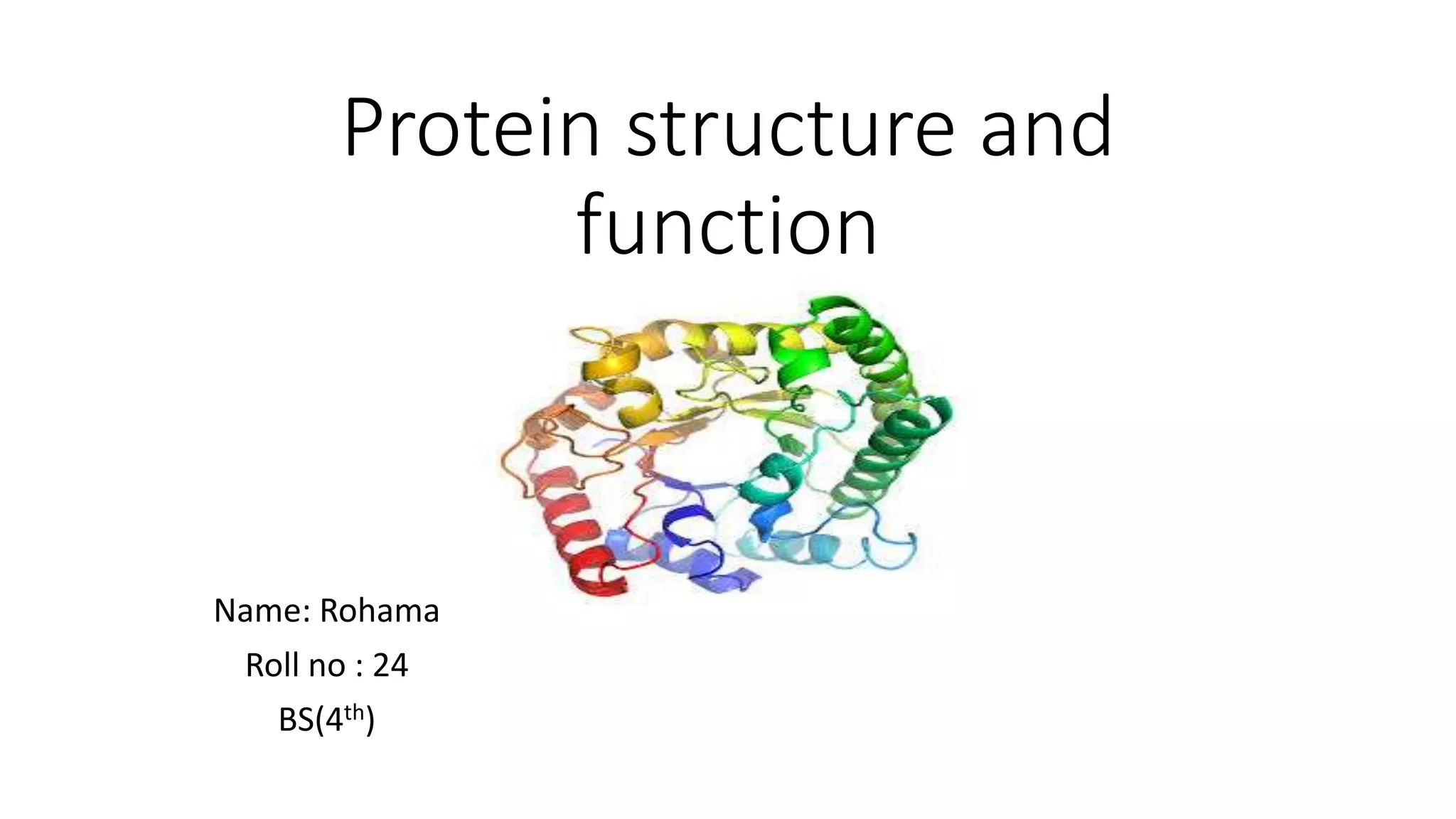
The document discusses the structure and function of proteins, starting with the basic definition of proteins and amino acids. It outlines the four levels of protein structure (primary, secondary, tertiary, quaternary) and explains the connection between their structure and functions, which include support, transport, signaling, movement, defense, catalysis, and hormonal regulation. It also describes the process of protein biosynthesis and the difference between proteins and polypeptides.
Outline
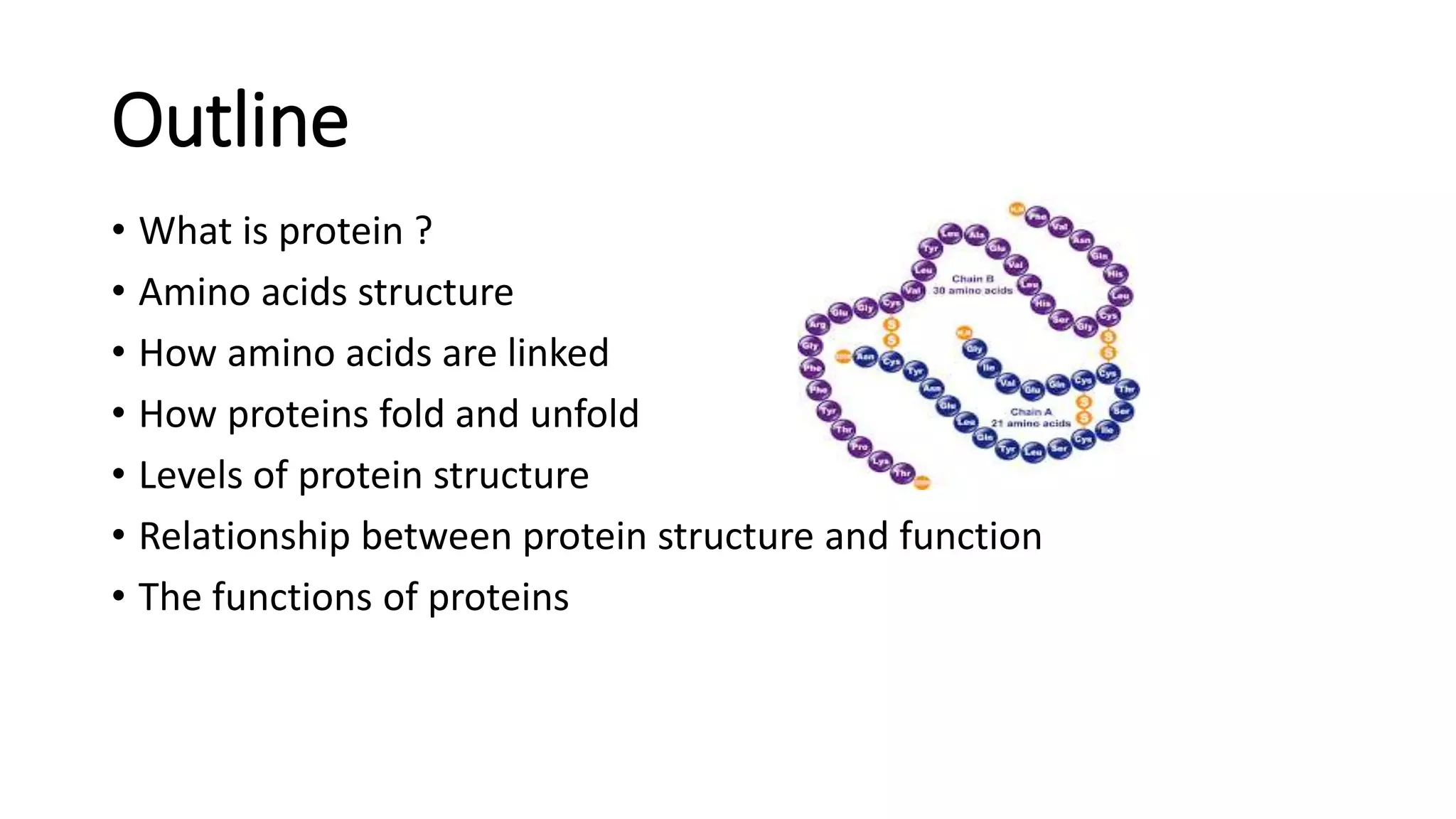
• What isprotein ?
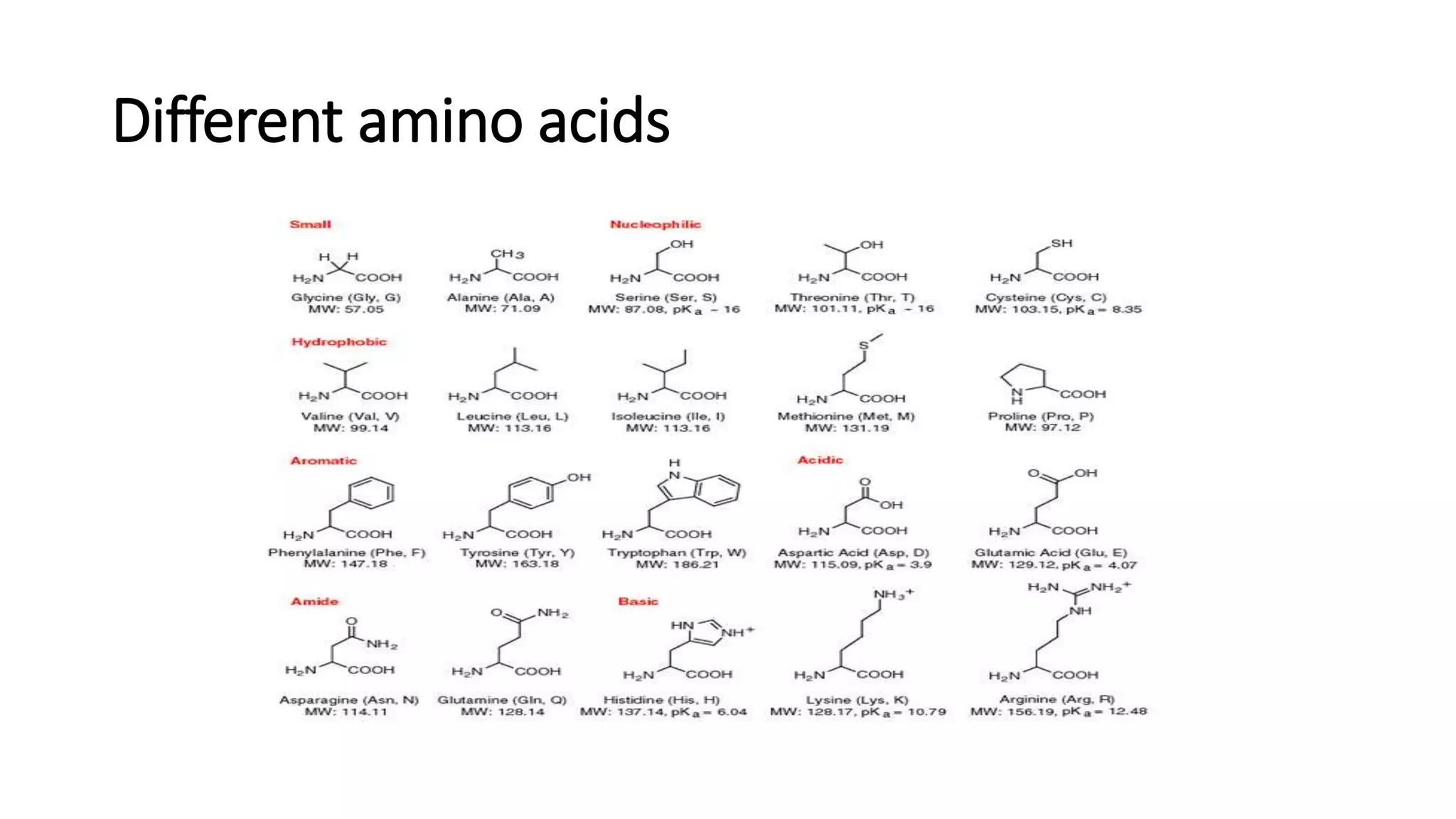
• Amino acids structure
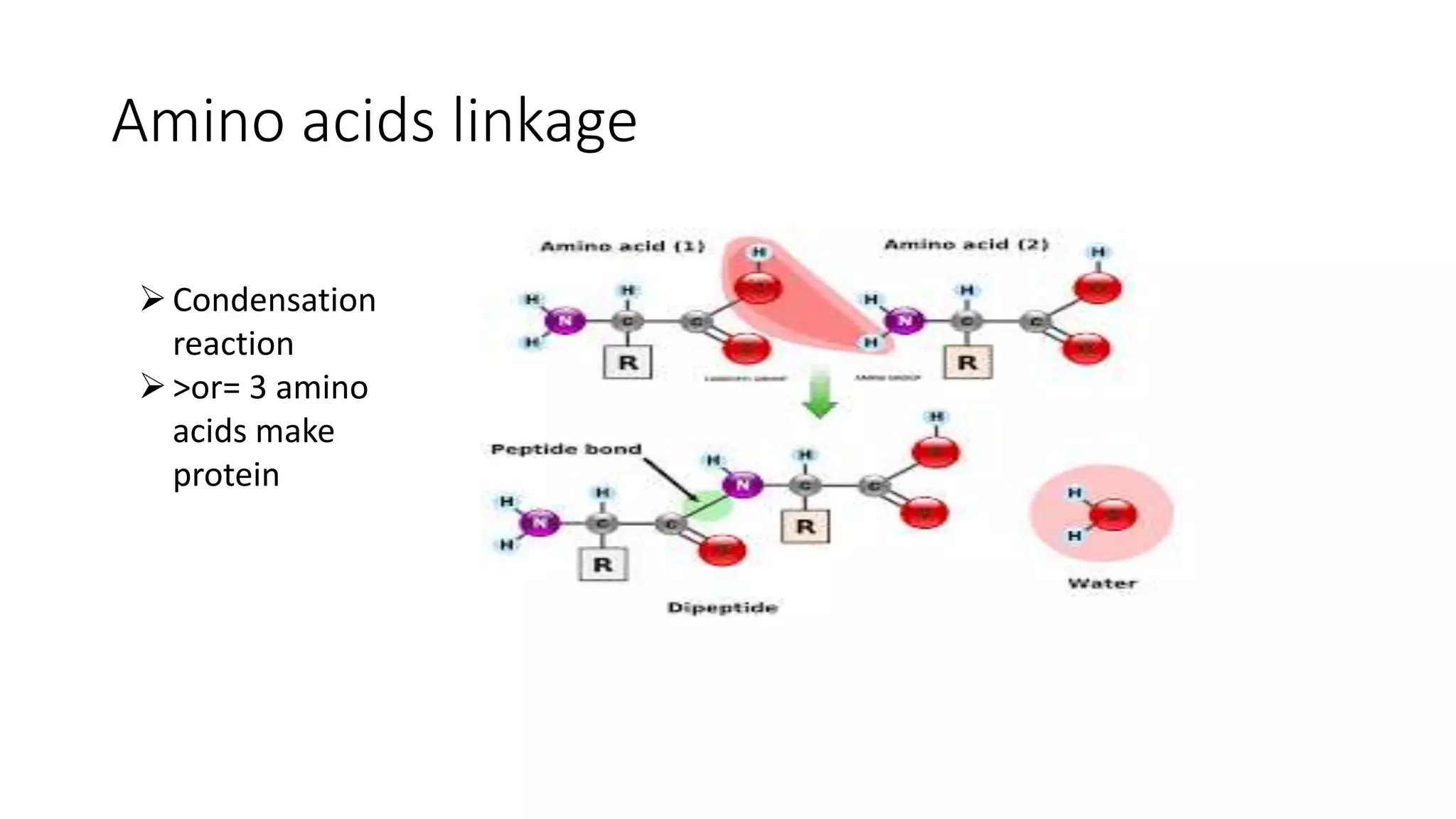
• How amino acids are linked
• How proteins fold and unfold
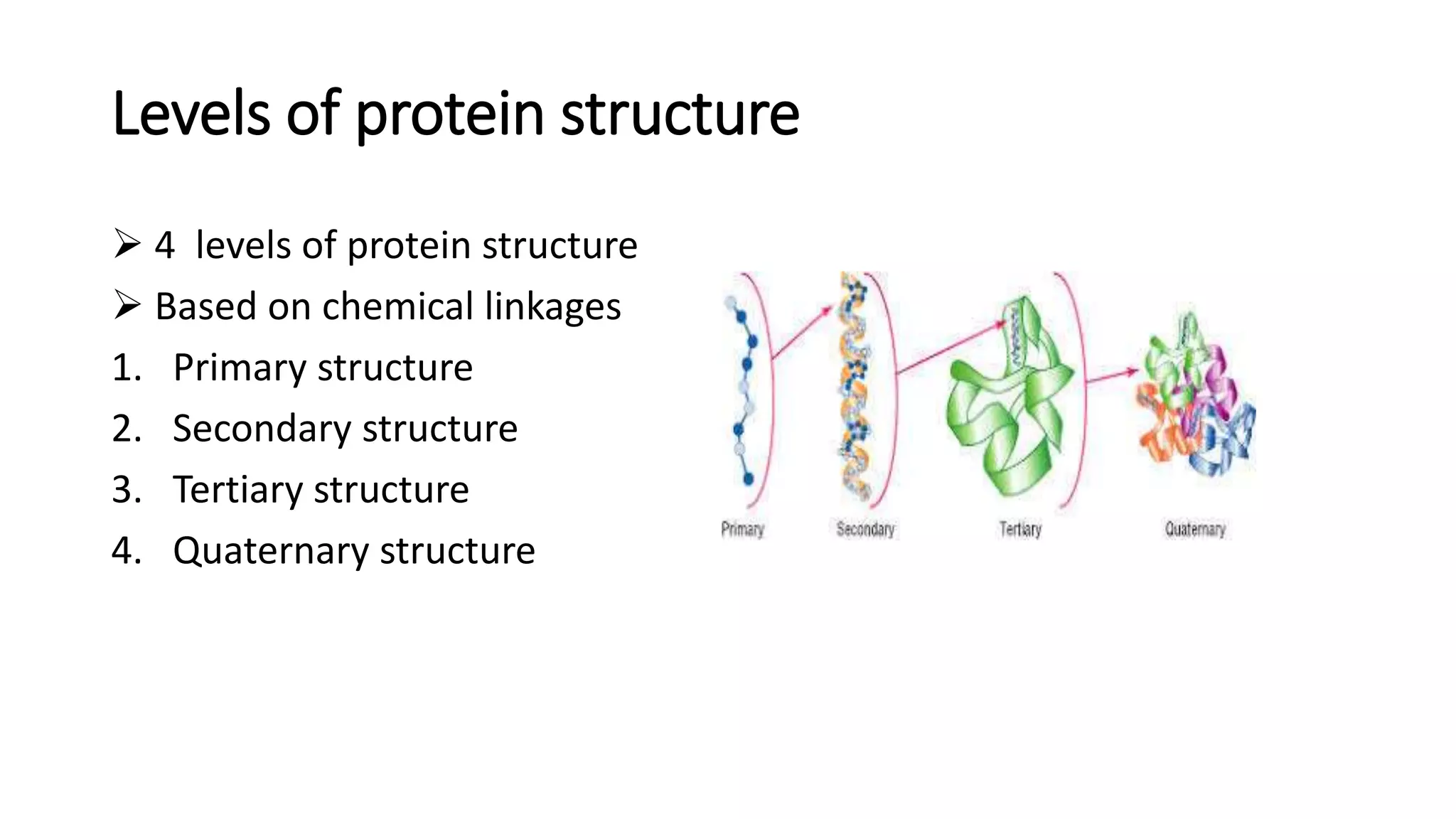
• Levels of protein structure
• Relationship between protein structure and function
• The functions of proteins
3.
Protein
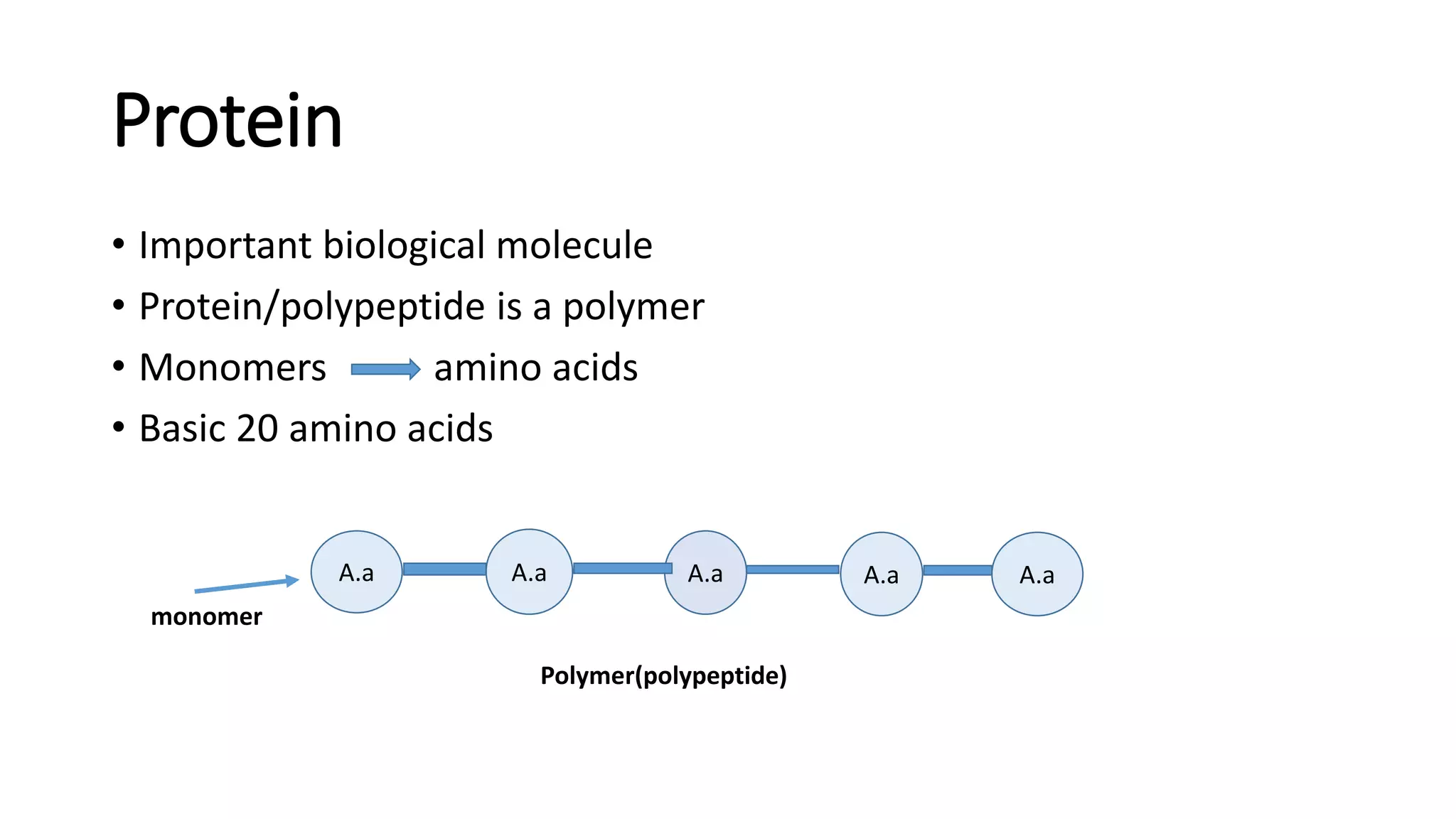
• Important biologicalmolecule
• Protein/polypeptide is a polymer
• Monomers amino acids
• Basic 20 amino acids
A.a A.a A.a A.a A.a
monomer
Polymer(polypeptide)
4.
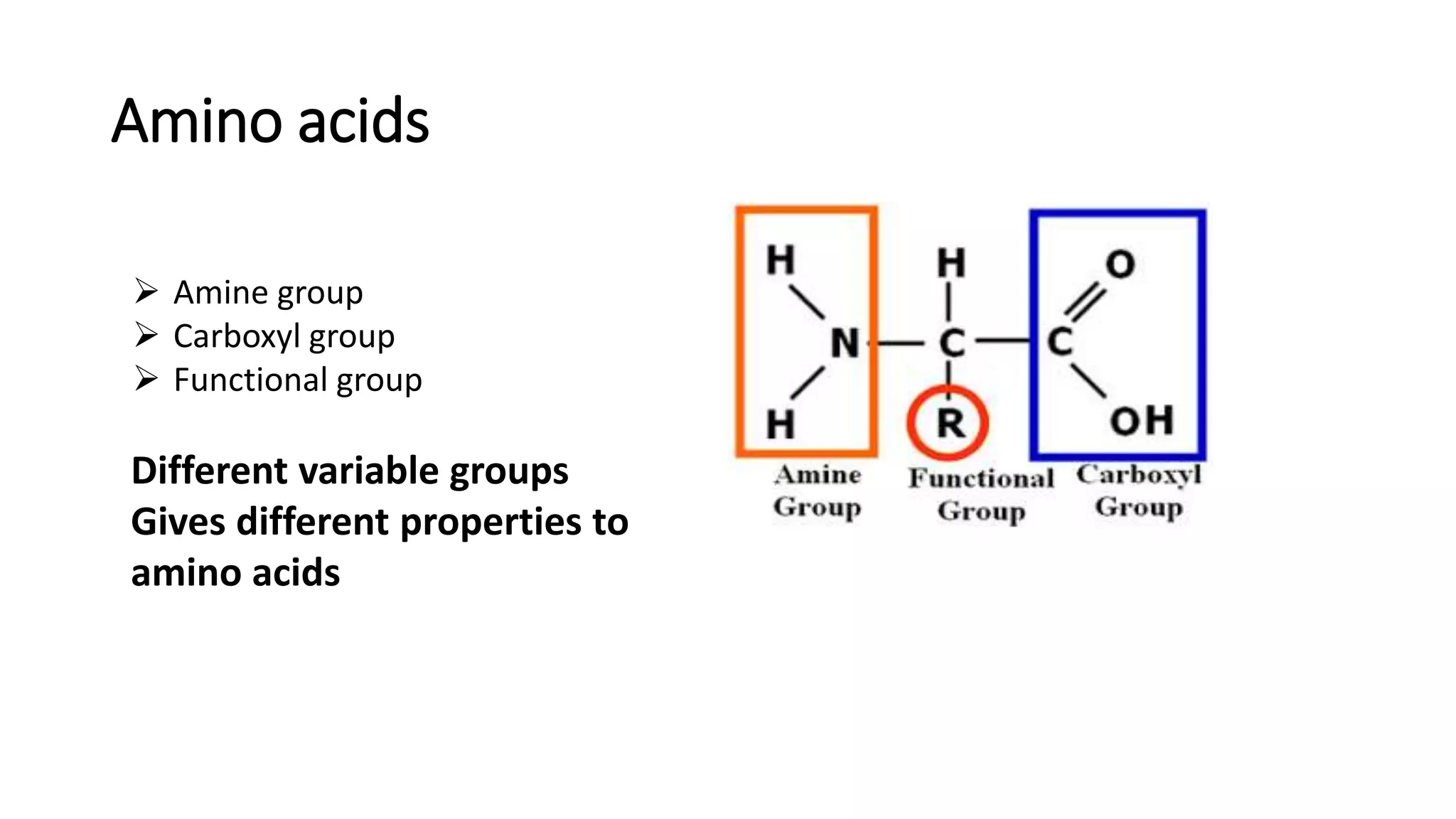
Amino acids
Aminegroup
Carboxyl group
Functional group
Different variable groups
Gives different properties to
amino acids
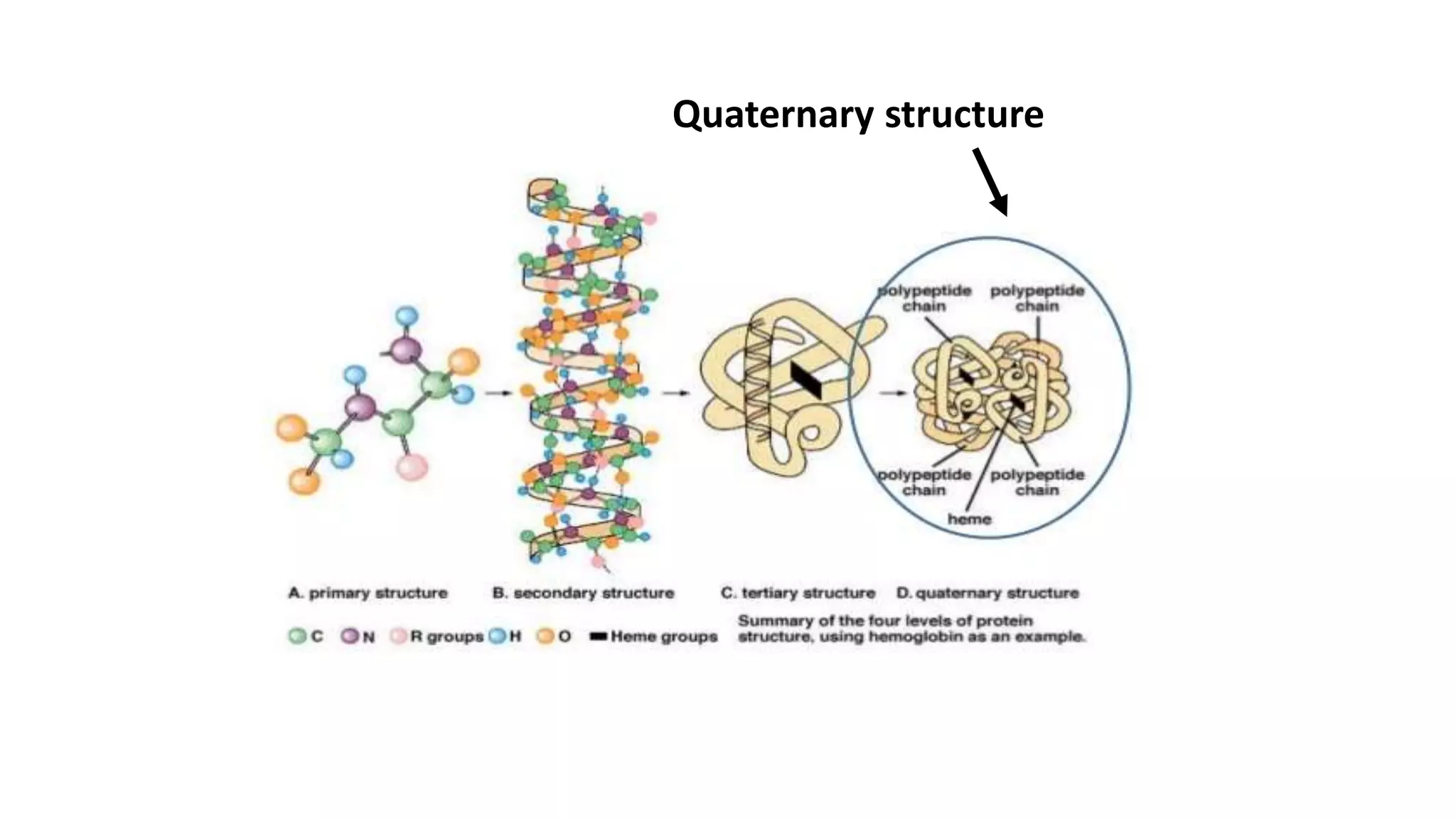
Levels of proteinstructure
4 levels of protein structure
Based on chemical linkages
1. Primary structure
2. Secondary structure
3. Tertiary structure
4. Quaternary structure
9.
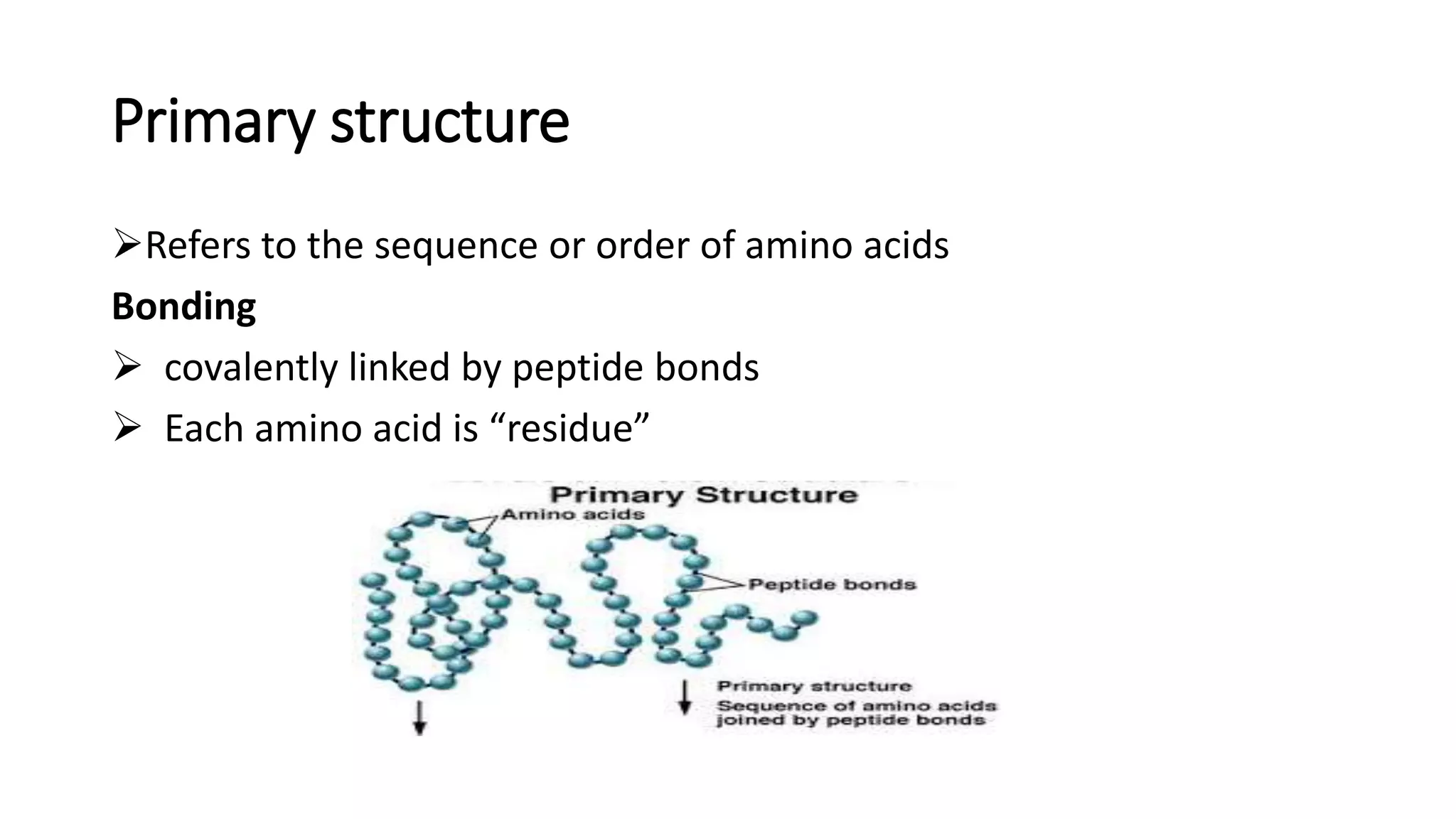
Primary structure
Refers tothe sequence or order of amino acids
Bonding
covalently linked by peptide bonds
Each amino acid is “residue”
10.
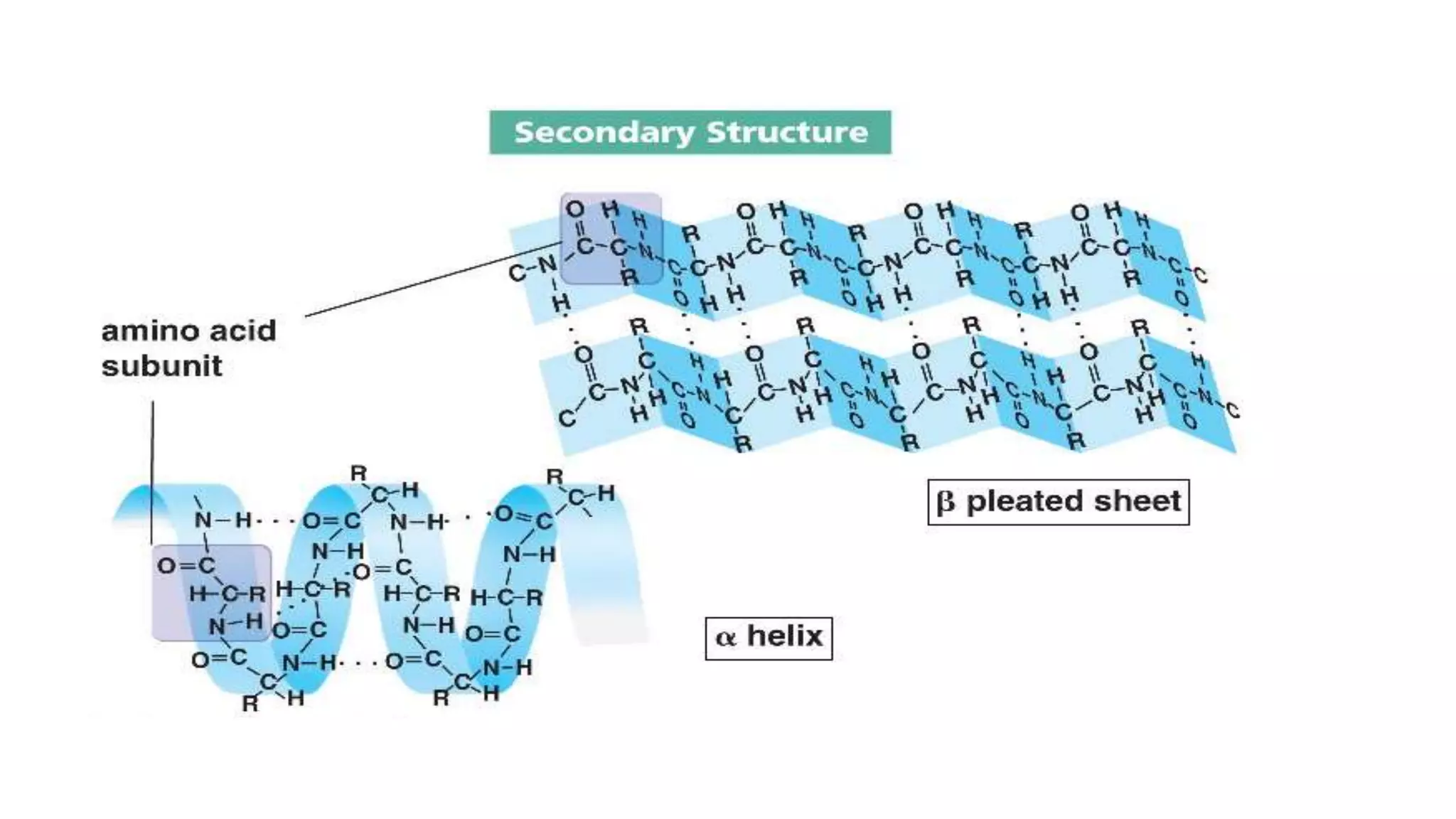
Secondary structure
Localized arrangementof adjacent amino acids formed as polypeptide
chain folds
Two main types of secondary structure
α-helix and the β-strand or β-sheets
bonding
hydrogen bonding
12.
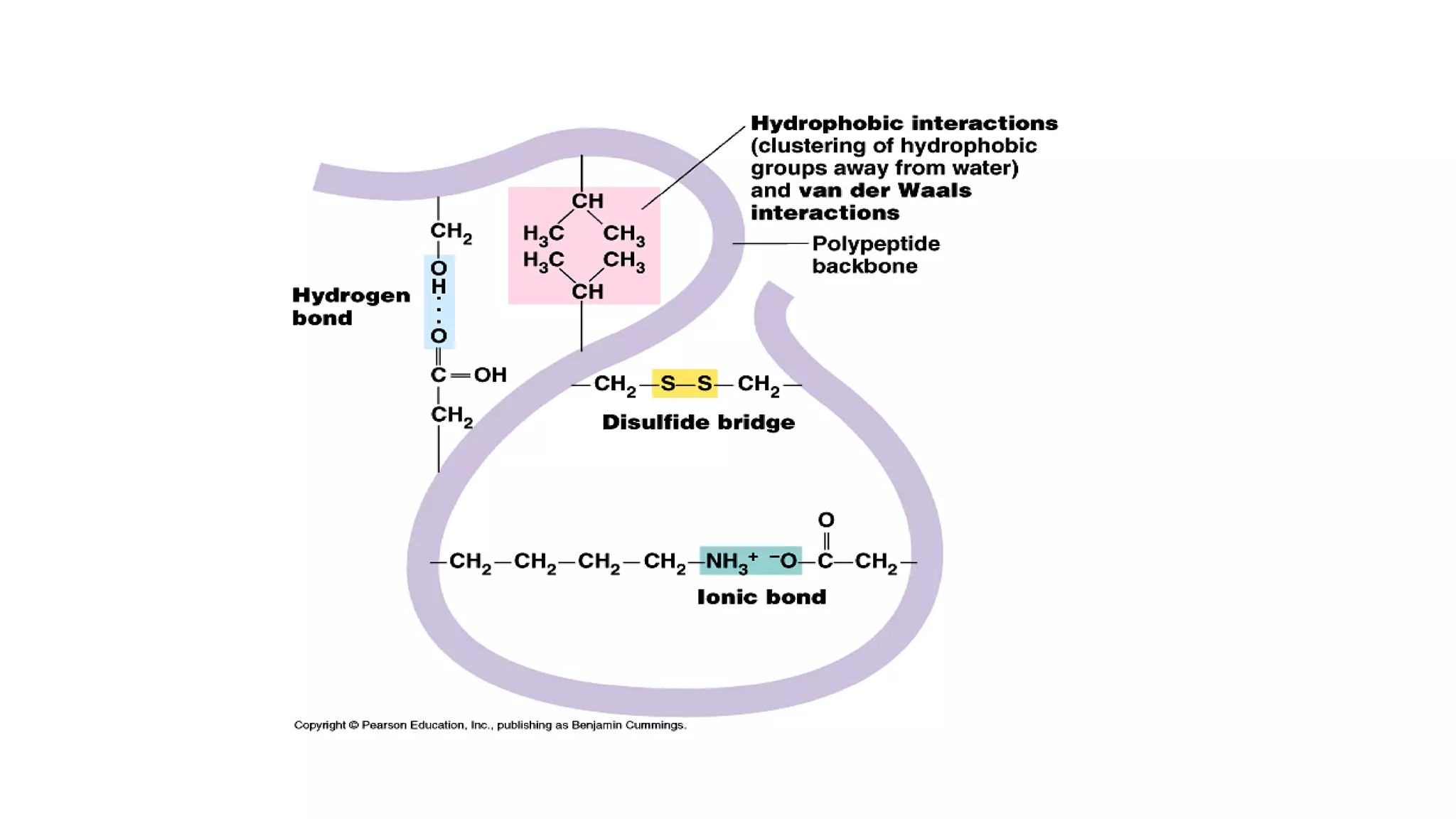
Tertiary structure
• Tertiarystructure refers to the three-dimensional structure of
monomeric and multimeric protein molecules
• Bondings
hydrogen bonding
ionic bonding
Van der walls interactions
disulfide linkage
14.
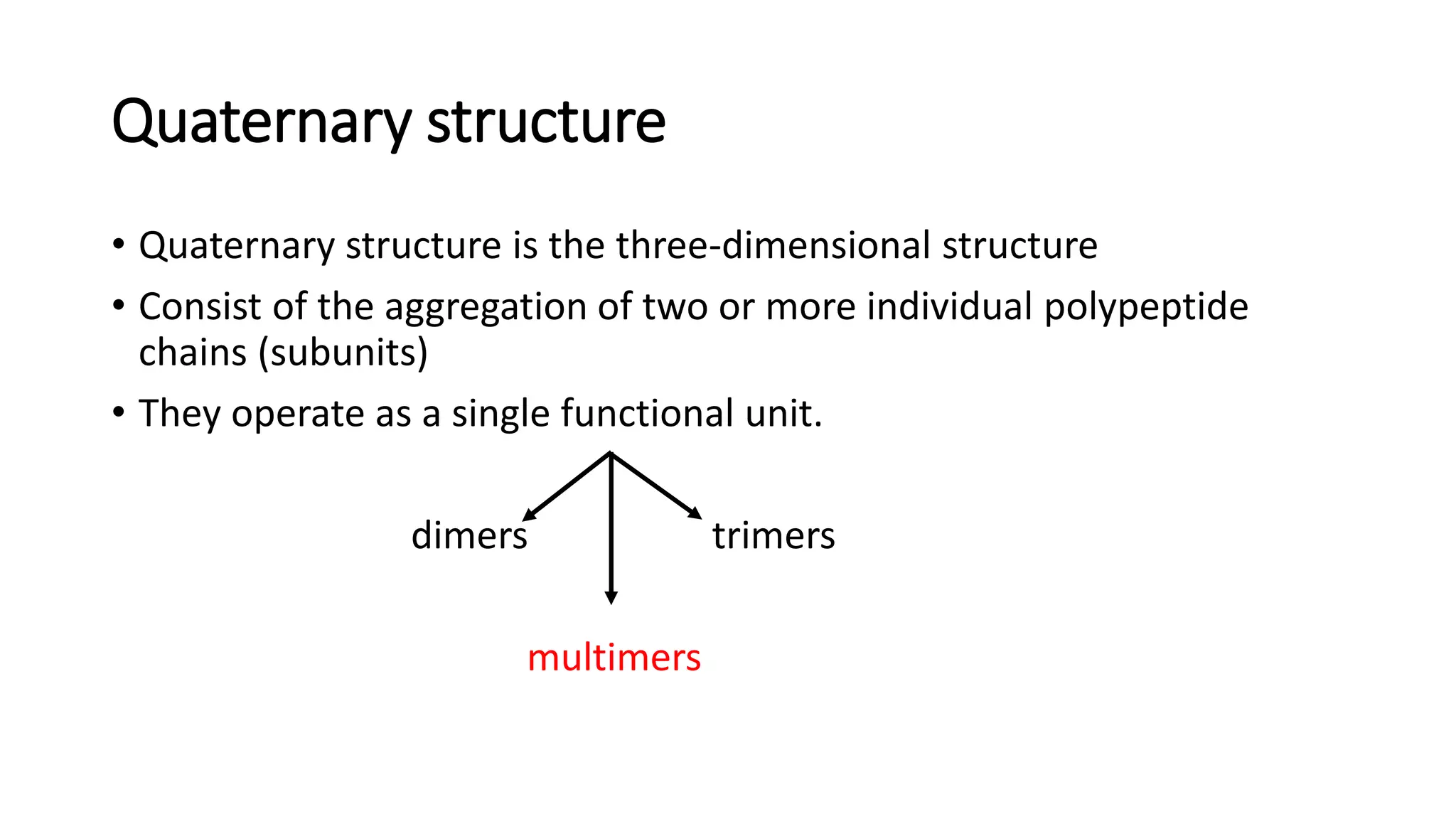
Quaternary structure
• Quaternarystructure is the three-dimensional structure
• Consist of the aggregation of two or more individual polypeptide
chains (subunits)
• They operate as a single functional unit.
dimers trimers
multimers
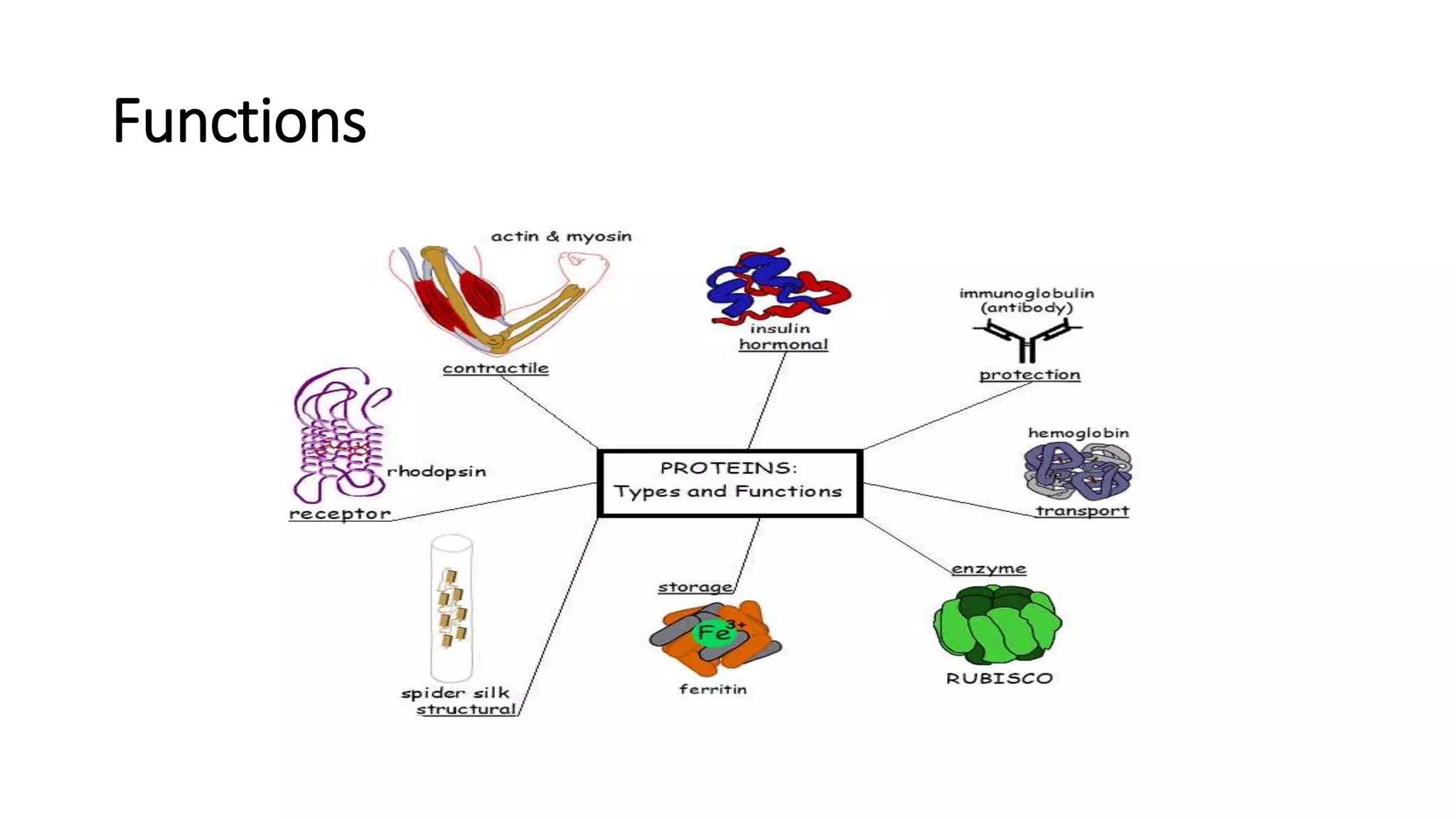
Functions of protein
•Structural support
• Transporting molecules
• Receiving and sending signals
• Movement
• Defense against diseases
• Catalysis of biochemical reactions
• Hormonal proteins