Protein
Protein Basics Amino acids = building blocks of proteins 20 kinds, but only 9 are  essential  amino acids (EAA) Phenylalanine, valine, tryptophan, methionine, threonine, histidine, isoleucine, leucine, lysine EAA needs approx. 11% of total protein intake Typical diet supplies 50% as EAA Children have higher need for EAA, need high-quality protein in diet Each amino acid contains carbon, hydrogen, and  nitrogen
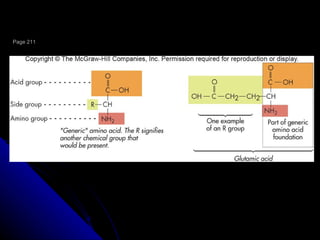
Amino Acids Each amino acid contains an “R” group Specialized side-group Examples: Branch-chain amino acids (BCAA)  have carbon and hydrogen “R” groups and  can be used to make glucose  if little or no CHO is consumed in the diet Leucine, isoleucine, valine PKU (phenylketonuria) – disease caused by inability to convert “R” group of phenylalanine to form tyrosine
Page 211
Amino Acids to Protein Amino acids are connected via  peptide bonds Dipeptide Tripeptide Polypeptide
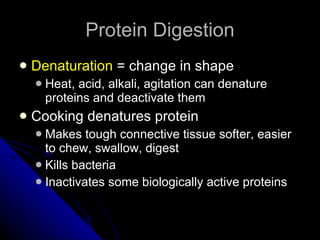
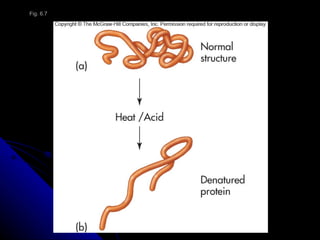
Protein Digestion Denaturation  = change in shape Heat, acid, alkali, agitation can denature proteins and deactivate them Cooking denatures protein Makes tough connective tissue softer, easier to chew, swallow, digest Kills bacteria Inactivates some biologically active proteins
Fig. 6.7
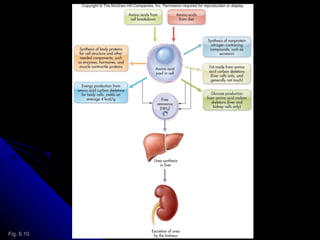
Fig. 6.10
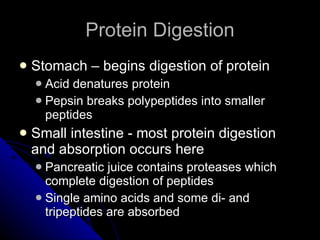
Protein Digestion Stomach – begins digestion of protein Acid denatures protein Pepsin breaks polypeptides into smaller peptides Small intestine - most protein digestion and absorption occurs here Pancreatic juice contains proteases which complete digestion of peptides Single amino acids and some di- and tripeptides are absorbed
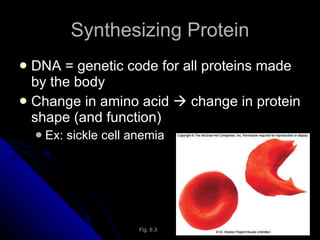
Synthesizing Protein DNA = genetic code for all proteins made by the body Change in amino acid    change in protein shape (and function) Ex: sickle cell anemia Fig. 6.3
Protein Turnover Protein turnover  = constant synthesis and breakdown of protein Allows cells to adapt to changes in body circumstances Amino acids are easily recycled, so we do not need to eat as much protein If amino acid used for energy, made into glucose, or lost due to cell breakdown, waste product  ammonia  is produced Liver turns ammonia into  urea  which is filtered by kidneys for excretion
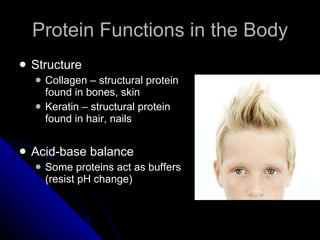
Protein Functions in the Body Structure Collagen – structural protein found in bones, skin Keratin – structural protein found in hair, nails Acid-base balance Some proteins act as buffers (resist pH change)
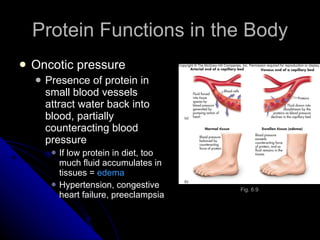
Protein Functions in the Body Oncotic pressure Presence of protein in small blood vessels attract water back into blood, partially counteracting blood pressure If low protein in diet, too much fluid accumulates in tissues =  edema Hypertension, congestive heart failure, preeclampsia Fig. 6.9
Thinking Time What affect would a drop in pH (more acidic) have on body proteins? Why might an elderly adult with a poor appetite have edema in her feet and ankles?
Protein Functions in the Body Hormones Thyroid hormone, insulin, glucagon, growth hormone Enzymes Almost all are proteins or contain protein Immune system Antibodies are proteins Energy If low on CHO, liver and kidneys make glucose from BCAA If starving, amino acids can be used for energy    muscle and organ wasting
Thinking Time Why does a patient with a poor appetite have a higher risk for infection? Why do enzymes and hormones from animal or plant foods not adversely affect our bodies?
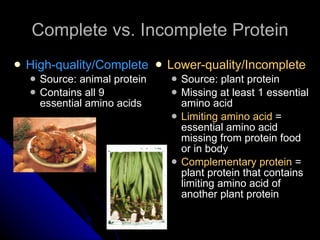
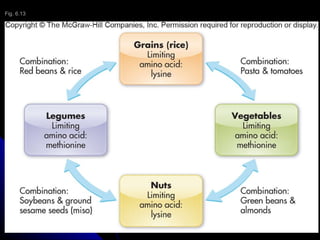
Complete vs. Incomplete Protein High-quality/Complete Source: animal protein Contains all 9 essential amino acids Lower-quality/Incomplete Source: plant protein Missing at least 1 essential amino acid Limiting amino acid  = essential amino acid missing from protein food or in body Complementary protein  = plant protein that contains limiting amino acid of another plant protein
Fig. 6.13
 
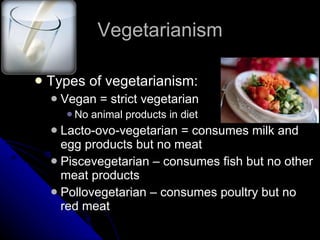
Vegetarianism Types of vegetarianism: Vegan = strict vegetarian No animal products in diet Lacto-ovo-vegetarian = consumes milk and egg products but no meat Piscevegetarian – consumes fish but no other meat products Pollovegetarian – consumes poultry but no red meat
Vegetarianism Health reasons Generally lower risk for cardiovascular disease Less saturated fat, no or little cholesterol, low sodium More fiber, phytochemicals Moral/ethical reasons Financial reasons
Legumes Legumes provide an excellent source of protein (although incomplete protein) Limiting amino acid = methionine Also good source of fiber, vitamins and minerals Digestive difficulty due to medium-chain length fibers that are fermented by bacteria in large intestine    gas, acid production
Legumes Beano – enzyme formula that may reduce gas production Small servings Start with split peas, limas, lentils Dry bean prep: Cook in boiling water for 3 min, turn off heat, cover, soak 2-3 hours, pour off water, use fresh water for cooking Canned bean prep: Pour off water, rinse well
Soy FDA approved health claim for lowering cholesterol because of soy protein 25 grams/day Sources: tofu, soymilk, soyflour, tempeh, miso, soynuts, edemame Isoflavones in soy have possible health benefits: Decrease menopause symptoms, osteoporosis risk, some cancer growth
Protein Needs Need to balance protein lost from breakdown (can be determined by urea in urine) If growing, pregnant/lactating, or recovering from illness, need more protein RDA: 0.8 grams/kg 8-10% of total kcal intake 46-56 grams/day needed vs. 65-100 grams actual intake! Excess protein intake    amino acids stripped of nitrogen (converted to urea) and carbon skeleton  stores as fat
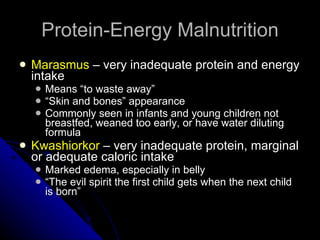
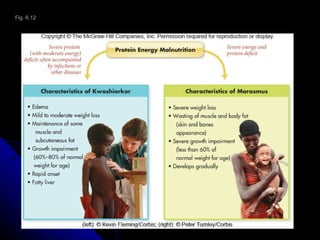
Protein-Energy Malnutrition Marasmus  – very inadequate protein and energy intake Means “to waste away” “ Skin and bones” appearance Commonly seen in infants and young children not breastfed, weaned too early, or have water diluting formula Kwashiorkor  – very inadequate protein, marginal or adequate caloric intake Marked edema, especially in belly “ The evil spirit the first child gets when the next child is born”
Fig. 6.12
High-protein Diets Pros: Provide extra vitamin B6, iron, zinc Cons: May indicate low plant food intake    decreased fiber, vitamins, some minerals, no phytochemicals Associated with cardiovascular disease risk (likely due to saturated fat intake) High red meat consumption associated with colon cancer risk Extra burden on kidneys to excrete excess nitrogen Toxicity from certain amino acids if taken in large amounts (supplements)
Supplementation Amino acid supplements Popular ergogenic aids in sports Decrease absorption of similar amino acids May lead to limiting amino acid situation in body Little evidence that they are beneficial to athletes (except for endurance sports)

Protein ch6

  • 1.
  • 2.
    Protein Basics Aminoacids = building blocks of proteins 20 kinds, but only 9 are essential amino acids (EAA) Phenylalanine, valine, tryptophan, methionine, threonine, histidine, isoleucine, leucine, lysine EAA needs approx. 11% of total protein intake Typical diet supplies 50% as EAA Children have higher need for EAA, need high-quality protein in diet Each amino acid contains carbon, hydrogen, and nitrogen
  • 3.
    Amino Acids Eachamino acid contains an “R” group Specialized side-group Examples: Branch-chain amino acids (BCAA) have carbon and hydrogen “R” groups and can be used to make glucose if little or no CHO is consumed in the diet Leucine, isoleucine, valine PKU (phenylketonuria) – disease caused by inability to convert “R” group of phenylalanine to form tyrosine
  • 4.
  • 5.
    Amino Acids toProtein Amino acids are connected via peptide bonds Dipeptide Tripeptide Polypeptide
  • 6.
    Protein Digestion Denaturation = change in shape Heat, acid, alkali, agitation can denature proteins and deactivate them Cooking denatures protein Makes tough connective tissue softer, easier to chew, swallow, digest Kills bacteria Inactivates some biologically active proteins
  • 7.
  • 8.
  • 9.
    Protein Digestion Stomach– begins digestion of protein Acid denatures protein Pepsin breaks polypeptides into smaller peptides Small intestine - most protein digestion and absorption occurs here Pancreatic juice contains proteases which complete digestion of peptides Single amino acids and some di- and tripeptides are absorbed
  • 10.
    Synthesizing Protein DNA= genetic code for all proteins made by the body Change in amino acid  change in protein shape (and function) Ex: sickle cell anemia Fig. 6.3
  • 11.
    Protein Turnover Proteinturnover = constant synthesis and breakdown of protein Allows cells to adapt to changes in body circumstances Amino acids are easily recycled, so we do not need to eat as much protein If amino acid used for energy, made into glucose, or lost due to cell breakdown, waste product ammonia is produced Liver turns ammonia into urea which is filtered by kidneys for excretion
  • 12.
    Protein Functions inthe Body Structure Collagen – structural protein found in bones, skin Keratin – structural protein found in hair, nails Acid-base balance Some proteins act as buffers (resist pH change)
  • 13.
    Protein Functions inthe Body Oncotic pressure Presence of protein in small blood vessels attract water back into blood, partially counteracting blood pressure If low protein in diet, too much fluid accumulates in tissues = edema Hypertension, congestive heart failure, preeclampsia Fig. 6.9
  • 14.
    Thinking Time Whataffect would a drop in pH (more acidic) have on body proteins? Why might an elderly adult with a poor appetite have edema in her feet and ankles?
  • 15.
    Protein Functions inthe Body Hormones Thyroid hormone, insulin, glucagon, growth hormone Enzymes Almost all are proteins or contain protein Immune system Antibodies are proteins Energy If low on CHO, liver and kidneys make glucose from BCAA If starving, amino acids can be used for energy  muscle and organ wasting
  • 16.
    Thinking Time Whydoes a patient with a poor appetite have a higher risk for infection? Why do enzymes and hormones from animal or plant foods not adversely affect our bodies?
  • 17.
    Complete vs. IncompleteProtein High-quality/Complete Source: animal protein Contains all 9 essential amino acids Lower-quality/Incomplete Source: plant protein Missing at least 1 essential amino acid Limiting amino acid = essential amino acid missing from protein food or in body Complementary protein = plant protein that contains limiting amino acid of another plant protein
  • 18.
  • 19.
  • 20.
    Vegetarianism Types ofvegetarianism: Vegan = strict vegetarian No animal products in diet Lacto-ovo-vegetarian = consumes milk and egg products but no meat Piscevegetarian – consumes fish but no other meat products Pollovegetarian – consumes poultry but no red meat
  • 21.
    Vegetarianism Health reasonsGenerally lower risk for cardiovascular disease Less saturated fat, no or little cholesterol, low sodium More fiber, phytochemicals Moral/ethical reasons Financial reasons
  • 22.
    Legumes Legumes providean excellent source of protein (although incomplete protein) Limiting amino acid = methionine Also good source of fiber, vitamins and minerals Digestive difficulty due to medium-chain length fibers that are fermented by bacteria in large intestine  gas, acid production
  • 23.
    Legumes Beano –enzyme formula that may reduce gas production Small servings Start with split peas, limas, lentils Dry bean prep: Cook in boiling water for 3 min, turn off heat, cover, soak 2-3 hours, pour off water, use fresh water for cooking Canned bean prep: Pour off water, rinse well
  • 24.
    Soy FDA approvedhealth claim for lowering cholesterol because of soy protein 25 grams/day Sources: tofu, soymilk, soyflour, tempeh, miso, soynuts, edemame Isoflavones in soy have possible health benefits: Decrease menopause symptoms, osteoporosis risk, some cancer growth
  • 25.
    Protein Needs Needto balance protein lost from breakdown (can be determined by urea in urine) If growing, pregnant/lactating, or recovering from illness, need more protein RDA: 0.8 grams/kg 8-10% of total kcal intake 46-56 grams/day needed vs. 65-100 grams actual intake! Excess protein intake  amino acids stripped of nitrogen (converted to urea) and carbon skeleton stores as fat
  • 26.
    Protein-Energy Malnutrition Marasmus – very inadequate protein and energy intake Means “to waste away” “ Skin and bones” appearance Commonly seen in infants and young children not breastfed, weaned too early, or have water diluting formula Kwashiorkor – very inadequate protein, marginal or adequate caloric intake Marked edema, especially in belly “ The evil spirit the first child gets when the next child is born”
  • 27.
  • 28.
    High-protein Diets Pros:Provide extra vitamin B6, iron, zinc Cons: May indicate low plant food intake  decreased fiber, vitamins, some minerals, no phytochemicals Associated with cardiovascular disease risk (likely due to saturated fat intake) High red meat consumption associated with colon cancer risk Extra burden on kidneys to excrete excess nitrogen Toxicity from certain amino acids if taken in large amounts (supplements)
  • 29.
    Supplementation Amino acidsupplements Popular ergogenic aids in sports Decrease absorption of similar amino acids May lead to limiting amino acid situation in body Little evidence that they are beneficial to athletes (except for endurance sports)