
PROTEIN
Protein (10-15% of your diet)
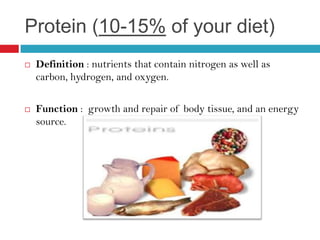
   Definition : nutrients that contain nitrogen as well as
    carbon, hydrogen, and oxygen.

   Function : growth and repair of body tissue, and an energy
    source.
Protein
   Amino Acids : chemical substances that
    make up proteins.
   Essential amino acids: nutrients your body
    cannot produce or store so you must get them
    through food. Nine of the 20 amino acids are
    essential.
   Complete protein : food that has all essential
    amino acids (animal products, soy, poi)
Source of Proteins
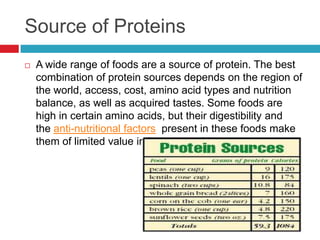
   A wide range of foods are a source of protein. The best
    combination of protein sources depends on the region of
    the world, access, cost, amino acid types and nutrition
    balance, as well as acquired tastes. Some foods are
    high in certain amino acids, but their digestibility and
    the anti-nutritional factors present in these foods make
    them of limited value in human nutrition.
Function of Proteins in Human
Body
  Proteins vary in structure as well as function. They
  are constructed from a set of 20 amino acids and
  have distinct three-dimensional shapes. Below is
  a list of a few types of proteins and their functions:
 Antibodies defend the body from germs.


   Contractile proteins are responsible for
    movement.

   Enzymes speed up chemical reactions.

   Storage proteins store amino acids.
Protein Diet
   High Protein Diet
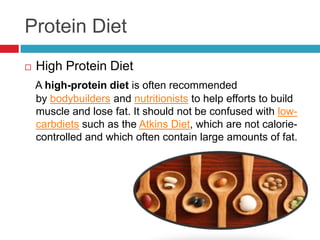
    A high-protein diet is often recommended
    by bodybuilders and nutritionists to help efforts to build
    muscle and lose fat. It should not be confused with low-
    carbdiets such as the Atkins Diet, which are not calorie-
    controlled and which often contain large amounts of fat.
Protein Diet
   Low Protein Diet
    A low-protein diet is a diet in which people
    reduce their intake of protein. A low-protein
    diet is often prescribed to people
    with kidney or liver disease.
    Foods to avoid are any animal byproduct such
    as meats, eggs, fish, poultry, milk, yogurt, chee
    se,
     Pulses, etc
Protein deficiency

   Protein deficiency and malnutrition can lead to
    variety of ailments including mental
    retardation and kwashiorkor. Symptoms of
    kwashiorkor include apathy, diarrhea,
    inactivity, failure to grow, flaky skin, fatty liver,
    and edema of the belly and legs. This edema
    is explained by the action of lipoxygenase on
    arachidonic acid to form leukotrienes and the
    normal functioning of proteins in fluid balance
    and lipoprotein transport
Protein

Protein

  • 1.
  • 2.
    Protein (10-15% ofyour diet)  Definition : nutrients that contain nitrogen as well as carbon, hydrogen, and oxygen.  Function : growth and repair of body tissue, and an energy source.
  • 3.
    Protein  Amino Acids : chemical substances that make up proteins.  Essential amino acids: nutrients your body cannot produce or store so you must get them through food. Nine of the 20 amino acids are essential.  Complete protein : food that has all essential amino acids (animal products, soy, poi)
  • 4.
    Source of Proteins  A wide range of foods are a source of protein. The best combination of protein sources depends on the region of the world, access, cost, amino acid types and nutrition balance, as well as acquired tastes. Some foods are high in certain amino acids, but their digestibility and the anti-nutritional factors present in these foods make them of limited value in human nutrition.
  • 5.
    Function of Proteinsin Human Body Proteins vary in structure as well as function. They are constructed from a set of 20 amino acids and have distinct three-dimensional shapes. Below is a list of a few types of proteins and their functions:  Antibodies defend the body from germs.  Contractile proteins are responsible for movement.  Enzymes speed up chemical reactions.  Storage proteins store amino acids.
  • 6.
    Protein Diet  High Protein Diet A high-protein diet is often recommended by bodybuilders and nutritionists to help efforts to build muscle and lose fat. It should not be confused with low- carbdiets such as the Atkins Diet, which are not calorie- controlled and which often contain large amounts of fat.
  • 7.
    Protein Diet  Low Protein Diet A low-protein diet is a diet in which people reduce their intake of protein. A low-protein diet is often prescribed to people with kidney or liver disease. Foods to avoid are any animal byproduct such as meats, eggs, fish, poultry, milk, yogurt, chee se, Pulses, etc
  • 8.
    Protein deficiency  Protein deficiency and malnutrition can lead to variety of ailments including mental retardation and kwashiorkor. Symptoms of kwashiorkor include apathy, diarrhea, inactivity, failure to grow, flaky skin, fatty liver, and edema of the belly and legs. This edema is explained by the action of lipoxygenase on arachidonic acid to form leukotrienes and the normal functioning of proteins in fluid balance and lipoprotein transport