Protein
The presentation
Such style
So Sciency
Protein
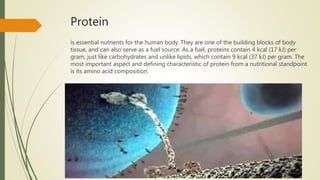
is essential nutrients for the human body. They are one of the building blocks of body
tissue, and can also serve as a fuel source. As a fuel, proteins contain 4 kcal (17 kJ) per
gram, just like carbohydrates and unlike lipids, which contain 9 kcal (37 kJ) per gram. The
most important aspect and defining characteristic of protein from a nutritional standpoint
is its amino acid composition.
Protein in Layman’s terms
 Large molecules
 Made up of chains of amino acids
 Are found in every cell in the body
 The sequence of amino acids is determined by DNA
 Are involved in most of the body’s functions and life processes
Structure of Proteins
 Made up of chains of amino acids; classified by number of amino acids in
a chain
 Peptides: fewer than 50 amino acids
 Dipeptides: 2 amino acids
 Tripeptides: 3 amino acids
 Polypeptides: more than 10 amino acids
 Proteins: more than 50 amino acids
 Typically 100 to 10,000 amino acids linked together
 Chains are synthesizes based on specific bodily DNA
 Amino acids are composed of carbon, hydrogen, oxygen, and nitrogen
Protein in the body
 Protein is a nutrient needed by the human body for growth and maintenance.
 Aside from water, proteins are the most abundant kind of molecules in the body.
 Protein can be found in all cells of the body and is the major structural component
of all cells in the body, especially muscle.
→This also includes body organs, hair and skin.
 Proteins are also used in membranes, such as glycoproteins. When broken down
into amino acids, they are used as precursors to nucleic acid, co-enzymes,
hormones, immune response, cellular repair, and other molecules essential for
life. Additionally, protein is needed to form blood cells.
Protein
can be
found
in a
wide
variety
of
food!
Now for the sciencey stuff
Protein
 Proteins are polymer chains made of amino acids linked together by peptide
bonds.
 During human digestion, proteins are broken down in the stomach to
smaller polypeptide chains via hydrochloric acid and protease actions.
 This is crucial for the synthesis of the essential amino acids that cannot
be biosynthesized by the body.
PRotein
 There are nine essential amino acids which humans must obtain from their diet in order
to prevent protein-energy malnutrition.
 Phenylalanine
 Valine
 Threonine
 Tryptophan
 Methionine
 Leucine
 Isoleucine
 Lysine
 Histidine
PROtein
 There are five dispensable amino acids which humans are able to synthesize in the
body.
 Alanine
 Aspartic acid
 Asparagine
 Glutamic acid
 Serine
Dietary Requirements
 The amount of protein required in a person's diet is determined in large part by
overall energy intake, the body's need for nitrogen and essential amino acids, body
weight and composition, rate of growth in the individual, physical activity level,
individual's energy and carbohydrate intake, as well as the presence of illness or
injury.
Dietary Requirements
 Physical activity and exertion as well as enhanced muscular mass increase the need
for protein. Requirements are also greater during childhood for growth and
development, during pregnancy or when breast-feeding in order to nourish a baby,
or when the body needs to recover from malnutrition or trauma or after an
operation.
Warning
 If not enough energy is taken in through diet, as in the process of starvation, the
body will use protein from the muscle mass to meet its energy needs,
leading to muscle wasting over time. If the individual does not consume adequate
protein in nutrition, then muscle will also waste as more vital cellular processes (e.g.
respiration enzymes, blood cells) recycle muscle protein for their own
requirements.
Warning
 Protein deficiency and malnutrition can lead to variety of
ailments including mental
retardation and kwashiorkor. Symptoms of kwashiorkor
include apathy, diarrhea, inactivity, failure to grow, flaky skin,
fatty liver, and edema of the belly and legs. This edema is
explained by the action of lipoxygenase on arachidonic acid to
form leukotrienes and the normal functioning of proteins in
fluid balance and lipoprotein transport.
 PEM is fairly common worldwide in both children and adults
and accounts for 6 million deaths annually. In the
industrialized world, PEM is predominantly seen in hospitals, is
associated with disease, or is often found in the elderly.
A child in Nigeria
during the Biafra
War suffering from
kwashiorkor – one of
the three protein
energy malnutrition
ailments afflicting over
10 million children in
developing countries.
That’s All ^_^
 Denmark Velasquez
 Tom Ayagan
 Rexton Mensi
 Jazer Oriao
 Colleen Vencio
 Clarisse Joy Santos
Group 2

Protein (Nutrient)

  • 1.
  • 2.
    Protein is essential nutrientsfor the human body. They are one of the building blocks of body tissue, and can also serve as a fuel source. As a fuel, proteins contain 4 kcal (17 kJ) per gram, just like carbohydrates and unlike lipids, which contain 9 kcal (37 kJ) per gram. The most important aspect and defining characteristic of protein from a nutritional standpoint is its amino acid composition.
  • 3.
    Protein in Layman’sterms  Large molecules  Made up of chains of amino acids  Are found in every cell in the body  The sequence of amino acids is determined by DNA  Are involved in most of the body’s functions and life processes
  • 4.
    Structure of Proteins Made up of chains of amino acids; classified by number of amino acids in a chain  Peptides: fewer than 50 amino acids  Dipeptides: 2 amino acids  Tripeptides: 3 amino acids  Polypeptides: more than 10 amino acids  Proteins: more than 50 amino acids  Typically 100 to 10,000 amino acids linked together  Chains are synthesizes based on specific bodily DNA  Amino acids are composed of carbon, hydrogen, oxygen, and nitrogen
  • 5.
    Protein in thebody  Protein is a nutrient needed by the human body for growth and maintenance.  Aside from water, proteins are the most abundant kind of molecules in the body.  Protein can be found in all cells of the body and is the major structural component of all cells in the body, especially muscle. →This also includes body organs, hair and skin.  Proteins are also used in membranes, such as glycoproteins. When broken down into amino acids, they are used as precursors to nucleic acid, co-enzymes, hormones, immune response, cellular repair, and other molecules essential for life. Additionally, protein is needed to form blood cells.
  • 6.
  • 7.
    Now for thesciencey stuff
  • 8.
    Protein  Proteins arepolymer chains made of amino acids linked together by peptide bonds.  During human digestion, proteins are broken down in the stomach to smaller polypeptide chains via hydrochloric acid and protease actions.  This is crucial for the synthesis of the essential amino acids that cannot be biosynthesized by the body.
  • 9.
    PRotein  There arenine essential amino acids which humans must obtain from their diet in order to prevent protein-energy malnutrition.  Phenylalanine  Valine  Threonine  Tryptophan  Methionine  Leucine  Isoleucine  Lysine  Histidine
  • 10.
    PROtein  There arefive dispensable amino acids which humans are able to synthesize in the body.  Alanine  Aspartic acid  Asparagine  Glutamic acid  Serine
  • 11.
    Dietary Requirements  Theamount of protein required in a person's diet is determined in large part by overall energy intake, the body's need for nitrogen and essential amino acids, body weight and composition, rate of growth in the individual, physical activity level, individual's energy and carbohydrate intake, as well as the presence of illness or injury.
  • 12.
    Dietary Requirements  Physicalactivity and exertion as well as enhanced muscular mass increase the need for protein. Requirements are also greater during childhood for growth and development, during pregnancy or when breast-feeding in order to nourish a baby, or when the body needs to recover from malnutrition or trauma or after an operation.
  • 13.
    Warning  If notenough energy is taken in through diet, as in the process of starvation, the body will use protein from the muscle mass to meet its energy needs, leading to muscle wasting over time. If the individual does not consume adequate protein in nutrition, then muscle will also waste as more vital cellular processes (e.g. respiration enzymes, blood cells) recycle muscle protein for their own requirements.
  • 14.
    Warning  Protein deficiencyand malnutrition can lead to variety of ailments including mental retardation and kwashiorkor. Symptoms of kwashiorkor include apathy, diarrhea, inactivity, failure to grow, flaky skin, fatty liver, and edema of the belly and legs. This edema is explained by the action of lipoxygenase on arachidonic acid to form leukotrienes and the normal functioning of proteins in fluid balance and lipoprotein transport.  PEM is fairly common worldwide in both children and adults and accounts for 6 million deaths annually. In the industrialized world, PEM is predominantly seen in hospitals, is associated with disease, or is often found in the elderly. A child in Nigeria during the Biafra War suffering from kwashiorkor – one of the three protein energy malnutrition ailments afflicting over 10 million children in developing countries.
  • 15.
    That’s All ^_^ Denmark Velasquez  Tom Ayagan  Rexton Mensi  Jazer Oriao  Colleen Vencio  Clarisse Joy Santos Group 2