Proprioceptive
Neuromuscular
Facilitation
PRESENTED BY
DR. ANAZ A (MPT – MSS)
Contents
• PNF definition
• Neurophysiologic basis of PNF
• Uses of PNF
• Basic principles of PNF
• Techniques of PNF
• PNF stretching
• Patterns of PNF
Definition
• Proprioceptive neuromuscular facilitation (PNF) is an approach
to therapeutic exercise that combines functionally based
diagonal patterns of movement with techniques of
neuromuscular facilitation to evoke motor responses and
improve neuromuscular control and function.
--- kisner and colby
• Proprioceptive : sensory receptors giving information
• Neuromuscular : involving nerves and muscles
• Facilitation : making easier /helping
Neurophysiological basis of PNF
• Sherrington…
• Concept of facilitation and inhibition
• Stretch reflex
• Neurophysiological phenomena
FASCILITATION
• Facilitory – an impulse causing the recruitment and discharge
of additional motor neurons in the spinal cord
• Results in increased excitability in the muscles
• Weak muscles would be aided through facilitation
INHIBITION
• Inhibitory – any stimulus that causes motor neurons to drop
away from the discharge zone and away from the spinal cord
• Inhibition results in decreased excitability of motor neurons
• Muscle spasticity can be decreased
STRETCH REFLEX
• The stretch reflex involves two types of receptors
• Muscle spindles
• Golgi tendon organ
Nuerophysiological phenomena
• RECIPROCAL INHIBITION (muscle spindle)
• AUTOGENIC INHIBITION (GTO)
• is defined as inhibition mediated by afferent fibers from
stretched muscle acting on the alpha motor neurons supplying
that muscle, causing it to reflex
Uses of PNF
1. PNF treatment has been used to increase strength,
flexibility, coordination and functional mobility.
2. The main goal of treatment is to facilitate the patient in
achieving a movement or posture.•
3. Stretches as well as diagonals and rational exercise patterns
are used to improve ADL's functional mobility and athletic
performance
4. It is mainly used in orthopedic rehabilitation for
musculoskeletal injuries and in neurological rehab.•
5. PNF can be used for any condition, however the patient
condition level may require modifications.
BASIC PRINCIPLES OF PNF
1. Resistance
2. Manual contact
3. Stretch stimulus
4. Stretch reflex
5. Verbal commands
6. Traction and approximation
7. Timing
8. Body positioning and body mechanics
Maximal resistance
• Opposing forces to the patients movement is called resistance
• Resistance should be adjusted throughout the pattern to
accommodate to strong and weak components of the pattern.
Manual contact
• The term manual contact refers to how and where the
therapist’s hands are placed on the patient.
• placed over the agonist muscle groups or their tendinous
insertions.
• allow the therapist to apply resistance to the appropriate
muscle groups and cue the patient
Stretch stimulus
• The stretch stimulus occurs when the muscle is elongated
• The lengthened position of the muscle is the starting
position of each pattern and the stretch is maintained
throughout the movement
• All the components of a pattern must be stretched
simultaneously
Stretch reflex
• The stretch reflex is facilitated by a rapid stretch
(overpressure) just past the point of tension to an already
elongated agonist muscle
• The stretch reflex is usually directed to a distal muscle group
to elicit a phasic muscle contraction to initiate a given diagonal
movement pattern.
• The quick stretch is followed by sustained resistance to the
agonist muscles to keep the contracting muscles under
tension.
Verbal Commands
• Auditory cues are given to enhance motor output
• The tone and volume of the verbal commands are varied to
help maintain the patient’s attention.
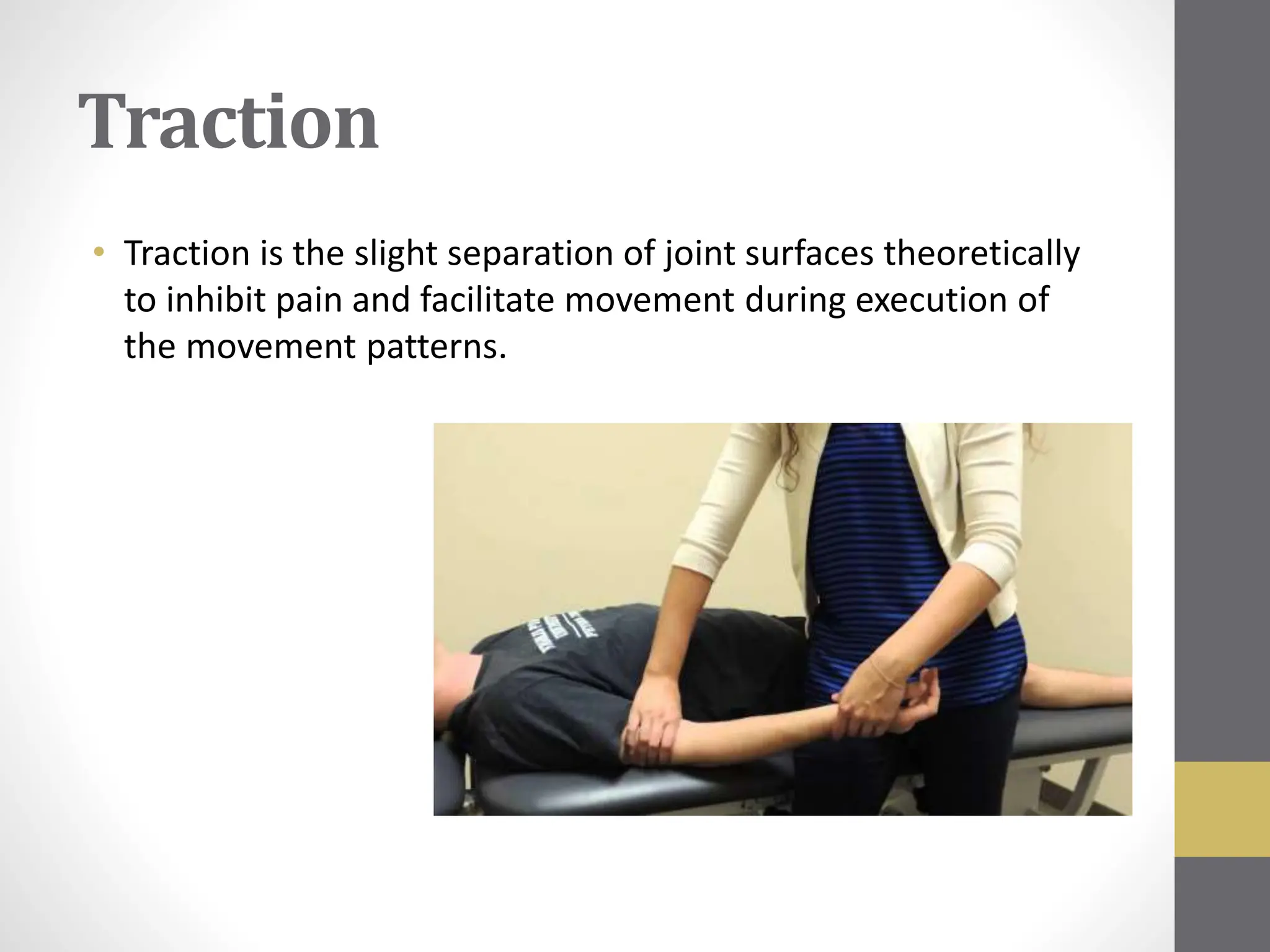
Traction
• Traction is the slight separation of joint surfaces theoretically
to inhibit pain and facilitate movement during execution of
the movement patterns.
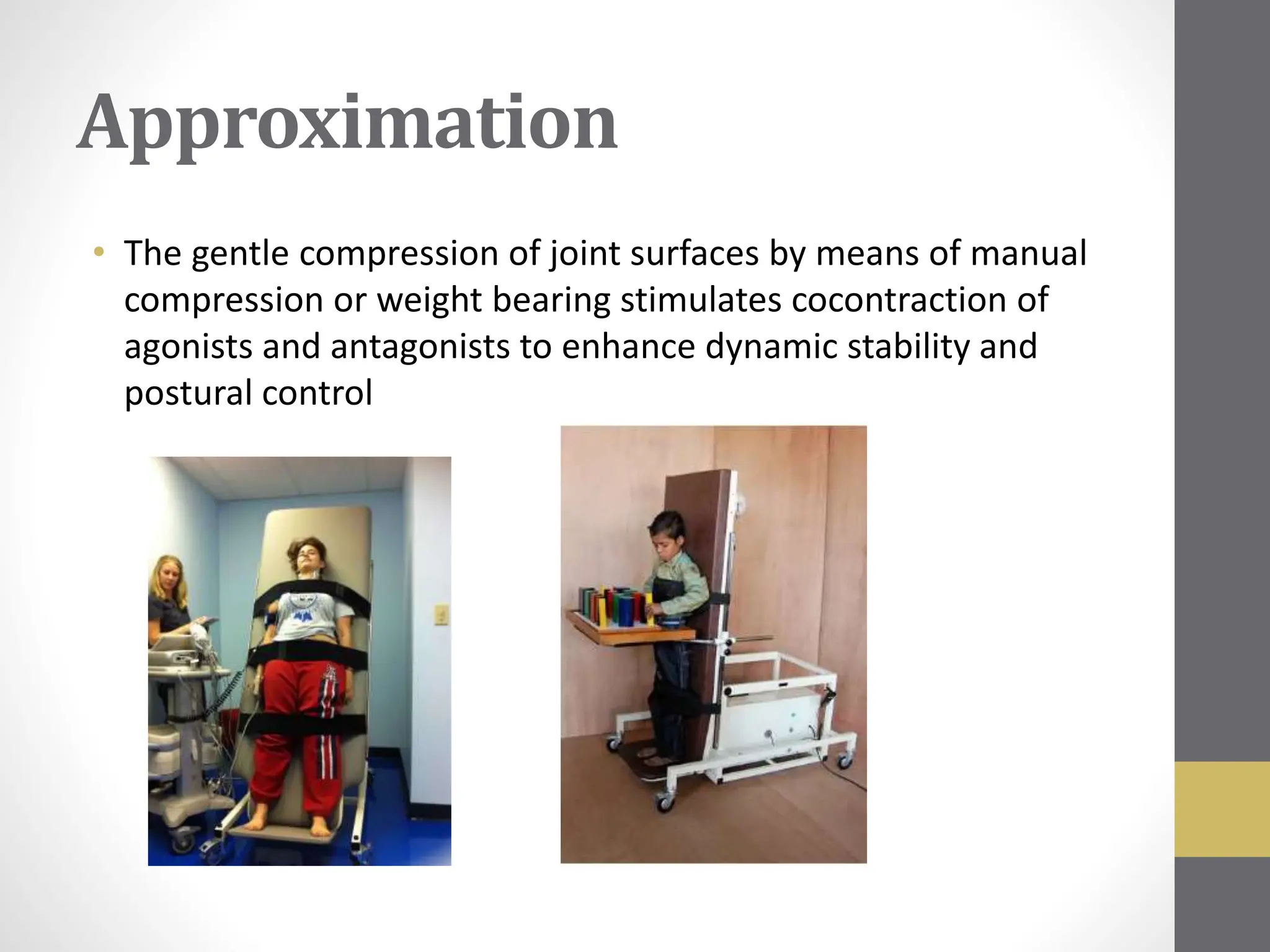
Approximation
• The gentle compression of joint surfaces by means of manual
compression or weight bearing stimulates cocontraction of
agonists and antagonists to enhance dynamic stability and
postural control
Normal Timing
• Timing is the sequencing of motions
• Should be in a rhythmic manner
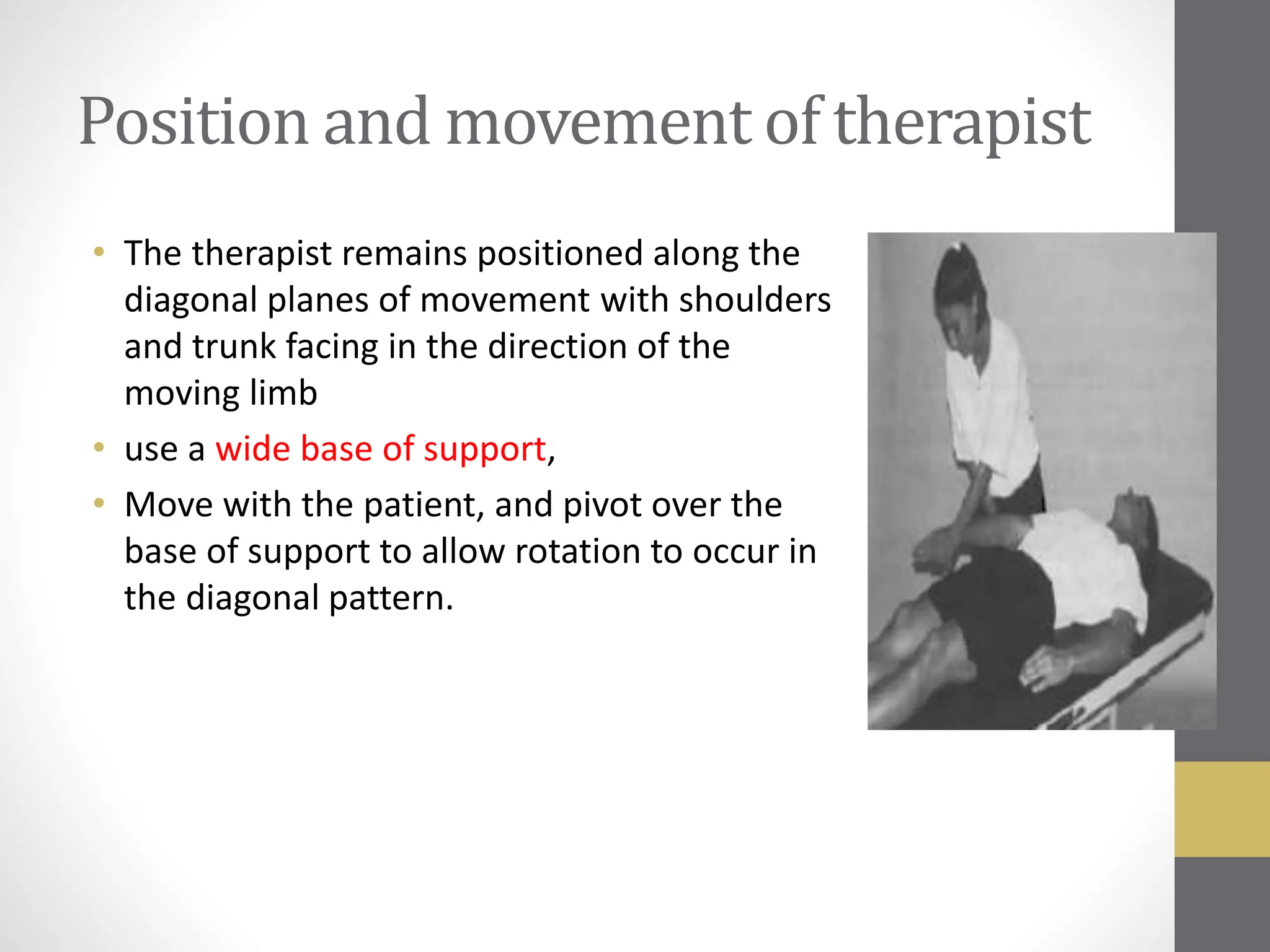
Position and movement of therapist
• The therapist remains positioned along the
diagonal planes of movement with shoulders
and trunk facing in the direction of the
moving limb
• use a wide base of support,
• Move with the patient, and pivot over the
base of support to allow rotation to occur in
the diagonal pattern.
Visual Cues
• The patient is asked to follow the movement of a limb to
further enhance control of movement throughout the ROM.
PNF patterns
Techniques of PNF

Proprioceptive Neuromuscular Facilitation.pptx

  • 1.
  • 3.
    Contents • PNF definition •Neurophysiologic basis of PNF • Uses of PNF • Basic principles of PNF • Techniques of PNF • PNF stretching • Patterns of PNF
  • 4.
    Definition • Proprioceptive neuromuscularfacilitation (PNF) is an approach to therapeutic exercise that combines functionally based diagonal patterns of movement with techniques of neuromuscular facilitation to evoke motor responses and improve neuromuscular control and function. --- kisner and colby
  • 5.
    • Proprioceptive :sensory receptors giving information • Neuromuscular : involving nerves and muscles • Facilitation : making easier /helping
  • 6.
    Neurophysiological basis ofPNF • Sherrington… • Concept of facilitation and inhibition • Stretch reflex • Neurophysiological phenomena
  • 7.
    FASCILITATION • Facilitory –an impulse causing the recruitment and discharge of additional motor neurons in the spinal cord • Results in increased excitability in the muscles • Weak muscles would be aided through facilitation
  • 8.
    INHIBITION • Inhibitory –any stimulus that causes motor neurons to drop away from the discharge zone and away from the spinal cord • Inhibition results in decreased excitability of motor neurons • Muscle spasticity can be decreased
  • 9.
    STRETCH REFLEX • Thestretch reflex involves two types of receptors • Muscle spindles • Golgi tendon organ
  • 10.
    Nuerophysiological phenomena • RECIPROCALINHIBITION (muscle spindle) • AUTOGENIC INHIBITION (GTO) • is defined as inhibition mediated by afferent fibers from stretched muscle acting on the alpha motor neurons supplying that muscle, causing it to reflex
  • 11.
    Uses of PNF 1.PNF treatment has been used to increase strength, flexibility, coordination and functional mobility. 2. The main goal of treatment is to facilitate the patient in achieving a movement or posture.• 3. Stretches as well as diagonals and rational exercise patterns are used to improve ADL's functional mobility and athletic performance 4. It is mainly used in orthopedic rehabilitation for musculoskeletal injuries and in neurological rehab.• 5. PNF can be used for any condition, however the patient condition level may require modifications.
  • 12.
    BASIC PRINCIPLES OFPNF 1. Resistance 2. Manual contact 3. Stretch stimulus 4. Stretch reflex 5. Verbal commands 6. Traction and approximation 7. Timing 8. Body positioning and body mechanics
  • 13.
    Maximal resistance • Opposingforces to the patients movement is called resistance • Resistance should be adjusted throughout the pattern to accommodate to strong and weak components of the pattern.
  • 14.
    Manual contact • Theterm manual contact refers to how and where the therapist’s hands are placed on the patient. • placed over the agonist muscle groups or their tendinous insertions. • allow the therapist to apply resistance to the appropriate muscle groups and cue the patient
  • 15.
    Stretch stimulus • Thestretch stimulus occurs when the muscle is elongated • The lengthened position of the muscle is the starting position of each pattern and the stretch is maintained throughout the movement • All the components of a pattern must be stretched simultaneously
  • 16.
    Stretch reflex • Thestretch reflex is facilitated by a rapid stretch (overpressure) just past the point of tension to an already elongated agonist muscle • The stretch reflex is usually directed to a distal muscle group to elicit a phasic muscle contraction to initiate a given diagonal movement pattern. • The quick stretch is followed by sustained resistance to the agonist muscles to keep the contracting muscles under tension.
  • 17.
    Verbal Commands • Auditorycues are given to enhance motor output • The tone and volume of the verbal commands are varied to help maintain the patient’s attention.
  • 18.
    Traction • Traction isthe slight separation of joint surfaces theoretically to inhibit pain and facilitate movement during execution of the movement patterns.
  • 19.
    Approximation • The gentlecompression of joint surfaces by means of manual compression or weight bearing stimulates cocontraction of agonists and antagonists to enhance dynamic stability and postural control
  • 20.
    Normal Timing • Timingis the sequencing of motions • Should be in a rhythmic manner
  • 21.
    Position and movementof therapist • The therapist remains positioned along the diagonal planes of movement with shoulders and trunk facing in the direction of the moving limb • use a wide base of support, • Move with the patient, and pivot over the base of support to allow rotation to occur in the diagonal pattern.
  • 22.
    Visual Cues • Thepatient is asked to follow the movement of a limb to further enhance control of movement throughout the ROM.
  • 23.
  • 24.