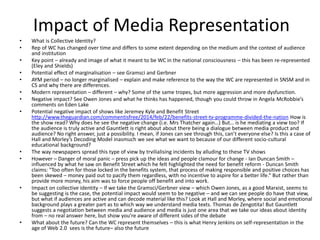
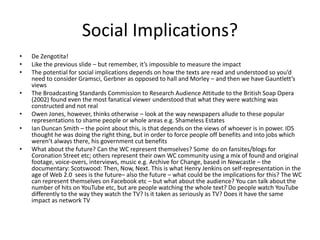
The document discusses media representation of the working class over time and across different media. It notes that while the working class was once marginalized in media, films and television in the late 1950s/early 1960s featured working class stories and characters at the center. However, more recent representations show greater dysfunction and aggression. This can negatively impact collective identity if audiences interpret media at face value, but the impact depends on how texts are decoded. While some argue negative portrayals influence policy, others believe audiences can negotiate meanings and the working class is representing itself through new media.