Collective Identity

  Prompt Question 3
Question
• What are the social implications of different
  media representations of groups of people?
Translation
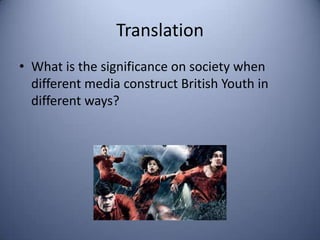
• What is the significance on society when
  different media construct British Youth in
  different ways?
Examples
• This links in with the first question. Think
  about who consumes the media texts we have
  studied, what do they do with it?
• Do they use the texts to help form their own
  identity and become part of a collective
  group. Or if outside of the ‘collective group’ do
  they use it to form their opinions of that
  collective group.
Types of Representation
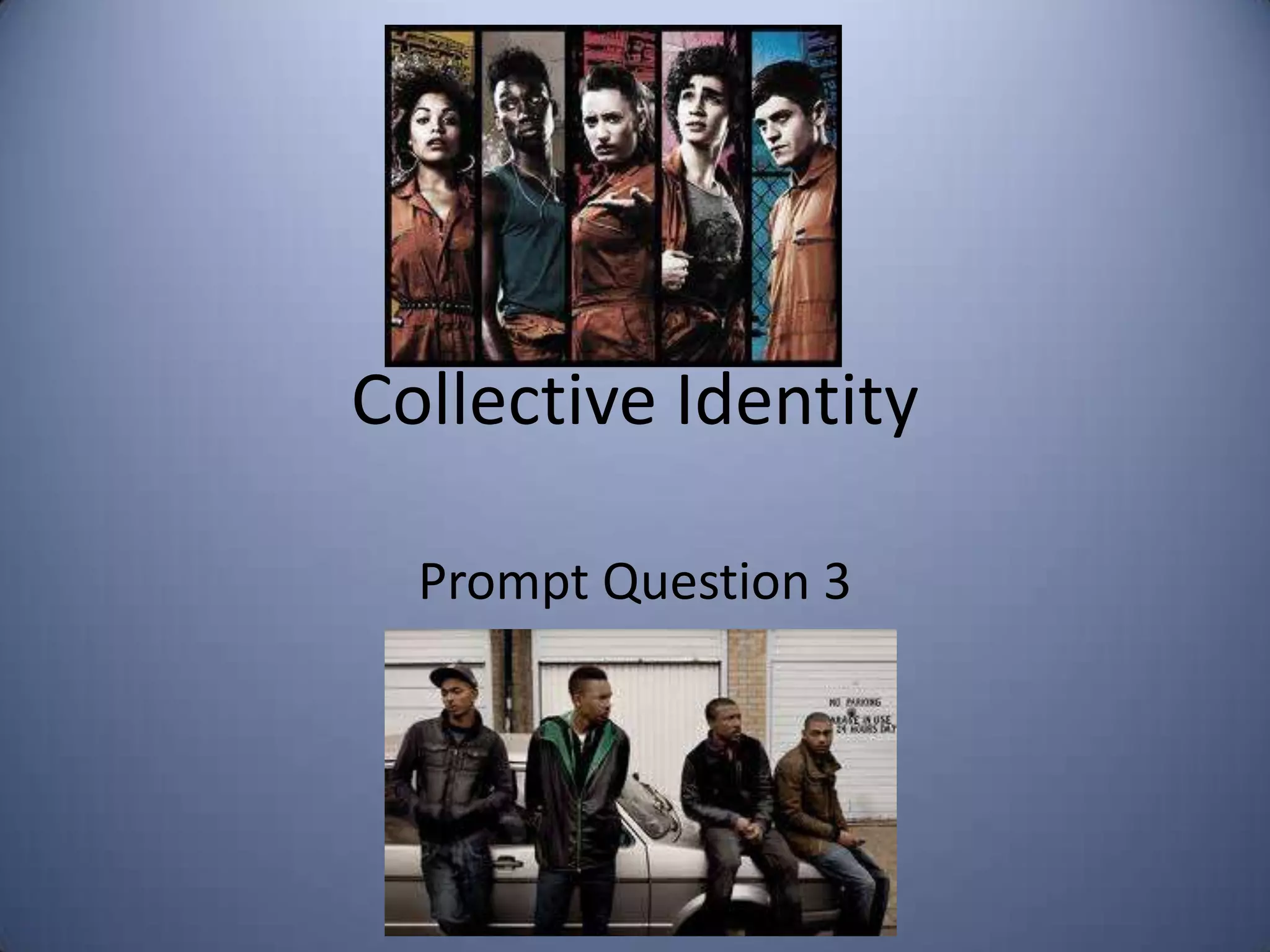
• Youth represented in accordance with popular
  notions of adolescence.
• Youth are often ‘demonised’ by the mass
  media.
• Youth are let down by adults
• Youth are represented as part of a subculture
• Alienation- youth are estranged from part of
  society.
TASK
• Using the handout, give an example from
  contemporary media to back up that quote.

• Choose a character from the text and then
  explain how that example affirms or opposes
  the quote.
Gerbner
Cultivation Theory (Audience effects theory)

• The effects of mass media communication on
  society’s beliefs and attitudes.
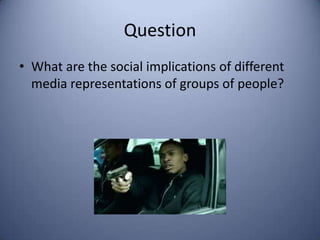
• The more violence seen in films the more
  likely we are to believe in its existence.
Cultivation Theory
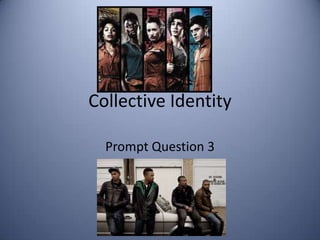
• Attack the Block and E20 would then make us
  believe that it is the lower class British youths
  that behave in this way and therefore develop
  negative and fearful attitudes about them.

• This ultimately creates moral panic, through
  symbolic violence and follows cultural
  hegemony.
Hypodermic Theory/Magic Bullet
      (Audience effects theory)
• This theory suggests that audiences passively
  receive the information transmitted via a
  media text, without any attempt on their part
  to process or challenge the data; so we can
  ultimately be easily manipulated.

• It does not recognise that as consumers we
  have more control over how the media
  influences us.

Prompt 3

  • 1.
    Collective Identity Prompt Question 3
  • 2.
    Question • What arethe social implications of different media representations of groups of people?
  • 3.
    Translation • What isthe significance on society when different media construct British Youth in different ways?
  • 4.
    Examples • This linksin with the first question. Think about who consumes the media texts we have studied, what do they do with it? • Do they use the texts to help form their own identity and become part of a collective group. Or if outside of the ‘collective group’ do they use it to form their opinions of that collective group.
  • 5.
    Types of Representation •Youth represented in accordance with popular notions of adolescence. • Youth are often ‘demonised’ by the mass media. • Youth are let down by adults • Youth are represented as part of a subculture • Alienation- youth are estranged from part of society.
  • 6.
    TASK • Using thehandout, give an example from contemporary media to back up that quote. • Choose a character from the text and then explain how that example affirms or opposes the quote.
  • 7.
    Gerbner Cultivation Theory (Audienceeffects theory) • The effects of mass media communication on society’s beliefs and attitudes. • The more violence seen in films the more likely we are to believe in its existence.
  • 8.
    Cultivation Theory • Attackthe Block and E20 would then make us believe that it is the lower class British youths that behave in this way and therefore develop negative and fearful attitudes about them. • This ultimately creates moral panic, through symbolic violence and follows cultural hegemony.
  • 9.
    Hypodermic Theory/Magic Bullet (Audience effects theory) • This theory suggests that audiences passively receive the information transmitted via a media text, without any attempt on their part to process or challenge the data; so we can ultimately be easily manipulated. • It does not recognise that as consumers we have more control over how the media influences us.