
Project Management for
Public Works Professionals
Charles R. (Chas) Jordan
M.P.A., P.W.E., F.M.P.
Assistant Public Works Director /
Facilities Manager
City of Largo, Florida
Florida Public Works Institute
APWA Florida Chapter
Suggested Resources

IFMA FMP Program – Project
Management

PMP Program Information

MS Project and Other Project
Management Software Courses

APWA Materials -
− Management of Public Works
Construction Projects
− Project Management in Construction
− PSMJ Project Management Bootcamp
PM Basics

Project Management – Can't be Taught
in an Hour

Same Basic Principles of Project
Management apply to general
Management

Experience is the best way to learn
appropriate project management
principles

There is no such thing as a perfect
Project.
What is a Project?

According to Joseph Juran:
− “A Problem scheduled for Solution”

According to IFMA:
− “Projects are specific units of work that
when completed produce an outcome or
achieve an objective”

According to Chas:
− “Something that needs to get done.”
Examples of Projects

Building a Treatment Plant

Replacing a Roof on a Building

Repaving a Street

Developing a Strategic Plan

Developing a Budget Submittal

Implementing a new software system

Becoming Accredited
What is Project Management?

According to IFMA:
− “Project Management is the coordination of
people, funds and resources, tasks, and
approvals required to accomplish an
objective”

According to PMI:
− “Project Management is the application of
knowledge, skills and techniques to
execute projects effectively and efficiently”

According to Chas:
− Project Management is the skills to get
something done within the planned
Project Management in Public
Works

Why is it important?

How many projects do each of us work
on per day?
− Per week?
− Per year?

Can we get away with being good Public
Works Professionals and never manage
a project?
“All things are created twice;
first mentally; then
physically. The key to
creativity is to begin with the
end in mind, with a vision
and a blue print of the
desired result.”
- Stephen Covey
Project Management Basics

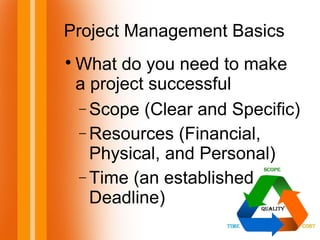
What do you need to make
a project successful
− Scope (Clear and Specific)
− Resources (Financial,
Physical, and Personal)
− Time (an established
Deadline)
The Role of the
Project Manager

Congratulations! You are now a PM.
May God have mercy on your soul...

What do you do? What do you need to
know?

What is a quality Project Manager?
− Leader
− Knowledgable
− Team Builder and Facilitator
− Good Manager of People and Resources
Project Schedule

As the Project Manager, upon being
given a Project to manage, you should
follow a basic four step schedule:
1.Project Initiation
2.Project Planning
3.Project Performance
4.Project Review
Project Initiation

Determination of the Project Manager

Development of the Project Scope

Determination of the total Project
Budget

Selection of Project Team Members

Designation of the Timeframe or
Deadline
Project Planning

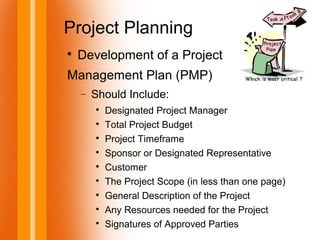
Development of a Project
Management Plan (PMP)
− Should Include:

Designated Project Manager

Total Project Budget

Project Timeframe

Sponsor or Designated Representative

Customer

The Project Scope (in less than one page)

General Description of the Project

Any Resources needed for the Project

Signatures of Approved Parties
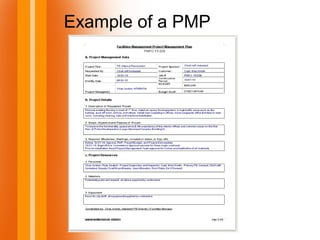
Example of a PMP
Project Planning

Work Breakdown Structure (WBS)
− Checklist of tasks through the Projects
major milestones

Basic task list that divides the project's
deliverables and work into manageable or
logical subdivisions

Assists in clarifying the project's scope

Easily managed in assigning work and
resources

Can assist in development of Project plan and
budget
Project Planning

Development of Specific Project
Budget
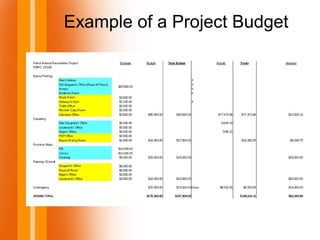
− A Project Budget should include

The total designated in your City or County
Departmental budget

A broken down budget by major project
deliverables

A Contingency

Variances

Project Actuals
− Learn to love Spreadsheets (even though
they are a pain)
Example of a Project Budget
Project Planning

Development of Project
Timeline
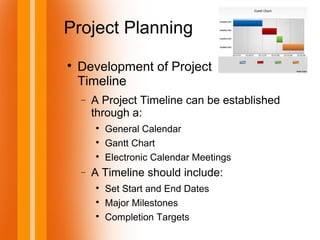
− A Project Timeline can be established
through a:

General Calendar

Gantt Chart

Electronic Calendar Meetings
− A Timeline should include:

Set Start and End Dates

Major Milestones

Completion Targets
Project Planning

Procurement of Resources
− Recruitment of Quality Project Team
Members

Assessment of Team Strenghts and
Weaknesses

Designation of Members to particular aspects
of objectives of the project

Good Mix of Skills and Abilities

Right people in the right place
− Appropriation of Equipment and Supplies

Do you need an end loader or a backhoe?
Project Performance

Keeping to the Schedule
− Two to Three Week Look Aheads
− Schedule Updates Every Monday
Morning
− Review of Objectives each week
− Flexible time schedules within Timeframe

Keeping to the Budget
− Minimum Monthly Financials (Project
Payments)
− Variance Reports as Major Purchases
are Made
Project Performance

“Scope Creep”
− According to Wikipedia:

“Uncontrolled changes in a project's scope”
− According to Infolific:

“Change in Project Scope after Project is
Started”
− According to Chas:

The Project Manager isn't doing their job, or
politics reared it's ugly head.
− Example:

Adding a Landscaping Element to a Road
Project After the Fact
Top 20 Excuses Why Projects
Fail – PSMJ – Chas's Favorites

The project team was full of incompetents.

I didn't have enough time.

The budget was unrealistic.

I couldn't get enough help.

The schedule was unrealistic.

The contractor didn't understand the job.

This job was “unique”.
Project Review / Completion

Closing Out the Project
− Acceptance of Deliverables

Is the Project meeting the Scope and/or
Specification?

Has it been properly inspected?

Have you reviewed your checklist (WBS) and
everything has been checked off?

Has a punchlist been reviewed and
completed?

Has warranty information been properly
developed and turned over?

Has retainage been reviewed and approved?

Has all correct documentation been turned
Project Review / Completion

Reviewing the Project
− Evaluate the Outcomes and Outputs

Did they meet the Customer's Expectations?

Did they meet the requirements in the PMP?

Has the basic Scope been met?
− Tools for Review:

Balance Scorecard Review

After Action “Lessons Learned” Review
(whether the project went well or not)

Scope and Financial Audits to determine
variance
Unique Aspects of PW Project
Management

Politics
− City or County Commissions and Councils
− Public Opinion and Input
− Districts
− N.I.M.B.Y.

Media
− Under the microscope
− Build Relationships with Reporters
− Have your facts straight
− Weekly or Monthly Status Reports
Takeaways

Train your Project Managers
− PSMJ
− PMI

Develop a functional System in Your
Department
− PMP Worksheets
− WBS Worksheets

Even Good Projects Go Bad, the
Difference: The Project Manager
Questions / Comments?

Project Management for Public Works Professionals

  • 1.
    Project Management for PublicWorks Professionals Charles R. (Chas) Jordan M.P.A., P.W.E., F.M.P. Assistant Public Works Director / Facilities Manager City of Largo, Florida Florida Public Works Institute APWA Florida Chapter
  • 2.
    Suggested Resources  IFMA FMPProgram – Project Management  PMP Program Information  MS Project and Other Project Management Software Courses  APWA Materials - − Management of Public Works Construction Projects − Project Management in Construction − PSMJ Project Management Bootcamp
  • 3.
    PM Basics  Project Management– Can't be Taught in an Hour  Same Basic Principles of Project Management apply to general Management  Experience is the best way to learn appropriate project management principles  There is no such thing as a perfect Project.
  • 4.
    What is aProject?  According to Joseph Juran: − “A Problem scheduled for Solution”  According to IFMA: − “Projects are specific units of work that when completed produce an outcome or achieve an objective”  According to Chas: − “Something that needs to get done.”
  • 5.
    Examples of Projects  Buildinga Treatment Plant  Replacing a Roof on a Building  Repaving a Street  Developing a Strategic Plan  Developing a Budget Submittal  Implementing a new software system  Becoming Accredited
  • 6.
    What is ProjectManagement?  According to IFMA: − “Project Management is the coordination of people, funds and resources, tasks, and approvals required to accomplish an objective”  According to PMI: − “Project Management is the application of knowledge, skills and techniques to execute projects effectively and efficiently”  According to Chas: − Project Management is the skills to get something done within the planned
  • 7.
    Project Management inPublic Works  Why is it important?  How many projects do each of us work on per day? − Per week? − Per year?  Can we get away with being good Public Works Professionals and never manage a project?
  • 8.
    “All things arecreated twice; first mentally; then physically. The key to creativity is to begin with the end in mind, with a vision and a blue print of the desired result.” - Stephen Covey
  • 9.
    Project Management Basics  Whatdo you need to make a project successful − Scope (Clear and Specific) − Resources (Financial, Physical, and Personal) − Time (an established Deadline)
  • 10.
    The Role ofthe Project Manager  Congratulations! You are now a PM. May God have mercy on your soul...  What do you do? What do you need to know?  What is a quality Project Manager? − Leader − Knowledgable − Team Builder and Facilitator − Good Manager of People and Resources
  • 11.
    Project Schedule  As theProject Manager, upon being given a Project to manage, you should follow a basic four step schedule: 1.Project Initiation 2.Project Planning 3.Project Performance 4.Project Review
  • 12.
    Project Initiation  Determination ofthe Project Manager  Development of the Project Scope  Determination of the total Project Budget  Selection of Project Team Members  Designation of the Timeframe or Deadline
  • 13.
    Project Planning  Development ofa Project Management Plan (PMP) − Should Include:  Designated Project Manager  Total Project Budget  Project Timeframe  Sponsor or Designated Representative  Customer  The Project Scope (in less than one page)  General Description of the Project  Any Resources needed for the Project  Signatures of Approved Parties
  • 14.
  • 15.
    Project Planning  Work BreakdownStructure (WBS) − Checklist of tasks through the Projects major milestones  Basic task list that divides the project's deliverables and work into manageable or logical subdivisions  Assists in clarifying the project's scope  Easily managed in assigning work and resources  Can assist in development of Project plan and budget
  • 16.
    Project Planning  Development ofSpecific Project Budget − A Project Budget should include  The total designated in your City or County Departmental budget  A broken down budget by major project deliverables  A Contingency  Variances  Project Actuals − Learn to love Spreadsheets (even though they are a pain)
  • 17.
    Example of aProject Budget
  • 18.
    Project Planning  Development ofProject Timeline − A Project Timeline can be established through a:  General Calendar  Gantt Chart  Electronic Calendar Meetings − A Timeline should include:  Set Start and End Dates  Major Milestones  Completion Targets
  • 19.
    Project Planning  Procurement ofResources − Recruitment of Quality Project Team Members  Assessment of Team Strenghts and Weaknesses  Designation of Members to particular aspects of objectives of the project  Good Mix of Skills and Abilities  Right people in the right place − Appropriation of Equipment and Supplies  Do you need an end loader or a backhoe?
  • 20.
    Project Performance  Keeping tothe Schedule − Two to Three Week Look Aheads − Schedule Updates Every Monday Morning − Review of Objectives each week − Flexible time schedules within Timeframe  Keeping to the Budget − Minimum Monthly Financials (Project Payments) − Variance Reports as Major Purchases are Made
  • 21.
    Project Performance  “Scope Creep” −According to Wikipedia:  “Uncontrolled changes in a project's scope” − According to Infolific:  “Change in Project Scope after Project is Started” − According to Chas:  The Project Manager isn't doing their job, or politics reared it's ugly head. − Example:  Adding a Landscaping Element to a Road Project After the Fact
  • 22.
    Top 20 ExcusesWhy Projects Fail – PSMJ – Chas's Favorites  The project team was full of incompetents.  I didn't have enough time.  The budget was unrealistic.  I couldn't get enough help.  The schedule was unrealistic.  The contractor didn't understand the job.  This job was “unique”.
  • 23.
    Project Review /Completion  Closing Out the Project − Acceptance of Deliverables  Is the Project meeting the Scope and/or Specification?  Has it been properly inspected?  Have you reviewed your checklist (WBS) and everything has been checked off?  Has a punchlist been reviewed and completed?  Has warranty information been properly developed and turned over?  Has retainage been reviewed and approved?  Has all correct documentation been turned
  • 24.
    Project Review /Completion  Reviewing the Project − Evaluate the Outcomes and Outputs  Did they meet the Customer's Expectations?  Did they meet the requirements in the PMP?  Has the basic Scope been met? − Tools for Review:  Balance Scorecard Review  After Action “Lessons Learned” Review (whether the project went well or not)  Scope and Financial Audits to determine variance
  • 26.
    Unique Aspects ofPW Project Management  Politics − City or County Commissions and Councils − Public Opinion and Input − Districts − N.I.M.B.Y.  Media − Under the microscope − Build Relationships with Reporters − Have your facts straight − Weekly or Monthly Status Reports
  • 27.
    Takeaways  Train your ProjectManagers − PSMJ − PMI  Develop a functional System in Your Department − PMP Worksheets − WBS Worksheets  Even Good Projects Go Bad, the Difference: The Project Manager
  • 28.