Embracing and Executing
Change
Charles R. (Chas) Jordan
M.P.A., P.W.E., F.M.P., S.T.P,
ENV SP, LEED GA
President
Radiant Training & Consulting, LLC
Florida Public Works Institute
APWA Florida Chapter
Socrates:

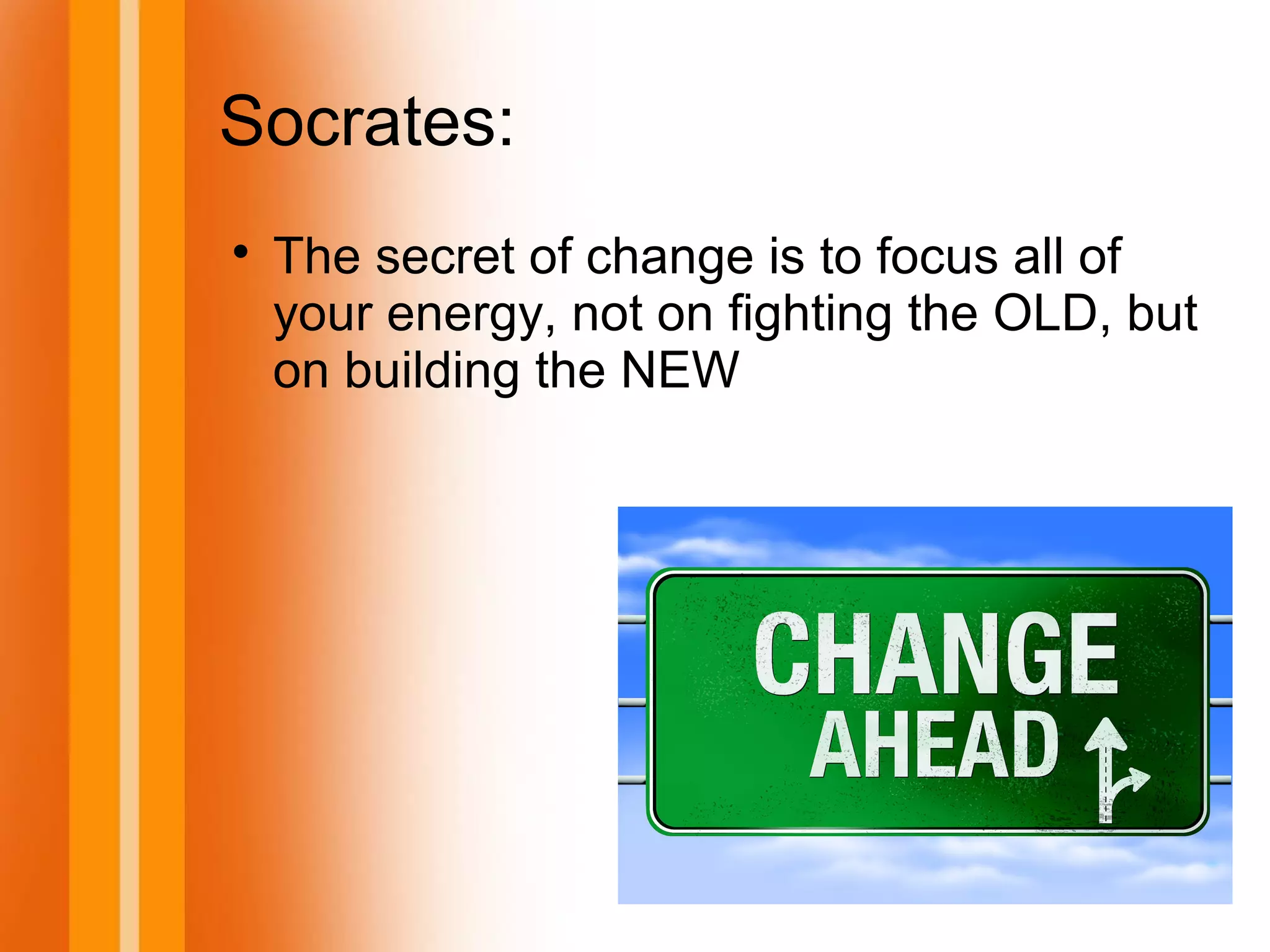
The secret of change is to focus all of
your energy, not on fighting the OLD, but
on building the NEW
Why do we resist Change?

Fear of the unknown

Wants to do good, don't want to learn new

Mandates without explanation or concern
(perception is perceived as negative)

Fear of irrelevance
Why does change occur?
What happens?

To Progress

To keep moving

To help people

Make jobs easier

Because other things change, making
something change

Example: Fuel Charge Increase
Why is Change Important?
• Change is necessary to move
• Think of the changes in the last 50
years
• Health
• Technology
• Transportation
• Safety
• Yet, change feels so uncomfortable...
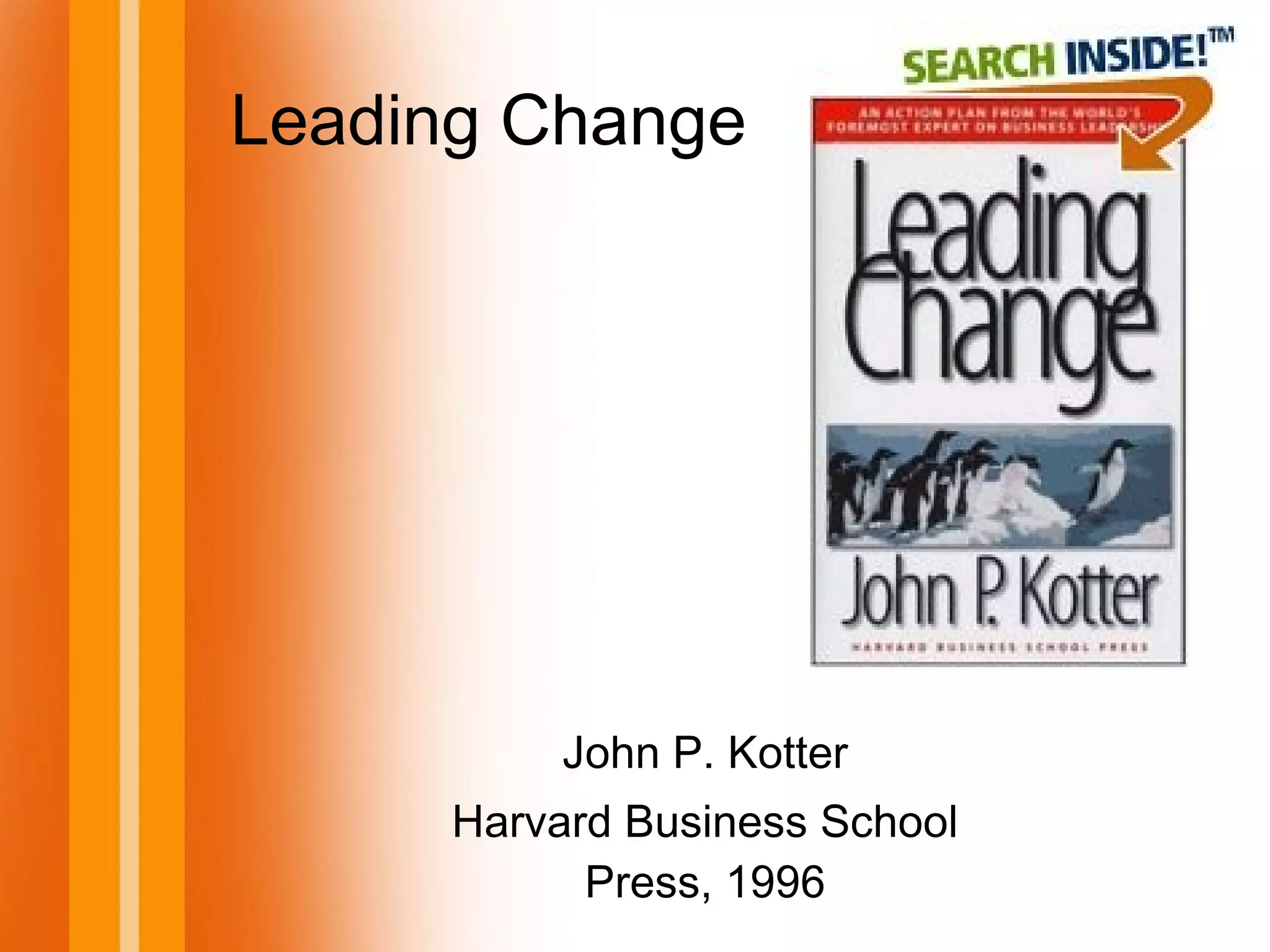
John P. Kotter
Harvard Business School
Press, 1996
Leading Change
Effective Change Leadership

Make it Urgent

Set Leadership

Develop a Vision and Strategy

Communicate the Vision

Empower Staff

Generate Short-Term Wins

Take Gains and Make More

Make the Change - Culture
Effective steps to making a
change:

Why is the change so important?

Is there a dedicated group supporting the change?

What will be better/different when we get there?

Talk about it!

Let others help and be involved

Celebrate easy wins

Celebrate major milestones

Embrace the new results
How to make it happen

We need to do this now because…

Set the Team

Present the Future

This is where you work, this is the vision

Do what is right

Celebrate

Keep up the momentum

Reward and recognize change agents
Get on the Bus! Have you
ever seen someone...

On the bus

Driving the bus

Wants to be on the bus, but can’t find
the door

Appears to be on the bus, but putting
sugar in the gas tank

Sits near the door of the bus for hasty
exit

Slicing tires
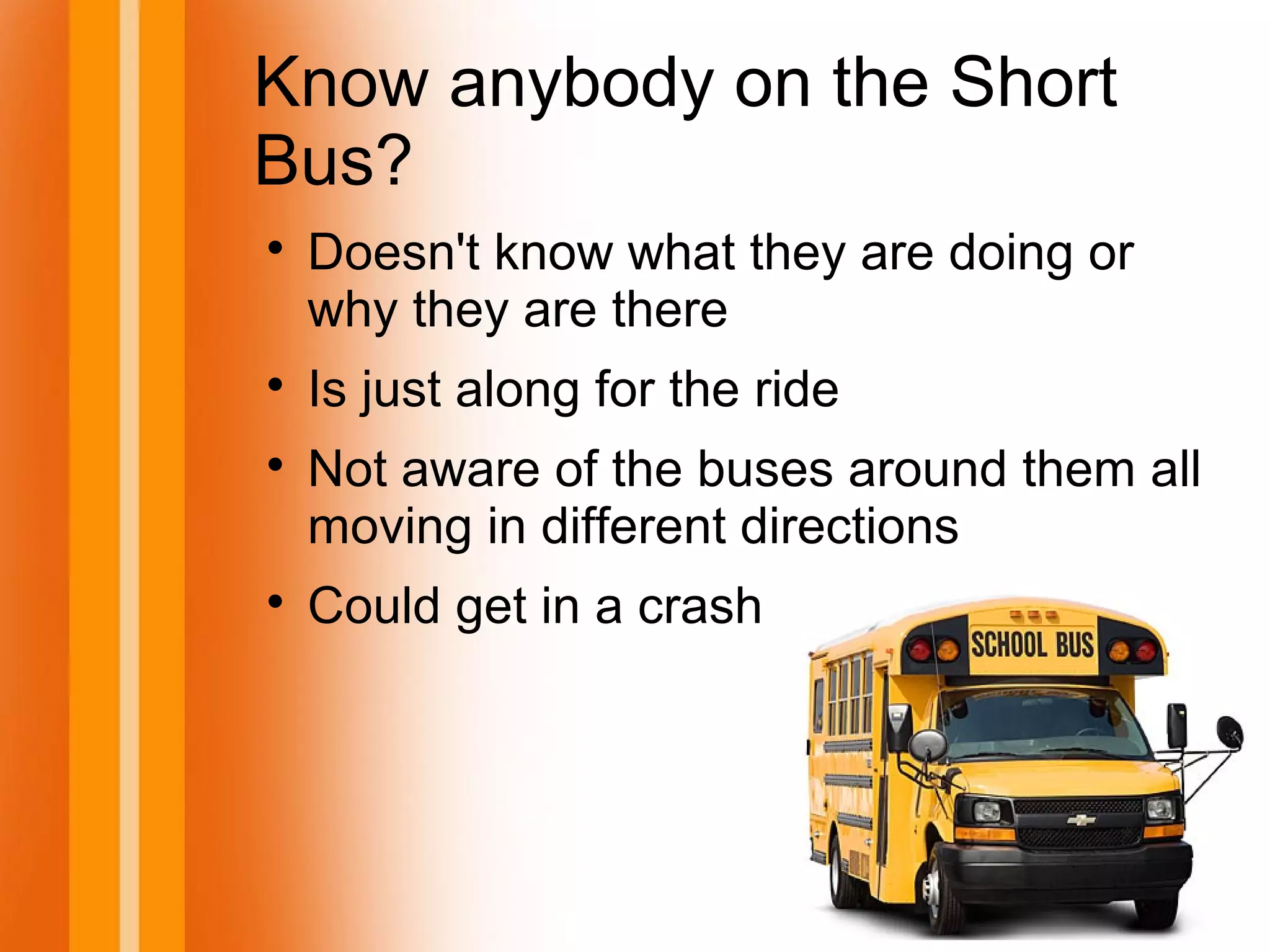
Know anybody on the Short
Bus?

Doesn't know what they are doing or
why they are there

Is just along for the ride

Not aware of the buses around them all
moving in different directions

Could get in a crash
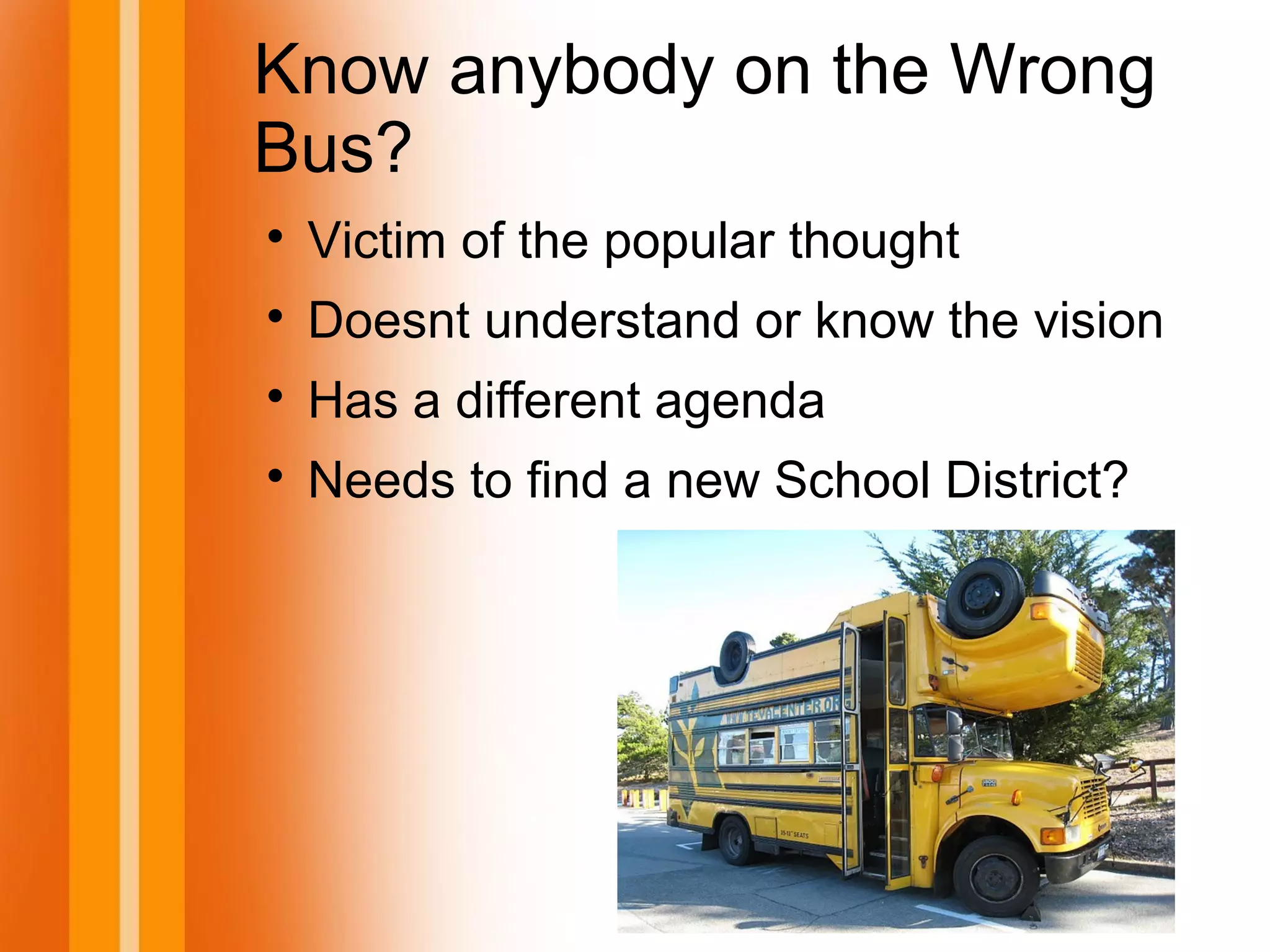
Know anybody on the Wrong
Bus?

Victim of the popular thought

Doesnt understand or know the vision

Has a different agenda

Needs to find a new School District?
What is a change that is
happening in your
workplace that makes you
feel angry and/or afraid.
What is a change that
needs to happen in your
workplace.
How do you think you can
make it happen
Implementing the Change

Make a Plan
− Clearly state the change and the steps
toward it

Have town halls or staff charettes to
discuss the impacts and advantages

Support your staff & support the
change
− Allocate resources
Feedback and Communication

Meetings and Sit Downs

Email Communications

Talk one on one with employees

Airing of grievances and brainstorms

Document and Communicate Progress
− Send out emails at major milestones
− Recognize folks for effective work
− Communicate out your great work
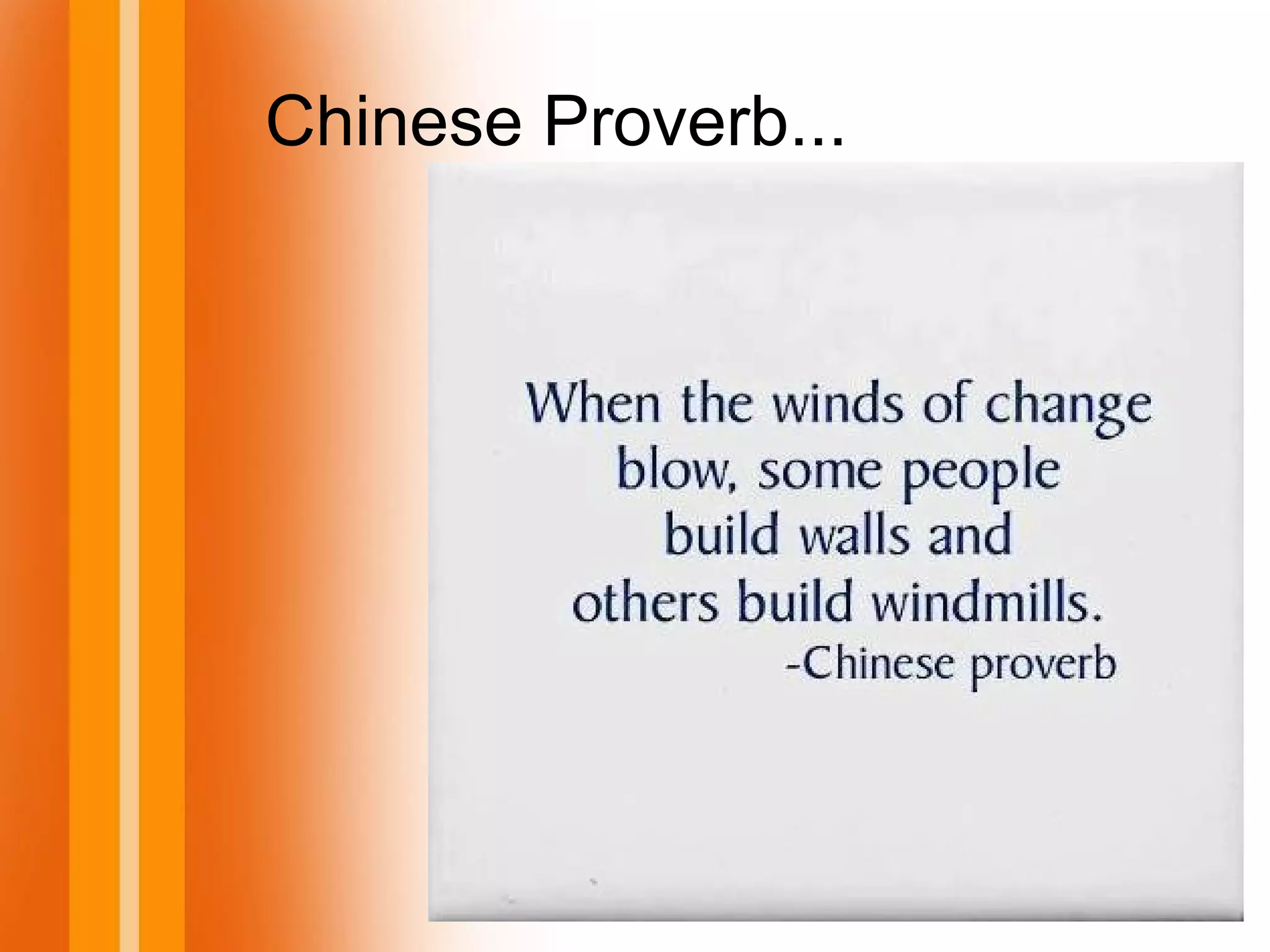
Chinese Proverb...
Questions / Comments?

Embracing and Executing Change - Public Works Institute

  • 1.
    Embracing and Executing Change CharlesR. (Chas) Jordan M.P.A., P.W.E., F.M.P., S.T.P, ENV SP, LEED GA President Radiant Training & Consulting, LLC Florida Public Works Institute APWA Florida Chapter
  • 2.
    Socrates:  The secret ofchange is to focus all of your energy, not on fighting the OLD, but on building the NEW
  • 4.
    Why do weresist Change?  Fear of the unknown  Wants to do good, don't want to learn new  Mandates without explanation or concern (perception is perceived as negative)  Fear of irrelevance
  • 5.
    Why does changeoccur? What happens?  To Progress  To keep moving  To help people  Make jobs easier  Because other things change, making something change  Example: Fuel Charge Increase
  • 6.
    Why is ChangeImportant? • Change is necessary to move • Think of the changes in the last 50 years • Health • Technology • Transportation • Safety • Yet, change feels so uncomfortable...
  • 7.
    John P. Kotter HarvardBusiness School Press, 1996 Leading Change
  • 8.
    Effective Change Leadership  Makeit Urgent  Set Leadership  Develop a Vision and Strategy  Communicate the Vision  Empower Staff  Generate Short-Term Wins  Take Gains and Make More  Make the Change - Culture
  • 9.
    Effective steps tomaking a change:  Why is the change so important?  Is there a dedicated group supporting the change?  What will be better/different when we get there?  Talk about it!  Let others help and be involved  Celebrate easy wins  Celebrate major milestones  Embrace the new results
  • 10.
    How to makeit happen  We need to do this now because…  Set the Team  Present the Future  This is where you work, this is the vision  Do what is right  Celebrate  Keep up the momentum  Reward and recognize change agents
  • 12.
    Get on theBus! Have you ever seen someone...  On the bus  Driving the bus  Wants to be on the bus, but can’t find the door  Appears to be on the bus, but putting sugar in the gas tank  Sits near the door of the bus for hasty exit  Slicing tires
  • 13.
    Know anybody onthe Short Bus?  Doesn't know what they are doing or why they are there  Is just along for the ride  Not aware of the buses around them all moving in different directions  Could get in a crash
  • 14.
    Know anybody onthe Wrong Bus?  Victim of the popular thought  Doesnt understand or know the vision  Has a different agenda  Needs to find a new School District?
  • 15.
    What is achange that is happening in your workplace that makes you feel angry and/or afraid.
  • 16.
    What is achange that needs to happen in your workplace. How do you think you can make it happen
  • 17.
    Implementing the Change  Makea Plan − Clearly state the change and the steps toward it  Have town halls or staff charettes to discuss the impacts and advantages  Support your staff & support the change − Allocate resources
  • 18.
    Feedback and Communication  Meetingsand Sit Downs  Email Communications  Talk one on one with employees  Airing of grievances and brainstorms  Document and Communicate Progress − Send out emails at major milestones − Recognize folks for effective work − Communicate out your great work
  • 19.
  • 20.