Good Presentation Skills
A “No Sweat Situation”
The Painless Way to Successful
Speaking
Tips On How To Get Over
Glossophobia
 Know your audience. Different strokes
for Different folks.
 Organize your speech
 Write your speech/presentation
 Practise correctly
 Know how to handle nervousness
Organize your speech
The introduction, the body, the closing
 The introduction
 Be dramatic
 Tell a joke
 Pose a question
 The body
 Use a formal outline
 Closing
 Witty line
Writing your Speech/
Presentation
 Do it yourself
 Keep it simple and to the point
 Keep the writing conversational
 Use personal examples
 Humor almost always helps
 REWRITE your speech till you are
satisfied
Practise Correctly
Methods of practice
 Stand in front of a full-length mirror
 Tape record or (even better) videotape
yourself
 Gather together some friends, family, sit them
down, and deliver your whole spiel to them
 Rehearse small sections of your speech
throughout the day.
 See if you can memorize sections without
relying on the notes at all.
Incorporate Gestures
 Less is more.
 Practice your gestures in front of the
mirror
 Make your gestures convincing, smooth
and well timed
 SMILE - relax
 Turn nervousness into positive energy.
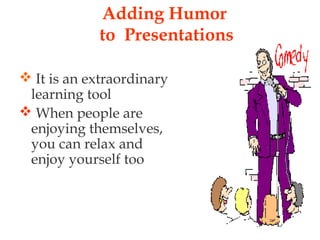
Adding Humor
to Presentations
 It is an extraordinary
learning tool
 When people are
enjoying themselves,
you can relax and
enjoy yourself too
Explain : Workstation
A police station is where the policemen stop.
A train station is where the train stops.
I have a work station.
Techniques to handle
Nervousness
Physical preparation
 A clean mouth is a happy mouth.
 Look presentable. Nice hair, clothes, nails. Dress to
impress. Go to the bathroom about a half-hour before
the speech.
 Do Deep breathing exercises
 If hand gestures are a part of your presentation,
shake up your hands
 Vocal exercises help. Prepare your mouth
 BE CONFIDENT!
(Even if you're not, fake it)
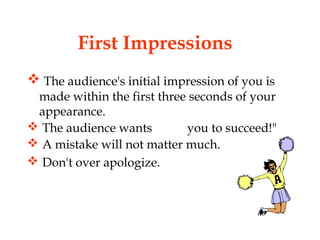
First Impressions
 The audience's initial impression of you is
made within the first three seconds of your
appearance.
 The audience wants you to succeed!"
 A mistake will not matter much.
 Don't over apologize.
Using Notes/Prompt Cards
 Key points – not paras of text. (Just enough to jog your memory)
 Quotes, statistics, lists.
 TYPING EVERYTHING IN UPPER CASE, MAKES
IT MORE DIFFICULT TO READ.
 Don’t use unstapled sheets.
 Don’t be afraid to leave your prompt cards and move
away.
What NOT To Do When
Making a Presentation
 Try to fool the audience
 Read it from your text
 Use inside stories
 Make your audience the butt of a
joke.
 Go over the time limit
Prepare, Prepare & Prepare!
Remember
The only difference between an amateur
and a professional is that:
An Amateur is one who keeps doing it till
he gets it right.
A Professional is one who keeps doing it
so that he doesn’t get it wrong.

Good presentation skills

  • 1.
  • 2.
    A “No SweatSituation” The Painless Way to Successful Speaking
  • 3.
    Tips On HowTo Get Over Glossophobia  Know your audience. Different strokes for Different folks.  Organize your speech  Write your speech/presentation  Practise correctly  Know how to handle nervousness
  • 4.
    Organize your speech Theintroduction, the body, the closing  The introduction  Be dramatic  Tell a joke  Pose a question  The body  Use a formal outline  Closing  Witty line
  • 5.
    Writing your Speech/ Presentation Do it yourself  Keep it simple and to the point  Keep the writing conversational  Use personal examples  Humor almost always helps  REWRITE your speech till you are satisfied
  • 6.
    Practise Correctly Methods ofpractice  Stand in front of a full-length mirror  Tape record or (even better) videotape yourself  Gather together some friends, family, sit them down, and deliver your whole spiel to them  Rehearse small sections of your speech throughout the day.  See if you can memorize sections without relying on the notes at all.
  • 7.
    Incorporate Gestures  Lessis more.  Practice your gestures in front of the mirror  Make your gestures convincing, smooth and well timed  SMILE - relax  Turn nervousness into positive energy.
  • 8.
    Adding Humor to Presentations It is an extraordinary learning tool  When people are enjoying themselves, you can relax and enjoy yourself too
  • 9.
    Explain : Workstation Apolice station is where the policemen stop. A train station is where the train stops. I have a work station.
  • 10.
    Techniques to handle Nervousness Physicalpreparation  A clean mouth is a happy mouth.  Look presentable. Nice hair, clothes, nails. Dress to impress. Go to the bathroom about a half-hour before the speech.  Do Deep breathing exercises  If hand gestures are a part of your presentation, shake up your hands  Vocal exercises help. Prepare your mouth  BE CONFIDENT! (Even if you're not, fake it)
  • 11.
    First Impressions  Theaudience's initial impression of you is made within the first three seconds of your appearance.  The audience wants you to succeed!"  A mistake will not matter much.  Don't over apologize.
  • 12.
    Using Notes/Prompt Cards Key points – not paras of text. (Just enough to jog your memory)  Quotes, statistics, lists.  TYPING EVERYTHING IN UPPER CASE, MAKES IT MORE DIFFICULT TO READ.  Don’t use unstapled sheets.  Don’t be afraid to leave your prompt cards and move away.
  • 13.
    What NOT ToDo When Making a Presentation  Try to fool the audience  Read it from your text  Use inside stories  Make your audience the butt of a joke.  Go over the time limit
  • 14.
    Prepare, Prepare &Prepare! Remember The only difference between an amateur and a professional is that: An Amateur is one who keeps doing it till he gets it right. A Professional is one who keeps doing it so that he doesn’t get it wrong.

Editor's Notes

  • #4 Glossophobia is fear of public speaking or speech anxiety.