PRODUCTION TECHNOLOGY FOR
BIOAGENTS AND BIOFERTILIZERS
PDA CULTURE MEDIUM
Any nutrient material which supports the growth of the micro-
organisms is known as culture media or substrata.
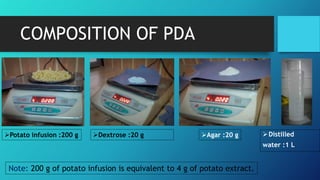
COMPOSITION OF PDA
Distilled
water :1 L
Note: 200 g of potato infusion is equivalent to 4 g of potato extract.
Potato infusion :200 g Dextrose :20 g Agar :20 g
PROCEDURE
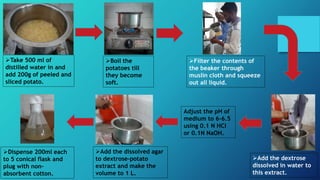
Take 500 ml of
distilled water in and
add 200g of peeled and
sliced potato.
Boil the
potatoes till
they become
soft.
Filter the contents of
the beaker through
muslin cloth and squeeze
out all liquid.
Add the dextrose
dissolved in water to
this extract.
Adjust the pH of
medium to 6-6.5
using 0.1 N HCl
or 0.1N NaOH.
Add the dissolved agar
to dextrose-potato
extract and make the
volume to 1 L.
Dispense 200ml each
to 5 conical flask and
plug with non-
absorbent cotton.
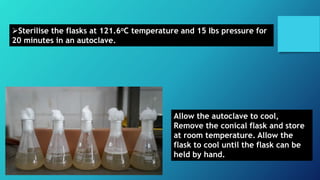
Sterilise the flasks at 121.6oC temperature and 15 Ibs pressure for
20 minutes in an autoclave.
Allow the autoclave to cool,
Remove the conical flask and store
at room temperature. Allow the
flask to cool until the flask can be
held by hand.
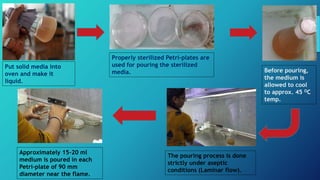
POURING CULTURE MEDIA INTO
PLATES
Put solid media into
oven and make it
liquid.
Properly sterilized Petri-plates are
used for pouring the sterilized
media. Before pouring,
the medium is
allowed to cool
to approx. 45 OC
temp.
The pouring process is done
strictly under aseptic
conditions (Laminar flow).
Approximately 15-20 ml
medium is poured in each
Petri-plate of 90 mm
diameter near the flame.
•After pouring, the plates are immediately
covered with the lid.
•After some time, when the medium of the
plate solidifies, the plates are put in inverted
position in order to avoid evaporation.
ISOLATION OF Trichoderma spp.
Isolation process of separating micro-organism from tissue of host.
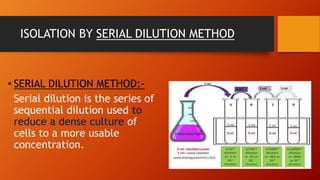
ISOLATION BY SERIAL DILUTION METHOD
• SERIAL DILUTION METHOD:-
Serial dilution is the series of
sequential dilution used to
reduce a dense culture of
cells to a more usable
concentration.
PROCEDURE
First take four sterilized test tubes and label them 1 to 4.
Add 9 ml of sterilized distilled water in to each test tube.
Take 1 gm soil sample into test tube having 10 ml distilled water and
mix thoroughly. (1:10)
Take 1 ml suspension from first test tube and pipette into second test
tube having 9 ml distilled water. (1:100)
Continue this procedure until you have serially diluted the original
bacterial suspension into test tube 4. (1:10000)
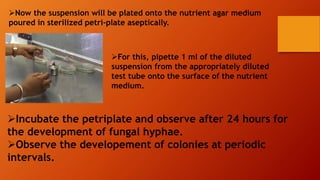
Incubate the petriplate and observe after 24 hours for
the development of fungal hyphae.
Observe the developement of colonies at periodic
intervals.
Now the suspension will be plated onto the nutrient agar medium
poured in sterilized petri-plate aseptically.
For this, pipette 1 ml of the diluted
suspension from the appropriately diluted
test tube onto the surface of the nutrient
medium.
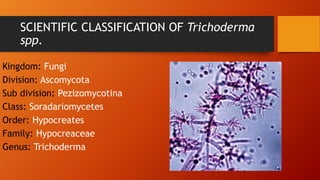
SCIENTIFIC CLASSIFICATION OF Trichoderma
spp.
Kingdom: Fungi
Division: Ascomycota
Sub division: Pezizomycotina
Class: Soradariomycetes
Order: Hypocreates
Family: Hypocreaceae
Genus: Trichoderma
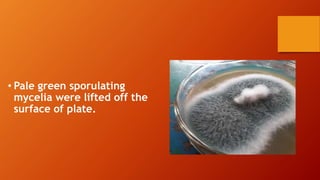
• Pale green sporulating
mycelia were lifted off the
surface of plate.
Mass multiplication of
Trichoderma in sorghum grains.
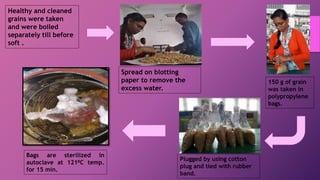
Healthy and cleaned
grains were taken
and were boiled
separately till before
soft .
Spread on blotting
paper to remove the
excess water.
150 g of grain
was taken in
polypropylene
bags.
Plugged by using cotton
plug and tied with rubber
band.
Bags are sterilized in
autoclave at 121⁰C temp.
for 15 min.
•7 days old culture of Trichoderma grown on potato dextrose agar
medium was used for inoculation.
•Five mycelial discs [5mm] of above culture was inoculated in each
bag and incubated after15 days at room temperature (27± 2⁰C)
four replications were kept for each treatment.
•After 15 days of inoculation, the sub-strate were hurried thoroughly
polypropylene bags. 1 gram of sample from each substrate was
drawn aseptically for colony counts.
Application methods of bio
agent Trichoderma spp.
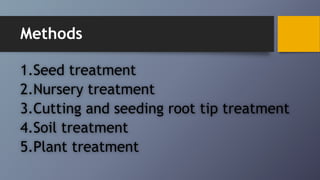
Methods
1.Seed treatment
2.Nursery treatment
3.Cutting and seeding root tip treatment
4.Soil treatment
5.Plant treatment
Thank you…

Production technology for bioagents and biofertilizers 2

  • 1.
  • 2.
    PDA CULTURE MEDIUM Anynutrient material which supports the growth of the micro- organisms is known as culture media or substrata.
  • 3.
    COMPOSITION OF PDA Distilled water:1 L Note: 200 g of potato infusion is equivalent to 4 g of potato extract. Potato infusion :200 g Dextrose :20 g Agar :20 g
  • 4.
  • 5.
    Take 500 mlof distilled water in and add 200g of peeled and sliced potato. Boil the potatoes till they become soft. Filter the contents of the beaker through muslin cloth and squeeze out all liquid. Add the dextrose dissolved in water to this extract. Adjust the pH of medium to 6-6.5 using 0.1 N HCl or 0.1N NaOH. Add the dissolved agar to dextrose-potato extract and make the volume to 1 L. Dispense 200ml each to 5 conical flask and plug with non- absorbent cotton.
  • 6.
    Sterilise the flasksat 121.6oC temperature and 15 Ibs pressure for 20 minutes in an autoclave. Allow the autoclave to cool, Remove the conical flask and store at room temperature. Allow the flask to cool until the flask can be held by hand.
  • 7.
  • 8.
    Put solid mediainto oven and make it liquid. Properly sterilized Petri-plates are used for pouring the sterilized media. Before pouring, the medium is allowed to cool to approx. 45 OC temp. The pouring process is done strictly under aseptic conditions (Laminar flow). Approximately 15-20 ml medium is poured in each Petri-plate of 90 mm diameter near the flame.
  • 9.
    •After pouring, theplates are immediately covered with the lid. •After some time, when the medium of the plate solidifies, the plates are put in inverted position in order to avoid evaporation.
  • 10.
    ISOLATION OF Trichodermaspp. Isolation process of separating micro-organism from tissue of host.
  • 11.
    ISOLATION BY SERIALDILUTION METHOD • SERIAL DILUTION METHOD:- Serial dilution is the series of sequential dilution used to reduce a dense culture of cells to a more usable concentration.
  • 12.
    PROCEDURE First take foursterilized test tubes and label them 1 to 4. Add 9 ml of sterilized distilled water in to each test tube. Take 1 gm soil sample into test tube having 10 ml distilled water and mix thoroughly. (1:10) Take 1 ml suspension from first test tube and pipette into second test tube having 9 ml distilled water. (1:100) Continue this procedure until you have serially diluted the original bacterial suspension into test tube 4. (1:10000)
  • 13.
    Incubate the petriplateand observe after 24 hours for the development of fungal hyphae. Observe the developement of colonies at periodic intervals. Now the suspension will be plated onto the nutrient agar medium poured in sterilized petri-plate aseptically. For this, pipette 1 ml of the diluted suspension from the appropriately diluted test tube onto the surface of the nutrient medium.
  • 14.
    SCIENTIFIC CLASSIFICATION OFTrichoderma spp. Kingdom: Fungi Division: Ascomycota Sub division: Pezizomycotina Class: Soradariomycetes Order: Hypocreates Family: Hypocreaceae Genus: Trichoderma
  • 15.
    • Pale greensporulating mycelia were lifted off the surface of plate.
  • 16.
  • 17.
    Healthy and cleaned grainswere taken and were boiled separately till before soft . Spread on blotting paper to remove the excess water. 150 g of grain was taken in polypropylene bags. Plugged by using cotton plug and tied with rubber band. Bags are sterilized in autoclave at 121⁰C temp. for 15 min.
  • 18.
    •7 days oldculture of Trichoderma grown on potato dextrose agar medium was used for inoculation. •Five mycelial discs [5mm] of above culture was inoculated in each bag and incubated after15 days at room temperature (27± 2⁰C) four replications were kept for each treatment. •After 15 days of inoculation, the sub-strate were hurried thoroughly polypropylene bags. 1 gram of sample from each substrate was drawn aseptically for colony counts.
  • 19.
    Application methods ofbio agent Trichoderma spp.
  • 20.
    Methods 1.Seed treatment 2.Nursery treatment 3.Cuttingand seeding root tip treatment 4.Soil treatment 5.Plant treatment
  • 21.

Editor's Notes