PROCTER & GAMBLE
DISTRIBUTION CHANNEL
SYSTEM
By: Sarvesh Singh 2K16GA016
Kaif Ullah Khan 2K16GA017
Anushree Mukherjee 2K16GA018
Abhishek Sidhu 2K16GA020
FLOW OF CONTENTS
 Introduction
 Channel Explanation
 Intensive and Extensive Distribution
 Vertical Marketing System
 Transportation
 Diagrammatic Presentation of Channel
 Conclusion
Introduction
 The company was established in 1837, by William Procter and James
Gamble
 Company headquartered in Cincinnati, Ohio
 Established in India in 1964
 Product includes Vicks, Ariel, Tide, Olay, Gillette, Ambipur, Pampers,
Pantene, Oral-B, Head & Shoulders, Wella and Duracell
 Operates under 3 entities Procter & Gamble Hygiene and Health Care
Limited and Gillette India Limited
Channel Explanation
 In India: General office in Mumbai and manufacturing facilities in
five areas (Baddi, Bhiwadi, Goa, Hyderabad, Bhopal).
 Globally they manufacture their own goods from many different
countries such as the US, Canada, China, Mexico, Australia and
more.
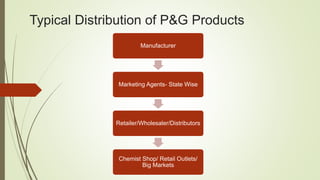
Typical Distribution of P&G Products
Manufacturer
Marketing Agents- State Wise
Retailer/Wholesaler/Distributors
Chemist Shop/ Retail Outlets/
Big Markets
Agents
 P&G products are distributed through a network of redistribution stockists RS)
(covering both urban and rural population).
There are 35 C&FAs (Carrying and Forwarding Agents) in the country who feed
these redistribution stockists regularly.
The general trade comprises grocery stores, chemists, wholesale, kiosks and
general stores.
The C&FAs act as buffer stock‐points (at company depot) to ensure that
stock‐outs did not take place.
The C&FA system has also resulted in cost savings in terms of direct
transportation and reduced time lag in delivery.
Intensive Distribution
 P&G follows this strategy in India. As the company manufactures
FMCG convenience/necessity goods, hence there is lesser/no brand
loyalty from customer side.
 These products are typically purchased impulsively and frequently
and required to be widely available to customers.
 The distribution network of the company needs to be very strong and
proactive.
 As the products are relatively small and easily transported, they are
easy to box up a great number of units to many different channel
intermediaries
Extensive Distribution
 Sold in retail stores such as Walmart, Target, and other convenient
stores all over the world
 Company requires extensive distribution to obtain big sales volume
 The Procter and Gamble owns a series of distribution centers in
Texas, Ohio, and more
Vertical Marketing System
Corporate Vertical Marketing System: Wella Professionals have joined
with P&G and are exclusive distributors of their hair and skincare products.
They are only sold within their own stores.
Transportation
 Shipping: Their first mode of transportation is through shipping
Advantages: Provided large amounts of carrying capacity with low cost
Disadvantages: They are often effected by weather and seasonal delay which
may delay the shipping time.
 Truck wholesaling: Then the products move to truck fleets where P&G have a
contract with "Ryder logistics & Solution“.
Advantages: Trucks are relatively fast form of transportation
Disadvantages: Expensive way to transport so often they use double trucks
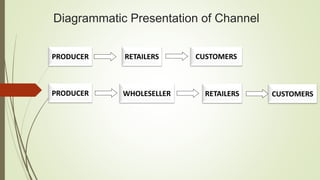
Diagrammatic Presentation of Channel
PRODUCER RETAILERS CUSTOMERS
PRODUCER WHOLESELLER RETAILERS CUSTOMERS
Conclusion
 The company uses its absolute control power to design more effective
distribution channels.
 It streamlines the number of distributors so that making the distributors is
more stable and competitive.
 P&G Company is investing in a more agile and faster distribution network
to optimize inventory and reduce out-of-stocks.
 It reasonably allocates resources across channel options.
 It is also investing in its sales force to establish more profitable
distribution system (Annual Report of P&G, 2016)
THANK YOU

Procter and Gamble distribution channel system

  • 1.
    PROCTER & GAMBLE DISTRIBUTIONCHANNEL SYSTEM By: Sarvesh Singh 2K16GA016 Kaif Ullah Khan 2K16GA017 Anushree Mukherjee 2K16GA018 Abhishek Sidhu 2K16GA020
  • 2.
    FLOW OF CONTENTS Introduction  Channel Explanation  Intensive and Extensive Distribution  Vertical Marketing System  Transportation  Diagrammatic Presentation of Channel  Conclusion
  • 3.
    Introduction  The companywas established in 1837, by William Procter and James Gamble  Company headquartered in Cincinnati, Ohio  Established in India in 1964  Product includes Vicks, Ariel, Tide, Olay, Gillette, Ambipur, Pampers, Pantene, Oral-B, Head & Shoulders, Wella and Duracell  Operates under 3 entities Procter & Gamble Hygiene and Health Care Limited and Gillette India Limited
  • 4.
    Channel Explanation  InIndia: General office in Mumbai and manufacturing facilities in five areas (Baddi, Bhiwadi, Goa, Hyderabad, Bhopal).  Globally they manufacture their own goods from many different countries such as the US, Canada, China, Mexico, Australia and more.
  • 5.
    Typical Distribution ofP&G Products Manufacturer Marketing Agents- State Wise Retailer/Wholesaler/Distributors Chemist Shop/ Retail Outlets/ Big Markets
  • 6.
    Agents  P&G productsare distributed through a network of redistribution stockists RS) (covering both urban and rural population). There are 35 C&FAs (Carrying and Forwarding Agents) in the country who feed these redistribution stockists regularly. The general trade comprises grocery stores, chemists, wholesale, kiosks and general stores. The C&FAs act as buffer stock‐points (at company depot) to ensure that stock‐outs did not take place. The C&FA system has also resulted in cost savings in terms of direct transportation and reduced time lag in delivery.
  • 7.
    Intensive Distribution  P&Gfollows this strategy in India. As the company manufactures FMCG convenience/necessity goods, hence there is lesser/no brand loyalty from customer side.  These products are typically purchased impulsively and frequently and required to be widely available to customers.  The distribution network of the company needs to be very strong and proactive.  As the products are relatively small and easily transported, they are easy to box up a great number of units to many different channel intermediaries
  • 8.
    Extensive Distribution  Soldin retail stores such as Walmart, Target, and other convenient stores all over the world  Company requires extensive distribution to obtain big sales volume  The Procter and Gamble owns a series of distribution centers in Texas, Ohio, and more
  • 9.
    Vertical Marketing System CorporateVertical Marketing System: Wella Professionals have joined with P&G and are exclusive distributors of their hair and skincare products. They are only sold within their own stores.
  • 10.
    Transportation  Shipping: Theirfirst mode of transportation is through shipping Advantages: Provided large amounts of carrying capacity with low cost Disadvantages: They are often effected by weather and seasonal delay which may delay the shipping time.  Truck wholesaling: Then the products move to truck fleets where P&G have a contract with "Ryder logistics & Solution“. Advantages: Trucks are relatively fast form of transportation Disadvantages: Expensive way to transport so often they use double trucks
  • 11.
    Diagrammatic Presentation ofChannel PRODUCER RETAILERS CUSTOMERS PRODUCER WHOLESELLER RETAILERS CUSTOMERS
  • 12.
    Conclusion  The companyuses its absolute control power to design more effective distribution channels.  It streamlines the number of distributors so that making the distributors is more stable and competitive.  P&G Company is investing in a more agile and faster distribution network to optimize inventory and reduce out-of-stocks.  It reasonably allocates resources across channel options.  It is also investing in its sales force to establish more profitable distribution system (Annual Report of P&G, 2016)
  • 13.