PROBLEMS WITH THE USE 
OF THE VERB 
S K I L L S 3 3 -36
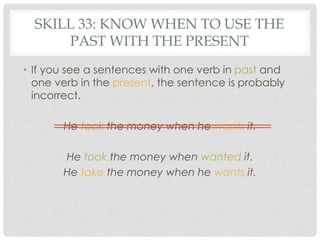
SKILL 33: KNOW WHEN TO USE THE 
PAST WITH THE PRESENT 
• If you see a sentences with one verb in past and 
one verb in the present, the sentence is probably 
incorrect. 
He took the money when he wants it. 
He took the money when wanted it. 
He take the money when he wants it.
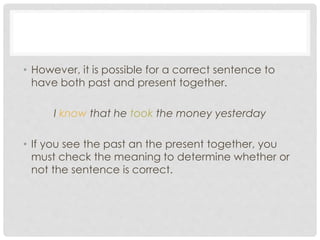
• However, it is possible for a correct sentence to 
have both past and present together. 
I know that he took the money yesterday 
• If you see the past an the present together, you 
must check the meaning to determine whether or 
not the sentence is correct.
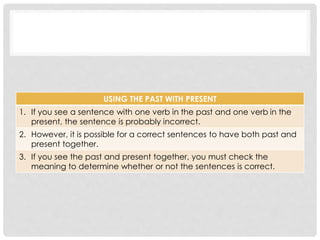
USING THE PAST WITH PRESENT 
1. If you see a sentence with one verb in the past and one verb in the 
present, the sentence is probably incorrect. 
2. However, it is possible for a correct sentences to have both past and 
present together. 
3. If you see the past and present together, you must check the 
meaning to determine whether or not the sentences is correct.
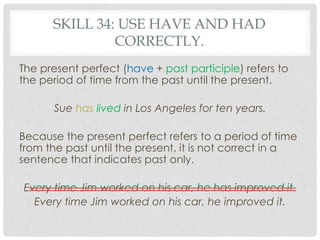
SKILL 34: USE HAVE AND HAD 
CORRECTLY. 
The present perfect (have + past participle) refers to 
the period of time from the past until the present. 
Sue has lived in Los Angeles for ten years. 
Because the present perfect refers to a period of time 
from the past until the present, it is not correct in a 
sentence that indicates past only. 
Every time Jim worked on his car, he has improved it. 
Every time Jim worked on his car, he improved it.
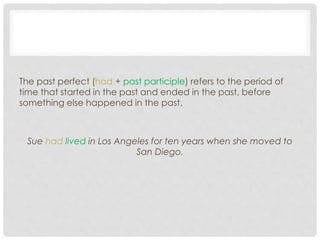
The past perfect (had + past participle) refers to the period of 
time that started in the past and ended in the past, before 
something else happened in the past. 
Sue had lived in Los Angeles for ten years when she moved to 
San Diego.
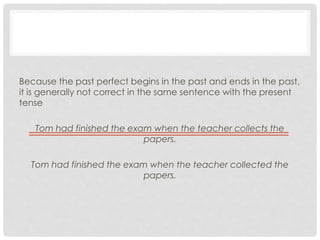
Because the past perfect begins in the past and ends in the past, 
it is generally not correct in the same sentence with the present 
tense 
Tom had finished the exam when the teacher collects the 
papers. 
Tom had finished the exam when the teacher collected the 
papers.
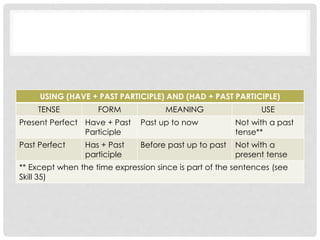
USING (HAVE + PAST PARTICIPLE) AND (HAD + PAST PARTICIPLE) 
TENSE FORM MEANING USE 
Present Perfect Have + Past 
Participle 
Past up to now Not with a past 
tense** 
Past Perfect Has + Past 
participle 
Before past up to past Not with a 
present tense 
** Except when the time expression since is part of the sentences (see 
Skill 35)
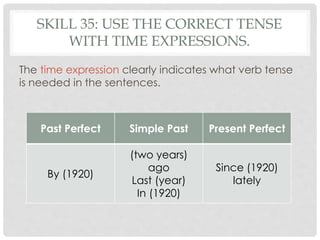
SKILL 35: USE THE CORRECT TENSE 
WITH TIME EXPRESSIONS. 
The time expression clearly indicates what verb tense 
is needed in the sentences. 
Past Perfect Simple Past Present Perfect 
By (1920) 
(two years) 
ago 
Last (year) 
In (1920) 
Since (1920) 
lately
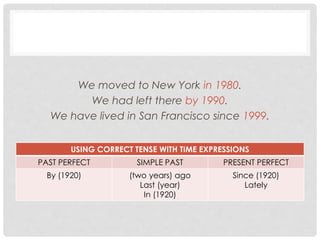
We moved to New York in 1980. 
We had left there by 1990. 
We have lived in San Francisco since 1999. 
USING CORRECT TENSE WITH TIME EXPRESSIONS 
PAST PERFECT SIMPLE PAST PRESENT PERFECT 
By (1920) (two years) ago 
Last (year) 
In (1920) 
Since (1920) 
Lately
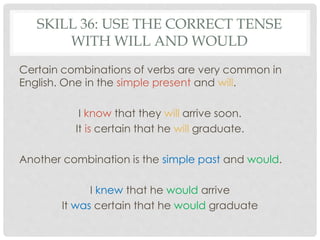
SKILL 36: USE THE CORRECT TENSE 
WITH WILL AND WOULD 
Certain combinations of verbs are very common in 
English. One in the simple present and will. 
I know that they will arrive soon. 
It is certain that he will graduate. 
Another combination is the simple past and would. 
I knew that he would arrive 
It was certain that he would graduate
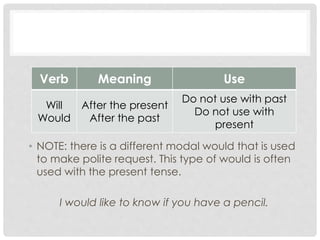
Verb Meaning Use 
Will 
Would 
After the present 
After the past 
Do not use with past 
Do not use with 
present 
• NOTE: there is a different modal would that is used 
to make polite request. This type of would is often 
used with the present tense. 
I would like to know if you have a pencil.
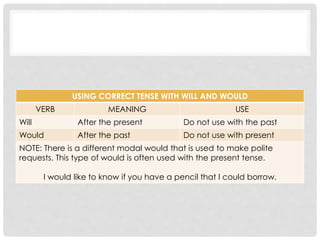
USING CORRECT TENSE WITH WILL AND WOULD 
VERB MEANING USE 
Will After the present Do not use with the past 
Would After the past Do not use with present 
NOTE: There is a different modal would that is used to make polite 
requests. This type of would is often used with the present tense. 
I would like to know if you have a pencil that I could borrow.

Problems with the use of the verb

  • 1.
    PROBLEMS WITH THEUSE OF THE VERB S K I L L S 3 3 -36
  • 2.
    SKILL 33: KNOWWHEN TO USE THE PAST WITH THE PRESENT • If you see a sentences with one verb in past and one verb in the present, the sentence is probably incorrect. He took the money when he wants it. He took the money when wanted it. He take the money when he wants it.
  • 3.
    • However, itis possible for a correct sentence to have both past and present together. I know that he took the money yesterday • If you see the past an the present together, you must check the meaning to determine whether or not the sentence is correct.
  • 4.
    USING THE PASTWITH PRESENT 1. If you see a sentence with one verb in the past and one verb in the present, the sentence is probably incorrect. 2. However, it is possible for a correct sentences to have both past and present together. 3. If you see the past and present together, you must check the meaning to determine whether or not the sentences is correct.
  • 5.
    SKILL 34: USEHAVE AND HAD CORRECTLY. The present perfect (have + past participle) refers to the period of time from the past until the present. Sue has lived in Los Angeles for ten years. Because the present perfect refers to a period of time from the past until the present, it is not correct in a sentence that indicates past only. Every time Jim worked on his car, he has improved it. Every time Jim worked on his car, he improved it.
  • 6.
    The past perfect(had + past participle) refers to the period of time that started in the past and ended in the past, before something else happened in the past. Sue had lived in Los Angeles for ten years when she moved to San Diego.
  • 7.
    Because the pastperfect begins in the past and ends in the past, it is generally not correct in the same sentence with the present tense Tom had finished the exam when the teacher collects the papers. Tom had finished the exam when the teacher collected the papers.
  • 8.
    USING (HAVE +PAST PARTICIPLE) AND (HAD + PAST PARTICIPLE) TENSE FORM MEANING USE Present Perfect Have + Past Participle Past up to now Not with a past tense** Past Perfect Has + Past participle Before past up to past Not with a present tense ** Except when the time expression since is part of the sentences (see Skill 35)
  • 9.
    SKILL 35: USETHE CORRECT TENSE WITH TIME EXPRESSIONS. The time expression clearly indicates what verb tense is needed in the sentences. Past Perfect Simple Past Present Perfect By (1920) (two years) ago Last (year) In (1920) Since (1920) lately
  • 10.
    We moved toNew York in 1980. We had left there by 1990. We have lived in San Francisco since 1999. USING CORRECT TENSE WITH TIME EXPRESSIONS PAST PERFECT SIMPLE PAST PRESENT PERFECT By (1920) (two years) ago Last (year) In (1920) Since (1920) Lately
  • 11.
    SKILL 36: USETHE CORRECT TENSE WITH WILL AND WOULD Certain combinations of verbs are very common in English. One in the simple present and will. I know that they will arrive soon. It is certain that he will graduate. Another combination is the simple past and would. I knew that he would arrive It was certain that he would graduate
  • 12.
    Verb Meaning Use Will Would After the present After the past Do not use with past Do not use with present • NOTE: there is a different modal would that is used to make polite request. This type of would is often used with the present tense. I would like to know if you have a pencil.
  • 13.
    USING CORRECT TENSEWITH WILL AND WOULD VERB MEANING USE Will After the present Do not use with the past Would After the past Do not use with present NOTE: There is a different modal would that is used to make polite requests. This type of would is often used with the present tense. I would like to know if you have a pencil that I could borrow.