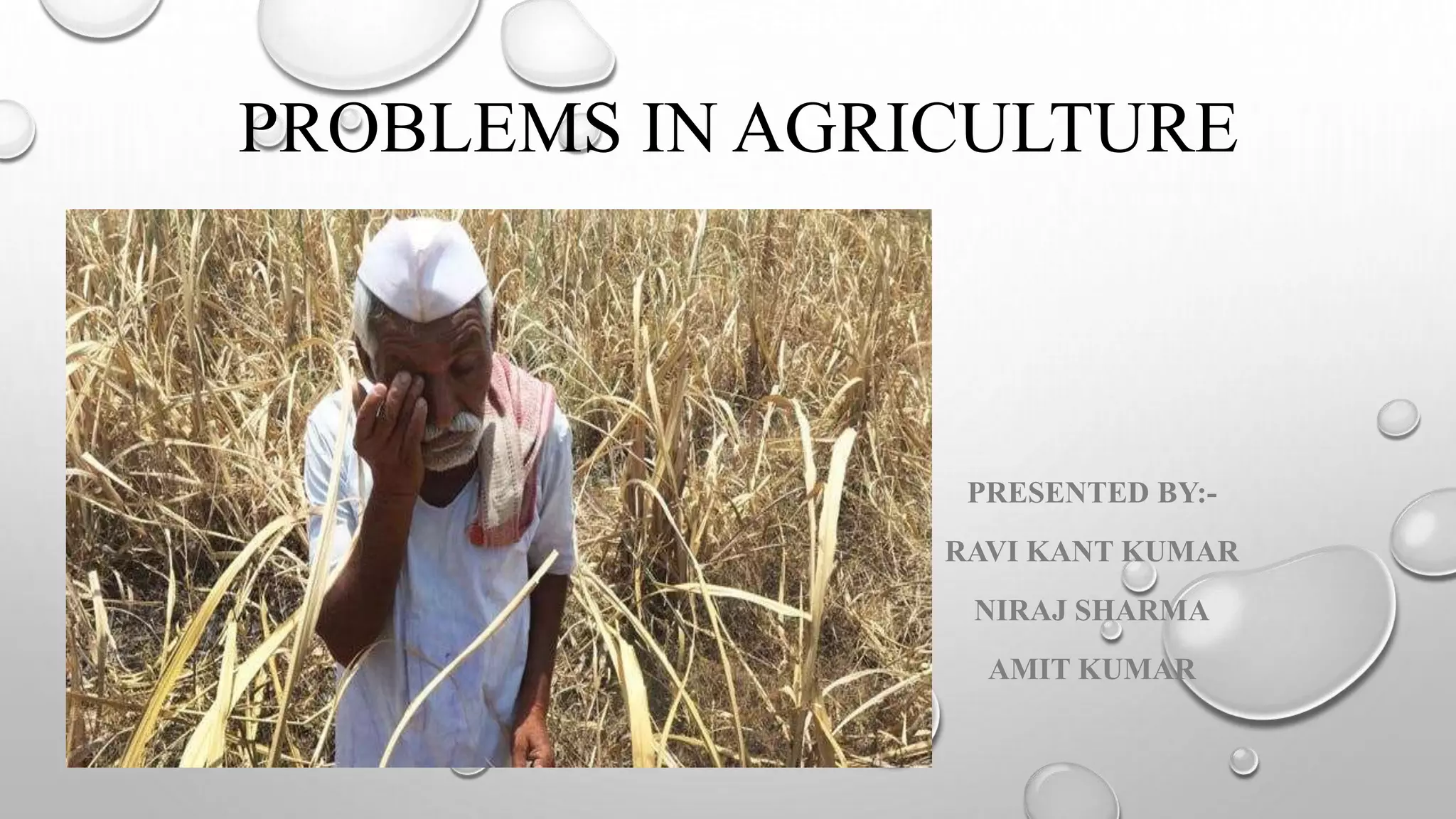
PROBLEMS IN AGRICULTURE
PRESENTED BY:-
RAVI KANT KUMAR
NIRAJ SHARMA
AMIT KUMAR
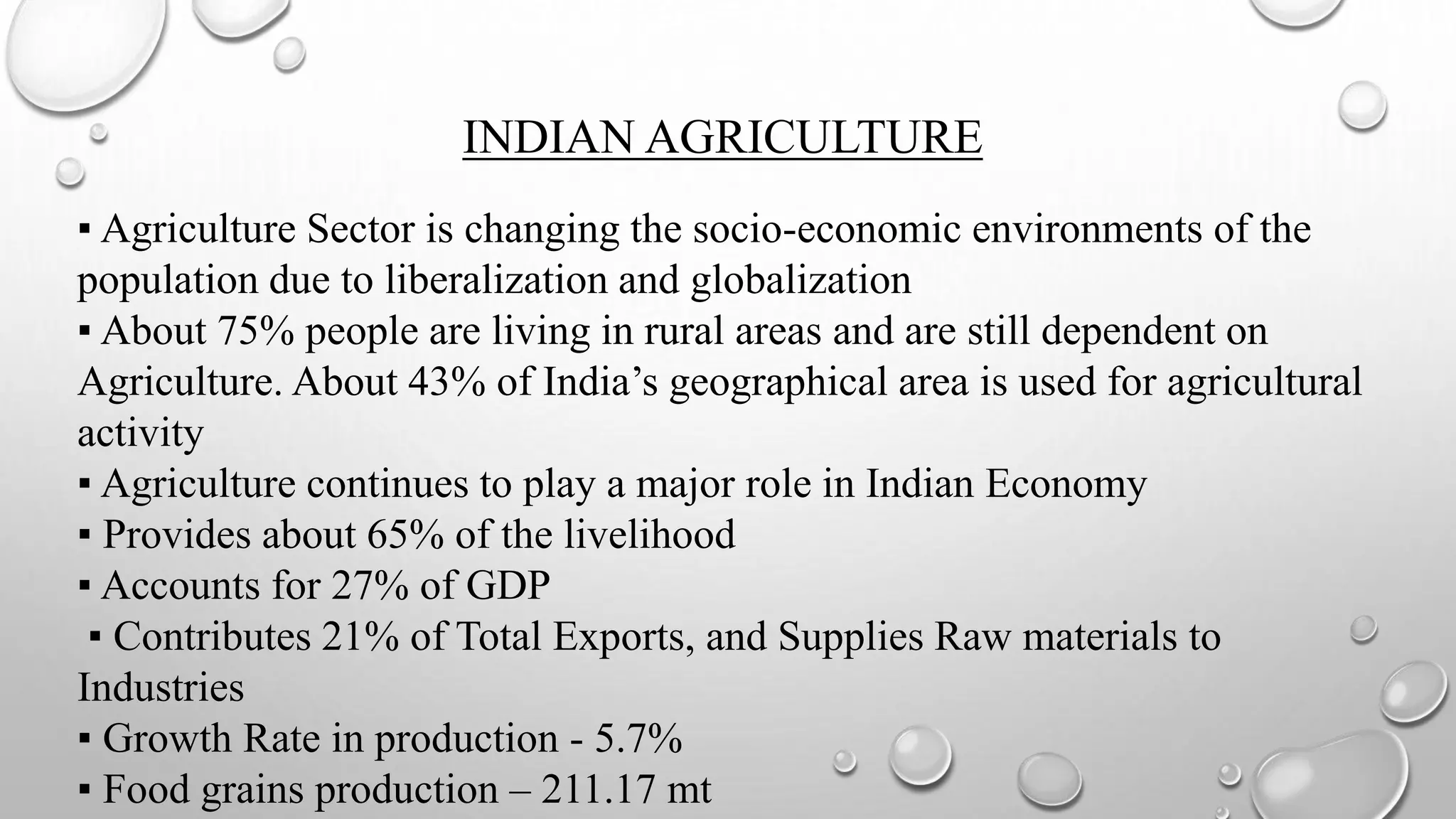
INDIAN AGRICULTURE
▪ Agriculture Sector is changing the socio-economic environments of the
population due to liberalization and globalization
▪ About 75% people are living in rural areas and are still dependent on
Agriculture. About 43% of India’s geographical area is used for agricultural
activity
▪ Agriculture continues to play a major role in Indian Economy
▪ Provides about 65% of the livelihood
▪ Accounts for 27% of GDP
▪ Contributes 21% of Total Exports, and Supplies Raw materials to
Industries
▪ Growth Rate in production - 5.7%
▪ Food grains production – 211.17 mt
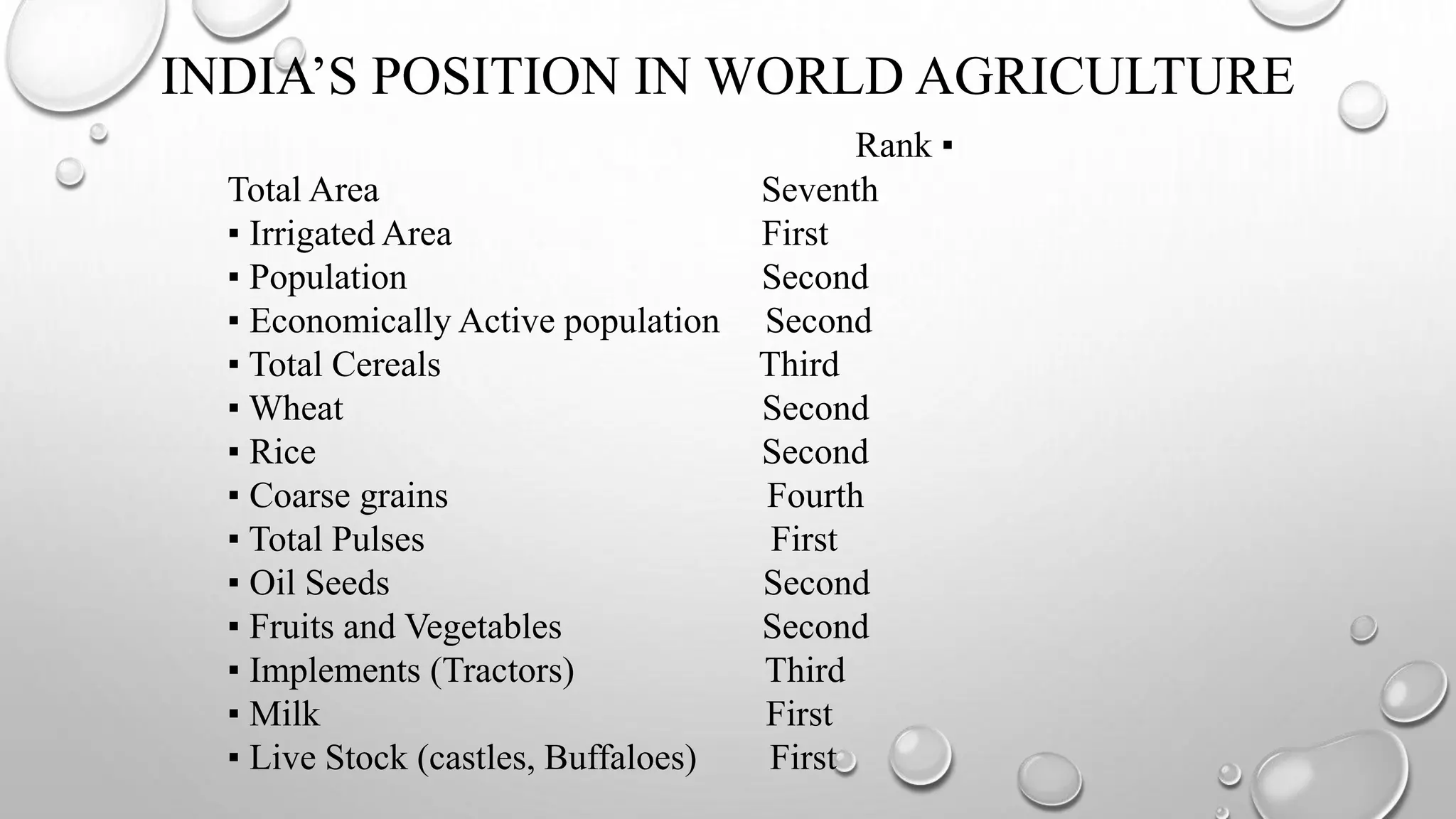
INDIA’S POSITION IN WORLD AGRICULTURE
Rank ▪
Total Area Seventh
▪ Irrigated Area First
▪ Population Second
▪ Economically Active population Second
▪ Total Cereals Third
▪ Wheat Second
▪ Rice Second
▪ Coarse grains Fourth
▪ Total Pulses First
▪ Oil Seeds Second
▪ Fruits and Vegetables Second
▪ Implements (Tractors) Third
▪ Milk First
▪ Live Stock (castles, Buffaloes) First
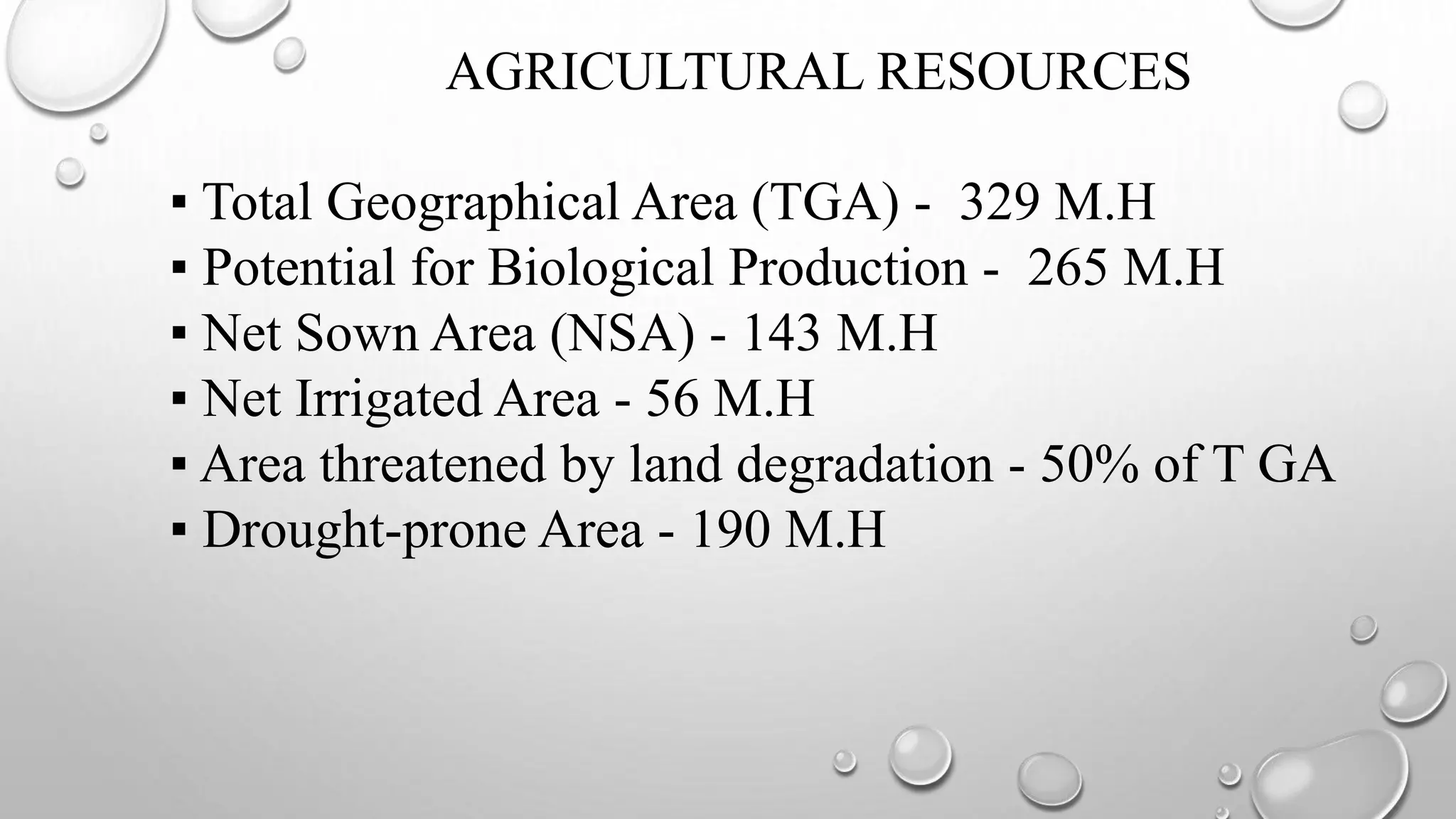
AGRICULTURAL RESOURCES
▪ Total Geographical Area (TGA) - 329 M.H
▪ Potential for Biological Production - 265 M.H
▪ Net Sown Area (NSA) - 143 M.H
▪ Net Irrigated Area - 56 M.H
▪ Area threatened by land degradation - 50% of T GA
▪ Drought-prone Area - 190 M.H
MILE STONES IN AGRICULTURAL DEVELOPMENT
▪ Green Revolution (1968)
▪ Ever-Green Revolution (1996)
▪ Blue Revolution (water, fish)
▪ White Revolution (Milk)
▪ Yellow Revolution (flower, edible)
▪ Bio-Technology Revolution
▪ ICT Revolution
DEVELOPMENT OF INDIAN AGRICULTURE :
BASIC ISSUES
▪ Revitalization of Cooperative Institutions
▪ Improving Rural Credits
▪ Research, Education & Extension
▪ Human Resources Development
▪ Trade & Export Promotion
▪ Land Reforms
▪ Enabling Environment for higher Agricultural Growth
EFFORTS ON POLICIES, STRATEGIES AND
FRAMEWORKS
▪ National Agriculture Policy (2000)
▪ National Seeds policy (2002)
▪ Cooperative Policy
▪ Agricultural Price policy
▪ Agricultural Extension Framework (2001)
▪ WTO/GATT agreement (1994)
TECHNOLOGIES FOR SUSTAINABLE AGRICULTURAL
DEVELOPMENT
▪ Biotechnology
▪ Pre & post harvesting technology
▪ Energy saving technology
▪ Environment protection technology
▪ Information and Communication technology
▪ GIS & RS technology
▪ Internet/Intranet Technology
Problems in agriculture

Problems in agriculture

  • 1.
    PROBLEMS IN AGRICULTURE PRESENTEDBY:- RAVI KANT KUMAR NIRAJ SHARMA AMIT KUMAR
  • 2.
    INDIAN AGRICULTURE ▪ AgricultureSector is changing the socio-economic environments of the population due to liberalization and globalization ▪ About 75% people are living in rural areas and are still dependent on Agriculture. About 43% of India’s geographical area is used for agricultural activity ▪ Agriculture continues to play a major role in Indian Economy ▪ Provides about 65% of the livelihood ▪ Accounts for 27% of GDP ▪ Contributes 21% of Total Exports, and Supplies Raw materials to Industries ▪ Growth Rate in production - 5.7% ▪ Food grains production – 211.17 mt
  • 3.
    INDIA’S POSITION INWORLD AGRICULTURE Rank ▪ Total Area Seventh ▪ Irrigated Area First ▪ Population Second ▪ Economically Active population Second ▪ Total Cereals Third ▪ Wheat Second ▪ Rice Second ▪ Coarse grains Fourth ▪ Total Pulses First ▪ Oil Seeds Second ▪ Fruits and Vegetables Second ▪ Implements (Tractors) Third ▪ Milk First ▪ Live Stock (castles, Buffaloes) First
  • 4.
    AGRICULTURAL RESOURCES ▪ TotalGeographical Area (TGA) - 329 M.H ▪ Potential for Biological Production - 265 M.H ▪ Net Sown Area (NSA) - 143 M.H ▪ Net Irrigated Area - 56 M.H ▪ Area threatened by land degradation - 50% of T GA ▪ Drought-prone Area - 190 M.H
  • 5.
    MILE STONES INAGRICULTURAL DEVELOPMENT ▪ Green Revolution (1968) ▪ Ever-Green Revolution (1996) ▪ Blue Revolution (water, fish) ▪ White Revolution (Milk) ▪ Yellow Revolution (flower, edible) ▪ Bio-Technology Revolution ▪ ICT Revolution
  • 6.
    DEVELOPMENT OF INDIANAGRICULTURE : BASIC ISSUES ▪ Revitalization of Cooperative Institutions ▪ Improving Rural Credits ▪ Research, Education & Extension ▪ Human Resources Development ▪ Trade & Export Promotion ▪ Land Reforms ▪ Enabling Environment for higher Agricultural Growth
  • 8.
    EFFORTS ON POLICIES,STRATEGIES AND FRAMEWORKS ▪ National Agriculture Policy (2000) ▪ National Seeds policy (2002) ▪ Cooperative Policy ▪ Agricultural Price policy ▪ Agricultural Extension Framework (2001) ▪ WTO/GATT agreement (1994)
  • 9.
    TECHNOLOGIES FOR SUSTAINABLEAGRICULTURAL DEVELOPMENT ▪ Biotechnology ▪ Pre & post harvesting technology ▪ Energy saving technology ▪ Environment protection technology ▪ Information and Communication technology ▪ GIS & RS technology ▪ Internet/Intranet Technology