PROBLEMS FACED IN CONTROL
VALVES
Prem Baboo
Sr. Manager (Prod)
National Fertilizers Ltd. India
F.I.E., Institution of Engineers (India)
Technical Advisor & an Expert for
www.ureaknowhow.com
PROBLEMS FACED IN CONTROL
VALVES
• CAVITATION
• FLASHING
• NOISE
• CHOKED FLOW
CAVITATION
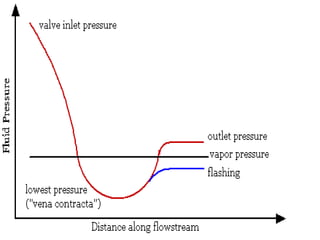
• Cavitations happens between the two-stage process of
vaporization and condensation of a liquid. As fluid
passes through a valve just downstream of the orifice
area, there is an increase in velocity or kinetic energy
that is accompanied by a substantial decrease in
pressure or potential energy. This occurs in an area
called the VENA CONTRACTA. If the pressure in this area
falls below that of the vapor pressure of the flowing
fluid, vaporization (boiling) occurs. Vapor bubbles then
continue downstream where the velocity of the fluid
begins to slow and the pressure in the fluid recovers.
The vapor bubbles then collapse or implode.
FLASHING
• When the vapor pressure downstream of a
control valve is less than the upstream vapor
pressure, part of the liquid changes to a vapor
and remains as a vapor unless the
downstream pressure recovers significantly.
This is called Flashing The vapor bubbles
along with the fluid ( dual face flow) can also
cause mechanical damage to the valve and
piping system
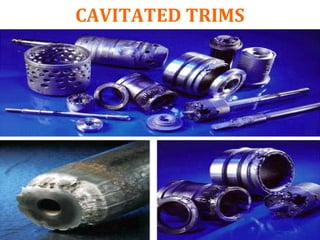
CAVITATED TRIMS
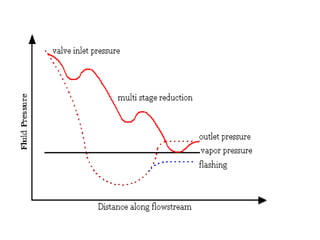
How to reduce cavitation & Flashing
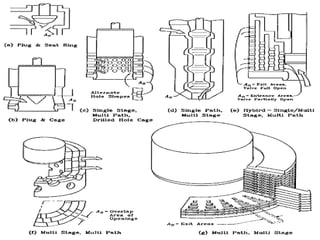
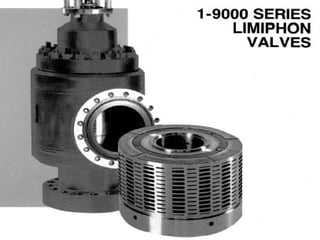
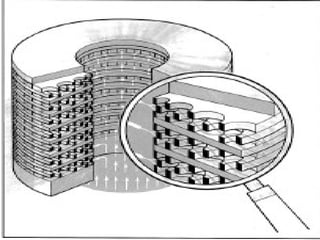
• By using anti cavitating trims effect of cavitation
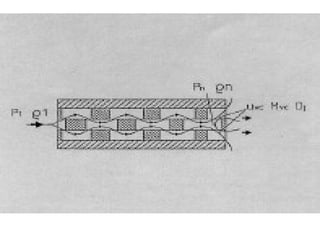
can be reduced. The pressure reduction is done
in stages to decrease the velocity by providing a
volume in between. By doing this the pressure
never falls below the vapour pressure of the
liquid.
Noise in control valves
• Noise is the result of energy dissipation
in the control valve. The major sources
of control valve noise are
– Mechanical vibration of components
– Hydrodynamic noise
– Aerodynamic noise.
Mechanical Noise
• Vibration of valve components is a result of random
pressure fluctuations within the valve body and/or
fluid impingement upon the movable or flexible
parts. Noise that is a by-product of vibration of valve
components is usually of a secondary concern and
may even be beneficial since it warns that conditions
exist which could produce valve failure. Mechanical
vibration has for the most part been eliminated by
improved valve design and is generally considered a
structural problem rather than a noise problem.
HYDRODYNAMIC VALVE NOISE
• The major source of hydrodynamic noise (i.e., noise
resulting from liquid flow) is cavitation which is
caused by implosion of vapor bubbles formed in the
cavitation process. Noise is produced by the energy
dissipation of the imploding bubbles. Noise
produced by cavitation in a valve has a broad
frequency range, however, it can have appreciable
energy at frequencies below 600 Hz. Cavitation noise
is often described as a rattling sound similar to that
which would be anticipated if gravel were in the
fluid stream.
AERODYNAMIC NOISE
• The major source of aerodynamic valve noise
(i.e., noise resulting from gas flow) is a by-
product of a turbulent gas stream. A control
valve controls gas flow by converting
potential (pressure) energy into turbulence.
Most of the energy is converted into heat;
however, a small portion of this energy is
converted into sound.
CHOKED FLOW
• This condition exists when at a fixed upstream
pressure the flow cannot be further increased by
lowering the downstream pressure. Fluids flow
through a valve because of a difference in pressure
between the inlet (Pl) and outlet (P2) of the valve.
This pressure difference (Delta-P) or pressure drop
is essential to moving the fluid. Flow is proportional
to the square root of the pressure drop. Which
means that the higher the pressure drop is the more
fluid can be moved through the valve.
• If the inlet pressure to a valve remains constant,
then the differential pressure can only be increased
by lowering the outlet pressure. For gases and
steam, which are compressible fluids, the maximum
velocity of the fluid through the valve is limited by
the velocity of the propagation of a pressure wave
which travels at the speed of sound in the fluid. If the
pressure drop is sufficiently high, the velocity in the
flow stream at the VENA CONTRACTA will reach the
velocity of sound. Further decrease in the outlet
pressure will not be felt upstream because the
pressure wave can only travel at sonic velocity and
the signal will never translate upstream.
******************************************

Problems faced in conrol valves ppt

  • 1.
    PROBLEMS FACED INCONTROL VALVES Prem Baboo Sr. Manager (Prod) National Fertilizers Ltd. India F.I.E., Institution of Engineers (India) Technical Advisor & an Expert for www.ureaknowhow.com
  • 2.
    PROBLEMS FACED INCONTROL VALVES • CAVITATION • FLASHING • NOISE • CHOKED FLOW
  • 3.
    CAVITATION • Cavitations happensbetween the two-stage process of vaporization and condensation of a liquid. As fluid passes through a valve just downstream of the orifice area, there is an increase in velocity or kinetic energy that is accompanied by a substantial decrease in pressure or potential energy. This occurs in an area called the VENA CONTRACTA. If the pressure in this area falls below that of the vapor pressure of the flowing fluid, vaporization (boiling) occurs. Vapor bubbles then continue downstream where the velocity of the fluid begins to slow and the pressure in the fluid recovers. The vapor bubbles then collapse or implode.
  • 4.
    FLASHING • When thevapor pressure downstream of a control valve is less than the upstream vapor pressure, part of the liquid changes to a vapor and remains as a vapor unless the downstream pressure recovers significantly. This is called Flashing The vapor bubbles along with the fluid ( dual face flow) can also cause mechanical damage to the valve and piping system
  • 6.
  • 7.
    How to reducecavitation & Flashing • By using anti cavitating trims effect of cavitation can be reduced. The pressure reduction is done in stages to decrease the velocity by providing a volume in between. By doing this the pressure never falls below the vapour pressure of the liquid.
  • 13.
    Noise in controlvalves • Noise is the result of energy dissipation in the control valve. The major sources of control valve noise are – Mechanical vibration of components – Hydrodynamic noise – Aerodynamic noise.
  • 14.
    Mechanical Noise • Vibrationof valve components is a result of random pressure fluctuations within the valve body and/or fluid impingement upon the movable or flexible parts. Noise that is a by-product of vibration of valve components is usually of a secondary concern and may even be beneficial since it warns that conditions exist which could produce valve failure. Mechanical vibration has for the most part been eliminated by improved valve design and is generally considered a structural problem rather than a noise problem.
  • 15.
    HYDRODYNAMIC VALVE NOISE •The major source of hydrodynamic noise (i.e., noise resulting from liquid flow) is cavitation which is caused by implosion of vapor bubbles formed in the cavitation process. Noise is produced by the energy dissipation of the imploding bubbles. Noise produced by cavitation in a valve has a broad frequency range, however, it can have appreciable energy at frequencies below 600 Hz. Cavitation noise is often described as a rattling sound similar to that which would be anticipated if gravel were in the fluid stream.
  • 16.
    AERODYNAMIC NOISE • Themajor source of aerodynamic valve noise (i.e., noise resulting from gas flow) is a by- product of a turbulent gas stream. A control valve controls gas flow by converting potential (pressure) energy into turbulence. Most of the energy is converted into heat; however, a small portion of this energy is converted into sound.
  • 17.
    CHOKED FLOW • Thiscondition exists when at a fixed upstream pressure the flow cannot be further increased by lowering the downstream pressure. Fluids flow through a valve because of a difference in pressure between the inlet (Pl) and outlet (P2) of the valve. This pressure difference (Delta-P) or pressure drop is essential to moving the fluid. Flow is proportional to the square root of the pressure drop. Which means that the higher the pressure drop is the more fluid can be moved through the valve.
  • 18.
    • If theinlet pressure to a valve remains constant, then the differential pressure can only be increased by lowering the outlet pressure. For gases and steam, which are compressible fluids, the maximum velocity of the fluid through the valve is limited by the velocity of the propagation of a pressure wave which travels at the speed of sound in the fluid. If the pressure drop is sufficiently high, the velocity in the flow stream at the VENA CONTRACTA will reach the velocity of sound. Further decrease in the outlet pressure will not be felt upstream because the pressure wave can only travel at sonic velocity and the signal will never translate upstream. ******************************************

Editor's Notes

  • #4 : Occurs only in liquid service. In its simplest terms cavitation is the two-stage process of vaporization and condensation of a liquid. Vaporization is simply the boiling of a liquid, which is also known as FLASHING. In a control valve this vaporization takes place because the pressure of the liquid is lowered, instead of the more common occurrence where the temperature is raised. As fluid passes through a valve just downstream of the orifice area, there is an increase in velocity or kinetic energy that is accompanied by a substantial decrease in pressure or potential energy. This occurs in an area called the VENA CONTRACTA. If the pressure in this area falls below that of the vapor pressure of the flowing fluid, vaporization (boiling) occurs. Vapor bubbles then continue downstream where the velocity of the fluid begins to slow and the pressure in the fluid recovers. The vapor bubbles then collapse or implode. Cavitation can cause a Choked Flow condition to occur and can cause mechanical damage to valves and piping