8.
communic
ations
ProblemManagementFoundation
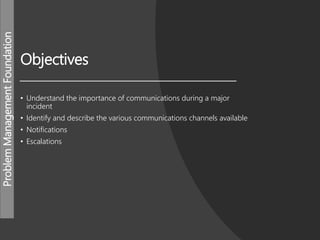
Objectives
• Understand the importance of communications during a major
incident
• Identify and describe the various communications channels available
• Notifications
• Escalations
ProblemManagementFoundation
Communicating
USS Montana (1 minute)
ProblemManagementFoundation
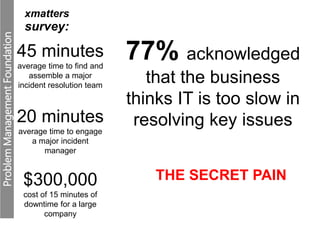
xmatters
survey:
45 minutes
average time to find and
assemble a major
incident resolution team
77% acknowledged
that the business
thinks IT is too slow in
resolving key issues20 minutes
average time to engage
a major incident
manager
$300,000
cost of 15 minutes of
downtime for a large
company
THE SECRET PAIN
ProblemManagementFoundation
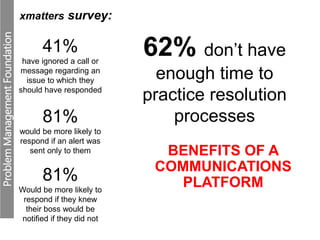
BENEFITS OF A
COMMUNICATIONS
PLATFORM
41%
have ignored a call or
message regarding an
issue to which they
should have responded
62% don’t have
enough time to
practice resolution
processes81%
would be more likely to
respond if an alert was
sent only to them
81%
Would be more likely to
respond if they knew
their boss would be
notified if they did not
xmatters survey:
ProblemManagementFoundation
xmatters survey:
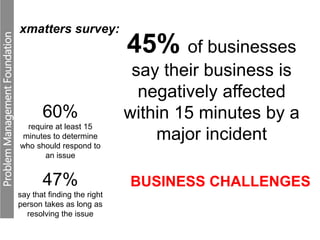
BUSINESS CHALLENGES
45% of businesses
say their business is
negatively affected
within 15 minutes by a
major incident
60%
require at least 15
minutes to determine
who should respond to
an issue
47%
say that finding the right
person takes as long as
resolving the issue
ProblemManagementFoundation xmatters
survey:
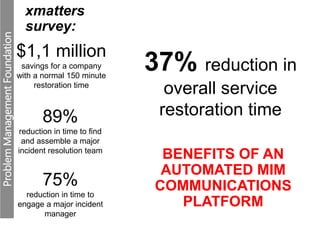
BENEFITS OF AN
AUTOMATED MIM
COMMUNICATIONS
PLATFORM
$1,1 million
savings for a company
with a normal 150 minute
restoration time
37% reduction in
overall service
restoration time89%
reduction in time to find
and assemble a major
incident resolution team
75%
reduction in time to
engage a major incident
manager
ProblemManagementFoundation
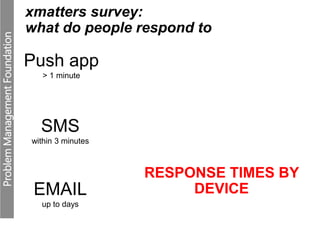
xmatters survey:
what do people respond to
RESPONSE TIMES BY
DEVICE
Push app
> 1 minute
SMS
within 3 minutes
EMAIL
up to days
ProblemManagementFoundation
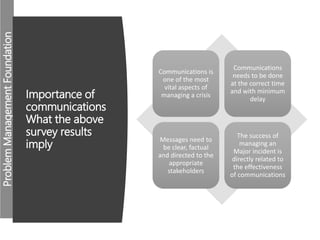
Importance of
communications
What the above
survey results
imply
Communications is
one of the most
vital aspects of
managing a crisis
Communications
needs to be done
at the correct time
and with minimum
delay
Messages need to
be clear, factual
and directed to the
appropriate
stakeholders
The success of
managing an
Major incident is
directly related to
the effectiveness
of communications
ProblemManagementFoundation
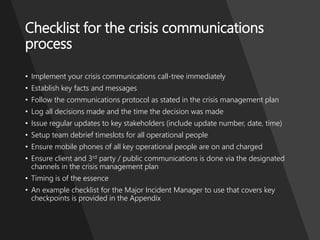
Checklist for the crisis communications
process
• Implement your crisis communications call-tree immediately
• Establish key facts and messages
• Follow the communications protocol as stated in the crisis management plan
• Log all decisions made and the time the decision was made
• Issue regular updates to key stakeholders (include update number, date, time)
• Setup team debrief timeslots for all operational people
• Ensure mobile phones of all key operational people are on and charged
• Ensure client and 3rd party / public communications is done via the designated
channels in the crisis management plan
• Timing is of the essence
• An example checklist for the Major Incident Manager to use that covers key
checkpoints is provided in the Appendix
ProblemManagementFoundation
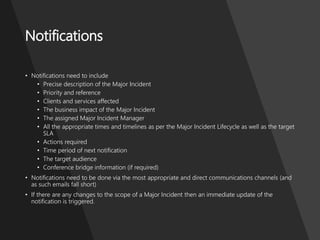
Notifications
• Notifications need to include
• Precise description of the Major Incident
• Priority and reference
• Clients and services affected
• The business impact of the Major Incident
• The assigned Major Incident Manager
• All the appropriate times and timelines as per the Major Incident Lifecycle as well as the target
SLA
• Actions required
• Time period of next notification
• The target audience
• Conference bridge information (if required)
• Notifications need to be done via the most appropriate and direct communications channels (and
as such emails fall short)
• If there are any changes to the scope of a Major Incident then an immediate update of the
notification is triggered.
ProblemManagementFoundation
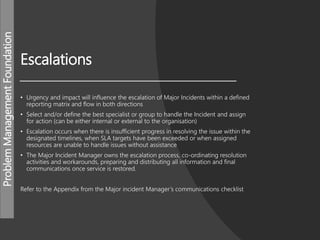
Escalations
• Urgency and impact will influence the escalation of Major Incidents within a defined
reporting matrix and flow in both directions
• Select and/or define the best specialist or group to handle the Incident and assign
for action (can be either internal or external to the organisation)
• Escalation occurs when there is insufficient progress in resolving the issue within the
designated timelines, when SLA targets have been exceeded or when assigned
resources are unable to handle issues without assistance
• The Major Incident Manager owns the escalation process, co-ordinating resolution
activities and workarounds, preparing and distributing all information and final
communications once service is restored.
Refer to the Appendix from the Major incident Manager’s communications checklist
ProblemManagementFoundation
{x}matters Tool to assist in communications process for
major and related incidents
ProblemManagementFoundation
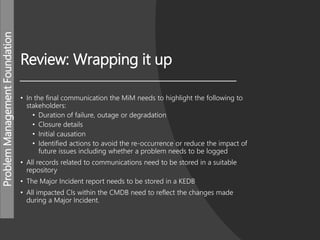
Review: Wrapping it up
• In the final communication the MiM needs to highlight the following to
stakeholders:
• Duration of failure, outage or degradation
• Closure details
• Initial causation
• Identified actions to avoid the re-occurrence or reduce the impact of
future issues including whether a problem needs to be logged
• All records related to communications need to be stored in a suitable
repository
• The Major Incident report needs to be stored in a KEDB
• All impacted CIs within the CMDB need to reflect the changes made
during a Major Incident.

Problem management foundation Communications

  • 1.
  • 2.
    ProblemManagementFoundation Objectives • Understand theimportance of communications during a major incident • Identify and describe the various communications channels available • Notifications • Escalations
  • 3.
  • 4.
    ProblemManagementFoundation xmatters survey: 45 minutes average timeto find and assemble a major incident resolution team 77% acknowledged that the business thinks IT is too slow in resolving key issues20 minutes average time to engage a major incident manager $300,000 cost of 15 minutes of downtime for a large company THE SECRET PAIN
  • 5.
    ProblemManagementFoundation BENEFITS OF A COMMUNICATIONS PLATFORM 41% haveignored a call or message regarding an issue to which they should have responded 62% don’t have enough time to practice resolution processes81% would be more likely to respond if an alert was sent only to them 81% Would be more likely to respond if they knew their boss would be notified if they did not xmatters survey:
  • 6.
    ProblemManagementFoundation xmatters survey: BUSINESS CHALLENGES 45%of businesses say their business is negatively affected within 15 minutes by a major incident 60% require at least 15 minutes to determine who should respond to an issue 47% say that finding the right person takes as long as resolving the issue
  • 7.
    ProblemManagementFoundation xmatters survey: BENEFITS OFAN AUTOMATED MIM COMMUNICATIONS PLATFORM $1,1 million savings for a company with a normal 150 minute restoration time 37% reduction in overall service restoration time89% reduction in time to find and assemble a major incident resolution team 75% reduction in time to engage a major incident manager
  • 8.
    ProblemManagementFoundation xmatters survey: what dopeople respond to RESPONSE TIMES BY DEVICE Push app > 1 minute SMS within 3 minutes EMAIL up to days
  • 9.
    ProblemManagementFoundation Importance of communications What theabove survey results imply Communications is one of the most vital aspects of managing a crisis Communications needs to be done at the correct time and with minimum delay Messages need to be clear, factual and directed to the appropriate stakeholders The success of managing an Major incident is directly related to the effectiveness of communications
  • 10.
    ProblemManagementFoundation Checklist for thecrisis communications process • Implement your crisis communications call-tree immediately • Establish key facts and messages • Follow the communications protocol as stated in the crisis management plan • Log all decisions made and the time the decision was made • Issue regular updates to key stakeholders (include update number, date, time) • Setup team debrief timeslots for all operational people • Ensure mobile phones of all key operational people are on and charged • Ensure client and 3rd party / public communications is done via the designated channels in the crisis management plan • Timing is of the essence • An example checklist for the Major Incident Manager to use that covers key checkpoints is provided in the Appendix
  • 11.
    ProblemManagementFoundation Notifications • Notifications needto include • Precise description of the Major Incident • Priority and reference • Clients and services affected • The business impact of the Major Incident • The assigned Major Incident Manager • All the appropriate times and timelines as per the Major Incident Lifecycle as well as the target SLA • Actions required • Time period of next notification • The target audience • Conference bridge information (if required) • Notifications need to be done via the most appropriate and direct communications channels (and as such emails fall short) • If there are any changes to the scope of a Major Incident then an immediate update of the notification is triggered.
  • 12.
    ProblemManagementFoundation Escalations • Urgency andimpact will influence the escalation of Major Incidents within a defined reporting matrix and flow in both directions • Select and/or define the best specialist or group to handle the Incident and assign for action (can be either internal or external to the organisation) • Escalation occurs when there is insufficient progress in resolving the issue within the designated timelines, when SLA targets have been exceeded or when assigned resources are unable to handle issues without assistance • The Major Incident Manager owns the escalation process, co-ordinating resolution activities and workarounds, preparing and distributing all information and final communications once service is restored. Refer to the Appendix from the Major incident Manager’s communications checklist
  • 13.
    ProblemManagementFoundation {x}matters Tool toassist in communications process for major and related incidents
  • 14.
    ProblemManagementFoundation Review: Wrapping itup • In the final communication the MiM needs to highlight the following to stakeholders: • Duration of failure, outage or degradation • Closure details • Initial causation • Identified actions to avoid the re-occurrence or reduce the impact of future issues including whether a problem needs to be logged • All records related to communications need to be stored in a suitable repository • The Major Incident report needs to be stored in a KEDB • All impacted CIs within the CMDB need to reflect the changes made during a Major Incident.

Editor's Notes

  • #3 Objectives
  • #4 Video refer: https://vimeo.com/83662045
  • #12 Notifications
  • #13 Refer Major incident Manager’s communications checklist - http://www.deesmith.co.za/content/Major%20Incident%20Manager's%20checklist%2025%20-%209%20-%2015.pdf
  • #14 xmatters.com
  • #15 Refer Major incident Manager’s communications checklist - http://www.deesmith.co.za/content/Major%20Incident%20Manager's%20checklist%2025%20-%209%20-%2015.pdf