12. simulation
ProblemManagementFoundation
Flight simulators
ProblemManagementFoundation
Why use simulation?
• Pilots are trained on simulators because they can not afford to deal with life
threating events in the air by way of experimentation
• The diligence applied in the aviation industry is seldom duplicated with Information
Technology being a case in point
• Simulation is crucial to the successful resolution of a crisis
• A disaster recovery test is an example of a simulation involving crisis management
• The simulation exercises should cover
• Media communications
• Being able to avoid inconsistent communications
• Social media interactions
• Desktop exercises
• Full blown scenario simulations (replay of known errors)
• Co-ordination of all stakeholders
ProblemManagementFoundation
Problem management training
• Problem management has components of training, operations and
review (assessment).
• Training has theoretical aspects and also practical considerations which
can be addressed using simulation
• People respond in an unpredictable manner when unforeseen events
occur
• Training people is about
• equipping then with an additional skill set in order to manage an
unpredictable situation
• ensuring that they deal with known situations in an optimal manner
• managing an escalating situation with calm judgement under
extraordinary circumstances
• coping with the different stages of a crisis
ProblemManagementFoundation
Simulation process
• Draw diagram from photo
• Objective behind simulation is to understand and develop a fit for purpose
process or crisis management program that works for the enterprise/organization
• Needs to highlight risks, gaps and adverse changes that have occurred that can
be corrected to ensure readiness
• Highlights items that would require additional financial funding
• Confirms the validity of tool choices
ProblemManagementFoundation
Types of simulation
• Testing and training
• Acceptance tests
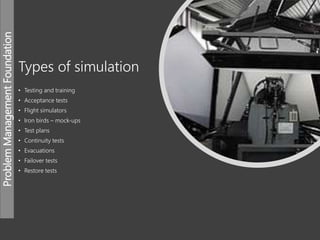
• Flight simulators
• Iron birds – mock-ups
• Test plans
• Continuity tests
• Evacuations
• Failover tests
• Restore tests
ProblemManagementFoundation
Post simulation
• Feedback required from participants
• Typically includes field reports, questionnaires, reports/logs from
tools, dashboards, completed checklists and videos/recordings.
• It is important to evaluate all of the above in order to produce a
detailed findings document
• This document should discuss what worked, what didn’t work, gaps
in processes and technology, the crisis communications and
proposed changes to operations.
• Timelines should be agreed for any remedial activities that need to
be actioned.
• Practice, practice, practice.
ProblemManagementFoundation
Review
• Although simulations tools exist within Information Technology, they are not as mature
as in the aviation industry
• Important to understand practice and update the processes, tools and technology
constantly.
• Regular simulation of scenarios is crucial to crisis readiness.
• Training people on what to expect and how to respond.
• Ensure you have backup resources.
• Conduct a disciplined post crisis simulation review
• Always assess readiness by asking the following questions
• Has a representative set of scenarios been tested?
• Do we have more than one response to a scenario?
• Is our crisis activation response effective?
• Do we have a clear chain of command?
• Do we have the right people in the right places doing the right things?

Problem management foundation Simulation

  • 1.
  • 2.
  • 3.
    ProblemManagementFoundation Why use simulation? •Pilots are trained on simulators because they can not afford to deal with life threating events in the air by way of experimentation • The diligence applied in the aviation industry is seldom duplicated with Information Technology being a case in point • Simulation is crucial to the successful resolution of a crisis • A disaster recovery test is an example of a simulation involving crisis management • The simulation exercises should cover • Media communications • Being able to avoid inconsistent communications • Social media interactions • Desktop exercises • Full blown scenario simulations (replay of known errors) • Co-ordination of all stakeholders
  • 4.
    ProblemManagementFoundation Problem management training •Problem management has components of training, operations and review (assessment). • Training has theoretical aspects and also practical considerations which can be addressed using simulation • People respond in an unpredictable manner when unforeseen events occur • Training people is about • equipping then with an additional skill set in order to manage an unpredictable situation • ensuring that they deal with known situations in an optimal manner • managing an escalating situation with calm judgement under extraordinary circumstances • coping with the different stages of a crisis
  • 5.
    ProblemManagementFoundation Simulation process • Drawdiagram from photo • Objective behind simulation is to understand and develop a fit for purpose process or crisis management program that works for the enterprise/organization • Needs to highlight risks, gaps and adverse changes that have occurred that can be corrected to ensure readiness • Highlights items that would require additional financial funding • Confirms the validity of tool choices
  • 6.
    ProblemManagementFoundation Types of simulation •Testing and training • Acceptance tests • Flight simulators • Iron birds – mock-ups • Test plans • Continuity tests • Evacuations • Failover tests • Restore tests
  • 7.
    ProblemManagementFoundation Post simulation • Feedbackrequired from participants • Typically includes field reports, questionnaires, reports/logs from tools, dashboards, completed checklists and videos/recordings. • It is important to evaluate all of the above in order to produce a detailed findings document • This document should discuss what worked, what didn’t work, gaps in processes and technology, the crisis communications and proposed changes to operations. • Timelines should be agreed for any remedial activities that need to be actioned. • Practice, practice, practice.
  • 8.
    ProblemManagementFoundation Review • Although simulationstools exist within Information Technology, they are not as mature as in the aviation industry • Important to understand practice and update the processes, tools and technology constantly. • Regular simulation of scenarios is crucial to crisis readiness. • Training people on what to expect and how to respond. • Ensure you have backup resources. • Conduct a disciplined post crisis simulation review • Always assess readiness by asking the following questions • Has a representative set of scenarios been tested? • Do we have more than one response to a scenario? • Is our crisis activation response effective? • Do we have a clear chain of command? • Do we have the right people in the right places doing the right things?

Editor's Notes

  • #3 Video refer: https://lnkd.in/epxiHfV