
Kindly Switch to Silent Mode
No Comments
No Name Presents
PMP Communication & Human Resources
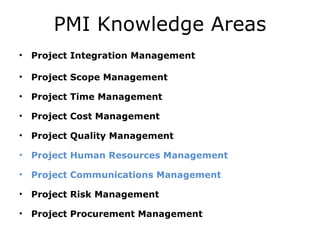
PMI Knowledge Areas Project Integration Management  Project Scope Management  Project Time Management Project Cost Management Project Quality Management Project Human Resources Management Project Communications Management Project Risk Management Project Procurement Management
Organizational Influences
Functional Organization Project Coordinator
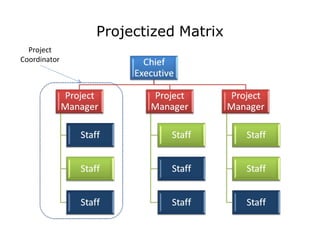
Projectized   Matrix Project Coordinator
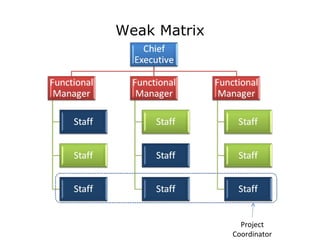
Weak Matrix Project Coordinator
Balanced Matrix Project Coordinator
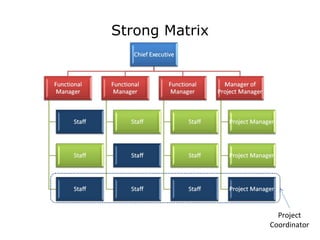
Strong Matrix Project Coordinator
HR Planning Enterprise environmental factors Organizational process assets  Project management  plan – Activity Resource Requirements Organizational charts and position descriptions Networking  Organizational theory  Roles and responsibilities Project organization chart Staffing management plan Inputs Tools and Techniques Outputs
Organizational process assets Are artifacts that relate to describing, implementing, and improving processes (e.g., policies, measurements, process descriptions, and process implementation support tools).  The term “process assets” is used to indicate that these artifacts are developed or acquired to meet the business objectives of the organization, and they represent investments by the organization that are expected to provide current and future business value.
Acquire Project team Enterprise environmental factors Organizational process assets Roles & Responsibilities Project organization chart Staffing Management Plan Pre-assignment Negotiation Acquisition Virtual teams Project staff assigned Resource availability Staffing management plan (updates) Inputs Tools and Techniques Outputs
Responsibility matrix  Project Manager Business Lead Technical Lead Function Manager Sponsor Create  Project Plan Acquire  resources Develop  requirements Construction R Quality  Control Close  Project Responsible Approve Consult Informed R R R R R R R R R A A A C C C C C C C C C C C C I I C I C I
Develop Project team Project staff assignments Staffing management plan Resource availability General management skills  Training Team-building activities Ground rules Co-location Reward and recognition systems Team performance assessment Inputs Tools and Techniques Outputs
Team performance assessment The project management team makes ongoing formal or informal assessments of the project team's performance.  Improvements in skills that allow a person to perform assigned activities more effectively Improvements in competencies and sentiments that help the team perform better as a group  Reduced staff turnover rate.
Manage project team Organizational  process assets Project staff assignment Roles and  responsibilities Project organization  chart Team performance  assessment Work performance  information Performance report Observation and  conversation Project performance  appraisal Conflict  management Issue log Requested change Recommended corrective actions Recommended  preventive action Organizational process assets (updates) Project  management  (updates) Inputs Tools and Techniques Outputs
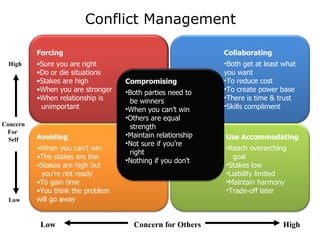
Conflict Management Concern For  Self High Low High Low Concern for Others Forcing Sure you are right Do or die situations Stakes are high When you are stronger When relationship is  unimportant Collaborating Both get at least what you want To reduce cost To create power base There is time & trust Skills compliment Avoiding When you can’t win The stakes are low Stakes are high but  you’re not ready To gain time You think the problem will go away Use Accommodating Reach overarching goal Stakes low Liability limited Maintain harmony Trade-off later Compromising Both parties need to be winners When you can’t win Others are equal strength Maintain relationship Not sure if you’re  right Nothing if you don’t
How conflict can be good Conflict often produces important results such as new ideas, better alternatives, and motivation to work harder and more collaboratively Groupthink can be developed  if there are no conflicting viewpoints Task-related conflict often improves team performance , but emotional conflict often depresses team performance
Communication
What is Communication
Communications Channels
Communication planning 1.  Enterprise  Environmental Factors 2. Organizational  Process Assets  3. Project Scope  Statement 4. Project Management Plan: Constraints &  Assumptions 1. Communications requirements analysis 2. Communications  Technology 1. Communications management plan Inputs Tools and Techniques Outputs
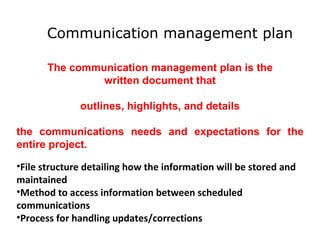
Communication management plan The communication management plan is the written document that outlines, highlights, and details the communications needs and expectations for the entire project. File structure detailing how the information will be stored and maintained Method to access information between scheduled communications Process for handling updates/corrections
Information distribution 1.  Communication  management plan Communication  skills Information  gathering and  retrieval systems Lessons learned  process Organizational  process assets Requested change Inputs Tools and Techniques Outputs
Information Distribution  (1) Getting the right information to the right people at the right time and in a useful format is just as important as developing the information in the first place.
Important considerations include: Using technology to enhance information distribution. Formal and informal methods for distributing information. Don’t bury crucial information. Don’t be afraid to report bad information. Oral communication via meetings and informal talks helps bring important information—good and bad—out into the open. Information Distribution  (2)
Personal Preferences Affect Communication Needs Introverts   like more private communications, while  extroverts  like to discuss things in public. Intuitive   people like to understand the big picture, while  sensing  people need step-by-step details. Thinkers   want to know the logic behind decisions, while  feeling  people want to know how something affects them personally. Judging   people are driven to meet deadlines while  perceiving  people need more help in developing and following plans.
Information Distribution methods
Performance reporting 1. Work performance information 2. Performance  measurements 3. Forecasted completion 4. Quality control measurements 5. Project management plan. Performance measurement baseline 6. Approved change requests 7  Deliverables 1. Information  presentation tools 2. Performance  information gathering and compilation 3. Status review  meetings 4. Time reporting systems 5. Cost reporting  systems 1. Performance reports 2. Forecasts 3. Requested changes 4. Recommended corrective actions 5. Organizational  process assets updates Inputs Tools and Techniques Outputs
Sample reports & templates Project Description Monthly Progress Report Letter of Agreement for a Class Project Outline for a Final Project Report Final Project Documentation Items Gantt Chart Template for a Class Project
1. Communications  management plan 2. Organizational  process assets 1. Communications  methods 2. Issues logs 1. Resolved issues 2. Approved change  requests 3. Approved corrective actions 4. Organizational  process assets updates Manage stakeholder Inputs Tools and Techniques Outputs
Issue Log
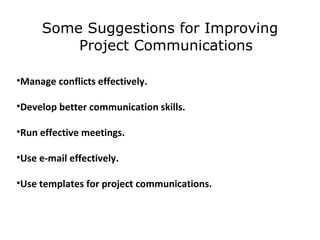
Some Suggestions for Improving Project Communications Manage conflicts effectively. Develop better communication skills. Run effective meetings. Use e-mail effectively. Use templates for project communications.

PMP Communication & Human resource

  • 1.
    Kindly Switch toSilent Mode
  • 2.
  • 3.
  • 4.
    PMP Communication &Human Resources
  • 5.
    PMI Knowledge AreasProject Integration Management Project Scope Management Project Time Management Project Cost Management Project Quality Management Project Human Resources Management Project Communications Management Project Risk Management Project Procurement Management
  • 6.
  • 7.
  • 8.
    Projectized Matrix Project Coordinator
  • 9.
  • 10.
  • 11.
  • 12.
    HR Planning Enterpriseenvironmental factors Organizational process assets Project management plan – Activity Resource Requirements Organizational charts and position descriptions Networking Organizational theory Roles and responsibilities Project organization chart Staffing management plan Inputs Tools and Techniques Outputs
  • 13.
    Organizational process assetsAre artifacts that relate to describing, implementing, and improving processes (e.g., policies, measurements, process descriptions, and process implementation support tools). The term “process assets” is used to indicate that these artifacts are developed or acquired to meet the business objectives of the organization, and they represent investments by the organization that are expected to provide current and future business value.
  • 14.
    Acquire Project teamEnterprise environmental factors Organizational process assets Roles & Responsibilities Project organization chart Staffing Management Plan Pre-assignment Negotiation Acquisition Virtual teams Project staff assigned Resource availability Staffing management plan (updates) Inputs Tools and Techniques Outputs
  • 15.
    Responsibility matrix Project Manager Business Lead Technical Lead Function Manager Sponsor Create Project Plan Acquire resources Develop requirements Construction R Quality Control Close Project Responsible Approve Consult Informed R R R R R R R R R A A A C C C C C C C C C C C C I I C I C I
  • 16.
    Develop Project teamProject staff assignments Staffing management plan Resource availability General management skills Training Team-building activities Ground rules Co-location Reward and recognition systems Team performance assessment Inputs Tools and Techniques Outputs
  • 17.
    Team performance assessmentThe project management team makes ongoing formal or informal assessments of the project team's performance. Improvements in skills that allow a person to perform assigned activities more effectively Improvements in competencies and sentiments that help the team perform better as a group Reduced staff turnover rate.
  • 18.
    Manage project teamOrganizational process assets Project staff assignment Roles and responsibilities Project organization chart Team performance assessment Work performance information Performance report Observation and conversation Project performance appraisal Conflict management Issue log Requested change Recommended corrective actions Recommended preventive action Organizational process assets (updates) Project management (updates) Inputs Tools and Techniques Outputs
  • 19.
    Conflict Management ConcernFor Self High Low High Low Concern for Others Forcing Sure you are right Do or die situations Stakes are high When you are stronger When relationship is unimportant Collaborating Both get at least what you want To reduce cost To create power base There is time & trust Skills compliment Avoiding When you can’t win The stakes are low Stakes are high but you’re not ready To gain time You think the problem will go away Use Accommodating Reach overarching goal Stakes low Liability limited Maintain harmony Trade-off later Compromising Both parties need to be winners When you can’t win Others are equal strength Maintain relationship Not sure if you’re right Nothing if you don’t
  • 20.
    How conflict canbe good Conflict often produces important results such as new ideas, better alternatives, and motivation to work harder and more collaboratively Groupthink can be developed if there are no conflicting viewpoints Task-related conflict often improves team performance , but emotional conflict often depresses team performance
  • 21.
  • 22.
  • 23.
  • 24.
    Communication planning 1. Enterprise Environmental Factors 2. Organizational Process Assets 3. Project Scope Statement 4. Project Management Plan: Constraints & Assumptions 1. Communications requirements analysis 2. Communications Technology 1. Communications management plan Inputs Tools and Techniques Outputs
  • 25.
    Communication management planThe communication management plan is the written document that outlines, highlights, and details the communications needs and expectations for the entire project. File structure detailing how the information will be stored and maintained Method to access information between scheduled communications Process for handling updates/corrections
  • 26.
    Information distribution 1. Communication management plan Communication skills Information gathering and retrieval systems Lessons learned process Organizational process assets Requested change Inputs Tools and Techniques Outputs
  • 27.
    Information Distribution (1) Getting the right information to the right people at the right time and in a useful format is just as important as developing the information in the first place.
  • 28.
    Important considerations include:Using technology to enhance information distribution. Formal and informal methods for distributing information. Don’t bury crucial information. Don’t be afraid to report bad information. Oral communication via meetings and informal talks helps bring important information—good and bad—out into the open. Information Distribution (2)
  • 29.
    Personal Preferences AffectCommunication Needs Introverts like more private communications, while extroverts like to discuss things in public. Intuitive people like to understand the big picture, while sensing people need step-by-step details. Thinkers want to know the logic behind decisions, while feeling people want to know how something affects them personally. Judging people are driven to meet deadlines while perceiving people need more help in developing and following plans.
  • 30.
  • 31.
    Performance reporting 1.Work performance information 2. Performance measurements 3. Forecasted completion 4. Quality control measurements 5. Project management plan. Performance measurement baseline 6. Approved change requests 7 Deliverables 1. Information presentation tools 2. Performance information gathering and compilation 3. Status review meetings 4. Time reporting systems 5. Cost reporting systems 1. Performance reports 2. Forecasts 3. Requested changes 4. Recommended corrective actions 5. Organizational process assets updates Inputs Tools and Techniques Outputs
  • 32.
    Sample reports &templates Project Description Monthly Progress Report Letter of Agreement for a Class Project Outline for a Final Project Report Final Project Documentation Items Gantt Chart Template for a Class Project
  • 33.
    1. Communications management plan 2. Organizational process assets 1. Communications methods 2. Issues logs 1. Resolved issues 2. Approved change requests 3. Approved corrective actions 4. Organizational process assets updates Manage stakeholder Inputs Tools and Techniques Outputs
  • 34.
  • 35.
    Some Suggestions forImproving Project Communications Manage conflicts effectively. Develop better communication skills. Run effective meetings. Use e-mail effectively. Use templates for project communications.

Editor's Notes

  • #6 PMI Knowledge Areas Project Integration Management Project Scope Management Project Time Management Project Cost Management Project Quality Management Project Human Resources Management Project Communications Management Project Risk Management Project Procurement Management
  • #13 HR Planning Input and output PMBOK
  • #14 Organizational process assets Process assets definition
  • #15 Acquire Project team Input and output PMBOK
  • #16 Responsibility matrix PMCOM presentation
  • #17 Develop Project team Input and output PMBOK
  • #19 Manage project team Input and output PMBOK
  • #20 Conflict Management PROCOM presentation
  • #21 How conflict can be good Conflict often produces important results, such as new ideas, better alternatives, and motivation to work harder and more collaboratively Groupthink can develop if there are no conflicting viewpoints Research by Karen Jehn suggests that task-related conflict often improves team performance, but emotional conflict often depresses team performance
  • #22 Communication The greatest threat to many projects is a failure to communicate. CIOs have indicated that IT professionals must be able to communicate effectively to succeed in their positions. Strong verbal skills are a key factor in career advancement for IT professionals. However, our culture does not portray IT professionals as being good communicators.