1
Fundamentals 0f Vegetable Production-VSC501(2+1)
Presented By:
Sanmathi Naik A T S
Jr.M.Sc(Hort) Vegetable Science
COH,Bengaluru
Topic: Principle Of Vegetable Seed Production
2
Presented To:
Dr.M.Anjanappa
Proff, Dept.of Vegetable
Science
COH,Bengaluru
UNIVERSITY OF HORTICULTURAL SCIENCES,BAGALKOT
COLLEGE OF HORTICULTURE,BENGALURU
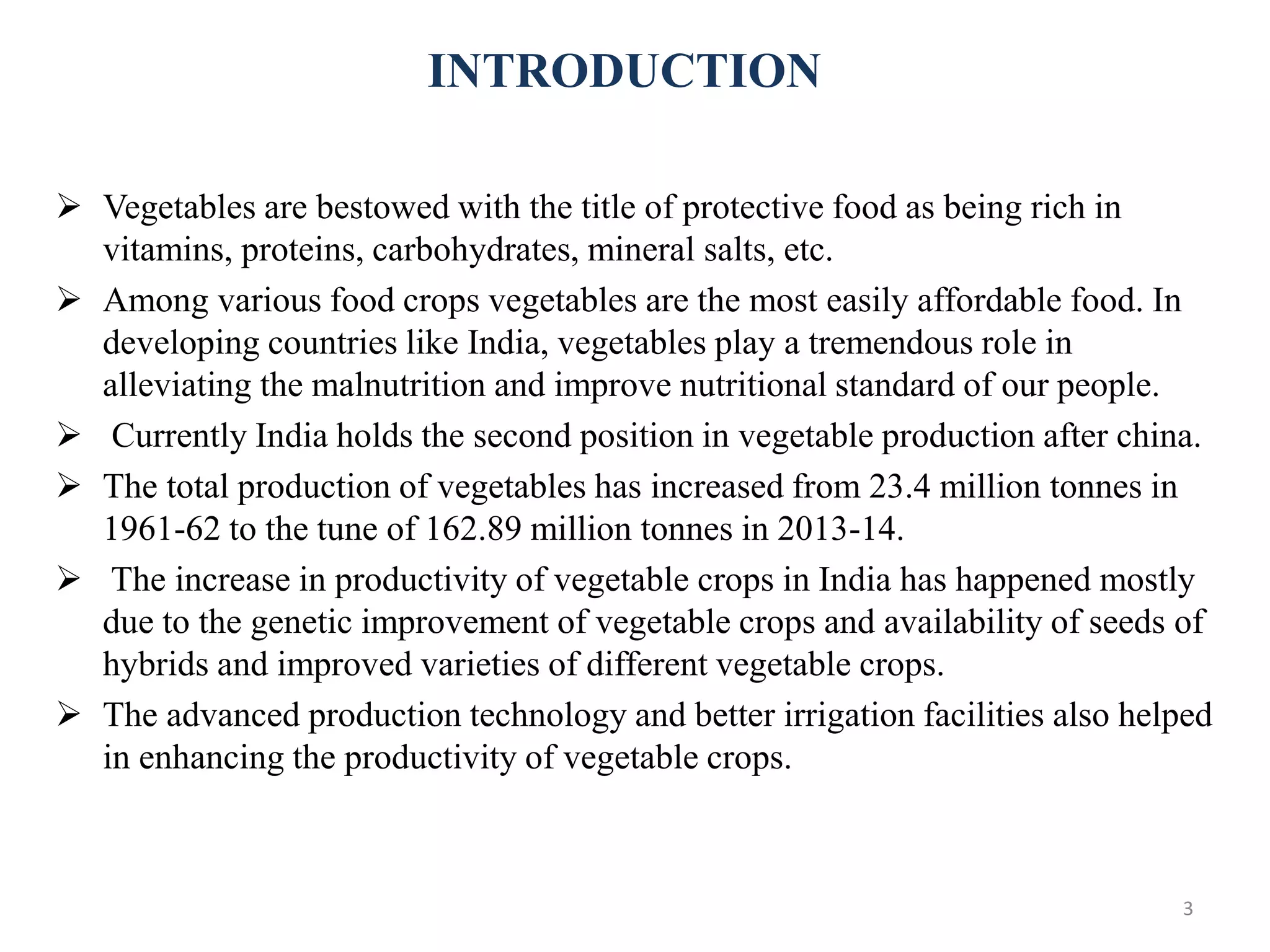
INTRODUCTION
 Vegetables are bestowed with the title of protective food as being rich in
vitamins, proteins, carbohydrates, mineral salts, etc.
 Among various food crops vegetables are the most easily affordable food. In
developing countries like India, vegetables play a tremendous role in
alleviating the malnutrition and improve nutritional standard of our people.
 Currently India holds the second position in vegetable production after china.
 The total production of vegetables has increased from 23.4 million tonnes in
1961-62 to the tune of 162.89 million tonnes in 2013-14.
 The increase in productivity of vegetable crops in India has happened mostly
due to the genetic improvement of vegetable crops and availability of seeds of
hybrids and improved varieties of different vegetable crops.
 The advanced production technology and better irrigation facilities also helped
in enhancing the productivity of vegetable crops.
3
Prospects of Seed Industry in India
 Total vegetable seed market in India is $ 228.182
million including open pollinated seed
 Hybrid vegetable seed industry is $ 80 million (11% of
world share)
 Second largest user of tomato hybrids (40t) after USA
 Largest area under hybrids of cabbage (60%) and
cauliflower (45%) of total area
4
Qualities of Good Vegetable Seeds
 Genetically pure
 Physically pure
 Physiologically viable
 Free from insect pests and diseases
 Free from seeds of weeds and other crops
5
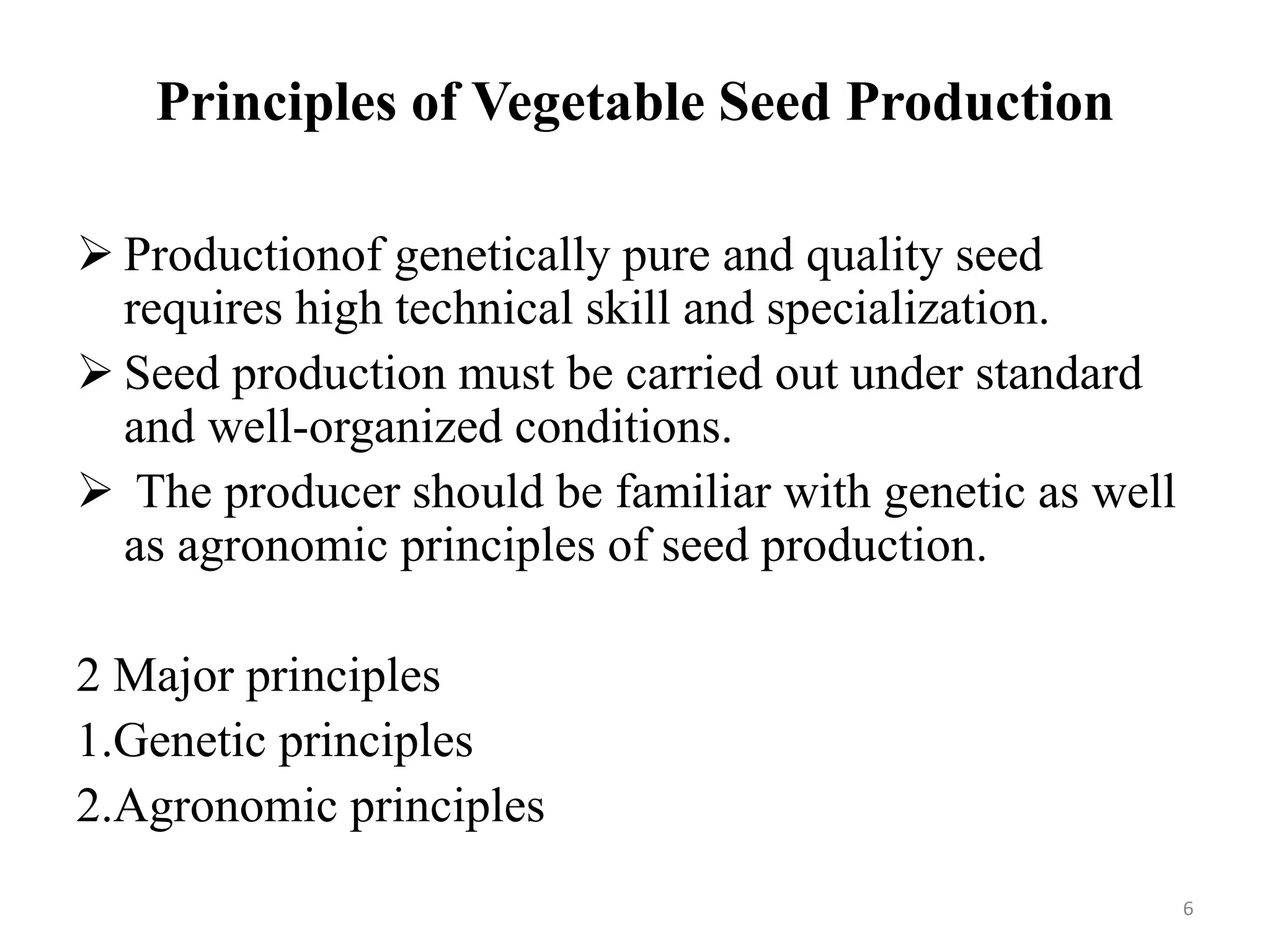
Principles of Vegetable Seed Production
 Productionof genetically pure and quality seed
requires high technical skill and specialization.
 Seed production must be carried out under standard
and well-organized conditions.
 The producer should be familiar with genetic as well
as agronomic principles of seed production.
2 Major principles
1.Genetic principles
2.Agronomic principles
6
Genetic Principles
1. Deterioration of varieties
a. Developmental variation
b. Mechanical mixtures
c. Mutations
d. Natural crossing
e. Minor genetic variations
f. Selective influence of diseases
g. Techniques of plant breeders
7
a. Developmental Variation
When the seed crops are grown in difficult
environment under different soil and fertility
conditions, or different climate conditions, or
under different photoperiods, or at different
elevation for several consecutive generations,
the developmental variation may arise some
times as differential growth response.
To minimize the opportunity for such shifts
to occur in varieties it is advisable to grow
them in their areas of adaptation and growing
seasons. 8
b. Mechanical mixtures
 This is the most important source of variety deterioration
during seed production. Mechanical mixtures may often take
place at the time of sowing, if more than one variety is sown
with same seed drill; through volunteer plants of the same crop
in the seed field; or through different varieties grown in
adjacent fields.
 Often the seed produce of all the varieties are kept on same
threshing floor, resulting in considerable varietal mixture.
 To avoid this sort mechanical contamination it would be
necessary to rogue the seed fields, and practice the utmost
care during the seed production, harvesting, threshing and
further handling
9
c. Mutations
This is not a serious factor of varietal
deterioration. In the majority of the cases it
is difficult to identify or detect minor
mutation.
10
d. Natural crossing
In sexually propagated crops, natural crossing is another
most important source of varietal deterioration due to
introgression to genes from unrelated stocks which can only
be solved by prevention
Natural crossing occurs due to following three reasons
 Natural crossing with undesirable types .
 Natural crossing with diseased plants.
 Natural crossing with off- type plants.
Natural crossing occurs due to following factors
 The breeding system of species
 Isolation systems
 Varietal mass
 Pollinating agent
11
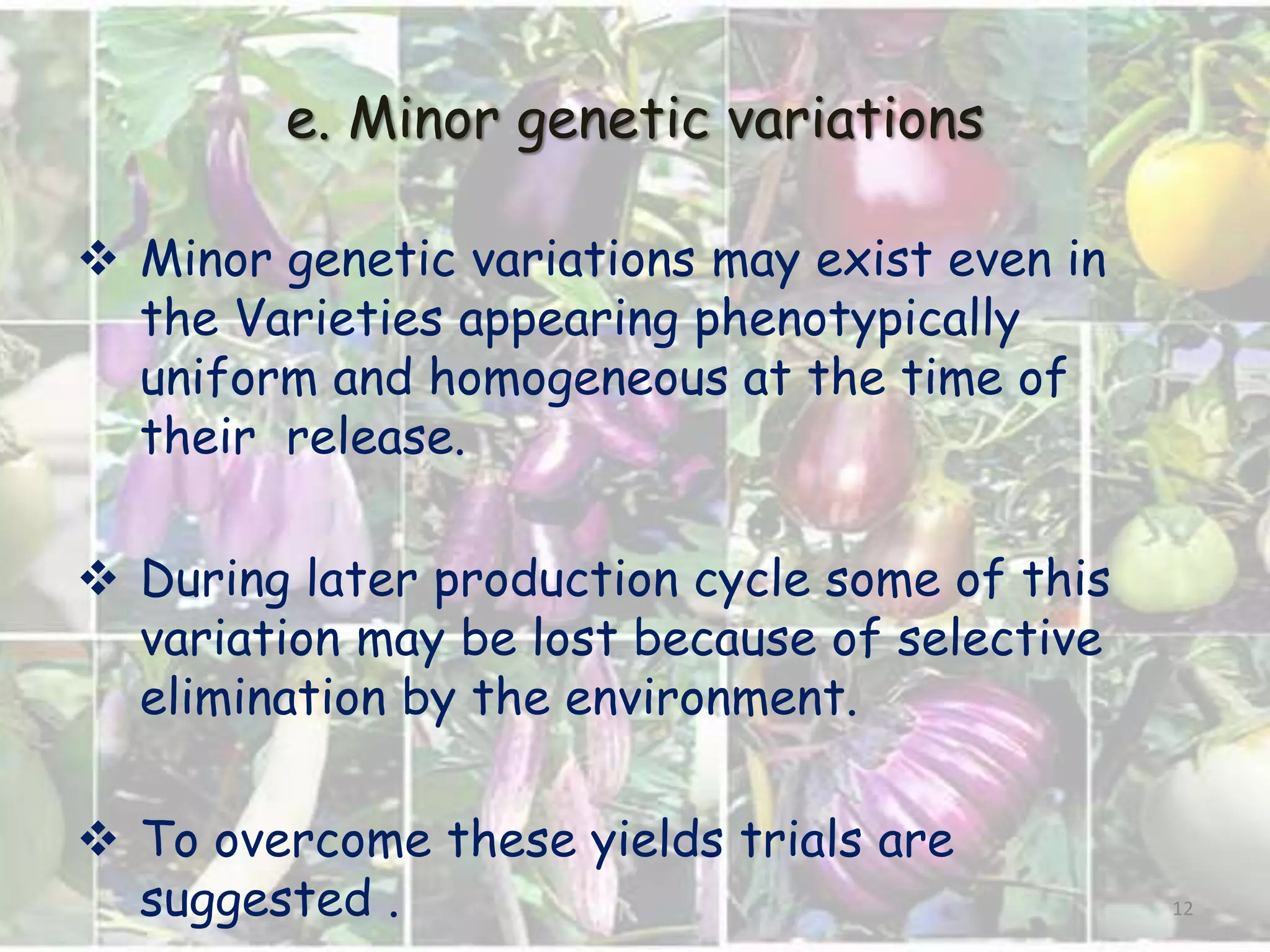
e. Minor genetic variations
 Minor genetic variations may exist even in
the Varieties appearing phenotypically
uniform and homogeneous at the time of
their release.
 During later production cycle some of this
variation may be lost because of selective
elimination by the environment.
 To overcome these yields trials are
suggested . 12
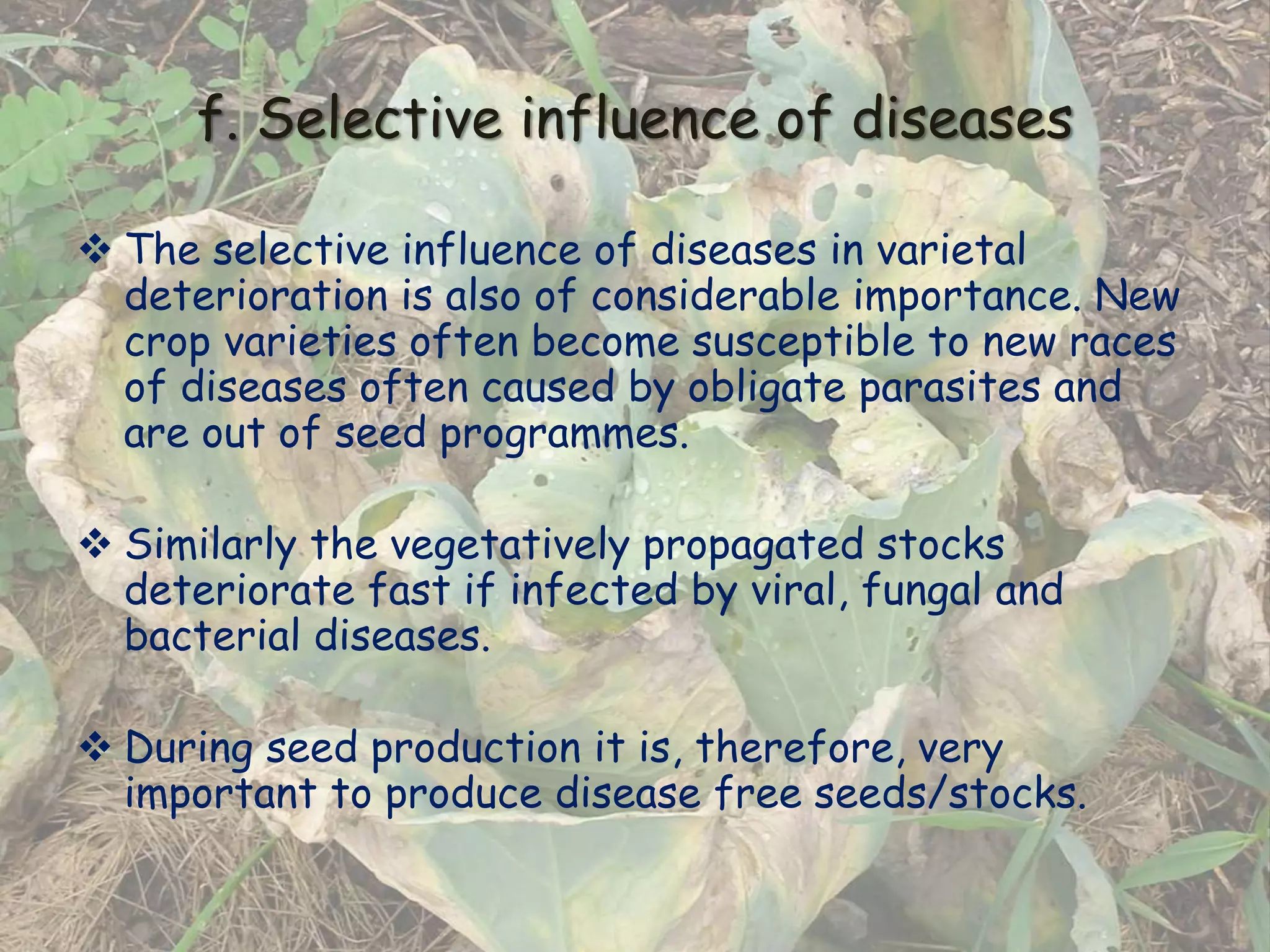
f. Selective influence of diseases
 The selective influence of diseases in varietal
deterioration is also of considerable importance. New
crop varieties often become susceptible to new races
of diseases often caused by obligate parasites and
are out of seed programmes.
 Similarly the vegetatively propagated stocks
deteriorate fast if infected by viral, fungal and
bacterial diseases.
 During seed production it is, therefore, very
important to produce disease free seeds/stocks.
13
g. Techniques of plant breeders
In certain instances, serious instabilities may
occur in varieties due to cytogenetically
irregularities not properly assessed in the new
varieties prior to their release.
Other factors, such as break down in male
sterility, certain environmental conditions, and
other heritable variations may considerably
lower the genetic purity.
14
Maintenance of Genetic Purity
During Seed Production:
 Use of approved seed only in seed multiplication.
 Inspection and approval of fields prior to planting.
 Field inspection and approval of growing crops at
critical stages for verification of genetic purity,
detection of mixtures, weeds, and for freedom from
noxious weeds and seed borne diseases etc.
 Sampling and sealing of cleaned lots.
 Growing of samples of potentially approved stocks for
comparison with authentic stocks. 15
Steps suggested for maintaining genetic purity
 Providing adequate isolation to prevent contamination by natural
crossing or mechanical mixtures.
 Rouging of seed fields prior to the stage at which they could
contaminate the seed crop.
 Periodic testing of varieties for genetic purity.
 Avoiding genetic shifts by growing crops in areas in their
adaptation only.
 Certification of seed crops to maintain genetic purity and quality
of seed.
 Adopting the generation system.
 Grow out tests. 16
Agronomic Principles
1.Selection of a Agro-climatic Region
2.Selection of seed plot
3.Isolation of Seed crops
4.Preparation of Land
5.Selection of variety
6.Seed treatment
7.Time of planting
8.Seed Rate
9.Method of sowing
10.Depth of sowing
11.Rouging
12.Supplementary pollination
13 .Weed control
14. Disease and insect control
15.Nutrition
16.Irrigation
17.Harvesting of Seed crops
18.Drying of seeds
19.Storage of raw seeds
17
1.Selection of a Agro-climatic Region
A crop variety to be grown for seed
production in an area must be adapted to the
photoperiod and temperature conditions
prevailing in that area.
18
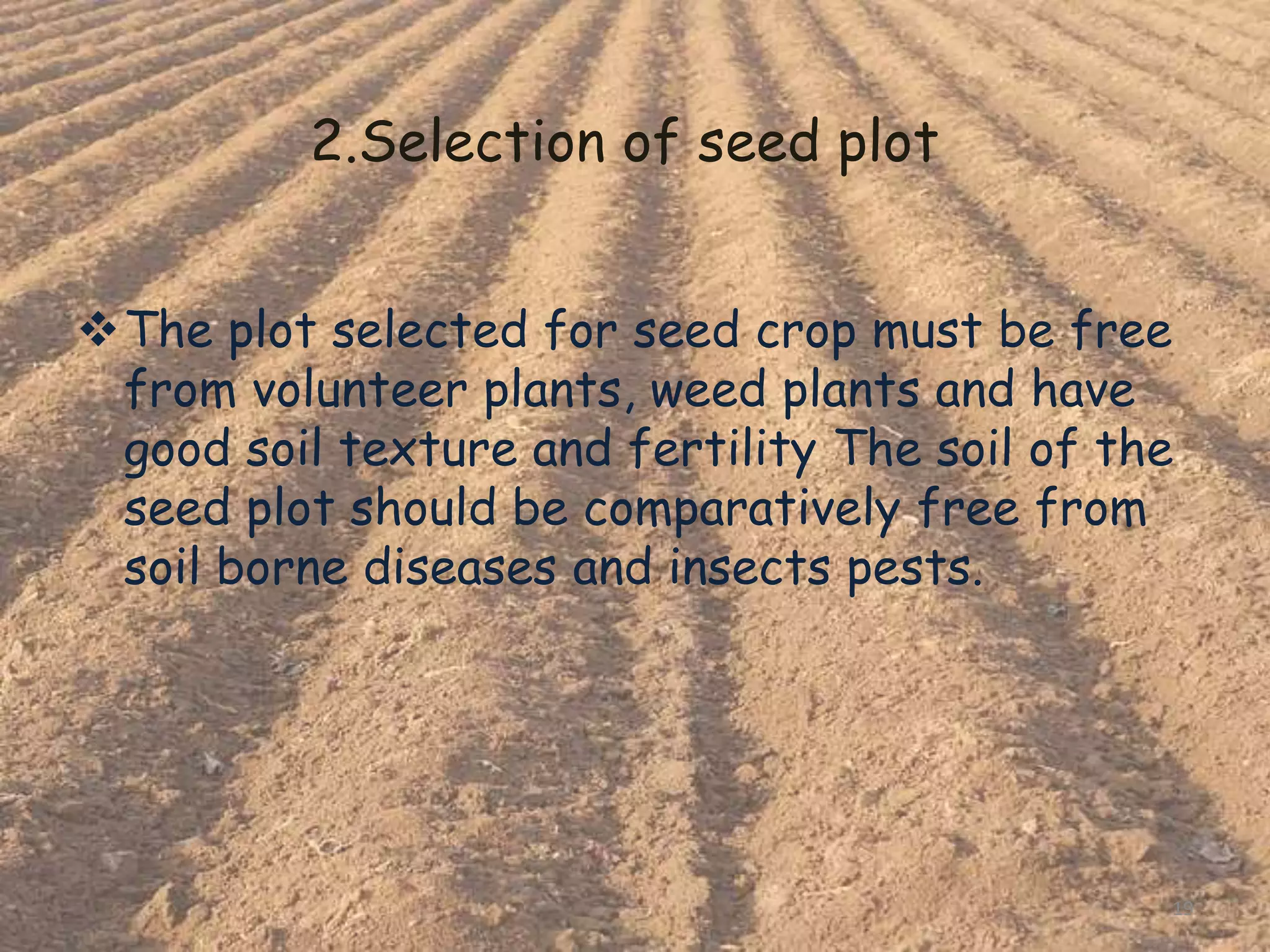
2.Selection of seed plot
The plot selected for seed crop must be free
from volunteer plants, weed plants and have
good soil texture and fertility The soil of the
seed plot should be comparatively free from
soil borne diseases and insects pests.
19
3.Isolation of Seed crops
The seed crop must be
isolated from other nearby
fields of the same crops
and the other contaminating
crops as per requirement of
the certification standards.
20
4.Preparation of Land
Good land preparation helps in improved
germination, good stand establishment and
destruction of potential weeds. It also aids in
water management and good uniform
irrigation.
21
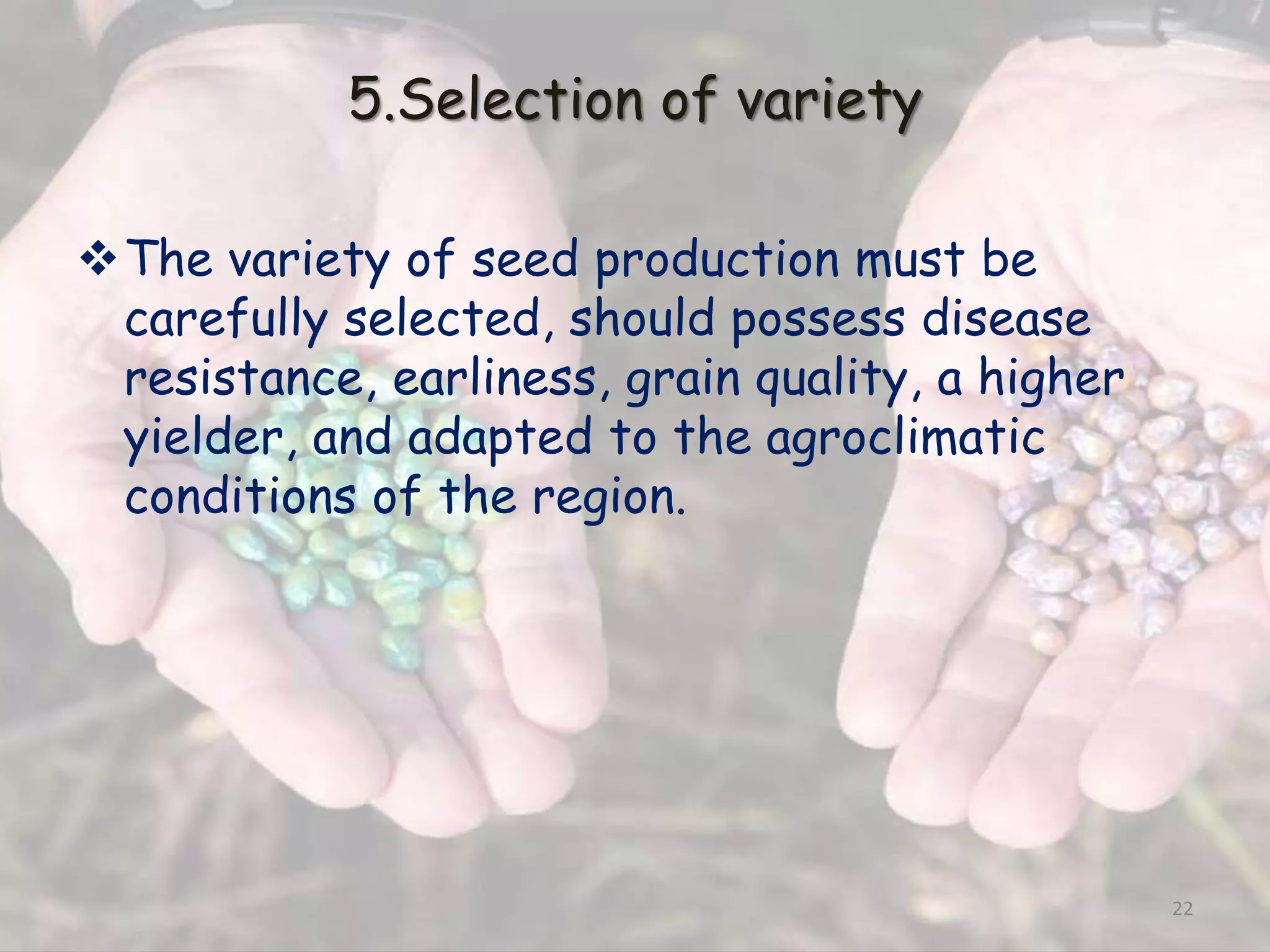
5.Selection of variety
The variety of seed production must be
carefully selected, should possess disease
resistance, earliness, grain quality, a higher
yielder, and adapted to the agroclimatic
conditions of the region.
22
6.Seed treatment
Depending upon the requirement the following
seed treatment may be given
Chemical seed treatment.
Bacterial inoculation for the legumes.
Seed treatment for breaking dormancy.
23
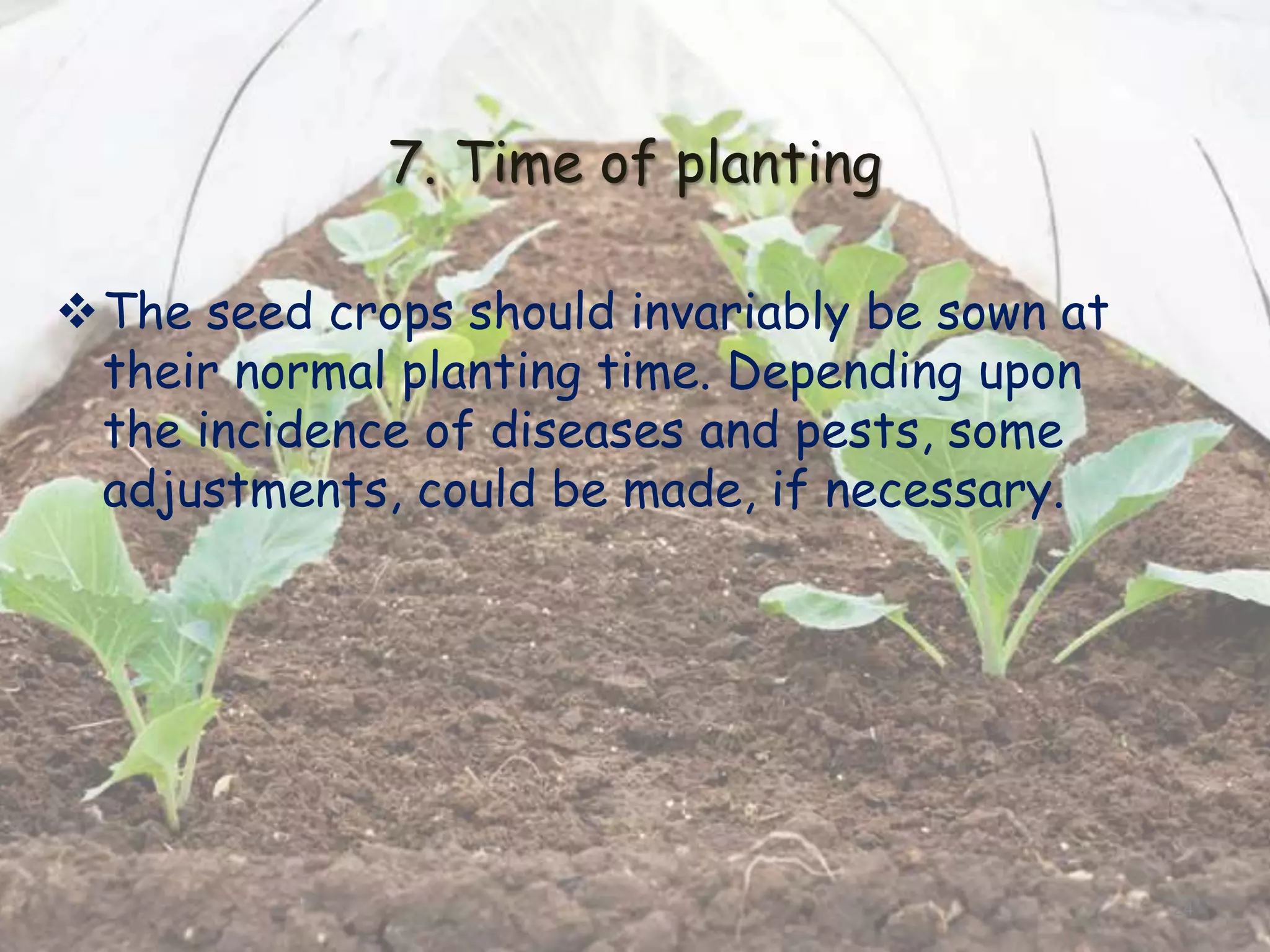
7. Time of planting
The seed crops should invariably be sown at
their normal planting time. Depending upon
the incidence of diseases and pests, some
adjustments, could be made, if necessary.
24
8.Seed Rate
Lower seed rates than usual for raising
commercial crop are desirable because they
facilitate rouging operations and inspection of
seed crops.
25
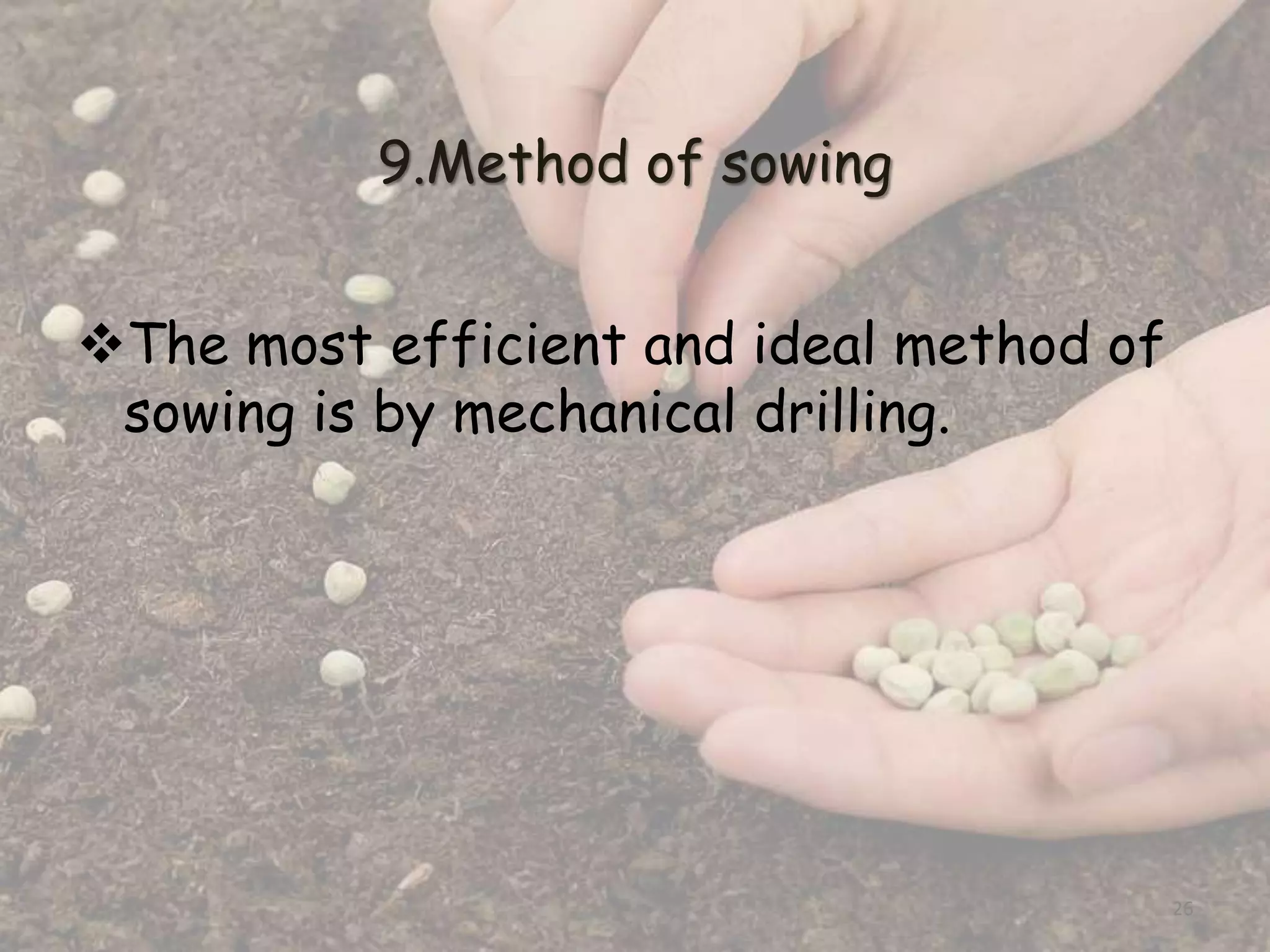
9.Method of sowing
The most efficient and ideal method of
sowing is by mechanical drilling.
26
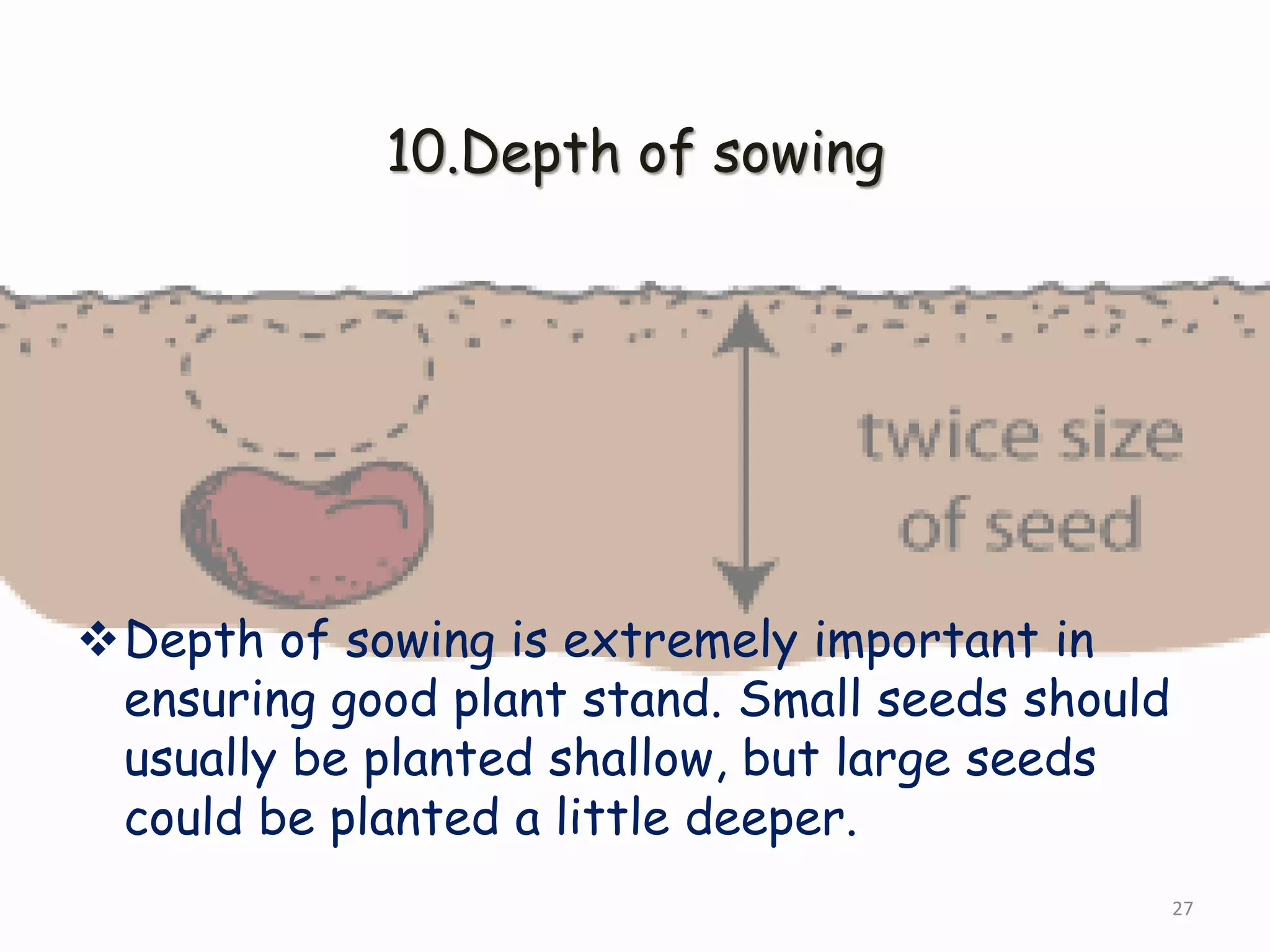
10.Depth of sowing
Depth of sowing is extremely important in
ensuring good plant stand. Small seeds should
usually be planted shallow, but large seeds
could be planted a little deeper.
27
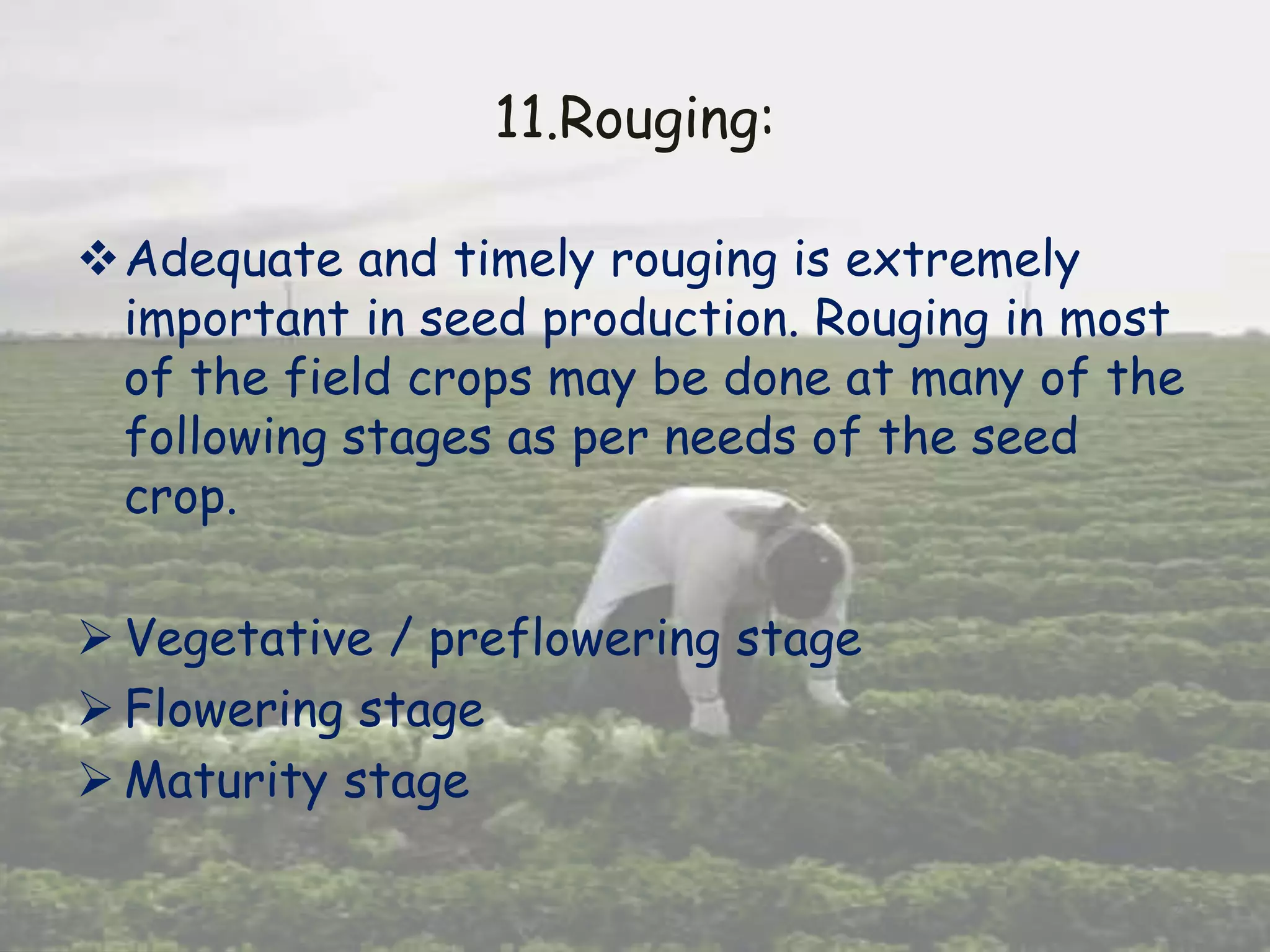
11.Rouging:
Adequate and timely rouging is extremely
important in seed production. Rouging in most
of the field crops may be done at many of the
following stages as per needs of the seed
crop.
 Vegetative / preflowering stage
 Flowering stage
 Maturity stage
28
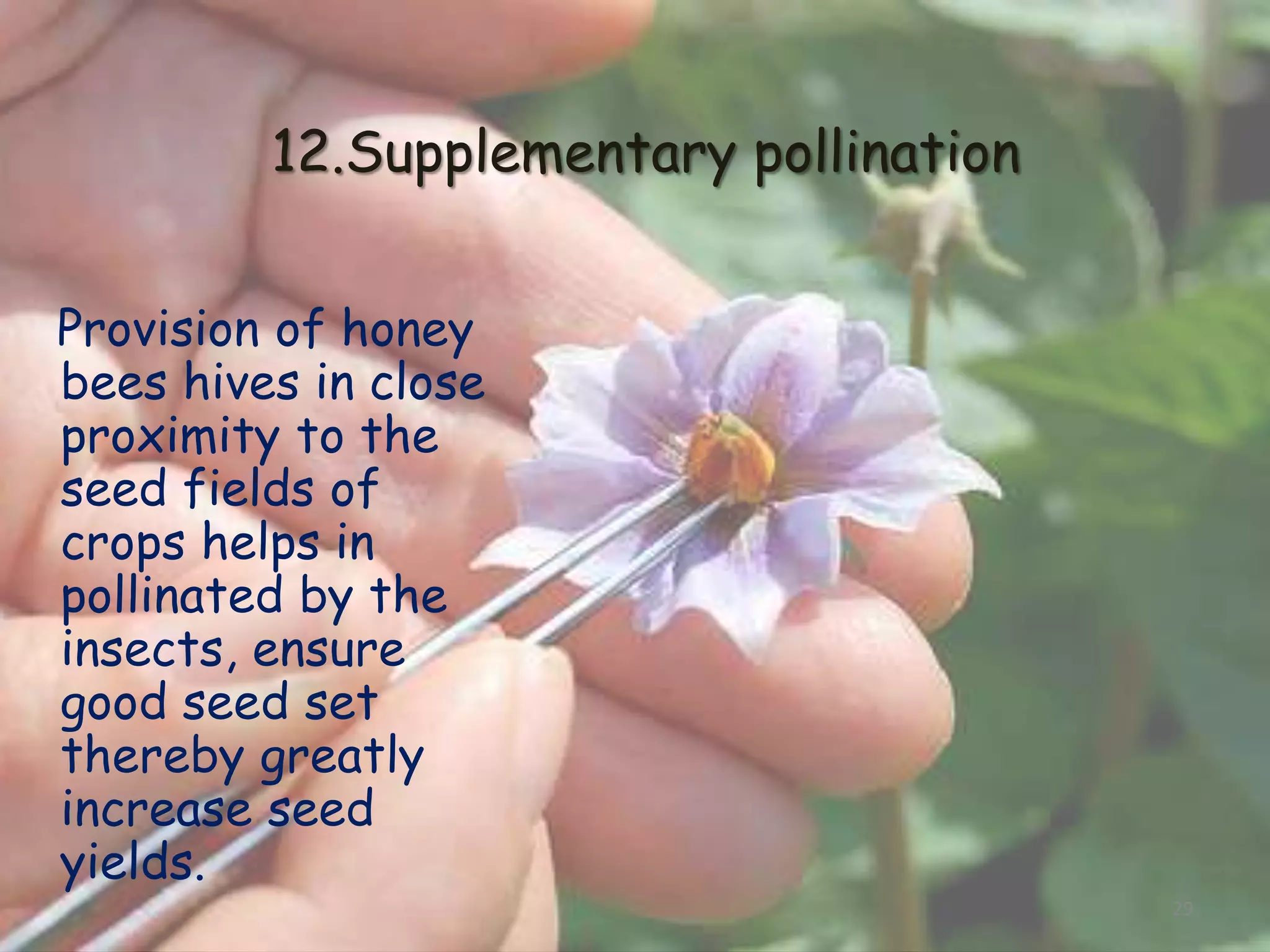
12.Supplementary pollination
Provision of honey
bees hives in close
proximity to the
seed fields of
crops helps in
pollinated by the
insects, ensure
good seed set
thereby greatly
increase seed
yields.
29
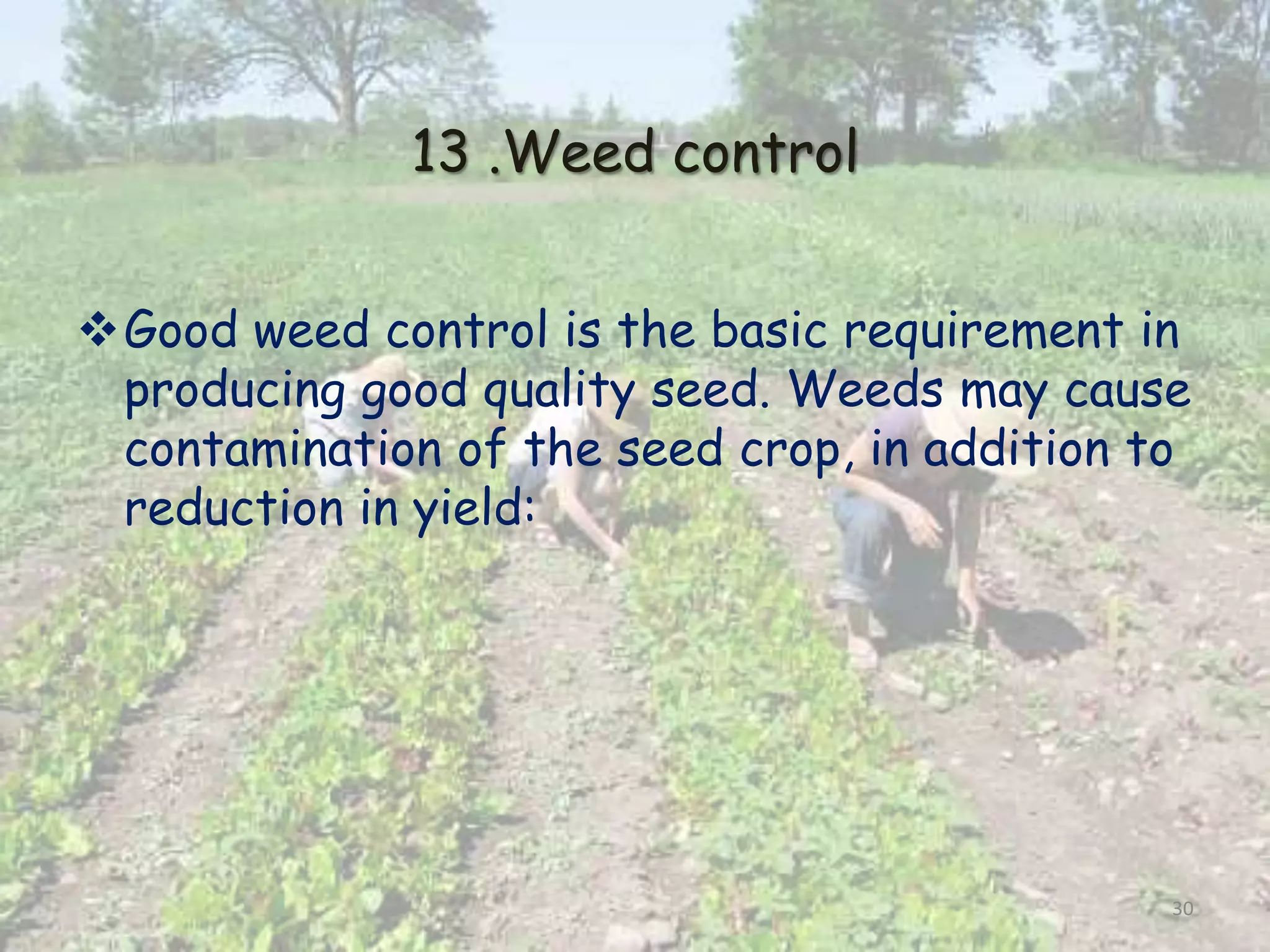
13 .Weed control
Good weed control is the basic requirement in
producing good quality seed. Weeds may cause
contamination of the seed crop, in addition to
reduction in yield:
30
14. Disease and insect control:
Successful disease and insect control is
another important factor in raising healthy
seed crops. Apart from reduction of yield,
the quality of seeds from diseased and insect
damaged plants is invariably poor.
31
15.Nutrition
In the nutrition of seed crops, nitrogen,
phosphorus, potassium, and several other
elements play an important role for proper
development of plants and seed.
 It is, therefore, advisable to know and
identify the nutritional requirements of seed
crops and apply adequate fertilizers.
32
16.Irrigation
Irrigation can be important at planting for
seed crops on dry soils to ensure good
uniform germination and adequate crop
stands.
Excess moisture or prolonged drought
adversely affects germination and frequently
results in poor crop stands.
33
17.Harvesting of Seed crops:
It is of great importance to harvest a seed
crop at the time that will allow both the
maximum yield and the best quality seed.
34
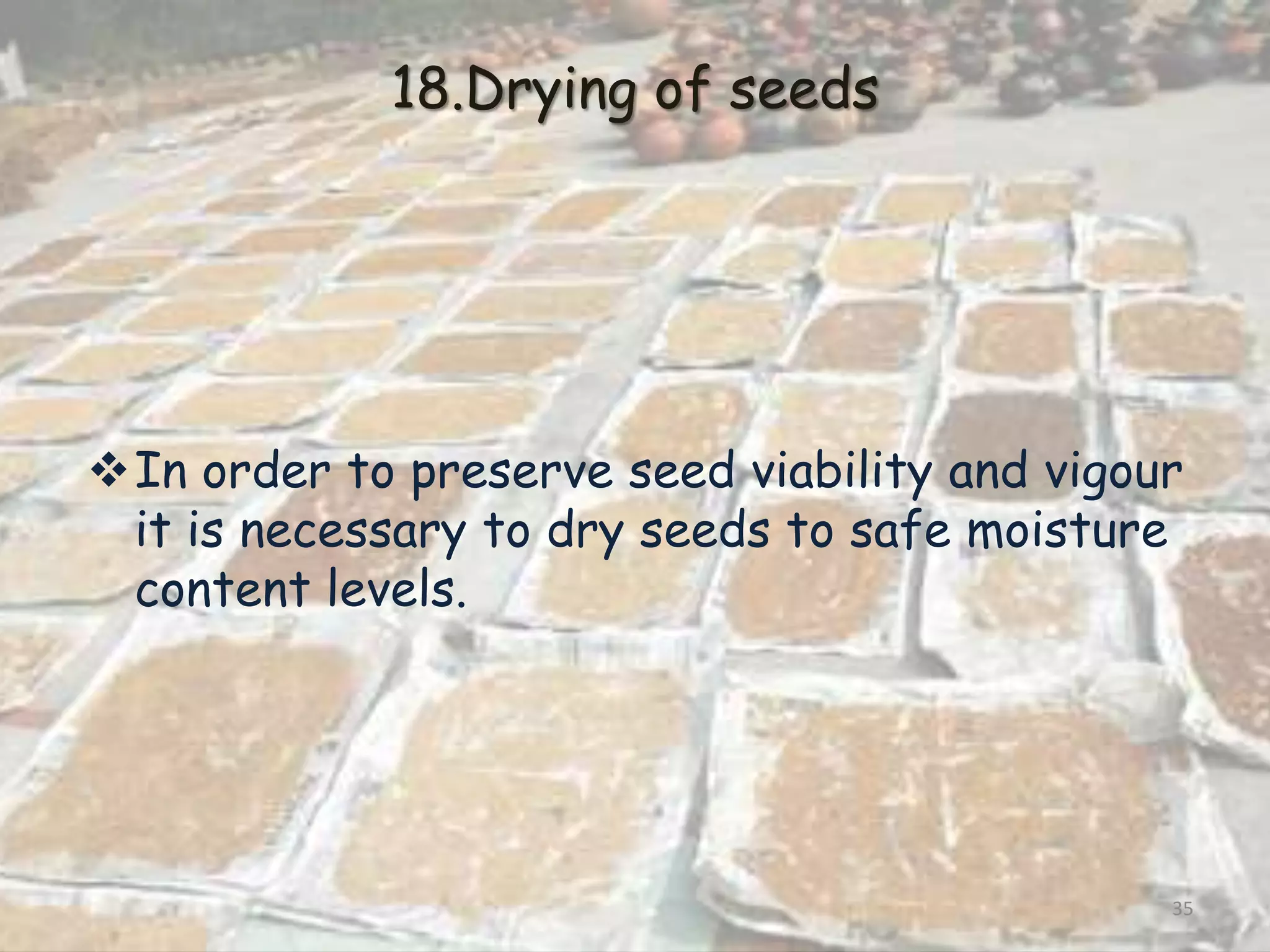
18.Drying of seeds
In order to preserve seed viability and vigour
it is necessary to dry seeds to safe moisture
content levels.
35
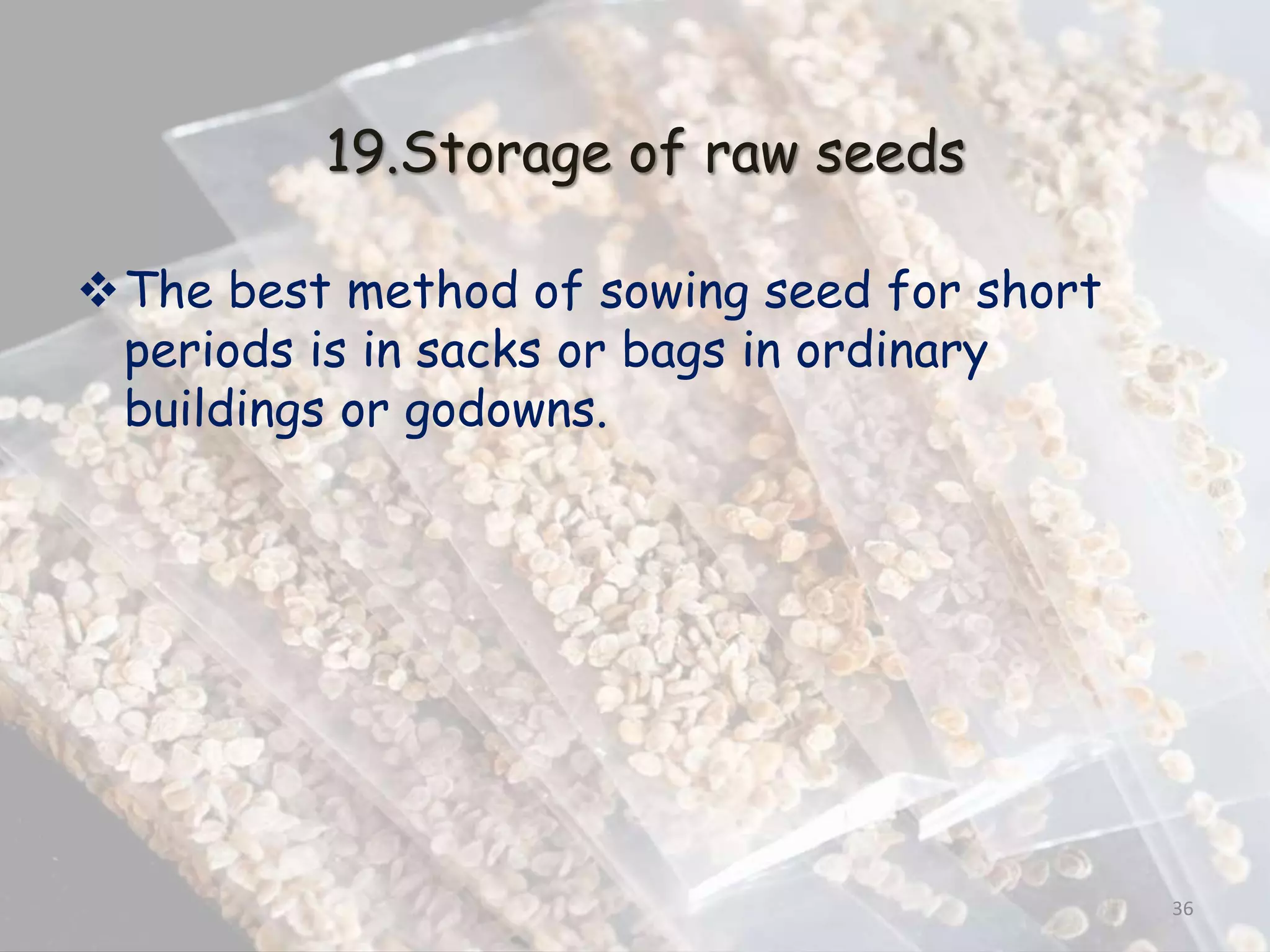
19.Storage of raw seeds
The best method of sowing seed for short
periods is in sacks or bags in ordinary
buildings or godowns.
36
CONCLUSION
37
By following appropriate seed production
techniques in vegetable crops, the growers can be
able to produce quality seeds for own use and on
the other hand can fetch handsome remuneration
by selling seeds. This not only helps the farmers in
income generation but ultimately the overall
vegetable production with respect to quantity and
quality can gain rapid momentum.
Reference
Seed production technology of vegetables- Prabhashankar singh, B,S Asati
1.Singh, P.M., Singh, B., Pandey, A.K. and Singh, R. (2010). Vegetable Seed
Production—A Ready Reckoner. Technical Bulletin No.37, IIVR, Varanasi.
2.Vanangamudi, K., Natarajan, N. and Srimathi, P. (2012) Advances in Seed Science
and Technology (Vol. 2) – Quality Seed Production in Vegetables. Agrobios (India),
Jodhpur.
3.Bhaskaran. M. and Vanangamudi, K. (2002). Principles of Seed Production and
Quality Control, Department of Seed Science and Technology, Tamil Nadu Agriculture
University, Coimbatore.
4.Parimala. K., Subramanian. K., Kannan. S. M. and Vijayalakshmi K. (2013). A Manual
on Seed Production and Certification, Centre for Indian Knowledge Systems (CIKS),
Chennai.
5.SEED PRODUCTION IN VEG ETABLE CROPS : THE IN DIAN PROS PECTS Durga Prasad
Moharana*, Vaibhav Singh, Pushpendra Singh and Anand K. Singh Department of
Horticulture, Institute of Agricultural Sciences, Banaras Hindu University, Varanasi-221
005 (U.P.)
38

Principles of vegetable seed production

  • 1.
  • 2.
    Fundamentals 0f VegetableProduction-VSC501(2+1) Presented By: Sanmathi Naik A T S Jr.M.Sc(Hort) Vegetable Science COH,Bengaluru Topic: Principle Of Vegetable Seed Production 2 Presented To: Dr.M.Anjanappa Proff, Dept.of Vegetable Science COH,Bengaluru UNIVERSITY OF HORTICULTURAL SCIENCES,BAGALKOT COLLEGE OF HORTICULTURE,BENGALURU
  • 3.
    INTRODUCTION  Vegetables arebestowed with the title of protective food as being rich in vitamins, proteins, carbohydrates, mineral salts, etc.  Among various food crops vegetables are the most easily affordable food. In developing countries like India, vegetables play a tremendous role in alleviating the malnutrition and improve nutritional standard of our people.  Currently India holds the second position in vegetable production after china.  The total production of vegetables has increased from 23.4 million tonnes in 1961-62 to the tune of 162.89 million tonnes in 2013-14.  The increase in productivity of vegetable crops in India has happened mostly due to the genetic improvement of vegetable crops and availability of seeds of hybrids and improved varieties of different vegetable crops.  The advanced production technology and better irrigation facilities also helped in enhancing the productivity of vegetable crops. 3
  • 4.
    Prospects of SeedIndustry in India  Total vegetable seed market in India is $ 228.182 million including open pollinated seed  Hybrid vegetable seed industry is $ 80 million (11% of world share)  Second largest user of tomato hybrids (40t) after USA  Largest area under hybrids of cabbage (60%) and cauliflower (45%) of total area 4
  • 5.
    Qualities of GoodVegetable Seeds  Genetically pure  Physically pure  Physiologically viable  Free from insect pests and diseases  Free from seeds of weeds and other crops 5
  • 6.
    Principles of VegetableSeed Production  Productionof genetically pure and quality seed requires high technical skill and specialization.  Seed production must be carried out under standard and well-organized conditions.  The producer should be familiar with genetic as well as agronomic principles of seed production. 2 Major principles 1.Genetic principles 2.Agronomic principles 6
  • 7.
    Genetic Principles 1. Deteriorationof varieties a. Developmental variation b. Mechanical mixtures c. Mutations d. Natural crossing e. Minor genetic variations f. Selective influence of diseases g. Techniques of plant breeders 7
  • 8.
    a. Developmental Variation Whenthe seed crops are grown in difficult environment under different soil and fertility conditions, or different climate conditions, or under different photoperiods, or at different elevation for several consecutive generations, the developmental variation may arise some times as differential growth response. To minimize the opportunity for such shifts to occur in varieties it is advisable to grow them in their areas of adaptation and growing seasons. 8
  • 9.
    b. Mechanical mixtures This is the most important source of variety deterioration during seed production. Mechanical mixtures may often take place at the time of sowing, if more than one variety is sown with same seed drill; through volunteer plants of the same crop in the seed field; or through different varieties grown in adjacent fields.  Often the seed produce of all the varieties are kept on same threshing floor, resulting in considerable varietal mixture.  To avoid this sort mechanical contamination it would be necessary to rogue the seed fields, and practice the utmost care during the seed production, harvesting, threshing and further handling 9
  • 10.
    c. Mutations This isnot a serious factor of varietal deterioration. In the majority of the cases it is difficult to identify or detect minor mutation. 10
  • 11.
    d. Natural crossing Insexually propagated crops, natural crossing is another most important source of varietal deterioration due to introgression to genes from unrelated stocks which can only be solved by prevention Natural crossing occurs due to following three reasons  Natural crossing with undesirable types .  Natural crossing with diseased plants.  Natural crossing with off- type plants. Natural crossing occurs due to following factors  The breeding system of species  Isolation systems  Varietal mass  Pollinating agent 11
  • 12.
    e. Minor geneticvariations  Minor genetic variations may exist even in the Varieties appearing phenotypically uniform and homogeneous at the time of their release.  During later production cycle some of this variation may be lost because of selective elimination by the environment.  To overcome these yields trials are suggested . 12
  • 13.
    f. Selective influenceof diseases  The selective influence of diseases in varietal deterioration is also of considerable importance. New crop varieties often become susceptible to new races of diseases often caused by obligate parasites and are out of seed programmes.  Similarly the vegetatively propagated stocks deteriorate fast if infected by viral, fungal and bacterial diseases.  During seed production it is, therefore, very important to produce disease free seeds/stocks. 13
  • 14.
    g. Techniques ofplant breeders In certain instances, serious instabilities may occur in varieties due to cytogenetically irregularities not properly assessed in the new varieties prior to their release. Other factors, such as break down in male sterility, certain environmental conditions, and other heritable variations may considerably lower the genetic purity. 14
  • 15.
    Maintenance of GeneticPurity During Seed Production:  Use of approved seed only in seed multiplication.  Inspection and approval of fields prior to planting.  Field inspection and approval of growing crops at critical stages for verification of genetic purity, detection of mixtures, weeds, and for freedom from noxious weeds and seed borne diseases etc.  Sampling and sealing of cleaned lots.  Growing of samples of potentially approved stocks for comparison with authentic stocks. 15
  • 16.
    Steps suggested formaintaining genetic purity  Providing adequate isolation to prevent contamination by natural crossing or mechanical mixtures.  Rouging of seed fields prior to the stage at which they could contaminate the seed crop.  Periodic testing of varieties for genetic purity.  Avoiding genetic shifts by growing crops in areas in their adaptation only.  Certification of seed crops to maintain genetic purity and quality of seed.  Adopting the generation system.  Grow out tests. 16
  • 17.
    Agronomic Principles 1.Selection ofa Agro-climatic Region 2.Selection of seed plot 3.Isolation of Seed crops 4.Preparation of Land 5.Selection of variety 6.Seed treatment 7.Time of planting 8.Seed Rate 9.Method of sowing 10.Depth of sowing 11.Rouging 12.Supplementary pollination 13 .Weed control 14. Disease and insect control 15.Nutrition 16.Irrigation 17.Harvesting of Seed crops 18.Drying of seeds 19.Storage of raw seeds 17
  • 18.
    1.Selection of aAgro-climatic Region A crop variety to be grown for seed production in an area must be adapted to the photoperiod and temperature conditions prevailing in that area. 18
  • 19.
    2.Selection of seedplot The plot selected for seed crop must be free from volunteer plants, weed plants and have good soil texture and fertility The soil of the seed plot should be comparatively free from soil borne diseases and insects pests. 19
  • 20.
    3.Isolation of Seedcrops The seed crop must be isolated from other nearby fields of the same crops and the other contaminating crops as per requirement of the certification standards. 20
  • 21.
    4.Preparation of Land Goodland preparation helps in improved germination, good stand establishment and destruction of potential weeds. It also aids in water management and good uniform irrigation. 21
  • 22.
    5.Selection of variety Thevariety of seed production must be carefully selected, should possess disease resistance, earliness, grain quality, a higher yielder, and adapted to the agroclimatic conditions of the region. 22
  • 23.
    6.Seed treatment Depending uponthe requirement the following seed treatment may be given Chemical seed treatment. Bacterial inoculation for the legumes. Seed treatment for breaking dormancy. 23
  • 24.
    7. Time ofplanting The seed crops should invariably be sown at their normal planting time. Depending upon the incidence of diseases and pests, some adjustments, could be made, if necessary. 24
  • 25.
    8.Seed Rate Lower seedrates than usual for raising commercial crop are desirable because they facilitate rouging operations and inspection of seed crops. 25
  • 26.
    9.Method of sowing Themost efficient and ideal method of sowing is by mechanical drilling. 26
  • 27.
    10.Depth of sowing Depthof sowing is extremely important in ensuring good plant stand. Small seeds should usually be planted shallow, but large seeds could be planted a little deeper. 27
  • 28.
    11.Rouging: Adequate and timelyrouging is extremely important in seed production. Rouging in most of the field crops may be done at many of the following stages as per needs of the seed crop.  Vegetative / preflowering stage  Flowering stage  Maturity stage 28
  • 29.
    12.Supplementary pollination Provision ofhoney bees hives in close proximity to the seed fields of crops helps in pollinated by the insects, ensure good seed set thereby greatly increase seed yields. 29
  • 30.
    13 .Weed control Goodweed control is the basic requirement in producing good quality seed. Weeds may cause contamination of the seed crop, in addition to reduction in yield: 30
  • 31.
    14. Disease andinsect control: Successful disease and insect control is another important factor in raising healthy seed crops. Apart from reduction of yield, the quality of seeds from diseased and insect damaged plants is invariably poor. 31
  • 32.
    15.Nutrition In the nutritionof seed crops, nitrogen, phosphorus, potassium, and several other elements play an important role for proper development of plants and seed.  It is, therefore, advisable to know and identify the nutritional requirements of seed crops and apply adequate fertilizers. 32
  • 33.
    16.Irrigation Irrigation can beimportant at planting for seed crops on dry soils to ensure good uniform germination and adequate crop stands. Excess moisture or prolonged drought adversely affects germination and frequently results in poor crop stands. 33
  • 34.
    17.Harvesting of Seedcrops: It is of great importance to harvest a seed crop at the time that will allow both the maximum yield and the best quality seed. 34
  • 35.
    18.Drying of seeds Inorder to preserve seed viability and vigour it is necessary to dry seeds to safe moisture content levels. 35
  • 36.
    19.Storage of rawseeds The best method of sowing seed for short periods is in sacks or bags in ordinary buildings or godowns. 36
  • 37.
    CONCLUSION 37 By following appropriateseed production techniques in vegetable crops, the growers can be able to produce quality seeds for own use and on the other hand can fetch handsome remuneration by selling seeds. This not only helps the farmers in income generation but ultimately the overall vegetable production with respect to quantity and quality can gain rapid momentum.
  • 38.
    Reference Seed production technologyof vegetables- Prabhashankar singh, B,S Asati 1.Singh, P.M., Singh, B., Pandey, A.K. and Singh, R. (2010). Vegetable Seed Production—A Ready Reckoner. Technical Bulletin No.37, IIVR, Varanasi. 2.Vanangamudi, K., Natarajan, N. and Srimathi, P. (2012) Advances in Seed Science and Technology (Vol. 2) – Quality Seed Production in Vegetables. Agrobios (India), Jodhpur. 3.Bhaskaran. M. and Vanangamudi, K. (2002). Principles of Seed Production and Quality Control, Department of Seed Science and Technology, Tamil Nadu Agriculture University, Coimbatore. 4.Parimala. K., Subramanian. K., Kannan. S. M. and Vijayalakshmi K. (2013). A Manual on Seed Production and Certification, Centre for Indian Knowledge Systems (CIKS), Chennai. 5.SEED PRODUCTION IN VEG ETABLE CROPS : THE IN DIAN PROS PECTS Durga Prasad Moharana*, Vaibhav Singh, Pushpendra Singh and Anand K. Singh Department of Horticulture, Institute of Agricultural Sciences, Banaras Hindu University, Varanasi-221 005 (U.P.) 38