Principles of Navigation
Orienting Your Compass for Service
Who Are Navigators?
“Navigators are trained, culturally
sensitive, and committed individuals
who provide support and guidance to
individual patients, and within their
community, to help improve access to
health care.”
Patient Navigators
• Support and mentor individuals with chronic
health conditions;
• Support the development of a Patient-
Centered Medical Home;
• Help in the development and integration of a
skilled-volunteer base to strengthen the
support offered to patients.
Community Navigators
• Address health disparities through health
education, outreach, & enrollment initiatives;
• Support the development of new collaborative
partnerships to address community health;
• Help in the development and integration of a
skilled-volunteer base to strengthen the
promotion of community health.
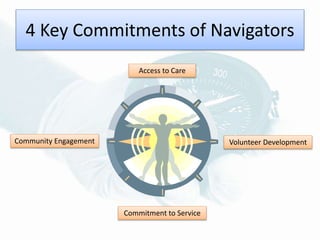
4 Key Commitments of Navigators
Access to Care
Commitment to Service
Community Engagement Volunteer Development
What is a
Patient-Centered Medical Home?
“A Patient-Centered Medical Home is a
health care setting that facilitates
partnerships between individual
patients, their personal physicians,
and when appropriate,
the patient’s family.”
Source: Patient Centered Primary Care Collaborative: http://www.pcpcc.net/content/joint-principles-patient-centered-medical-home
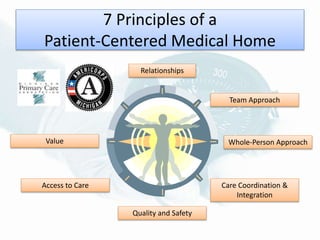
7 Principles of a
Patient-Centered Medical Home
Relationships
Quality and Safety
Value Whole-Person Approach
Team Approach
Care Coordination &
Integration
Access to Care
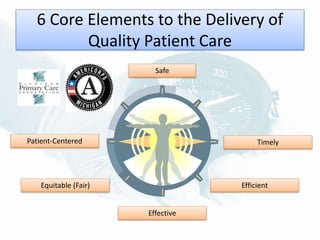
6 Core Elements to the Delivery of
Quality Patient Care
Safe
Effective
Patient-Centered Timely
EfficientEquitable (Fair)
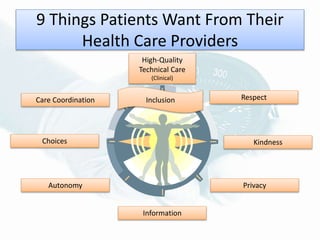
9 Things Patients Want From Their
Health Care Providers
High-Quality
Technical Care
(Clinical)
Information
Choices Kindness
PrivacyAutonomy
RespectCare Coordination Inclusion
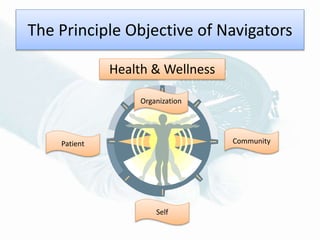
The Principle Objective of Navigators
Health & Wellness
Patient Community
Self
Organization
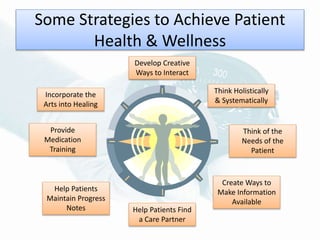
Some Strategies to Achieve Patient
Health & Wellness
Develop Creative
Ways to Interact
Think Holistically
& Systematically
Think of the
Needs of the
Patient
Create Ways to
Make Information
Available
Help Patients Find
a Care Partner
Help Patients
Maintain Progress
Notes
Provide
Medication
Training
Incorporate the
Arts into Healing
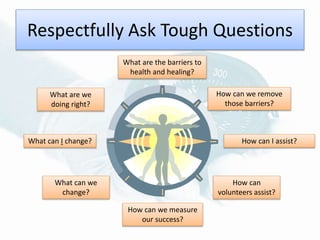
Respectfully Ask Tough Questions
What are the barriers to
health and healing?
How can we remove
those barriers?
How can I assist?
How can
volunteers assist?
How can we measure
our success?
What can we
change?
What can I change?
What are we
doing right?
Resources
Putting Patients First: Best Practices in Patient-Centered
Care by Susan P. Frampton & Patrick Charmel (Amazon)
National Association of Community Health Centers
Publications & Resources
Patient-Centered Primary Care Collaborative
http://www.pcpcc.net/
Through the Patient's Eyes: Understanding and Promoting Patient-Centered Care
Editors: Margaret Gerteis; Susan Edgman-Levitan; Jennifer Daley; Thomas L. Delbanco (Amazon)
Michigan Primary Care Association
Resource Library
Questions?

Principles of Navigation

  • 1.
    Principles of Navigation OrientingYour Compass for Service
  • 2.
    Who Are Navigators? “Navigatorsare trained, culturally sensitive, and committed individuals who provide support and guidance to individual patients, and within their community, to help improve access to health care.”
  • 3.
    Patient Navigators • Supportand mentor individuals with chronic health conditions; • Support the development of a Patient- Centered Medical Home; • Help in the development and integration of a skilled-volunteer base to strengthen the support offered to patients.
  • 4.
    Community Navigators • Addresshealth disparities through health education, outreach, & enrollment initiatives; • Support the development of new collaborative partnerships to address community health; • Help in the development and integration of a skilled-volunteer base to strengthen the promotion of community health.
  • 5.
    4 Key Commitmentsof Navigators Access to Care Commitment to Service Community Engagement Volunteer Development
  • 6.
    What is a Patient-CenteredMedical Home? “A Patient-Centered Medical Home is a health care setting that facilitates partnerships between individual patients, their personal physicians, and when appropriate, the patient’s family.” Source: Patient Centered Primary Care Collaborative: http://www.pcpcc.net/content/joint-principles-patient-centered-medical-home
  • 7.
    7 Principles ofa Patient-Centered Medical Home Relationships Quality and Safety Value Whole-Person Approach Team Approach Care Coordination & Integration Access to Care
  • 8.
    6 Core Elementsto the Delivery of Quality Patient Care Safe Effective Patient-Centered Timely EfficientEquitable (Fair)
  • 9.
    9 Things PatientsWant From Their Health Care Providers High-Quality Technical Care (Clinical) Information Choices Kindness PrivacyAutonomy RespectCare Coordination Inclusion
  • 10.
    The Principle Objectiveof Navigators Health & Wellness Patient Community Self Organization
  • 11.
    Some Strategies toAchieve Patient Health & Wellness Develop Creative Ways to Interact Think Holistically & Systematically Think of the Needs of the Patient Create Ways to Make Information Available Help Patients Find a Care Partner Help Patients Maintain Progress Notes Provide Medication Training Incorporate the Arts into Healing
  • 12.
    Respectfully Ask ToughQuestions What are the barriers to health and healing? How can we remove those barriers? How can I assist? How can volunteers assist? How can we measure our success? What can we change? What can I change? What are we doing right?
  • 13.
    Resources Putting Patients First:Best Practices in Patient-Centered Care by Susan P. Frampton & Patrick Charmel (Amazon) National Association of Community Health Centers Publications & Resources Patient-Centered Primary Care Collaborative http://www.pcpcc.net/ Through the Patient's Eyes: Understanding and Promoting Patient-Centered Care Editors: Margaret Gerteis; Susan Edgman-Levitan; Jennifer Daley; Thomas L. Delbanco (Amazon) Michigan Primary Care Association Resource Library
  • 14.