The purpose of this presentation is to:
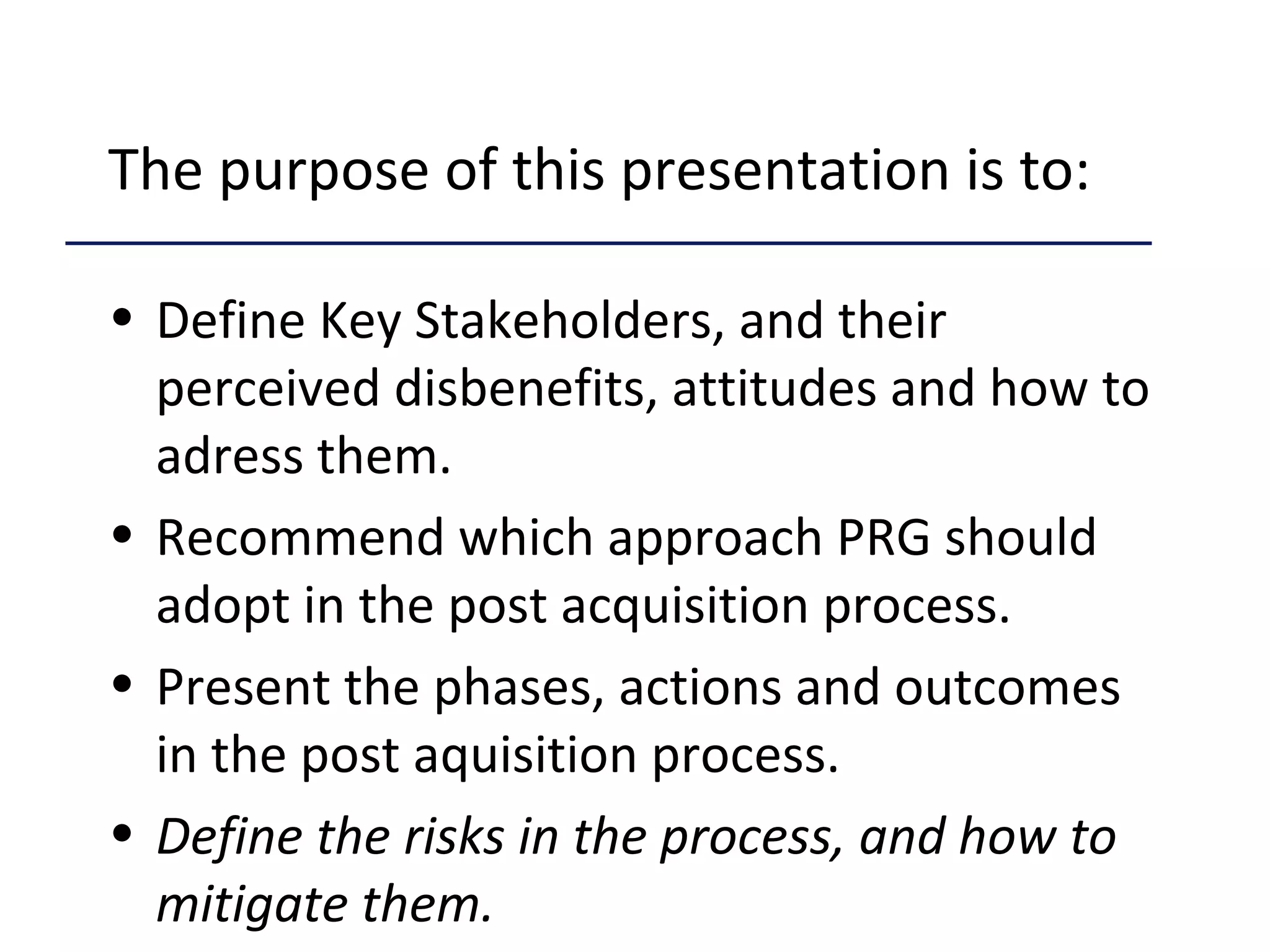
• Define Key Stakeholders, and their
perceived disbenefits, attitudes and how to
adress them.
• Recommend which approach PRG should
adopt in the post acquisition process.
• Present the phases, actions and outcomes
in the post aquisition process.
• Define the risks in the process, and how to
mitigate them.
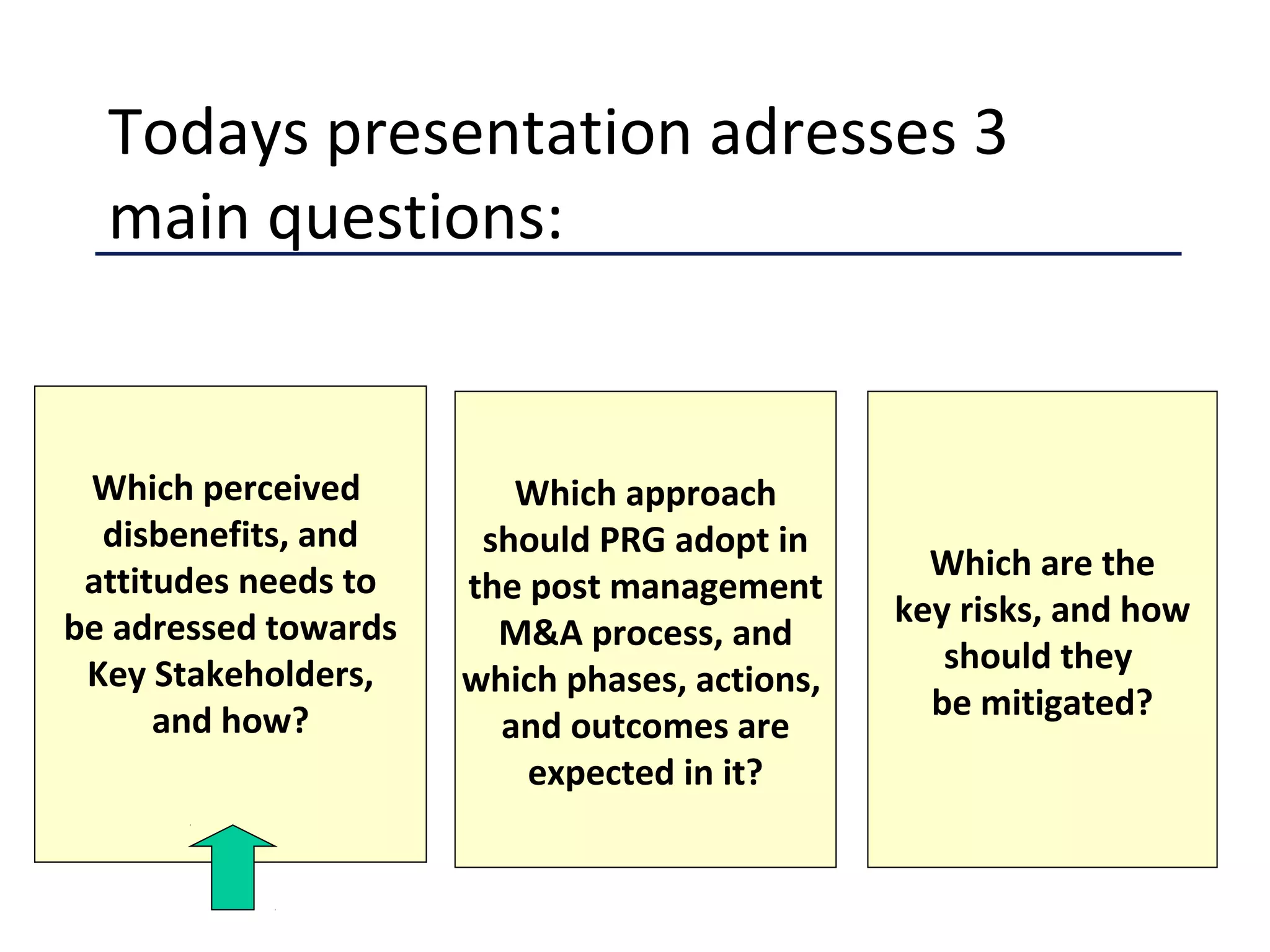
Todays presentation adresses 3
main questions:
Which perceived
disbenefits, and
attitudes needs to
be adressed towards
Key Stakeholders,
and how?
Which approach
should PRG adopt in
the post management
M&A process, and
which phases, actions,
and outcomes are
expected in it?
Which are the
key risks, and how
should they
be mitigated?
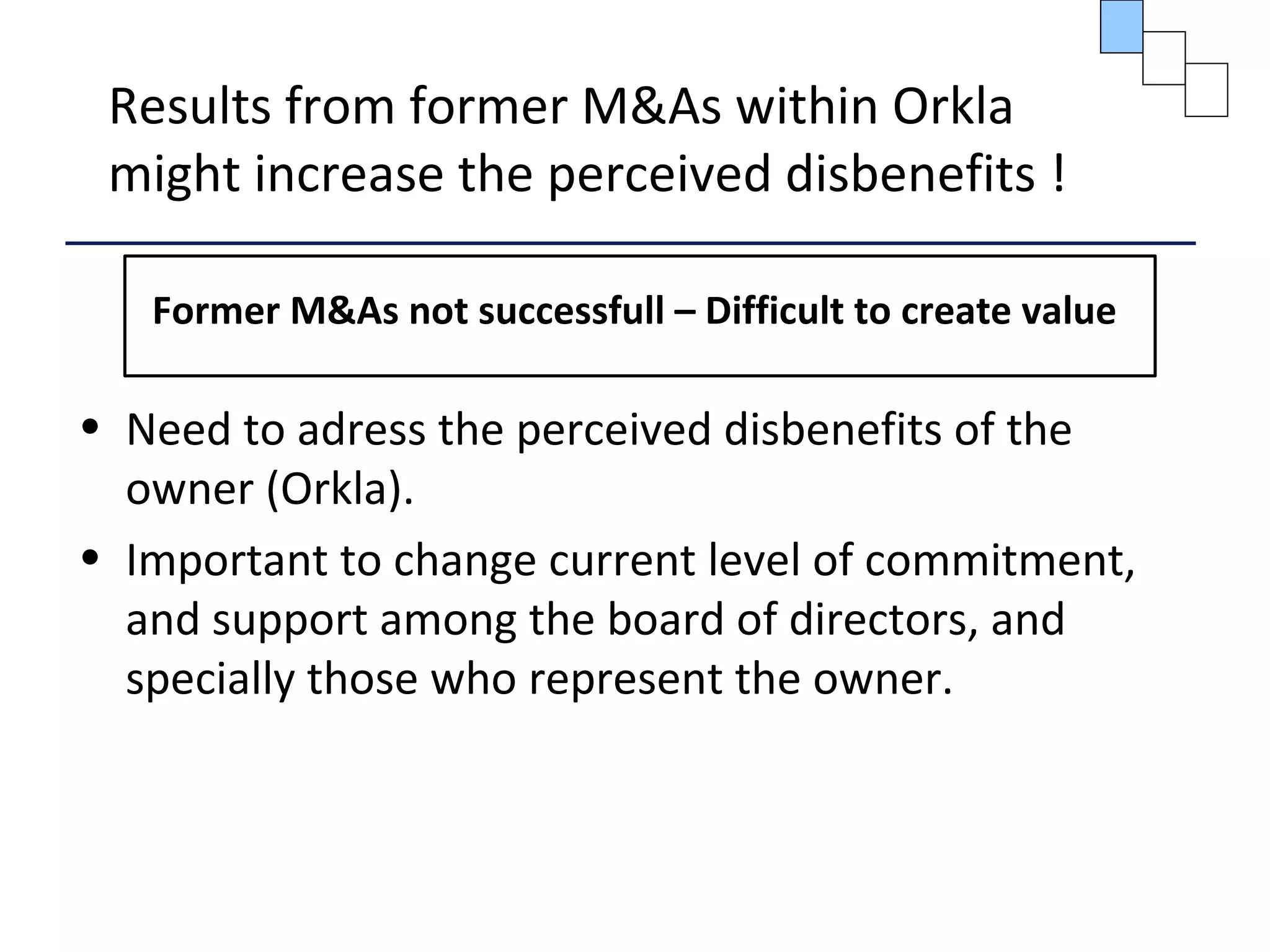
Results from former M&As within Orkla
might increase the perceived disbenefits !
Former M&As not successfull – Difficult to create value
• Need to adress the perceived disbenefits of the
owner (Orkla).
• Important to change current level of commitment,
and support among the board of directors, and
specially those who represent the owner.
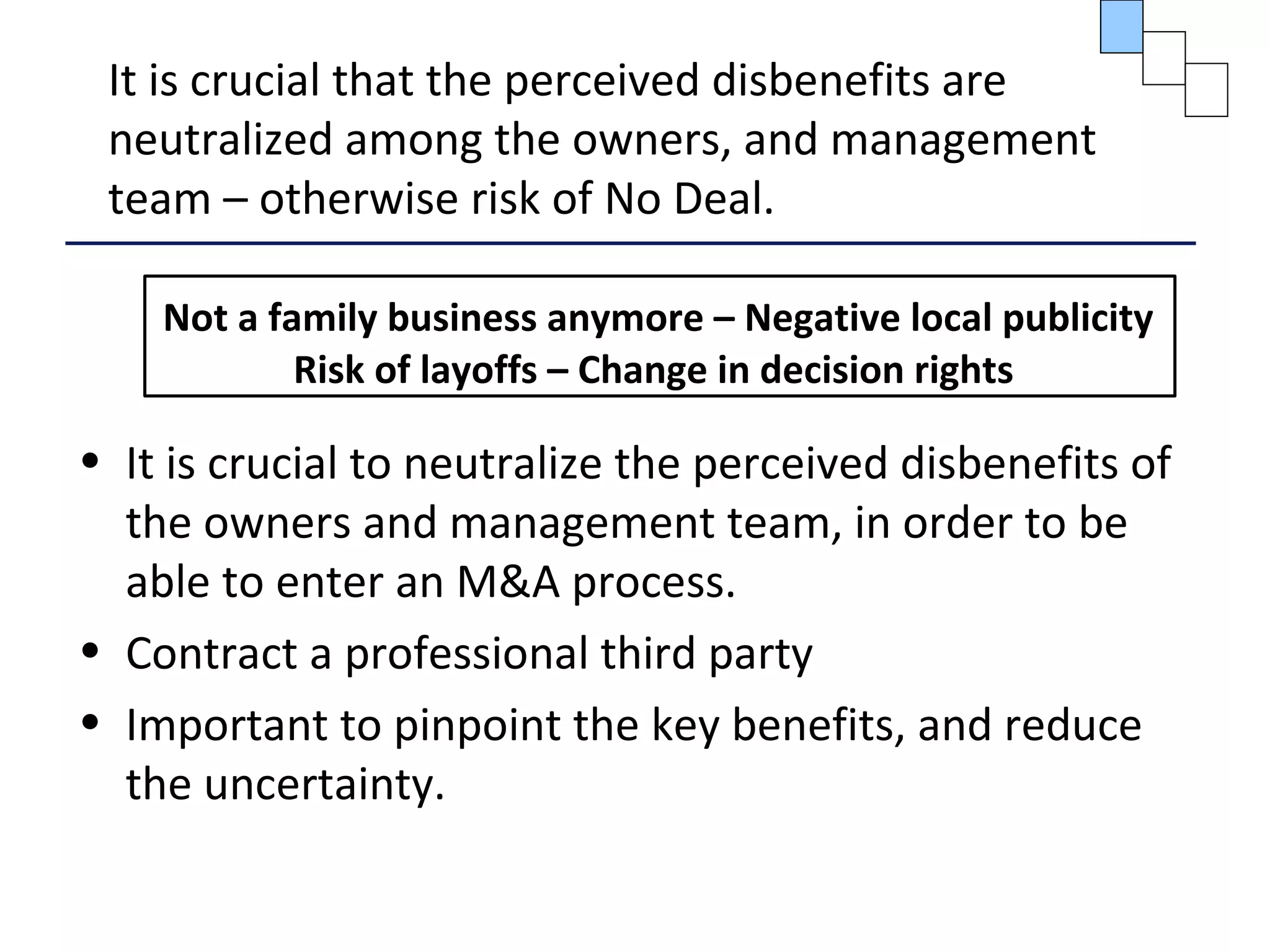
It is crucial that the perceived disbenefits are
neutralized among the owners, and management
team – otherwise risk of No Deal.
Not a family business anymore – Negative local publicity
Risk of layoffs – Change in decision rights
• It is crucial to neutralize the perceived disbenefits of
the owners and management team, in order to be
able to enter an M&A process.
• Contract a professional third party
• Important to pinpoint the key benefits, and reduce
the uncertainty.
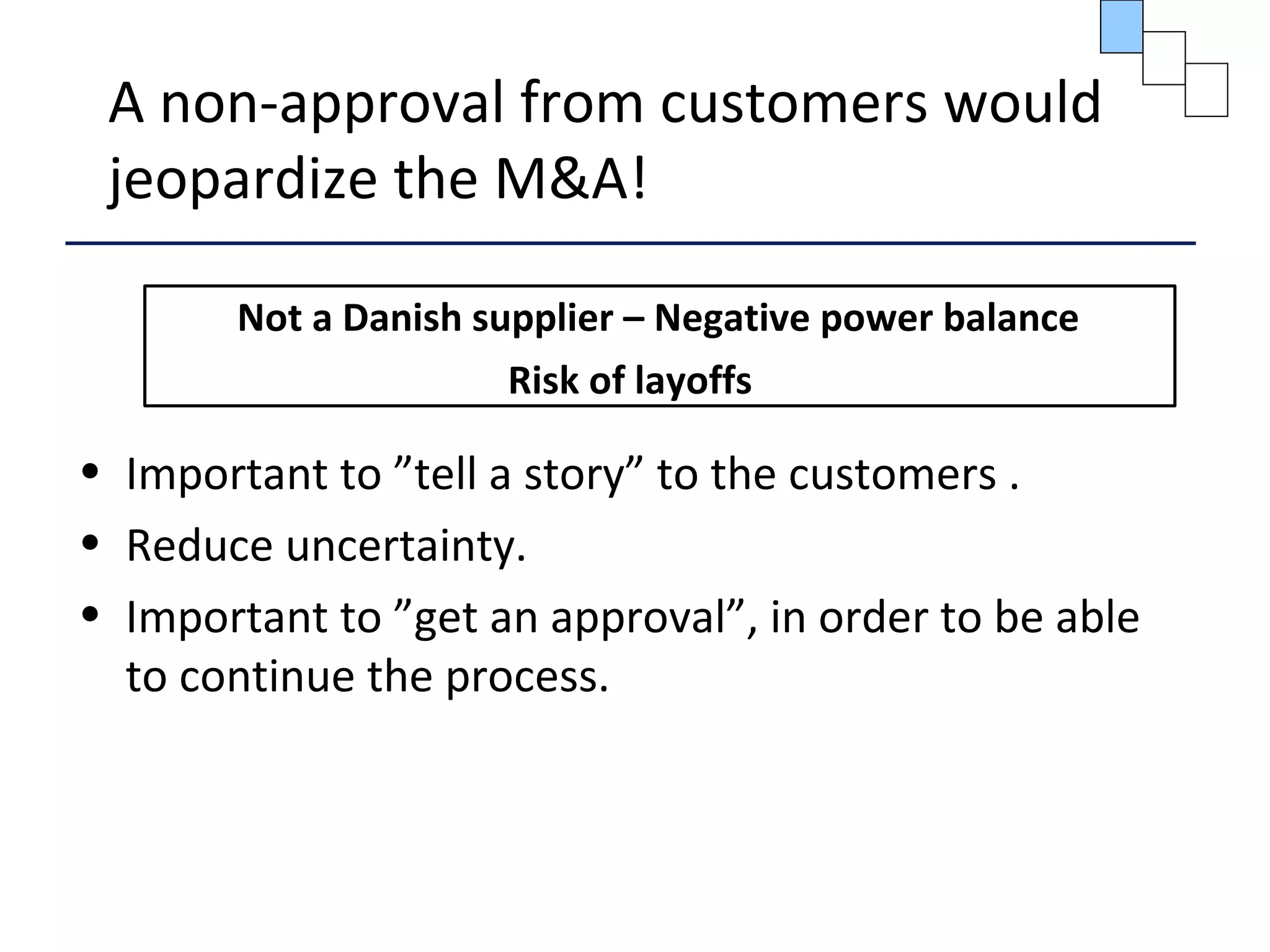
A non-approval from customers would
jeopardize the M&A!
Not a Danish supplier – Negative power balance
Risk of layoffs
• Important to ”tell a story” to the customers .
• Reduce uncertainty.
• Important to ”get an approval”, in order to be able
to continue the process.
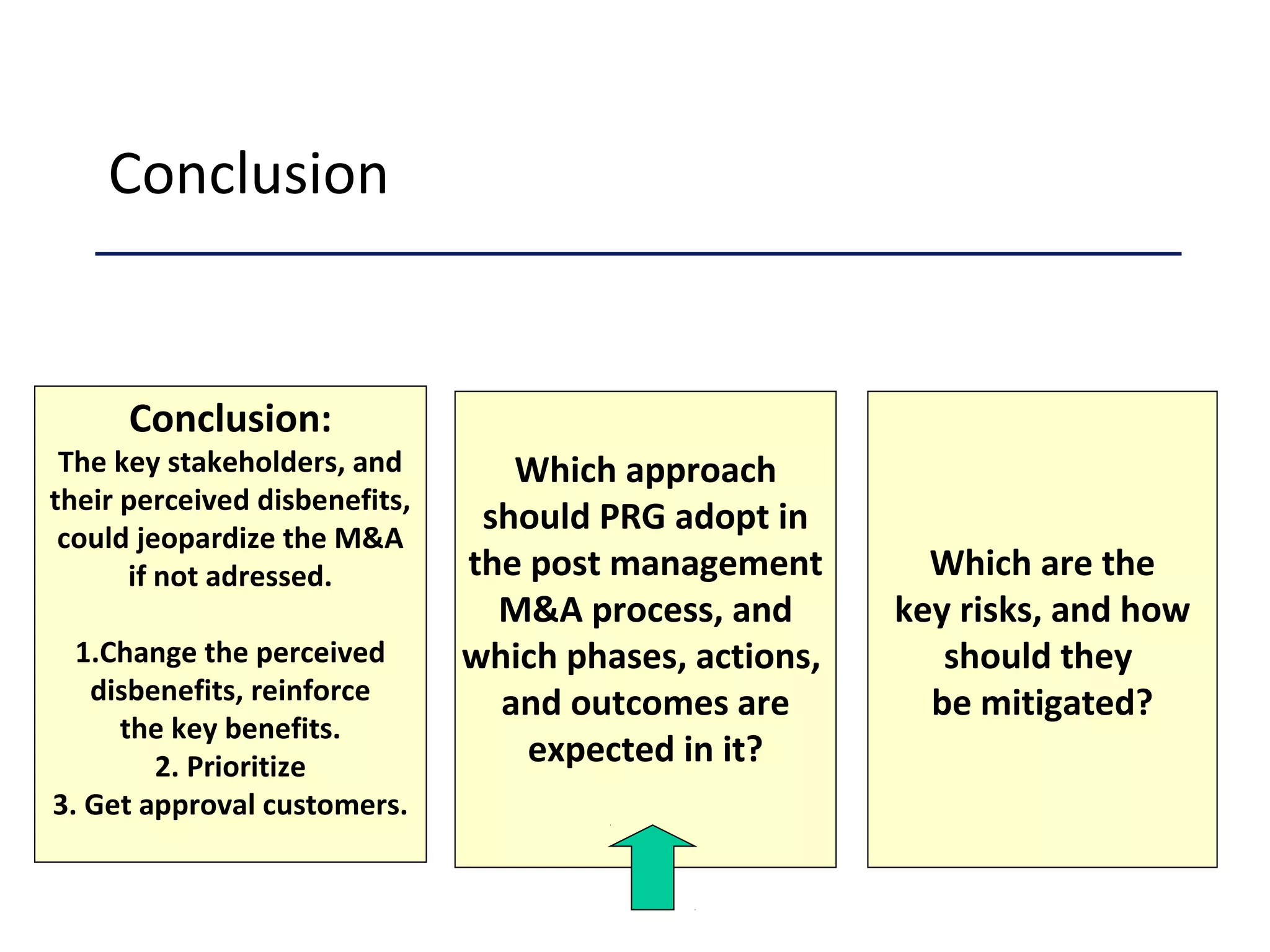
Conclusion
Conclusion:
The key stakeholders, and
their perceived disbenefits,
could jeopardize the M&A
if not adressed.
1.Change the perceived
disbenefits, reinforce
the key benefits.
2. Prioritize
3. Get approval customers.
Which approach
should PRG adopt in
the post management
M&A process, and
which phases, actions,
and outcomes are
expected in it?
Which are the
key risks, and how
should they
be mitigated?
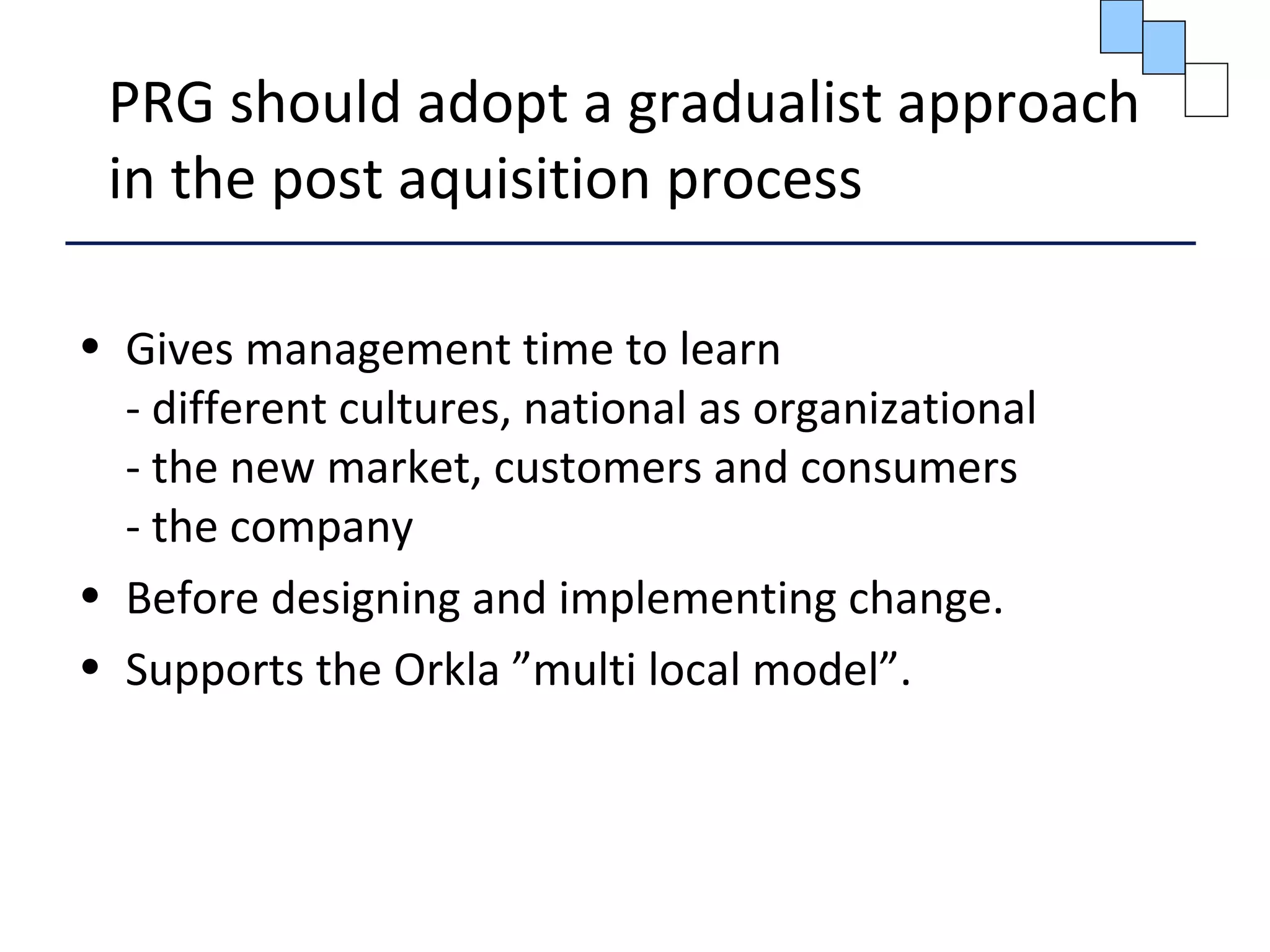
PRG should adopt a gradualist approach
in the post aquisition process
• Gives management time to learn
- different cultures, national as organizational
- the new market, customers and consumers
- the company
• Before designing and implementing change.
• Supports the Orkla ”multi local model”.
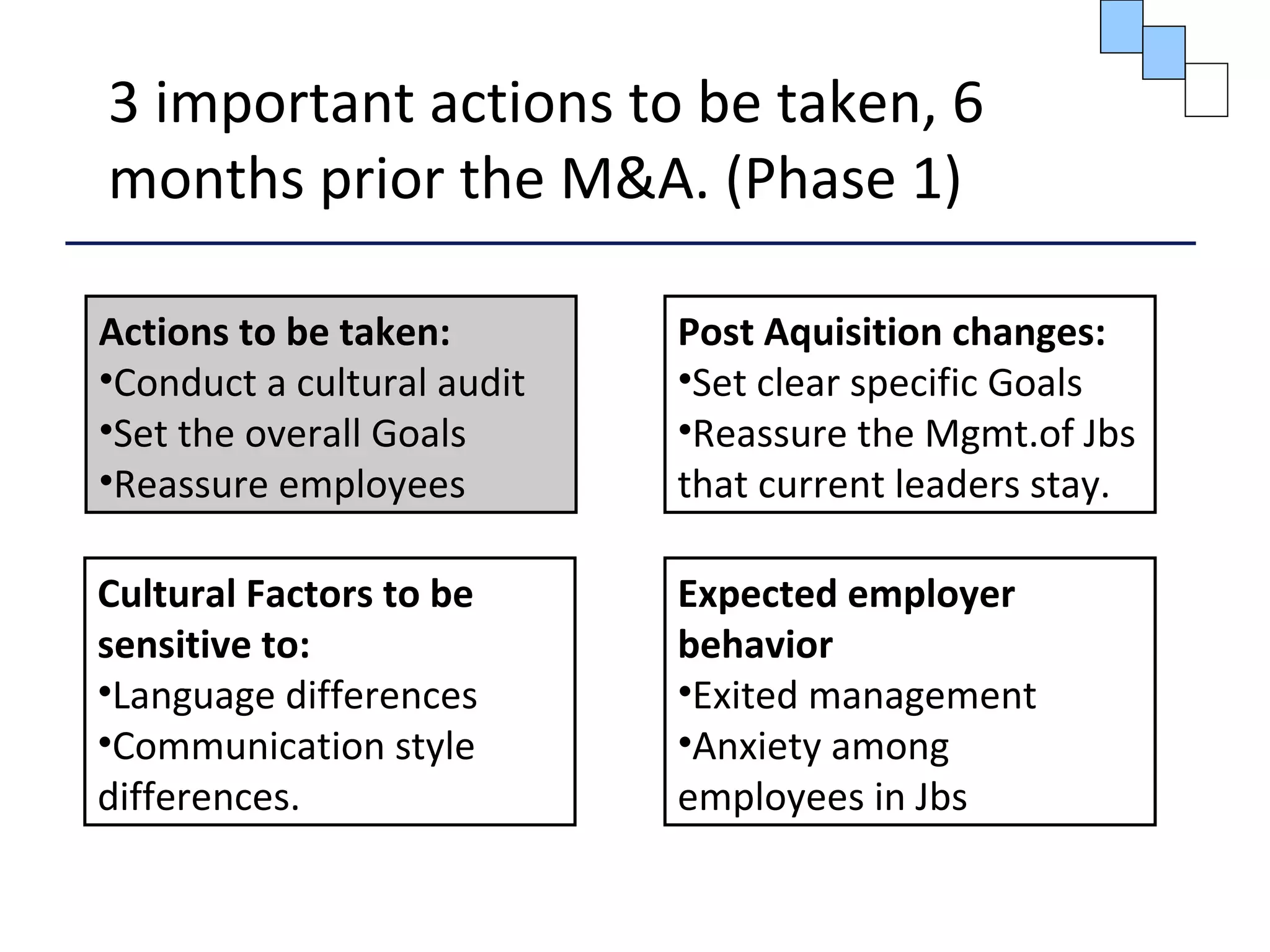
3 important actions to be taken, 6
months prior the M&A. (Phase 1)
Post Aquisition changes:
•Set clear specific Goals
•Reassure the Mgmt.of Jbs
that current leaders stay.
Actions to be taken:
•Conduct a cultural audit
•Set the overall Goals
•Reassure employees
Cultural Factors to be
sensitive to:
•Language differences
•Communication style
differences.
Expected employer
behavior
•Exited management
•Anxiety among
employees in Jbs
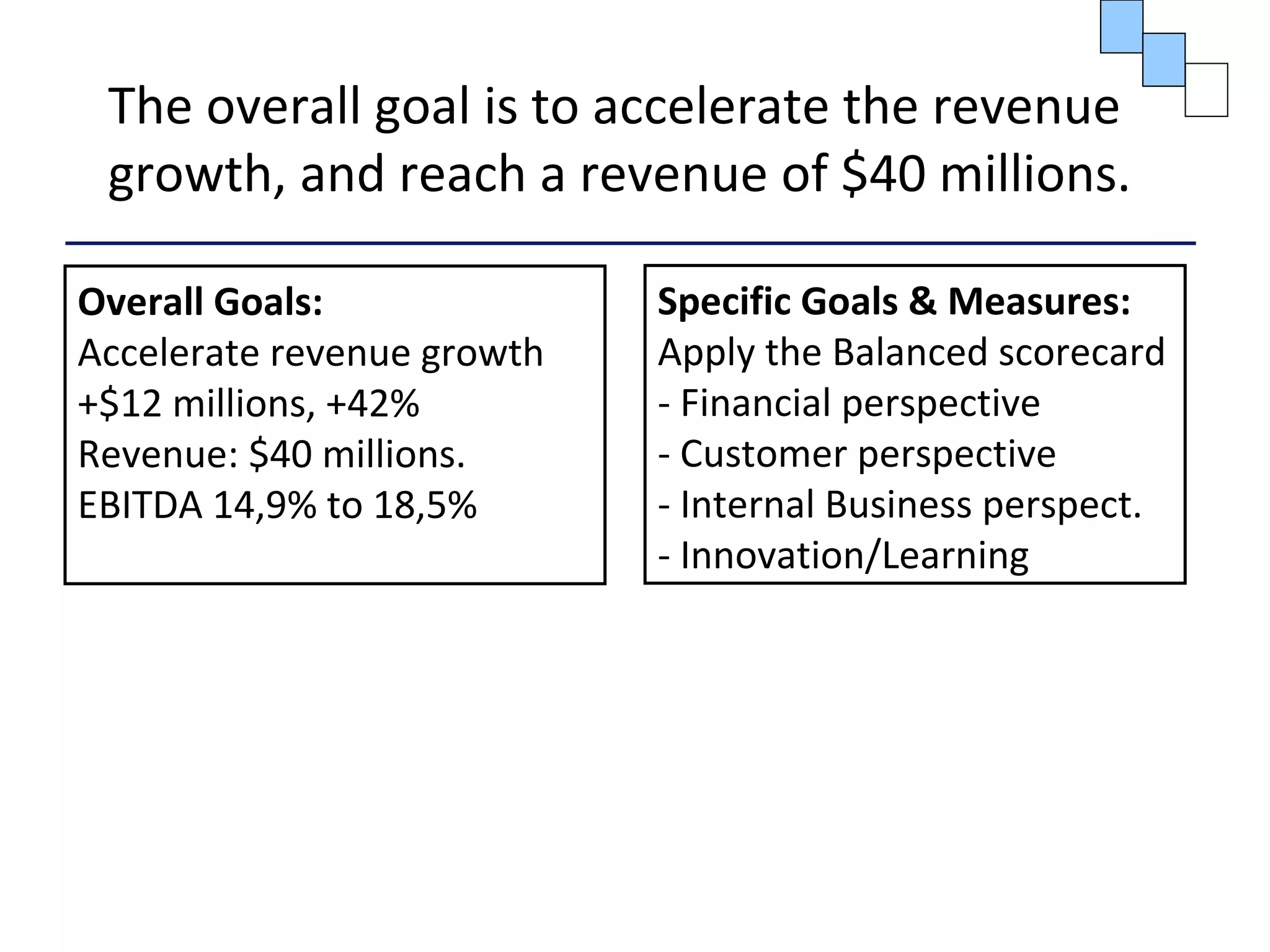
The overall goal is to accelerate the revenue
growth, and reach a revenue of $40 millions.
Overall Goals:
Accelerate revenue growth
+$12 millions, +42%
Revenue: $40 millions.
EBITDA 14,9% to 18,5%
Specific Goals & Measures:
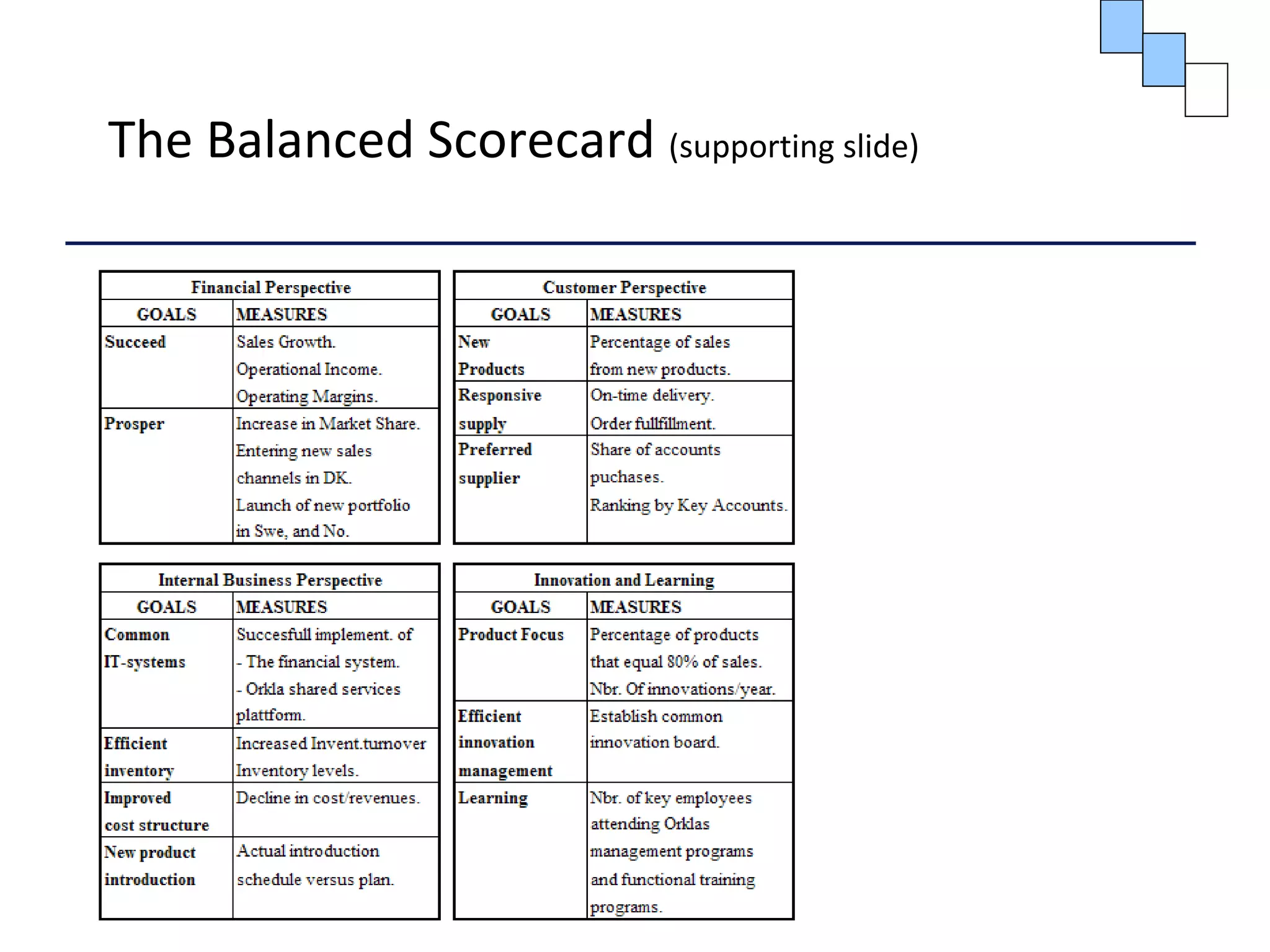
Apply the Balanced scorecard
- Financial perspective
- Customer perspective
- Internal Business perspect.
- Innovation/Learning
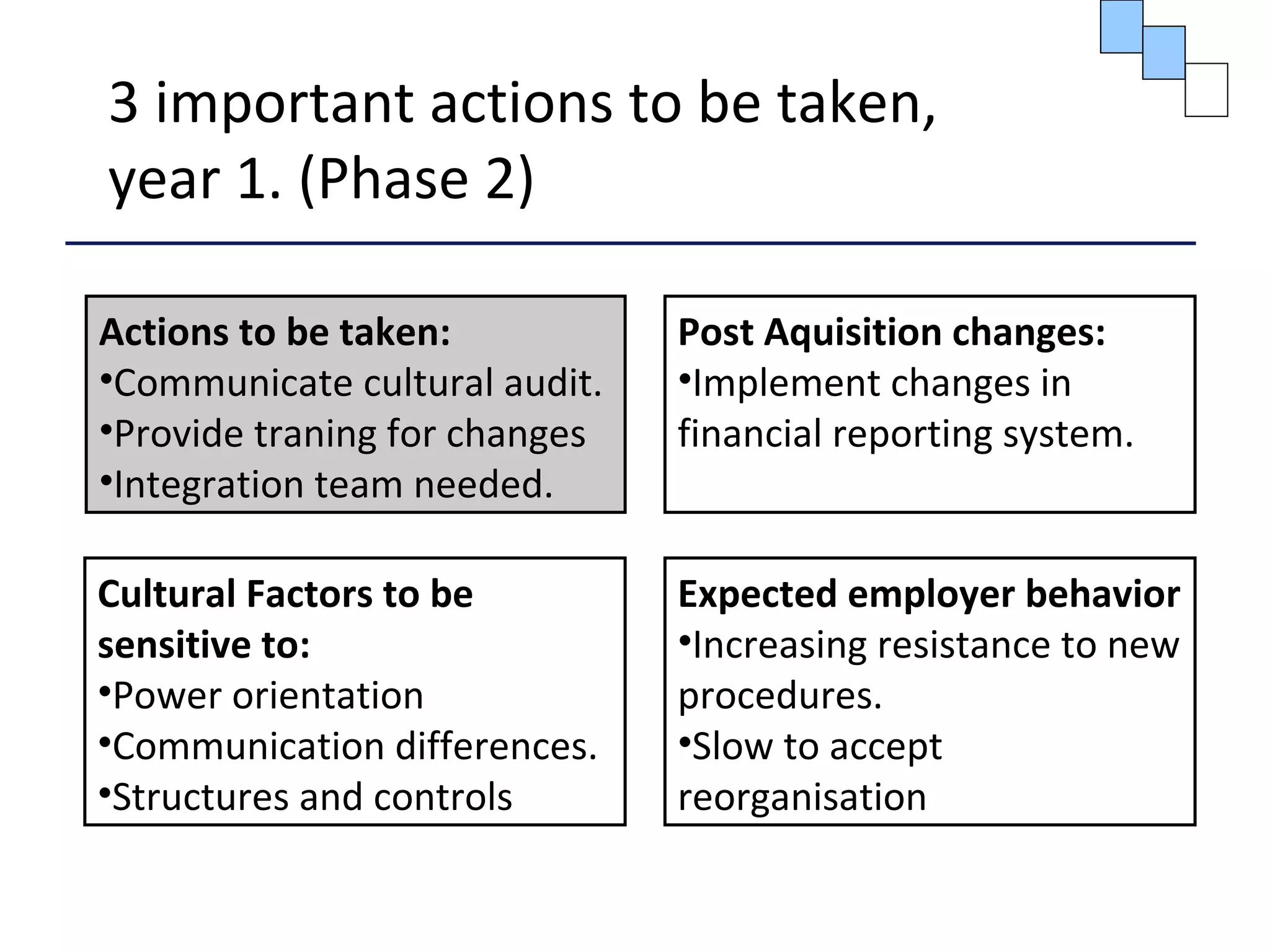
3 important actions to be taken,
year 1. (Phase 2)
Post Aquisition changes:
•Implement changes in
financial reporting system.
Actions to be taken:
•Communicate cultural audit.
•Provide traning for changes
•Integration team needed.
Cultural Factors to be
sensitive to:
•Power orientation
•Communication differences.
•Structures and controls
Expected employer behavior
•Increasing resistance to new
procedures.
•Slow to accept
reorganisation
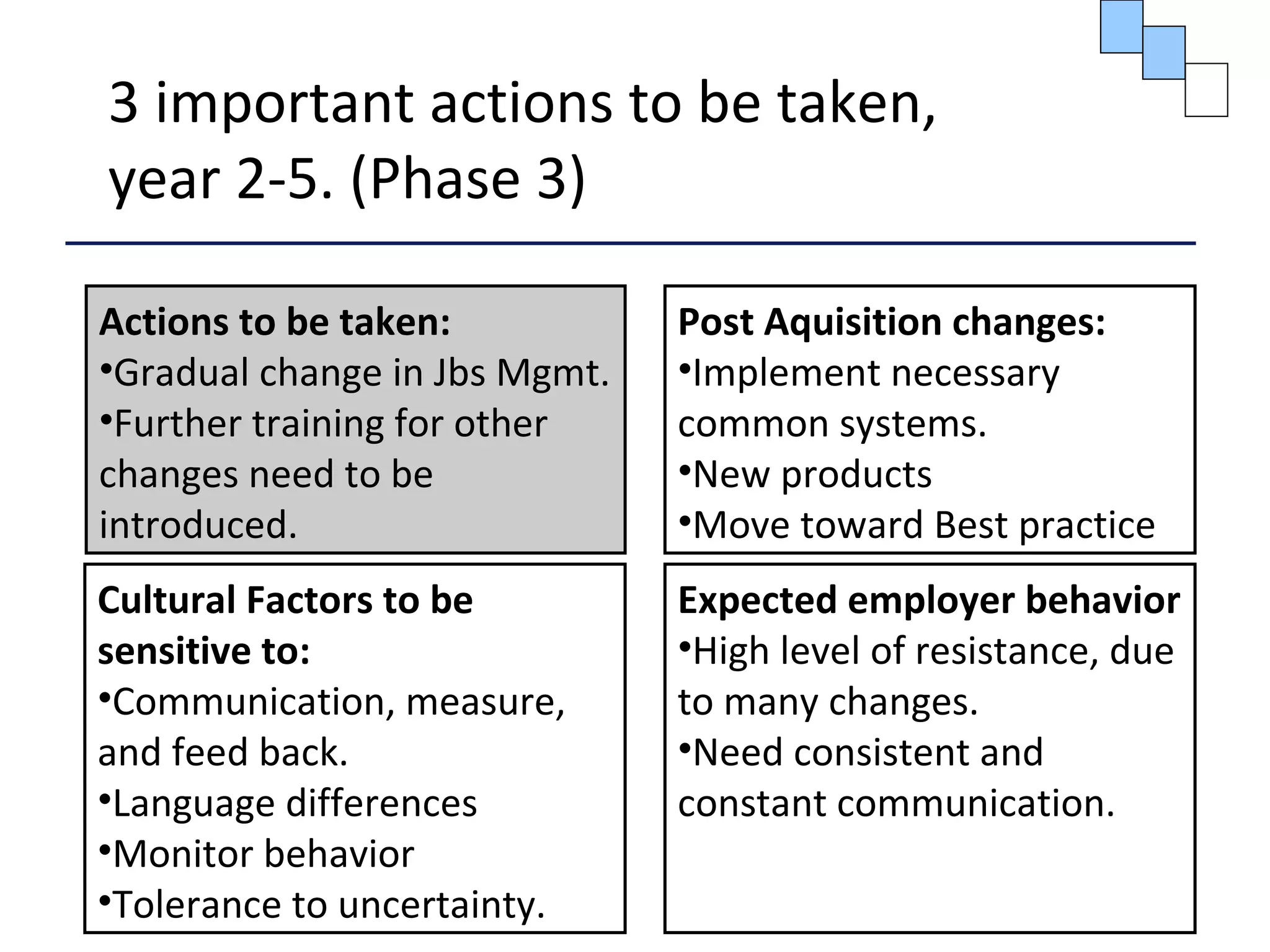
3 important actions to be taken,
year 2-5. (Phase 3)
Post Aquisition changes:
•Implement necessary
common systems.
•New products
•Move toward Best practice
Actions to be taken:
•Gradual change in Jbs Mgmt.
•Further training for other
changes need to be
introduced.
Cultural Factors to be
sensitive to:
•Communication, measure,
and feed back.
•Language differences
•Monitor behavior
•Tolerance to uncertainty.
Expected employer behavior
•High level of resistance, due
to many changes.
•Need consistent and
constant communication.
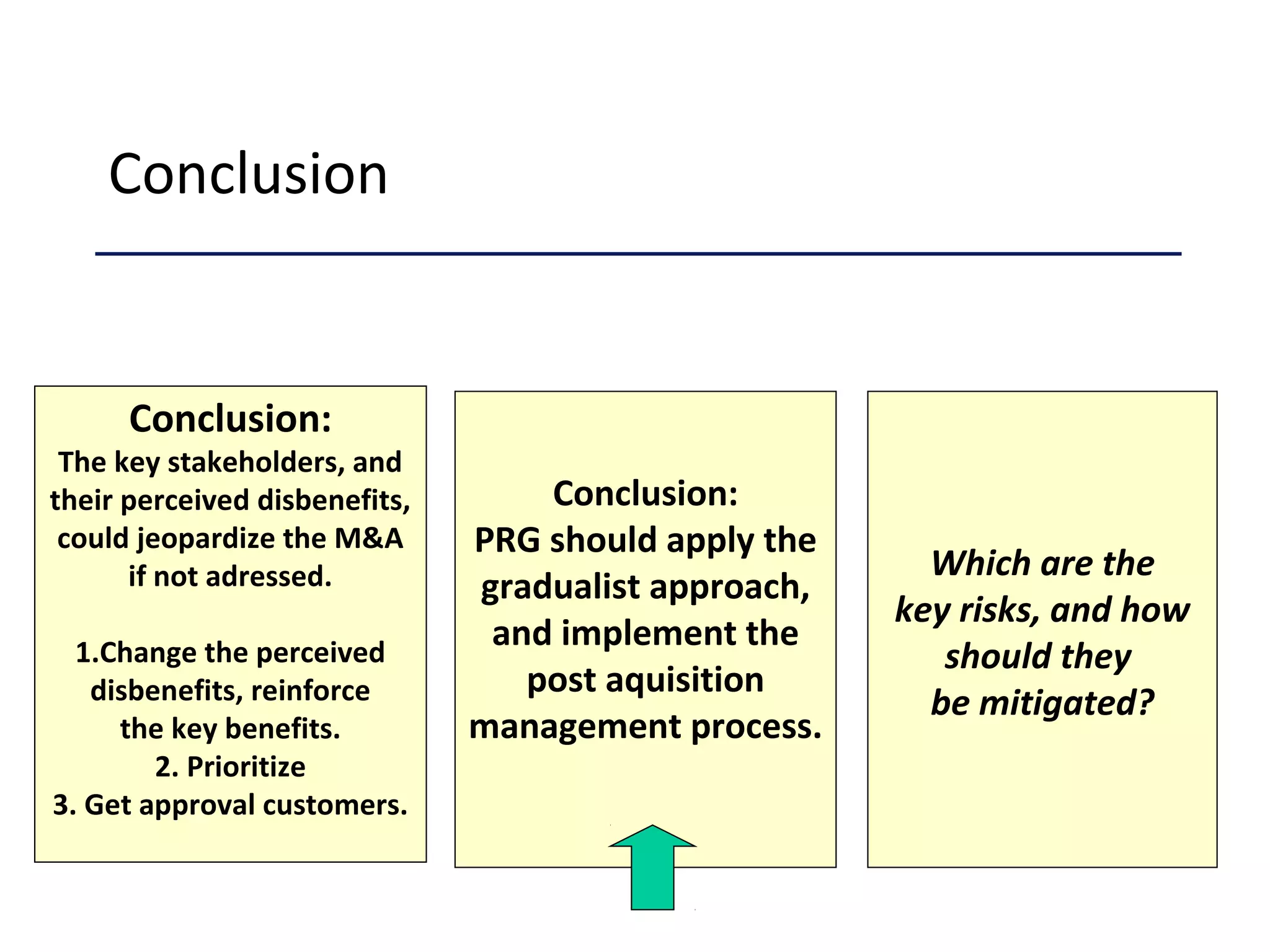
Conclusion
Conclusion:
The key stakeholders, and
their perceived disbenefits,
could jeopardize the M&A
if not adressed.
1.Change the perceived
disbenefits, reinforce
the key benefits.
2. Prioritize
3. Get approval customers.
Conclusion:
PRG should apply the
gradualist approach,
and implement the
post aquisition
management process.
Which are the
key risks, and how
should they
be mitigated?
The Balanced Scorecard (supporting slide)

Pierre Robert Implementation Storyboard

  • 1.
    The purpose ofthis presentation is to: • Define Key Stakeholders, and their perceived disbenefits, attitudes and how to adress them. • Recommend which approach PRG should adopt in the post acquisition process. • Present the phases, actions and outcomes in the post aquisition process. • Define the risks in the process, and how to mitigate them.
  • 2.
    Todays presentation adresses3 main questions: Which perceived disbenefits, and attitudes needs to be adressed towards Key Stakeholders, and how? Which approach should PRG adopt in the post management M&A process, and which phases, actions, and outcomes are expected in it? Which are the key risks, and how should they be mitigated?
  • 3.
    Results from formerM&As within Orkla might increase the perceived disbenefits ! Former M&As not successfull – Difficult to create value • Need to adress the perceived disbenefits of the owner (Orkla). • Important to change current level of commitment, and support among the board of directors, and specially those who represent the owner.
  • 4.
    It is crucialthat the perceived disbenefits are neutralized among the owners, and management team – otherwise risk of No Deal. Not a family business anymore – Negative local publicity Risk of layoffs – Change in decision rights • It is crucial to neutralize the perceived disbenefits of the owners and management team, in order to be able to enter an M&A process. • Contract a professional third party • Important to pinpoint the key benefits, and reduce the uncertainty.
  • 5.
    A non-approval fromcustomers would jeopardize the M&A! Not a Danish supplier – Negative power balance Risk of layoffs • Important to ”tell a story” to the customers . • Reduce uncertainty. • Important to ”get an approval”, in order to be able to continue the process.
  • 6.
    Conclusion Conclusion: The key stakeholders,and their perceived disbenefits, could jeopardize the M&A if not adressed. 1.Change the perceived disbenefits, reinforce the key benefits. 2. Prioritize 3. Get approval customers. Which approach should PRG adopt in the post management M&A process, and which phases, actions, and outcomes are expected in it? Which are the key risks, and how should they be mitigated?
  • 7.
    PRG should adopta gradualist approach in the post aquisition process • Gives management time to learn - different cultures, national as organizational - the new market, customers and consumers - the company • Before designing and implementing change. • Supports the Orkla ”multi local model”.
  • 8.
    3 important actionsto be taken, 6 months prior the M&A. (Phase 1) Post Aquisition changes: •Set clear specific Goals •Reassure the Mgmt.of Jbs that current leaders stay. Actions to be taken: •Conduct a cultural audit •Set the overall Goals •Reassure employees Cultural Factors to be sensitive to: •Language differences •Communication style differences. Expected employer behavior •Exited management •Anxiety among employees in Jbs
  • 9.
    The overall goalis to accelerate the revenue growth, and reach a revenue of $40 millions. Overall Goals: Accelerate revenue growth +$12 millions, +42% Revenue: $40 millions. EBITDA 14,9% to 18,5% Specific Goals & Measures: Apply the Balanced scorecard - Financial perspective - Customer perspective - Internal Business perspect. - Innovation/Learning
  • 10.
    3 important actionsto be taken, year 1. (Phase 2) Post Aquisition changes: •Implement changes in financial reporting system. Actions to be taken: •Communicate cultural audit. •Provide traning for changes •Integration team needed. Cultural Factors to be sensitive to: •Power orientation •Communication differences. •Structures and controls Expected employer behavior •Increasing resistance to new procedures. •Slow to accept reorganisation
  • 11.
    3 important actionsto be taken, year 2-5. (Phase 3) Post Aquisition changes: •Implement necessary common systems. •New products •Move toward Best practice Actions to be taken: •Gradual change in Jbs Mgmt. •Further training for other changes need to be introduced. Cultural Factors to be sensitive to: •Communication, measure, and feed back. •Language differences •Monitor behavior •Tolerance to uncertainty. Expected employer behavior •High level of resistance, due to many changes. •Need consistent and constant communication.
  • 12.
    Conclusion Conclusion: The key stakeholders,and their perceived disbenefits, could jeopardize the M&A if not adressed. 1.Change the perceived disbenefits, reinforce the key benefits. 2. Prioritize 3. Get approval customers. Conclusion: PRG should apply the gradualist approach, and implement the post aquisition management process. Which are the key risks, and how should they be mitigated?
  • 13.
    The Balanced Scorecard(supporting slide)