
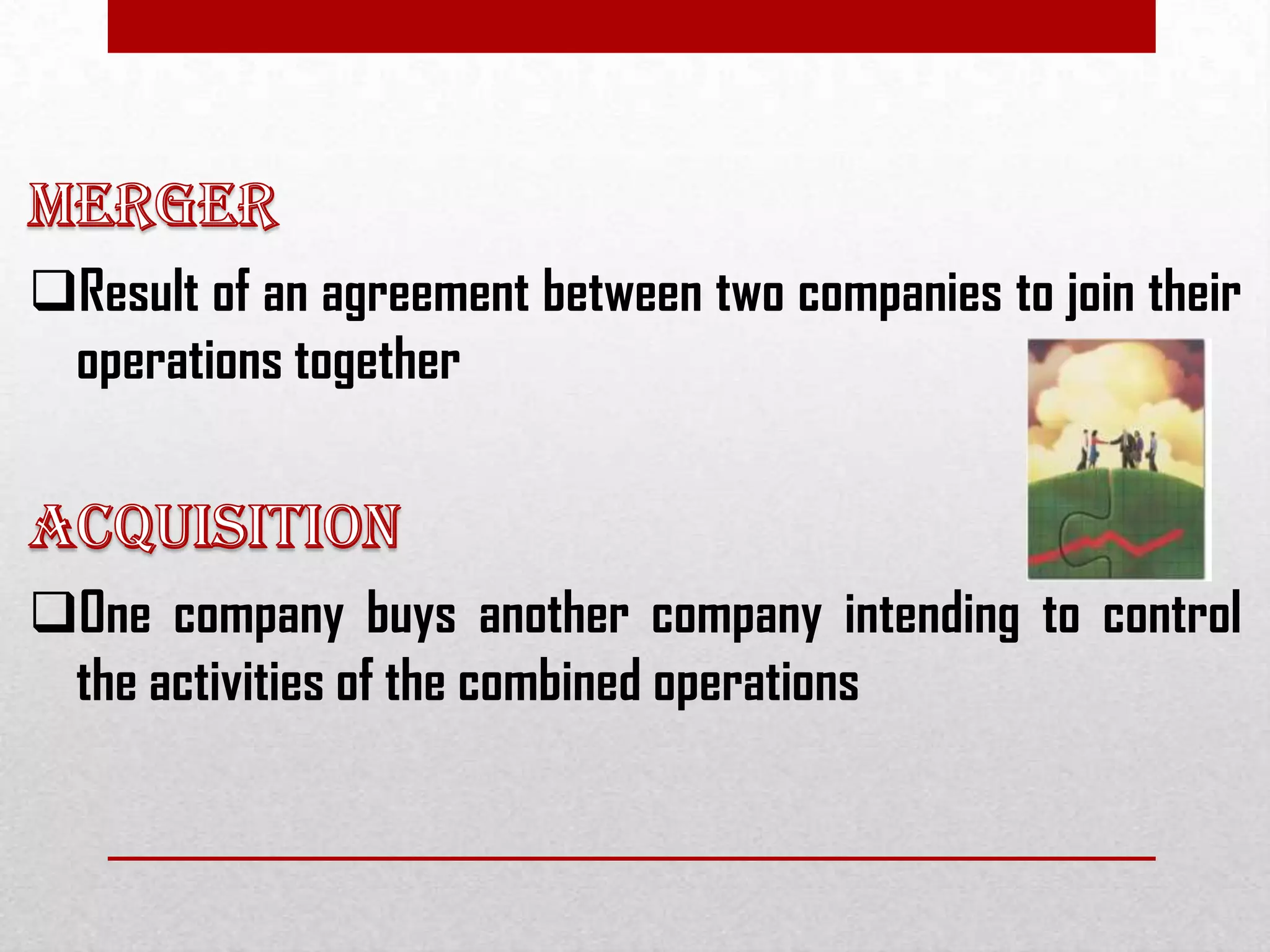
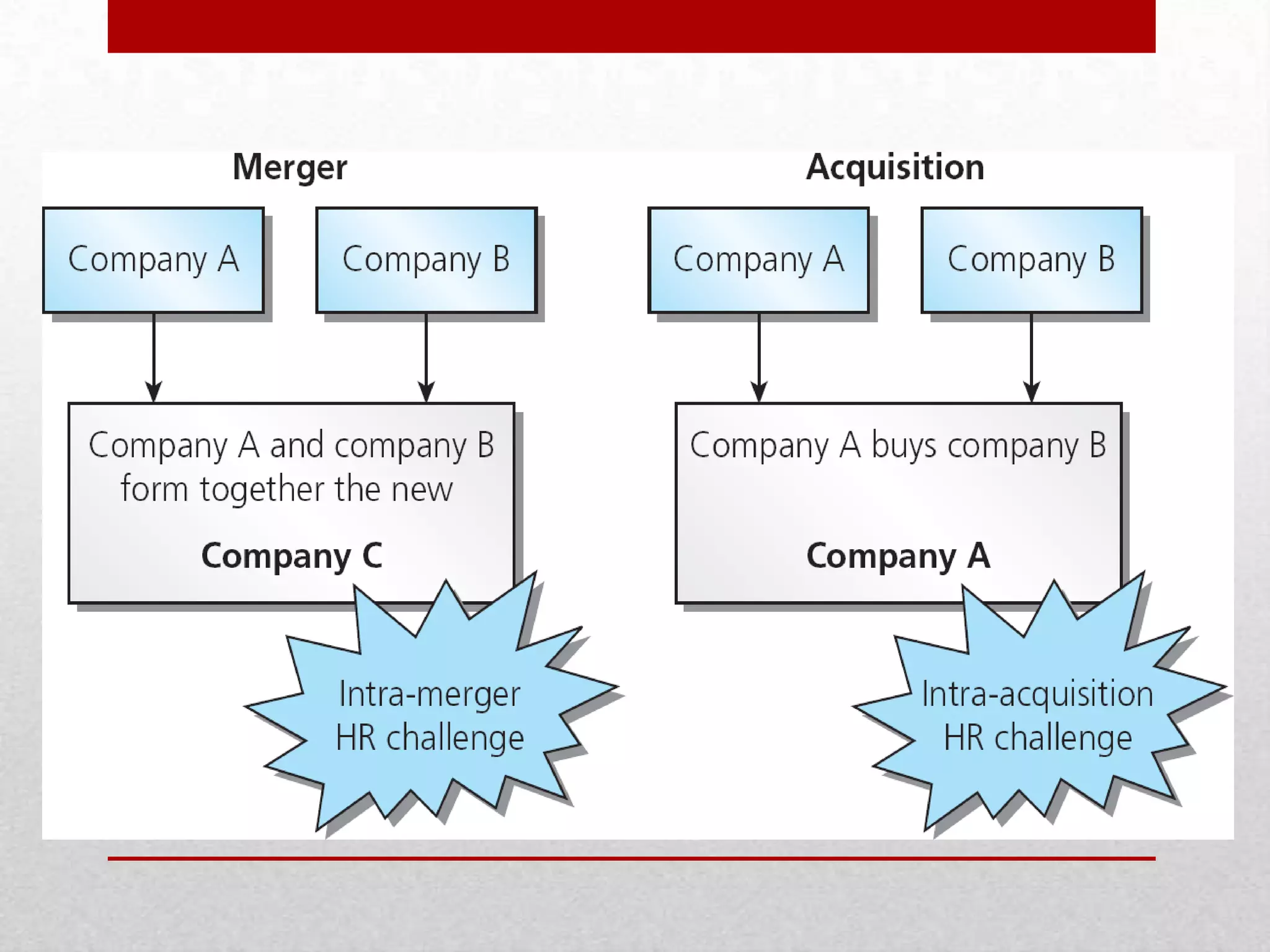
Result of an agreement between two companies to join their
operations together
One company buys another company intending to control
the activities of the combined operations
Horizontal Mergers: It takes place when the two organizations producing a
similar product combine.
E.g.: GAP Inc. control three distinct companies, Banana Republic, Old Navy and the
GAP itself.
 Vertical Mergers: It takes place when the two organizations working at
different stages in the production of the same product, combine.
E.g.: Carnegie Steel company, it control the mill, iron ore mines, coal mines, the
ships, the rail roads, the coke ovens.
 Conglomerate Mergers: It takes place when two organizations operate in
different industries. A conglomerate is a large company that consists of
divisions of often seemingly unrelated business.
E.g.: Tata group, Reliance Industries etc.
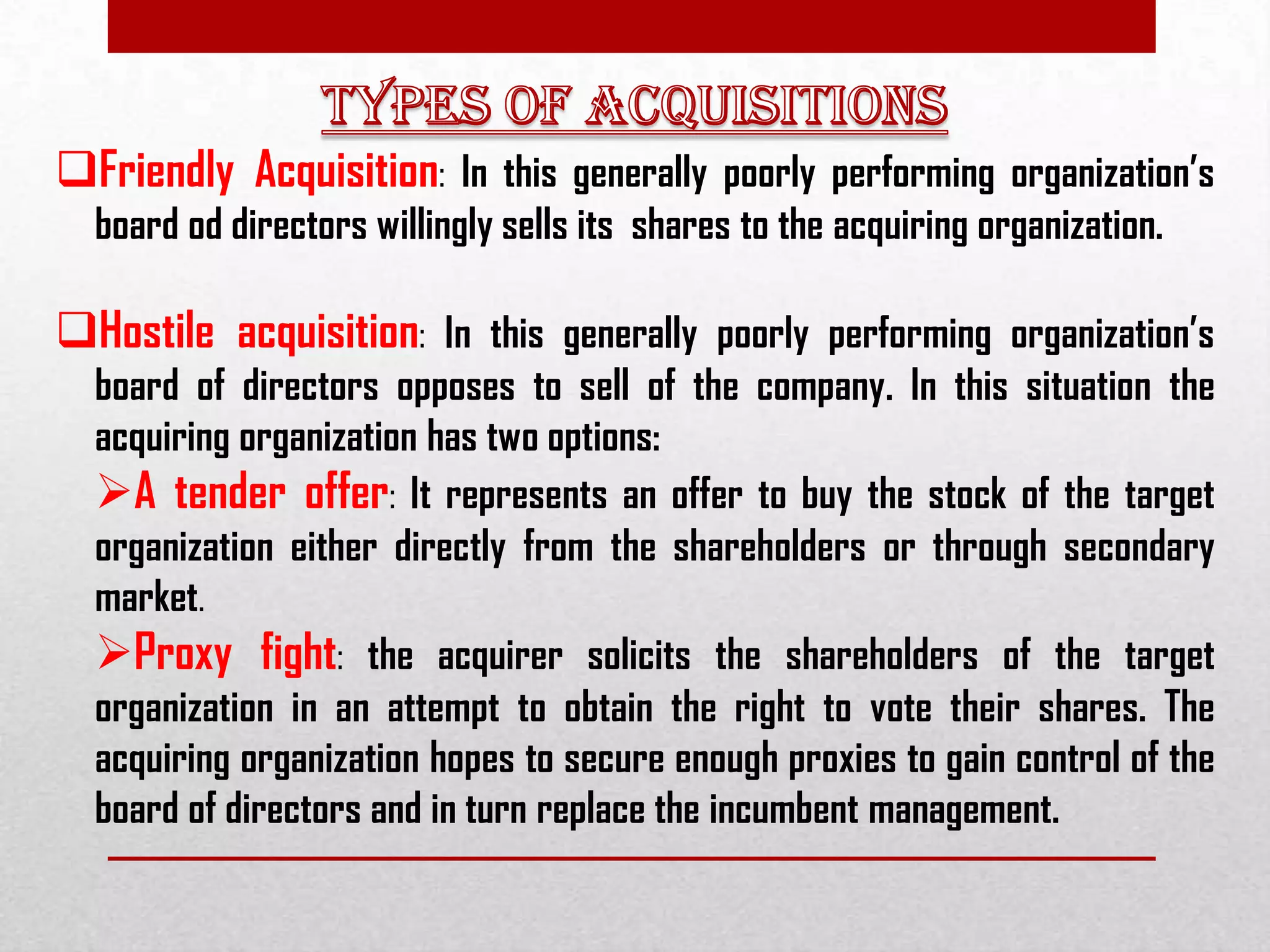
Friendly Acquisition: In this generally poorly performing organization’s
board od directors willingly sells its shares to the acquiring organization.
Hostile acquisition: In this generally poorly performing organization’s
board of directors opposes to sell of the company. In this situation the
acquiring organization has two options:
A tender offer: It represents an offer to buy the stock of the target
organization either directly from the shareholders or through secondary
market.
Proxy fight: the acquirer solicits the shareholders of the target
organization in an attempt to obtain the right to vote their shares. The
acquiring organization hopes to secure enough proxies to gain control of the
board of directors and in turn replace the incumbent management.
To provide improved capacity utilization
To provide better use of the existing sales force
To reduce managerial staff
To gain economies of scale
To smooth out seasonal trends in sales
To gain access to new suppliers, distributors, customers,
products and creditors
To gain new technology
To reduce tax obligations
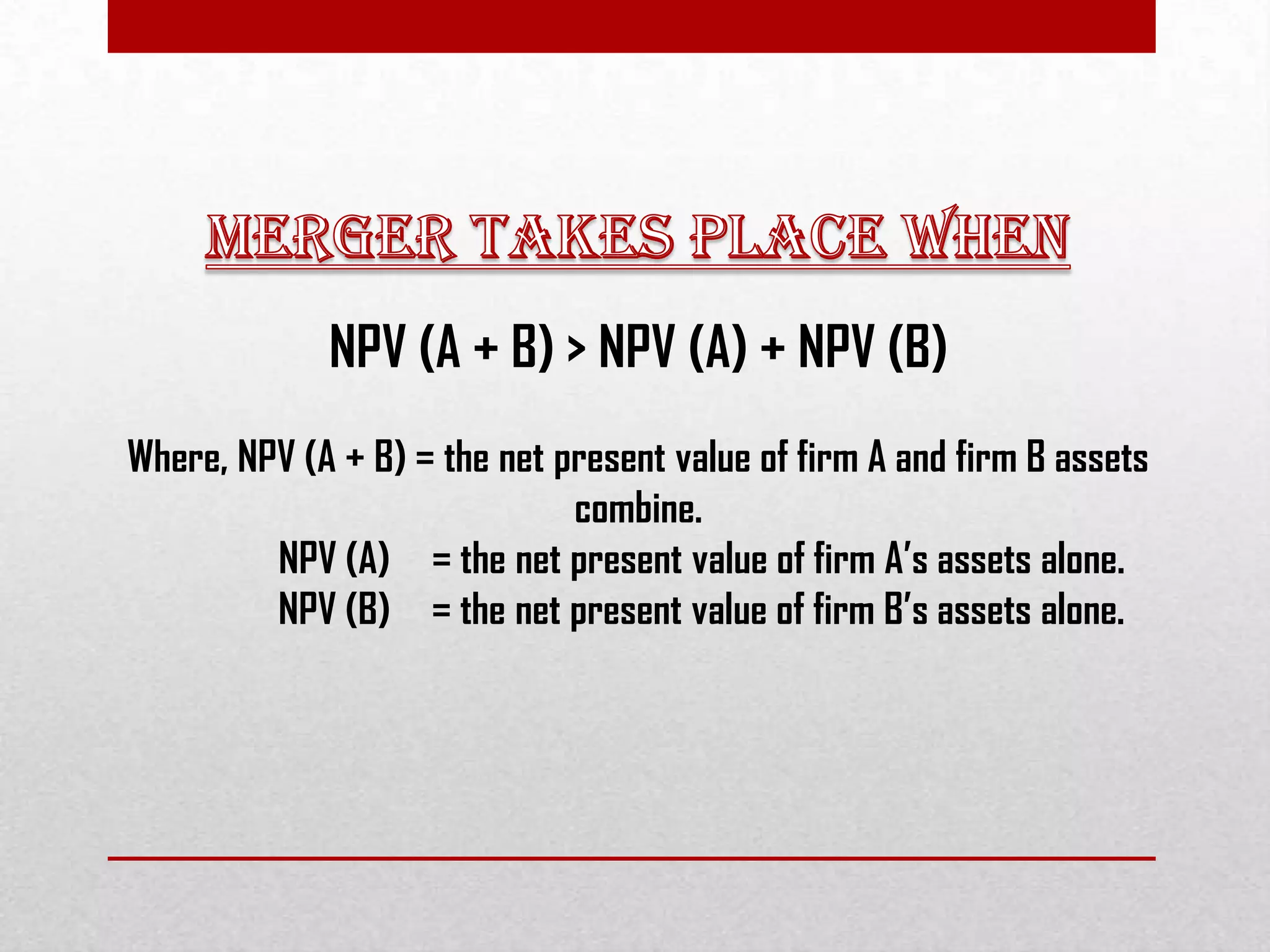
NPV (A + B) > NPV (A) + NPV (B)
Where, NPV (A + B) = the net present value of firm A and firm B assets
combine.
NPV (A) = the net present value of firm A’s assets alone.
NPV (B) = the net present value of firm B’s assets alone.
Undue focus on financial aspects– valuing assets, determining the price
and due diligence at the cost of human factor.
Line employees and managers at all level lose personal effectiveness as
a result of rumors, misinformation and worry.
Infrequent and irrelevant communication adds to the problem.
Without clear lines of authority and a clear understanding of where they
fit in, employees and managers are often caught in a web of conflicting
objectives and old loyalties.
The post merger entity demands a leadership to articulate a vision and
inspire others to join in that vision. But the stress and uncertainties
associate with the merger make the leader focus inwards and play safe.
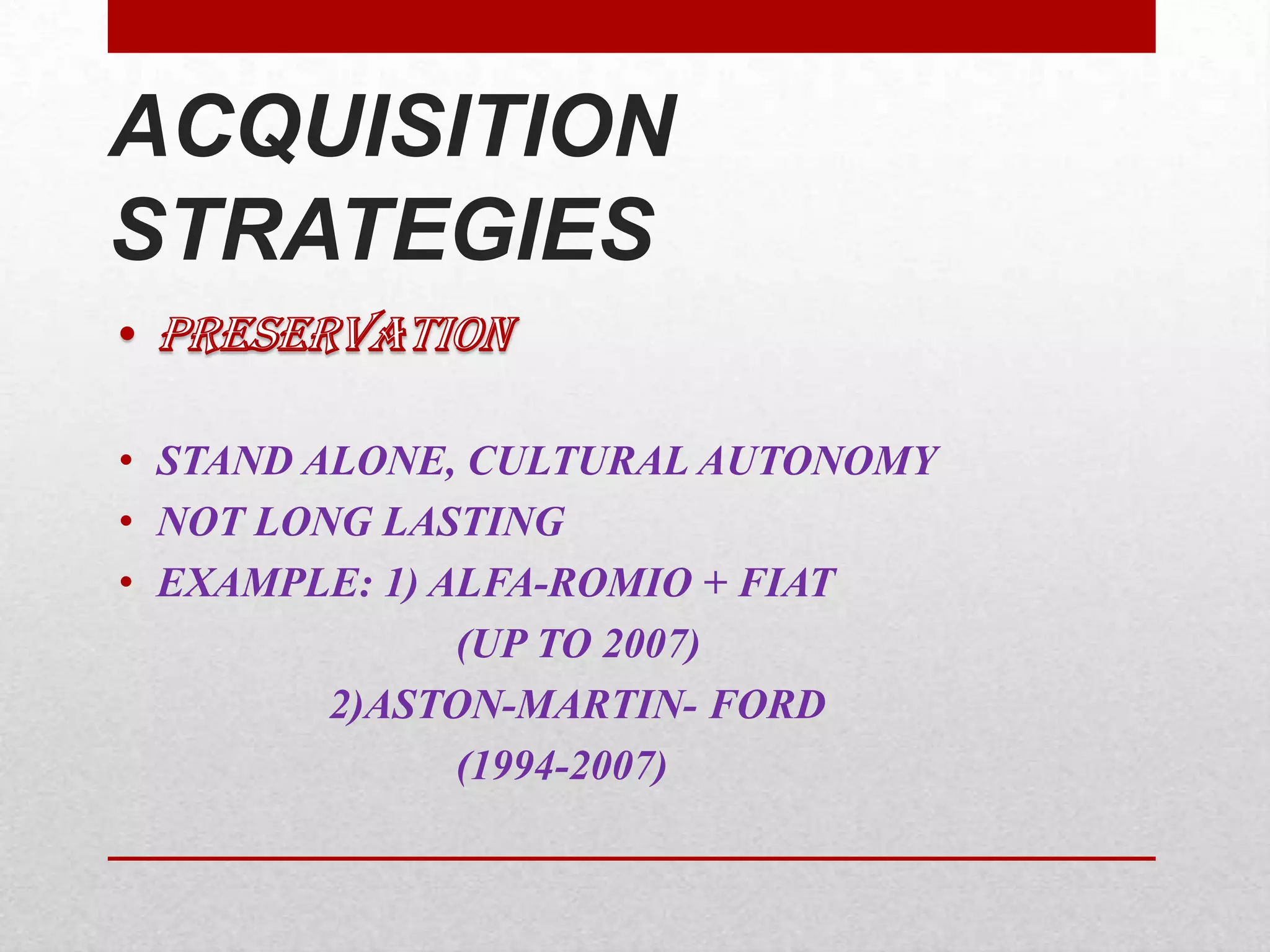
• STAND ALONE, CULTURAL AUTONOMY
• NOT LONG LASTING
• EXAMPLE: 1) ALFA-ROMIO + FIAT
(UP TO 2007)
2)ASTON-MARTIN- FORD
(1994-2007)
ACQUISITION
STRATEGIES
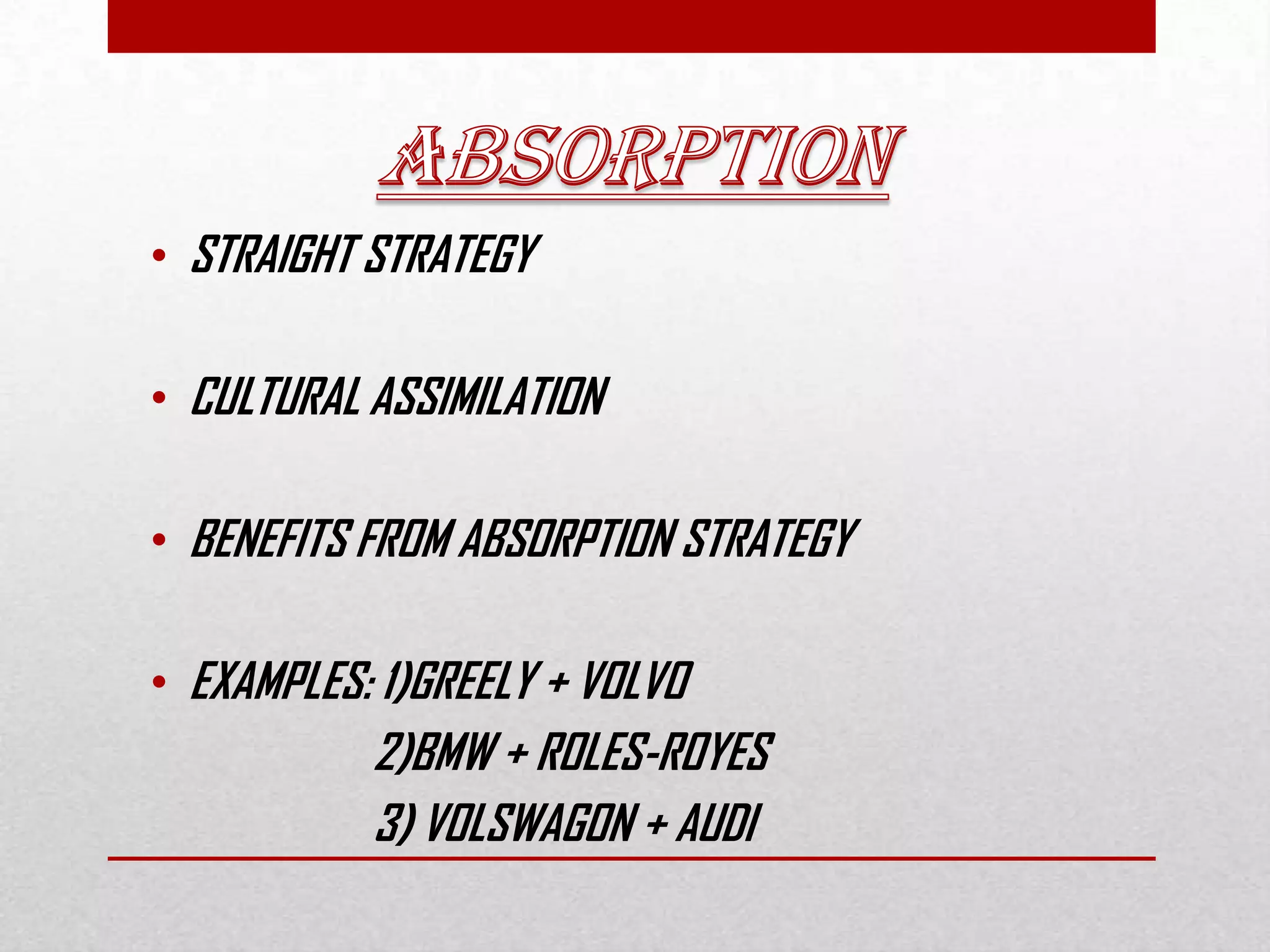
• STRAIGHT STRATEGY
• CULTURAL ASSIMILATION
• BENEFITS FROM ABSORPTION STRATEGY
• EXAMPLES: 1)GREELY + VOLVO
2)BMW + ROLES-ROYES
3) VOLSWAGON + AUDI
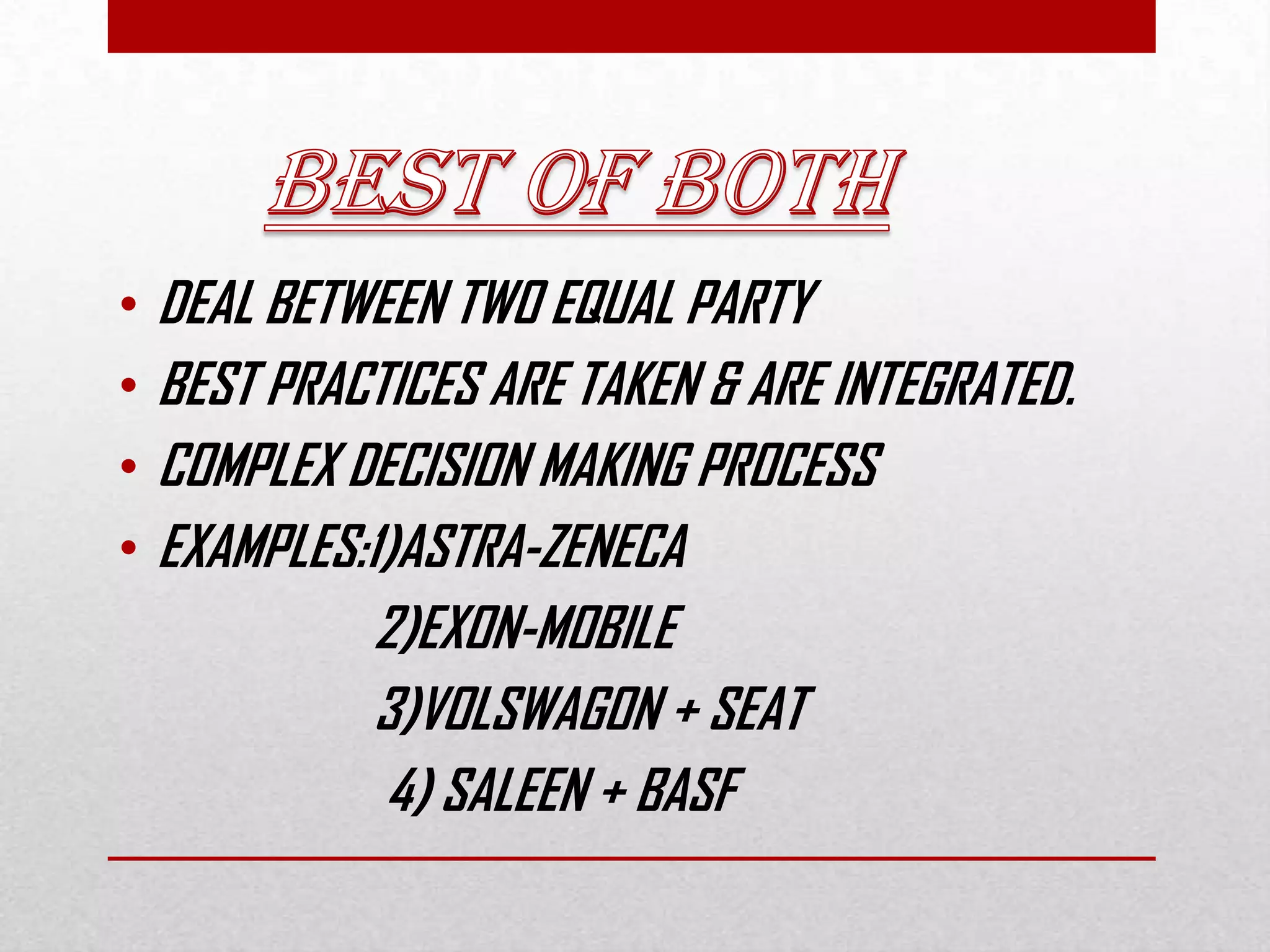
• DEAL BETWEEN TWO EQUAL PARTY
• BEST PRACTICES ARE TAKEN & ARE INTEGRATED.
• COMPLEX DECISION MAKING PROCESS
• EXAMPLES:1)ASTRA-ZENECA
2)EXON-MOBILE
3)VOLSWAGON + SEAT
4) SALEEN + BASF
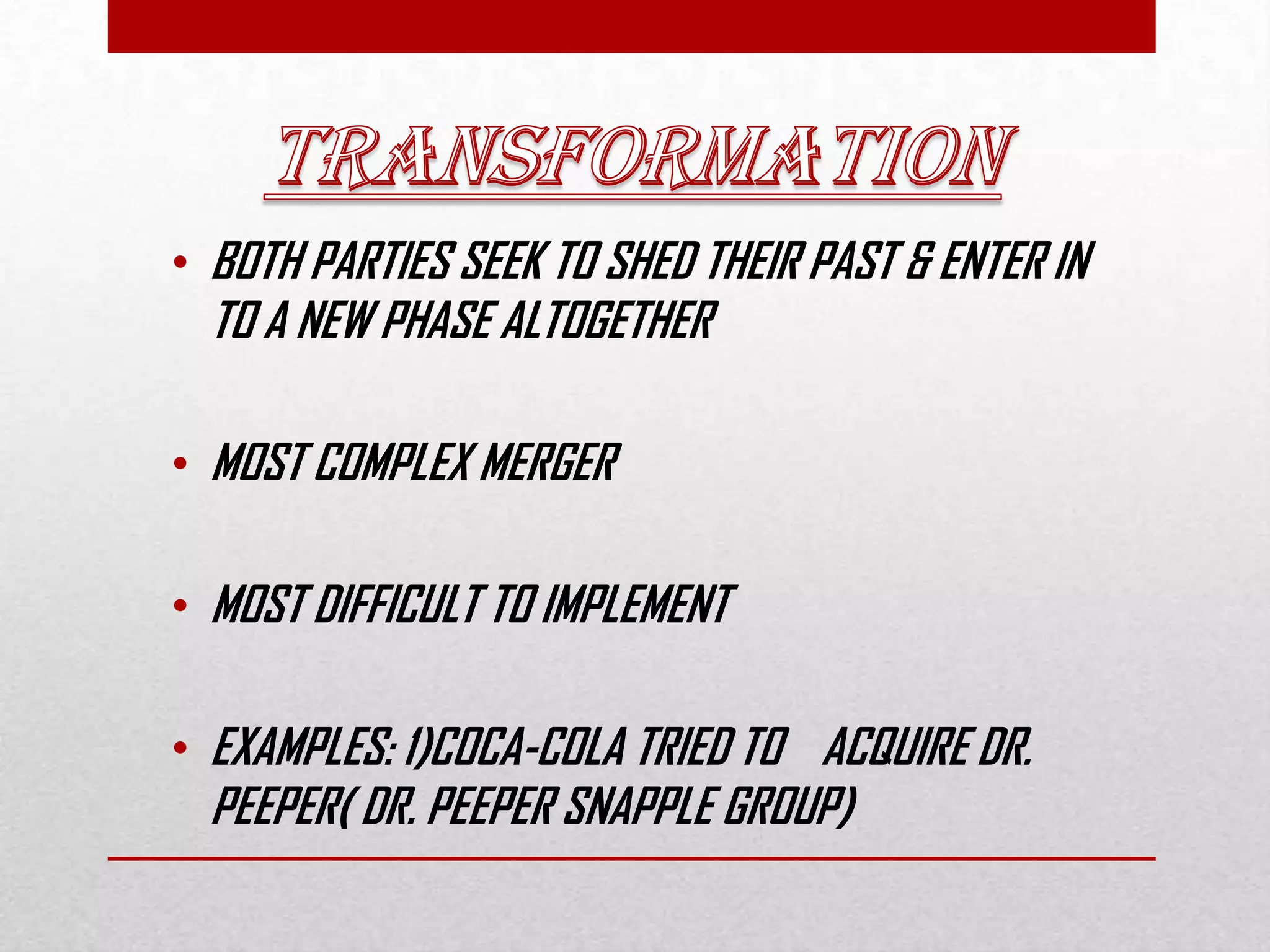
• BOTH PARTIES SEEK TO SHED THEIR PAST & ENTER IN
TO A NEW PHASE ALTOGETHER
• MOST COMPLEX MERGER
• MOST DIFFICULT TO IMPLEMENT
• EXAMPLES: 1)COCA-COLA TRIED TO ACQUIRE DR.
PEEPER( DR. PEEPER SNAPPLE GROUP)
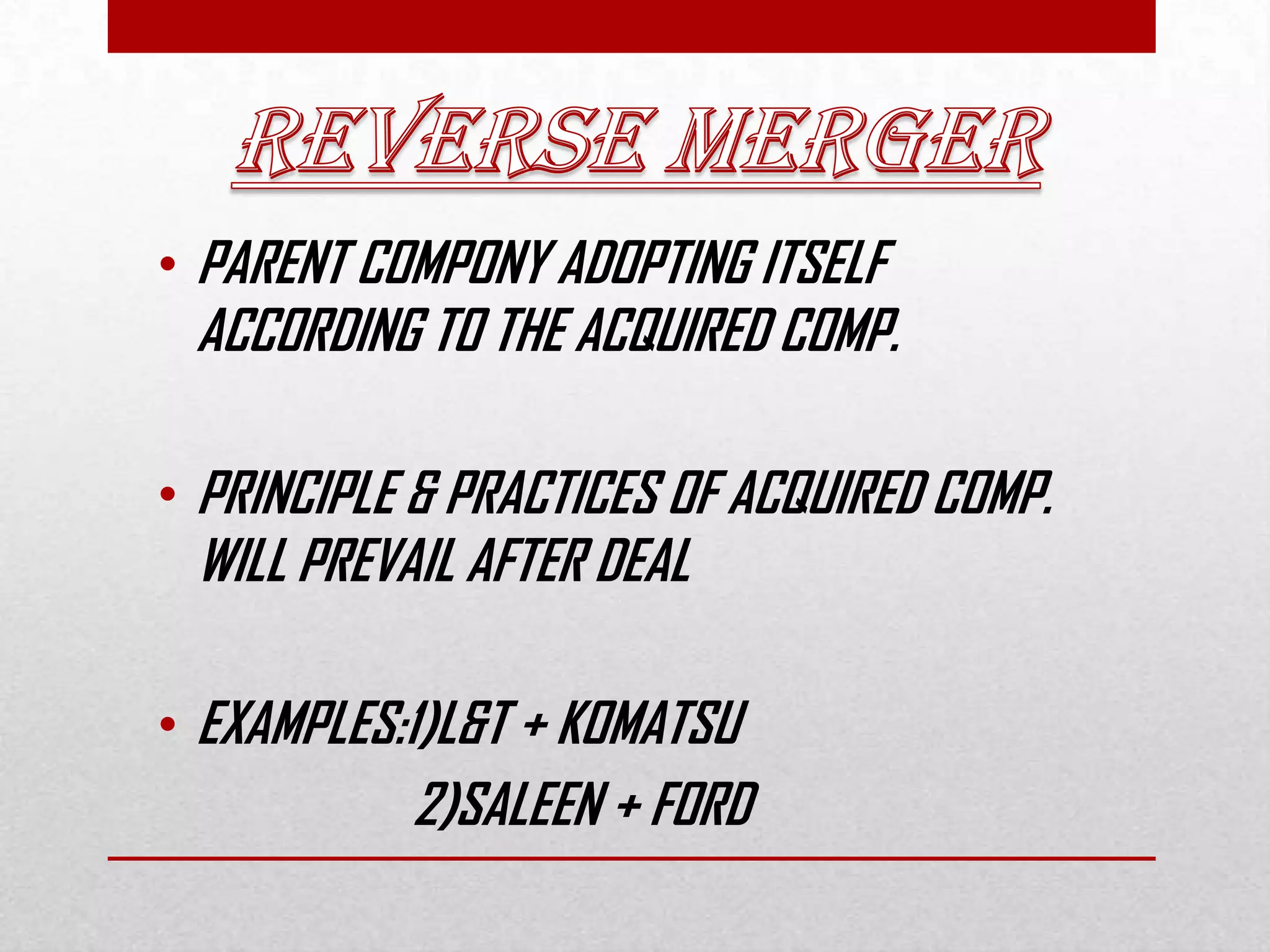
• PARENT COMPONY ADOPTING ITSELF
ACCORDING TO THE ACQUIRED COMP.
• PRINCIPLE & PRACTICES OF ACQUIRED COMP.
WILL PREVAIL AFTER DEAL
• EXAMPLES:1)L&T + KOMATSU
2)SALEEN + FORD
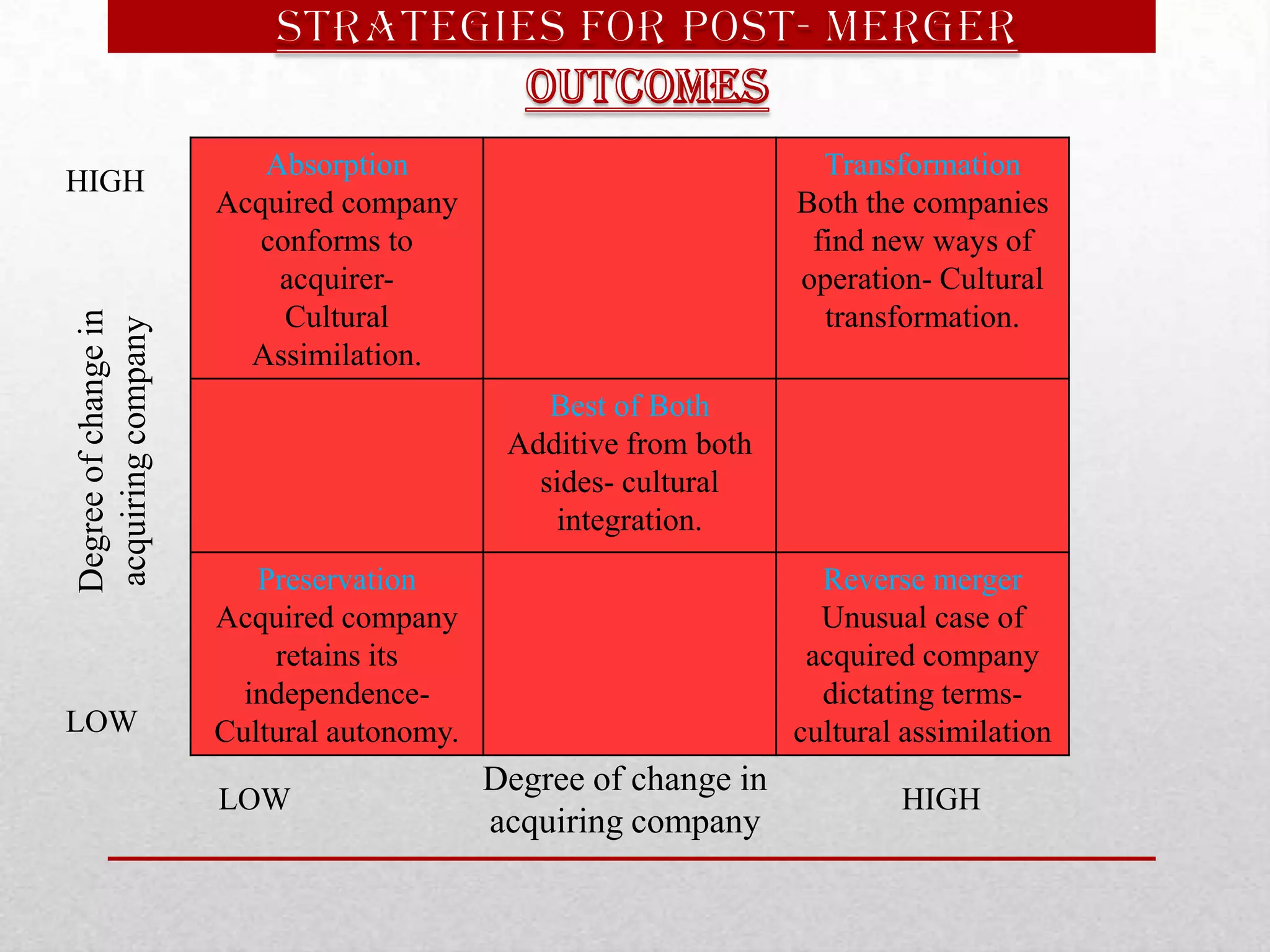
Absorption
Acquired company
conforms to
acquirer-
Cultural
Assimilation.
Transformation
Both the companies
find new ways of
operation- Cultural
transformation.
Best of Both
Additive from both
sides- cultural
integration.
Preservation
Acquired company
retains its
independence-
Cultural autonomy.
Reverse merger
Unusual case of
acquired company
dictating terms-
cultural assimilation
HIGH
HIGH
LOW
LOW
Degree of change in
acquiring company
Degreeofchangein
acquiringcompany
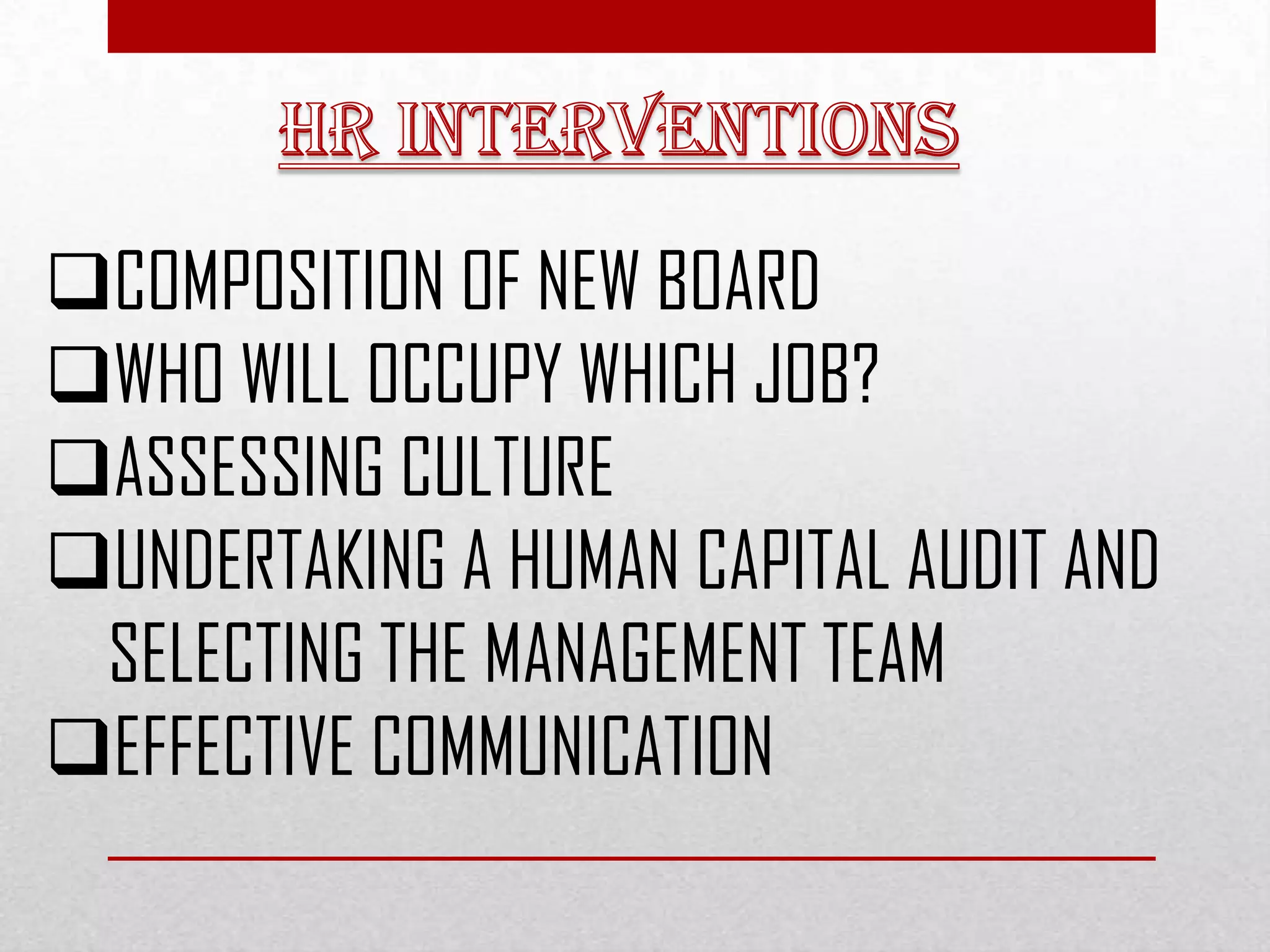
COMPOSITION OF NEW BOARD
WHO WILL OCCUPY WHICH JOB?
ASSESSING CULTURE
UNDERTAKING A HUMAN CAPITAL AUDIT AND
SELECTING THE MANAGEMENT TEAM
EFFECTIVE COMMUNICATION
RETAINING TALENT
CREATING THE NEW CULTURE
ALIGNING PERFORMANCE EVALUATION
AND REWARD SYSTEM
MANAGING THE TRANSITION
INTEGRATION
Mergers and Acquisitions

Mergers and Acquisitions

  • 3.
    Result of anagreement between two companies to join their operations together One company buys another company intending to control the activities of the combined operations
  • 5.
    Horizontal Mergers: Ittakes place when the two organizations producing a similar product combine. E.g.: GAP Inc. control three distinct companies, Banana Republic, Old Navy and the GAP itself.  Vertical Mergers: It takes place when the two organizations working at different stages in the production of the same product, combine. E.g.: Carnegie Steel company, it control the mill, iron ore mines, coal mines, the ships, the rail roads, the coke ovens.  Conglomerate Mergers: It takes place when two organizations operate in different industries. A conglomerate is a large company that consists of divisions of often seemingly unrelated business. E.g.: Tata group, Reliance Industries etc.
  • 6.
    Friendly Acquisition: Inthis generally poorly performing organization’s board od directors willingly sells its shares to the acquiring organization. Hostile acquisition: In this generally poorly performing organization’s board of directors opposes to sell of the company. In this situation the acquiring organization has two options: A tender offer: It represents an offer to buy the stock of the target organization either directly from the shareholders or through secondary market. Proxy fight: the acquirer solicits the shareholders of the target organization in an attempt to obtain the right to vote their shares. The acquiring organization hopes to secure enough proxies to gain control of the board of directors and in turn replace the incumbent management.
  • 7.
    To provide improvedcapacity utilization To provide better use of the existing sales force To reduce managerial staff To gain economies of scale To smooth out seasonal trends in sales To gain access to new suppliers, distributors, customers, products and creditors To gain new technology To reduce tax obligations
  • 8.
    NPV (A +B) > NPV (A) + NPV (B) Where, NPV (A + B) = the net present value of firm A and firm B assets combine. NPV (A) = the net present value of firm A’s assets alone. NPV (B) = the net present value of firm B’s assets alone.
  • 9.
    Undue focus onfinancial aspects– valuing assets, determining the price and due diligence at the cost of human factor. Line employees and managers at all level lose personal effectiveness as a result of rumors, misinformation and worry. Infrequent and irrelevant communication adds to the problem. Without clear lines of authority and a clear understanding of where they fit in, employees and managers are often caught in a web of conflicting objectives and old loyalties. The post merger entity demands a leadership to articulate a vision and inspire others to join in that vision. But the stress and uncertainties associate with the merger make the leader focus inwards and play safe.
  • 10.
    • STAND ALONE,CULTURAL AUTONOMY • NOT LONG LASTING • EXAMPLE: 1) ALFA-ROMIO + FIAT (UP TO 2007) 2)ASTON-MARTIN- FORD (1994-2007) ACQUISITION STRATEGIES
  • 11.
    • STRAIGHT STRATEGY •CULTURAL ASSIMILATION • BENEFITS FROM ABSORPTION STRATEGY • EXAMPLES: 1)GREELY + VOLVO 2)BMW + ROLES-ROYES 3) VOLSWAGON + AUDI
  • 12.
    • DEAL BETWEENTWO EQUAL PARTY • BEST PRACTICES ARE TAKEN & ARE INTEGRATED. • COMPLEX DECISION MAKING PROCESS • EXAMPLES:1)ASTRA-ZENECA 2)EXON-MOBILE 3)VOLSWAGON + SEAT 4) SALEEN + BASF
  • 13.
    • BOTH PARTIESSEEK TO SHED THEIR PAST & ENTER IN TO A NEW PHASE ALTOGETHER • MOST COMPLEX MERGER • MOST DIFFICULT TO IMPLEMENT • EXAMPLES: 1)COCA-COLA TRIED TO ACQUIRE DR. PEEPER( DR. PEEPER SNAPPLE GROUP)
  • 14.
    • PARENT COMPONYADOPTING ITSELF ACCORDING TO THE ACQUIRED COMP. • PRINCIPLE & PRACTICES OF ACQUIRED COMP. WILL PREVAIL AFTER DEAL • EXAMPLES:1)L&T + KOMATSU 2)SALEEN + FORD
  • 15.
    Absorption Acquired company conforms to acquirer- Cultural Assimilation. Transformation Boththe companies find new ways of operation- Cultural transformation. Best of Both Additive from both sides- cultural integration. Preservation Acquired company retains its independence- Cultural autonomy. Reverse merger Unusual case of acquired company dictating terms- cultural assimilation HIGH HIGH LOW LOW Degree of change in acquiring company Degreeofchangein acquiringcompany
  • 16.
    COMPOSITION OF NEWBOARD WHO WILL OCCUPY WHICH JOB? ASSESSING CULTURE UNDERTAKING A HUMAN CAPITAL AUDIT AND SELECTING THE MANAGEMENT TEAM EFFECTIVE COMMUNICATION
  • 17.
    RETAINING TALENT CREATING THENEW CULTURE ALIGNING PERFORMANCE EVALUATION AND REWARD SYSTEM MANAGING THE TRANSITION INTEGRATION