PREVENTION – WHAT YOU DO
TODAY WILL AFFECT
TOMORROW
Dolores Van Bourgondien, ANP-BC,
RN,MSN, BA, MA
October 2nd, 2013
Prevention
• Know your numbers
• Annual visits and screening
• Diet
• Exercise
• Mind-body
What is
prevention
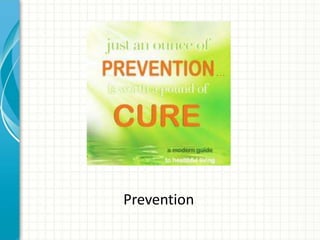
Prevention
Prevention
• The most important part of preventive
health care is maintaining good health
habits. This includes:
• Daily exercise
• Weight Control
• Proper nutrition
• Avoidance of smoking and drug abuse
• Abstinence from, or moderation of alcohol
• Proper control of any diseases or disorders,
such as high blood pressure, diabetes,
cholesterol
Periodic Screening
• 1. Periodic screening of adults for specific problems is important
and recommended:
• Pap smear
• Breast self-examination
• Mammography
• Testicular self-examination
• PSA test
• Cholesterol screening
• Colon cancer screening
• CT scan to screen smokers for lung cancer
• Abdominal aortic ultrasound
• Blood pressure
Immunizations
• 3. Keep immunizations up-to-date
• Flu Shots
• Pneumonia
• Tetanus – Tdap/TD
Know your Numbers
• Height
• Weight
• BMI
• Fat %
• Waist Circumference
• Blood Glucose Level
• HGBA1C
• Cholesterol
• Total
• LDL
• HDL
• Triglycerides
BMI
BMI
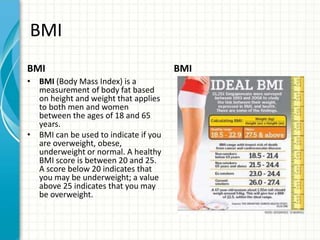
• BMI (Body Mass Index) is a
measurement of body fat based
on height and weight that applies
to both men and women
between the ages of 18 and 65
years.
• BMI can be used to indicate if you
are overweight, obese,
underweight or normal. A healthy
BMI score is between 20 and 25.
A score below 20 indicates that
you may be underweight; a value
above 25 indicates that you may
be overweight.
BMI
Fat %
Fat %
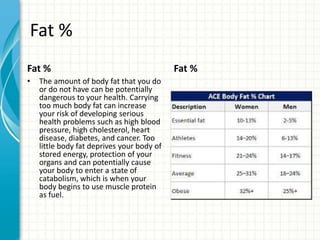
• The amount of body fat that you do
or do not have can be potentially
dangerous to your health. Carrying
too much body fat can increase
your risk of developing serious
health problems such as high blood
pressure, high cholesterol, heart
disease, diabetes, and cancer. Too
little body fat deprives your body of
stored energy, protection of your
organs and can potentially cause
your body to enter a state of
catabolism, which is when your
body begins to use muscle protein
as fuel.
Fat %
Waist Circumference
Waist Circumference
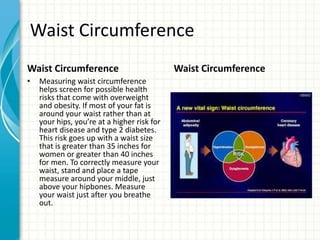
• Measuring waist circumference
helps screen for possible health
risks that come with overweight
and obesity. If most of your fat is
around your waist rather than at
your hips, you’re at a higher risk for
heart disease and type 2 diabetes.
This risk goes up with a waist size
that is greater than 35 inches for
women or greater than 40 inches
for men. To correctly measure your
waist, stand and place a tape
measure around your middle, just
above your hipbones. Measure
your waist just after you breathe
out.
Waist Circumference
PREVENTION TIPS
Diet - Importance
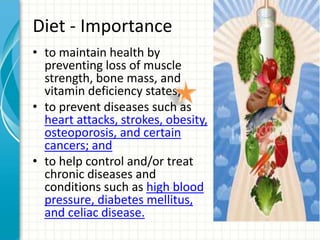
• to maintain health by
preventing loss of muscle
strength, bone mass, and
vitamin deficiency states;
• to prevent diseases such as
heart attacks, strokes, obesity,
osteoporosis, and certain
cancers; and
• to help control and/or treat
chronic diseases and
conditions such as high blood
pressure, diabetes mellitus,
and celiac disease.
Diet - Importance
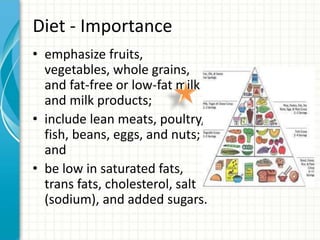
• emphasize fruits,
vegetables, whole grains,
and fat-free or low-fat milk
and milk products;
• include lean meats, poultry,
fish, beans, eggs, and nuts;
and
• be low in saturated fats,
trans fats, cholesterol, salt
(sodium), and added sugars.
Exercise
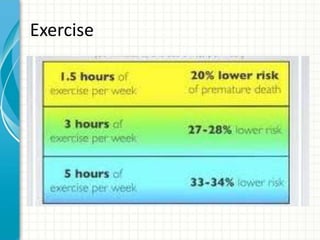
• 2 hours and 30 minutes (150 minutes) of
moderate-intensity aerobic activity (i.e., brisk
walking) every week and
• muscle-strengthening activities on 2 or more
days a week that work all major muscle
groups (legs, hips, back, abdomen,
chest, shoulders, and arms).
Exercise
Exercise
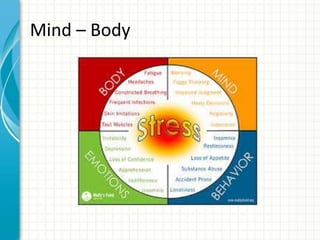
Mind – Body
Practices to Fight Stress
Take home message
• You can prevent future chronic diseases
• Know your Numbers
• Get routine check ups and screenings
• Eat smart
• Exercise Daily
• Maintain healthy weight
• Defuse Stress
QUESTIONS?
Prevention   what you do today affects tomorrow

Prevention what you do today affects tomorrow

  • 1.
    PREVENTION – WHATYOU DO TODAY WILL AFFECT TOMORROW Dolores Van Bourgondien, ANP-BC, RN,MSN, BA, MA October 2nd, 2013
  • 2.
    Prevention • Know yournumbers • Annual visits and screening • Diet • Exercise • Mind-body
  • 3.
  • 4.
  • 5.
    Prevention • The mostimportant part of preventive health care is maintaining good health habits. This includes: • Daily exercise • Weight Control • Proper nutrition • Avoidance of smoking and drug abuse • Abstinence from, or moderation of alcohol • Proper control of any diseases or disorders, such as high blood pressure, diabetes, cholesterol
  • 6.
    Periodic Screening • 1.Periodic screening of adults for specific problems is important and recommended: • Pap smear • Breast self-examination • Mammography • Testicular self-examination • PSA test • Cholesterol screening • Colon cancer screening • CT scan to screen smokers for lung cancer • Abdominal aortic ultrasound • Blood pressure
  • 7.
    Immunizations • 3. Keepimmunizations up-to-date • Flu Shots • Pneumonia • Tetanus – Tdap/TD
  • 8.
    Know your Numbers •Height • Weight • BMI • Fat % • Waist Circumference • Blood Glucose Level • HGBA1C • Cholesterol • Total • LDL • HDL • Triglycerides
  • 9.
    BMI BMI • BMI (BodyMass Index) is a measurement of body fat based on height and weight that applies to both men and women between the ages of 18 and 65 years. • BMI can be used to indicate if you are overweight, obese, underweight or normal. A healthy BMI score is between 20 and 25. A score below 20 indicates that you may be underweight; a value above 25 indicates that you may be overweight. BMI
  • 10.
    Fat % Fat % •The amount of body fat that you do or do not have can be potentially dangerous to your health. Carrying too much body fat can increase your risk of developing serious health problems such as high blood pressure, high cholesterol, heart disease, diabetes, and cancer. Too little body fat deprives your body of stored energy, protection of your organs and can potentially cause your body to enter a state of catabolism, which is when your body begins to use muscle protein as fuel. Fat %
  • 11.
    Waist Circumference Waist Circumference •Measuring waist circumference helps screen for possible health risks that come with overweight and obesity. If most of your fat is around your waist rather than at your hips, you’re at a higher risk for heart disease and type 2 diabetes. This risk goes up with a waist size that is greater than 35 inches for women or greater than 40 inches for men. To correctly measure your waist, stand and place a tape measure around your middle, just above your hipbones. Measure your waist just after you breathe out. Waist Circumference
  • 12.
  • 13.
    Diet - Importance •to maintain health by preventing loss of muscle strength, bone mass, and vitamin deficiency states; • to prevent diseases such as heart attacks, strokes, obesity, osteoporosis, and certain cancers; and • to help control and/or treat chronic diseases and conditions such as high blood pressure, diabetes mellitus, and celiac disease.
  • 14.
    Diet - Importance •emphasize fruits, vegetables, whole grains, and fat-free or low-fat milk and milk products; • include lean meats, poultry, fish, beans, eggs, and nuts; and • be low in saturated fats, trans fats, cholesterol, salt (sodium), and added sugars.
  • 15.
    Exercise • 2 hoursand 30 minutes (150 minutes) of moderate-intensity aerobic activity (i.e., brisk walking) every week and • muscle-strengthening activities on 2 or more days a week that work all major muscle groups (legs, hips, back, abdomen, chest, shoulders, and arms).
  • 16.
  • 17.
  • 18.
  • 19.
  • 20.
    Take home message •You can prevent future chronic diseases • Know your Numbers • Get routine check ups and screenings • Eat smart • Exercise Daily • Maintain healthy weight • Defuse Stress
  • 21.