DISTINCTION BETWEEN EPIC
AND TRAGEDY.
Department Of English, M.K.Bhavnagar
University.
Name :- Mansi.M.Upadhyay
Roll No :- 23
Enrollment No :- 2069108420190042
E-Mail ID :-
mansiupadhyay06@gmail.com
Submitted By :- Dr.Dilip Barad
Semester :- 1
Paper :- 3 (Literary Theory and
Criticism)
 .
INTRODUCTION
 Aristotle’s treatment of the epic is slight as
compared to his treatment of tragedy. But he
makes a few general statement, which bring
out the salient features of the epic, and
establishes the affinity as well as the
difference between epic and tragedy
THE AFFINITY BETWEEN TRAGEDY AND
EPIC
 Both epic and tragedy are imitations of serious
subjects, and deal with characters of the higher
type
 The structure of both should show a unity.
According to aristotle, the structure of the epic
should be modeled on dramatic principles.
 Single actions should be the proper content of the
epic.
 Epic poetry is similar to tragedy because it has
as many species as tragedy.
DIFFERENCES BETWEEN EPIC AND
TRAGEDY
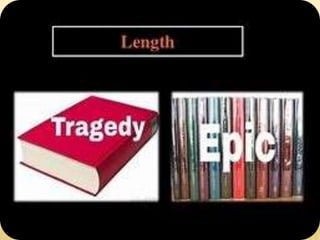
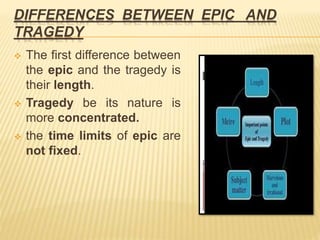
 The first difference between
the epic and the tragedy is
their length.
 Tragedy be its nature is
more concentrated.
 the time limits of epic are
not fixed.
CONTINUE…
 The epic allows greater scope for the marvelous
and the irrational.
 Tragedy however, cannot make too much use of
the marvelous within the action.
CONTINUE…
 The epic uses the mode of the narrative, and
tragedy the mode of the dramatic.
 The epic allows for more and longer incidents
than does tragedy. The epic allows multiplicity
of stories, which would be unthinkable in the
tragedy.
 The elements music and spectacle are only can
be found in the tragedy.
 Tragedy has a vividness which is absent in epic.
 For all reasons which discussed above, tragedy is
superior to the epic.
CONCLUSION
Aristotle considers the question of
the relative value of epic and tragedy. In his
opinion, though tragedy has been criticized as
vulgar, this is not so. “Tragedy, he maintains, is
richer in its effects, adding music and spectacle
to epic resources; it presents its stories even
when read no less vividly than the epic; it has a
stricter unity; its methods are more concentrated;
and it produces more effectively the requisite
emotional result, the pleasure from a catharsis of
pity and fear.”
Presentations.paper..3

Presentations.paper..3

  • 1.
    DISTINCTION BETWEEN EPIC ANDTRAGEDY. Department Of English, M.K.Bhavnagar University. Name :- Mansi.M.Upadhyay Roll No :- 23 Enrollment No :- 2069108420190042 E-Mail ID :- mansiupadhyay06@gmail.com Submitted By :- Dr.Dilip Barad Semester :- 1 Paper :- 3 (Literary Theory and Criticism)
  • 2.
  • 3.
    INTRODUCTION  Aristotle’s treatmentof the epic is slight as compared to his treatment of tragedy. But he makes a few general statement, which bring out the salient features of the epic, and establishes the affinity as well as the difference between epic and tragedy
  • 4.
    THE AFFINITY BETWEENTRAGEDY AND EPIC  Both epic and tragedy are imitations of serious subjects, and deal with characters of the higher type  The structure of both should show a unity. According to aristotle, the structure of the epic should be modeled on dramatic principles.  Single actions should be the proper content of the epic.  Epic poetry is similar to tragedy because it has as many species as tragedy.
  • 5.
    DIFFERENCES BETWEEN EPICAND TRAGEDY  The first difference between the epic and the tragedy is their length.  Tragedy be its nature is more concentrated.  the time limits of epic are not fixed.
  • 6.
    CONTINUE…  The epicallows greater scope for the marvelous and the irrational.  Tragedy however, cannot make too much use of the marvelous within the action.
  • 7.
    CONTINUE…  The epicuses the mode of the narrative, and tragedy the mode of the dramatic.  The epic allows for more and longer incidents than does tragedy. The epic allows multiplicity of stories, which would be unthinkable in the tragedy.  The elements music and spectacle are only can be found in the tragedy.  Tragedy has a vividness which is absent in epic.  For all reasons which discussed above, tragedy is superior to the epic.
  • 8.
    CONCLUSION Aristotle considers thequestion of the relative value of epic and tragedy. In his opinion, though tragedy has been criticized as vulgar, this is not so. “Tragedy, he maintains, is richer in its effects, adding music and spectacle to epic resources; it presents its stories even when read no less vividly than the epic; it has a stricter unity; its methods are more concentrated; and it produces more effectively the requisite emotional result, the pleasure from a catharsis of pity and fear.”