Sn1 and Sn2 lab-Orgo 1 lab
• 7 alkyl halides are treated with sodium iodide
  in acetone and with ethanolic solution of
  silver nitrate

• Author: Dr. Robert D. Craig, Ph.D
The procedure for today!!
• In the experiments that follow, 7 alkyl halides
  are treated with sodium iodide in acetone and
  with ethanolic solution of silver nitrate.
•
• 1. Sodium Iodide in Acetone
• 2. ethanolic silver nitrate solution
7 alkyl halides
• The seven alkyl halides are 1-chlorobutane, 1-
  butane, 2-chlorobutane, 2-chlorobutane, 2-
  chloro-2-mehtylpropane, 2-brombutane, 1-
  chloro-2-methylpropane and bromo benzene.
•
•
• You can just follow pg 338 to 340 exactly! Th
  Microscale Run. Low level Stress!!!
•
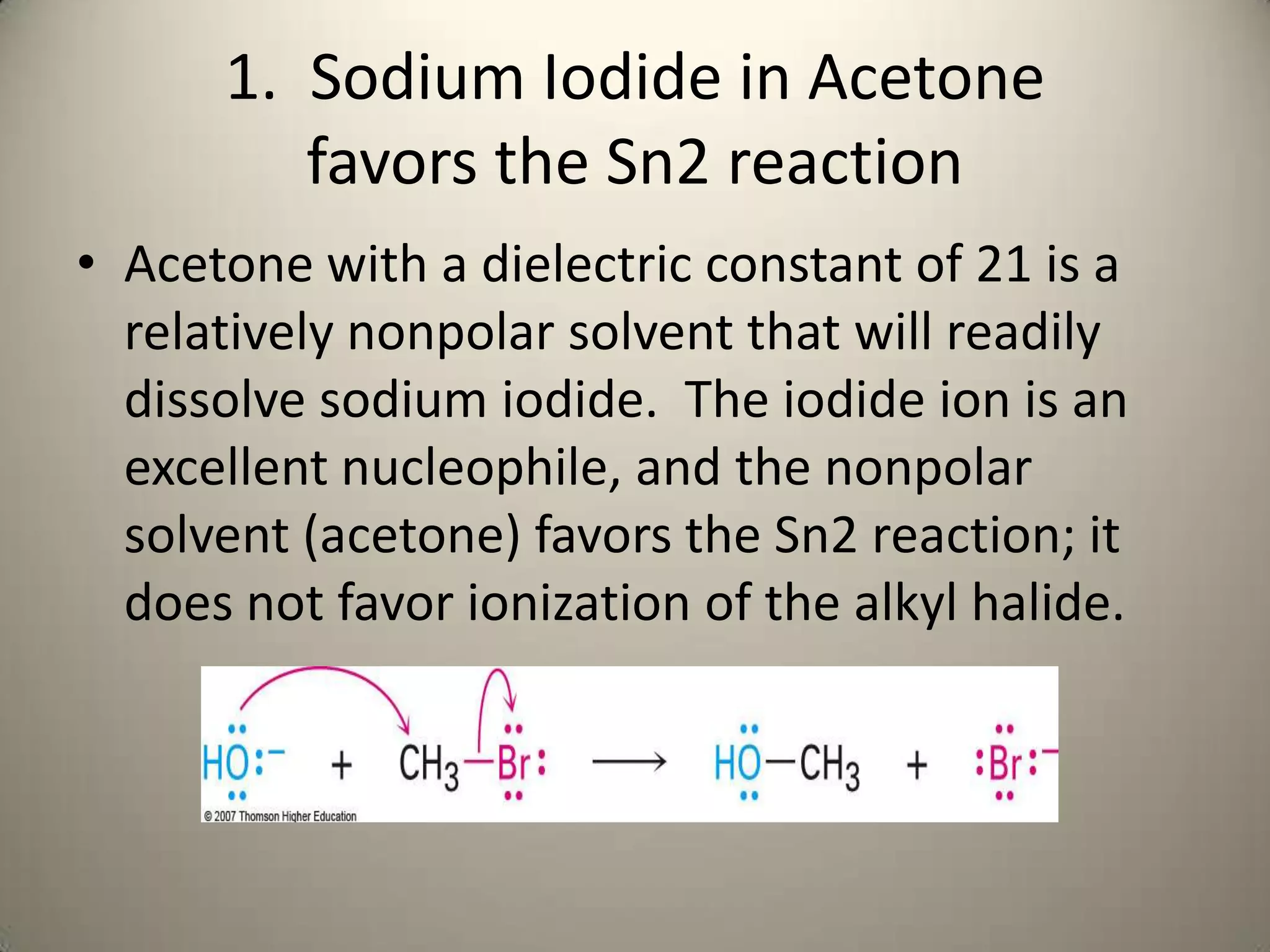
1. Sodium Iodide in Acetone
         favors the Sn2 reaction
• Acetone with a dielectric constant of 21 is a
  relatively nonpolar solvent that will readily
  dissolve sodium iodide. The iodide ion is an
  excellent nucleophile, and the nonpolar
  solvent (acetone) favors the Sn2 reaction; it
  does not favor ionization of the alkyl halide.
Sodium Iodide in Acetone
                favors the Sn2 reaction


                                 nucleophile


Electrophile                 Rate = k[ROTs][OAc]


                 Leaving Group
favors the Sn2 reaction
• The extent of reaction can be observed
  because sodium bromide and sodium chloride
  are not soluble is acetone and precipitate
  from solution if a reaction occurs.
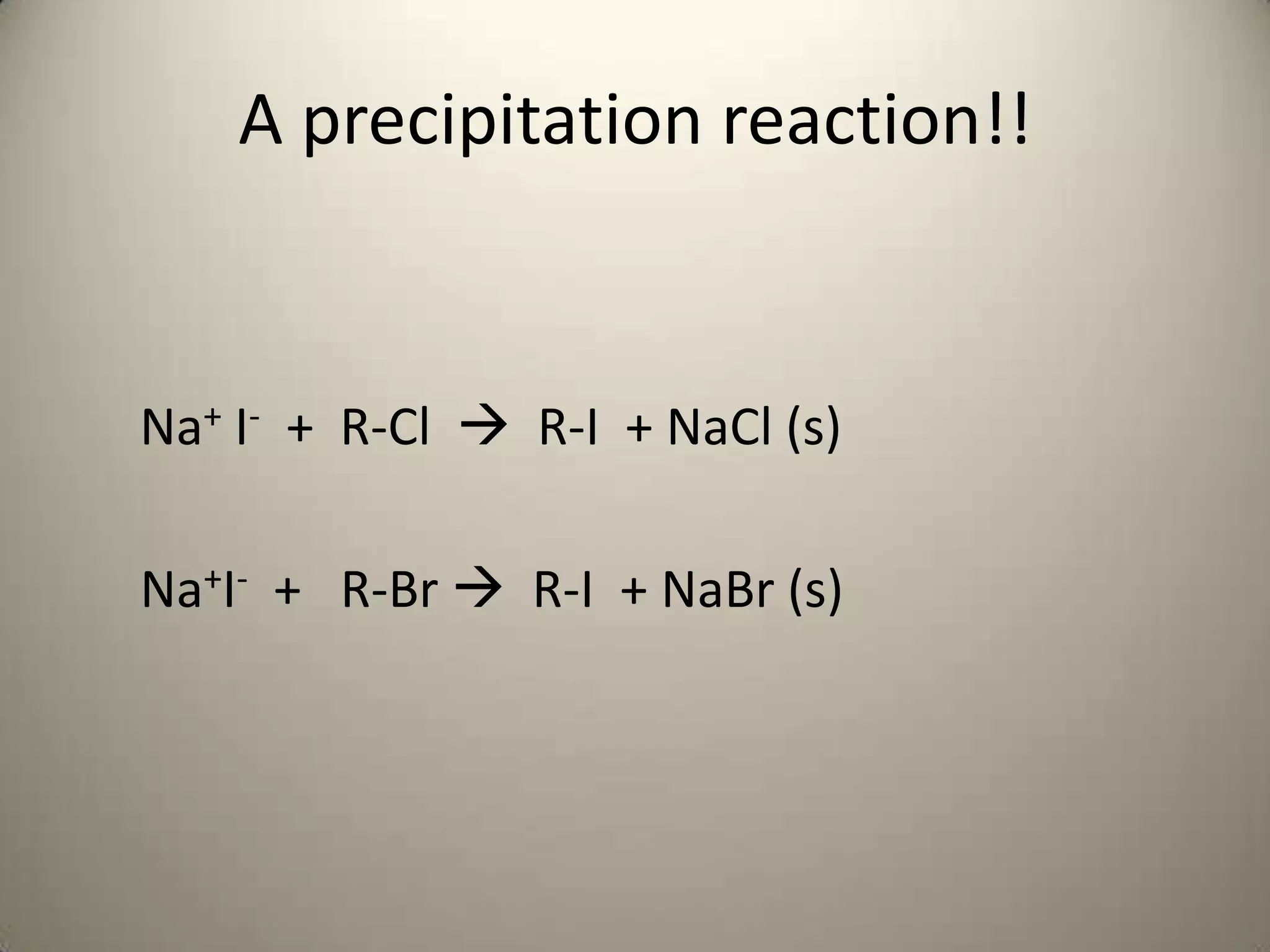
A precipitation reaction!!


Na+ I- + R-Cl  R-I + NaCl (s)

Na+I- + R-Br  R-I + NaBr (s)
2. ethanolic silver nitrate solution
            Favors an Sn1
• When an alkyl halide is treated with an
  ethanolic solution of silver nitrate, the silver
  ion coordinates with an electron pair of the
  halogen. This weakens the carbon-halogen
  bond because a molecule of insoluble silver
  halide is formed, the promoting an Sn1
  reaction of the alkyl halide. The solvent,
  ethanol, favors ionization of the halide, and
  nitrate ion is a very poor nucleophile, so alkyl
  nitrates do not form by an Sn2 reaction.
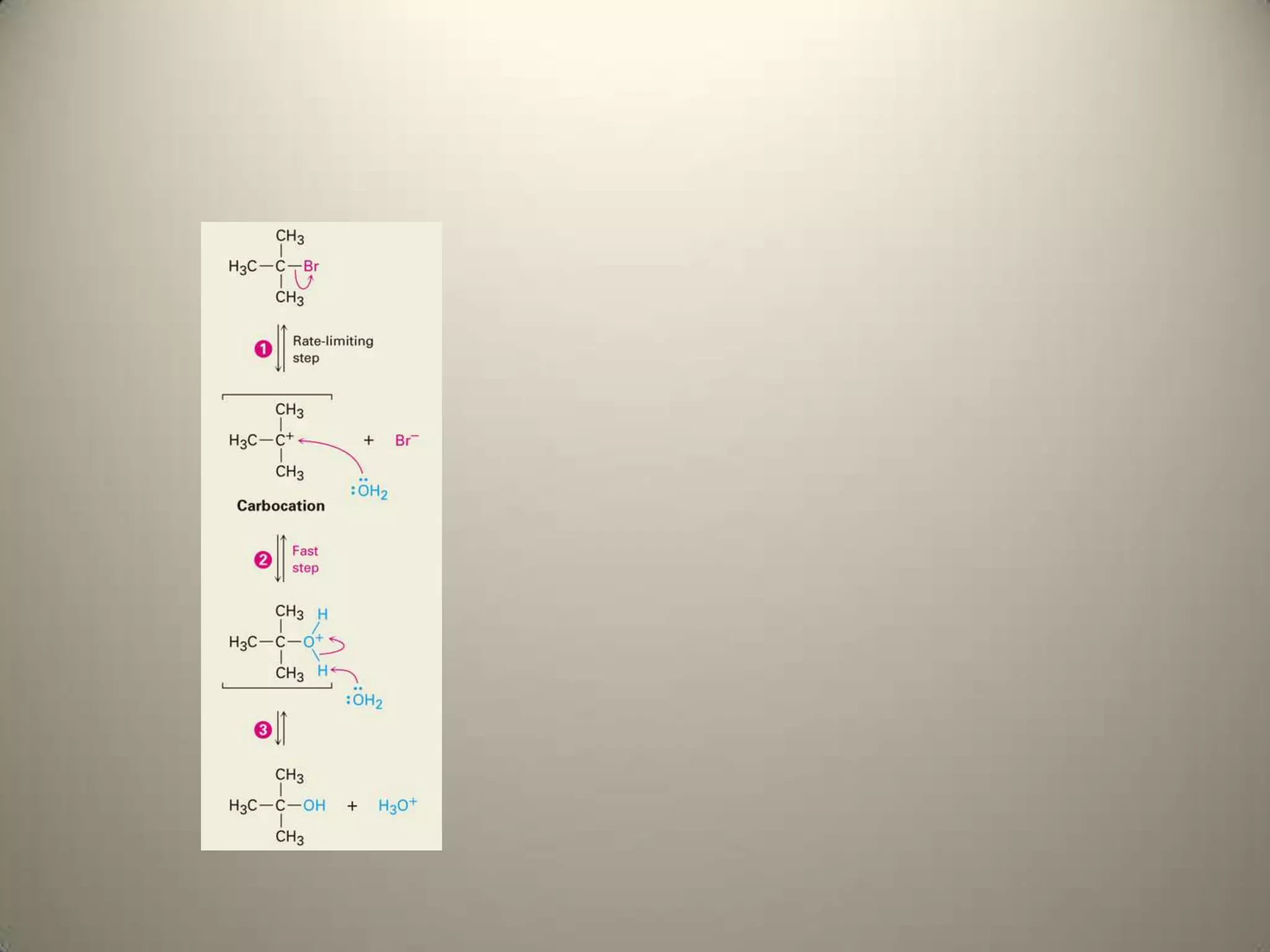
Rate-determining step is formation of
           carbocation
            rate = k[RX]
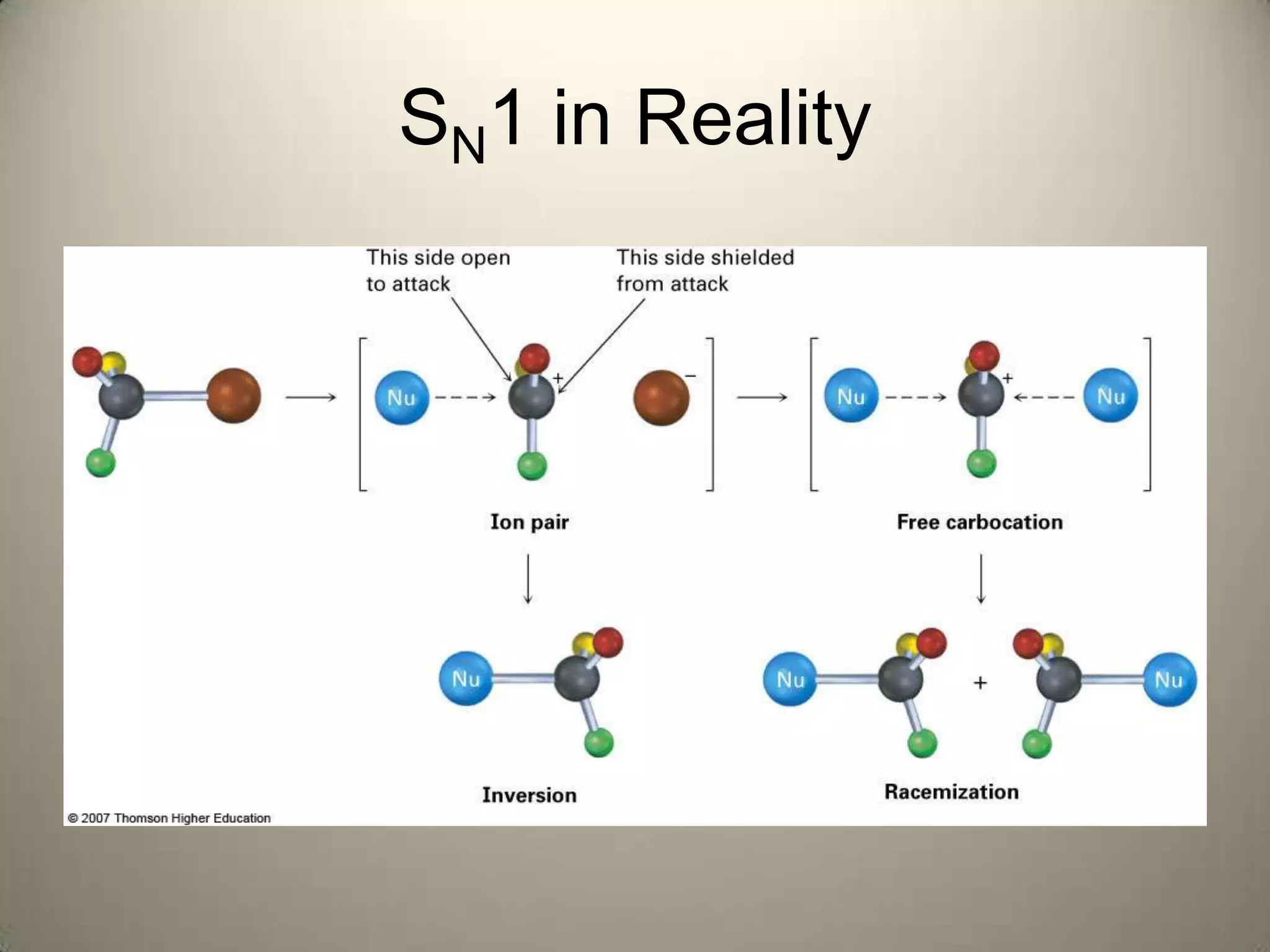
SN1 in Reality
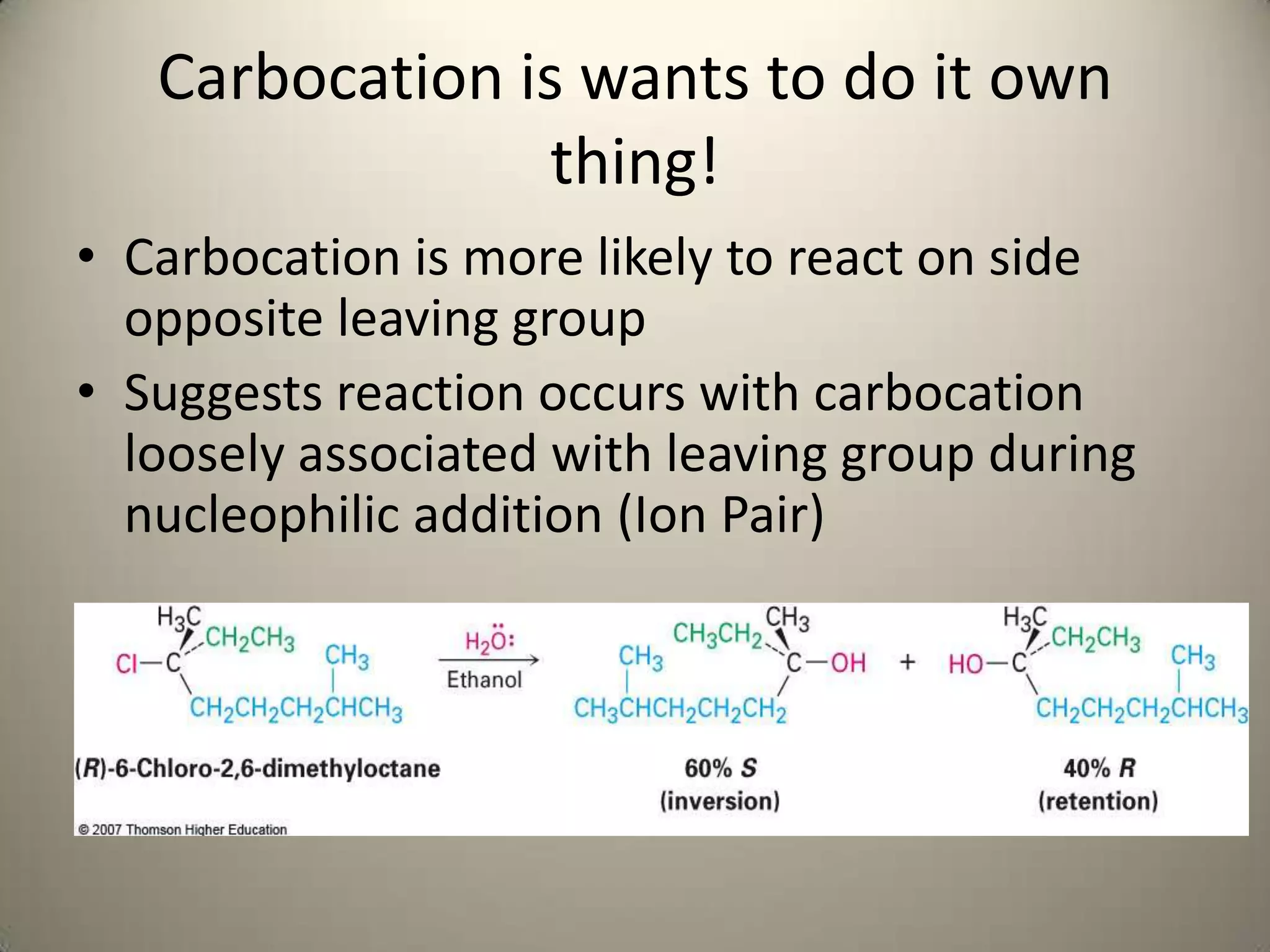
Carbocation is wants to do it own
                 thing!
• Carbocation is more likely to react on side
  opposite leaving group
• Suggests reaction occurs with carbocation
  loosely associated with leaving group during
  nucleophilic addition (Ion Pair)
lets make it happen!
R-X Ag+-> R-X -> R+ + AgX (s)
•
On the basis of the foregoing discussion,
• Let’s “make it happen!”
•
• The Microscale run!
The Microscale run
• Label 7 small containers (reaction tubes, 3 mL,
  centrifuge tubes, 10 x 75 mm test tubes, or 1
  mL vials), and place 0.1 mL of 100 mg of each
  of the following halides in the tubes.
•
The Microscale run
• Youre alkyl halides!

• 1-chlorobutane, 1-butane, 2-chlorobutane, 2-
  chlorobutane, 2-chloro-2-mehtylpropane, 2-
  brombutane, 1-chloro-2-methylpropane and
  bromo benzene
The Magic !
• To each tube then rapidly add 1 ml of 18%
  solution of sodium iodide in acetone, stopper
  each tube, mix the contents thoroughly, and
  note the time.
The precipitate!!!
• Note the time of the first appearance of any
  precipitate. If no reaction occurs within about
  5 min, place those tube in a 50 oC water bath
  and watch for any reaction over the next 5 to
  6 min.
The precipitate!!!
• Empty the tubes, rinse them with ethanol,
  place the same amount of each of the alkyl
  halides in each tube as in the first part of the
  experiment, add 1 ml of 1% ethanolic silver
  nitrate to each tube,
• And note the time of addition of as well as the
  time of appearance of the first traces of any
  precipitate.
•
unreactive halides
• If a precipitate does not occur in 5 min, heat
  the tubes containing these unreactive halides
  in a 50 oC water bath for 5 to 6 min and
  watch for any reaction
effect of the solvent
• To test the effect of the solvent on the rate of
  Sn1 reactivity. Compare the time needed for a
  precipitate to appear when 2-chlorobutane is
  treated with 1% ethanolic silver nitrate
  solution and when treated with 1% silver
  nitrate in a mixture of 50% ethanol and 50%
  water .
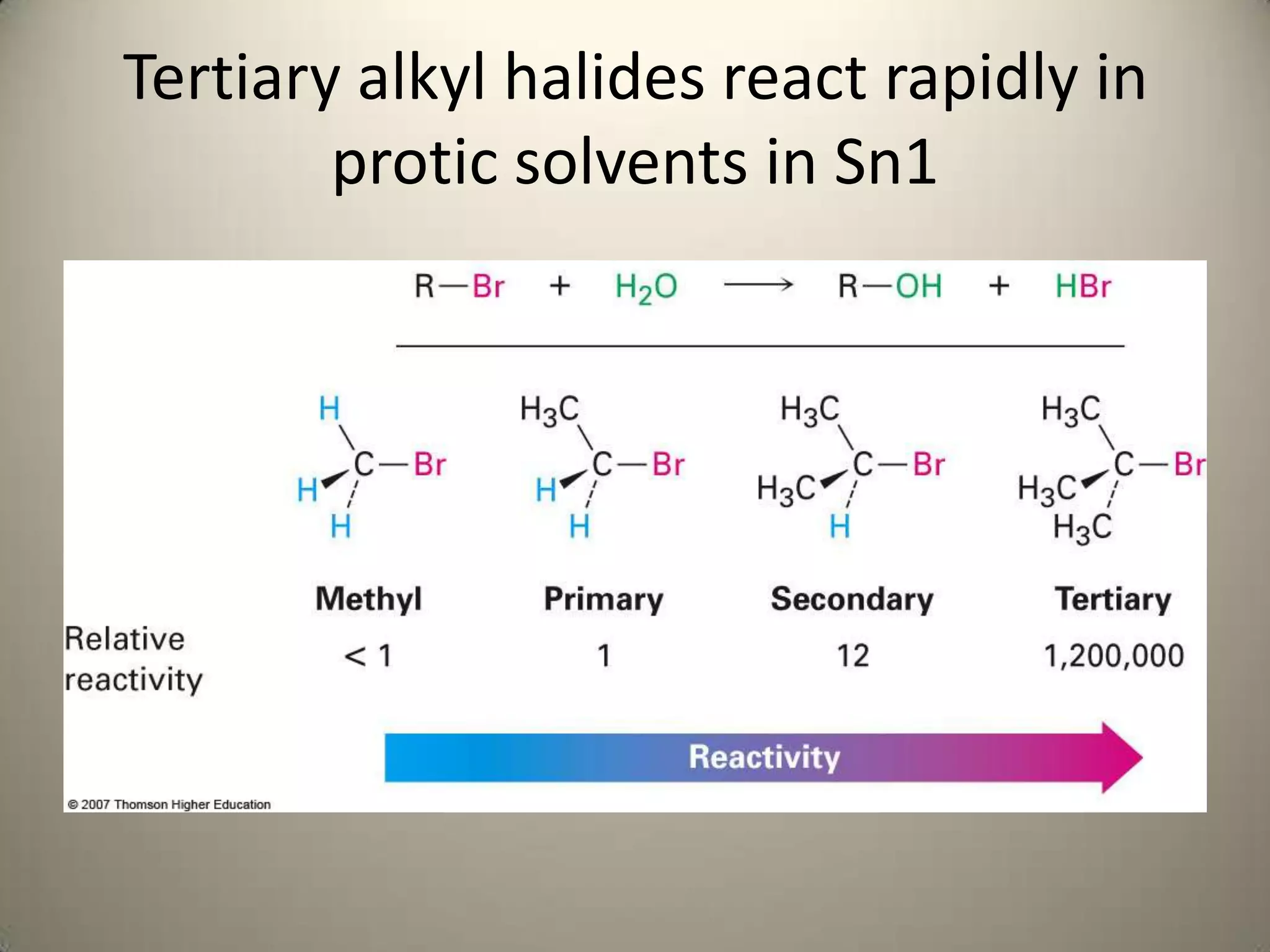
Tertiary alkyl halides react rapidly in
        protic solvents in Sn1
your analysis
• In your analysis of these experiments consider
  the :
• Nature of the leaving group
• Effect of the structure of the alkyl halide
• Effect of the solvent
• Effect of the temperature
Lets go to the Video tape!!!
• http://www.youtube.com/watch?v=g5_GEzr9
  1BQ
•
• http://www.youtube.com/watch?v=hXIQUChlJ
  q0&feature=related
Presentation17 alkyl halides new (2)

Presentation17 alkyl halides new (2)

  • 1.
    Sn1 and Sn2lab-Orgo 1 lab • 7 alkyl halides are treated with sodium iodide in acetone and with ethanolic solution of silver nitrate • Author: Dr. Robert D. Craig, Ph.D
  • 2.
    The procedure fortoday!! • In the experiments that follow, 7 alkyl halides are treated with sodium iodide in acetone and with ethanolic solution of silver nitrate. • • 1. Sodium Iodide in Acetone • 2. ethanolic silver nitrate solution
  • 3.
    7 alkyl halides •The seven alkyl halides are 1-chlorobutane, 1- butane, 2-chlorobutane, 2-chlorobutane, 2- chloro-2-mehtylpropane, 2-brombutane, 1- chloro-2-methylpropane and bromo benzene. • • • You can just follow pg 338 to 340 exactly! Th Microscale Run. Low level Stress!!! •
  • 4.
    1. Sodium Iodidein Acetone favors the Sn2 reaction • Acetone with a dielectric constant of 21 is a relatively nonpolar solvent that will readily dissolve sodium iodide. The iodide ion is an excellent nucleophile, and the nonpolar solvent (acetone) favors the Sn2 reaction; it does not favor ionization of the alkyl halide.
  • 5.
    Sodium Iodide inAcetone favors the Sn2 reaction nucleophile Electrophile Rate = k[ROTs][OAc] Leaving Group
  • 6.
    favors the Sn2reaction • The extent of reaction can be observed because sodium bromide and sodium chloride are not soluble is acetone and precipitate from solution if a reaction occurs.
  • 7.
    A precipitation reaction!! Na+I- + R-Cl  R-I + NaCl (s) Na+I- + R-Br  R-I + NaBr (s)
  • 8.
    2. ethanolic silvernitrate solution Favors an Sn1 • When an alkyl halide is treated with an ethanolic solution of silver nitrate, the silver ion coordinates with an electron pair of the halogen. This weakens the carbon-halogen bond because a molecule of insoluble silver halide is formed, the promoting an Sn1 reaction of the alkyl halide. The solvent, ethanol, favors ionization of the halide, and nitrate ion is a very poor nucleophile, so alkyl nitrates do not form by an Sn2 reaction.
  • 10.
    Rate-determining step isformation of carbocation rate = k[RX]
  • 11.
  • 12.
    Carbocation is wantsto do it own thing! • Carbocation is more likely to react on side opposite leaving group • Suggests reaction occurs with carbocation loosely associated with leaving group during nucleophilic addition (Ion Pair)
  • 13.
    lets make ithappen! R-X Ag+-> R-X -> R+ + AgX (s) • On the basis of the foregoing discussion, • Let’s “make it happen!” • • The Microscale run!
  • 14.
    The Microscale run •Label 7 small containers (reaction tubes, 3 mL, centrifuge tubes, 10 x 75 mm test tubes, or 1 mL vials), and place 0.1 mL of 100 mg of each of the following halides in the tubes. •
  • 15.
    The Microscale run •Youre alkyl halides! • 1-chlorobutane, 1-butane, 2-chlorobutane, 2- chlorobutane, 2-chloro-2-mehtylpropane, 2- brombutane, 1-chloro-2-methylpropane and bromo benzene
  • 16.
    The Magic ! •To each tube then rapidly add 1 ml of 18% solution of sodium iodide in acetone, stopper each tube, mix the contents thoroughly, and note the time.
  • 17.
    The precipitate!!! • Notethe time of the first appearance of any precipitate. If no reaction occurs within about 5 min, place those tube in a 50 oC water bath and watch for any reaction over the next 5 to 6 min.
  • 18.
    The precipitate!!! • Emptythe tubes, rinse them with ethanol, place the same amount of each of the alkyl halides in each tube as in the first part of the experiment, add 1 ml of 1% ethanolic silver nitrate to each tube, • And note the time of addition of as well as the time of appearance of the first traces of any precipitate. •
  • 19.
    unreactive halides • Ifa precipitate does not occur in 5 min, heat the tubes containing these unreactive halides in a 50 oC water bath for 5 to 6 min and watch for any reaction
  • 20.
    effect of thesolvent • To test the effect of the solvent on the rate of Sn1 reactivity. Compare the time needed for a precipitate to appear when 2-chlorobutane is treated with 1% ethanolic silver nitrate solution and when treated with 1% silver nitrate in a mixture of 50% ethanol and 50% water .
  • 21.
    Tertiary alkyl halidesreact rapidly in protic solvents in Sn1
  • 22.
    your analysis • Inyour analysis of these experiments consider the : • Nature of the leaving group • Effect of the structure of the alkyl halide • Effect of the solvent • Effect of the temperature
  • 23.
    Lets go tothe Video tape!!! • http://www.youtube.com/watch?v=g5_GEzr9 1BQ • • http://www.youtube.com/watch?v=hXIQUChlJ q0&feature=related