What have you learned from your
audience feedback?
How I collected my audience feedback:
When collecting my audience feedback, I wanted to create a survey that could allow my audience to freely express their opinions, but also for
the survey to be able to put into various graphs etc. thus making the data collected easier to analyze, and the lessons from it easier to learn.
I made a survey that was made up of mostly multiple choice questions. Multiple choice allows me to get the possible answers that I would find
useful, whether it be complimentary or criticism. Multiple choice also means that my data can be easily put into pie, graph charts etc. meaning
that trends, within the data, are easy to notice. The only issue with using multiple choice questions is that the answers aren’t as unique as they
would be with an answer box to write in, meaning that the feedback I received is not as personal and detailed.
In terms of my music video, I wanted to present representations of age as a grand narrative, as well as to show of my cinematography and
editing skills. So for me it was important to find out what aspects of the music video were the best, as well as the worst. I made sure that the
multiple choices within the questionnaire were ‘even’ so to speak, and masked the answer I was looking to receive, so the audience could
subjectively pick the answer they believed in. Questions such as ‘What grand narrative do you think my video is representing?’, matched with
the type of answer options I just mentioned, the audience are able to provide me with direct feedback in regards to a very important aspect of
my music video.
For my print production I wanted to find out if my intentions for the design and implications of it could be identified by the audience. For
example, the design was minimalistic, thus I asked the question ‘What art movement do you think my print productions have taken
inspiration from?’. I made sure that my questions were easy to answer, and made sure that I did not overcomplicate anything so the
information I gathered was concise and not unnecessary.
I decided to get the send my survey to 14-15 people, of whom were in my main target audience, which were people between the age of 12-18.
By asking this group of people, I was able to gather a clear idea of what my target audience wanted to see improved, as well as how they
understood my productions. However, if I was to do my survey again, I would broaden the age of the people I asked to do my survey, as it
would help me to make my productions more attractive to a much wider audience.
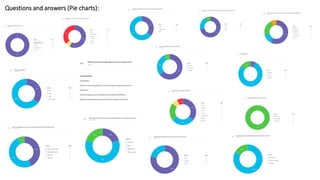
Questions and answers (Pie charts):
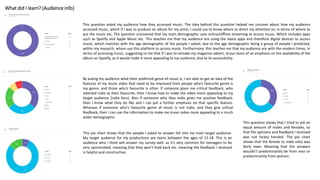
What did I learn? (Audience info)
This question asked my audience how they accessed music. The idea behind this question helped me uncover about how my audience
accessed music, which if I was to produce an album for my artist, I could use to know where to direct my attention to; in terms of where to
put the music etc. The question uncovered that my main demographic uses online/offline streaming to access music. Which includes apps
such as Spotify and Apple Music etc. This teaches me that my audience are using the latest apps and therefore digital devices to access
music, which matches with the age demographic of the people I asked; due to the age demographic being a group of people I predicted,
within my research, whom use this platform to access music. Furthermore, this teaches me that my audience are with the modern times, in
terms of accessing music, suggesting to me that if I was to remake my magazine advert, id put more of an emphasis on the availability of the
album on Spotify, as it would make it more appealing to my audience; due to its accessibility.
This question shows that I tried to ask an
equal amount of males and females, so
that the opinions and feedback I received
was not heavy handed. The pie chart
shows that the female to male ratio was
fairly even. Meaning that the answers
wouldn’t predominantly be from men or
predominantly from women.
By asking my audience what their preferred genre of music is, I am able to get an idea of the
features of my music video that need to be improved from people who’s favourite genre is
my genre, and those who’s favourite is other. If someone gives me critical feedback, who
selected indie as their favourite, then I know how to make the video more appealing to my
target audience (indie fans). Also if someone who likes indie gives me positive feedback,
then I know what they do like and I can put a further emphasis on that specific feature.
Whereas if someone who’s favourite genre of music is not indie, and they give critical
feedback, then I can use the information to make my music video more appealing to a much
wider demographic.
This pie chart shows that the people I asked to answer fall into my main target audience.
My target audience for my productions are teens between the ages of 12-18. This is an
audience who I think will answer my survey well, as it’s very common for teenagers to be
very opinionated, meaning that they won’t hold back etc. meaning the feedback I received
is helpful and constructive.
What did I learn? (Music video)
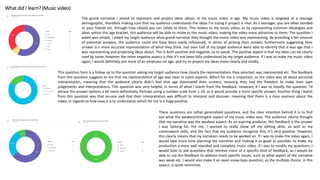
The grand narrative I aimed to represent and project ideas about, in my music video is age. My music video is targeted at a teenage
demographic, therefore making sure that my audience understands the ideas I’m trying ti project is vital. As a teenager, you are often bonded
to your friends etc. through how closely you can relate to them. This relates to my music video, as by representing common ideologies and
ideas within this age bracket, this audience will be able to relate to the music video, making the video more attractive to them. The question I
asked was simple, I asked my target audience what grand narrative they thought the music video was representing. By providing a fair amount
of potential answers, the audience could not have been easily influenced, in terms of picking their answer, furthermore suggesting their
answer is a more accurate representation of what they think. Just over half of my target audience were able to identify that it was age that I
was representing and projecting ideas about. This is both positive and negative, so to speak. The positive aspect is that my ideas can be clearly
read by some, however the more negative aspect is that it’s not been fully understood by my target audience. If I was to make my music video
again, I would definitely put more of an emphasis on age, and try to project my ideas more clearly and vividly.
This question here is a follow up to the question asking my target audience how clearly the representation, they selected, was represented etc. The feedback
from this question suggests to me that my representation of age was clear in some aspects. Which for me is important, as the video was all about personal
interpretation, meaning that the audience clearly didn’t feel that age dominated their screens, meaning they had the freedom to make their own
judgements and interpretations. This question was very helpful, in terms of what I learnt from the feedback. However, if I was to modify the question, I’d
phrase the answer options a bit more definitively. Perhaps using a number scale from 1-10, as it would provide a more specific answer. Another thing I learnt
from this question was that no-one said that their interpretation was difficult to interpret and discover; meaning that there is a clear easiness about the
video, in regards to how easy it is to understand, which for me is a huge positive.
These questions are rather generalized questions, and the clear intention behind it is to find
out what the weakest/strongest aspect of my music video was. The audience clearly thought
that my narrative was the weakest aspect. As an aspiring producer, this feedback is the answer
I was looking for. For me, I wanted to really show off my editing skills, as well as my
camerawork skills, and the fact that my audience recognize this, it’s very positive. However,
this clearly means that my narration needs to be worked on. If I was to make the video again, I
would take more time planning the narrative and making it as good as possible, to make my
production a more well rounded and complete music video. If I was to modify my questions, I
would look to ask questions that retrieve more of a specific kind of feedback, as I would be
able to use the feedback to address more specific issues, such as what aspect of the narrative
was weak etc. I would also make it an open essay-type question, as the multiple choice, in this
aspect, is quite restrictive.
What did I learn? (Print productions 1)
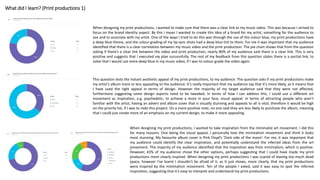
When designing my print productions, I wanted to make sure that there was a clear link to my music video. This was because I strived to
focus on the brand identity aspect. By this I mean I wanted to create this idea of a brand for my artist, something for the audience to
see and to associate with my artist. One of the ways I tried to do this was through the use of the colour blue, my print productions have
a deep blue theme, and the colour grading of my lip-sync shots had a deep blue tint to them. For me it was important that my audience
identified that there is a clear correlation between my music video and the print production. The pie chart shows that from the question
asking if there’s a clear link between the video and print production, nearly 80% of my audience said there is a clear link. This is very
positive and suggests that I executed my plan successfully. The rest of my feedback from this question states there is a partial link, to
solve that I would use more deep blue in my music video, if I was to colour grade the video again.
This question tests the instant aesthetic appeal of my print productions, to my audience. The question asks if my print productions make
my artist’s album more or less appealing to the audience. It’s really important that my audience say that it’s more likely, as it means that
I have used the right appeal in terms of design. However the majority of my target audience said that they were not affected,
furthermore suggesting some design aspects need to be tweaked. In terms of how I can address this, I could use a different art
movement as inspiration, e.g. psychedelic; to achieve a more in your face, visual appeal. In terms of attracting people who aren’t
familiar with the artist, having an advert and album cover that is visually stunning and appeals to all is vital, therefore it would be high
on the priority list, if I was to redo this project. On a more positive note, no one said they are less likely to purchase the album, meaning
that I could just create more of an emphasis on my current design, to make it more appealing.
When designing my print productions, I wanted to take inspiration from the minimalist art movement. I did this
for many reasons. One being the visual appeal, I personally love the minimalism movement and think it looks
most stunning. My favourite album cover is Pink Floyd’s ‘Dark side of the moon’. For me, it was important that
my audience could identify the clear inspiration, and potentially understand the inferred ideas from the art
movement. The majority of my audience identified that the inspiration was from minimalism, which is positive.
However, 43% of my audience chose the other options, perhaps suggesting that I could have made my print
productions more clearly inspired. When designing my print productions I was scared of leaving too much dead
space, however I've learnt I shouldn’t be afraid of it, as It just shows, more clearly, that my print productions
were inspired by the minimalism movement. Ten of the people I asked, said it was easy to spot the inferred
inspiration, suggesting that it’s easy to interpret and understand my print productions.
What did I learn? (Print productions 2)
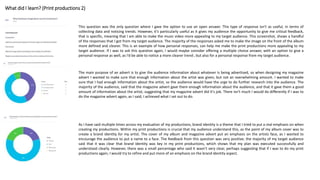
This question was the only question where I gave the option to use an open answer. This type of response isn’t as useful, in terms of
collecting data and noticing trends. However, it’s particularly useful as it gives my audience the opportunity to give me critical feedback,
that is specific, meaning that I am able to make the music video more appealing to my target audience. This screenshot, shows a handful
of the responses that I got from my target audience. The majority of the responses asked me to make the image on the front of the album
more defined and clearer. This is an example of how personal responses, can help me make the print productions more appealing to my
target audience. If I was to ask this question again, I would maybe consider offering a multiple choice answer, with an option to give a
personal response as well, as I’d be able to notice a more clearer trend , but also for a personal response from my target audience.
The main purpose of an advert is to give the audience information about whatever is being advertised, so when designing my magazine
advert I wanted to make sure that enough information about the artist was given, but not an overwhelming amount. I wanted to make
sure that I had enough information about the artist, so the audience would have the urge to do further research into the audience. The
majority of the audience, said that the magazine advert gave them enough information about the audience, and that it gave them a good
amount of information about the artist; suggesting that my magazine advert did it’s job. There isn’t much I would do differently if I was to
do the magazine advert again, as I said; I achieved what I set out to do.
As I have said multiple times across my evaluation of my productions, brand identity is a theme that I tried to put a real emphasis on when
creating my productions. Within my print productions is crucial that my audience understand this, as the point of my album cover was to
create a brand identity for my artist. The cover of my album and magazine advert put an emphasis on the artists face, as I wanted to
encourage the audience to put a name to a face. The feedback from this question was very positive, the majority of my target audience
said that it was clear that brand identity was key in my print productions, which shows that my plan was executed successfully and
understood clearly. However, there was a small percentage who said it wasn’t very clear, perhaps suggesting that if I was to do my print
productions again, I would try to refine and put more of an emphasis on the brand identity aspect.
Conclusion:
During the process of creating my productions I received a lot of feedback from both my peers and my teacher. The feedback that I received on
my music video from my peers was how I could improve my editing. The feedback would usually tell me to make the music cut in time to the
music, more cleanly. By this I mean that my cutting would be a bit off, and with this extra feedback I was able to create a video that is cut in
time, perfectly, to the music. As I said, it was more refining and making the video more crisp, which was what my peers told me to do. On the
other hand, my teacher would challenge me to incorporate more innovative and creative shots, as often as I could, therefore I added slo-mo
shots etc. this feedback that I received was very useful as it allowed me to create productions that were more creative, but also mature and
finished with finesse.
In conclusion, the audience feedback that I received was very useful. If I was to redo the whole project, I would create a music video that has a
clear and understandable relationship with the print production. For example, I would create an album cover that was more definitively cut, in
terms of the photo on the front. I would do this by taking an image that is easier to edit, the image I used wasn’t intended for the design that I
created. As well as this, I also took on board the positive feedback that I received. Usually, positive feedback is just a bonus, and it’s the critical
feedback that is required to improve a product. However, the positive feedback that I received can be used effectively, if I was to redo this
project I would put more of an emphasis on the aspects that were positive, for example would utilize my editing skills a bit more etc.

Presentation1

  • 1.
    What have youlearned from your audience feedback?
  • 2.
    How I collectedmy audience feedback: When collecting my audience feedback, I wanted to create a survey that could allow my audience to freely express their opinions, but also for the survey to be able to put into various graphs etc. thus making the data collected easier to analyze, and the lessons from it easier to learn. I made a survey that was made up of mostly multiple choice questions. Multiple choice allows me to get the possible answers that I would find useful, whether it be complimentary or criticism. Multiple choice also means that my data can be easily put into pie, graph charts etc. meaning that trends, within the data, are easy to notice. The only issue with using multiple choice questions is that the answers aren’t as unique as they would be with an answer box to write in, meaning that the feedback I received is not as personal and detailed. In terms of my music video, I wanted to present representations of age as a grand narrative, as well as to show of my cinematography and editing skills. So for me it was important to find out what aspects of the music video were the best, as well as the worst. I made sure that the multiple choices within the questionnaire were ‘even’ so to speak, and masked the answer I was looking to receive, so the audience could subjectively pick the answer they believed in. Questions such as ‘What grand narrative do you think my video is representing?’, matched with the type of answer options I just mentioned, the audience are able to provide me with direct feedback in regards to a very important aspect of my music video. For my print production I wanted to find out if my intentions for the design and implications of it could be identified by the audience. For example, the design was minimalistic, thus I asked the question ‘What art movement do you think my print productions have taken inspiration from?’. I made sure that my questions were easy to answer, and made sure that I did not overcomplicate anything so the information I gathered was concise and not unnecessary. I decided to get the send my survey to 14-15 people, of whom were in my main target audience, which were people between the age of 12-18. By asking this group of people, I was able to gather a clear idea of what my target audience wanted to see improved, as well as how they understood my productions. However, if I was to do my survey again, I would broaden the age of the people I asked to do my survey, as it would help me to make my productions more attractive to a much wider audience.
  • 3.
    Questions and answers(Pie charts):
  • 4.
    What did Ilearn? (Audience info) This question asked my audience how they accessed music. The idea behind this question helped me uncover about how my audience accessed music, which if I was to produce an album for my artist, I could use to know where to direct my attention to; in terms of where to put the music etc. The question uncovered that my main demographic uses online/offline streaming to access music. Which includes apps such as Spotify and Apple Music etc. This teaches me that my audience are using the latest apps and therefore digital devices to access music, which matches with the age demographic of the people I asked; due to the age demographic being a group of people I predicted, within my research, whom use this platform to access music. Furthermore, this teaches me that my audience are with the modern times, in terms of accessing music, suggesting to me that if I was to remake my magazine advert, id put more of an emphasis on the availability of the album on Spotify, as it would make it more appealing to my audience; due to its accessibility. This question shows that I tried to ask an equal amount of males and females, so that the opinions and feedback I received was not heavy handed. The pie chart shows that the female to male ratio was fairly even. Meaning that the answers wouldn’t predominantly be from men or predominantly from women. By asking my audience what their preferred genre of music is, I am able to get an idea of the features of my music video that need to be improved from people who’s favourite genre is my genre, and those who’s favourite is other. If someone gives me critical feedback, who selected indie as their favourite, then I know how to make the video more appealing to my target audience (indie fans). Also if someone who likes indie gives me positive feedback, then I know what they do like and I can put a further emphasis on that specific feature. Whereas if someone who’s favourite genre of music is not indie, and they give critical feedback, then I can use the information to make my music video more appealing to a much wider demographic. This pie chart shows that the people I asked to answer fall into my main target audience. My target audience for my productions are teens between the ages of 12-18. This is an audience who I think will answer my survey well, as it’s very common for teenagers to be very opinionated, meaning that they won’t hold back etc. meaning the feedback I received is helpful and constructive.
  • 5.
    What did Ilearn? (Music video) The grand narrative I aimed to represent and project ideas about, in my music video is age. My music video is targeted at a teenage demographic, therefore making sure that my audience understands the ideas I’m trying ti project is vital. As a teenager, you are often bonded to your friends etc. through how closely you can relate to them. This relates to my music video, as by representing common ideologies and ideas within this age bracket, this audience will be able to relate to the music video, making the video more attractive to them. The question I asked was simple, I asked my target audience what grand narrative they thought the music video was representing. By providing a fair amount of potential answers, the audience could not have been easily influenced, in terms of picking their answer, furthermore suggesting their answer is a more accurate representation of what they think. Just over half of my target audience were able to identify that it was age that I was representing and projecting ideas about. This is both positive and negative, so to speak. The positive aspect is that my ideas can be clearly read by some, however the more negative aspect is that it’s not been fully understood by my target audience. If I was to make my music video again, I would definitely put more of an emphasis on age, and try to project my ideas more clearly and vividly. This question here is a follow up to the question asking my target audience how clearly the representation, they selected, was represented etc. The feedback from this question suggests to me that my representation of age was clear in some aspects. Which for me is important, as the video was all about personal interpretation, meaning that the audience clearly didn’t feel that age dominated their screens, meaning they had the freedom to make their own judgements and interpretations. This question was very helpful, in terms of what I learnt from the feedback. However, if I was to modify the question, I’d phrase the answer options a bit more definitively. Perhaps using a number scale from 1-10, as it would provide a more specific answer. Another thing I learnt from this question was that no-one said that their interpretation was difficult to interpret and discover; meaning that there is a clear easiness about the video, in regards to how easy it is to understand, which for me is a huge positive. These questions are rather generalized questions, and the clear intention behind it is to find out what the weakest/strongest aspect of my music video was. The audience clearly thought that my narrative was the weakest aspect. As an aspiring producer, this feedback is the answer I was looking for. For me, I wanted to really show off my editing skills, as well as my camerawork skills, and the fact that my audience recognize this, it’s very positive. However, this clearly means that my narration needs to be worked on. If I was to make the video again, I would take more time planning the narrative and making it as good as possible, to make my production a more well rounded and complete music video. If I was to modify my questions, I would look to ask questions that retrieve more of a specific kind of feedback, as I would be able to use the feedback to address more specific issues, such as what aspect of the narrative was weak etc. I would also make it an open essay-type question, as the multiple choice, in this aspect, is quite restrictive.
  • 6.
    What did Ilearn? (Print productions 1) When designing my print productions, I wanted to make sure that there was a clear link to my music video. This was because I strived to focus on the brand identity aspect. By this I mean I wanted to create this idea of a brand for my artist, something for the audience to see and to associate with my artist. One of the ways I tried to do this was through the use of the colour blue, my print productions have a deep blue theme, and the colour grading of my lip-sync shots had a deep blue tint to them. For me it was important that my audience identified that there is a clear correlation between my music video and the print production. The pie chart shows that from the question asking if there’s a clear link between the video and print production, nearly 80% of my audience said there is a clear link. This is very positive and suggests that I executed my plan successfully. The rest of my feedback from this question states there is a partial link, to solve that I would use more deep blue in my music video, if I was to colour grade the video again. This question tests the instant aesthetic appeal of my print productions, to my audience. The question asks if my print productions make my artist’s album more or less appealing to the audience. It’s really important that my audience say that it’s more likely, as it means that I have used the right appeal in terms of design. However the majority of my target audience said that they were not affected, furthermore suggesting some design aspects need to be tweaked. In terms of how I can address this, I could use a different art movement as inspiration, e.g. psychedelic; to achieve a more in your face, visual appeal. In terms of attracting people who aren’t familiar with the artist, having an advert and album cover that is visually stunning and appeals to all is vital, therefore it would be high on the priority list, if I was to redo this project. On a more positive note, no one said they are less likely to purchase the album, meaning that I could just create more of an emphasis on my current design, to make it more appealing. When designing my print productions, I wanted to take inspiration from the minimalist art movement. I did this for many reasons. One being the visual appeal, I personally love the minimalism movement and think it looks most stunning. My favourite album cover is Pink Floyd’s ‘Dark side of the moon’. For me, it was important that my audience could identify the clear inspiration, and potentially understand the inferred ideas from the art movement. The majority of my audience identified that the inspiration was from minimalism, which is positive. However, 43% of my audience chose the other options, perhaps suggesting that I could have made my print productions more clearly inspired. When designing my print productions I was scared of leaving too much dead space, however I've learnt I shouldn’t be afraid of it, as It just shows, more clearly, that my print productions were inspired by the minimalism movement. Ten of the people I asked, said it was easy to spot the inferred inspiration, suggesting that it’s easy to interpret and understand my print productions.
  • 7.
    What did Ilearn? (Print productions 2) This question was the only question where I gave the option to use an open answer. This type of response isn’t as useful, in terms of collecting data and noticing trends. However, it’s particularly useful as it gives my audience the opportunity to give me critical feedback, that is specific, meaning that I am able to make the music video more appealing to my target audience. This screenshot, shows a handful of the responses that I got from my target audience. The majority of the responses asked me to make the image on the front of the album more defined and clearer. This is an example of how personal responses, can help me make the print productions more appealing to my target audience. If I was to ask this question again, I would maybe consider offering a multiple choice answer, with an option to give a personal response as well, as I’d be able to notice a more clearer trend , but also for a personal response from my target audience. The main purpose of an advert is to give the audience information about whatever is being advertised, so when designing my magazine advert I wanted to make sure that enough information about the artist was given, but not an overwhelming amount. I wanted to make sure that I had enough information about the artist, so the audience would have the urge to do further research into the audience. The majority of the audience, said that the magazine advert gave them enough information about the audience, and that it gave them a good amount of information about the artist; suggesting that my magazine advert did it’s job. There isn’t much I would do differently if I was to do the magazine advert again, as I said; I achieved what I set out to do. As I have said multiple times across my evaluation of my productions, brand identity is a theme that I tried to put a real emphasis on when creating my productions. Within my print productions is crucial that my audience understand this, as the point of my album cover was to create a brand identity for my artist. The cover of my album and magazine advert put an emphasis on the artists face, as I wanted to encourage the audience to put a name to a face. The feedback from this question was very positive, the majority of my target audience said that it was clear that brand identity was key in my print productions, which shows that my plan was executed successfully and understood clearly. However, there was a small percentage who said it wasn’t very clear, perhaps suggesting that if I was to do my print productions again, I would try to refine and put more of an emphasis on the brand identity aspect.
  • 8.
    Conclusion: During the processof creating my productions I received a lot of feedback from both my peers and my teacher. The feedback that I received on my music video from my peers was how I could improve my editing. The feedback would usually tell me to make the music cut in time to the music, more cleanly. By this I mean that my cutting would be a bit off, and with this extra feedback I was able to create a video that is cut in time, perfectly, to the music. As I said, it was more refining and making the video more crisp, which was what my peers told me to do. On the other hand, my teacher would challenge me to incorporate more innovative and creative shots, as often as I could, therefore I added slo-mo shots etc. this feedback that I received was very useful as it allowed me to create productions that were more creative, but also mature and finished with finesse. In conclusion, the audience feedback that I received was very useful. If I was to redo the whole project, I would create a music video that has a clear and understandable relationship with the print production. For example, I would create an album cover that was more definitively cut, in terms of the photo on the front. I would do this by taking an image that is easier to edit, the image I used wasn’t intended for the design that I created. As well as this, I also took on board the positive feedback that I received. Usually, positive feedback is just a bonus, and it’s the critical feedback that is required to improve a product. However, the positive feedback that I received can be used effectively, if I was to redo this project I would put more of an emphasis on the aspects that were positive, for example would utilize my editing skills a bit more etc.