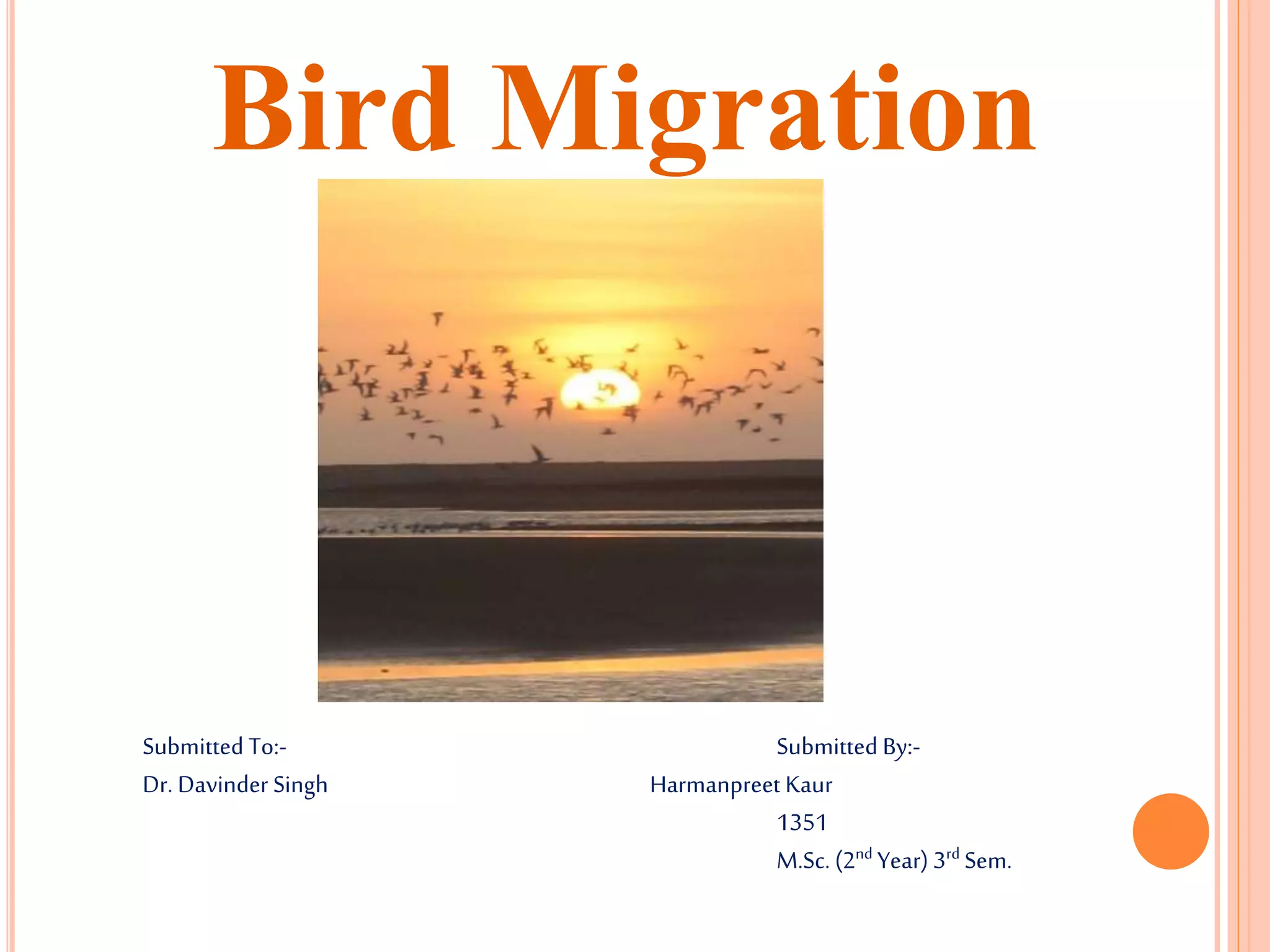
Bird Migration 
Submitted To:- Submitted By:- 
Dr. Davinder Singh Harmanpreet Kaur 
1351 
M.Sc. (2nd Year) 3rd Sem.
MIGRATION OF BIRDS: 
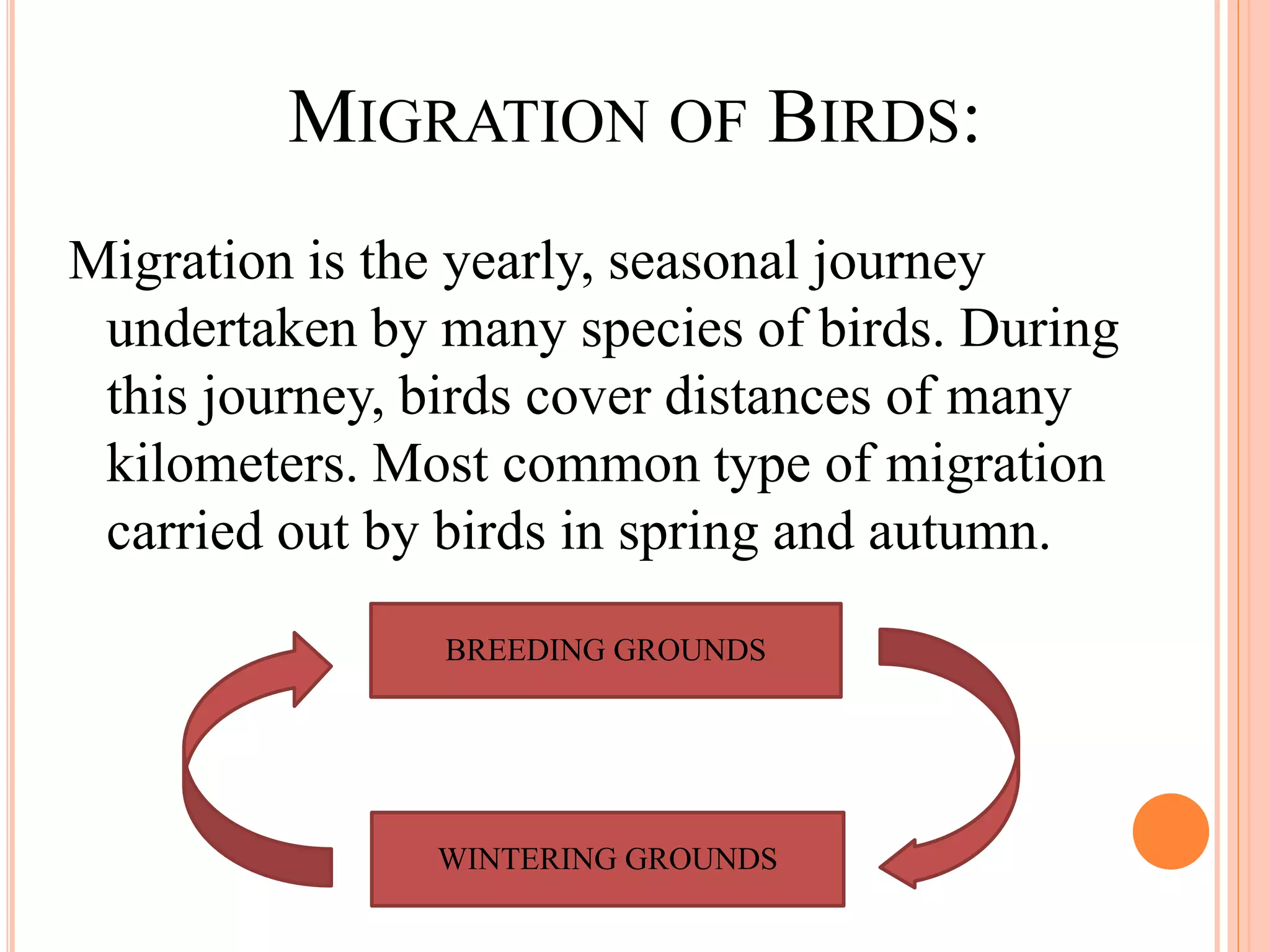
Migration is the yearly, seasonal journey 
undertaken by many species of birds. During 
this journey, birds cover distances of many 
kilometers. Most common type of migration 
carried out by birds in spring and autumn. 
BREEDING GROUNDS 
WINTERING GROUNDS
HOW DID MIGRATION ORIGINATE? 
Roots of migratory habits of modern birds are 
believed to date back millions of years and were 
tempered by environmental changes caused by 
the ice Ages of Quaternary period over the last 
2,500,000 years. 
As environment changed, some animals 
changed their habitat slightly towards more 
favourable places. Then stabilized by natural 
selection. Thus natural selection favoured the 
' migrants'.
STIMULUS FOR MIGRATION: 
Certain physiological and environmental 
cues,such as in late summer decrease in sunlight 
stimulate s migratory bird's pituitary gland to 
produce harmones prolactin and corticosterone 
from adrenal gland. These cause birds to: 
 accumulate large amount of fat 
 provide enough energy for long
WHY BIRDS MIGRATE?? 
Migration as opportunity.. 
 Nesting 
 Food 
Migration as escape.. 
 From weather 
 From lack of food 
 Predators 
 Diseases
WHEN AND HOW DO BIRDS MIGRATE? 
 Environmental and physiology trigger 
migration 
 Circannual rhythm and daylight trigger 
migration 
 Weather influence bird migration 
 Male go first
HOW DO BIRDS MIGRATE SUCH LONG 
DISTANCES? 
 Birds exploit winds to their favour 
 A vital aspect of being able to make such 
long trips is to lay down enough fat reserves 
 Preparing for journey.. 
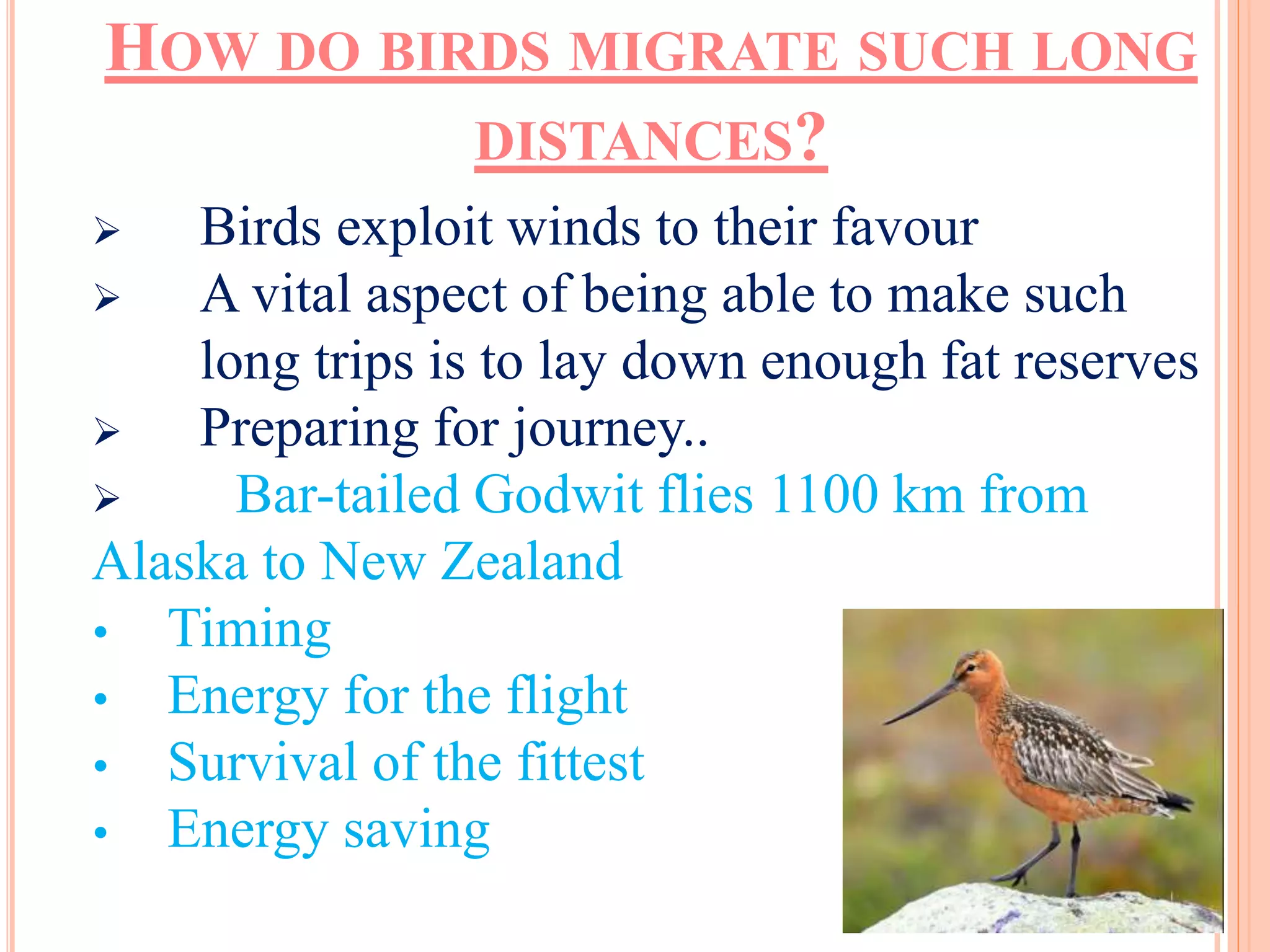
 Bar-tailed Godwit flies 1100 km from 
Alaska to New Zealand 
 Timing 
 Energy for the flight 
 Survival of the fittest 
 Energy saving
WHERE TO GO AND HOW TO GET 
THERE? 
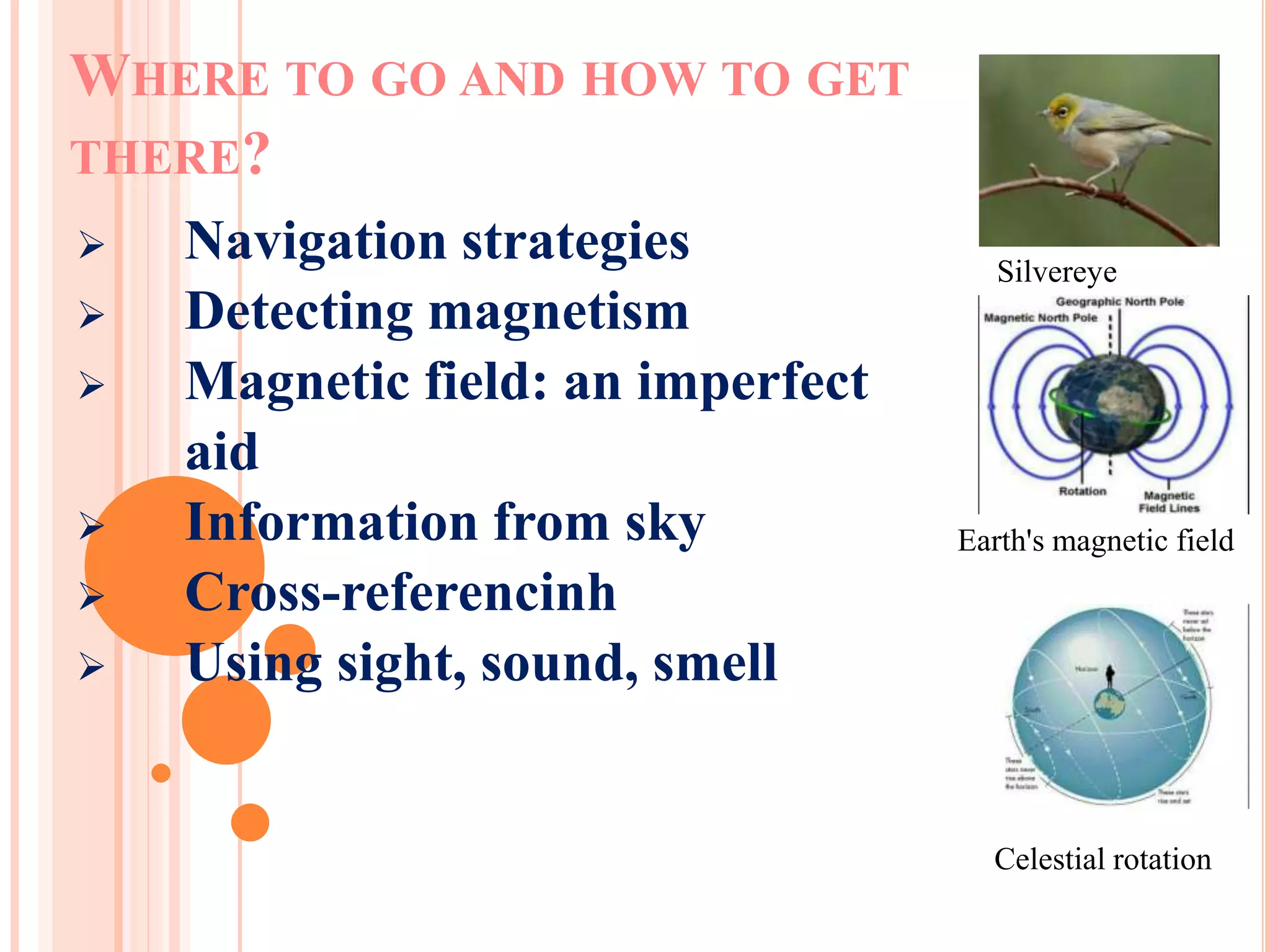
 Navigation strategies 
 Detecting magnetism 
 Magnetic field: an imperfect 
aid 
 Information from sky 
 Cross-referencinh 
 Using sight, sound, smell 
Silvereye 
Earth's magnetic field 
Celestial rotation
MIGRATORY ROUTES: 
Each migratory species has its own characteristics 
routes between its nesting and winter ranges. These 
paths are often rather broad. 
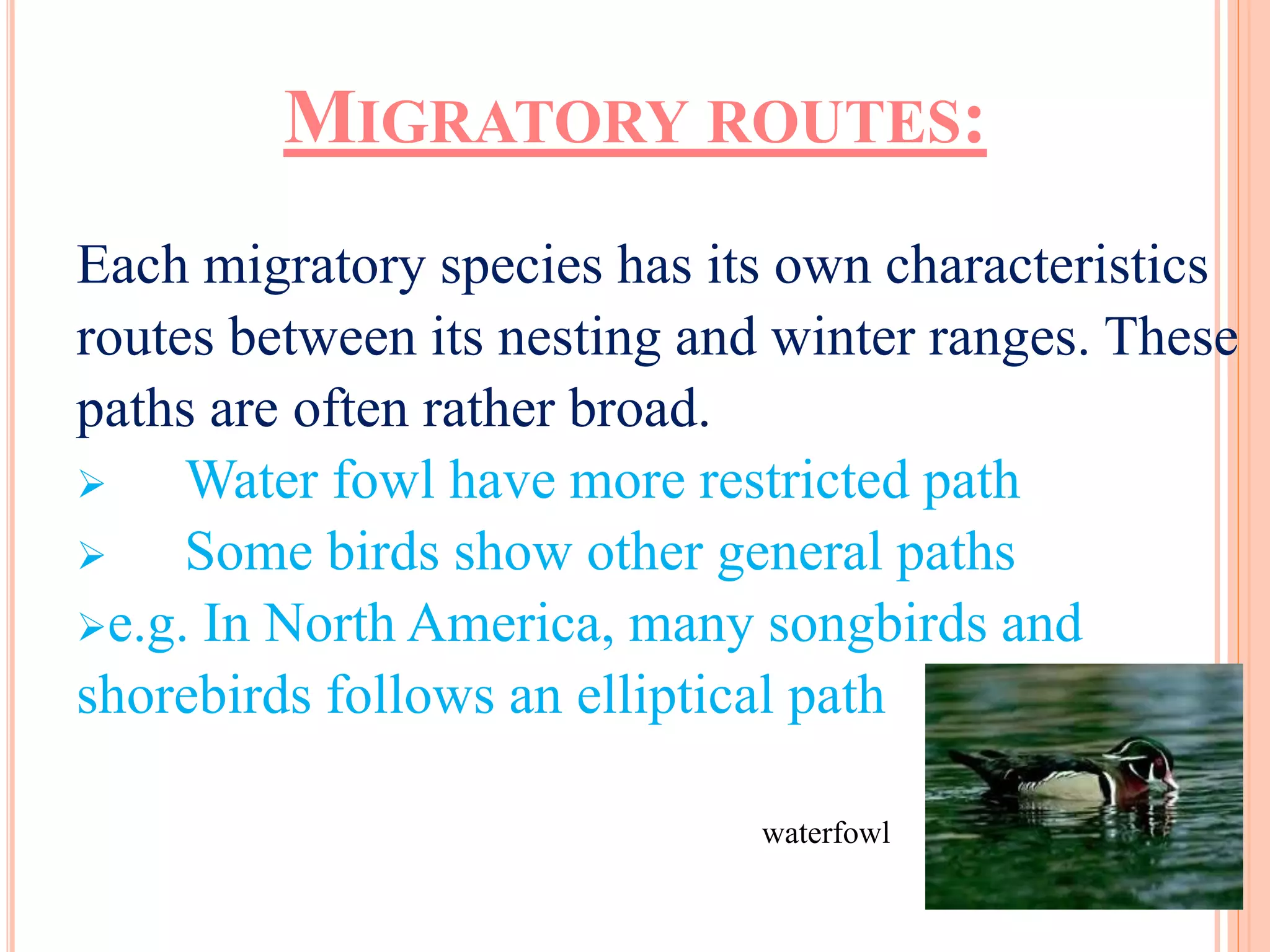
 Water fowl have more restricted path 
 Some birds show other general paths 
e.g. In North America, many songbirds and 
shorebirds follows an elliptical path 
waterfowl
 The third dimension 
 e.g.Hawks and vultures migrate at 3000 feet or less. 
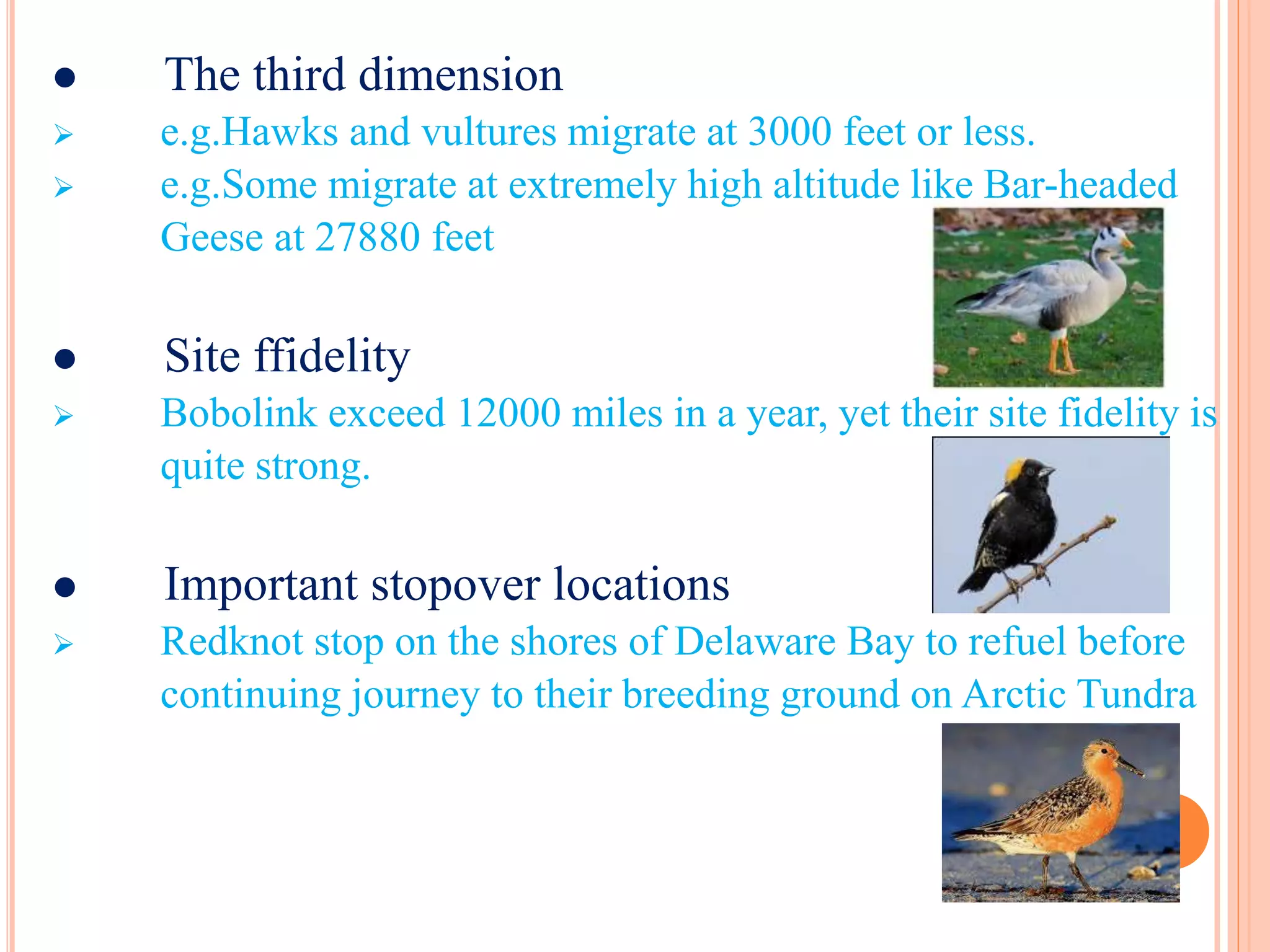
 e.g.Some migrate at extremely high altitude like Bar-headed 
Geese at 27880 feet 
 Site ffidelity 
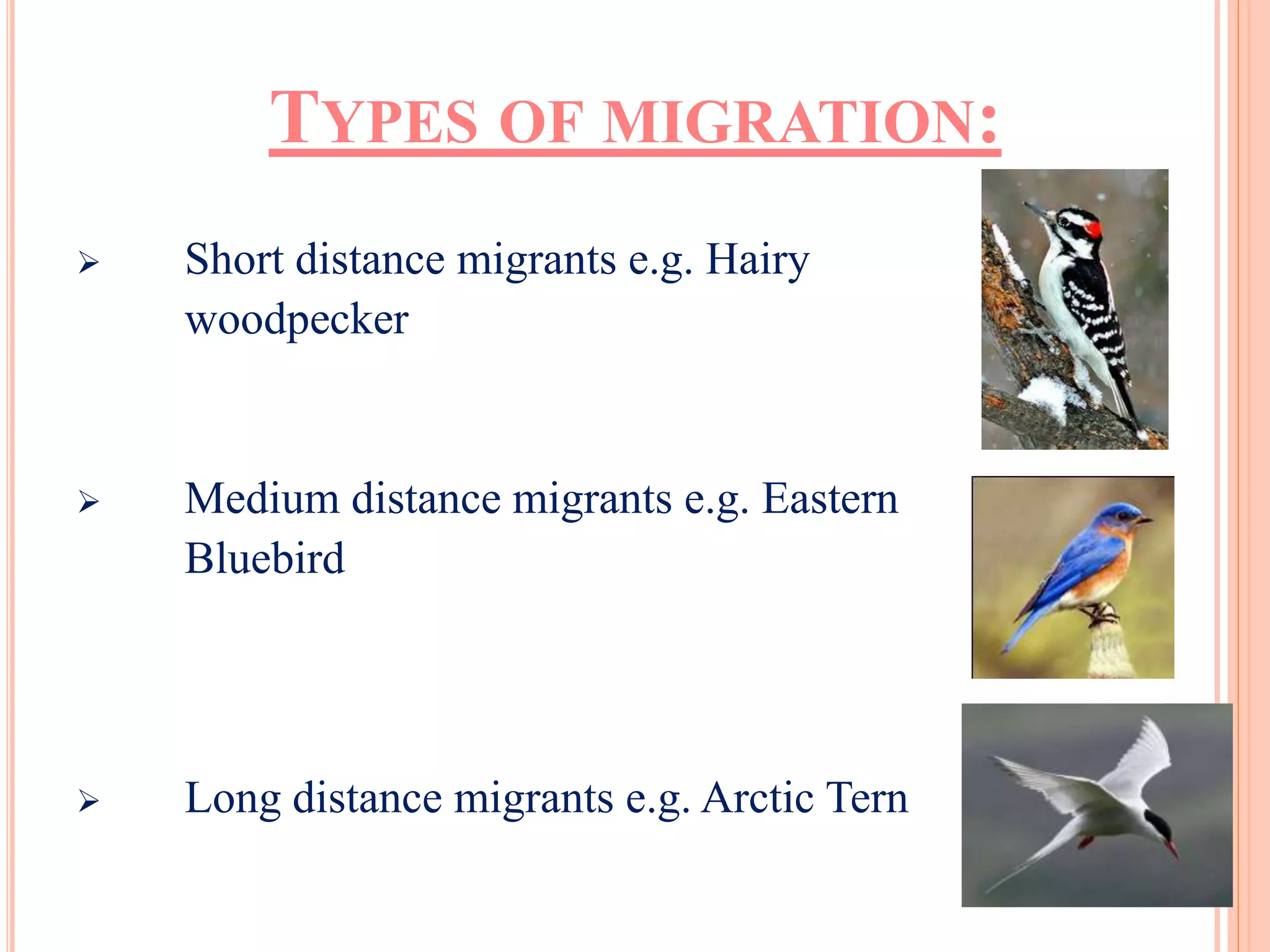
 Bobolink exceed 12000 miles in a year, yet their site fidelity is 
quite strong. 
 Important stopover locations 
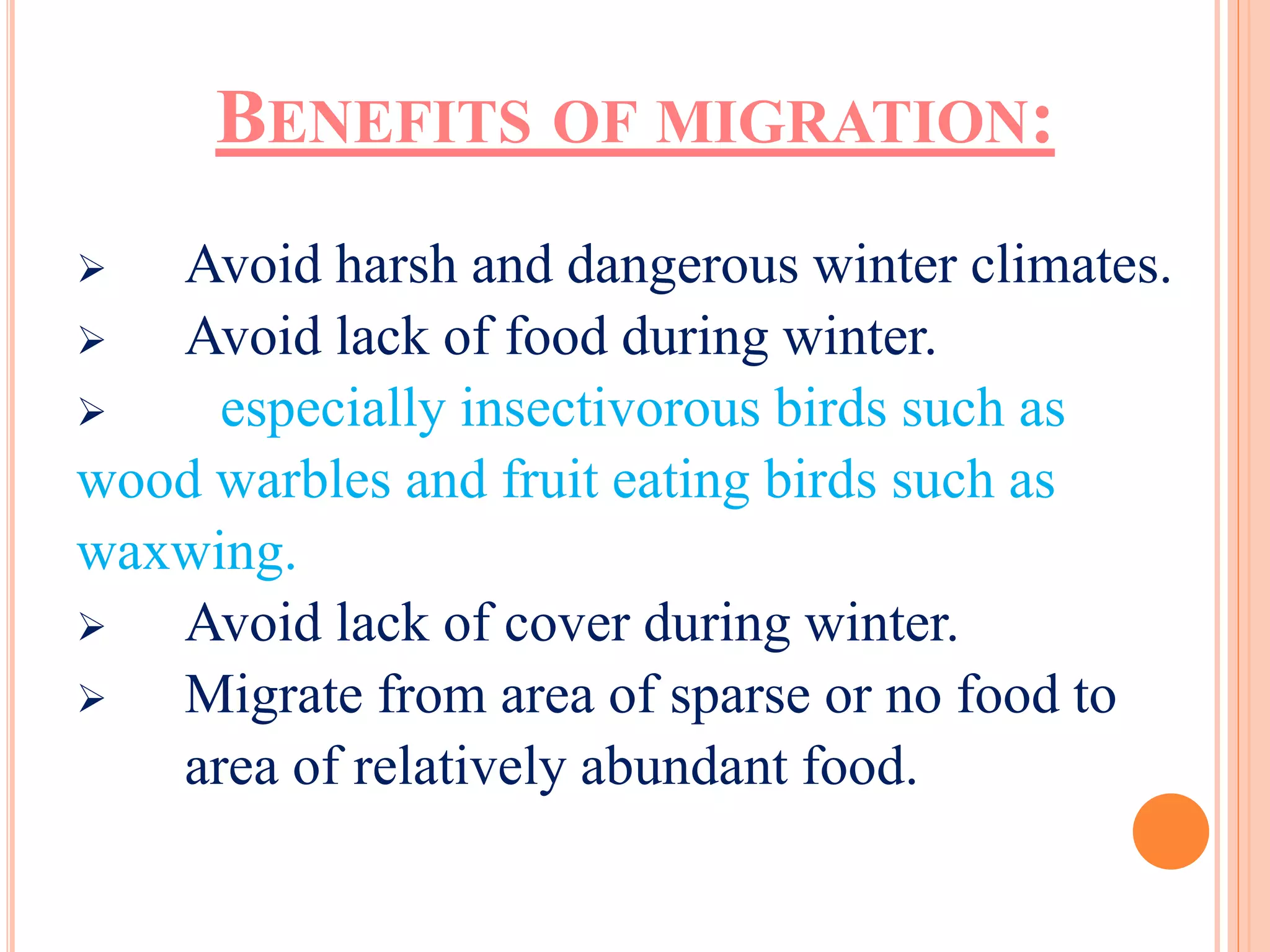
 Redknot stop on the shores of Delaware Bay to refuel before 
continuing journey to their breeding ground on Arctic Tundra
TYPES OF MIGRATION: 
 Short distance migrants e.g. Hairy 
woodpecker 
 Medium distance migrants e.g. Eastern 
Bluebird 
 Long distance migrants e.g. Arctic Tern
BENEFITS OF MIGRATION: 
 Avoid harsh and dangerous winter climates. 
 Avoid lack of food during winter. 
 especially insectivorous birds such as 
wood warbles and fruit eating birds such as 
waxwing. 
 Avoid lack of cover during winter. 
 Migrate from area of sparse or no food to 
area of relatively abundant food.
THREATS TO MIGRATORY BIRDS: 
Sadly, in addition to surviving storms and bad 
weather, exhaustion and other natural obstacles, 
migratory birds are increasingly face human 
threats. Habitat destruction that affects staging 
posts handicap their ability to re-fuel. These 
include draining wetlands, cutting down forests. 
Pollution of sea,water and air also effects them. 
These are also killed by lit-up skyscrapers, 
lighthouses etc.
Harmanpreet

Harmanpreet

  • 1.
    Bird Migration SubmittedTo:- Submitted By:- Dr. Davinder Singh Harmanpreet Kaur 1351 M.Sc. (2nd Year) 3rd Sem.
  • 2.
    MIGRATION OF BIRDS: Migration is the yearly, seasonal journey undertaken by many species of birds. During this journey, birds cover distances of many kilometers. Most common type of migration carried out by birds in spring and autumn. BREEDING GROUNDS WINTERING GROUNDS
  • 3.
    HOW DID MIGRATIONORIGINATE? Roots of migratory habits of modern birds are believed to date back millions of years and were tempered by environmental changes caused by the ice Ages of Quaternary period over the last 2,500,000 years. As environment changed, some animals changed their habitat slightly towards more favourable places. Then stabilized by natural selection. Thus natural selection favoured the ' migrants'.
  • 4.
    STIMULUS FOR MIGRATION: Certain physiological and environmental cues,such as in late summer decrease in sunlight stimulate s migratory bird's pituitary gland to produce harmones prolactin and corticosterone from adrenal gland. These cause birds to:  accumulate large amount of fat  provide enough energy for long
  • 5.
    WHY BIRDS MIGRATE?? Migration as opportunity..  Nesting  Food Migration as escape..  From weather  From lack of food  Predators  Diseases
  • 6.
    WHEN AND HOWDO BIRDS MIGRATE?  Environmental and physiology trigger migration  Circannual rhythm and daylight trigger migration  Weather influence bird migration  Male go first
  • 7.
    HOW DO BIRDSMIGRATE SUCH LONG DISTANCES?  Birds exploit winds to their favour  A vital aspect of being able to make such long trips is to lay down enough fat reserves  Preparing for journey..  Bar-tailed Godwit flies 1100 km from Alaska to New Zealand  Timing  Energy for the flight  Survival of the fittest  Energy saving
  • 8.
    WHERE TO GOAND HOW TO GET THERE?  Navigation strategies  Detecting magnetism  Magnetic field: an imperfect aid  Information from sky  Cross-referencinh  Using sight, sound, smell Silvereye Earth's magnetic field Celestial rotation
  • 9.
    MIGRATORY ROUTES: Eachmigratory species has its own characteristics routes between its nesting and winter ranges. These paths are often rather broad.  Water fowl have more restricted path  Some birds show other general paths e.g. In North America, many songbirds and shorebirds follows an elliptical path waterfowl
  • 10.
     The thirddimension  e.g.Hawks and vultures migrate at 3000 feet or less.  e.g.Some migrate at extremely high altitude like Bar-headed Geese at 27880 feet  Site ffidelity  Bobolink exceed 12000 miles in a year, yet their site fidelity is quite strong.  Important stopover locations  Redknot stop on the shores of Delaware Bay to refuel before continuing journey to their breeding ground on Arctic Tundra
  • 11.
    TYPES OF MIGRATION:  Short distance migrants e.g. Hairy woodpecker  Medium distance migrants e.g. Eastern Bluebird  Long distance migrants e.g. Arctic Tern
  • 12.
    BENEFITS OF MIGRATION:  Avoid harsh and dangerous winter climates.  Avoid lack of food during winter.  especially insectivorous birds such as wood warbles and fruit eating birds such as waxwing.  Avoid lack of cover during winter.  Migrate from area of sparse or no food to area of relatively abundant food.
  • 13.
    THREATS TO MIGRATORYBIRDS: Sadly, in addition to surviving storms and bad weather, exhaustion and other natural obstacles, migratory birds are increasingly face human threats. Habitat destruction that affects staging posts handicap their ability to re-fuel. These include draining wetlands, cutting down forests. Pollution of sea,water and air also effects them. These are also killed by lit-up skyscrapers, lighthouses etc.