Communication
   Essential to Human Behavior
What IS communication?
        Definition                      Outcomes
 Communication is the           Create shared meaning
  process by which
  individuals use symbols and    Create understanding
  behaviors to exchange
  information                    Develop relationships
   O’Hair and Wiemann (2009)
Why do we communicate?
 To express affiliation

 To achieve goals

 To influence other
How we communicate…
 Communication is symbolic

 Communication requires a shared code
   Encoding and decoding

 Communication is linked to culture

 Communication need not be intentional
   Interpersonal vs Intrapersonal

 Communication occurs through various channels

 Communication is a transactional process
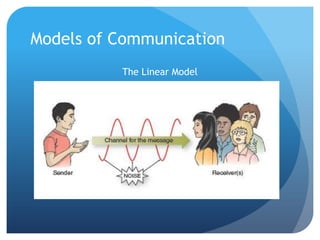
Models of Communication
          The Linear Model
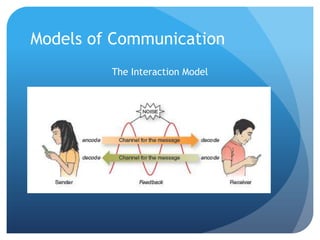
Models of Communication
         The Interaction Model
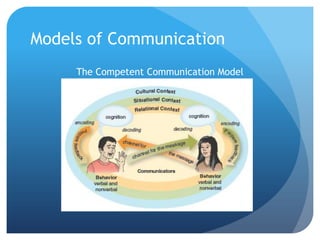
Models of Communication
     The Competent Communication Model
Perception
 A cognitive process through
  which we interpret our
  experiences and come to
  our own unique
  understandings

 To gather, organize, and
  evaluate the information
  we receive we use schemas
Schemas: organizing perceptions
     Schemas are…                Types of schemas…
 Mental structures that put    Prototype
  together related bits of
  information                   Stereotype

 Help you understand how       Script
  things work and how they
  should proceed

 Evolve and change over
  time
Challenges to perception
 Selective perception

 Undue influence

 Attributions
Changing perceptions
 Understand ourselves

 Understand how we manage our own circles or influence
  and identities; this changes over time

 Words crystalize perceptions

 Check with others

 Distinguish between facts and inference

 Monitor the self-serving bias
Communication and culture
 Culture is defined as a         Culture relates to:
  person’s beliefs and              Values
  attitudes about their world.      Beliefs
  Their spirituality, their
                                    Organizations
  sense of status and
                                    Gender
  hierarchy, their use of time
  and physical space, and           Physical ability or disability
  their relationships to one        Location
  another.                         …all shape our communicative
   Samovar & Porter, 2003)          behaviors.
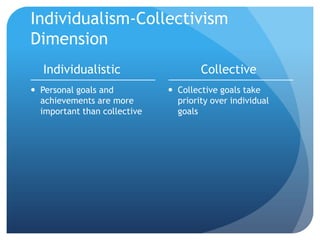
Individualism-Collectivism
Dimension
   Individualistic                    Collective
 Personal goals and           Collective goals take
  achievements are more         priority over individual
  important than collective     goals
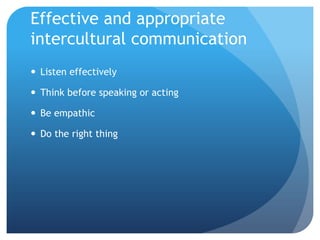
Effective and appropriate
intercultural communication
 Listen effectively

 Think before speaking or acting

 Be empathic

 Do the right thing
End

CWI comm 101 pres 1, 2, 3

  • 1.
    Communication Essential to Human Behavior
  • 2.
    What IS communication? Definition Outcomes  Communication is the  Create shared meaning process by which individuals use symbols and  Create understanding behaviors to exchange information  Develop relationships  O’Hair and Wiemann (2009)
  • 3.
    Why do wecommunicate?  To express affiliation  To achieve goals  To influence other
  • 4.
    How we communicate… Communication is symbolic  Communication requires a shared code  Encoding and decoding  Communication is linked to culture  Communication need not be intentional  Interpersonal vs Intrapersonal  Communication occurs through various channels  Communication is a transactional process
  • 5.
    Models of Communication The Linear Model
  • 6.
    Models of Communication The Interaction Model
  • 7.
    Models of Communication The Competent Communication Model
  • 8.
    Perception  A cognitiveprocess through which we interpret our experiences and come to our own unique understandings  To gather, organize, and evaluate the information we receive we use schemas
  • 9.
    Schemas: organizing perceptions Schemas are… Types of schemas…  Mental structures that put  Prototype together related bits of information  Stereotype  Help you understand how  Script things work and how they should proceed  Evolve and change over time
  • 10.
    Challenges to perception Selective perception  Undue influence  Attributions
  • 11.
    Changing perceptions  Understandourselves  Understand how we manage our own circles or influence and identities; this changes over time  Words crystalize perceptions  Check with others  Distinguish between facts and inference  Monitor the self-serving bias
  • 12.
    Communication and culture Culture is defined as a  Culture relates to: person’s beliefs and  Values attitudes about their world.  Beliefs Their spirituality, their  Organizations sense of status and  Gender hierarchy, their use of time and physical space, and  Physical ability or disability their relationships to one  Location another. …all shape our communicative  Samovar & Porter, 2003) behaviors.
  • 13.
    Individualism-Collectivism Dimension Individualistic Collective  Personal goals and  Collective goals take achievements are more priority over individual important than collective goals
  • 14.
    Effective and appropriate interculturalcommunication  Listen effectively  Think before speaking or acting  Be empathic  Do the right thing
  • 15.