Presentation Guidelines
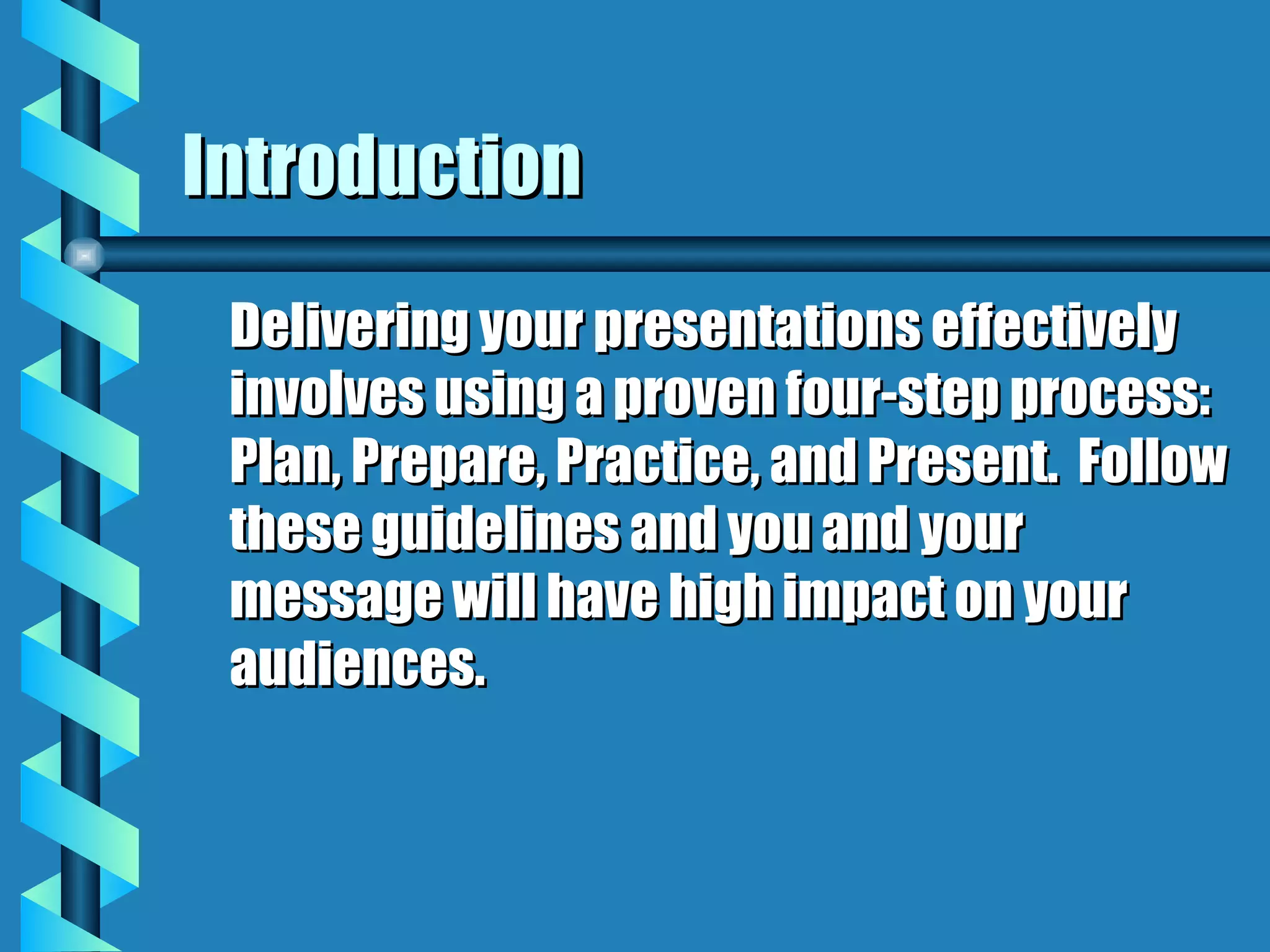
Introduction Delivering your presentations effectively involves using a proven four-step process:  Plan, Prepare, Practice, and Present.  Follow these guidelines and you and your message will have high impact on your audiences.
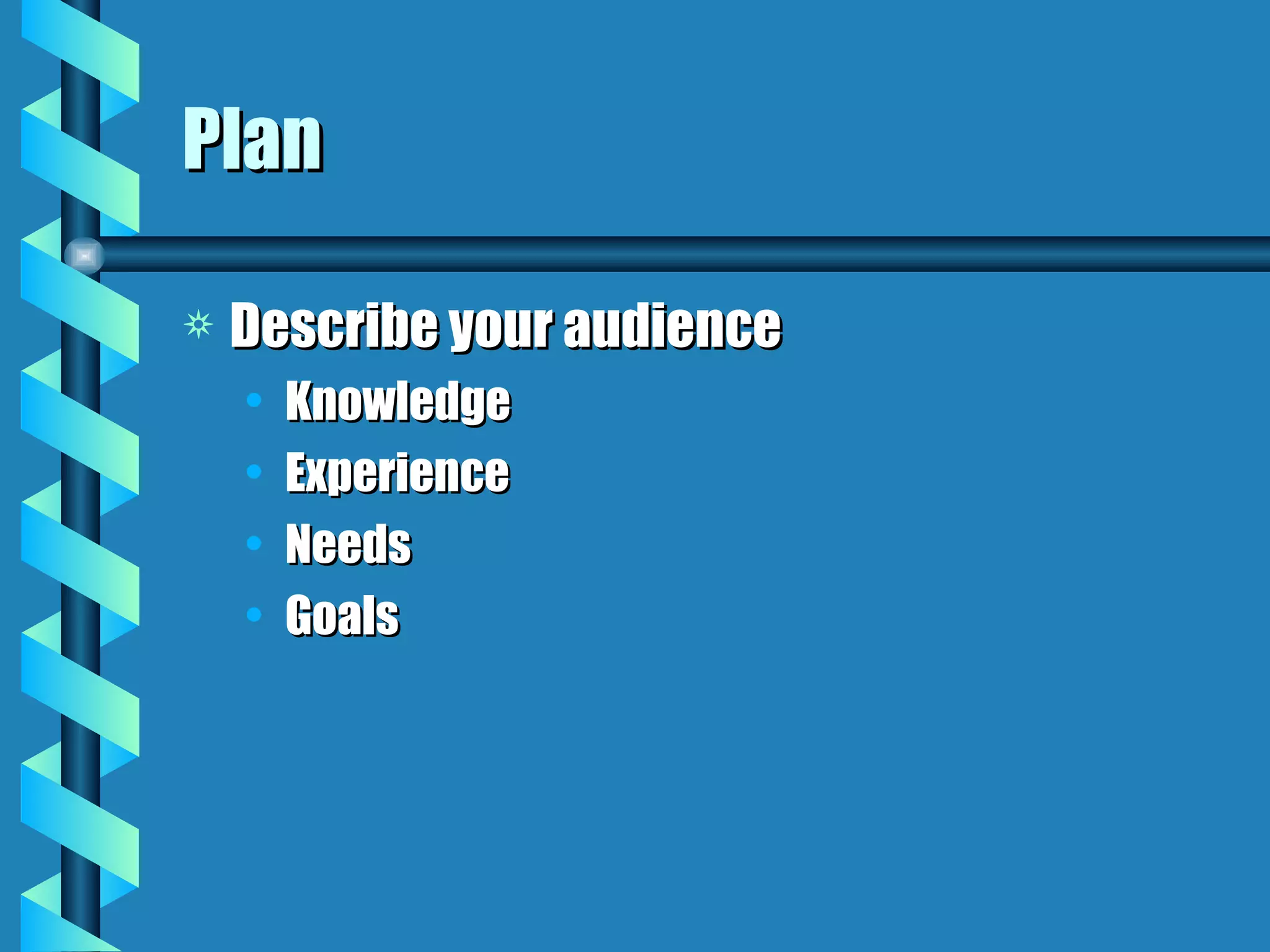
Plan Describe your audience Knowledge Experience Needs Goals
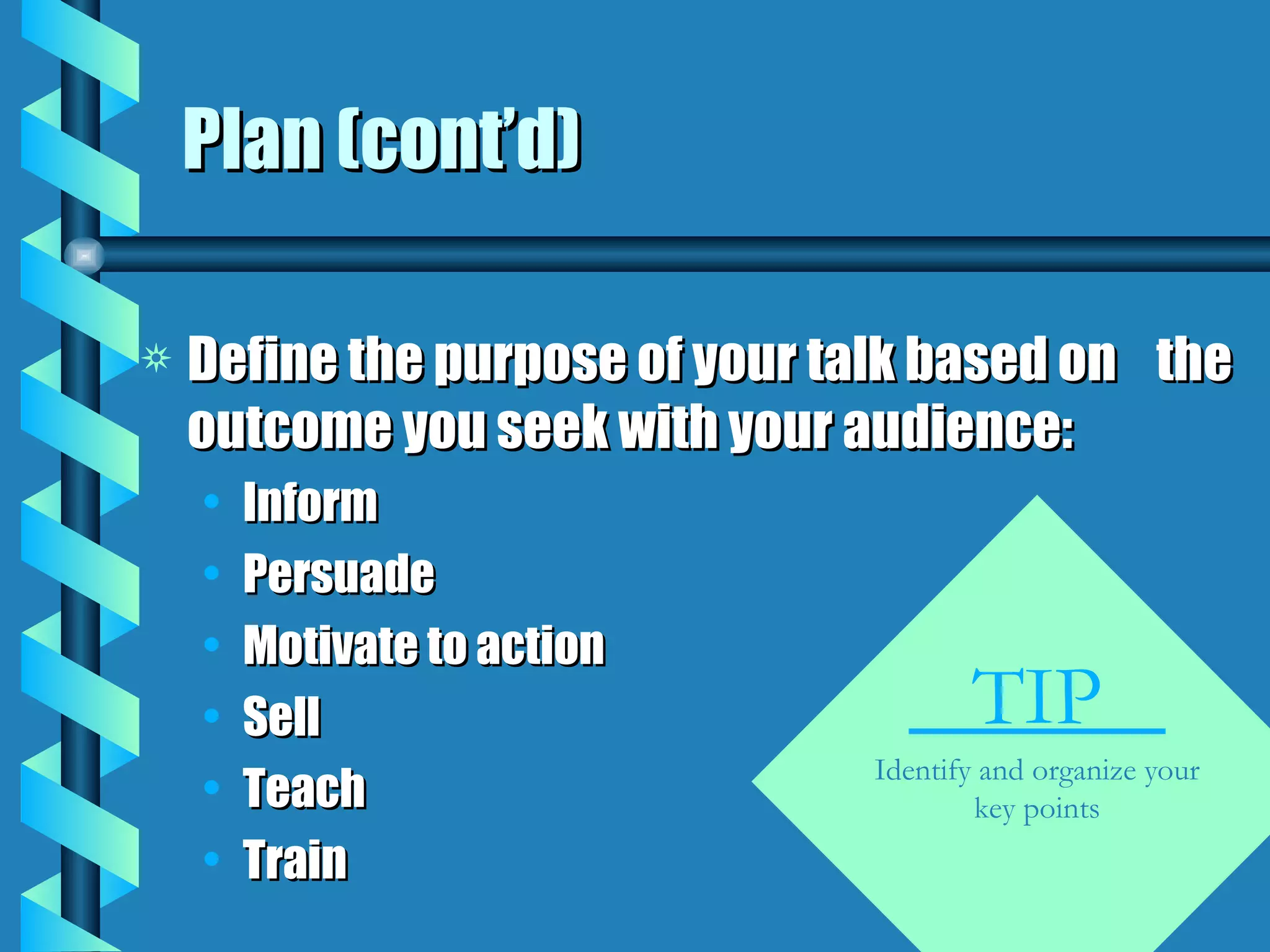
Plan (cont’d) Define the purpose of your talk based on  the outcome you seek with your audience: Inform Persuade Motivate to action Sell Teach Train TIP  Identify and organize your key points
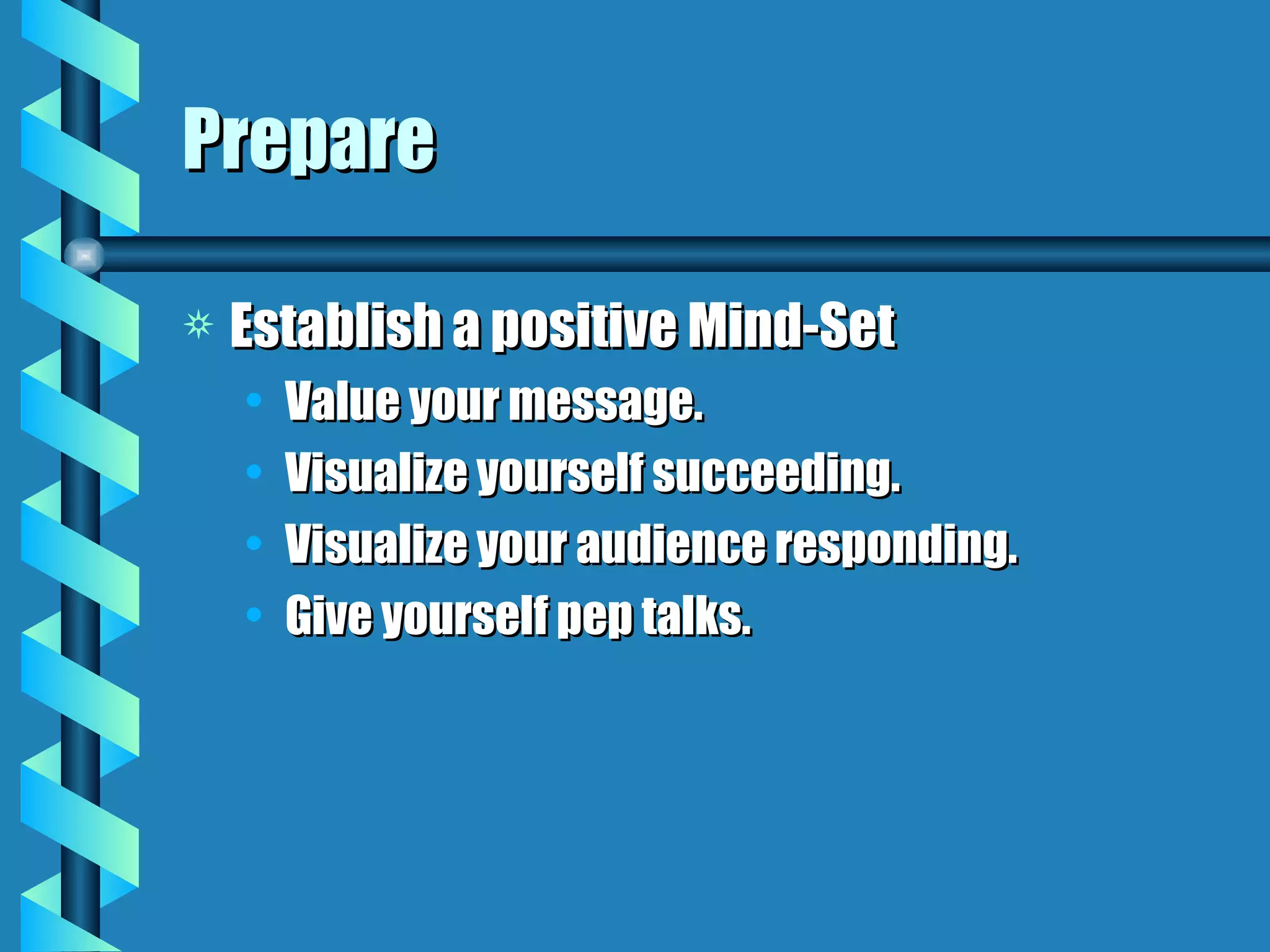
Prepare Establish a positive Mind-Set Value your message. Visualize yourself succeeding. Visualize your audience responding. Give yourself pep talks.
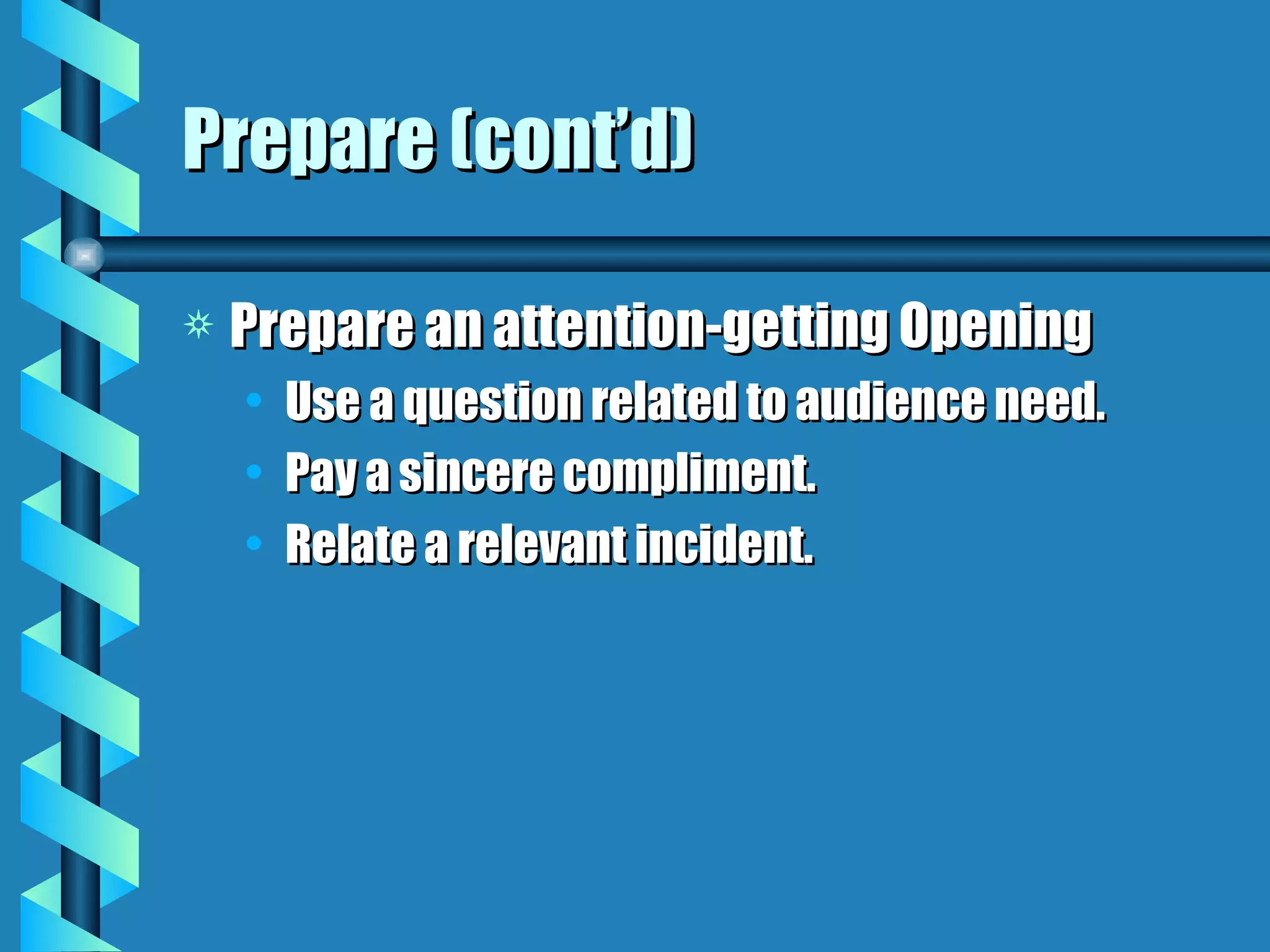
Prepare (cont’d) Prepare an attention-getting Opening Use a question related to audience need. Pay a sincere compliment. Relate a relevant incident.
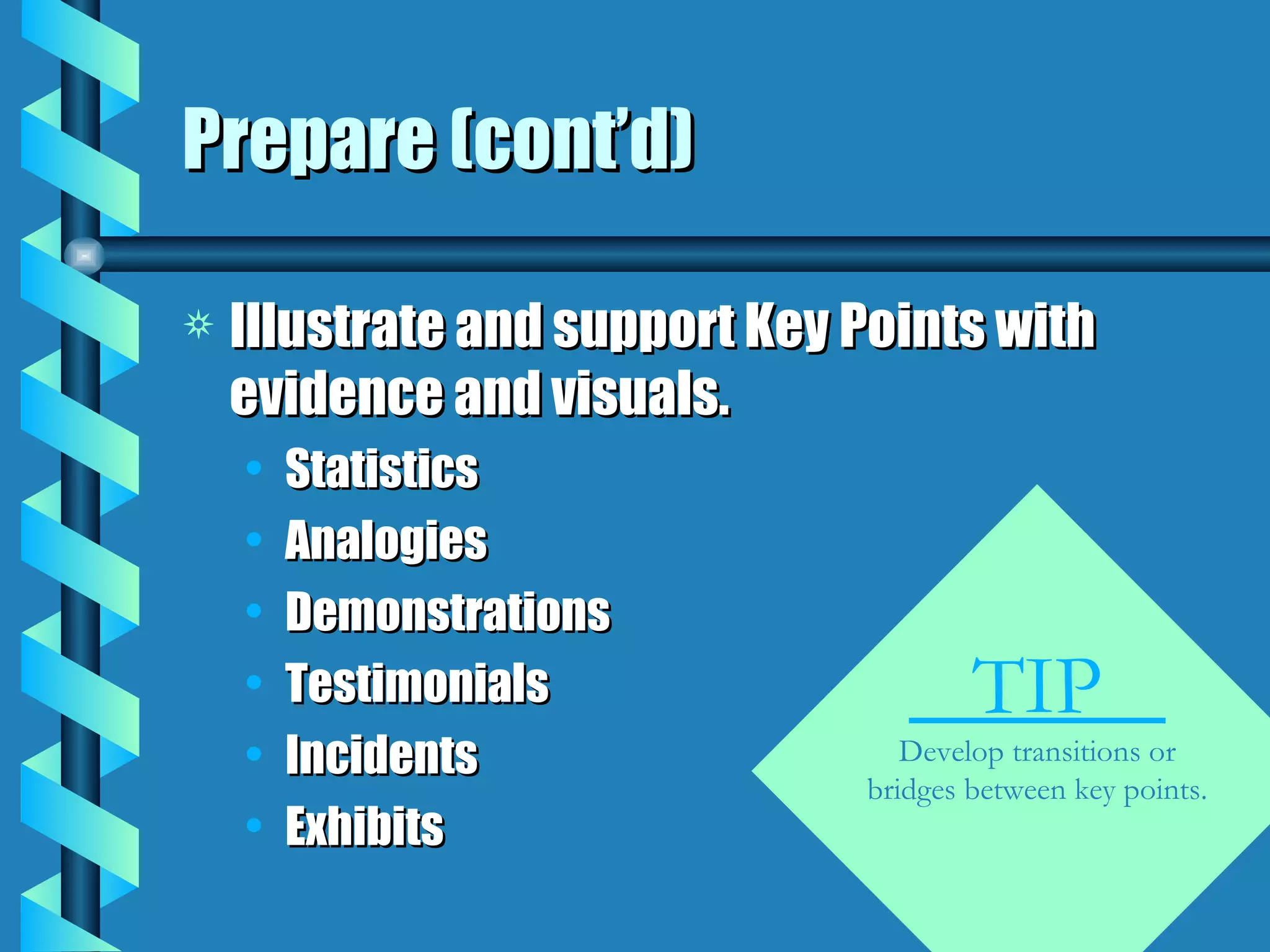
Prepare (cont’d) Illustrate and support Key Points with evidence and visuals. Statistics Analogies Demonstrations Testimonials Incidents Exhibits TIP  Develop transitions or bridges between key points.
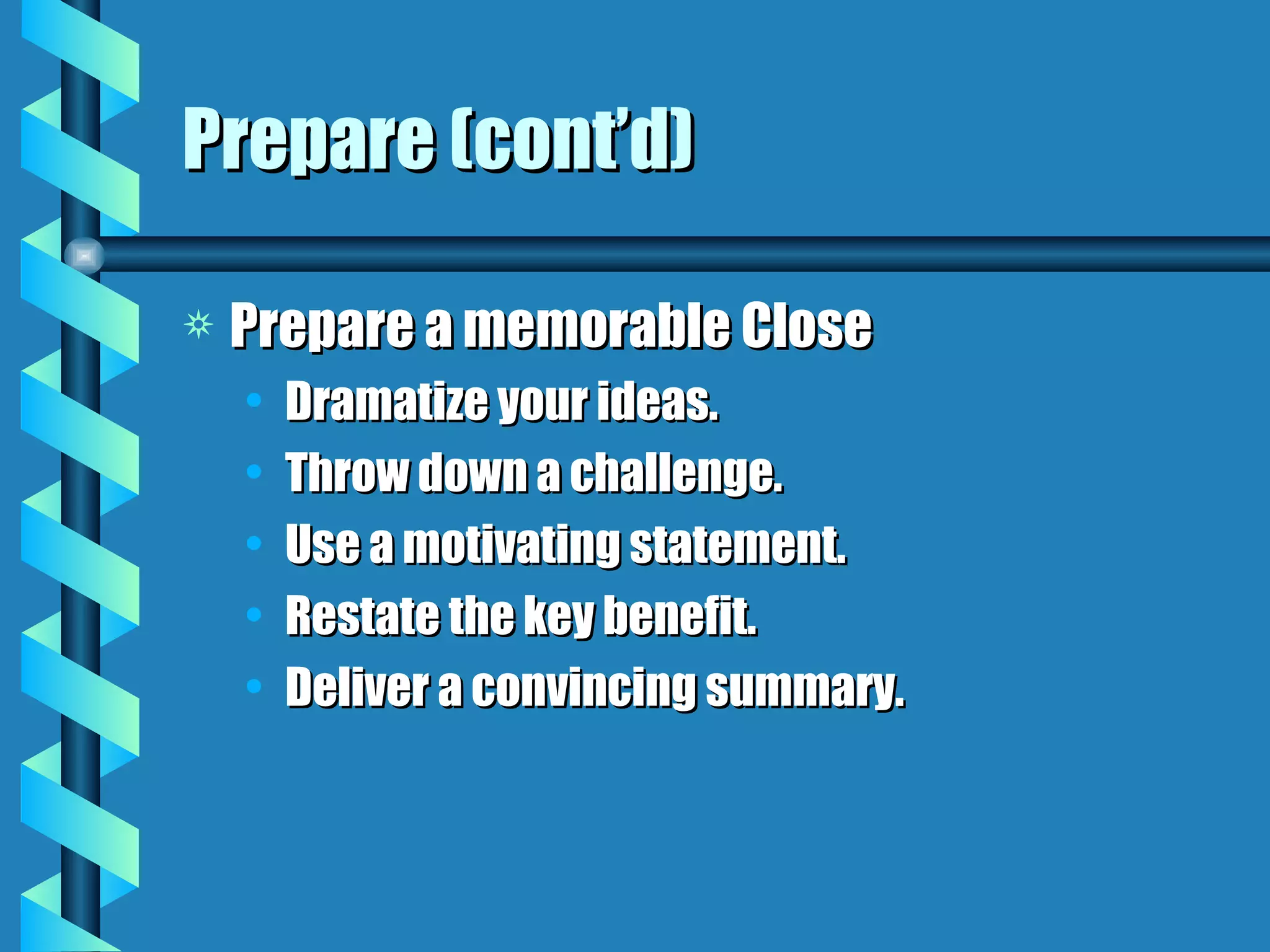
Prepare (cont’d) Prepare a memorable Close Dramatize your ideas. Throw down a challenge. Use a motivating statement. Restate the key benefit. Deliver a convincing summary.
Practice Research  has found that the three E’s are fundamental to successful presentations.
Practice (cont’d) Build your confidence and effectiveness by establishing for yourself Why you have  e arned the right  to deliver this talk. Why you are  e xcited about  the subject. Why you are  e ager to share  with your audience.
Practice (cont’d) Practice your presentation and review your visuals for Clarity Relevancy Eye-appeal Visibility Quality Memorability
Practice (cont’d) Practice your presentation before an audience, coach, video camera.  Receive feedback and coaching on Strong opening. Clear key points. Logical flow. Credible evidence. and...
Practice (cont’d) Also receive feedback and coaching on Memorable close. Clarity of message. Identifying distracting mannerisms. Results achieved.
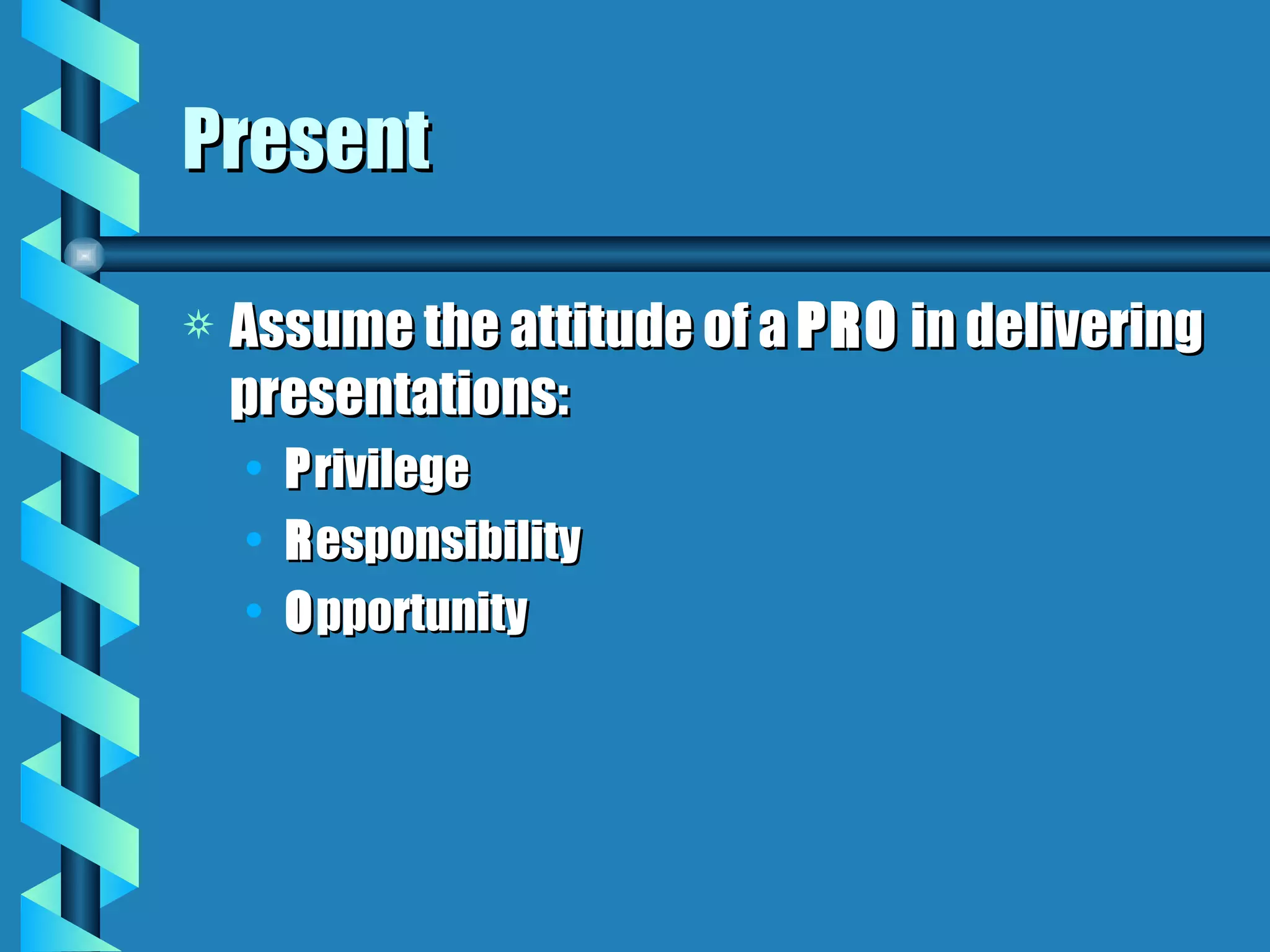
Present Assume the attitude of a  PRO  in delivering presentations: P rivilege R esponsibility O pportunity
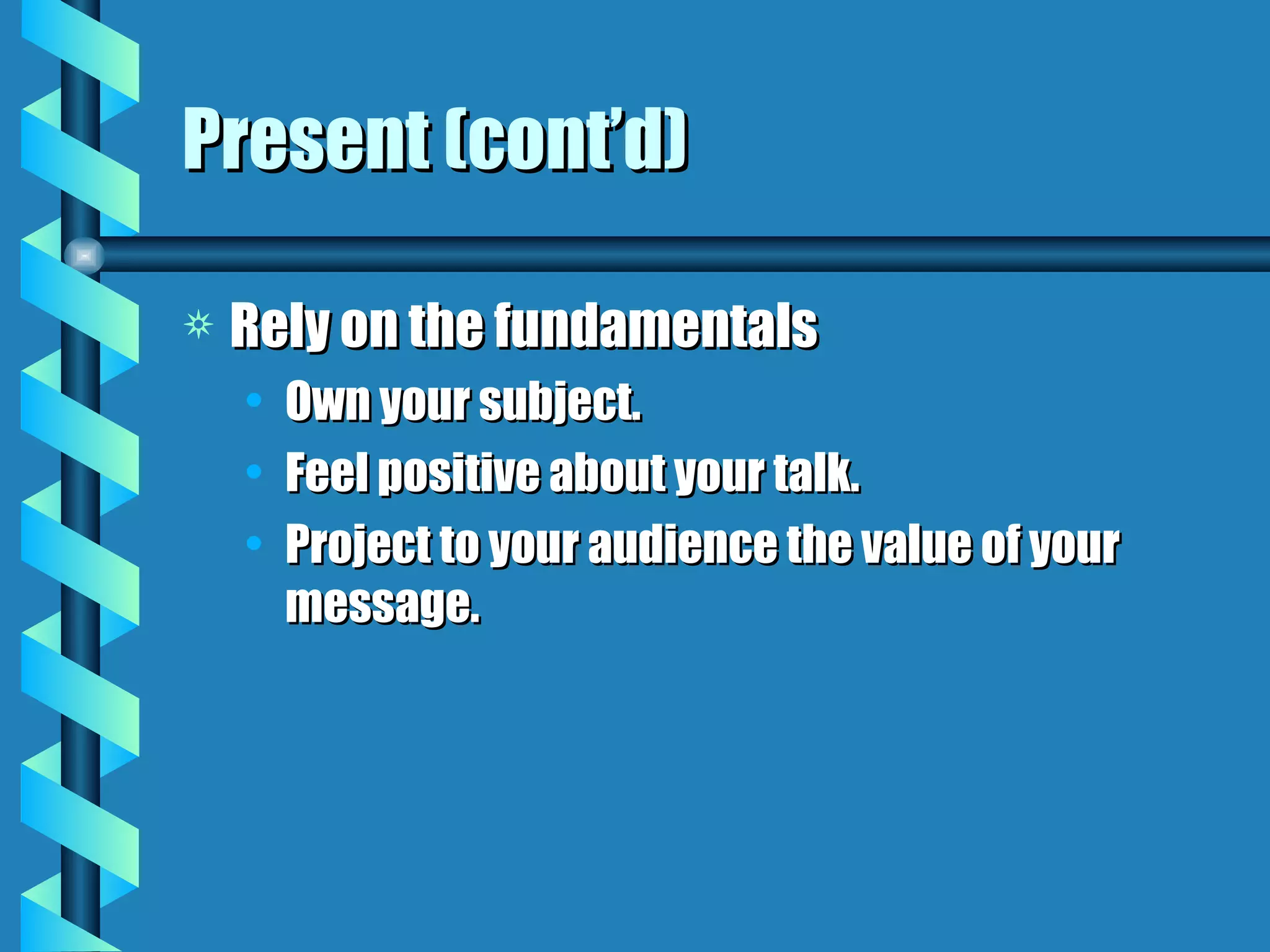
Present (cont’d) Rely on the fundamentals Own your subject. Feel positive about your talk. Project to your audience the value of your message.
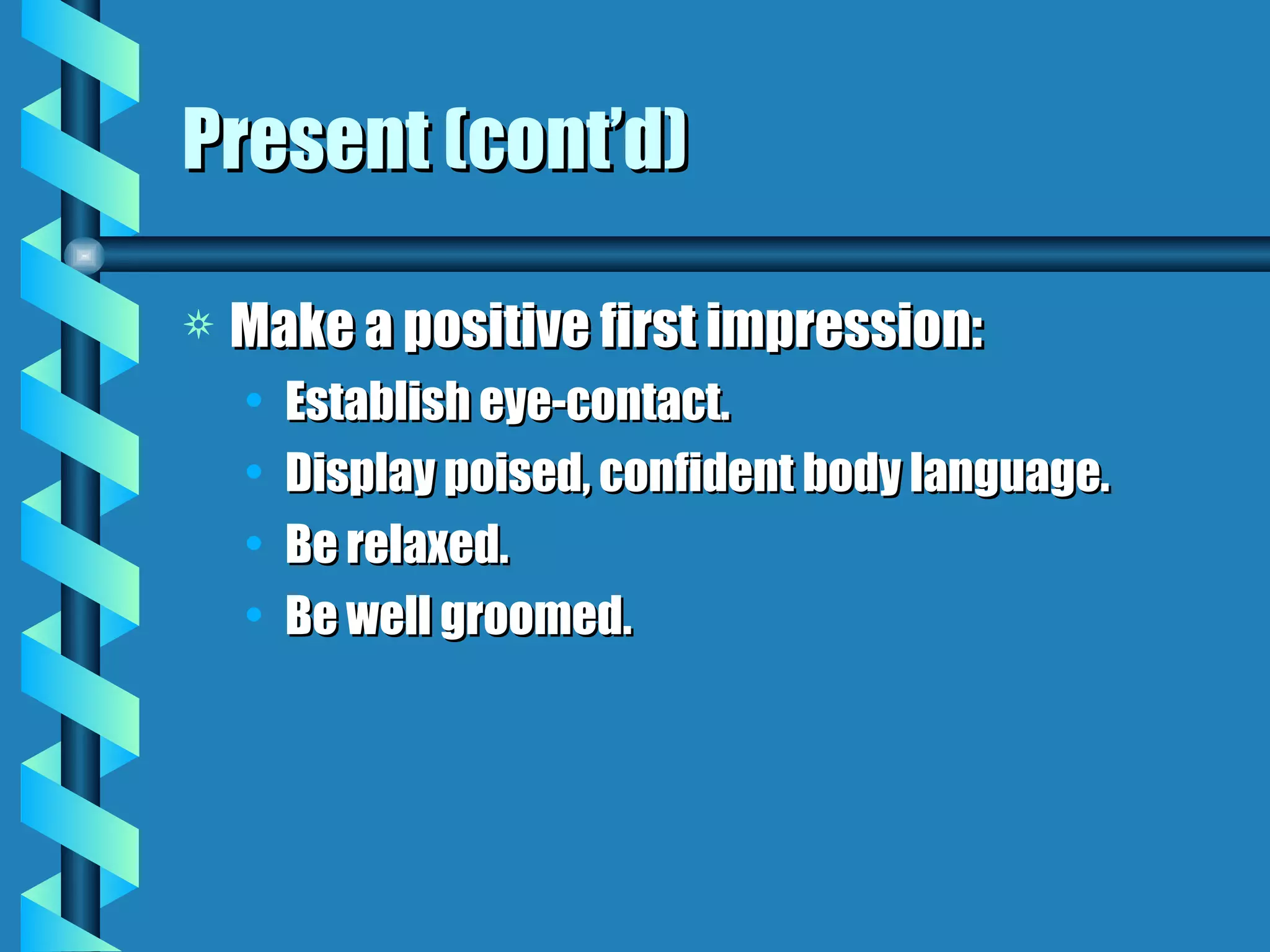
Present (cont’d) Make a positive first impression: Establish eye-contact. Display poised, confident body language. Be relaxed. Be well groomed.
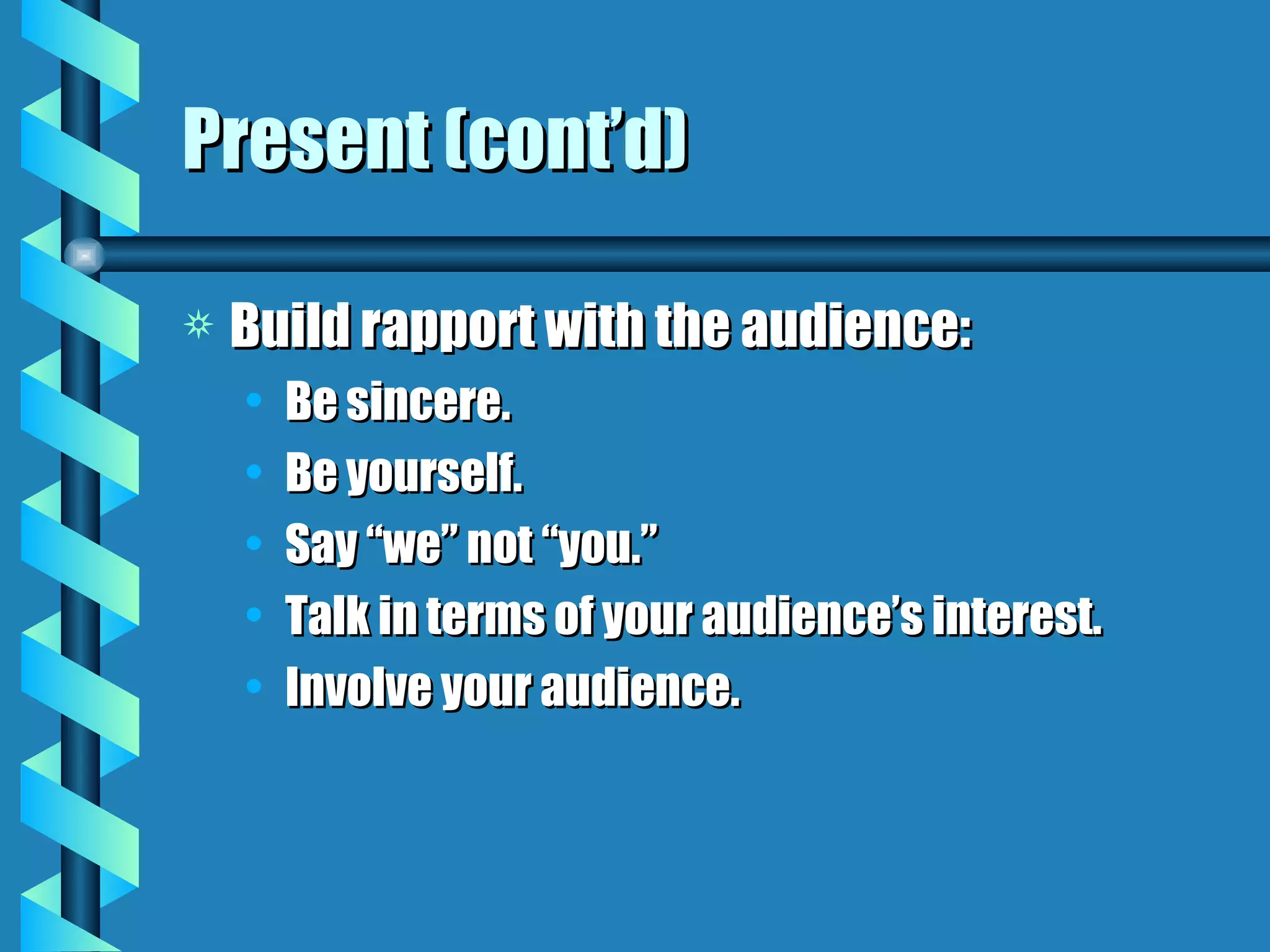
Present (cont’d) Build rapport with the audience: Be sincere. Be yourself. Say “we” not “you.” Talk in terms of your audience’s interest. Involve your audience.
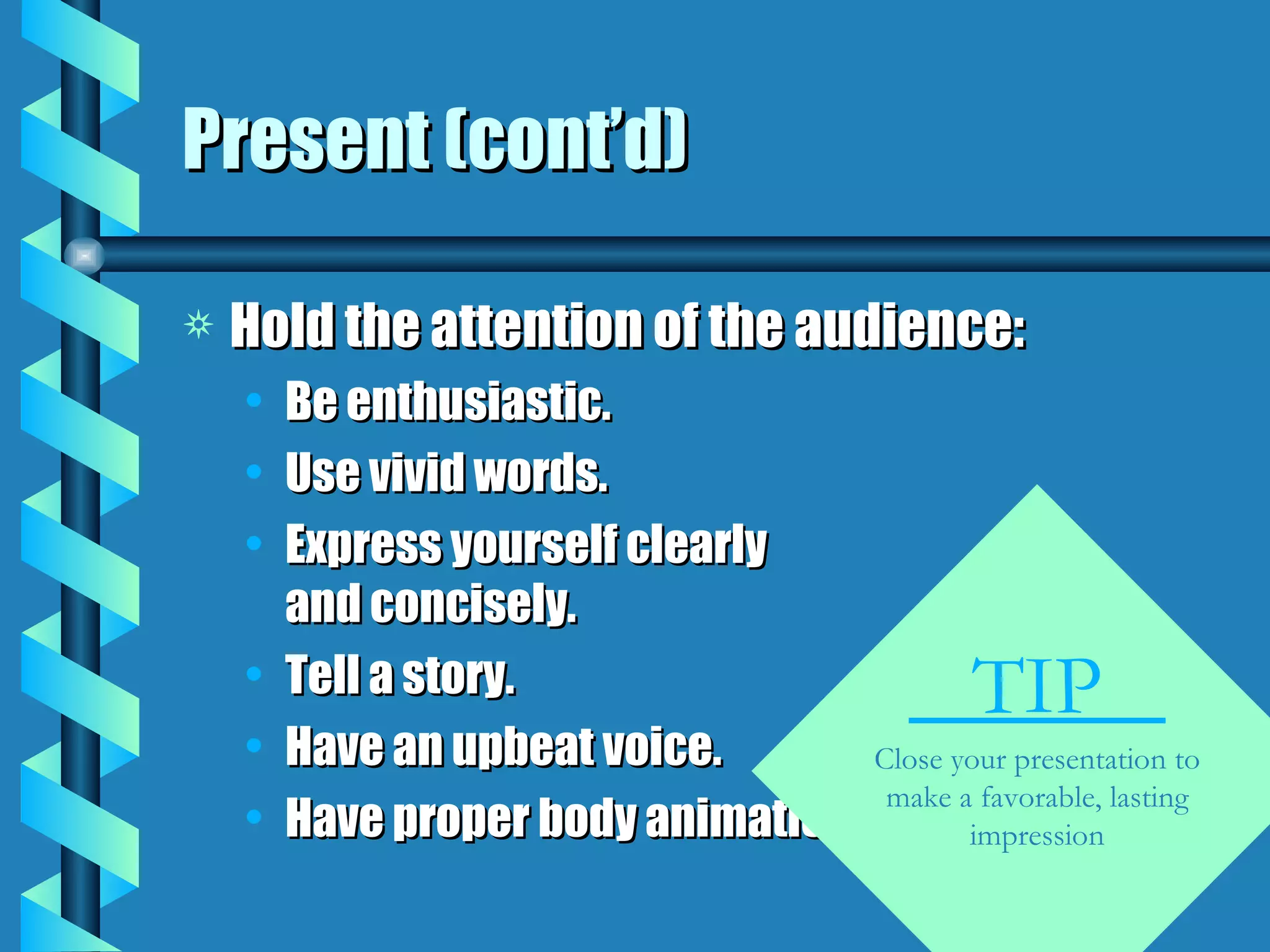
Present (cont’d) Hold the attention of the audience: Be enthusiastic. Use vivid words. Express yourself clearly and concisely. Tell a story. Have an upbeat voice. Have proper body animation. TIP  Close your presentation to make a favorable, lasting impression
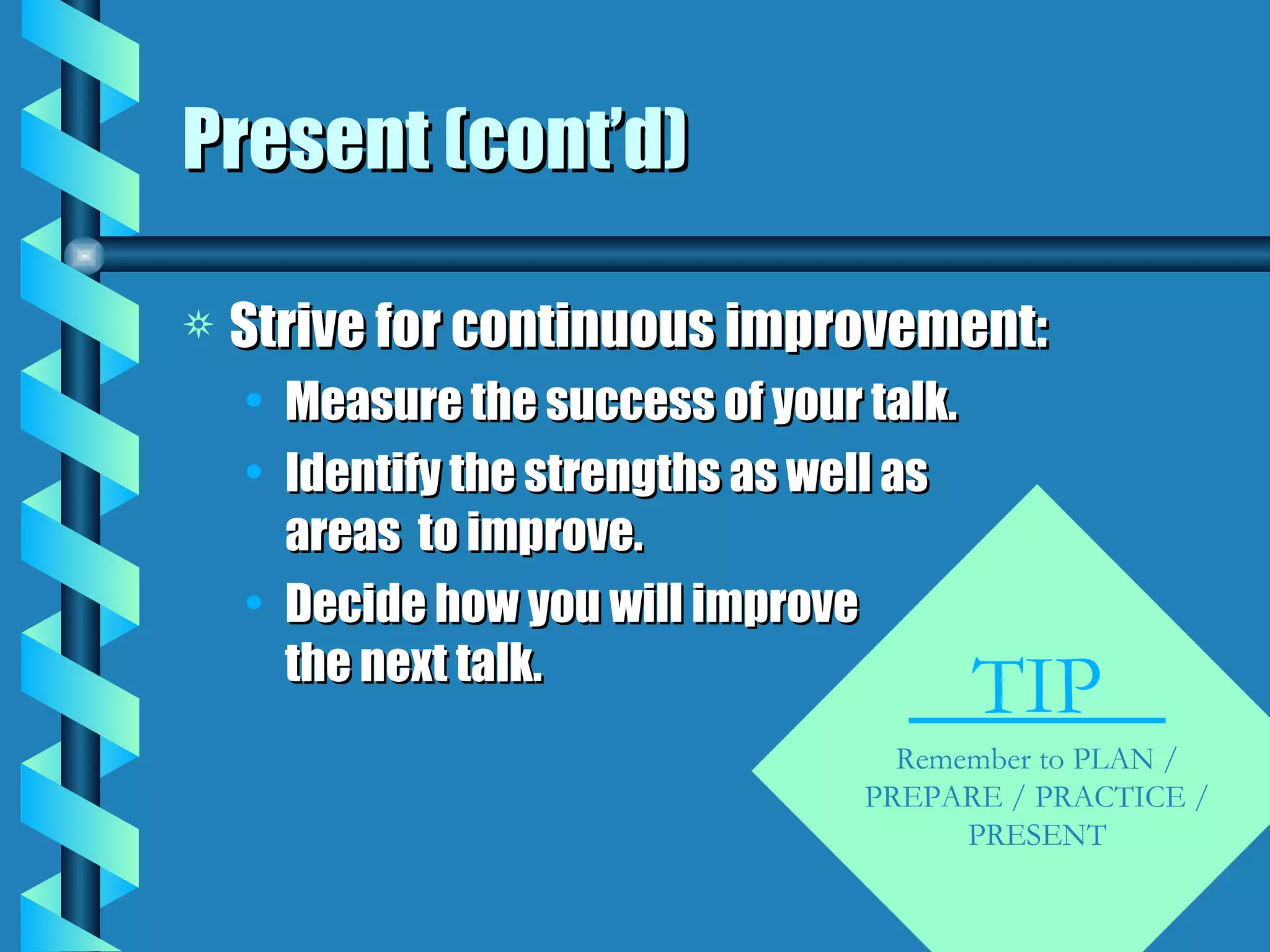
Present (cont’d) Strive for continuous improvement: Measure the success of your talk. Identify the strengths as well as areas  to improve. Decide how you will improve the next talk. TIP  Remember to PLAN / PREPARE / PRACTICE / PRESENT

Presentation Skills By Dale Carnegie

  • 1.
  • 2.
    Introduction Delivering yourpresentations effectively involves using a proven four-step process: Plan, Prepare, Practice, and Present. Follow these guidelines and you and your message will have high impact on your audiences.
  • 3.
    Plan Describe youraudience Knowledge Experience Needs Goals
  • 4.
    Plan (cont’d) Definethe purpose of your talk based on the outcome you seek with your audience: Inform Persuade Motivate to action Sell Teach Train TIP Identify and organize your key points
  • 5.
    Prepare Establish apositive Mind-Set Value your message. Visualize yourself succeeding. Visualize your audience responding. Give yourself pep talks.
  • 6.
    Prepare (cont’d) Preparean attention-getting Opening Use a question related to audience need. Pay a sincere compliment. Relate a relevant incident.
  • 7.
    Prepare (cont’d) Illustrateand support Key Points with evidence and visuals. Statistics Analogies Demonstrations Testimonials Incidents Exhibits TIP Develop transitions or bridges between key points.
  • 8.
    Prepare (cont’d) Preparea memorable Close Dramatize your ideas. Throw down a challenge. Use a motivating statement. Restate the key benefit. Deliver a convincing summary.
  • 9.
    Practice Research has found that the three E’s are fundamental to successful presentations.
  • 10.
    Practice (cont’d) Buildyour confidence and effectiveness by establishing for yourself Why you have e arned the right to deliver this talk. Why you are e xcited about the subject. Why you are e ager to share with your audience.
  • 11.
    Practice (cont’d) Practiceyour presentation and review your visuals for Clarity Relevancy Eye-appeal Visibility Quality Memorability
  • 12.
    Practice (cont’d) Practiceyour presentation before an audience, coach, video camera. Receive feedback and coaching on Strong opening. Clear key points. Logical flow. Credible evidence. and...
  • 13.
    Practice (cont’d) Alsoreceive feedback and coaching on Memorable close. Clarity of message. Identifying distracting mannerisms. Results achieved.
  • 14.
    Present Assume theattitude of a PRO in delivering presentations: P rivilege R esponsibility O pportunity
  • 15.
    Present (cont’d) Relyon the fundamentals Own your subject. Feel positive about your talk. Project to your audience the value of your message.
  • 16.
    Present (cont’d) Makea positive first impression: Establish eye-contact. Display poised, confident body language. Be relaxed. Be well groomed.
  • 17.
    Present (cont’d) Buildrapport with the audience: Be sincere. Be yourself. Say “we” not “you.” Talk in terms of your audience’s interest. Involve your audience.
  • 18.
    Present (cont’d) Holdthe attention of the audience: Be enthusiastic. Use vivid words. Express yourself clearly and concisely. Tell a story. Have an upbeat voice. Have proper body animation. TIP Close your presentation to make a favorable, lasting impression
  • 19.
    Present (cont’d) Strivefor continuous improvement: Measure the success of your talk. Identify the strengths as well as areas to improve. Decide how you will improve the next talk. TIP Remember to PLAN / PREPARE / PRACTICE / PRESENT