Speed
Articulation
Volume
Eye contact
Straight
Open
Lenience
Emphasis
Natural
Smile
Briefing a group
Conducting training
Educating
customers
Explaining a report
Communicating
with a team
Selling a product or
service
To be able to
create the right
perception. We
need to ensure
that we present
effectively.
The first step to being successful is
knowing
That you can be successful.
Firstly we have to
-believe its possible.
-want to make it happen.
-work at making it happen.
 There are 4 basic principles in
presentation;
 Everyone has something to say –
including you
 You have ways of communicating
belonging just to you.
 You have a right to be heard.
 you are responsible for being
heard.
 Audience was terrible.
 No one wanted to hear what I had
to say.
 Of course they were critical ,they
disagreed with me.
 I didn’t get chance to prepare.
 Nobody wanted to know the truth
anyway.
 What can you expect you lunch.
Self made obstacles like
 Written notes.
 Visual aids.
 Waffle.
 Body link.
Presentations could be
 Persuasive
 Informative
 Entertaining
 Corporate presentations
 Training
Depending on objective your
presentations could be one of the
above
 Objective: gaining the listener’s
acceptance or approval.
 method: go through logical order
of development which includes
 Objective : to make the audience
well informed on the concept
presented
 Methods: use visual aids ,clarity
,and coherence make important
contributions to help the listeners
relate to the concept
 Objective: to drive home a point
subtly but entertainingly
 Method: through humor
,description ,drama ,interest level
high and organization clear.
 Objective: in the corporate
presentation context. A mix of all
three may be required to deliver
effective presentations.
 Method: mix of all above to be
used
Objective: In training presentation
the objective is to impact knowledge,
skills and behavior of the participant
in a given area.
Methodology: Interactive, exercise
driven, role plays, etc.
Question 1 : Is this message relevant
for me ?
Question 2: Can I believe this
message?
Question 3: Is the speaker on my
side?
 Preparation
 Purpose
 Presence and passion
 Personality.
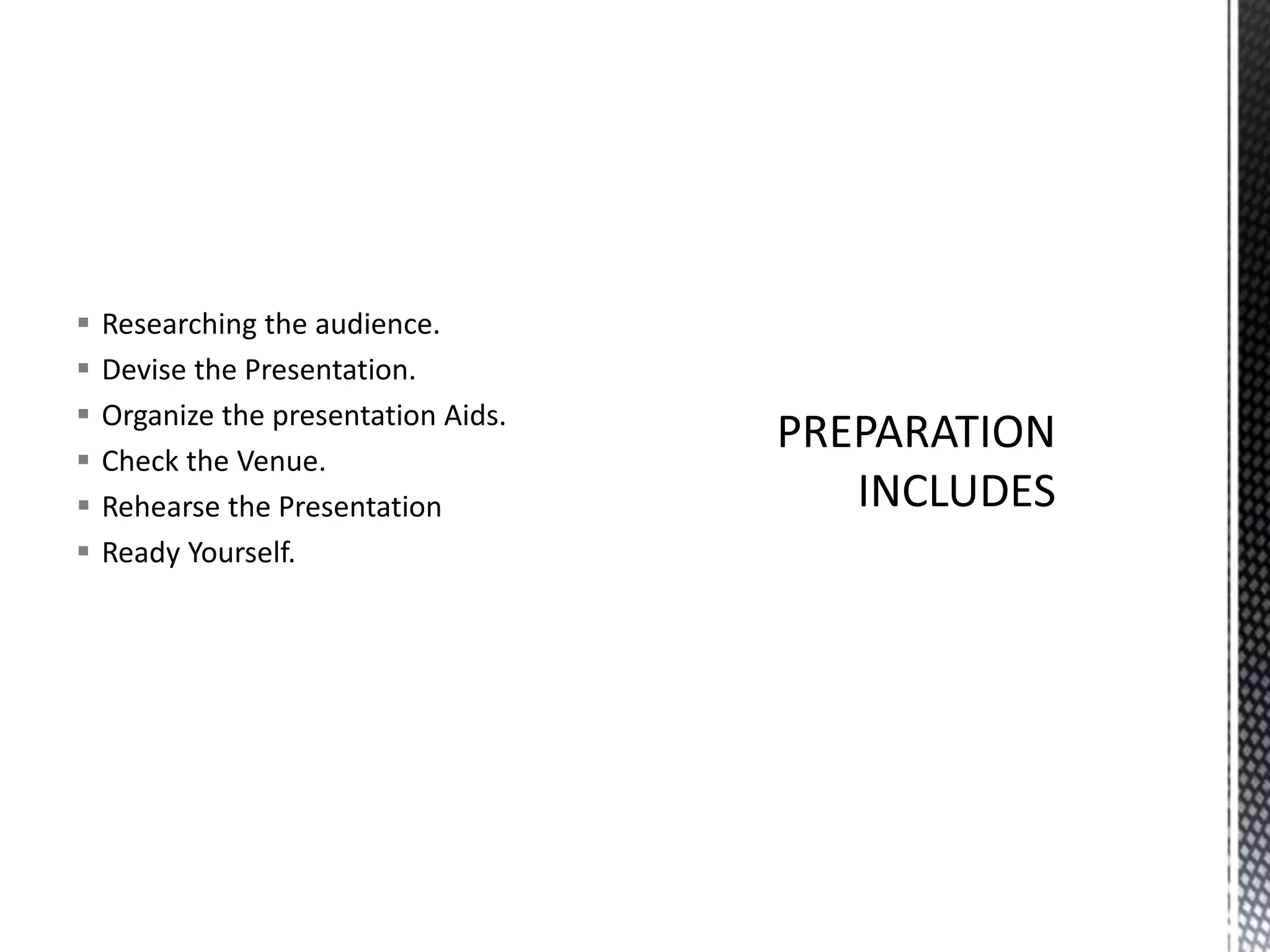
 Researching the audience.
 Devise the Presentation.
 Organize the presentation Aids.
 Check the Venue.
 Rehearse the Presentation
 Ready Yourself.
 Produce
 Organize.
 Write.
 Edit.
 Refine.
 Tell them what are you going to tell
them- objective.
 Tell them.
 Tell them again what you told have
told them- Summary.
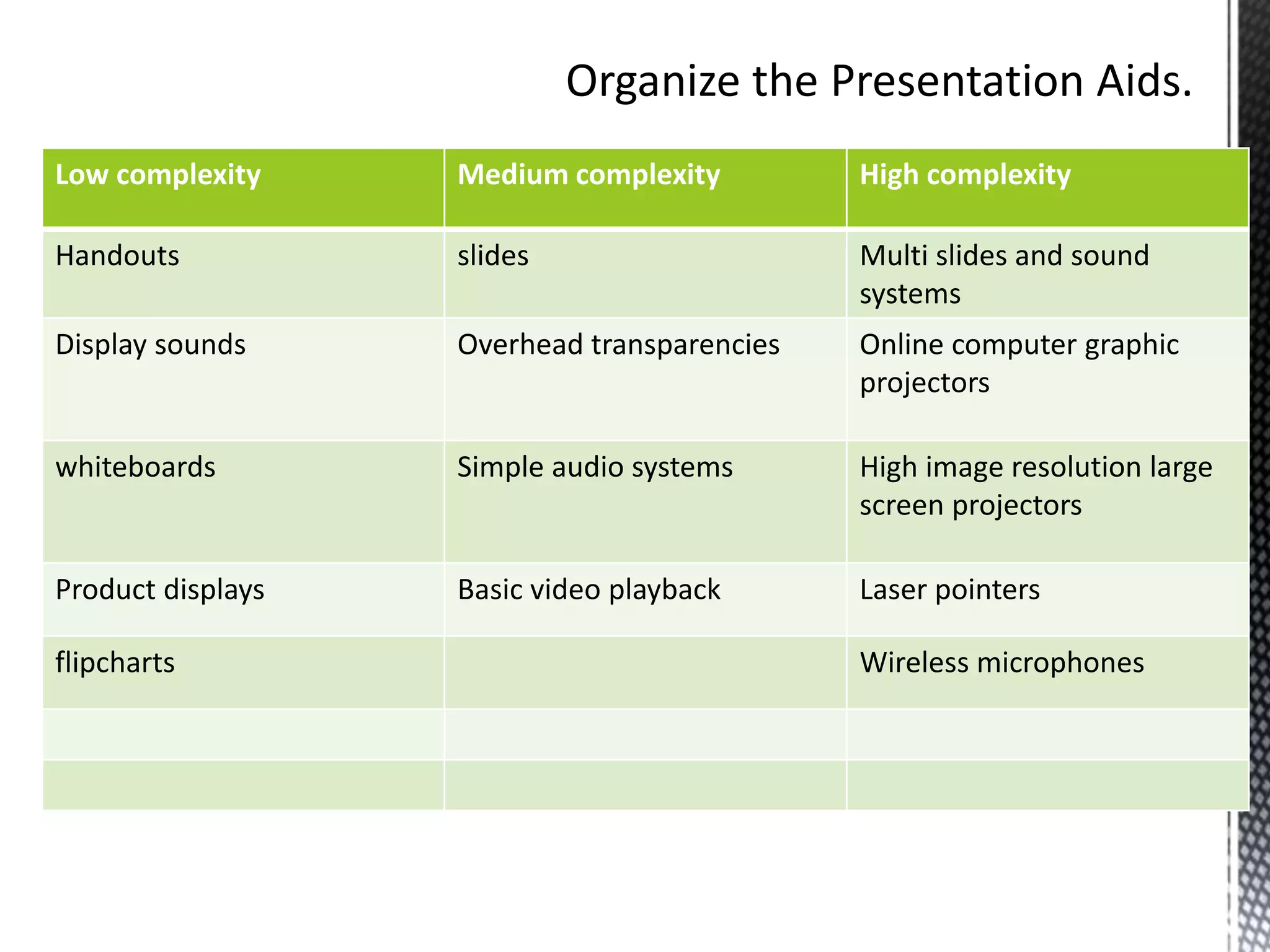
Low complexity Medium complexity High complexity
Handouts slides Multi slides and sound
systems
Display sounds Overhead transparencies Online computer graphic
projectors
whiteboards Simple audio systems High image resolution large
screen projectors
Product displays Basic video playback Laser pointers
flipcharts Wireless microphones
I INTEGRATE INTO YOUR
STYLE.
M MOVES THE
PRESENTATION ON
P GIVES PROFESSIONAL
APPEARANCE
A APPROPRIATE TO THE
MOMENT
C COMMUNICATES TO
THE AUDIENCE
T TECHNICALLY SOUND
 NO MORE THAN ABOUT 6 LINES
PER VISUAL
 TEXT SIZE SHOULD BE LARGE
ENOUGH FOR THE AUDIENCE TO
SEE
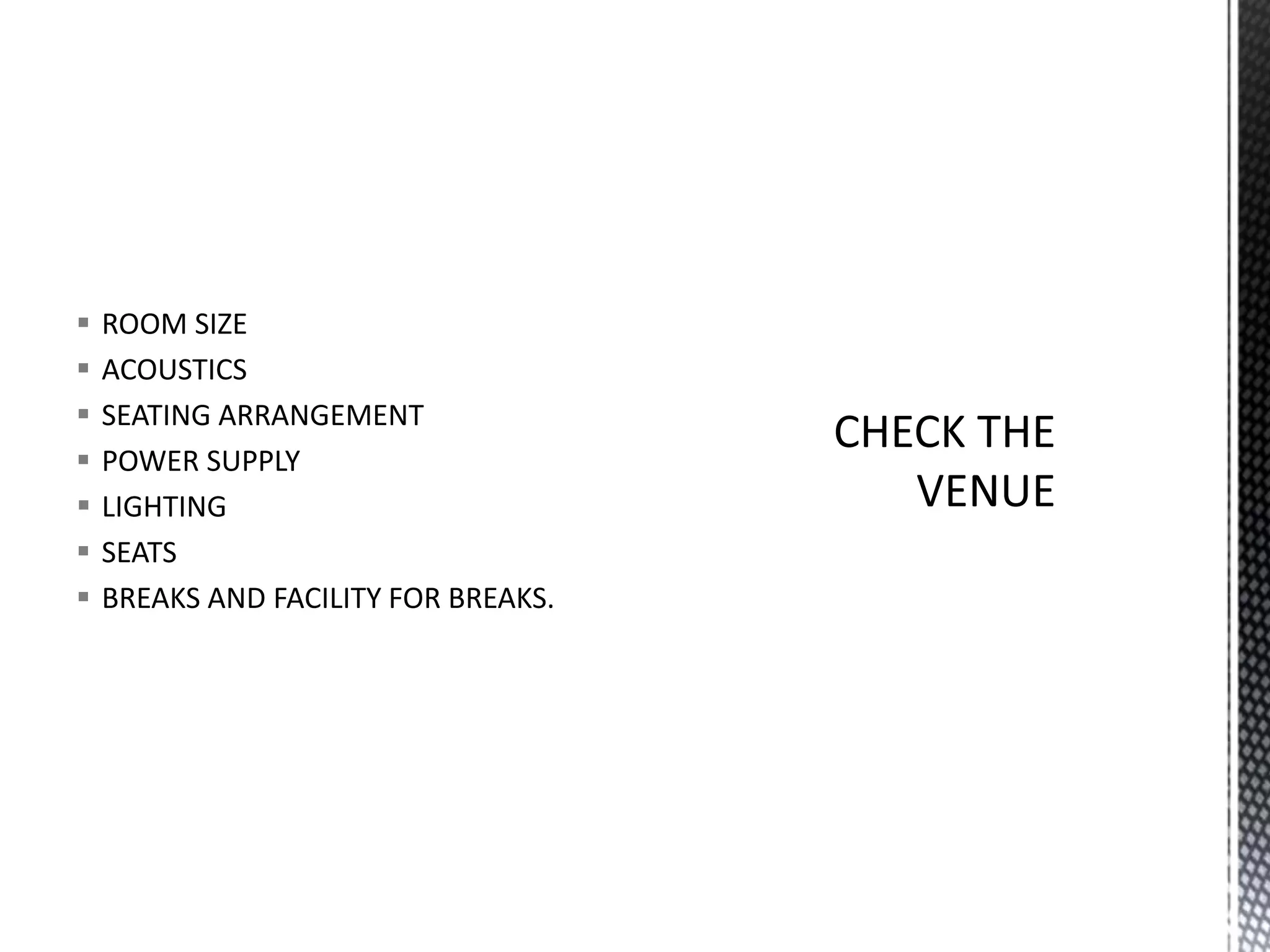
 ROOM SIZE
 ACOUSTICS
 SEATING ARRANGEMENT
 POWER SUPPLY
 LIGHTING
 SEATS
 BREAKS AND FACILITY FOR BREAKS.
Before the presentation.
 Make sure you have your thoughts
sequenced.
 You are familiar with the sequence
of slides.
 You are clear about what you have
to say when.
 You have an estimate of the time
for each activity and also the total
time.
 Make sure you have your thoughts
sequenced.
 You are familiar with the sequence
of slides.
 You are clear about what you have
to speak when.
 You have an estimate of the time
for each activity and also the total
time.
During delivery the flow should be
like driving a car….
 Focus on the traffic not on which
gear you are in.
 Focus on the audience not on what
to say when.
 Openness
 Frustration
 Defensiveness
 Confidence
 Active listening
 nervousness
 Open hands
 Palms up
 Unbuttoned coat
 Running hands trough hair.
 Rubbing back on the neck.
 “Tsk” sound
 Arms crosses on chest.
 Fist like gestures.
 Pointing index finger.
 Back straight.
 Purposeful movement.
 Eye contact.
 Putting hand on chin.
 Stoking chin.
 Head titled.
 Clearing throat.
 “whew” sound.
 Tugging the ear.
 Not looking at the participants.
 Jingling money in the pocket.
 Holding the lectern.
 Learning on the chair.
 Grab attention.
 Establish creditability.
 Make people smile.
 Re-assure them- this is a safe place
to make mistakes.
 Alert them to something.
Keep the room full of energy
Display passion and conviction in
what you are
saying
 Lack of participant’s interest or
motivation.
 Lack of discipline in class/non-
adherence to ground rule.
 Low level of interaction with the
Participants.
 Focus on a group or some select
participants.
 Talking too much.
 Pretend to be an “expert” or
“Know it all”
 Low level of listening.
 Heavy Lunch
 Humor provides a presenter with
the greatest chance of success and
least chance of failure.
 Presenter should provide audience
with relevant humor.
 While using humor in presentation
be aware of
1. The nature of Audience
2. Your personality and style.
 The Nature of the topic of
presentation.
 Speaker to be well groomed.
 Speech to be well rehearsed
 Establish credibility.
 Easy recall for the Salient points.
 Graphical representation of Data.
You are now able to:
 Sensitize the importance of making
an Impact.
 List the elements of preparation
for an Effective Presentation.
 Explain the various gestures in
body Language.
 List the Do’s of Delivering
presentations.
You are now able to
 Recall how to handle queries
during presentations.
 List the Don’ts of delivering
presentations.
 Explain the skills needed to make
an effective presentation.
THANK YOU

Presentation skills

  • 2.
  • 3.
  • 4.
    Briefing a group Conductingtraining Educating customers Explaining a report Communicating with a team Selling a product or service
  • 5.
    To be ableto create the right perception. We need to ensure that we present effectively.
  • 6.
    The first stepto being successful is knowing That you can be successful. Firstly we have to -believe its possible. -want to make it happen. -work at making it happen.
  • 7.
     There are4 basic principles in presentation;  Everyone has something to say – including you  You have ways of communicating belonging just to you.  You have a right to be heard.  you are responsible for being heard.
  • 8.
     Audience wasterrible.  No one wanted to hear what I had to say.  Of course they were critical ,they disagreed with me.  I didn’t get chance to prepare.  Nobody wanted to know the truth anyway.  What can you expect you lunch.
  • 9.
    Self made obstacleslike  Written notes.  Visual aids.  Waffle.  Body link.
  • 10.
    Presentations could be Persuasive  Informative  Entertaining  Corporate presentations  Training Depending on objective your presentations could be one of the above
  • 11.
     Objective: gainingthe listener’s acceptance or approval.  method: go through logical order of development which includes
  • 12.
     Objective :to make the audience well informed on the concept presented  Methods: use visual aids ,clarity ,and coherence make important contributions to help the listeners relate to the concept
  • 13.
     Objective: todrive home a point subtly but entertainingly  Method: through humor ,description ,drama ,interest level high and organization clear.
  • 14.
     Objective: inthe corporate presentation context. A mix of all three may be required to deliver effective presentations.  Method: mix of all above to be used
  • 15.
    Objective: In trainingpresentation the objective is to impact knowledge, skills and behavior of the participant in a given area. Methodology: Interactive, exercise driven, role plays, etc.
  • 16.
    Question 1 :Is this message relevant for me ? Question 2: Can I believe this message? Question 3: Is the speaker on my side?
  • 17.
     Preparation  Purpose Presence and passion  Personality.
  • 18.
     Researching theaudience.  Devise the Presentation.  Organize the presentation Aids.  Check the Venue.  Rehearse the Presentation  Ready Yourself.
  • 19.
     Produce  Organize. Write.  Edit.  Refine.
  • 20.
     Tell themwhat are you going to tell them- objective.  Tell them.  Tell them again what you told have told them- Summary.
  • 21.
    Low complexity Mediumcomplexity High complexity Handouts slides Multi slides and sound systems Display sounds Overhead transparencies Online computer graphic projectors whiteboards Simple audio systems High image resolution large screen projectors Product displays Basic video playback Laser pointers flipcharts Wireless microphones
  • 22.
    I INTEGRATE INTOYOUR STYLE. M MOVES THE PRESENTATION ON P GIVES PROFESSIONAL APPEARANCE A APPROPRIATE TO THE MOMENT C COMMUNICATES TO THE AUDIENCE T TECHNICALLY SOUND
  • 23.
     NO MORETHAN ABOUT 6 LINES PER VISUAL  TEXT SIZE SHOULD BE LARGE ENOUGH FOR THE AUDIENCE TO SEE
  • 24.
     ROOM SIZE ACOUSTICS  SEATING ARRANGEMENT  POWER SUPPLY  LIGHTING  SEATS  BREAKS AND FACILITY FOR BREAKS.
  • 25.
    Before the presentation. Make sure you have your thoughts sequenced.  You are familiar with the sequence of slides.  You are clear about what you have to say when.  You have an estimate of the time for each activity and also the total time.
  • 26.
     Make sureyou have your thoughts sequenced.  You are familiar with the sequence of slides.  You are clear about what you have to speak when.  You have an estimate of the time for each activity and also the total time.
  • 27.
    During delivery theflow should be like driving a car….  Focus on the traffic not on which gear you are in.  Focus on the audience not on what to say when.
  • 28.
     Openness  Frustration Defensiveness  Confidence  Active listening  nervousness
  • 29.
     Open hands Palms up  Unbuttoned coat
  • 30.
     Running handstrough hair.  Rubbing back on the neck.  “Tsk” sound
  • 31.
     Arms crosseson chest.  Fist like gestures.  Pointing index finger.
  • 32.
     Back straight. Purposeful movement.  Eye contact.
  • 33.
     Putting handon chin.  Stoking chin.  Head titled.
  • 34.
     Clearing throat. “whew” sound.  Tugging the ear.  Not looking at the participants.  Jingling money in the pocket.  Holding the lectern.  Learning on the chair.
  • 35.
     Grab attention. Establish creditability.  Make people smile.  Re-assure them- this is a safe place to make mistakes.  Alert them to something.
  • 36.
    Keep the roomfull of energy Display passion and conviction in what you are saying
  • 37.
     Lack ofparticipant’s interest or motivation.  Lack of discipline in class/non- adherence to ground rule.  Low level of interaction with the Participants.  Focus on a group or some select participants.  Talking too much.  Pretend to be an “expert” or “Know it all”  Low level of listening.  Heavy Lunch
  • 38.
     Humor providesa presenter with the greatest chance of success and least chance of failure.  Presenter should provide audience with relevant humor.  While using humor in presentation be aware of 1. The nature of Audience 2. Your personality and style.  The Nature of the topic of presentation.
  • 39.
     Speaker tobe well groomed.  Speech to be well rehearsed  Establish credibility.  Easy recall for the Salient points.  Graphical representation of Data.
  • 40.
    You are nowable to:  Sensitize the importance of making an Impact.  List the elements of preparation for an Effective Presentation.  Explain the various gestures in body Language.  List the Do’s of Delivering presentations.
  • 41.
    You are nowable to  Recall how to handle queries during presentations.  List the Don’ts of delivering presentations.  Explain the skills needed to make an effective presentation.
  • 42.