PRESENTATION
By :Taha Muhammad (BS-IT-2nd
)
1.DEFINITION
2.STEPS TO PREPARE A PRESENTATION
3.REMEDIES TO OVERCOME THE STAGE FEAR
PRESENTATION SKILLS
Definition:
A presentation is a method of communication in which information, ideas, or messages are
conveyed to an audience through spoken words, visual aids, and other supporting materials.
Presentations are typically delivered in a structured format and may be given in various settings,
such as conferences, meetings, classrooms, or public forums.
 Key features of a presentation include:
 Communication: Presentations are a means of conveying information, ideas, or messages
from the presenter to the audience. This communication can take various forms, including
verbal, visual, and nonverbal cues.
 Audience: Presentations are delivered to an audience, which may consist of individuals or
groups with varying levels of knowledge, interests, and perspectives. Effective presentations
take into account the needs and expectations of the audience.
 Structure: Presentations typically follow a structured format, with an introduction, main body,
and conclusion. The content is organized logically and may include supporting points,
examples, evidence, and summaries.
 Visual Aids: Visual aids such as slides, charts, graphs, images, or videos are often used to
enhance the presentation and support key points. Visual aids help to illustrate concepts,
clarify information, and engage the audience visually.
 Delivery: Presentations are delivered orally by the presenter, who speaks to the audience
while referring to visual aids and other supporting materials. Delivery may involve speaking
from memory, using notes, or following a prepared script or outline.
 Engagement: Effective presentations aim to engage the audience and maintain their
interest throughout the presentation. This may involve using storytelling techniques, asking
questions, encouraging interaction, and incorporating multimedia elements.
 Persuasion or Informational: Presentations may have different purposes, such as
persuading the audience to take a particular action, informing them about a topic or issue,
or sharing insights and expertise on a subject.
 Overall, presentations serve as a powerful tool for sharing information, influencing
opinions, fostering discussion, and creating connections between presenters and
audiences. They play a vital role in various professional, academic, and social
contexts, helping to communicate ideas, educate, inspire, and entertain
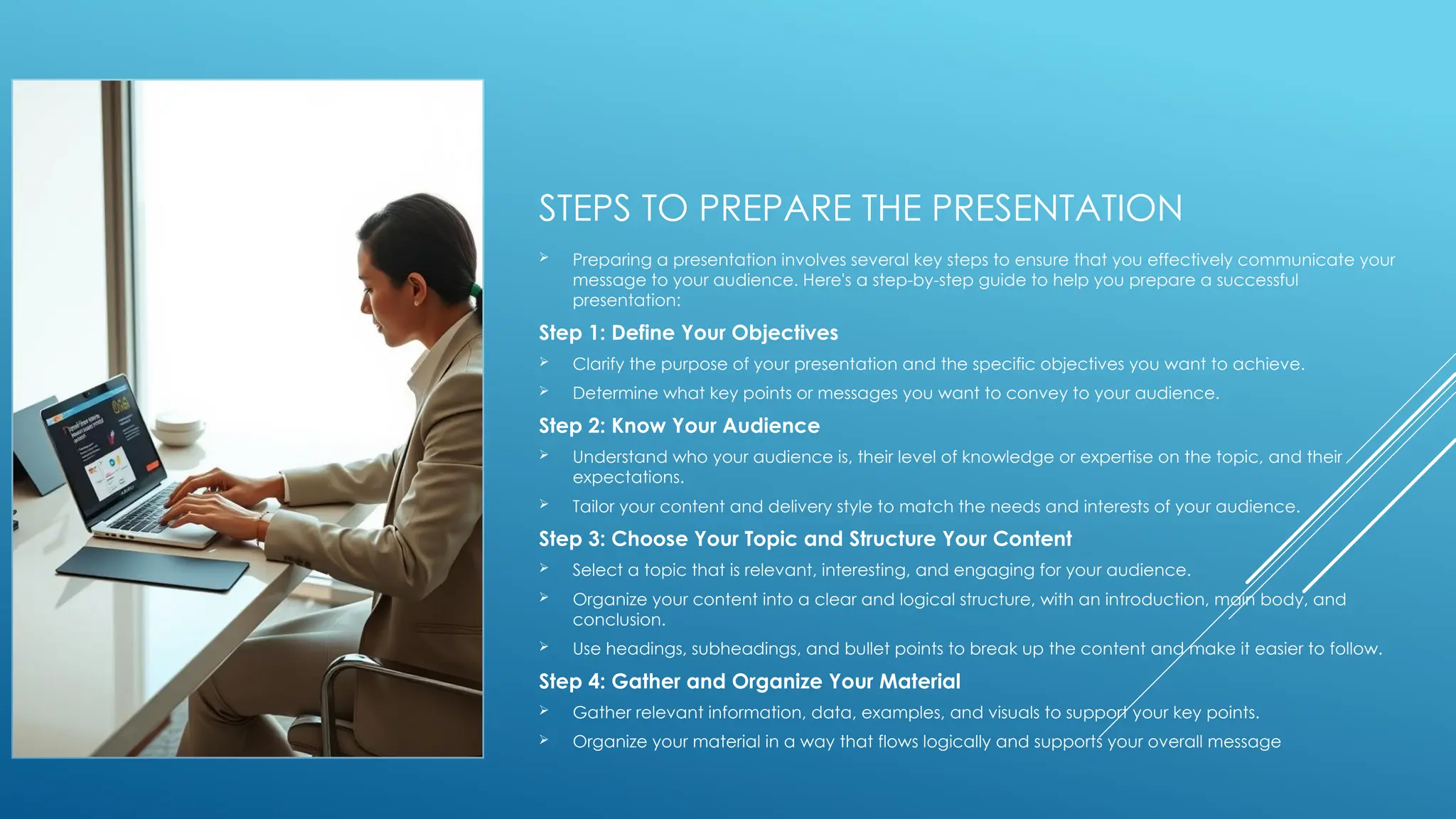
STEPS TO PREPARE THE PRESENTATION
 Preparing a presentation involves several key steps to ensure that you effectively communicate your
message to your audience. Here's a step-by-step guide to help you prepare a successful
presentation:
Step 1: Define Your Objectives
 Clarify the purpose of your presentation and the specific objectives you want to achieve.
 Determine what key points or messages you want to convey to your audience.
Step 2: Know Your Audience
 Understand who your audience is, their level of knowledge or expertise on the topic, and their
expectations.
 Tailor your content and delivery style to match the needs and interests of your audience.
Step 3: Choose Your Topic and Structure Your Content
 Select a topic that is relevant, interesting, and engaging for your audience.
 Organize your content into a clear and logical structure, with an introduction, main body, and
conclusion.
 Use headings, subheadings, and bullet points to break up the content and make it easier to follow.
Step 4: Gather and Organize Your Material
 Gather relevant information, data, examples, and visuals to support your key points.
 Organize your material in a way that flows logically and supports your overall message
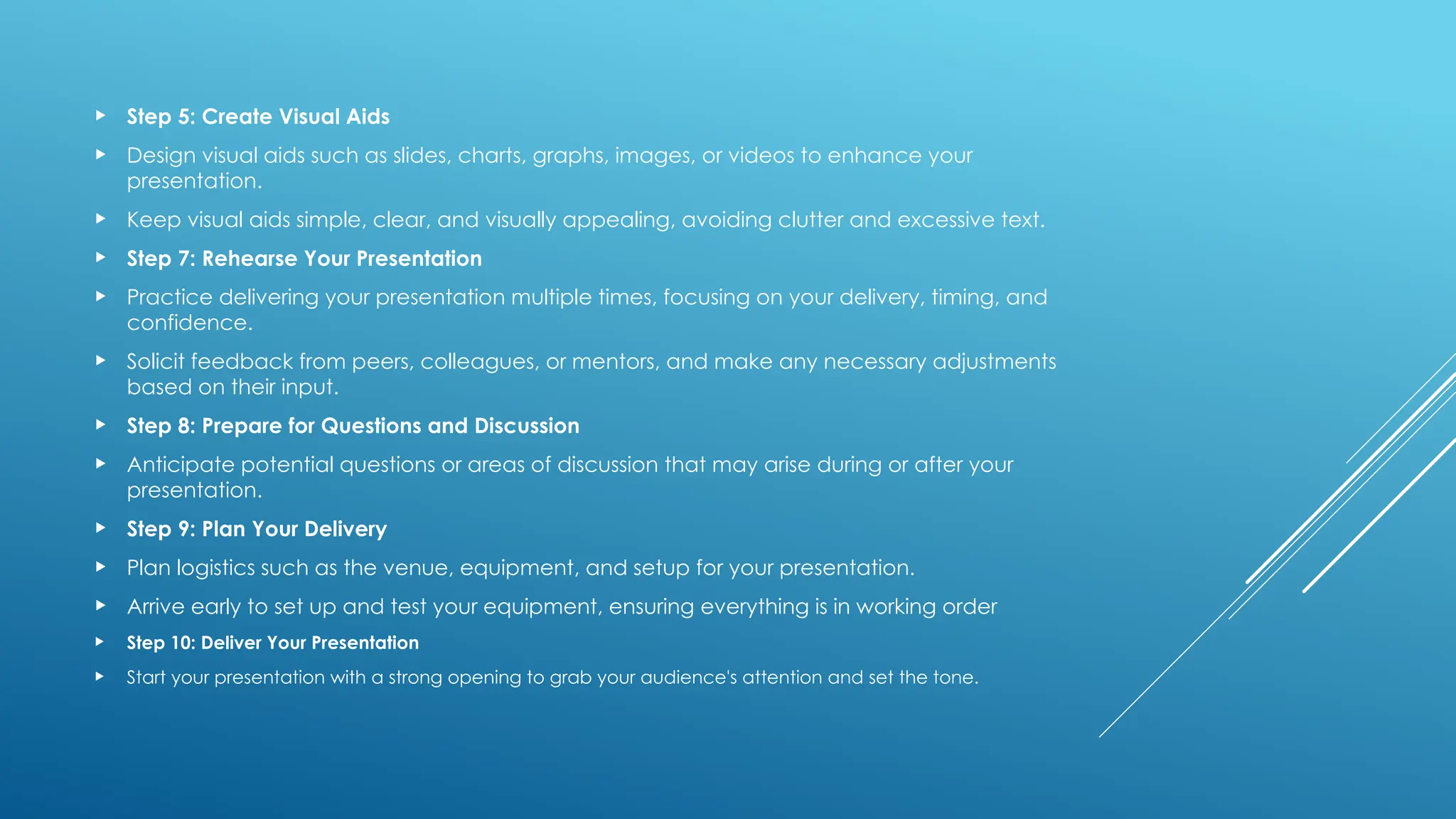
 Step 5: Create Visual Aids
 Design visual aids such as slides, charts, graphs, images, or videos to enhance your
presentation.
 Keep visual aids simple, clear, and visually appealing, avoiding clutter and excessive text.
 Step 7: Rehearse Your Presentation
 Practice delivering your presentation multiple times, focusing on your delivery, timing, and
confidence.
 Solicit feedback from peers, colleagues, or mentors, and make any necessary adjustments
based on their input.
 Step 8: Prepare for Questions and Discussion
 Anticipate potential questions or areas of discussion that may arise during or after your
presentation.
 Step 9: Plan Your Delivery
 Plan logistics such as the venue, equipment, and setup for your presentation.
 Arrive early to set up and test your equipment, ensuring everything is in working order
 Step 10: Deliver Your Presentation
 Start your presentation with a strong opening to grab your audience's attention and set the tone.
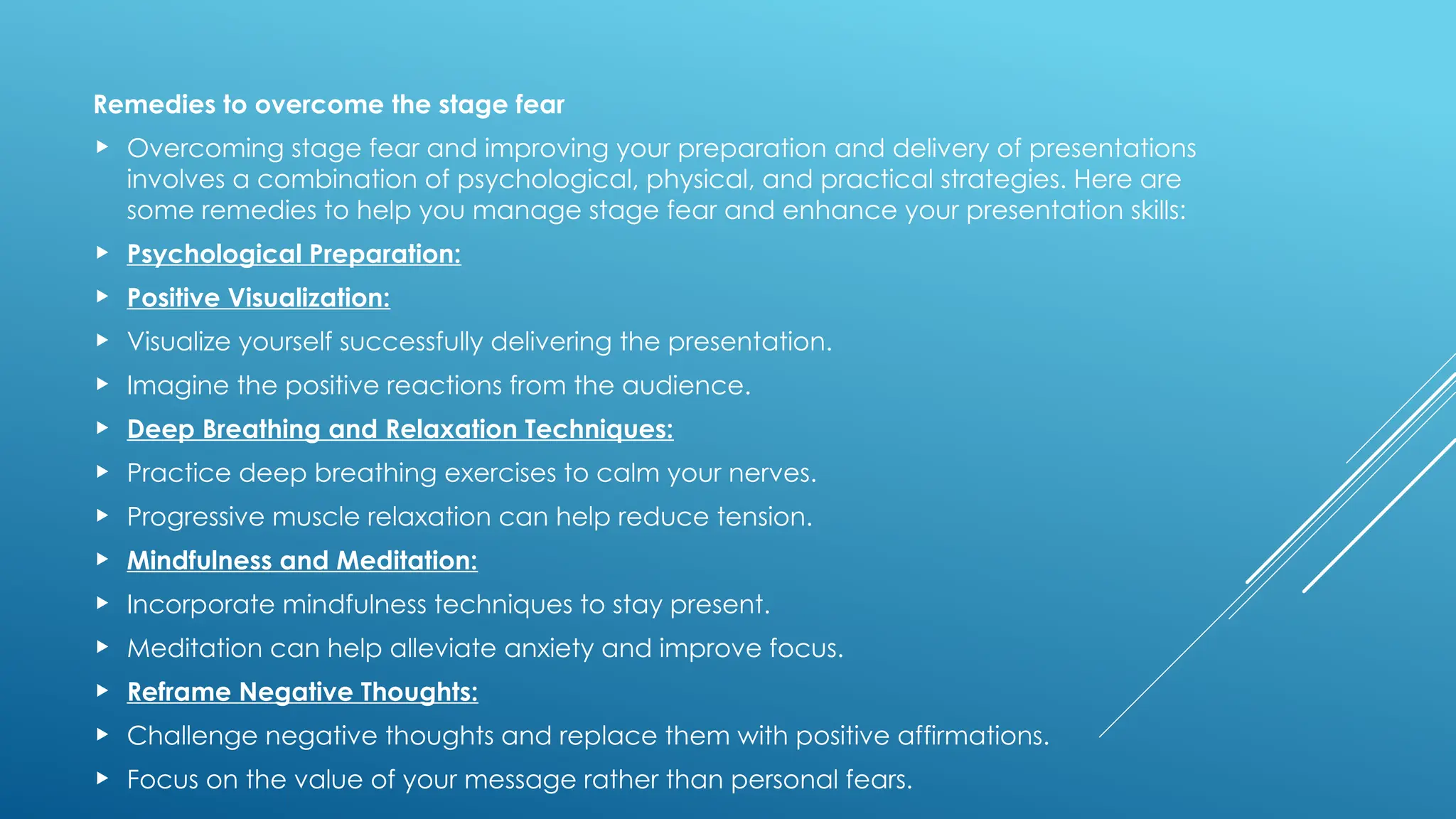
Remedies to overcome the stage fear
 Overcoming stage fear and improving your preparation and delivery of presentations
involves a combination of psychological, physical, and practical strategies. Here are
some remedies to help you manage stage fear and enhance your presentation skills:
 Psychological Preparation:
 Positive Visualization:
 Visualize yourself successfully delivering the presentation.
 Imagine the positive reactions from the audience.
 Deep Breathing and Relaxation Techniques:
 Practice deep breathing exercises to calm your nerves.
 Progressive muscle relaxation can help reduce tension.
 Mindfulness and Meditation:
 Incorporate mindfulness techniques to stay present.
 Meditation can help alleviate anxiety and improve focus.
 Reframe Negative Thoughts:
 Challenge negative thoughts and replace them with positive affirmations.
 Focus on the value of your message rather than personal fears.
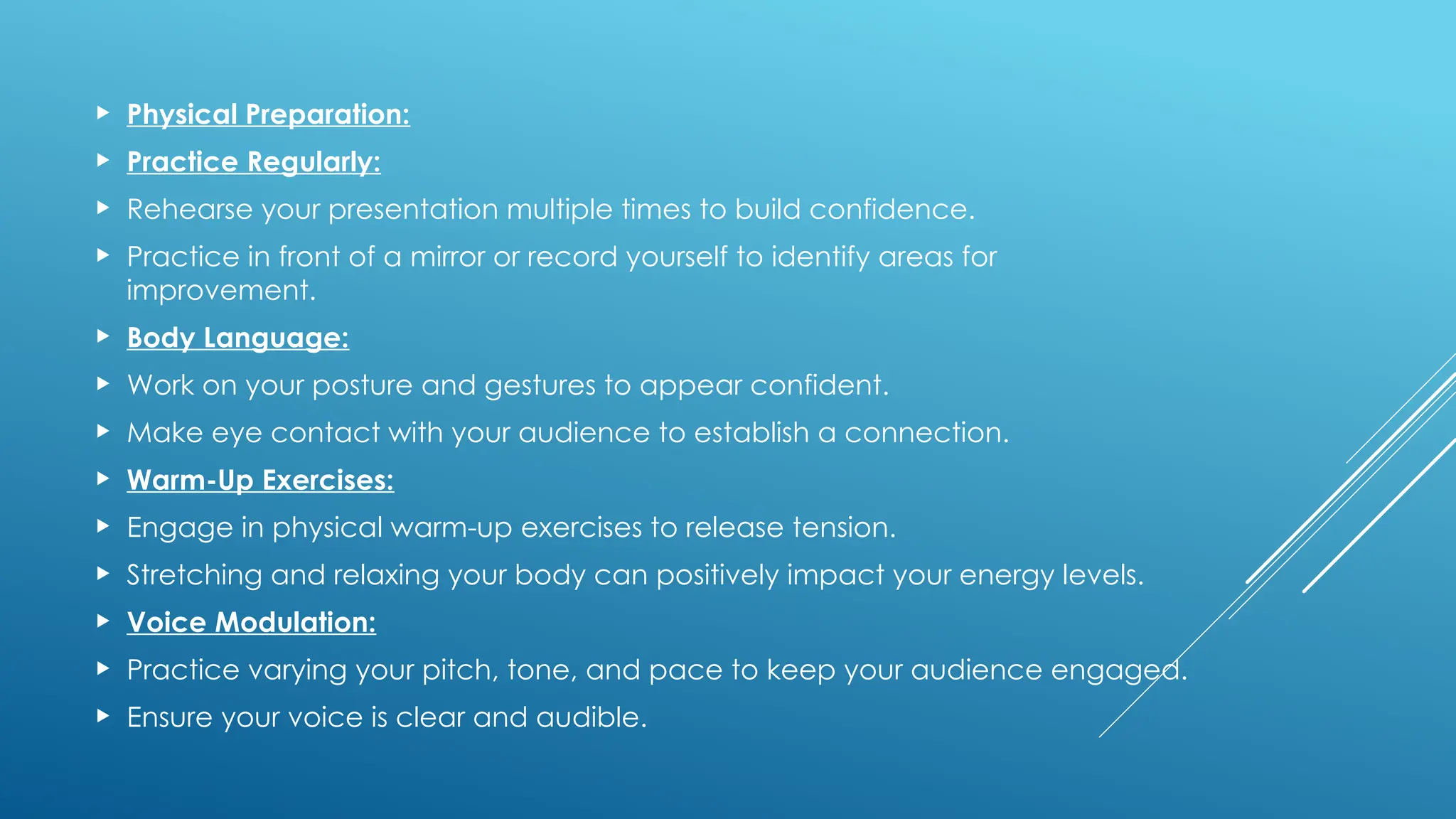
 Physical Preparation:
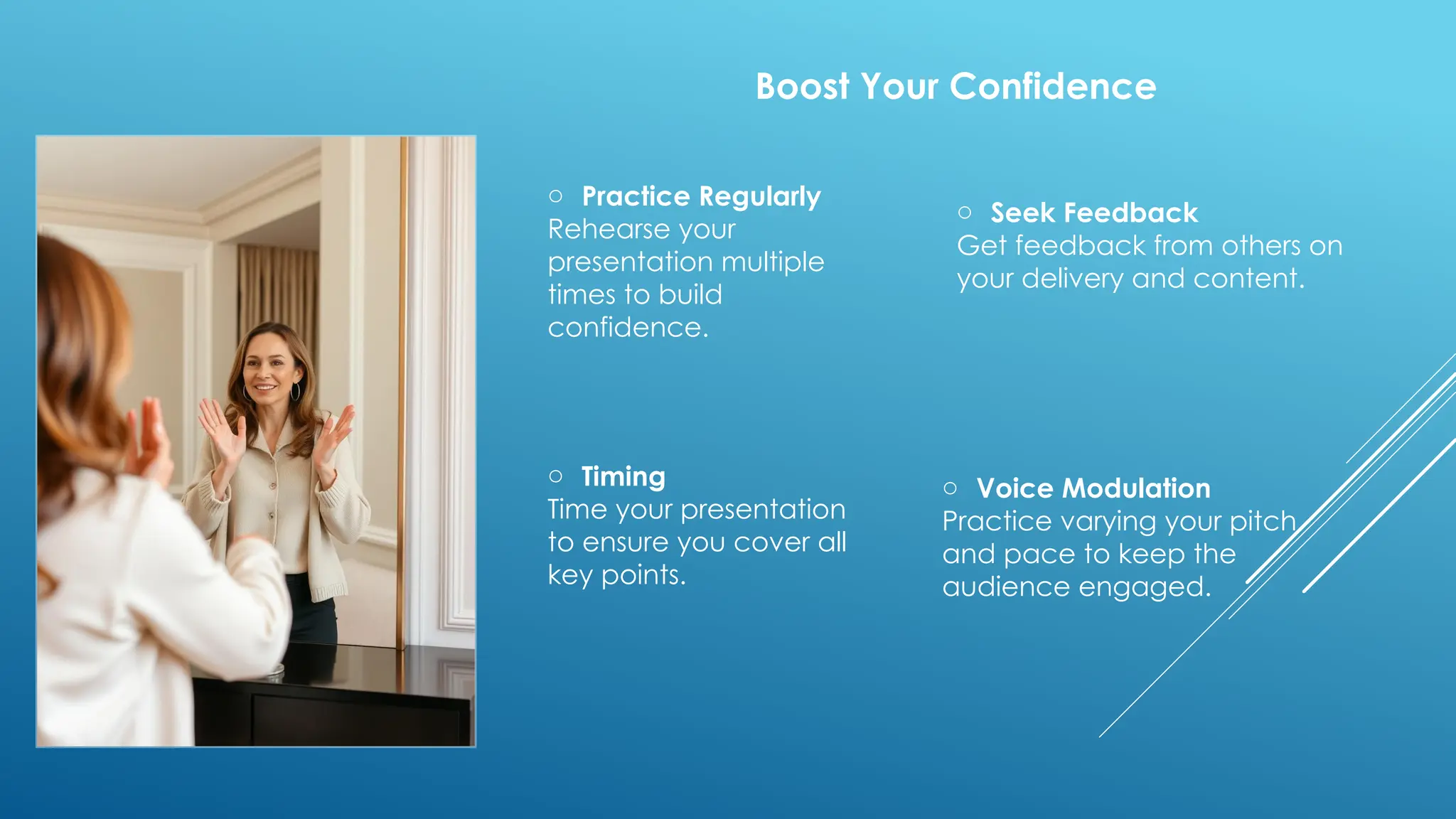
 Practice Regularly:
 Rehearse your presentation multiple times to build confidence.
 Practice in front of a mirror or record yourself to identify areas for
improvement.
 Body Language:
 Work on your posture and gestures to appear confident.
 Make eye contact with your audience to establish a connection.
 Warm-Up Exercises:
 Engage in physical warm-up exercises to release tension.
 Stretching and relaxing your body can positively impact your energy levels.
 Voice Modulation:
 Practice varying your pitch, tone, and pace to keep your audience engaged.
 Ensure your voice is clear and audible.
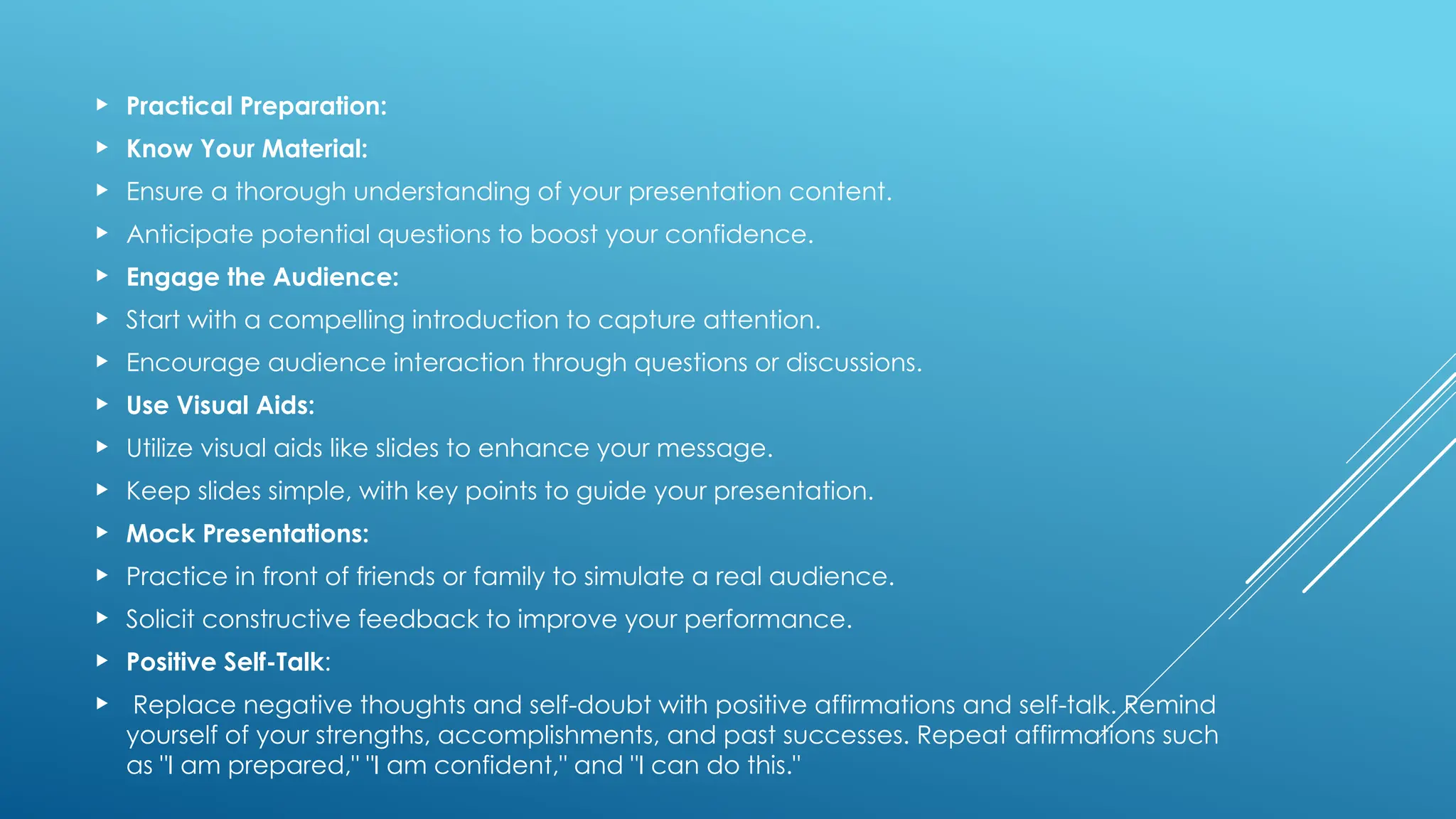
 Practical Preparation:
 Know Your Material:
 Ensure a thorough understanding of your presentation content.
 Anticipate potential questions to boost your confidence.
 Engage the Audience:
 Start with a compelling introduction to capture attention.
 Encourage audience interaction through questions or discussions.
 Use Visual Aids:
 Utilize visual aids like slides to enhance your message.
 Keep slides simple, with key points to guide your presentation.
 Mock Presentations:
 Practice in front of friends or family to simulate a real audience.
 Solicit constructive feedback to improve your performance.
 Positive Self-Talk:
 Replace negative thoughts and self-doubt with positive affirmations and self-talk. Remind
yourself of your strengths, accomplishments, and past successes. Repeat affirmations such
as "I am prepared," "I am confident," and "I can do this."
o Practice Regularly
Rehearse your
presentation multiple
times to build
confidence.
o Seek Feedback
Get feedback from others on
your delivery and content.
o Timing
Time your presentation
to ensure you cover all
key points.
o Voice Modulation
Practice varying your pitch
and pace to keep the
audience engaged.
Boost Your Confidence
 On the Day of Presentation:
 Arrive Early:
 Familiarize yourself with the venue and equipment.
 Arriving early helps you acclimate to the environment.
 Focus on Breathing:
 Take deep breaths before and during the presentation to stay calm.
 Pause and breathe if you feel nervous during the talk.
 Adapt to Changes:
 Be flexible and adapt to unexpected changes or challenges.
 Maintain a positive attitude regardless of minor setbacks.
 Remember, overcoming stage fear is a gradual process, and improvement comes
with practice
Engage Your Audience
Compelling Introduction
 Grab attention and set the tone for your presentation.
Interactive Elements
 Ask questions, encourage discussion, and involve the audience.
Eye Contact
 Make eye contact with your audience to establish a connection.
Clear Delivery
 Speak clearly, confidently, and at a moderate pace.
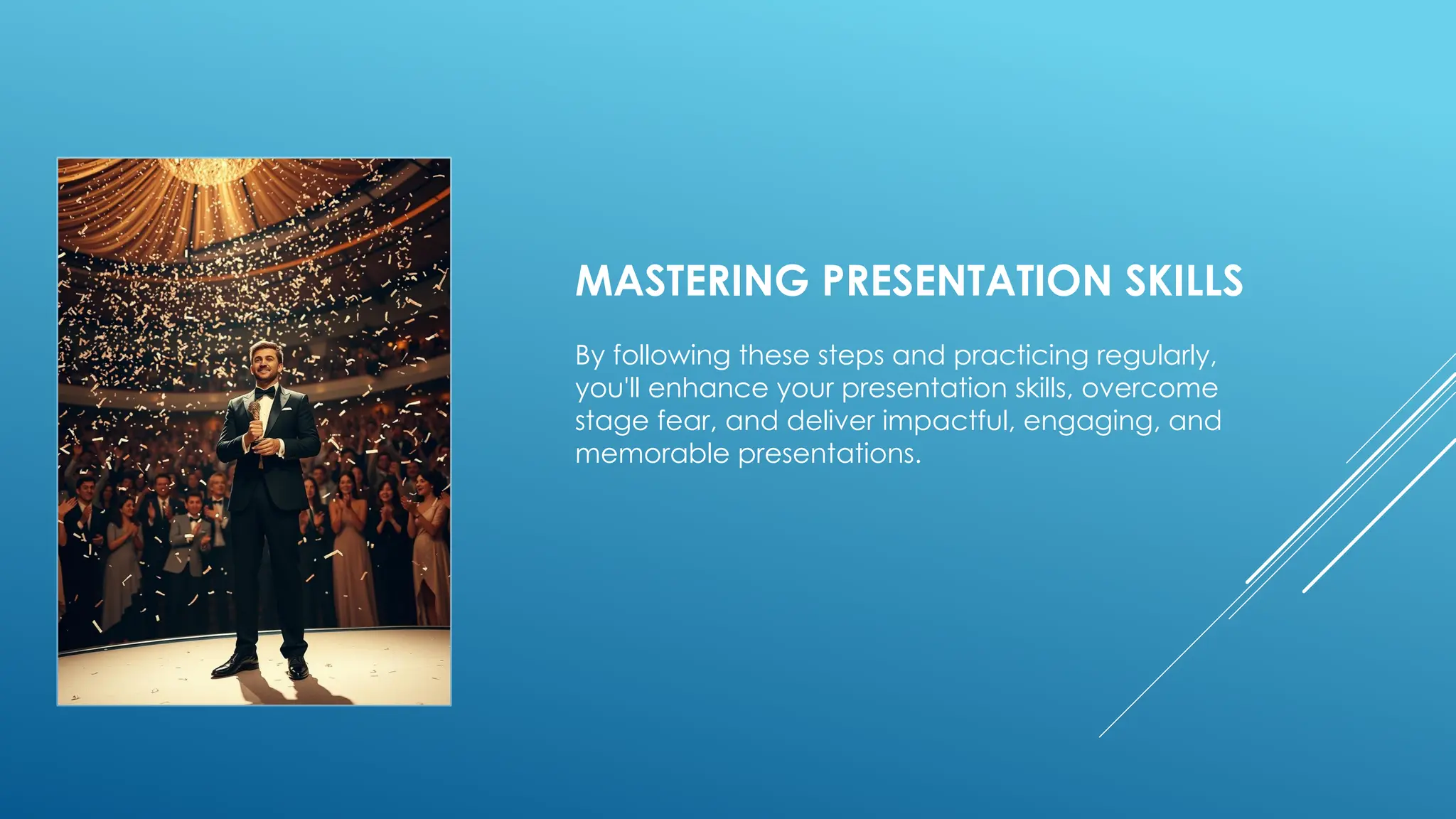
MASTERING PRESENTATION SKILLS
By following these steps and practicing regularly,
you'll enhance your presentation skills, overcome
stage fear, and deliver impactful, engaging, and
memorable presentations.
THANK
YO
U

presentation how to overcome stage fear how to prepare presentation in detai

  • 1.
  • 2.
    1.DEFINITION 2.STEPS TO PREPAREA PRESENTATION 3.REMEDIES TO OVERCOME THE STAGE FEAR PRESENTATION SKILLS
  • 3.
    Definition: A presentation isa method of communication in which information, ideas, or messages are conveyed to an audience through spoken words, visual aids, and other supporting materials. Presentations are typically delivered in a structured format and may be given in various settings, such as conferences, meetings, classrooms, or public forums.  Key features of a presentation include:  Communication: Presentations are a means of conveying information, ideas, or messages from the presenter to the audience. This communication can take various forms, including verbal, visual, and nonverbal cues.  Audience: Presentations are delivered to an audience, which may consist of individuals or groups with varying levels of knowledge, interests, and perspectives. Effective presentations take into account the needs and expectations of the audience.  Structure: Presentations typically follow a structured format, with an introduction, main body, and conclusion. The content is organized logically and may include supporting points, examples, evidence, and summaries.  Visual Aids: Visual aids such as slides, charts, graphs, images, or videos are often used to enhance the presentation and support key points. Visual aids help to illustrate concepts, clarify information, and engage the audience visually.
  • 4.
     Delivery: Presentationsare delivered orally by the presenter, who speaks to the audience while referring to visual aids and other supporting materials. Delivery may involve speaking from memory, using notes, or following a prepared script or outline.  Engagement: Effective presentations aim to engage the audience and maintain their interest throughout the presentation. This may involve using storytelling techniques, asking questions, encouraging interaction, and incorporating multimedia elements.  Persuasion or Informational: Presentations may have different purposes, such as persuading the audience to take a particular action, informing them about a topic or issue, or sharing insights and expertise on a subject.  Overall, presentations serve as a powerful tool for sharing information, influencing opinions, fostering discussion, and creating connections between presenters and audiences. They play a vital role in various professional, academic, and social contexts, helping to communicate ideas, educate, inspire, and entertain
  • 5.
    STEPS TO PREPARETHE PRESENTATION  Preparing a presentation involves several key steps to ensure that you effectively communicate your message to your audience. Here's a step-by-step guide to help you prepare a successful presentation: Step 1: Define Your Objectives  Clarify the purpose of your presentation and the specific objectives you want to achieve.  Determine what key points or messages you want to convey to your audience. Step 2: Know Your Audience  Understand who your audience is, their level of knowledge or expertise on the topic, and their expectations.  Tailor your content and delivery style to match the needs and interests of your audience. Step 3: Choose Your Topic and Structure Your Content  Select a topic that is relevant, interesting, and engaging for your audience.  Organize your content into a clear and logical structure, with an introduction, main body, and conclusion.  Use headings, subheadings, and bullet points to break up the content and make it easier to follow. Step 4: Gather and Organize Your Material  Gather relevant information, data, examples, and visuals to support your key points.  Organize your material in a way that flows logically and supports your overall message
  • 6.
     Step 5:Create Visual Aids  Design visual aids such as slides, charts, graphs, images, or videos to enhance your presentation.  Keep visual aids simple, clear, and visually appealing, avoiding clutter and excessive text.  Step 7: Rehearse Your Presentation  Practice delivering your presentation multiple times, focusing on your delivery, timing, and confidence.  Solicit feedback from peers, colleagues, or mentors, and make any necessary adjustments based on their input.  Step 8: Prepare for Questions and Discussion  Anticipate potential questions or areas of discussion that may arise during or after your presentation.  Step 9: Plan Your Delivery  Plan logistics such as the venue, equipment, and setup for your presentation.  Arrive early to set up and test your equipment, ensuring everything is in working order  Step 10: Deliver Your Presentation  Start your presentation with a strong opening to grab your audience's attention and set the tone.
  • 7.
    Remedies to overcomethe stage fear  Overcoming stage fear and improving your preparation and delivery of presentations involves a combination of psychological, physical, and practical strategies. Here are some remedies to help you manage stage fear and enhance your presentation skills:  Psychological Preparation:  Positive Visualization:  Visualize yourself successfully delivering the presentation.  Imagine the positive reactions from the audience.  Deep Breathing and Relaxation Techniques:  Practice deep breathing exercises to calm your nerves.  Progressive muscle relaxation can help reduce tension.  Mindfulness and Meditation:  Incorporate mindfulness techniques to stay present.  Meditation can help alleviate anxiety and improve focus.  Reframe Negative Thoughts:  Challenge negative thoughts and replace them with positive affirmations.  Focus on the value of your message rather than personal fears.
  • 8.
     Physical Preparation: Practice Regularly:  Rehearse your presentation multiple times to build confidence.  Practice in front of a mirror or record yourself to identify areas for improvement.  Body Language:  Work on your posture and gestures to appear confident.  Make eye contact with your audience to establish a connection.  Warm-Up Exercises:  Engage in physical warm-up exercises to release tension.  Stretching and relaxing your body can positively impact your energy levels.  Voice Modulation:  Practice varying your pitch, tone, and pace to keep your audience engaged.  Ensure your voice is clear and audible.
  • 9.
     Practical Preparation: Know Your Material:  Ensure a thorough understanding of your presentation content.  Anticipate potential questions to boost your confidence.  Engage the Audience:  Start with a compelling introduction to capture attention.  Encourage audience interaction through questions or discussions.  Use Visual Aids:  Utilize visual aids like slides to enhance your message.  Keep slides simple, with key points to guide your presentation.  Mock Presentations:  Practice in front of friends or family to simulate a real audience.  Solicit constructive feedback to improve your performance.  Positive Self-Talk:  Replace negative thoughts and self-doubt with positive affirmations and self-talk. Remind yourself of your strengths, accomplishments, and past successes. Repeat affirmations such as "I am prepared," "I am confident," and "I can do this."
  • 10.
    o Practice Regularly Rehearseyour presentation multiple times to build confidence. o Seek Feedback Get feedback from others on your delivery and content. o Timing Time your presentation to ensure you cover all key points. o Voice Modulation Practice varying your pitch and pace to keep the audience engaged. Boost Your Confidence
  • 11.
     On theDay of Presentation:  Arrive Early:  Familiarize yourself with the venue and equipment.  Arriving early helps you acclimate to the environment.  Focus on Breathing:  Take deep breaths before and during the presentation to stay calm.  Pause and breathe if you feel nervous during the talk.  Adapt to Changes:  Be flexible and adapt to unexpected changes or challenges.  Maintain a positive attitude regardless of minor setbacks.  Remember, overcoming stage fear is a gradual process, and improvement comes with practice
  • 12.
    Engage Your Audience CompellingIntroduction  Grab attention and set the tone for your presentation. Interactive Elements  Ask questions, encourage discussion, and involve the audience. Eye Contact  Make eye contact with your audience to establish a connection. Clear Delivery  Speak clearly, confidently, and at a moderate pace.
  • 13.
    MASTERING PRESENTATION SKILLS Byfollowing these steps and practicing regularly, you'll enhance your presentation skills, overcome stage fear, and deliver impactful, engaging, and memorable presentations.
  • 14.