Presentation Skills
Course Objectives By the end of the workshop you should: Be able to structure a presentation, and understand the need for clear objectives and careful planning Be aware of how you present yourselves visually and audibly, and able to deliver effectively, ensuring audience interest Determine the principles of using visual aids effectively Have increased your confidence at being able to make presentations
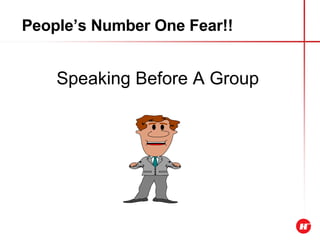
People’s Number One Fear!! Speaking Before A Group
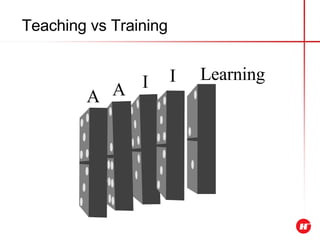
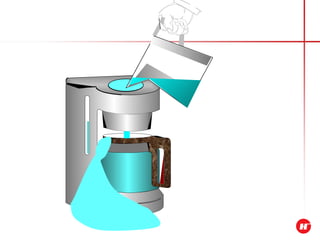
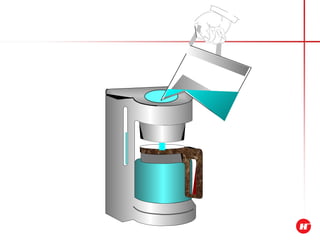
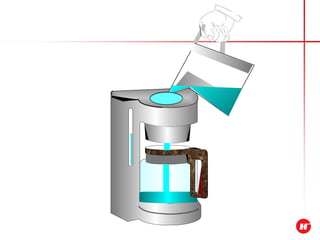
Teaching vs Training A A Learning I I
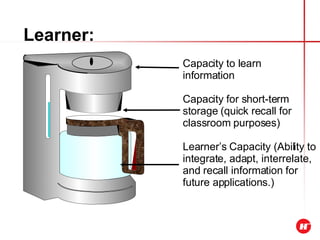
Learner: Capacity to learn information Capacity for short-term storage (quick recall for classroom purposes) Learner’s Capacity (Ability to integrate, adapt, interrelate, and recall information for future applications.)
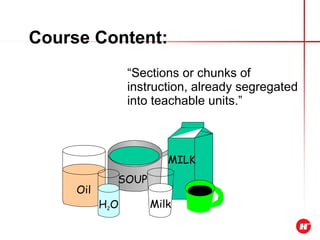
Course Content: “ Sections or chunks of instruction, already segregated into teachable units.” Oil SOUP MILK Milk H 2 O


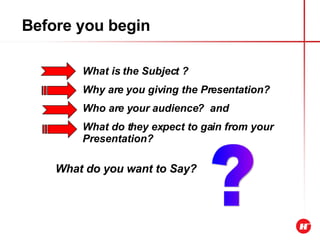
Before you begin ? What is the Subject ? Why are you giving the Presentation? Who are your audience?  and  What do they expect to gain from your Presentation? What do you want to Say?
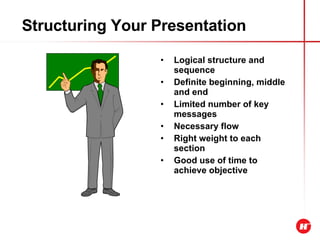
Structuring Your Presentation Logical structure and  sequence Definite beginning, middle and end Limited number of key messages Necessary flow Right weight to each section Good use of time to achieve objective
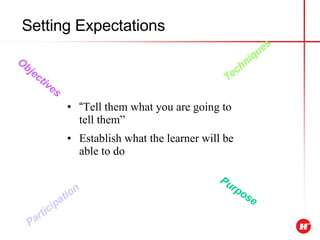
Setting Expectations “ Tell them what you are going to tell them” Establish what the learner will be able to do Objectives Purpose Techniques Participation
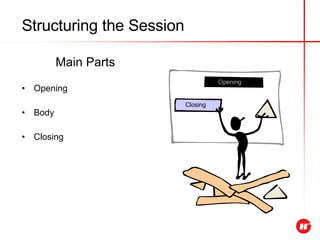
Structuring the Session Main Parts Opening Body Closing Opening Closing
Effective Openings Get learners thinking and interactive Include visuals Establish the purpose and objectives Make introductions Involve learners  Create familiarity
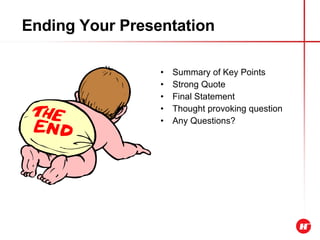
Ending Your Presentation Summary of Key Points Strong Quote Final Statement Thought provoking question Any Questions?
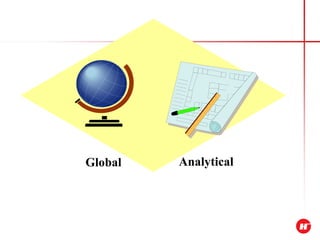
Global Analytical
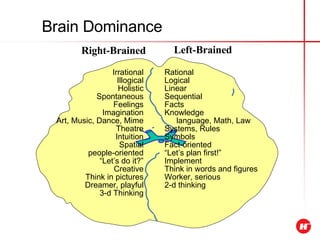
Brain Dominance Irrational Illogical Holistic Spontaneous Feelings Imagination Art, Music, Dance, Mime Theatre Intuition Spatial people-oriented “ Let’s do it?” Creative Think in pictures Dreamer, playful 3-d Thinking Rational Logical Linear Sequential Facts Knowledge language, Math, Law Systems, Rules Symbols Fact-oriented “ Let’s plan first!” Implement Think in words and figures Worker, serious 2-d thinking Right-Brained Left-Brained
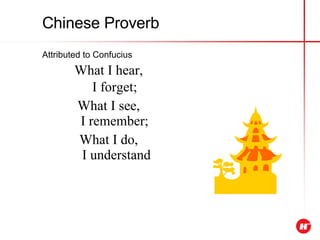
Chinese Proverb Attributed to Confucius What I hear, I forget; What I see, I remember; What I do,  I understand
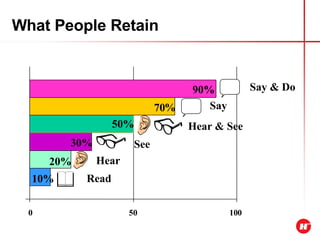
What People Retain 0 50 100 90% 70 % 50% 30% 20% 10% Say Say & Do Hear See Hear & See Read
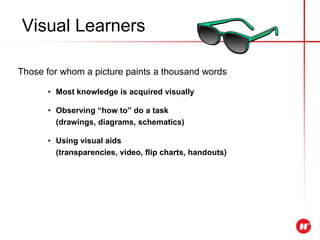
Visual Learners Those for whom a picture paints a thousand words Most knowledge is acquired visually Observing “how to” do a task  (drawings, diagrams, schematics) Using visual aids  (transparencies, video, flip charts, handouts)
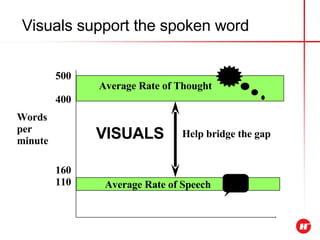
Visuals support the spoken word 500 400 160 110 Words per  minute Average Rate of Thought Average Rate of Speech VISUALS Help bridge the gap
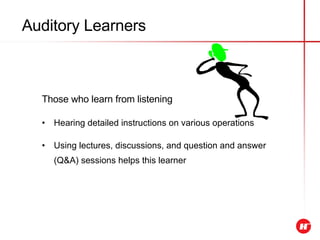
Auditory Learners Those who learn from listening Hearing detailed instructions on various operations Using lectures, discussions, and question and answer (Q&A) sessions helps this learner
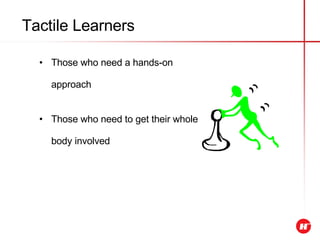
Tactile Learners Those who need a hands-on approach Those who need to get their whole body involved
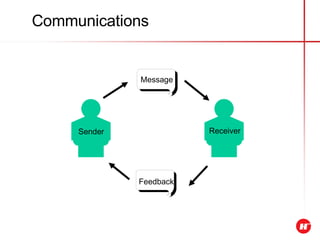
Communications Sender Receiver Message Feedback
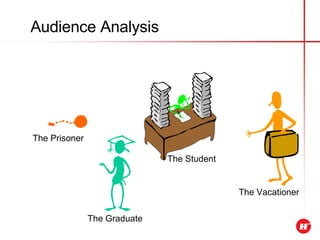
Audience Analysis The Student The Graduate The Vacationer The Prisoner
What Motivates Adult Learners Enjoyment of learning Desire to keep growing Pride in a job well done Desire to be qualified for position Desire to get promoted and to make more money
Purpose for learning Active, participative learning situations Relevant subject matter  Variety in learning method, pace, and evaluation Credible, enthusiastic facilitators  Respect for adult student’s knowledge and life experiences Expect good instruction Adult Learners Need
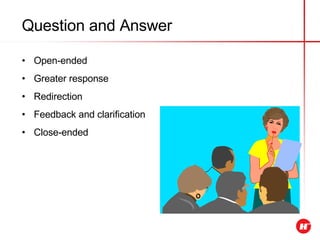
Question and Answer Open-ended Greater response Redirection Feedback and clarification Close-ended
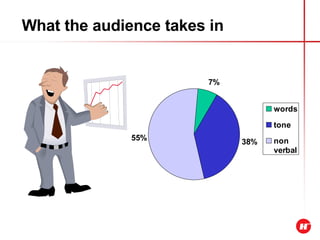
What the audience takes in
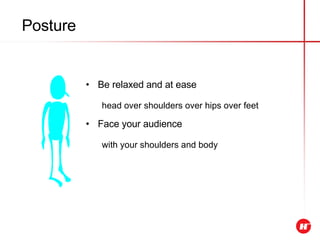
Posture Be relaxed and at ease head over shoulders over hips over feet Face your audience with your shoulders and body
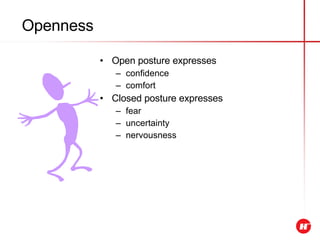
Openness Open posture expresses confidence comfort Closed posture expresses fear uncertainty nervousness
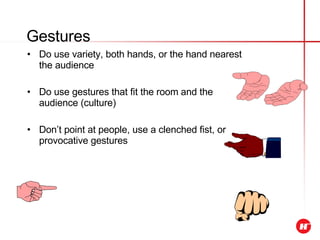
Do use variety, both hands, or the hand nearest the audience Do use gestures that fit the room and the audience (culture) Don’t point at people, use a clenched fist, or provocative gestures Gestures
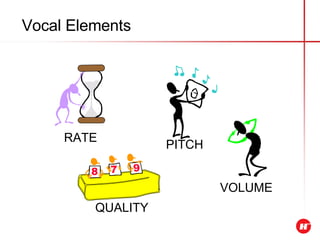
Vocal Elements RATE VOLUME QUALITY PITCH
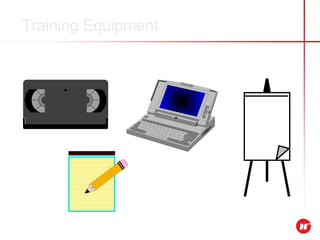
Training Equipment
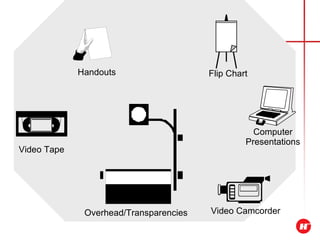
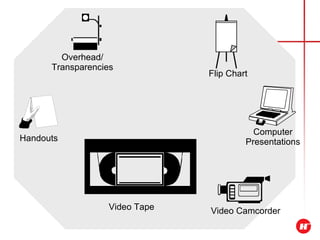
Instructional Job Aids Handouts Flip Chart Video   Tape Video Ca mcorder Computer Presentations Overhead/Transparencies
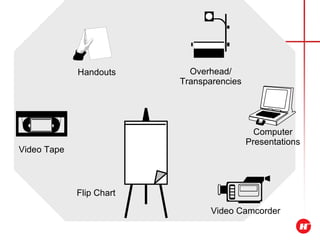
Instructional Job Aids Handouts Flip Chart Video   Tape Video Ca mcorder Computer Presentations Overhead/ Transparencies
Instructional Job Aids Overhead/ Transparencies Handouts Flip Chart Video   Tape Video Ca mcorder Computer Presentations
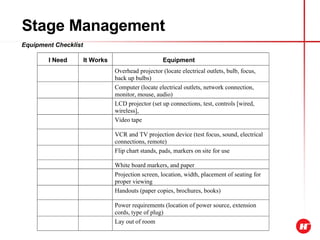
Stage Management
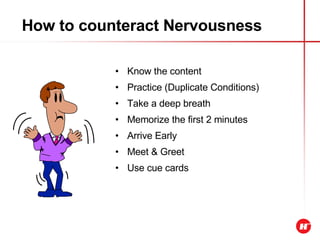
How to counteract Nervousness Know the content Practice (Duplicate Conditions) Take a deep breath Memorize the first 2 minutes Arrive Early Meet & Greet Use cue cards
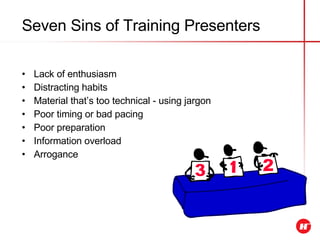
Seven Sins of Training Presenters Lack of enthusiasm Distracting habits Material that’s too technical - using jargon Poor timing or bad pacing Poor preparation Information overload Arrogance
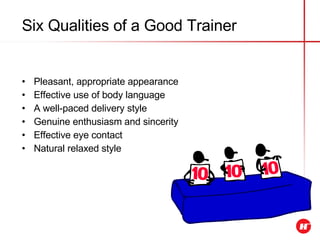
Six Qualities of a Good Trainer   Pleasant, appropriate appearance Effective use of body language A well-paced delivery style Genuine enthusiasm and sincerity Effective eye contact Natural relaxed style
Developing Presentation Skill Practice Practice Practice

Presentation Skills

  • 1.
  • 2.
    Course Objectives Bythe end of the workshop you should: Be able to structure a presentation, and understand the need for clear objectives and careful planning Be aware of how you present yourselves visually and audibly, and able to deliver effectively, ensuring audience interest Determine the principles of using visual aids effectively Have increased your confidence at being able to make presentations
  • 3.
    People’s Number OneFear!! Speaking Before A Group
  • 4.
    Teaching vs TrainingA A Learning I I
  • 5.
    Learner: Capacity tolearn information Capacity for short-term storage (quick recall for classroom purposes) Learner’s Capacity (Ability to integrate, adapt, interrelate, and recall information for future applications.)
  • 6.
    Course Content: “Sections or chunks of instruction, already segregated into teachable units.” Oil SOUP MILK Milk H 2 O
  • 7.
  • 8.
  • 9.
  • 10.
  • 11.
  • 12.
    Before you begin? What is the Subject ? Why are you giving the Presentation? Who are your audience? and What do they expect to gain from your Presentation? What do you want to Say?
  • 13.
    Structuring Your PresentationLogical structure and sequence Definite beginning, middle and end Limited number of key messages Necessary flow Right weight to each section Good use of time to achieve objective
  • 14.
    Setting Expectations “Tell them what you are going to tell them” Establish what the learner will be able to do Objectives Purpose Techniques Participation
  • 15.
    Structuring the SessionMain Parts Opening Body Closing Opening Closing
  • 16.
    Effective Openings Getlearners thinking and interactive Include visuals Establish the purpose and objectives Make introductions Involve learners Create familiarity
  • 17.
    Ending Your PresentationSummary of Key Points Strong Quote Final Statement Thought provoking question Any Questions?
  • 18.
  • 19.
    Brain Dominance IrrationalIllogical Holistic Spontaneous Feelings Imagination Art, Music, Dance, Mime Theatre Intuition Spatial people-oriented “ Let’s do it?” Creative Think in pictures Dreamer, playful 3-d Thinking Rational Logical Linear Sequential Facts Knowledge language, Math, Law Systems, Rules Symbols Fact-oriented “ Let’s plan first!” Implement Think in words and figures Worker, serious 2-d thinking Right-Brained Left-Brained
  • 20.
    Chinese Proverb Attributedto Confucius What I hear, I forget; What I see, I remember; What I do, I understand
  • 21.
    What People Retain0 50 100 90% 70 % 50% 30% 20% 10% Say Say & Do Hear See Hear & See Read
  • 22.
    Visual Learners Thosefor whom a picture paints a thousand words Most knowledge is acquired visually Observing “how to” do a task (drawings, diagrams, schematics) Using visual aids (transparencies, video, flip charts, handouts)
  • 23.
    Visuals support thespoken word 500 400 160 110 Words per minute Average Rate of Thought Average Rate of Speech VISUALS Help bridge the gap
  • 24.
    Auditory Learners Thosewho learn from listening Hearing detailed instructions on various operations Using lectures, discussions, and question and answer (Q&A) sessions helps this learner
  • 25.
    Tactile Learners Thosewho need a hands-on approach Those who need to get their whole body involved
  • 26.
  • 27.
    Audience Analysis TheStudent The Graduate The Vacationer The Prisoner
  • 28.
    What Motivates AdultLearners Enjoyment of learning Desire to keep growing Pride in a job well done Desire to be qualified for position Desire to get promoted and to make more money
  • 29.
    Purpose for learningActive, participative learning situations Relevant subject matter Variety in learning method, pace, and evaluation Credible, enthusiastic facilitators Respect for adult student’s knowledge and life experiences Expect good instruction Adult Learners Need
  • 30.
    Question and AnswerOpen-ended Greater response Redirection Feedback and clarification Close-ended
  • 31.
  • 32.
    Posture Be relaxedand at ease head over shoulders over hips over feet Face your audience with your shoulders and body
  • 33.
    Openness Open postureexpresses confidence comfort Closed posture expresses fear uncertainty nervousness
  • 34.
    Do use variety,both hands, or the hand nearest the audience Do use gestures that fit the room and the audience (culture) Don’t point at people, use a clenched fist, or provocative gestures Gestures
  • 35.
    Vocal Elements RATEVOLUME QUALITY PITCH
  • 36.
  • 37.
    Instructional Job AidsHandouts Flip Chart Video Tape Video Ca mcorder Computer Presentations Overhead/Transparencies
  • 38.
    Instructional Job AidsHandouts Flip Chart Video Tape Video Ca mcorder Computer Presentations Overhead/ Transparencies
  • 39.
    Instructional Job AidsOverhead/ Transparencies Handouts Flip Chart Video Tape Video Ca mcorder Computer Presentations
  • 40.
  • 41.
    How to counteractNervousness Know the content Practice (Duplicate Conditions) Take a deep breath Memorize the first 2 minutes Arrive Early Meet & Greet Use cue cards
  • 42.
    Seven Sins ofTraining Presenters Lack of enthusiasm Distracting habits Material that’s too technical - using jargon Poor timing or bad pacing Poor preparation Information overload Arrogance
  • 43.
    Six Qualities ofa Good Trainer Pleasant, appropriate appearance Effective use of body language A well-paced delivery style Genuine enthusiasm and sincerity Effective eye contact Natural relaxed style
  • 44.
    Developing Presentation SkillPractice Practice Practice