1
Adult Learners
Presented by
Muhammad Nisar
Presented to
Dr Niaz Muhammad
2
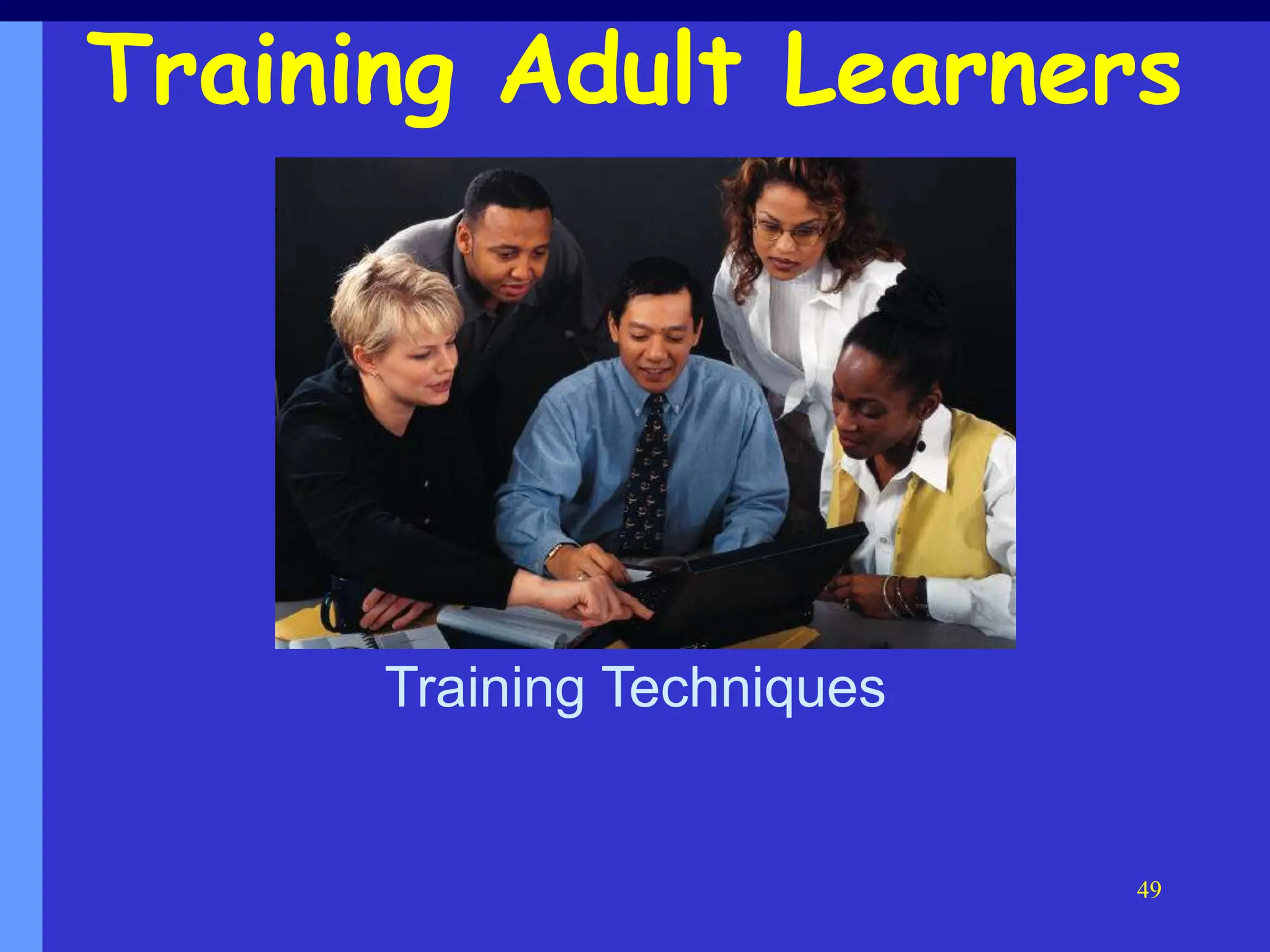
Training Adult Learners
Training Techniques
3
Contents
• Training is a System
• Strive to Improve
• Characteristics of Adult Learners
• The Trainer’s Role
• Teaching Adults
• Learning Styles
• Instructional Strategies
• Instructional Media
4
• Do’s
• Planning and Preparation
• Preparation Skills
• Delivery Skills
• Facilitator Responsibilities
• Fatal Mistakes
• Dont’s
• Answering Questions
• Difficult Questions and Learners
Contents
5
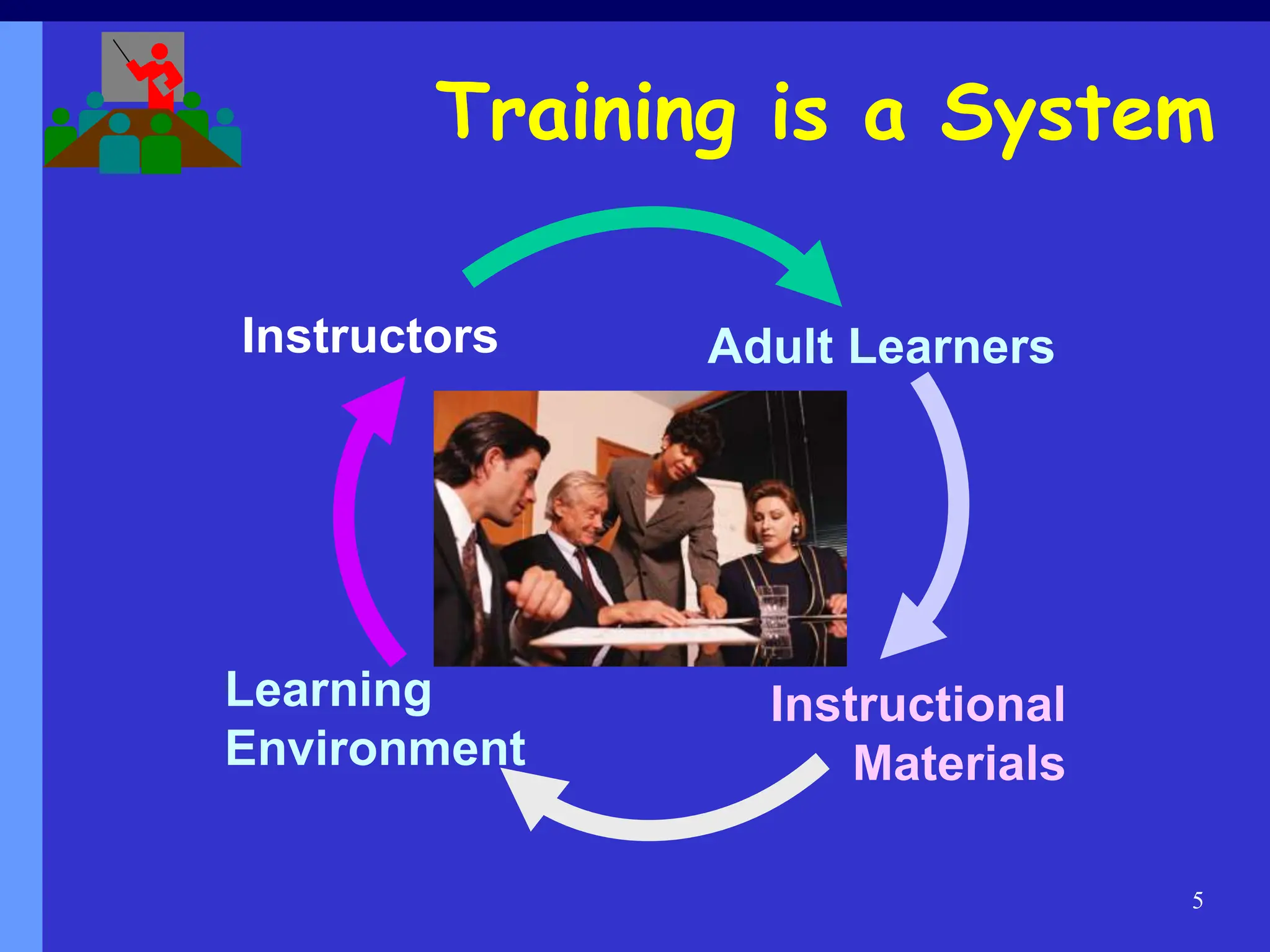
Training is a System
Adult Learners
Instructors
Learning
Environment
Instructional
Materials
6
Why the
Systems Approach?
• Focused
– what the adult learner needs to know
– what the adult learner to be able to do
• Linked
– instruction and outcomes
7
Systems View
• Preparation
• Implementation
• Evaluation
• Revision
Learners
Materials
Instructors
Environment
8
Strive to Improve
• Use the input from student
evaluations to improve your
future performance
• Update your materials to keep
them current
• Continue to improve your
knowledge of the subject matter
9
Characteristics
of Adult Learners
• Adults are capable of lifelong learning.
• Adults want to know why it’s important
(purpose) and how they can use it.
• Adults like to participate in decision
making regarding learning/training
– Choices
10
• Learn in their own ways
• Are not children
• Need organization
• Preconceptions and abilities
• New vs. Old learning
Characteristics
of Adult Learners
11
The Trainer’s Role
• Facilitator
• Presenter
• Coach
12
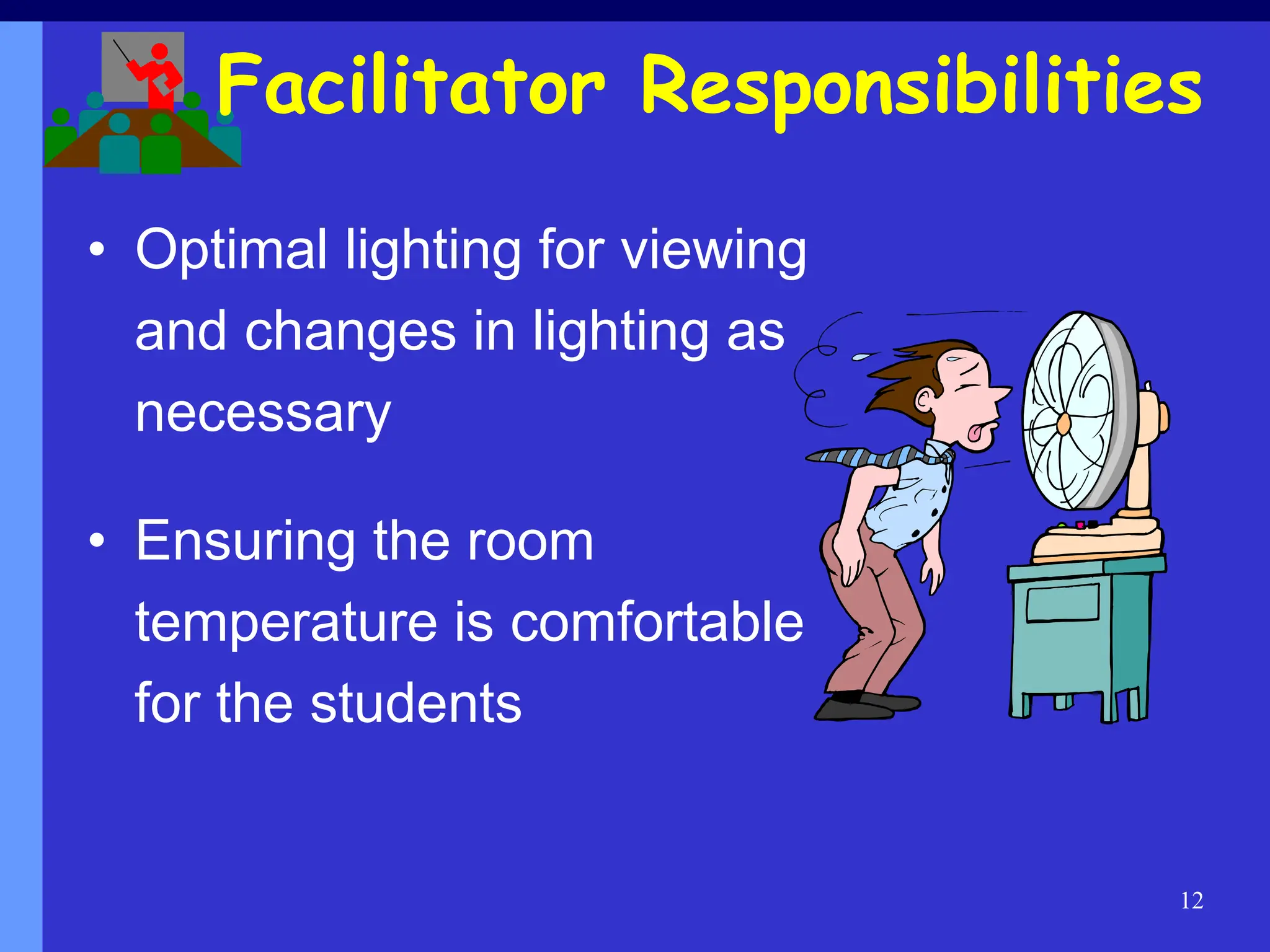
Facilitator Responsibilities
• Optimal lighting for viewing
and changes in lighting as
necessary
• Ensuring the room
temperature is comfortable
for the students
13
Facilitator Responsibilities
• Setting the initial mood of the group.
• Creating an effective climate for learning
• Motivate students to participate in the
learning process
• Be accepting of comments, avoid getting
defensive
14
Facilitator Responsibilities
• Control disruptive students
• Offer yourself as a resource
• Allow for limited debate and/or
challenges of the ideas presented
• Discuss how the learning can be applied
in real world applications
15
• Make yourself available at the beginning
of breaks and after class to field
individual student questions
• Always treat the learners with respect
• Avoid stereotypes
Facilitator Responsibilities
16
• More effective retention given more than one
training method
• Reading
• Hearing
• Seeing
• Seeing & Hearing
• Talking & Writing
• + Doing
Teaching Adults
10%
90%
70%
50%
30%
20%
17
• Explain what you plan to tell or do
• Tell them and/or do
• Tell them what you told them or did
• Learner explains and does
Teaching Adults
18
Learning Styles
• Active
– Participate
– Field tips
– Hands-on
– Presentations
• Passive
– Read
– Listen
– Observe
19
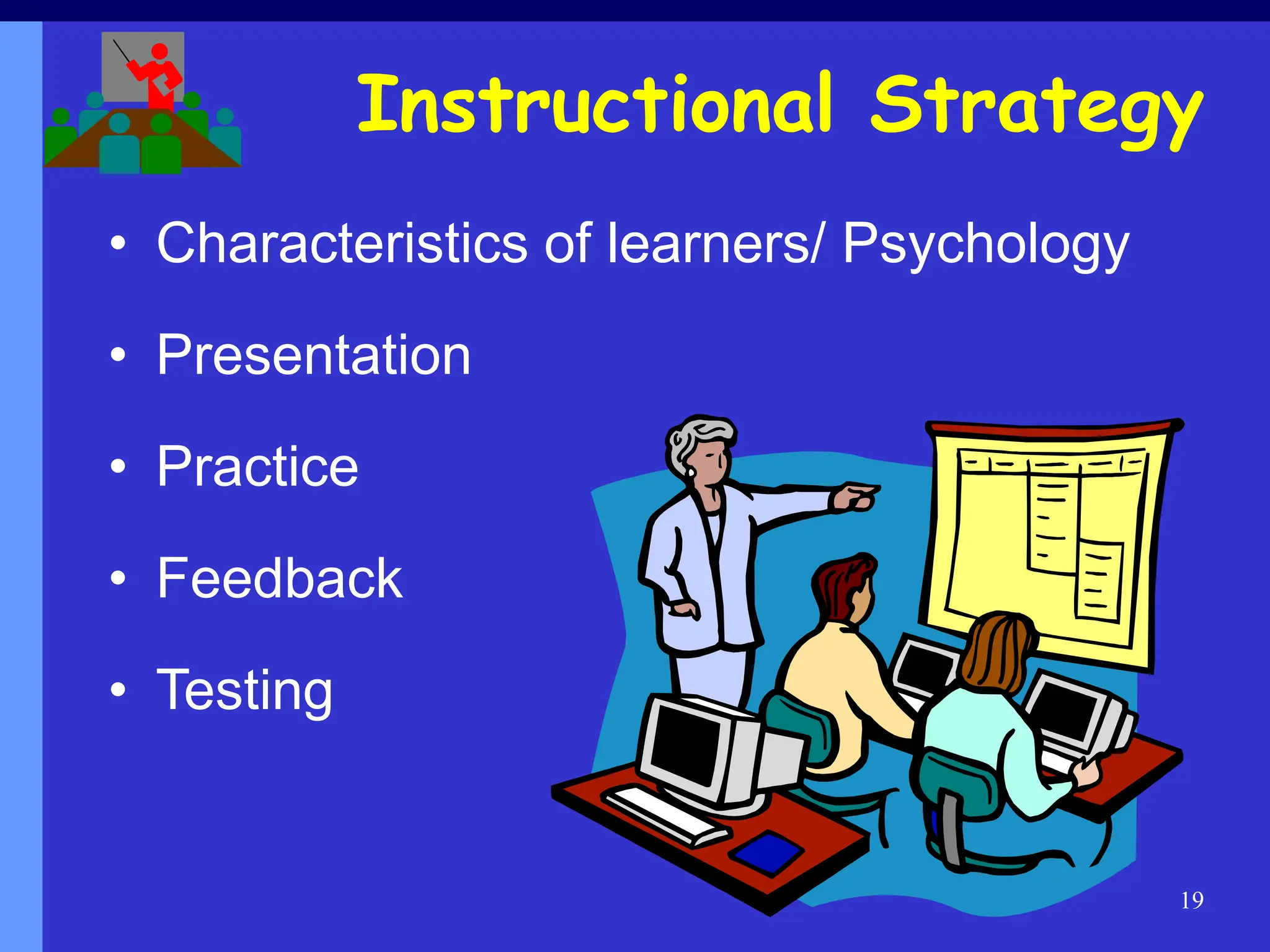
Instructional Strategy
• Characteristics of learners/ Psychology
• Presentation
• Practice
• Feedback
• Testing
20
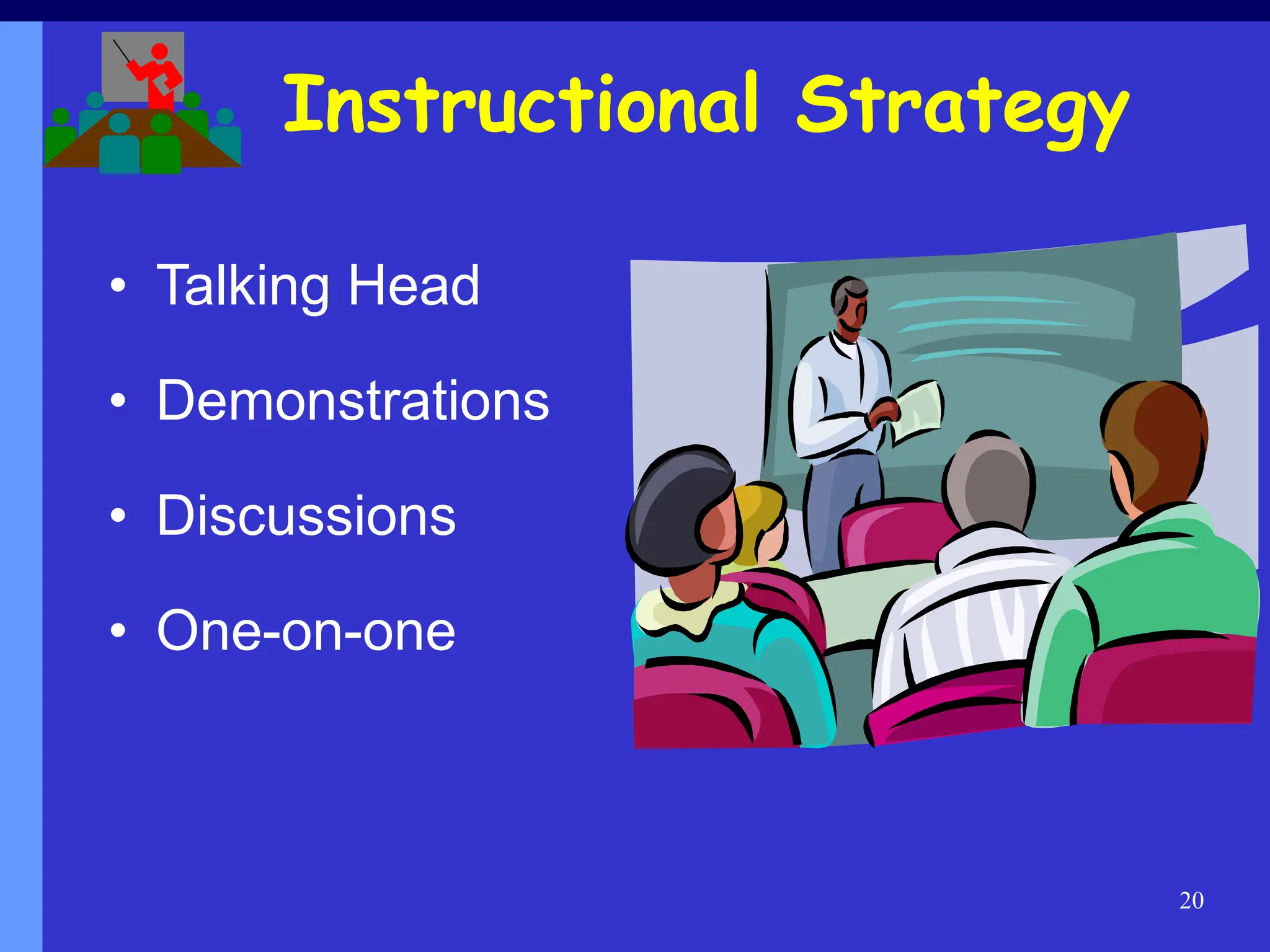
Instructional Strategy
• Talking Head
• Demonstrations
• Discussions
• One-on-one
21
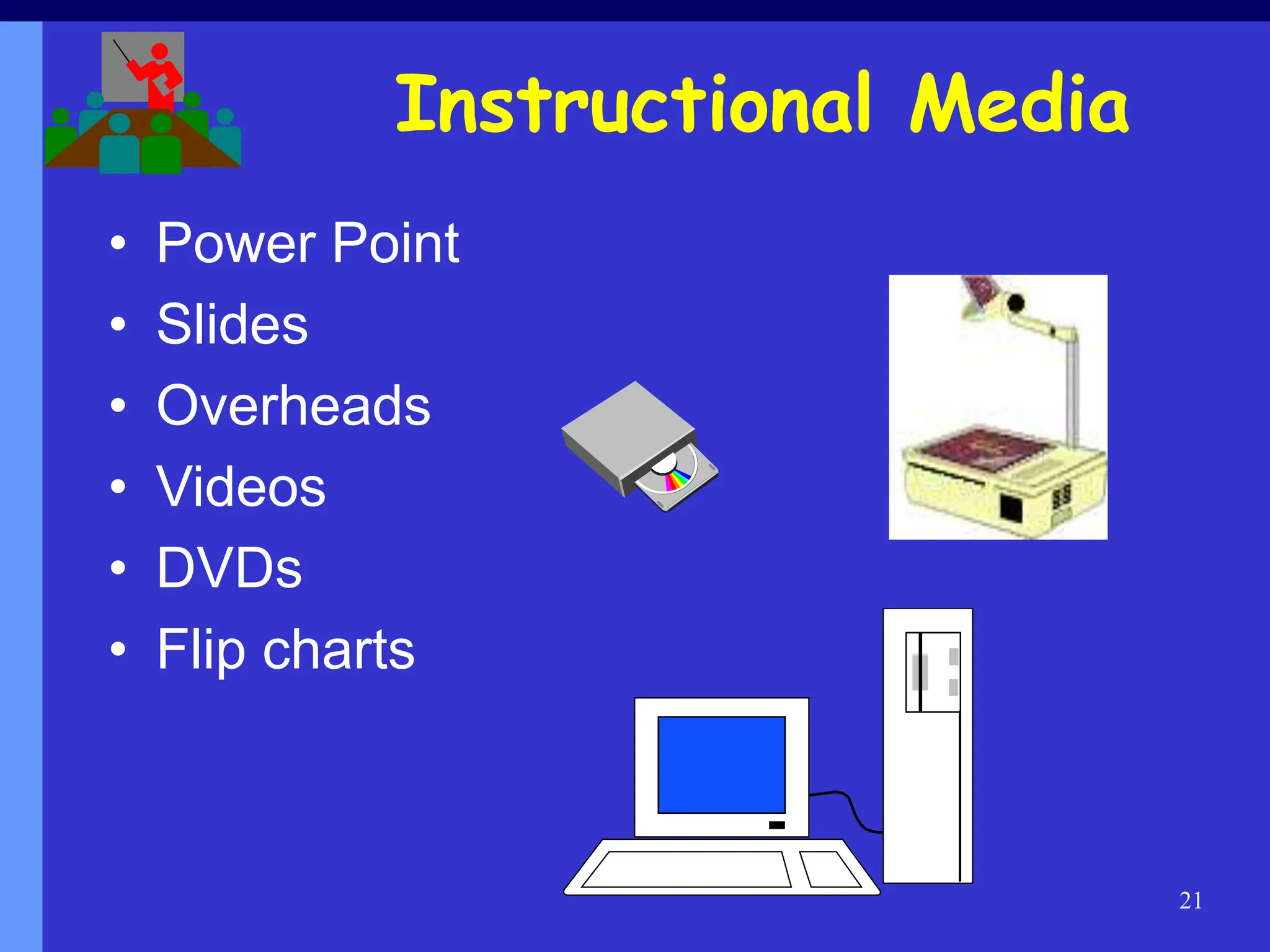
Instructional Media
• Power Point
• Slides
• Overheads
• Videos
• DVDs
• Flip charts
22
Do’s
• Positive mental attitude
• Dress appropriately
• Be enthusiastic
• Be energetic
• Avoid excessive slang and vernacular
23
• Speak up
• Be yourself
• Practice what you preach
• Watch your body language
• Be the best ‘you’ that you can be
Do’s
24
• Be prepared
• Be sensitive
• Acknowledge learners
• Use your sense of humor
• Be respectful
Do’s
25
Do’s
• Be accessible and approachable
• Be responsive
• Allow learners to lead
• Be flexible
• Maintain your schedule
26
Facilities
–Location
–Accommodations
–Speakers
–Food and beverage for breaks
Set-up and test all
equipment before the start
of the session
–Arrange student seating if necessary


Planning and Preparation
27
Learning Environment
– Room - suitable classroom space for
training
• Size
• Setup
– tables and chairs for all attendees
– plus two extra tables at the rear
reserved for the trainers)
– Temperature

Planning and Preparation
28
Arrive at the training( Adult learner
training) location early
•Become familiar with the facility:
–Security
–Exits
–Restrooms
–Emergency procedures
–Contact person
–Rules
Planning and Preparation

29
Planning and Preparation
Administrative
– Related paper work
• Sign in forms/registration forms
• Schedule
• Evaluations

30
Audiovisual and equipment that includes
– Computer
– LCD projector
– VCR/TV
– Microphone (if needed for the size room secured)
– Overhead transparency projector
– Whiteboard & markers
– Flipcharts & markers
– 35mm slide projector
– Projection screen

Planning and Preparation
31
Equipment and supplies
– Transparencies
– Markers
– Flip charts
– Paper
– Pens and pencils
– Handouts
Planning and Preparation

32
• The better you know your
subject the more confidence
you will have
• The more you practice the
better you will be
• Try your presentation out on
learners
Preparation Skills
33
Delivery Skills
• Make sure you speak so that
students in the back have no
trouble hearing you
• Enunciate your words clearly
• Avoid saying uhm…..
• Avoid distracting mannerisms
such as jingling change or
playing with your hair
34
Delivery Skills
• Involve the participants by
encouraging and asking
questions
• Start on time; make sure
that established breaks,
lunch and ending times
are adhered to
35
• Pace your delivery
according to the allotted
time and the material to
be covered
• If working from a
syllabus, make sure you
cover everything that is
on it, or explain changes
Delivery Skills
36
Delivery Skills
• Keep close tabs on the climate of
the class
• Recognize your strengths and
weaknesses
• Work to maximize your strengths
and minimize your weakness
37
• Don’t pretend to know all the
answers
• If you don’t know something:
– Discuss the question with the
class
– Let the student know you will get
the answer, but be sure to
remember to follow up
Delivery Skills
38
Fatal Mistakes
• Poor first impression
• No objectives
• Dull, dry and boring
• Frozen in one spot
• Weak eye contact
• Poor visual aids
39
• Weak close
• No humor
• Poor preparation
• No audience involvement
• No enthusiasm or conviction
• Poor facial expression
Fatal Mistakes
40
Don’ts
• Don’t be too formal
• Don’t be a know it all
• Don’t be unprepared
• Do not talk down to learners
• Do not use profanity
• Don’t be distracting
41
Don’ts
• Don’t loose control
• Don’t catch people unprepared
• Don’t be afraid to say you do not know
• Don’t avoid eye contact
42
Answering Questions
• Repeat the question
– Answer now/later
– Redirect
– Discussion
• Don’t bluff
– You know
– You don’t know
43
Difficult
Questions and Learners
• Argumentative individual
• Loaded questions
• Long-winded
• No good answer
44
Summary
• The instructor does not know everything.
• Remember – you are leading a group.
45
Questions
46
Bassi, L. J. & Van Buren, M. E. (1999). Sharpening
the leading edge: The State of the Industry Report
reveals the steps companies must take to ascend to
the top of the training field. American Society for
Training and Development: Alexandria, VA.
Carey, L. & Dick, W. (1996). The systematic design
of instruction. (4th ed.). New York: HarperCollins
Publishers, Inc.
Chrétien, J. (May/June 1995). Effective Training
Techniques, OH&S Canada (11) 3. 29-33.
References
47
Grimaldi, J. V. & Simonds, R. H. (1989). Safety
management. (5th ed.). Boston, MA: Irwin.
Handley, W. (1977). Industrial Safety handbook. (2nd
ed.). London: McGraw-Hill Book Company (UK)
Limited.
Johnson, D. (1998). Adult educators need to have
enthusiasm. Adult Learning (9) 4, 11-14.
References
48
McMaster, S. (2000).Training Made Easy for Health,
Safety, and Environmental Trainers. McMaster Training
Associates ©.
Krause, T. R. (1997). The behavior-based safety
process: Managing involvement for an Injury-free
culture. (2nd ed.). New York: Van Nostrand Reinhold.
Saccaro, J. A. (1994). Developing safety training
programs: Preventing accidents and improving worker
performance through quality training. (2nd ed.). New
York: Van Nostrand Reinhold.
References
49
Training Adult Learners
Training Techniques

ADULT LEARNERS by Nisar.ppt

  • 1.
    1 Adult Learners Presented by MuhammadNisar Presented to Dr Niaz Muhammad
  • 2.
  • 3.
    3 Contents • Training isa System • Strive to Improve • Characteristics of Adult Learners • The Trainer’s Role • Teaching Adults • Learning Styles • Instructional Strategies • Instructional Media
  • 4.
    4 • Do’s • Planningand Preparation • Preparation Skills • Delivery Skills • Facilitator Responsibilities • Fatal Mistakes • Dont’s • Answering Questions • Difficult Questions and Learners Contents
  • 5.
    5 Training is aSystem Adult Learners Instructors Learning Environment Instructional Materials
  • 6.
    6 Why the Systems Approach? •Focused – what the adult learner needs to know – what the adult learner to be able to do • Linked – instruction and outcomes
  • 7.
    7 Systems View • Preparation •Implementation • Evaluation • Revision Learners Materials Instructors Environment
  • 8.
    8 Strive to Improve •Use the input from student evaluations to improve your future performance • Update your materials to keep them current • Continue to improve your knowledge of the subject matter
  • 9.
    9 Characteristics of Adult Learners •Adults are capable of lifelong learning. • Adults want to know why it’s important (purpose) and how they can use it. • Adults like to participate in decision making regarding learning/training – Choices
  • 10.
    10 • Learn intheir own ways • Are not children • Need organization • Preconceptions and abilities • New vs. Old learning Characteristics of Adult Learners
  • 11.
    11 The Trainer’s Role •Facilitator • Presenter • Coach
  • 12.
    12 Facilitator Responsibilities • Optimallighting for viewing and changes in lighting as necessary • Ensuring the room temperature is comfortable for the students
  • 13.
    13 Facilitator Responsibilities • Settingthe initial mood of the group. • Creating an effective climate for learning • Motivate students to participate in the learning process • Be accepting of comments, avoid getting defensive
  • 14.
    14 Facilitator Responsibilities • Controldisruptive students • Offer yourself as a resource • Allow for limited debate and/or challenges of the ideas presented • Discuss how the learning can be applied in real world applications
  • 15.
    15 • Make yourselfavailable at the beginning of breaks and after class to field individual student questions • Always treat the learners with respect • Avoid stereotypes Facilitator Responsibilities
  • 16.
    16 • More effectiveretention given more than one training method • Reading • Hearing • Seeing • Seeing & Hearing • Talking & Writing • + Doing Teaching Adults 10% 90% 70% 50% 30% 20%
  • 17.
    17 • Explain whatyou plan to tell or do • Tell them and/or do • Tell them what you told them or did • Learner explains and does Teaching Adults
  • 18.
    18 Learning Styles • Active –Participate – Field tips – Hands-on – Presentations • Passive – Read – Listen – Observe
  • 19.
    19 Instructional Strategy • Characteristicsof learners/ Psychology • Presentation • Practice • Feedback • Testing
  • 20.
    20 Instructional Strategy • TalkingHead • Demonstrations • Discussions • One-on-one
  • 21.
    21 Instructional Media • PowerPoint • Slides • Overheads • Videos • DVDs • Flip charts
  • 22.
    22 Do’s • Positive mentalattitude • Dress appropriately • Be enthusiastic • Be energetic • Avoid excessive slang and vernacular
  • 23.
    23 • Speak up •Be yourself • Practice what you preach • Watch your body language • Be the best ‘you’ that you can be Do’s
  • 24.
    24 • Be prepared •Be sensitive • Acknowledge learners • Use your sense of humor • Be respectful Do’s
  • 25.
    25 Do’s • Be accessibleand approachable • Be responsive • Allow learners to lead • Be flexible • Maintain your schedule
  • 26.
    26 Facilities –Location –Accommodations –Speakers –Food and beveragefor breaks Set-up and test all equipment before the start of the session –Arrange student seating if necessary   Planning and Preparation
  • 27.
    27 Learning Environment – Room- suitable classroom space for training • Size • Setup – tables and chairs for all attendees – plus two extra tables at the rear reserved for the trainers) – Temperature  Planning and Preparation
  • 28.
    28 Arrive at thetraining( Adult learner training) location early •Become familiar with the facility: –Security –Exits –Restrooms –Emergency procedures –Contact person –Rules Planning and Preparation 
  • 29.
    29 Planning and Preparation Administrative –Related paper work • Sign in forms/registration forms • Schedule • Evaluations 
  • 30.
    30 Audiovisual and equipmentthat includes – Computer – LCD projector – VCR/TV – Microphone (if needed for the size room secured) – Overhead transparency projector – Whiteboard & markers – Flipcharts & markers – 35mm slide projector – Projection screen  Planning and Preparation
  • 31.
    31 Equipment and supplies –Transparencies – Markers – Flip charts – Paper – Pens and pencils – Handouts Planning and Preparation 
  • 32.
    32 • The betteryou know your subject the more confidence you will have • The more you practice the better you will be • Try your presentation out on learners Preparation Skills
  • 33.
    33 Delivery Skills • Makesure you speak so that students in the back have no trouble hearing you • Enunciate your words clearly • Avoid saying uhm….. • Avoid distracting mannerisms such as jingling change or playing with your hair
  • 34.
    34 Delivery Skills • Involvethe participants by encouraging and asking questions • Start on time; make sure that established breaks, lunch and ending times are adhered to
  • 35.
    35 • Pace yourdelivery according to the allotted time and the material to be covered • If working from a syllabus, make sure you cover everything that is on it, or explain changes Delivery Skills
  • 36.
    36 Delivery Skills • Keepclose tabs on the climate of the class • Recognize your strengths and weaknesses • Work to maximize your strengths and minimize your weakness
  • 37.
    37 • Don’t pretendto know all the answers • If you don’t know something: – Discuss the question with the class – Let the student know you will get the answer, but be sure to remember to follow up Delivery Skills
  • 38.
    38 Fatal Mistakes • Poorfirst impression • No objectives • Dull, dry and boring • Frozen in one spot • Weak eye contact • Poor visual aids
  • 39.
    39 • Weak close •No humor • Poor preparation • No audience involvement • No enthusiasm or conviction • Poor facial expression Fatal Mistakes
  • 40.
    40 Don’ts • Don’t betoo formal • Don’t be a know it all • Don’t be unprepared • Do not talk down to learners • Do not use profanity • Don’t be distracting
  • 41.
    41 Don’ts • Don’t loosecontrol • Don’t catch people unprepared • Don’t be afraid to say you do not know • Don’t avoid eye contact
  • 42.
    42 Answering Questions • Repeatthe question – Answer now/later – Redirect – Discussion • Don’t bluff – You know – You don’t know
  • 43.
    43 Difficult Questions and Learners •Argumentative individual • Loaded questions • Long-winded • No good answer
  • 44.
    44 Summary • The instructordoes not know everything. • Remember – you are leading a group.
  • 45.
  • 46.
    46 Bassi, L. J.& Van Buren, M. E. (1999). Sharpening the leading edge: The State of the Industry Report reveals the steps companies must take to ascend to the top of the training field. American Society for Training and Development: Alexandria, VA. Carey, L. & Dick, W. (1996). The systematic design of instruction. (4th ed.). New York: HarperCollins Publishers, Inc. Chrétien, J. (May/June 1995). Effective Training Techniques, OH&S Canada (11) 3. 29-33. References
  • 47.
    47 Grimaldi, J. V.& Simonds, R. H. (1989). Safety management. (5th ed.). Boston, MA: Irwin. Handley, W. (1977). Industrial Safety handbook. (2nd ed.). London: McGraw-Hill Book Company (UK) Limited. Johnson, D. (1998). Adult educators need to have enthusiasm. Adult Learning (9) 4, 11-14. References
  • 48.
    48 McMaster, S. (2000).TrainingMade Easy for Health, Safety, and Environmental Trainers. McMaster Training Associates ©. Krause, T. R. (1997). The behavior-based safety process: Managing involvement for an Injury-free culture. (2nd ed.). New York: Van Nostrand Reinhold. Saccaro, J. A. (1994). Developing safety training programs: Preventing accidents and improving worker performance through quality training. (2nd ed.). New York: Van Nostrand Reinhold. References
  • 49.