HOME AUTOMATION SYSTEM USING IoT
BY:
RAJBALA PURNIMA PRIYA (BE/15319/15)
Under the guidance of : MAYANK SINGH
DEPARTMENT OF ELECTRICAL AND ELECTRONICS
ENGINEERING
BIRLA INSTITUTE OF TECHNOLOGY,MESRA
BIRLA INSTITUTE OF TECHNOLOGY, PATNA
INTRODUCTION
our objectives can be summarised as:
• To be able to control any electrical home appliances using local
internet connection through mobile hotspot . Use of IR(Infrared
sensor) sensor to detect any object in front of sensor and switch
on/off lights and fan accordingly.
• Use of DHT11 (digital temperature and humidity sensor) to
sense temperature and humidity of the room and displaying it on
LCD display with LCD and sensor connected to arduino.
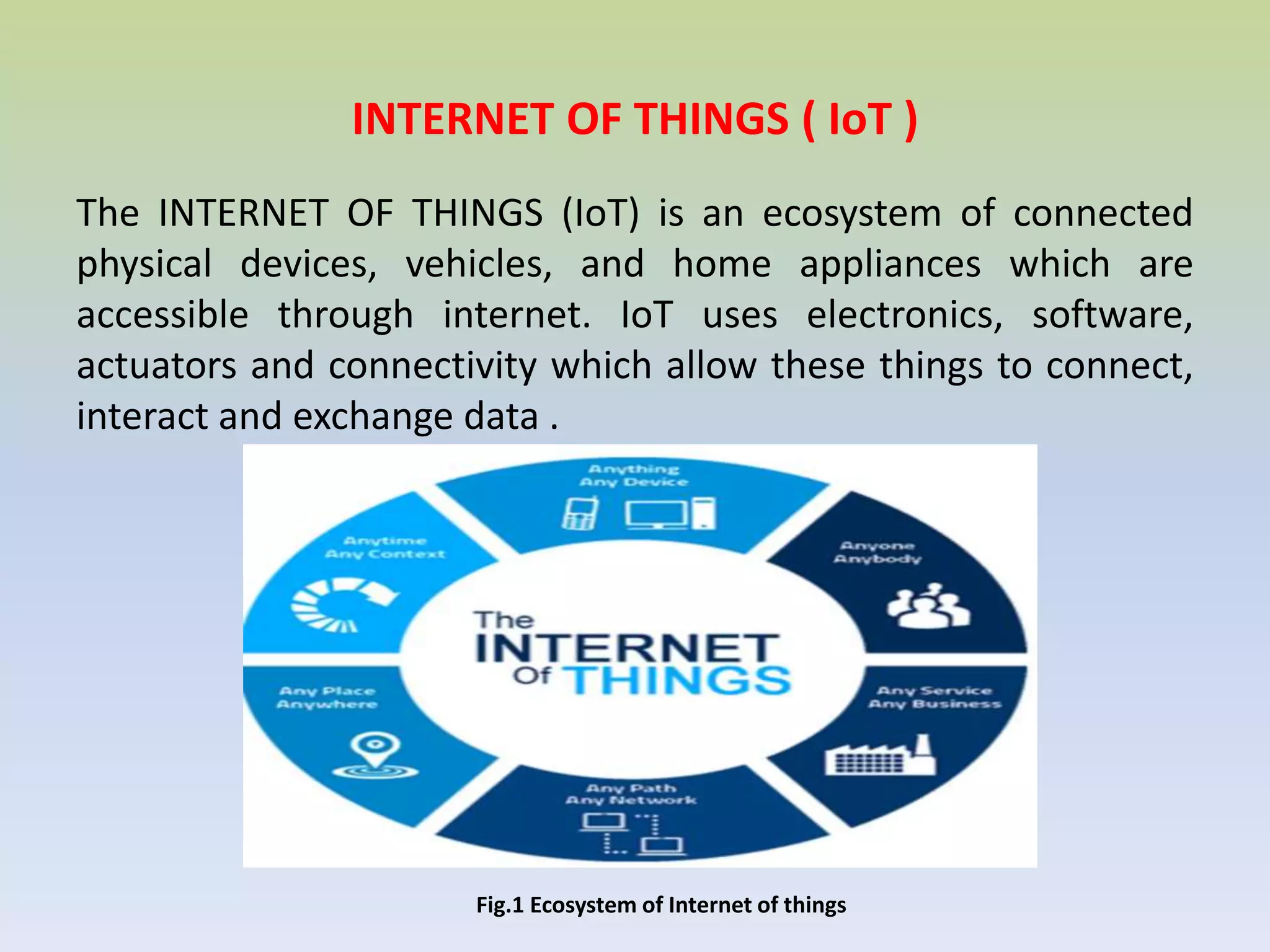
INTERNET OF THINGS ( IoT )
The INTERNET OF THINGS (IoT) is an ecosystem of connected
physical devices, vehicles, and home appliances which are
accessible through internet. IoT uses electronics, software,
actuators and connectivity which allow these things to connect,
interact and exchange data .
Fig.1 Ecosystem of Internet of things
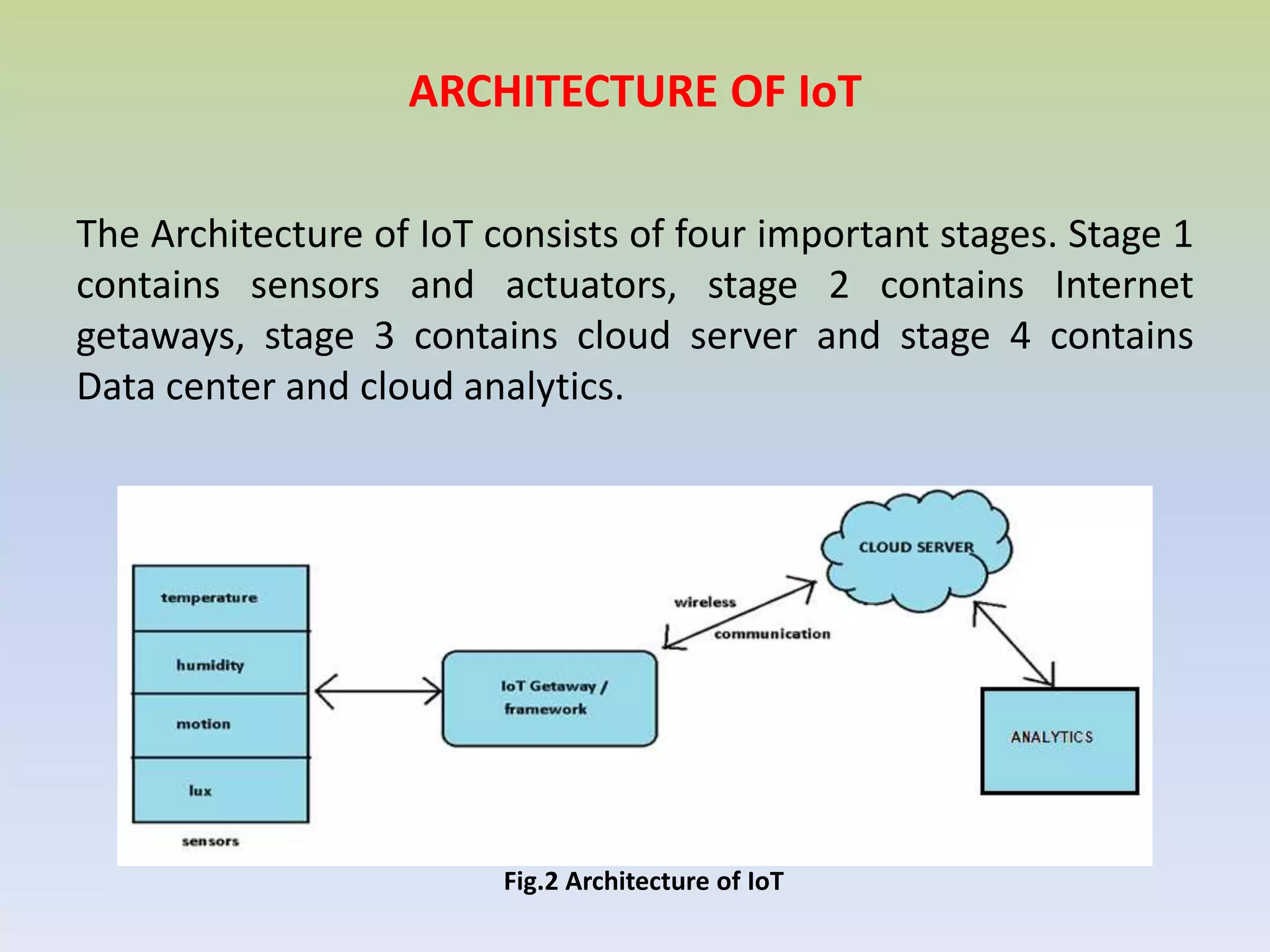
ARCHITECTURE OF IoT
The Architecture of IoT consists of four important stages. Stage 1
contains sensors and actuators, stage 2 contains Internet
getaways, stage 3 contains cloud server and stage 4 contains
Data center and cloud analytics.
Fig.2 Architecture of IoT
APPLICATION OF IoT
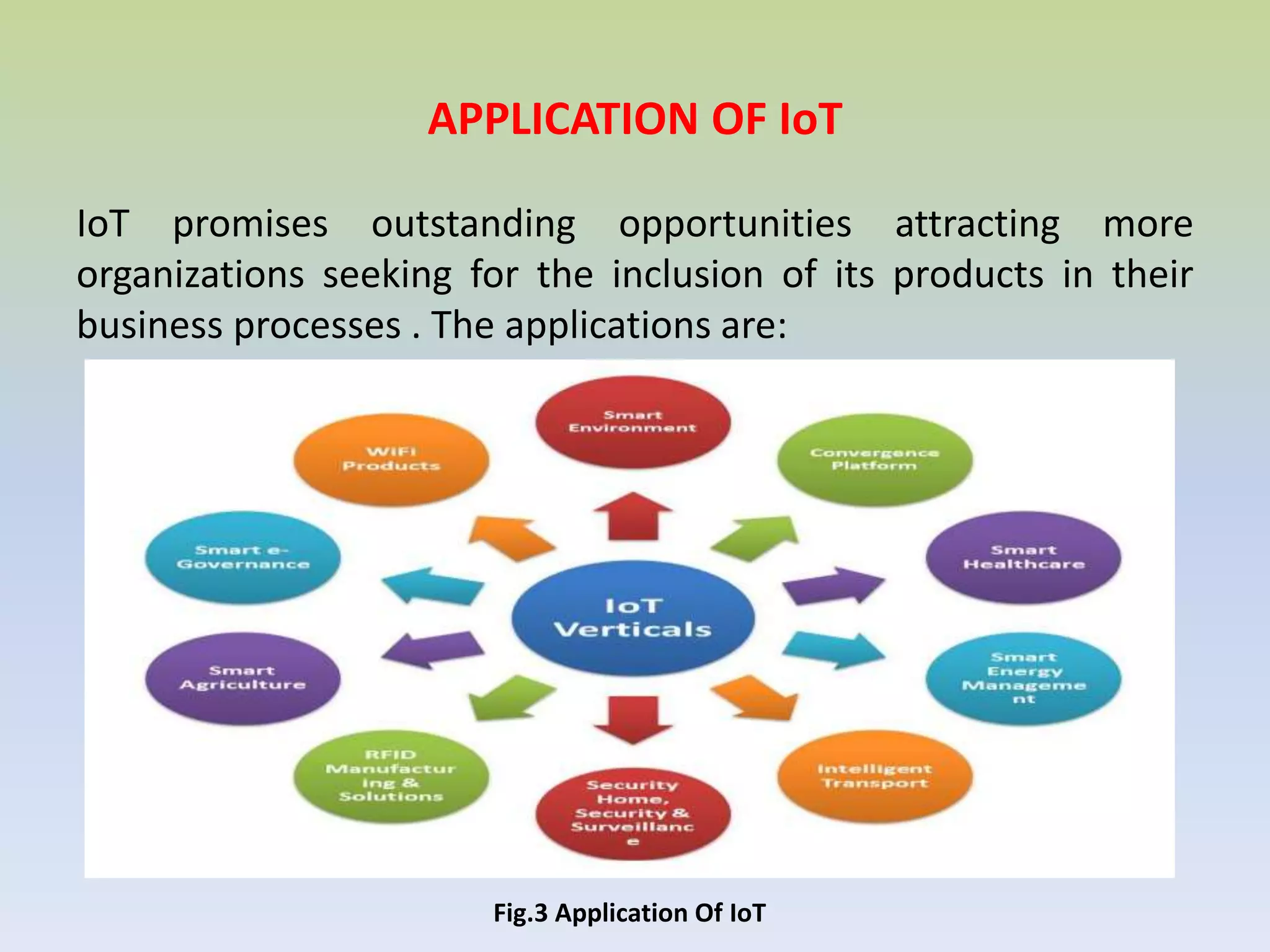
IoT promises outstanding opportunities attracting more
organizations seeking for the inclusion of its products in their
business processes . The applications are:
Fig.3 Application Of IoT
OUR WORK
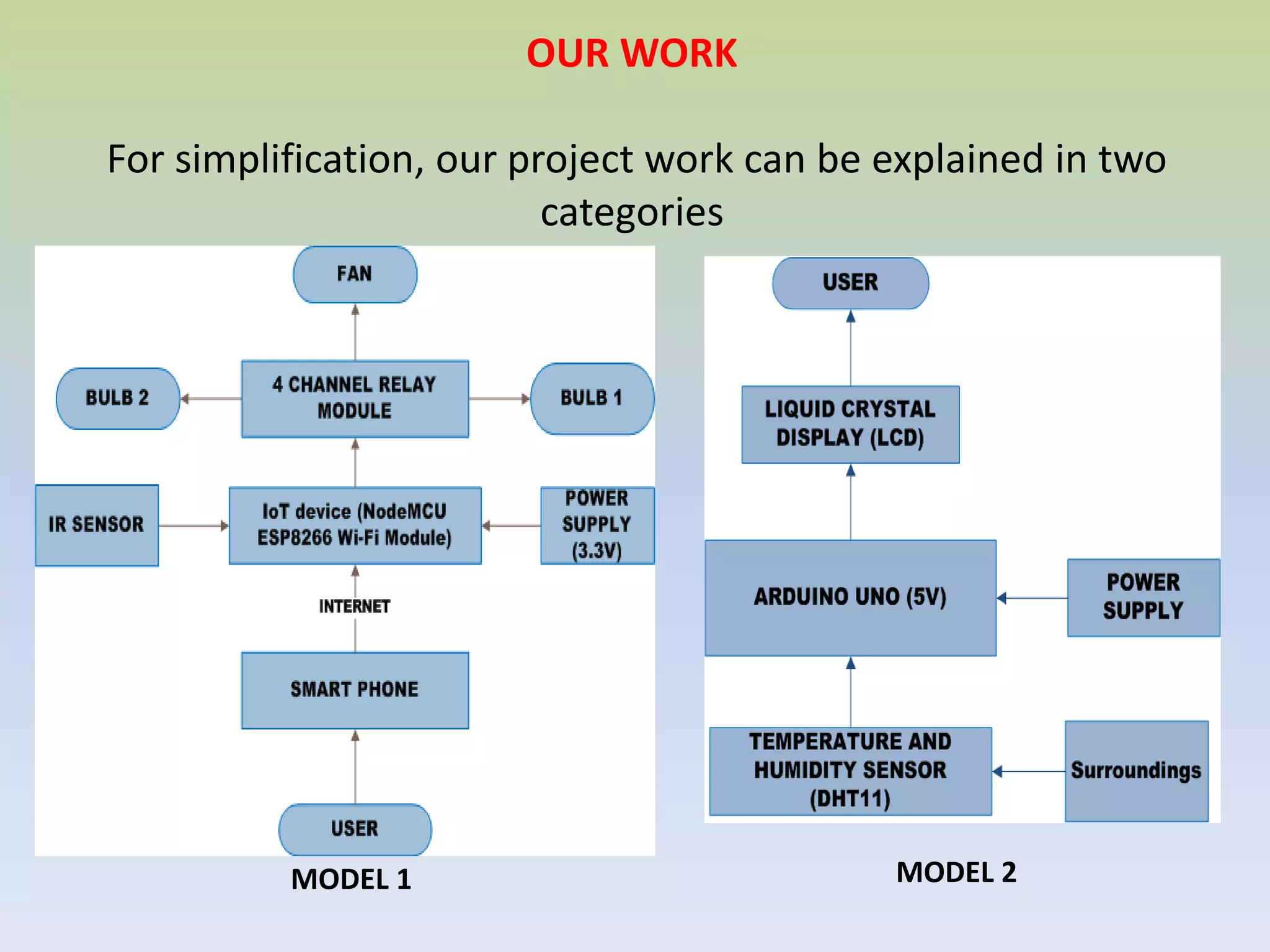
For simplification, our project work can be explained in two
categories
MODEL 1 MODEL 2
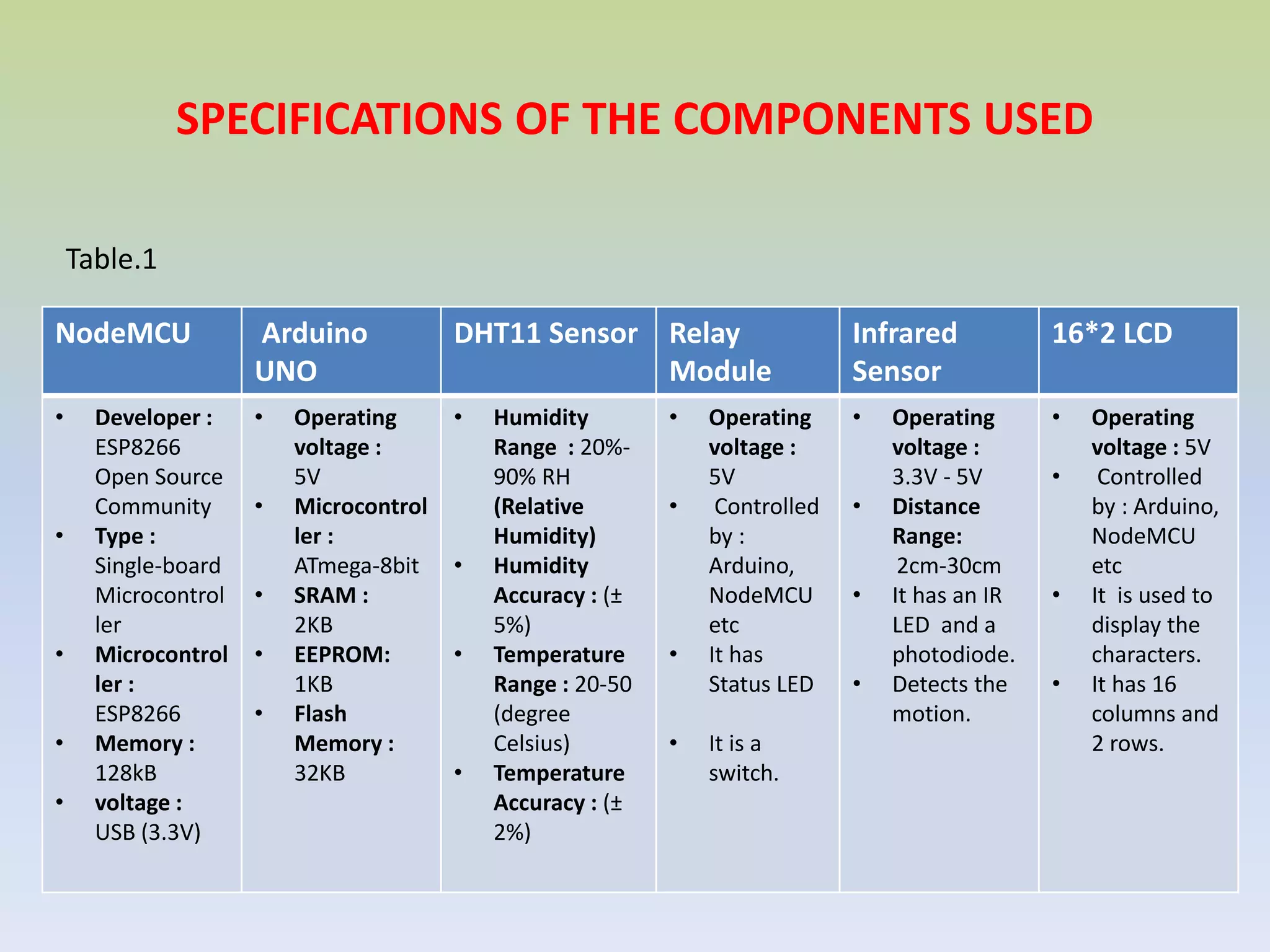
SPECIFICATIONS OF THE COMPONENTS USED
NodeMCU Arduino
UNO
DHT11 Sensor Relay
Module
Infrared
Sensor
16*2 LCD
• Developer :
ESP8266
Open Source
Community
• Type :
Single-board
Microcontrol
ler
• Microcontrol
ler :
ESP8266
• Memory :
128kB
• voltage :
USB (3.3V)
• Operating
voltage :
5V
• Microcontrol
ler :
ATmega-8bit
• SRAM :
2KB
• EEPROM:
1KB
• Flash
Memory :
32KB
• Humidity
Range : 20%-
90% RH
(Relative
Humidity)
• Humidity
Accuracy : (±
5%)
• Temperature
Range : 20-50
(degree
Celsius)
• Temperature
Accuracy : (±
2%)
• Operating
voltage :
5V
• Controlled
by :
Arduino,
NodeMCU
etc
• It has
Status LED
• It is a
switch.
• Operating
voltage :
3.3V - 5V
• Distance
Range:
2cm-30cm
• It has an IR
LED and a
photodiode.
• Detects the
motion.
• Operating
voltage : 5V
• Controlled
by : Arduino,
NodeMCU
etc
• It is used to
display the
characters.
• It has 16
columns and
2 rows.
Table.1
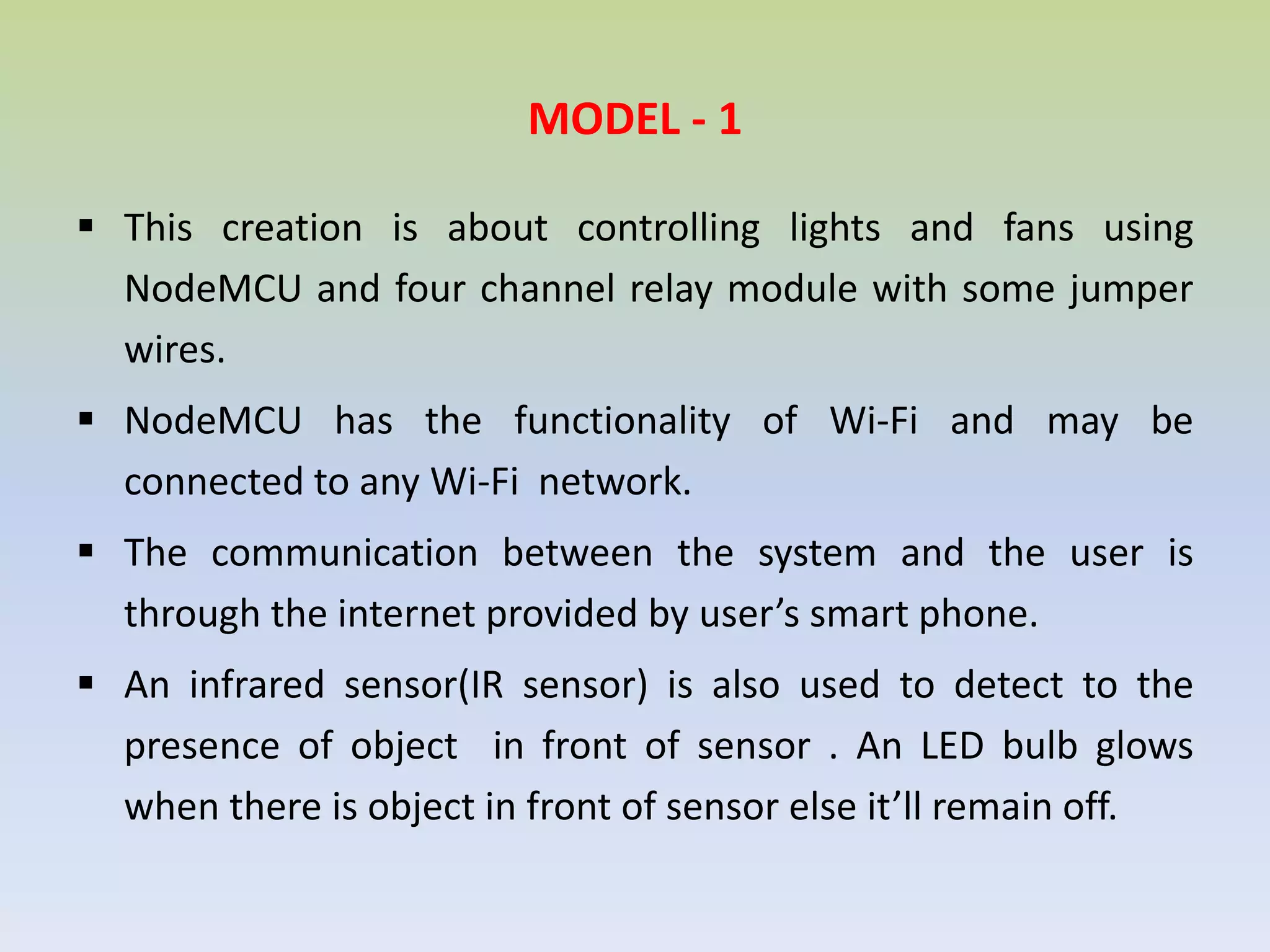
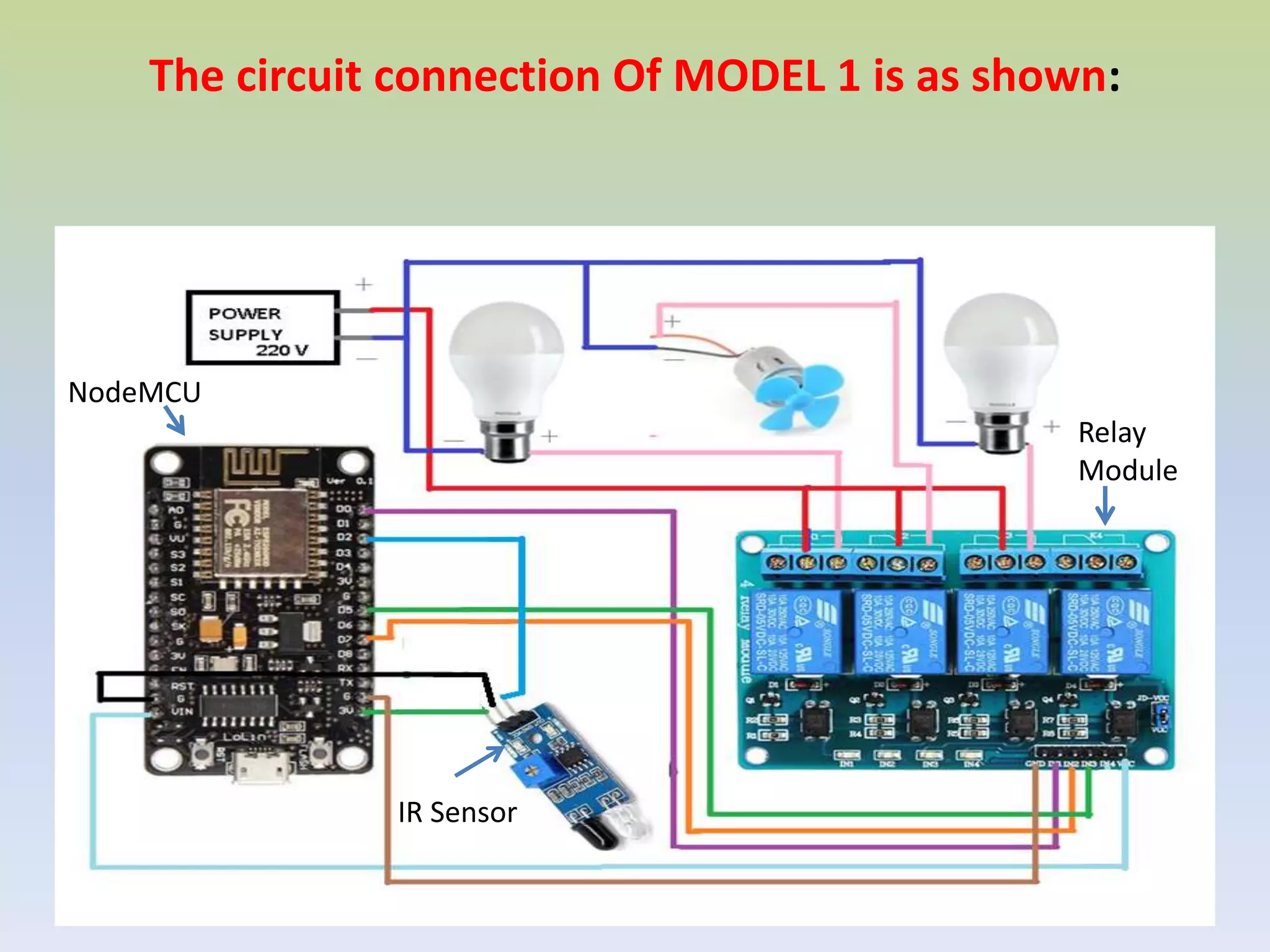
MODEL - 1
 This creation is about controlling lights and fans using
NodeMCU and four channel relay module with some jumper
wires.
 NodeMCU has the functionality of Wi-Fi and may be
connected to any Wi-Fi network.
 The communication between the system and the user is
through the internet provided by user’s smart phone.
 An infrared sensor(IR sensor) is also used to detect to the
presence of object in front of sensor . An LED bulb glows
when there is object in front of sensor else it’ll remain off.
The circuit connection Of MODEL 1 is as shown:
Relay
module
IR Sensor
nodeMCU
NodeMCU
IR Sensor
Relay
Module
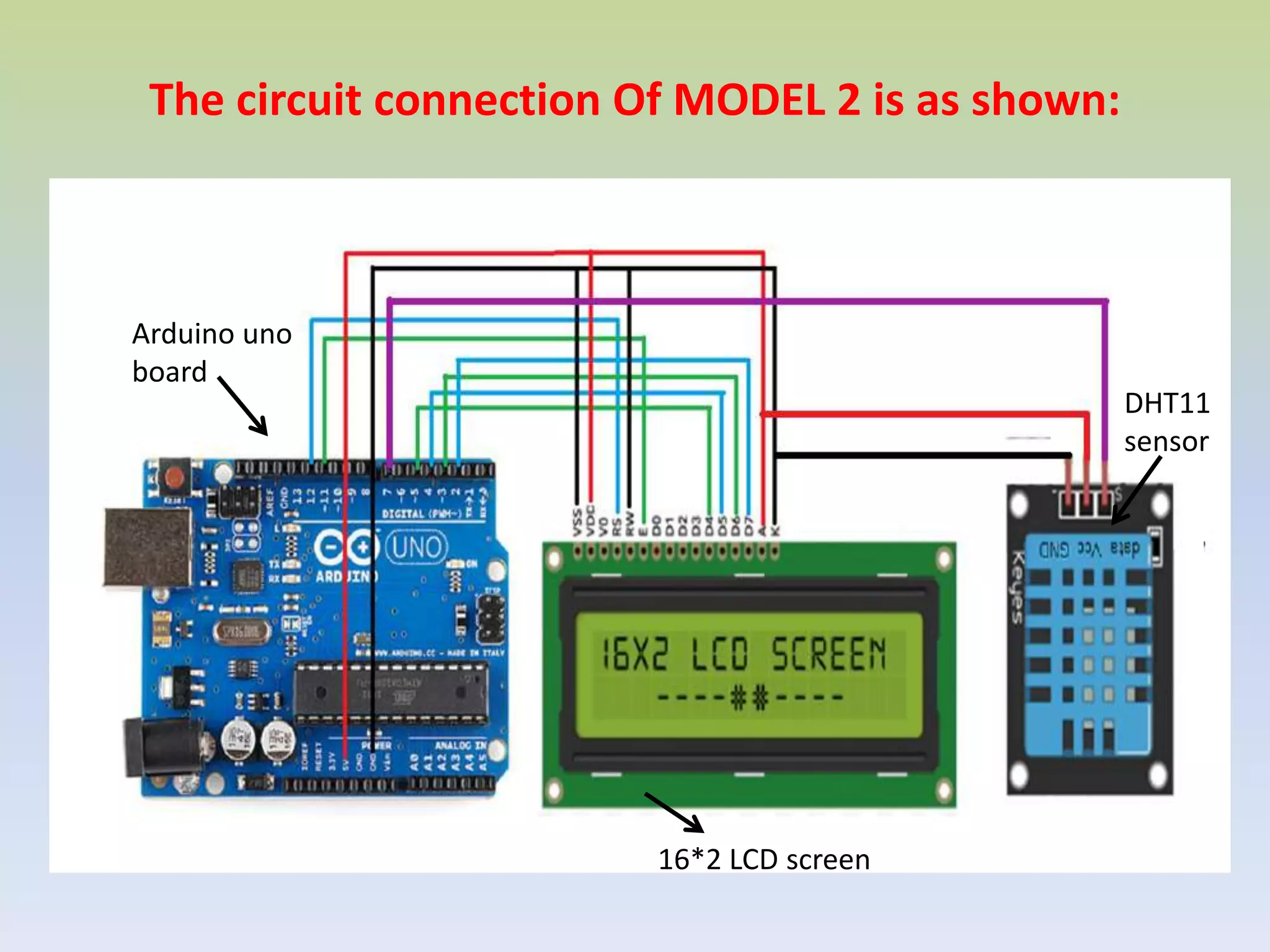
MODEL - 2
• This model consists of arduino Uno, DHT11 sensor, LCD
display and jumper wires for connection.
• Arduino board are able to read inputs and turn it into an
output as programmed.
• The process is DHT11 sensor senses the surrounding
temperature and humidity and feeds it into the arduino
board.
• The data fed into arduino is captured by the display showing
the resulted temperature and humidity.
The circuit connection Of MODEL 2 is as shown:
Arduino uno
board
16*2 LCD screen
DHT11
sensor
RESULTS
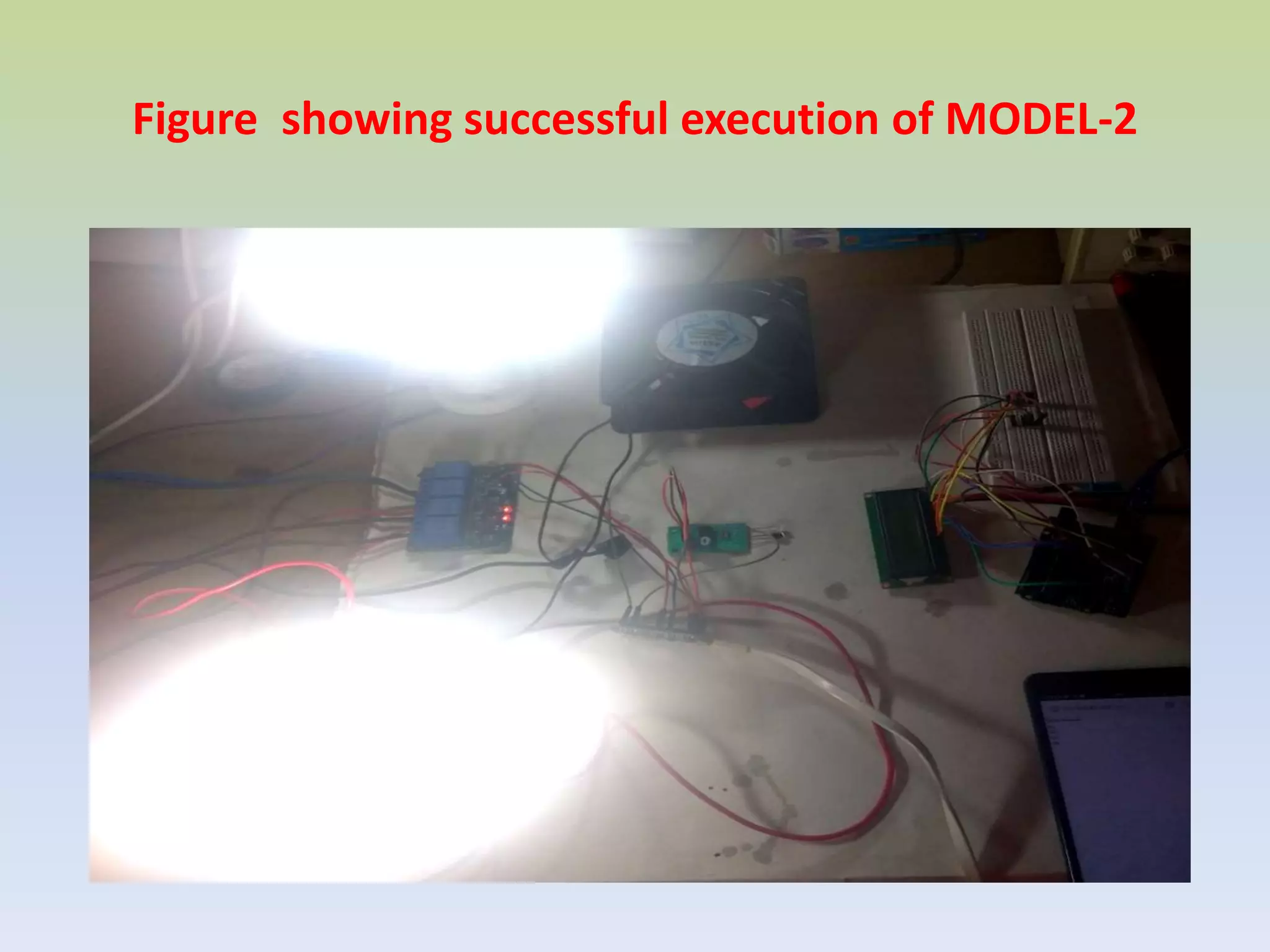
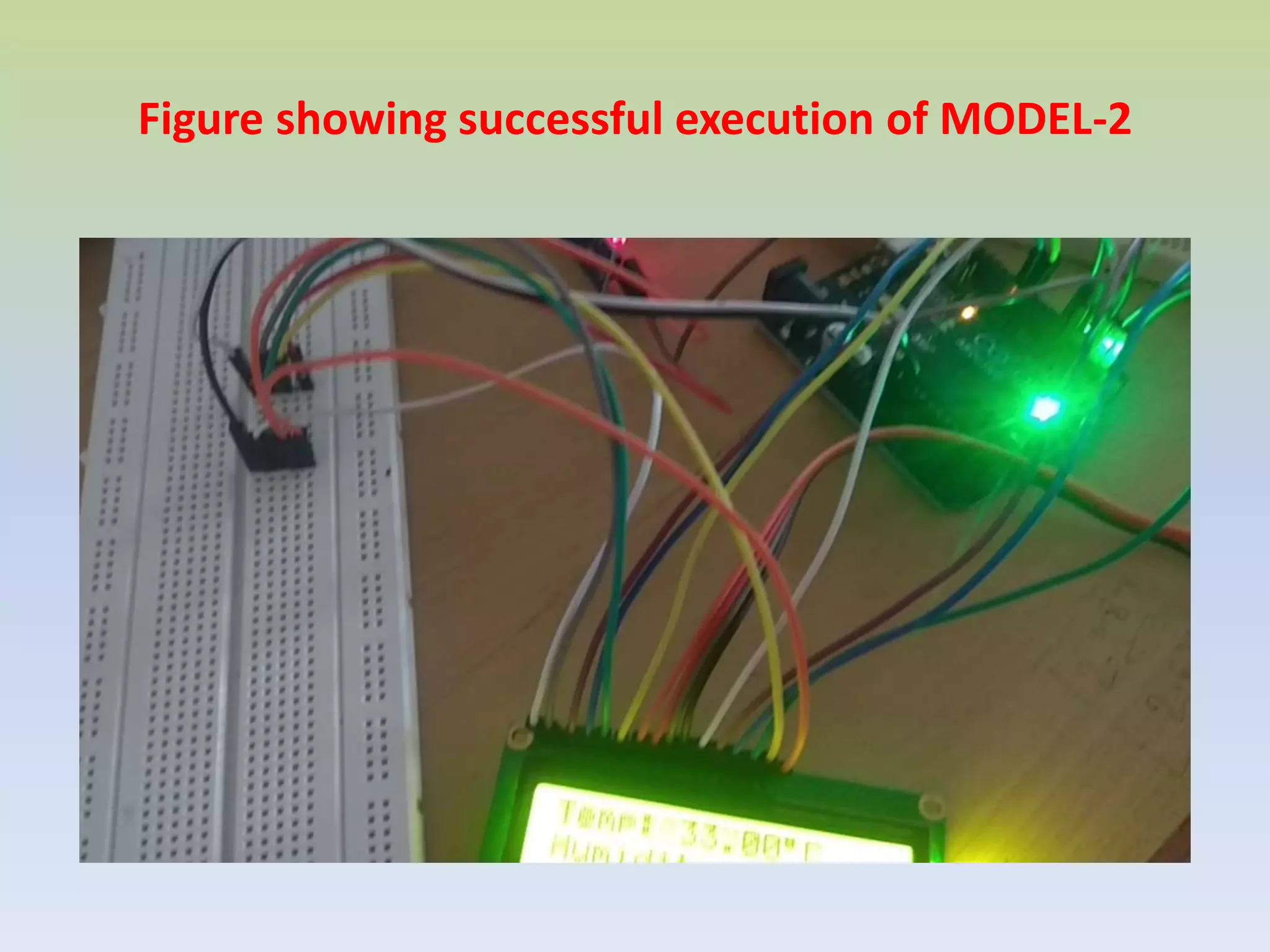
• The figure in the next two slide represents successful execution of our
project.
• By Model 1, the end users can control light and fan of the room by using
his or her smart phone. For doing this they only need to enter their
mobile’s hotspot name and it’s password in the programming of arduino
IDE software. Moreover an LED bulb glows when there is object in front of
IR sensor else it’ll remain off. .
• Model 2, being the narrow work on home automation displays the
temperature and humidity of the room on LCD screen every second using
DHT11 sensor, arduino uno and arduino software.
Figure showing successful execution of MODEL-2
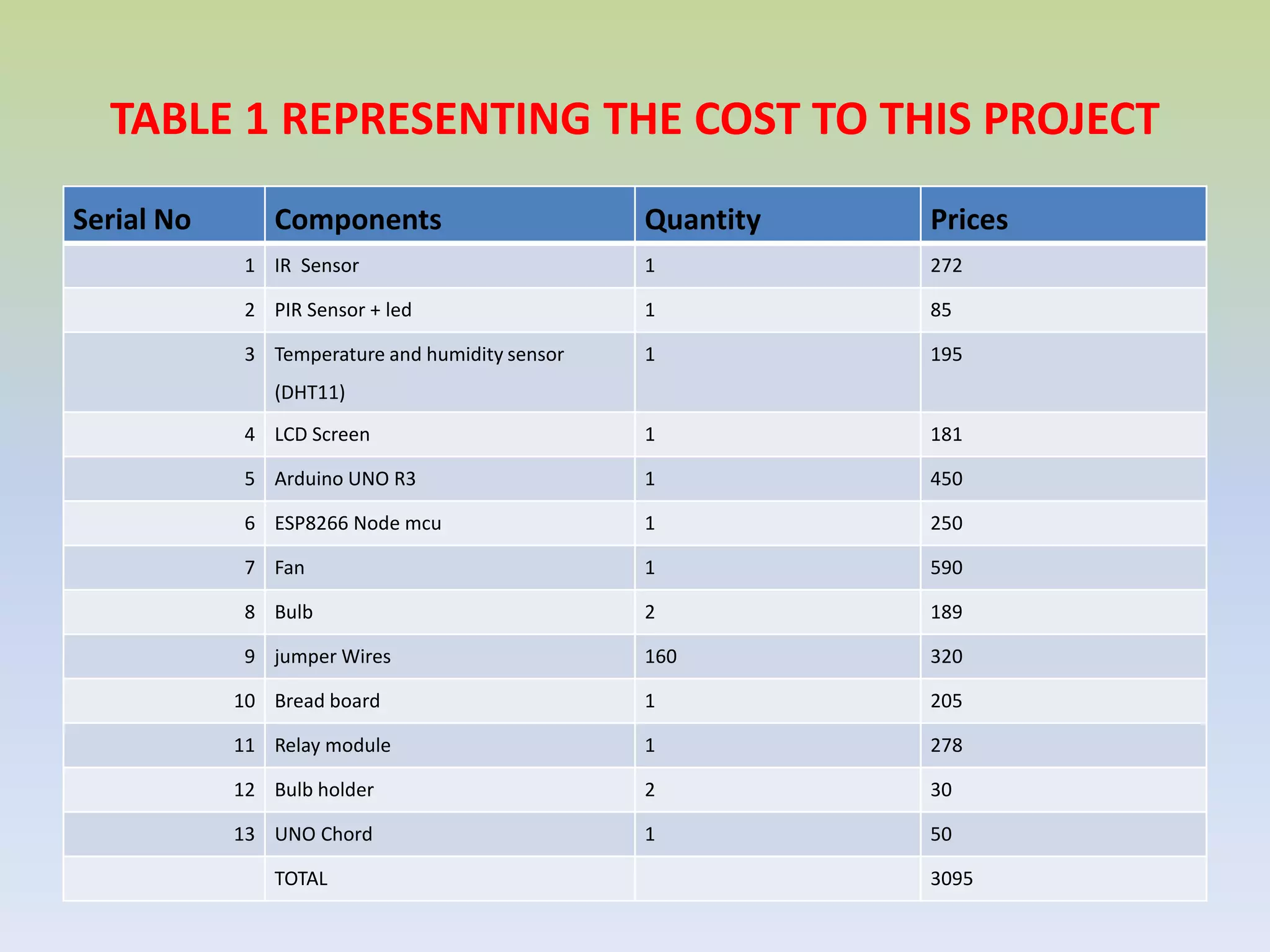
TABLE 1 REPRESENTING THE COST TO THIS PROJECT
Serial No Components Quantity Prices
1 IR Sensor 1 272
2 PIR Sensor + led 1 85
3 Temperature and humidity sensor
(DHT11)
1 195
4 LCD Screen 1 181
5 Arduino UNO R3 1 450
6 ESP8266 Node mcu 1 250
7 Fan 1 590
8 Bulb 2 189
9 jumper Wires 160 320
10 Bread board 1 205
11 Relay module 1 278
12 Bulb holder 2 30
13 UNO Chord 1 50
TOTAL 3095
REFERENCES
1. Nicholas Liew Long Guang, Thillainathan Logenthiran, Khalid Abidi, “Application of Internet of Things (IoT) for Home Energy
Management,” IEEE PES Asia-Pacific Power and Energy Engineering Conference (APPEEC), 2017.
2. Muhammad Asadullah, Ahsan Raza, “An overview of home automation systems,” International Conference on Robotics and Artificial
Intelligence, 2016
3. R.Piyare, M.Tazil, “Bluetooth Based Home Automation System Using Cell Phone,” IEEE 15th International Symposium on Consumer
Electronics,2011
4. Shiu Kumar, Seong Ro Lee, “Android Based Smart Home System with Control via Bluetooth and Internet Connectivity,” IEEE ISCE, 2014
5. Sonali Sen, Shamik Chakrabarty, Raghav Toshniwal, Ankita Bhaumik, “Design of an Intelligent Voice Controlled Home Automation
System,” International Journal of Computer Applications (0975 – 8887) Volume 121 – No.15, 2015
6. Humaid AlShu’eili, Gourab Sen Gupta, Subhas Mukhopadhyay, “Voice Recognition Based Wireless Home Automation System,”
4th International Conference on Mechatronics (ICOM) 2011.
7. Rozita Teymourzadeh, CEng, Member IEEE/IET, Salah Addin Ahmed, Kok Wai Chan, and Mok Vee Hoong, “Smart GSM Based Home
Automation System,” IEEE Conference on Systems, Process & Control (ICSPC2013), 2013
8. Aniket Pramanik, Rishikesh, Vikash Nagar, Satyam Dwivedi, Biplav Choudhury, “GSM based Smart Home and Digital Notice Board,”
International Conference on Computational Techniques in Information and Communication Technologies (ICCTICT), 2016.
9. Pavithra.D, Ranjith Balakrishnan, “IoT based Monitoring and Control System for Home Automation,” Global Conference on
Communication Technologies (GCCT), 2015.
10. M. Kuzlu, M. Pipattanasomporn, and S. Rahman, “IEEE Innovative Smart Grid Technologies Conference (ISGT),
11. Hemraj Sharma, Sukesha Sharma, “A Review of sensor networks: Technologies and Applications,” RAECS UIET Panjab University
Chandigarh, 2015.
12. H. Sharma and S. Sharma, “A review of sensor networks: Technologies and applications,” Engineering and Computational Sciences
(RAECS), Recent Advances in, Chandigarh, 2014.
13. Smart Home Automation Server, “The Duckbill 2 Family,” 2015 [Online].Available: https://www.i2se.com/smart-home-
automationserver .
14. S. Courreges, S. Oudji, V. Meghdadi, C. Brauers and R. Kays, “Performance and interoperability evaluation of radiofrequency home
automation protocols and Bluetooth Low Energy for smart grid and smart home applications,” IEEE International Conference on
Consumer Electronics (ICCE), 2016.
15. A tale of five protocols, E-Book, 1st ed. San Francisco, pp. 2-39, 2017.
Presentation on INTERNET OF THINGS

Presentation on INTERNET OF THINGS

  • 1.
    HOME AUTOMATION SYSTEMUSING IoT BY: RAJBALA PURNIMA PRIYA (BE/15319/15) Under the guidance of : MAYANK SINGH DEPARTMENT OF ELECTRICAL AND ELECTRONICS ENGINEERING BIRLA INSTITUTE OF TECHNOLOGY,MESRA BIRLA INSTITUTE OF TECHNOLOGY, PATNA
  • 2.
    INTRODUCTION our objectives canbe summarised as: • To be able to control any electrical home appliances using local internet connection through mobile hotspot . Use of IR(Infrared sensor) sensor to detect any object in front of sensor and switch on/off lights and fan accordingly. • Use of DHT11 (digital temperature and humidity sensor) to sense temperature and humidity of the room and displaying it on LCD display with LCD and sensor connected to arduino.
  • 3.
    INTERNET OF THINGS( IoT ) The INTERNET OF THINGS (IoT) is an ecosystem of connected physical devices, vehicles, and home appliances which are accessible through internet. IoT uses electronics, software, actuators and connectivity which allow these things to connect, interact and exchange data . Fig.1 Ecosystem of Internet of things
  • 4.
    ARCHITECTURE OF IoT TheArchitecture of IoT consists of four important stages. Stage 1 contains sensors and actuators, stage 2 contains Internet getaways, stage 3 contains cloud server and stage 4 contains Data center and cloud analytics. Fig.2 Architecture of IoT
  • 5.
    APPLICATION OF IoT IoTpromises outstanding opportunities attracting more organizations seeking for the inclusion of its products in their business processes . The applications are: Fig.3 Application Of IoT
  • 6.
    OUR WORK For simplification,our project work can be explained in two categories MODEL 1 MODEL 2
  • 7.
    SPECIFICATIONS OF THECOMPONENTS USED NodeMCU Arduino UNO DHT11 Sensor Relay Module Infrared Sensor 16*2 LCD • Developer : ESP8266 Open Source Community • Type : Single-board Microcontrol ler • Microcontrol ler : ESP8266 • Memory : 128kB • voltage : USB (3.3V) • Operating voltage : 5V • Microcontrol ler : ATmega-8bit • SRAM : 2KB • EEPROM: 1KB • Flash Memory : 32KB • Humidity Range : 20%- 90% RH (Relative Humidity) • Humidity Accuracy : (± 5%) • Temperature Range : 20-50 (degree Celsius) • Temperature Accuracy : (± 2%) • Operating voltage : 5V • Controlled by : Arduino, NodeMCU etc • It has Status LED • It is a switch. • Operating voltage : 3.3V - 5V • Distance Range: 2cm-30cm • It has an IR LED and a photodiode. • Detects the motion. • Operating voltage : 5V • Controlled by : Arduino, NodeMCU etc • It is used to display the characters. • It has 16 columns and 2 rows. Table.1
  • 8.
    MODEL - 1 This creation is about controlling lights and fans using NodeMCU and four channel relay module with some jumper wires.  NodeMCU has the functionality of Wi-Fi and may be connected to any Wi-Fi network.  The communication between the system and the user is through the internet provided by user’s smart phone.  An infrared sensor(IR sensor) is also used to detect to the presence of object in front of sensor . An LED bulb glows when there is object in front of sensor else it’ll remain off.
  • 9.
    The circuit connectionOf MODEL 1 is as shown: Relay module IR Sensor nodeMCU NodeMCU IR Sensor Relay Module
  • 10.
    MODEL - 2 •This model consists of arduino Uno, DHT11 sensor, LCD display and jumper wires for connection. • Arduino board are able to read inputs and turn it into an output as programmed. • The process is DHT11 sensor senses the surrounding temperature and humidity and feeds it into the arduino board. • The data fed into arduino is captured by the display showing the resulted temperature and humidity.
  • 11.
    The circuit connectionOf MODEL 2 is as shown: Arduino uno board 16*2 LCD screen DHT11 sensor
  • 12.
    RESULTS • The figurein the next two slide represents successful execution of our project. • By Model 1, the end users can control light and fan of the room by using his or her smart phone. For doing this they only need to enter their mobile’s hotspot name and it’s password in the programming of arduino IDE software. Moreover an LED bulb glows when there is object in front of IR sensor else it’ll remain off. . • Model 2, being the narrow work on home automation displays the temperature and humidity of the room on LCD screen every second using DHT11 sensor, arduino uno and arduino software.
  • 13.
    Figure showing successfulexecution of MODEL-2
  • 14.
    Figure showing successfulexecution of MODEL-2
  • 15.
    TABLE 1 REPRESENTINGTHE COST TO THIS PROJECT Serial No Components Quantity Prices 1 IR Sensor 1 272 2 PIR Sensor + led 1 85 3 Temperature and humidity sensor (DHT11) 1 195 4 LCD Screen 1 181 5 Arduino UNO R3 1 450 6 ESP8266 Node mcu 1 250 7 Fan 1 590 8 Bulb 2 189 9 jumper Wires 160 320 10 Bread board 1 205 11 Relay module 1 278 12 Bulb holder 2 30 13 UNO Chord 1 50 TOTAL 3095
  • 16.
    REFERENCES 1. Nicholas LiewLong Guang, Thillainathan Logenthiran, Khalid Abidi, “Application of Internet of Things (IoT) for Home Energy Management,” IEEE PES Asia-Pacific Power and Energy Engineering Conference (APPEEC), 2017. 2. Muhammad Asadullah, Ahsan Raza, “An overview of home automation systems,” International Conference on Robotics and Artificial Intelligence, 2016 3. R.Piyare, M.Tazil, “Bluetooth Based Home Automation System Using Cell Phone,” IEEE 15th International Symposium on Consumer Electronics,2011 4. Shiu Kumar, Seong Ro Lee, “Android Based Smart Home System with Control via Bluetooth and Internet Connectivity,” IEEE ISCE, 2014 5. Sonali Sen, Shamik Chakrabarty, Raghav Toshniwal, Ankita Bhaumik, “Design of an Intelligent Voice Controlled Home Automation System,” International Journal of Computer Applications (0975 – 8887) Volume 121 – No.15, 2015 6. Humaid AlShu’eili, Gourab Sen Gupta, Subhas Mukhopadhyay, “Voice Recognition Based Wireless Home Automation System,” 4th International Conference on Mechatronics (ICOM) 2011. 7. Rozita Teymourzadeh, CEng, Member IEEE/IET, Salah Addin Ahmed, Kok Wai Chan, and Mok Vee Hoong, “Smart GSM Based Home Automation System,” IEEE Conference on Systems, Process & Control (ICSPC2013), 2013 8. Aniket Pramanik, Rishikesh, Vikash Nagar, Satyam Dwivedi, Biplav Choudhury, “GSM based Smart Home and Digital Notice Board,” International Conference on Computational Techniques in Information and Communication Technologies (ICCTICT), 2016. 9. Pavithra.D, Ranjith Balakrishnan, “IoT based Monitoring and Control System for Home Automation,” Global Conference on Communication Technologies (GCCT), 2015. 10. M. Kuzlu, M. Pipattanasomporn, and S. Rahman, “IEEE Innovative Smart Grid Technologies Conference (ISGT), 11. Hemraj Sharma, Sukesha Sharma, “A Review of sensor networks: Technologies and Applications,” RAECS UIET Panjab University Chandigarh, 2015. 12. H. Sharma and S. Sharma, “A review of sensor networks: Technologies and applications,” Engineering and Computational Sciences (RAECS), Recent Advances in, Chandigarh, 2014. 13. Smart Home Automation Server, “The Duckbill 2 Family,” 2015 [Online].Available: https://www.i2se.com/smart-home- automationserver . 14. S. Courreges, S. Oudji, V. Meghdadi, C. Brauers and R. Kays, “Performance and interoperability evaluation of radiofrequency home automation protocols and Bluetooth Low Energy for smart grid and smart home applications,” IEEE International Conference on Consumer Electronics (ICCE), 2016. 15. A tale of five protocols, E-Book, 1st ed. San Francisco, pp. 2-39, 2017.