By: VIKRAM.G.B
     2nd M.COM
           V.D.C
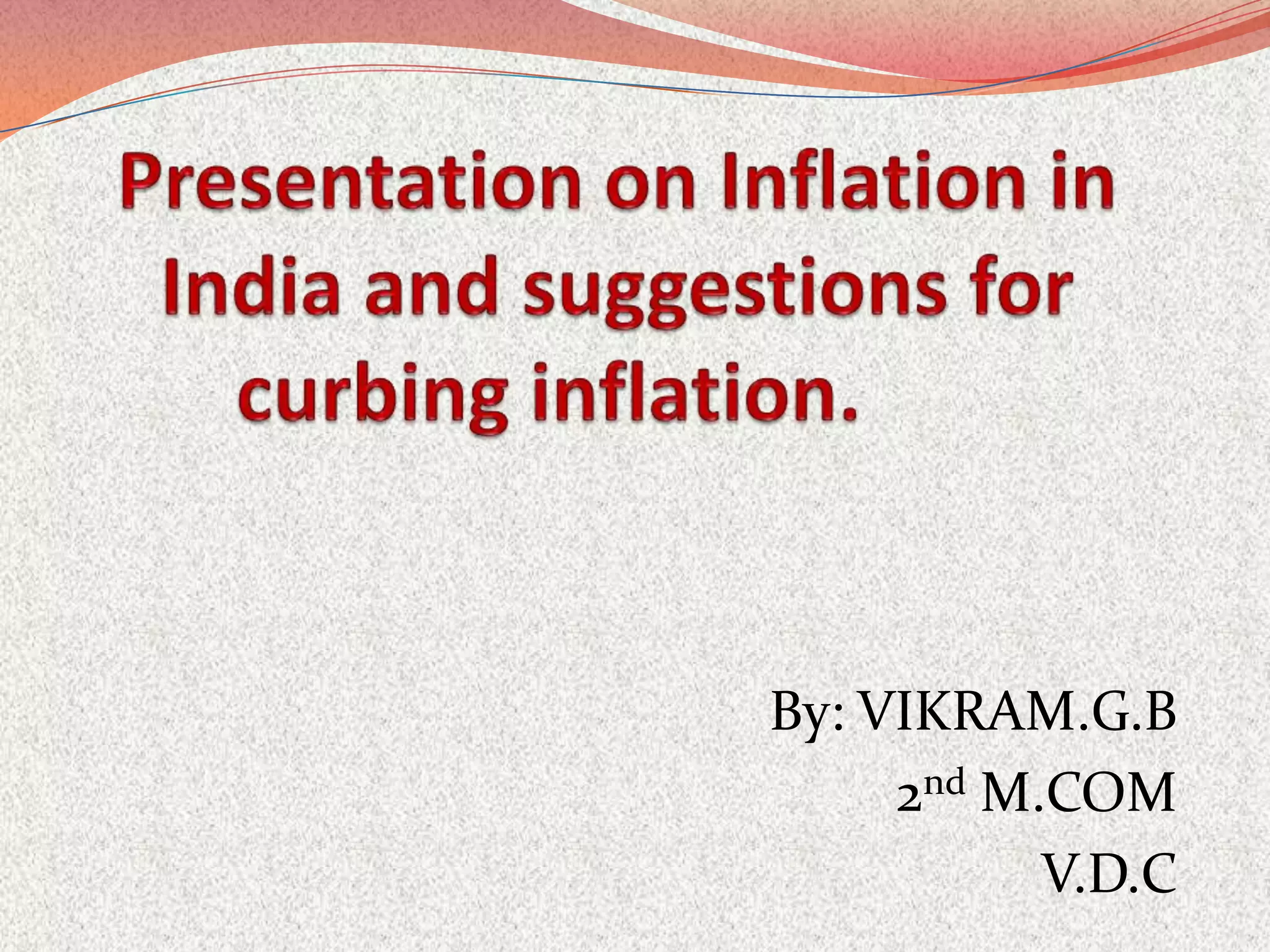
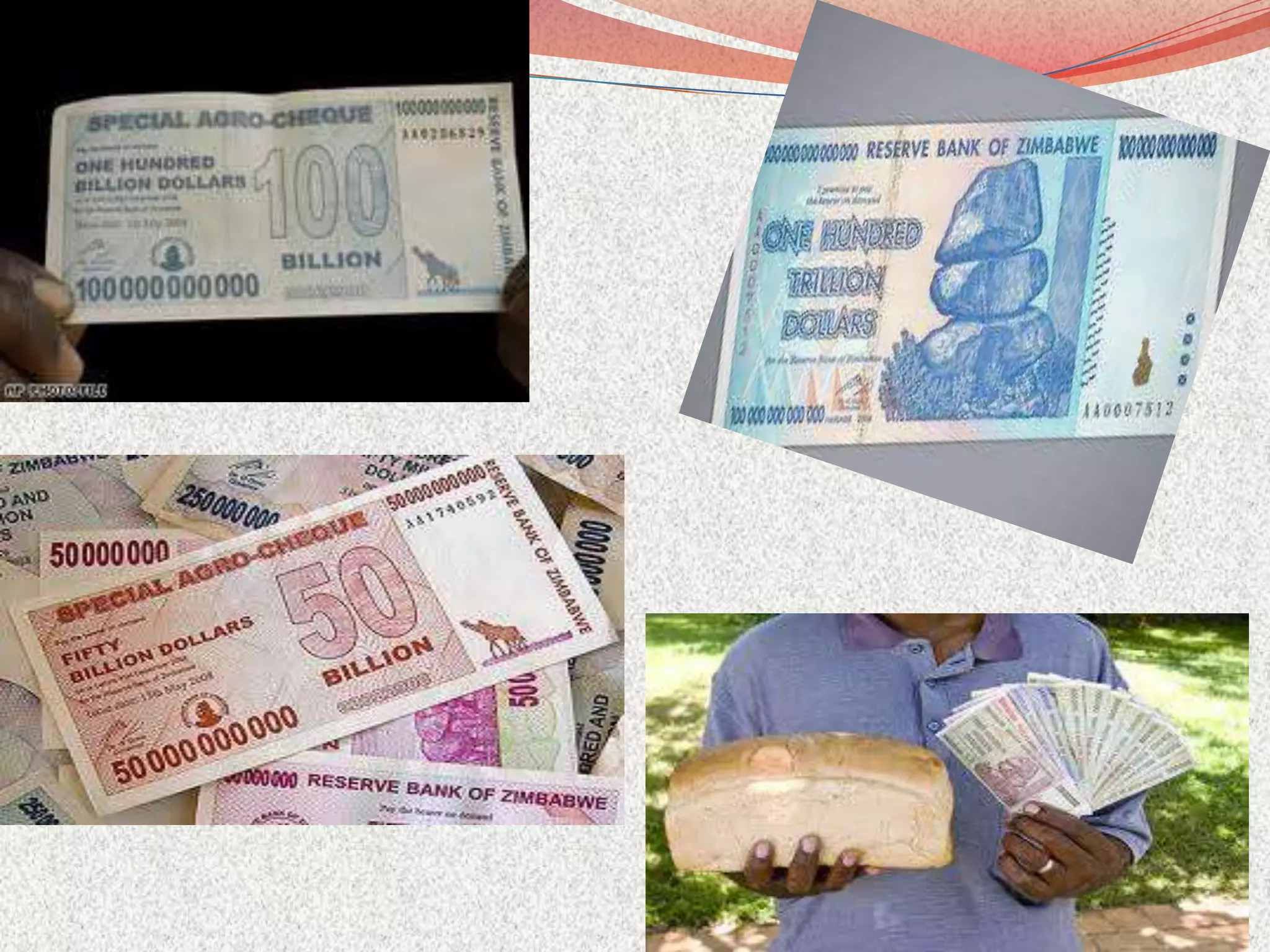
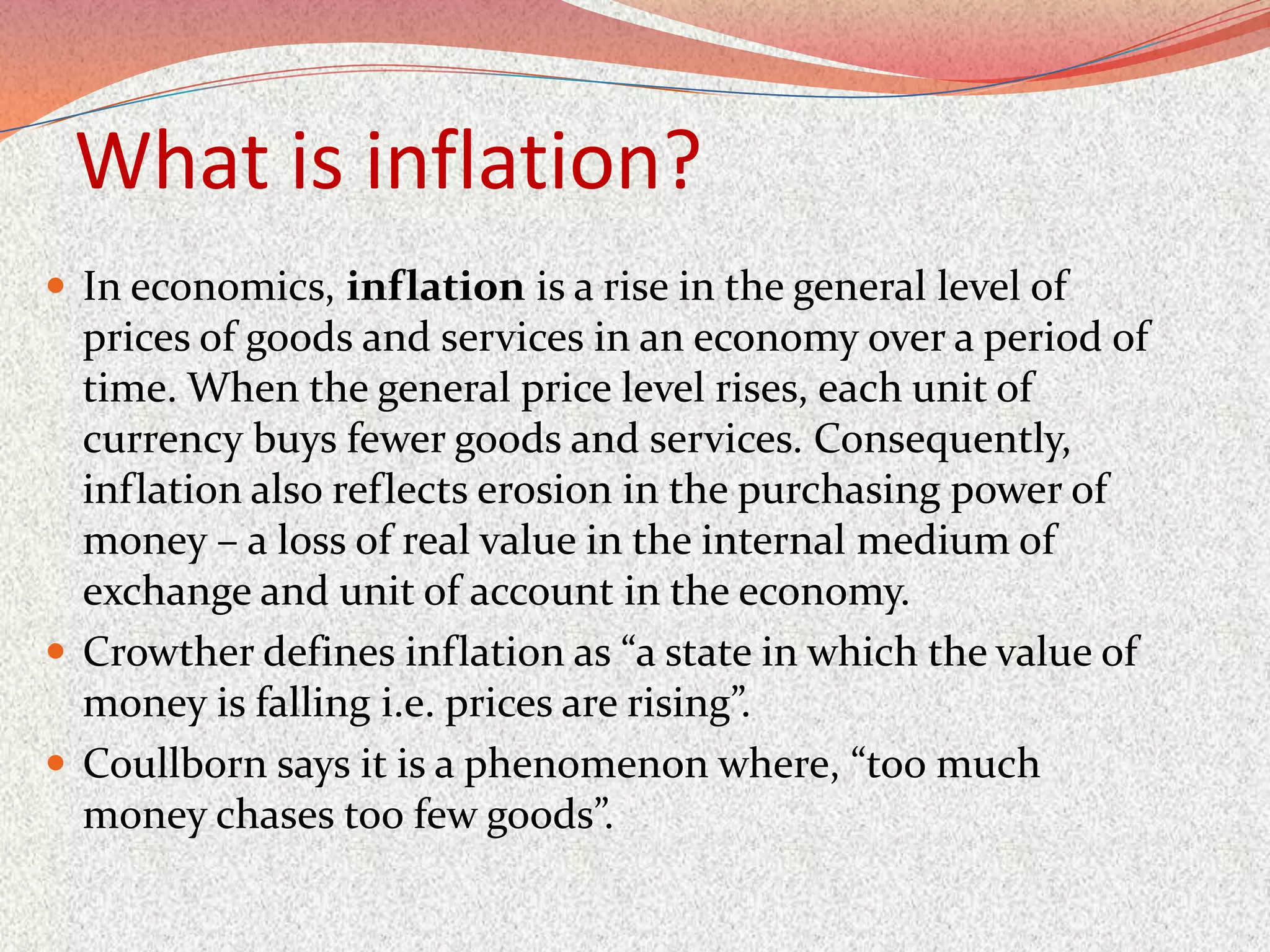
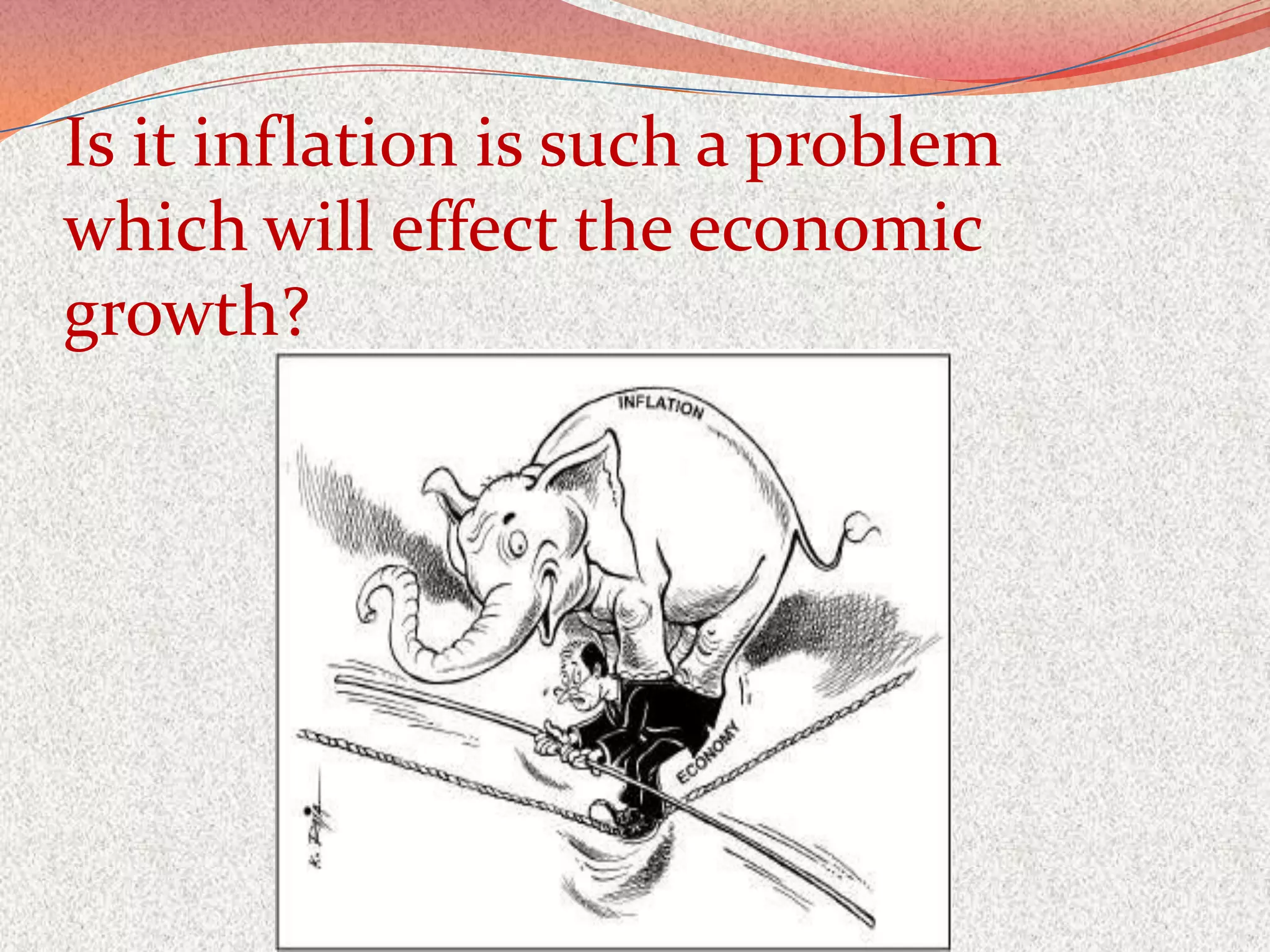
What is inflation?
 In economics, inflation is a rise in the general level of
  prices of goods and services in an economy over a period of
  time. When the general price level rises, each unit of
  currency buys fewer goods and services. Consequently,
  inflation also reflects erosion in the purchasing power of
  money – a loss of real value in the internal medium of
  exchange and unit of account in the economy.
 Crowther defines inflation as “a state in which the value of
  money is falling i.e. prices are rising”.
 Coullborn says it is a phenomenon where, “too much
  money chases too few goods”.
Is it inflation is such a problem
which will effect the economic
growth?
Effects of inflation:
 Generally, we mean inflation as general rise in price
    level, actually the prices of different goods and services rise at
    different rates. This results in change in the pattern of income
    distribution in the community which is the source of many evil
    effects.
   Due to inflation velocity of money rises, savings gives place to
    dis saving so in turn it affects the capital formation
   There will be chance of earning more profits out of rising prices
    this development may lead to black marketing.
   Inflation makes business planning and long term
    investment risky.
   The creditors are affected adversely because purchasing
    power of the money will be lower than that of the money which
    they had lent.
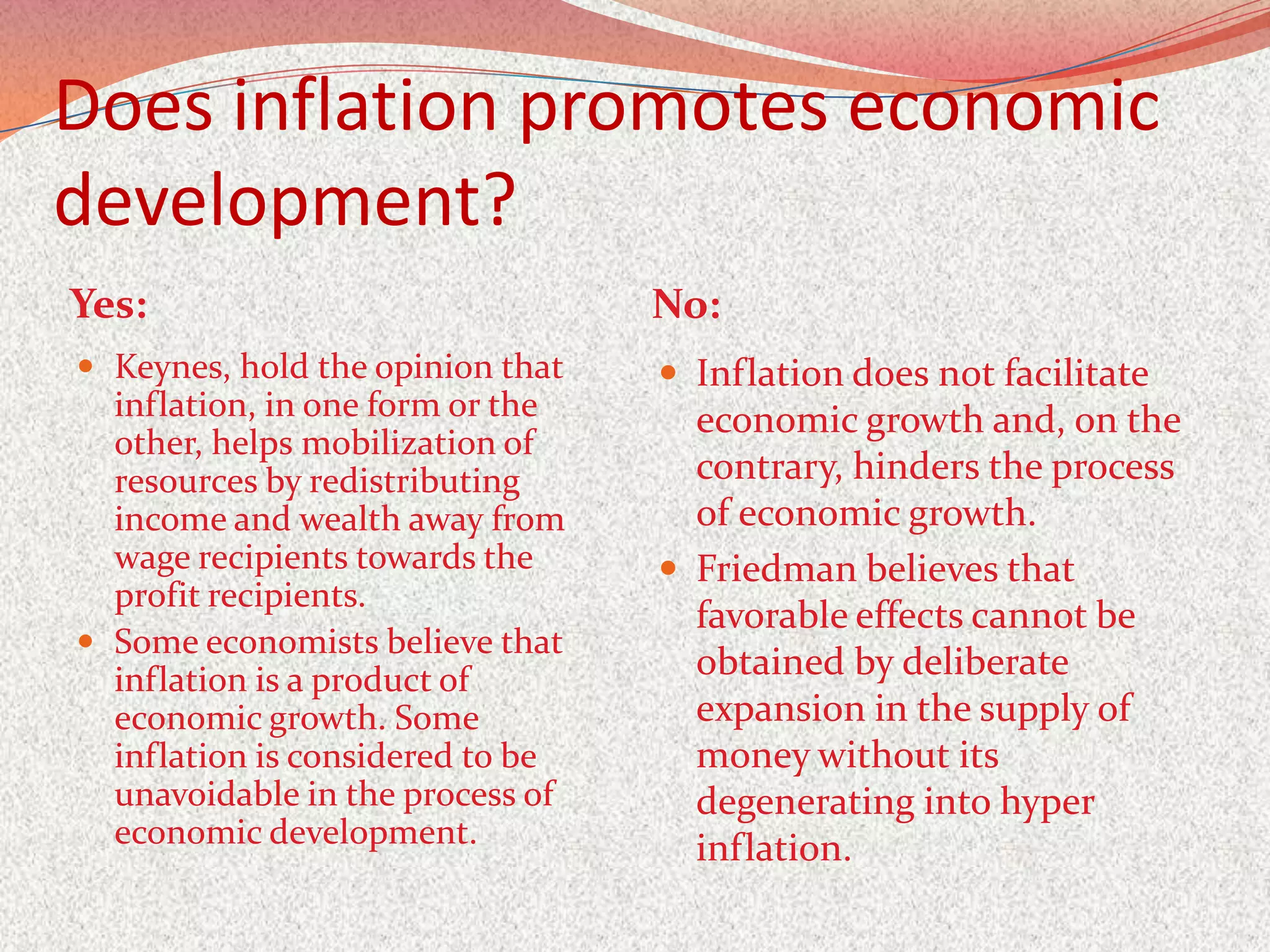
 The people worst hit by inflation are those who are least
  able to protect themselves. Inflation causes hardships to all
  who live on fixed incomes. E.g. pensioners, widows, factory
  workers etc..
Does inflation promotes economic
development?
Yes:                              No:
 Keynes, hold the opinion that    Inflation does not facilitate
  inflation, in one form or the     economic growth and, on the
  other, helps mobilization of
  resources by redistributing       contrary, hinders the process
  income and wealth away from       of economic growth.
  wage recipients towards the      Friedman believes that
  profit recipients.
                                    favorable effects cannot be
 Some economists believe that
  inflation is a product of         obtained by deliberate
  economic growth. Some             expansion in the supply of
  inflation is considered to be     money without its
  unavoidable in the process of     degenerating into hyper
  economic development.             inflation.
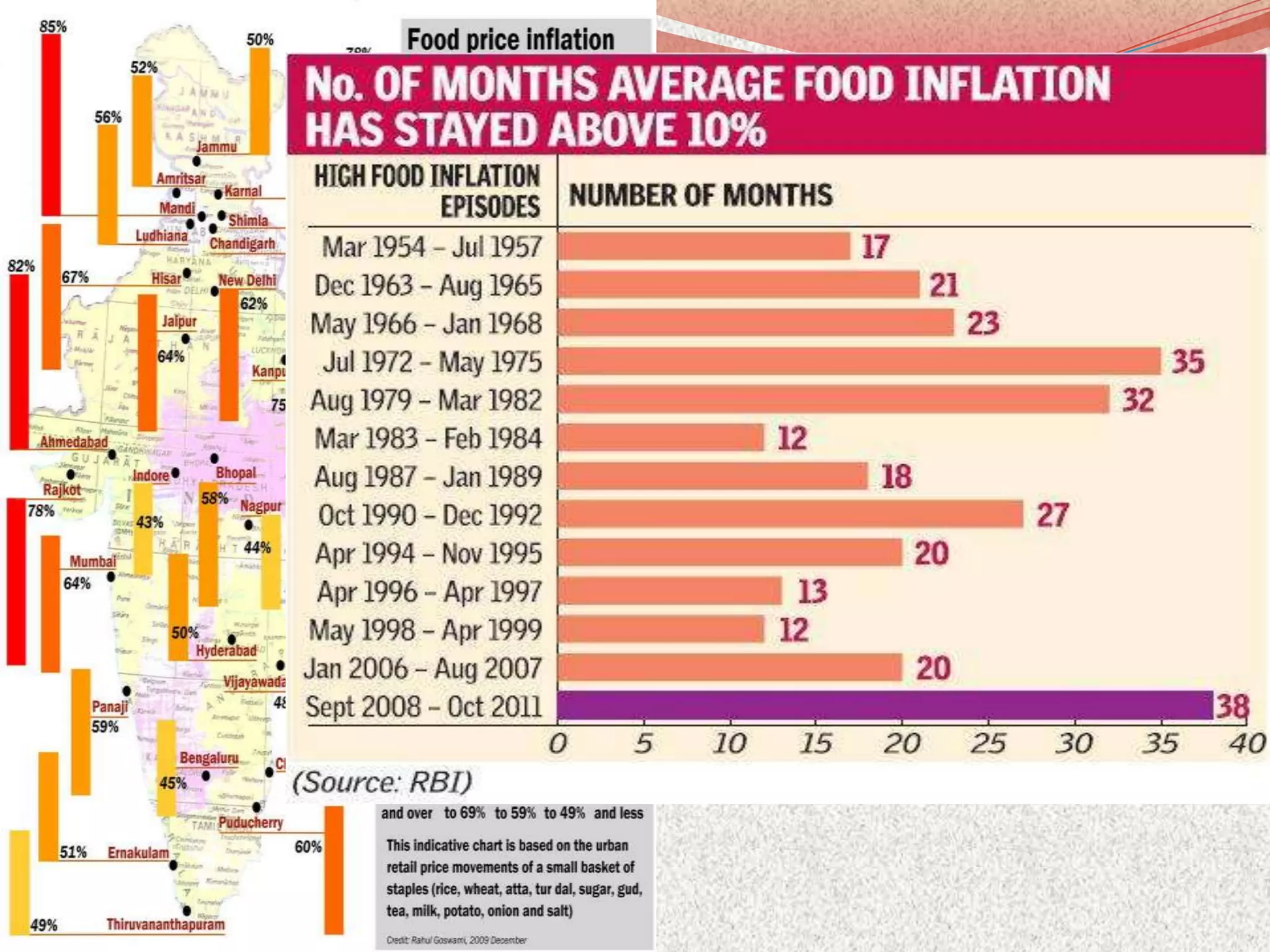
Inflation based on Consumer Price Index at 7.65% in January.
Food inflation turns negative -0.42% on January 19, 2012 .
World inflation rate (consumer prices): developed countries 2.5%
developing countries 5.6%.


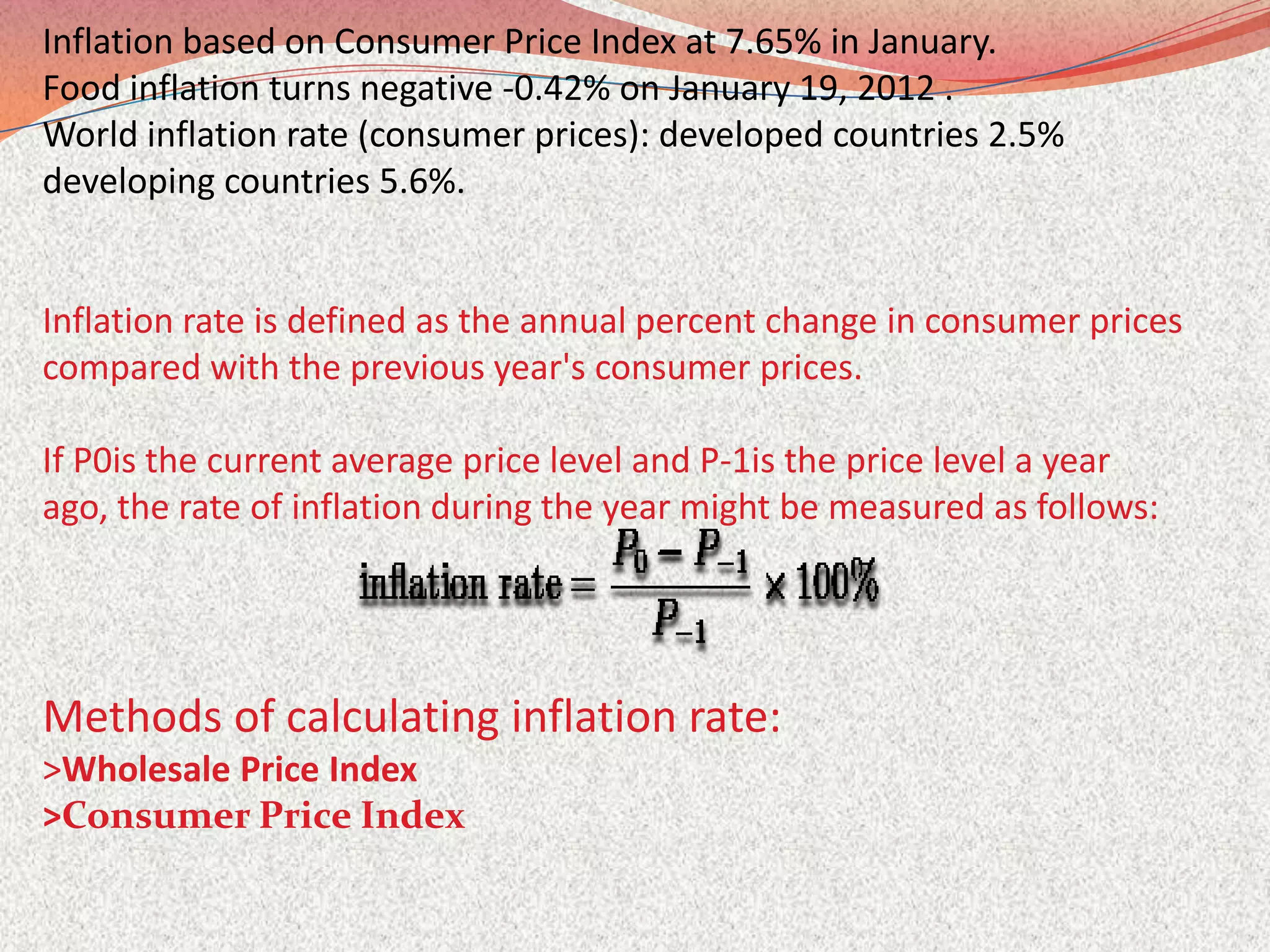
Inflation rate is defined as the annual percent change in consumer prices
compared with the previous year's consumer prices.

If P0is the current average price level and P-1is the price level a year
ago, the rate of inflation during the year might be measured as follows:


Methods of calculating inflation rate:
>Wholesale Price Index
>Consumer Price Index
Performance of anti-inflationery
  measures in India:
 Gargantuan(huge) spending without addressing underlying supply
  bottlenecks.
 Government has failed to ensure that the economy can produce
  and efficiently distribute goods & services. This is the core cause of
  inflation.
 The anemic growth in infrastructure industries is an indicator of the
  policy failures that have led to inflation.
 NREGA has contributed to price rises in many areas because
  the UPA government has failed to make rural markets
  competitive. In a village with a few shops, any rise in income of the
  villagers will cause shopkeepers to increase their prices.
 The failure to dismantle barriers to agricultural marketing
  and failure to integrate India into a single market for agricultural
  goods not only contribute to food price inflation but undermine
  the welfare of farmers.
Suggestions to curb the inflation:
 Fine tuning up of the monetary policy. As IMF
  suggested our central bank to tightening of money supply
  to control inflation.(19 April 2007, TIMES NEWS
  NETWORK).
 The Reserve Bank of India (RBI) is hiking the interest rates
  consecutively. The underlying reason for these hikes
  remains the same - higher inflation.
  So this with another question as to what else can the
  government do to control inflation? Well this is not an
  option that can continue for too long. Higher interest rates
  force organizations and consumers alike to postpone their
  buying or spending decisions. This hampers the economic
  growth. So the government should make more
  desirable monetary policies to curb the inflation.
 Another option that the government has is to use the
  fiscal policy to check inflation. This means that the
  government raises tax rates, which in turn would bring
  down disposable income and would hence impact demand.
 The government could choose yet another alternative of
  direct intervention. It could set limits on the rate of
  growth of wages. This would reduce the disposable
  income available to the people and in turn would help
  curtail demand thereby bringing down the prices.
 The government would cut down its own spending as
  well as borrowing targets as well. This would reduce the
  demand pulled inflation in the country.
 The government has is to reform the long-term policies
  related to labor as well as the supply side. Reforming
  these policies would remove the bottlenecks that exist in
  the supply chain. This would effectively help reduce the
  cost push inflation. Reforming labor policies would help
  weaken trade unions and give more flexibility for healthier
  negotiations for both the companies as well as for the
  employees. This in turn would help control the wage cost
  inflation in the long term.
Presentation on inflation

Presentation on inflation

  • 1.
    By: VIKRAM.G.B 2nd M.COM V.D.C
  • 3.
    What is inflation? In economics, inflation is a rise in the general level of prices of goods and services in an economy over a period of time. When the general price level rises, each unit of currency buys fewer goods and services. Consequently, inflation also reflects erosion in the purchasing power of money – a loss of real value in the internal medium of exchange and unit of account in the economy.  Crowther defines inflation as “a state in which the value of money is falling i.e. prices are rising”.  Coullborn says it is a phenomenon where, “too much money chases too few goods”.
  • 4.
    Is it inflationis such a problem which will effect the economic growth?
  • 5.
    Effects of inflation: Generally, we mean inflation as general rise in price level, actually the prices of different goods and services rise at different rates. This results in change in the pattern of income distribution in the community which is the source of many evil effects.  Due to inflation velocity of money rises, savings gives place to dis saving so in turn it affects the capital formation  There will be chance of earning more profits out of rising prices this development may lead to black marketing.  Inflation makes business planning and long term investment risky.  The creditors are affected adversely because purchasing power of the money will be lower than that of the money which they had lent.
  • 6.
     The peopleworst hit by inflation are those who are least able to protect themselves. Inflation causes hardships to all who live on fixed incomes. E.g. pensioners, widows, factory workers etc..
  • 7.
    Does inflation promoteseconomic development? Yes: No:  Keynes, hold the opinion that  Inflation does not facilitate inflation, in one form or the economic growth and, on the other, helps mobilization of resources by redistributing contrary, hinders the process income and wealth away from of economic growth. wage recipients towards the  Friedman believes that profit recipients. favorable effects cannot be  Some economists believe that inflation is a product of obtained by deliberate economic growth. Some expansion in the supply of inflation is considered to be money without its unavoidable in the process of degenerating into hyper economic development. inflation.
  • 8.
    Inflation based onConsumer Price Index at 7.65% in January. Food inflation turns negative -0.42% on January 19, 2012 . World inflation rate (consumer prices): developed countries 2.5% developing countries 5.6%. Inflation rate is defined as the annual percent change in consumer prices compared with the previous year's consumer prices. If P0is the current average price level and P-1is the price level a year ago, the rate of inflation during the year might be measured as follows: Methods of calculating inflation rate: >Wholesale Price Index >Consumer Price Index
  • 10.
    Performance of anti-inflationery measures in India:  Gargantuan(huge) spending without addressing underlying supply bottlenecks.  Government has failed to ensure that the economy can produce and efficiently distribute goods & services. This is the core cause of inflation.  The anemic growth in infrastructure industries is an indicator of the policy failures that have led to inflation.  NREGA has contributed to price rises in many areas because the UPA government has failed to make rural markets competitive. In a village with a few shops, any rise in income of the villagers will cause shopkeepers to increase their prices.  The failure to dismantle barriers to agricultural marketing and failure to integrate India into a single market for agricultural goods not only contribute to food price inflation but undermine the welfare of farmers.
  • 11.
    Suggestions to curbthe inflation:  Fine tuning up of the monetary policy. As IMF suggested our central bank to tightening of money supply to control inflation.(19 April 2007, TIMES NEWS NETWORK).  The Reserve Bank of India (RBI) is hiking the interest rates consecutively. The underlying reason for these hikes remains the same - higher inflation. So this with another question as to what else can the government do to control inflation? Well this is not an option that can continue for too long. Higher interest rates force organizations and consumers alike to postpone their buying or spending decisions. This hampers the economic growth. So the government should make more desirable monetary policies to curb the inflation.  Another option that the government has is to use the fiscal policy to check inflation. This means that the government raises tax rates, which in turn would bring down disposable income and would hence impact demand.
  • 12.
     The governmentcould choose yet another alternative of direct intervention. It could set limits on the rate of growth of wages. This would reduce the disposable income available to the people and in turn would help curtail demand thereby bringing down the prices.  The government would cut down its own spending as well as borrowing targets as well. This would reduce the demand pulled inflation in the country.  The government has is to reform the long-term policies related to labor as well as the supply side. Reforming these policies would remove the bottlenecks that exist in the supply chain. This would effectively help reduce the cost push inflation. Reforming labor policies would help weaken trade unions and give more flexibility for healthier negotiations for both the companies as well as for the employees. This in turn would help control the wage cost inflation in the long term.