Inflation
- Mayur Khatri (2027)
Contents : A glimpse of what is to come
•Meaning and Definitions
•Types of Inflation
•Theories and causes of Inflation
•Effects of Inflation
•Control Measures
•Present Scenario
Definitions :

What is Inflation?
“Inflation is an increase in the quantity of purchasing power.”–
Gregory

Inflation is the stage of too much money chasing too few
goods.”-- Coulbourn

Meaning :
Inflation is considered a global phenomenon. It takes place
because of rapidly rising prices of goods and services, resulting
in the decline of the value of money.
The rate at which the general level of prices for goods and
services is rising, and, subsequently, purchasing power is falling.
Types of Inflation
-Creeping Inflation
-Walking or trotting Inflation
-Running Inflation
-Galloping Inflation
-Hyper Inflation
Theories and Causes of Inflation
The main cause of inflation is the increase in the demand of
goods and services and at the same time decrease in the
supply of goods and services.
There are two theories related to the causes of inflation:
Demand-pull (when there is excess demand), and
Cost-push (when costs rise)
Theories and Causes of Inflation
 Demand Pull Inflation –
This occurs when there is excess aggregate demand in the
economy (overall) or in a specific market or industry.
Businesses respond to high demand by
raising prices to increase their profit margin
Theories and Causes of Inflation
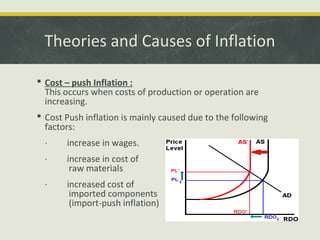
 Cost – push Inflation :
This occurs when costs of production or operation are
increasing.
 Cost Push inflation is mainly caused due to the following
factors:
·

increase in wages.

·

increase in cost of
raw materials

·

increased cost of
imported components
(import-push inflation)
Effects of Inflation
Effect depends on the speed of inflation and the nature of
the economy.
 Rising prices of imports
 Lowers national saving
 Redistribution of Income & Wealth
 Collapse of Monetary system
 Adverse impact socially and politically
 Discourages Investment & savings
 Higher Interest / Income tax rates
Control Measures
Monetary Policy:
Monetary Policy
essentially implies the policy
followed by financial
institutions.
High interest rates and
slow growth of the money
supply are the traditional
ways through which central
banks fight or prevent
inflation.
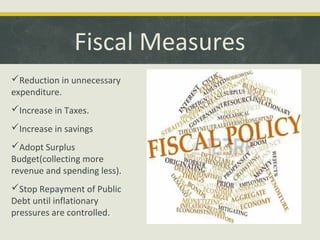
Fiscal Measures
Reduction in unnecessary
expenditure.
Increase in Taxes.
Increase in savings
Adopt Surplus
Budget(collecting more
revenue and spending less).
Stop Repayment of Public
Debt until inflationary
pressures are controlled.
Other Measures
Present Scenario
COUNTRY

CATEGOR
Y

DATES

ACTUAL HIGHEST

INFLATIO
1969 –
6.46
N RATE
2013
The inflation rate in India was recorded
at 6.46 % in September-2013.

INDIA

From 1969 until 2013,
India Inflation Rate averaged 7.7%
Highest
34.7%September -1974
Lowest
-11.3 % in May -1976
The average inflation of India in
2013: 11.04 %

34.68

LOWEST
-11.31

UNIT
PERCENT

FREQUENCY
MONTHLY
Thank You

Inflation

  • 1.
  • 2.
    Contents : Aglimpse of what is to come •Meaning and Definitions •Types of Inflation •Theories and causes of Inflation •Effects of Inflation •Control Measures •Present Scenario
  • 3.
    Definitions : What isInflation? “Inflation is an increase in the quantity of purchasing power.”– Gregory Inflation is the stage of too much money chasing too few goods.”-- Coulbourn Meaning : Inflation is considered a global phenomenon. It takes place because of rapidly rising prices of goods and services, resulting in the decline of the value of money. The rate at which the general level of prices for goods and services is rising, and, subsequently, purchasing power is falling.
  • 4.
    Types of Inflation -CreepingInflation -Walking or trotting Inflation -Running Inflation -Galloping Inflation -Hyper Inflation
  • 5.
    Theories and Causesof Inflation The main cause of inflation is the increase in the demand of goods and services and at the same time decrease in the supply of goods and services. There are two theories related to the causes of inflation: Demand-pull (when there is excess demand), and Cost-push (when costs rise)
  • 6.
    Theories and Causesof Inflation  Demand Pull Inflation – This occurs when there is excess aggregate demand in the economy (overall) or in a specific market or industry. Businesses respond to high demand by raising prices to increase their profit margin
  • 7.
    Theories and Causesof Inflation  Cost – push Inflation : This occurs when costs of production or operation are increasing.  Cost Push inflation is mainly caused due to the following factors: · increase in wages. · increase in cost of raw materials · increased cost of imported components (import-push inflation)
  • 8.
    Effects of Inflation Effectdepends on the speed of inflation and the nature of the economy.  Rising prices of imports  Lowers national saving  Redistribution of Income & Wealth  Collapse of Monetary system  Adverse impact socially and politically  Discourages Investment & savings  Higher Interest / Income tax rates
  • 9.
  • 10.
    Monetary Policy: Monetary Policy essentiallyimplies the policy followed by financial institutions. High interest rates and slow growth of the money supply are the traditional ways through which central banks fight or prevent inflation.
  • 11.
    Fiscal Measures Reduction inunnecessary expenditure. Increase in Taxes. Increase in savings Adopt Surplus Budget(collecting more revenue and spending less). Stop Repayment of Public Debt until inflationary pressures are controlled.
  • 12.
  • 13.
    Present Scenario COUNTRY CATEGOR Y DATES ACTUAL HIGHEST INFLATIO 1969– 6.46 N RATE 2013 The inflation rate in India was recorded at 6.46 % in September-2013. INDIA From 1969 until 2013, India Inflation Rate averaged 7.7% Highest 34.7%September -1974 Lowest -11.3 % in May -1976 The average inflation of India in 2013: 11.04 % 34.68 LOWEST -11.31 UNIT PERCENT FREQUENCY MONTHLY
  • 14.