David Atkinson BSc. Chem. Eng.
East and West Midlands Safety Managers
Meeting – Nottingham
January 2015
BLUERAD LTD
• Each day in Europe approximately 12 people die in house fires and 120
people are severely injured [1]
• There were 275 fire fatalities in England in 2013-14 [2]
• Two thirds of all fire fatalities were in accidental dwelling fires. There were
3,600 hospital non – fatal casualties and the fire services attended
170,000 fires. (This excludes Greater Manchester data)
• In Scotland almost half of the fatalities occurred where there was a
smoke alarm fitted. The most common reason being that the alarm
was not fitted close enough.[3]
• The cost of fire damage stands at a record level. More open plan buildings,
which allow more rapid spread of fire, and the increase in out of town developments, where
fires can go for longer unnoticed, are among factors contributing to the doubling of fire costs
since 2002. [4]
[1] Information Bulletin of the World Fire Statistics Centre. Geneva Association. www.genevaassociation.org
[2] Department for Communities and Local Government. www.firestatitics@communities.gsi.gov.uk
[3] Fire and Rescue Statistics Scotland 2013-14
[4] Association of British Insurers
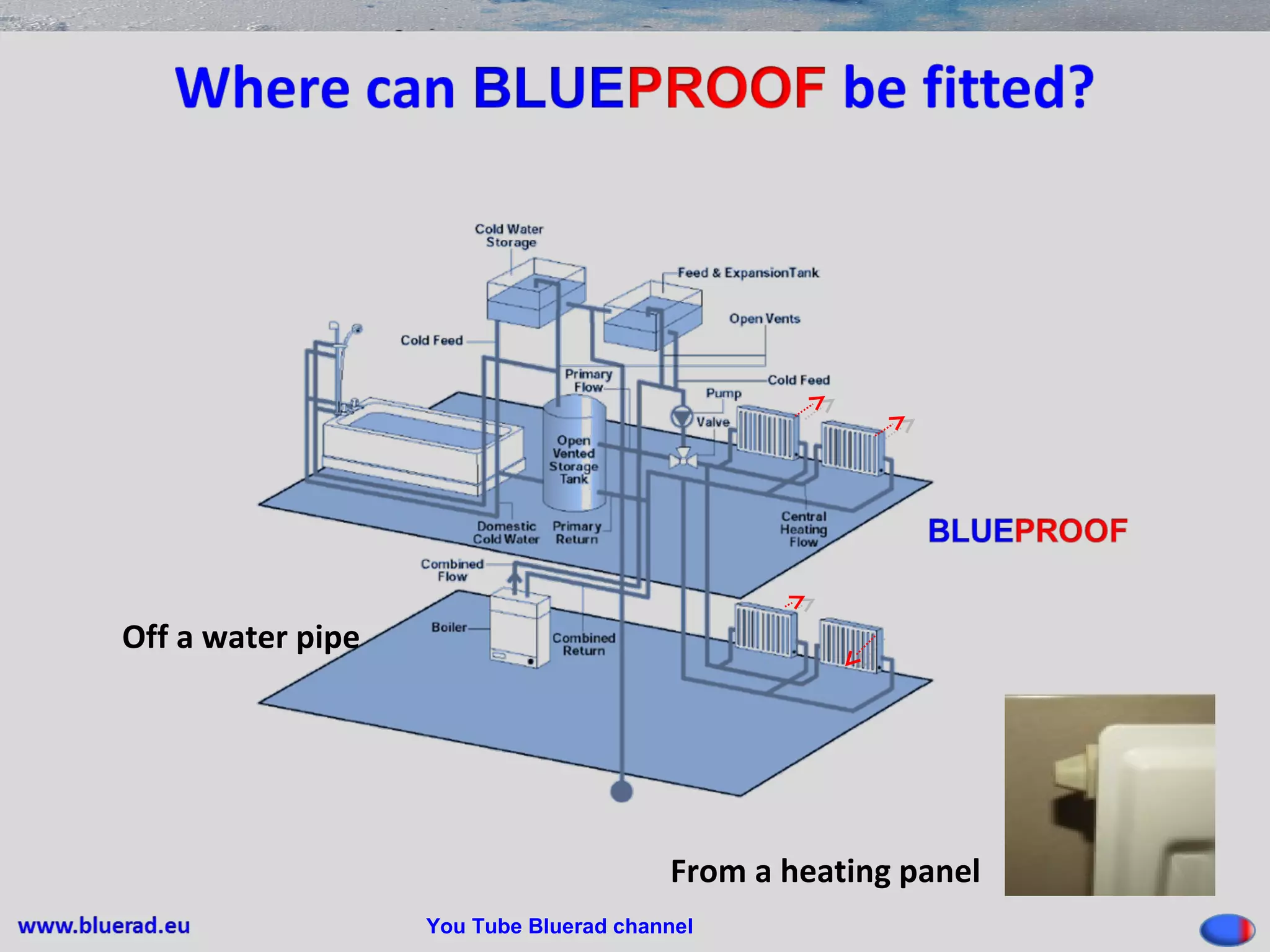
From a heating panel
Off a water pipe
You Tube Bluerad channel
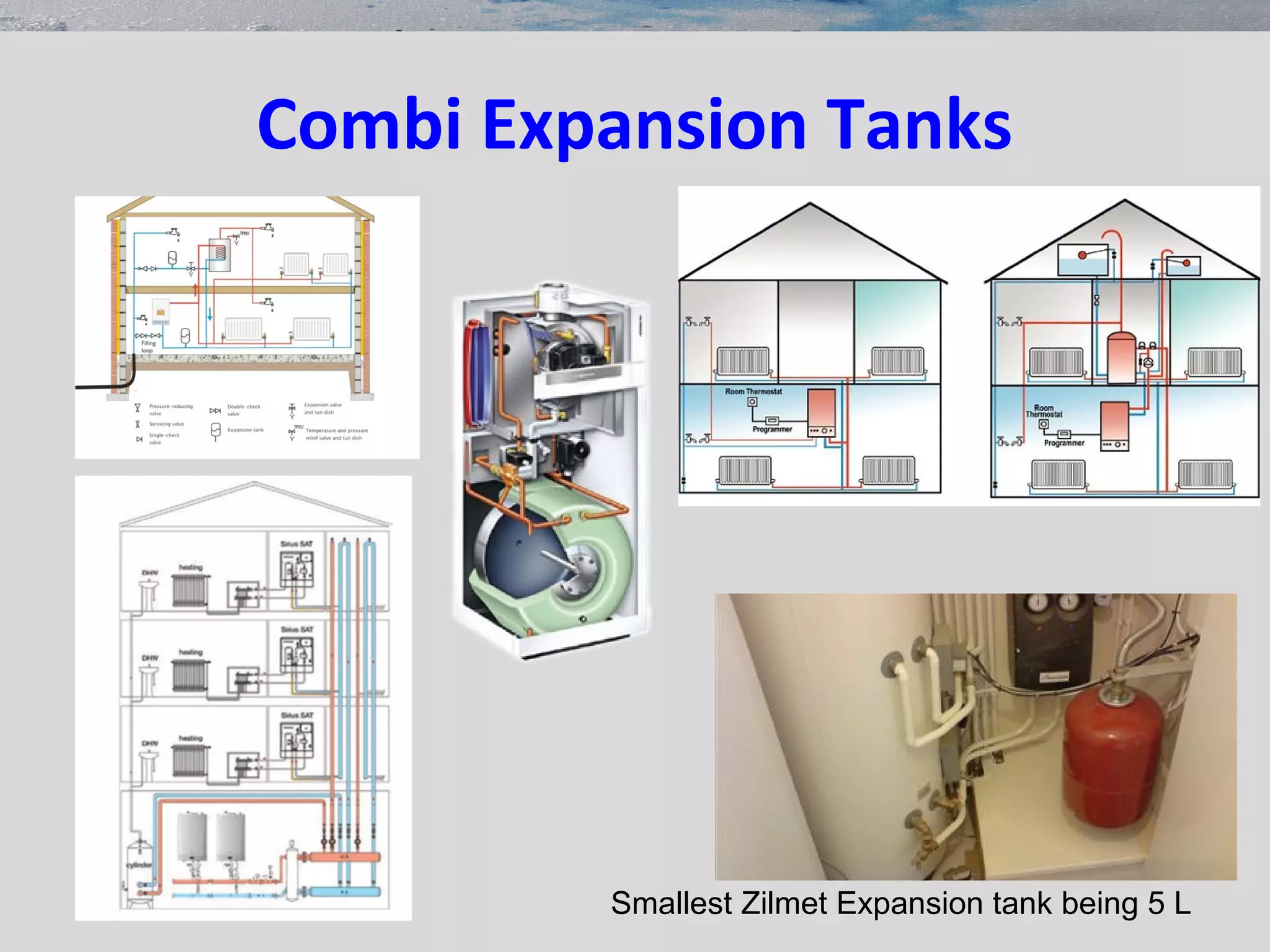
Combi Expansion Tanks
Smallest Zilmet Expansion tank being 5 L
Adaptability
Initial Concept Development
• very little water has a massive effect on a fire[1]
• the amount of fluid in a heating panel(s) gives twice the requirement to
suppress a fire in an average sized room [2]
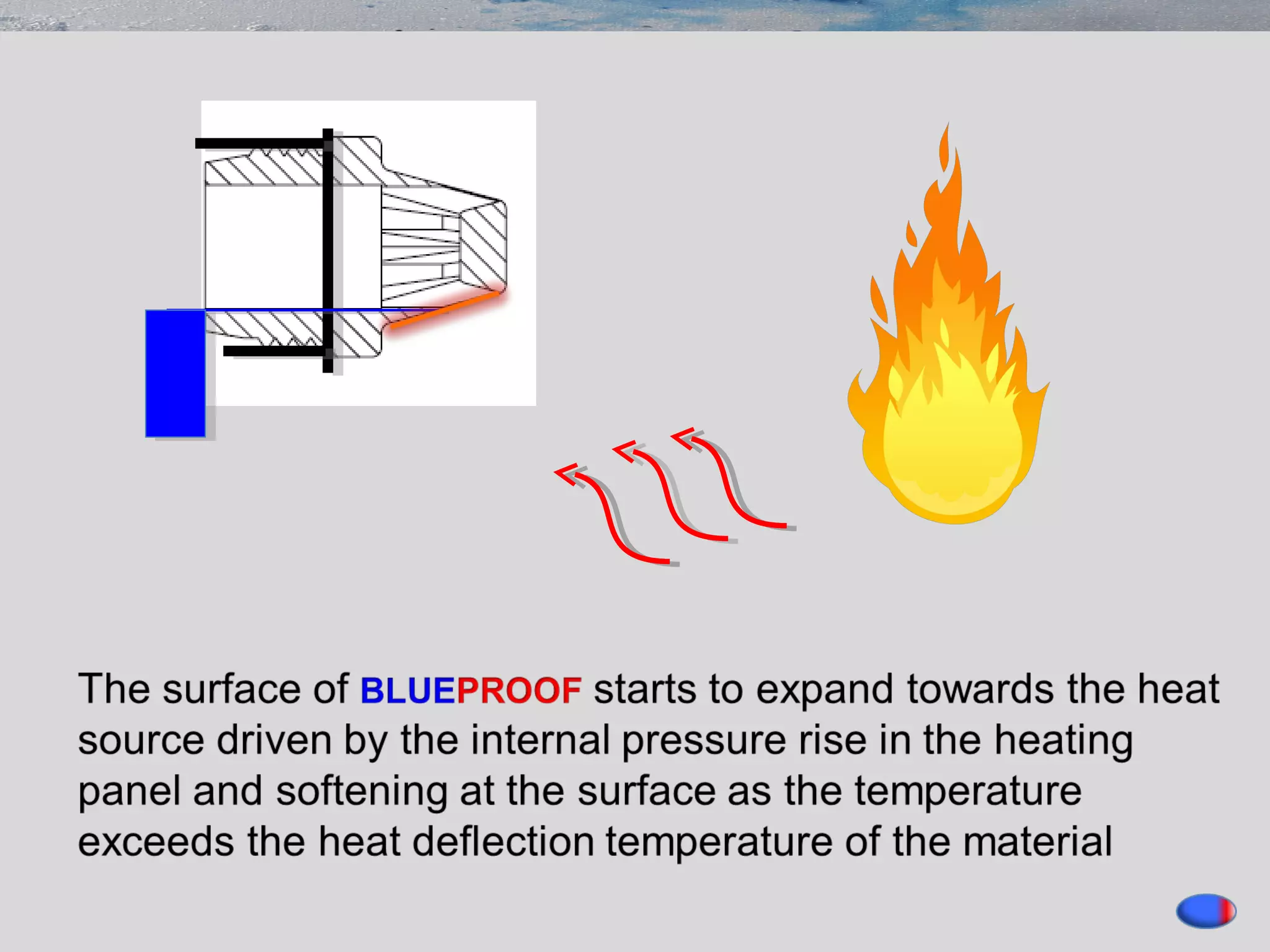
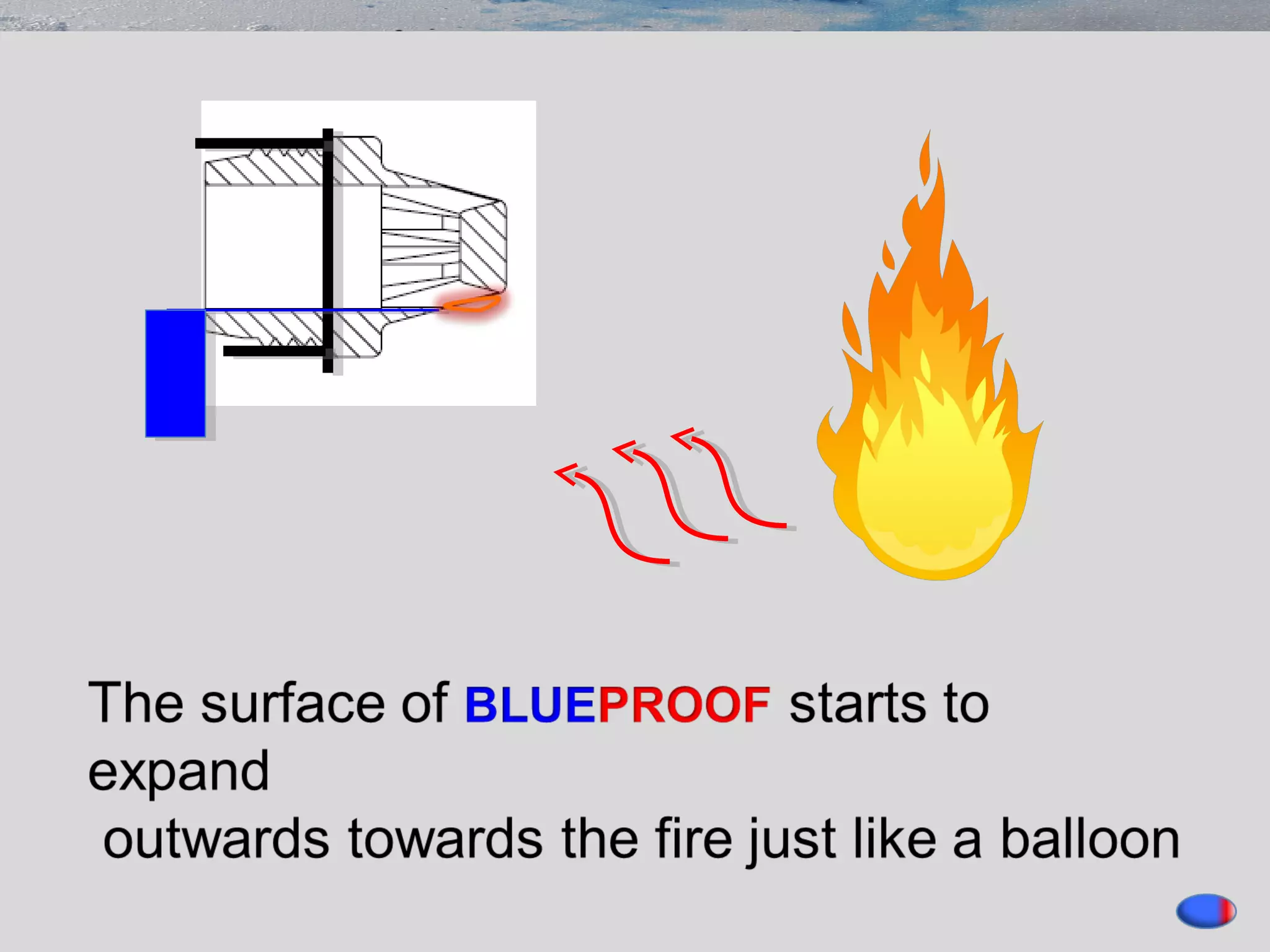
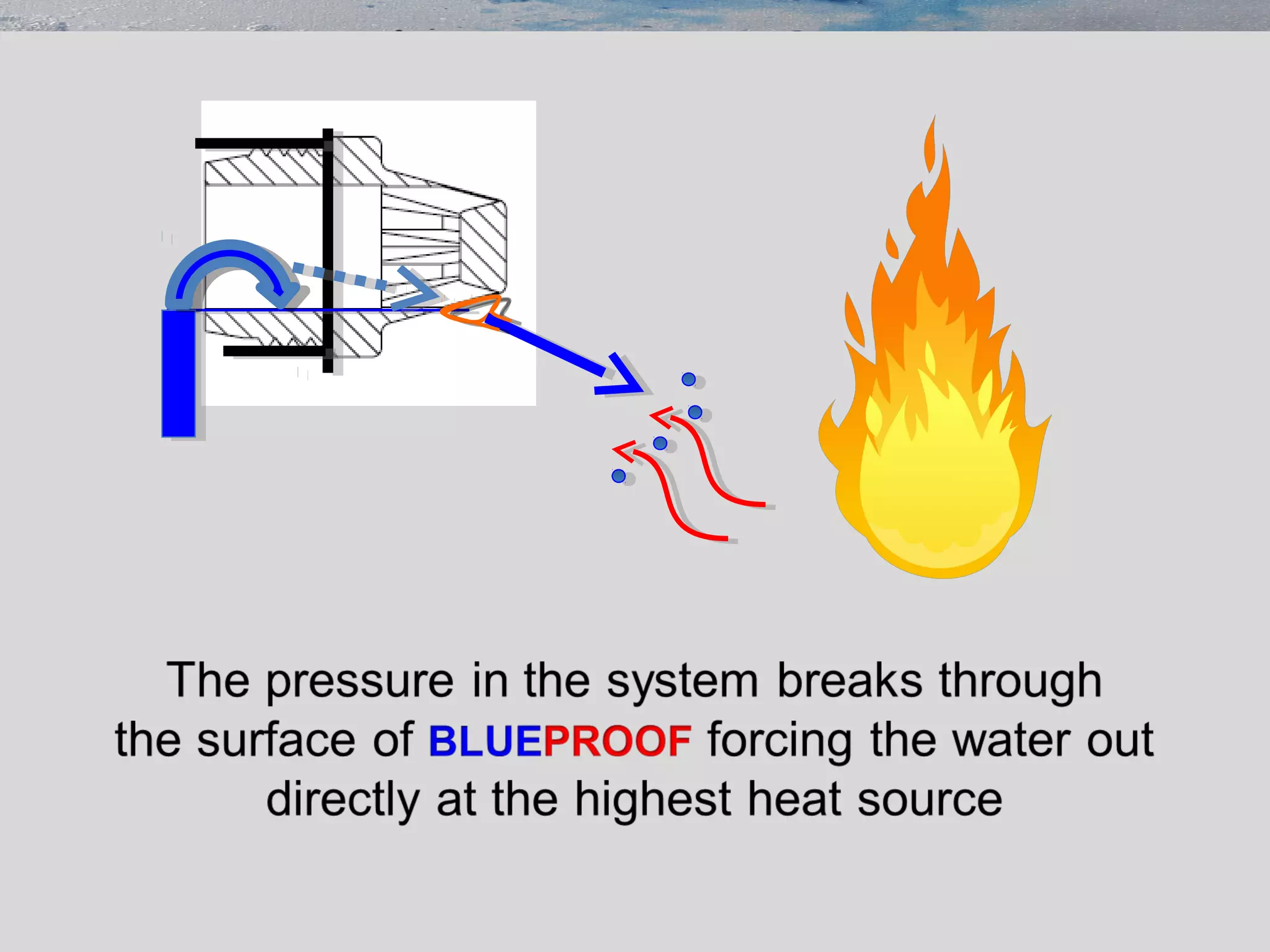
• a high tech device can be used to release the fluid from the heating panel
• the device will meet the temperature and pressure requirements of a
household radiator under normal operating conditions (13 bar and 75o
C
operating and 85o
C max )[3]
• The smallest Zilmet expansion tank holds 5 L as back up to the radiator.
• PSV’s on CE systems are sized for pressure relief and not flow release
[1] Essentials of Fire Fighting and Fire Department Operations 5th Edition correlated to the 2008 edition of NFPA 1001
[2] The Case For Space Royal Institute for British Architects 2011
[3] Din EN 442
From the initial observations based on science that have been the
inspiration to Bluerad’s design team, we now know:
What does rapid application of water do?
Applying water directly into the fire area, as soon as possible, results
in the most effective means of suppressing the fire
This is not new and has been called by many names
– Blitz attack
– Resetting the fire
– Early water
– Transitional attack [2]
[1] www.firetactics.com
[2] Source Fire Behaviour and Tactical Considerations Aug 23rd
2013 IAFTV NIST UL
Water will increase its volume by 1,700 times at STP and 1 g of water requires 2260 j to
convert it into steam.
Formed
nozzle
Thin
sections
[1] American Society of Mechanical Engineers (ASME)
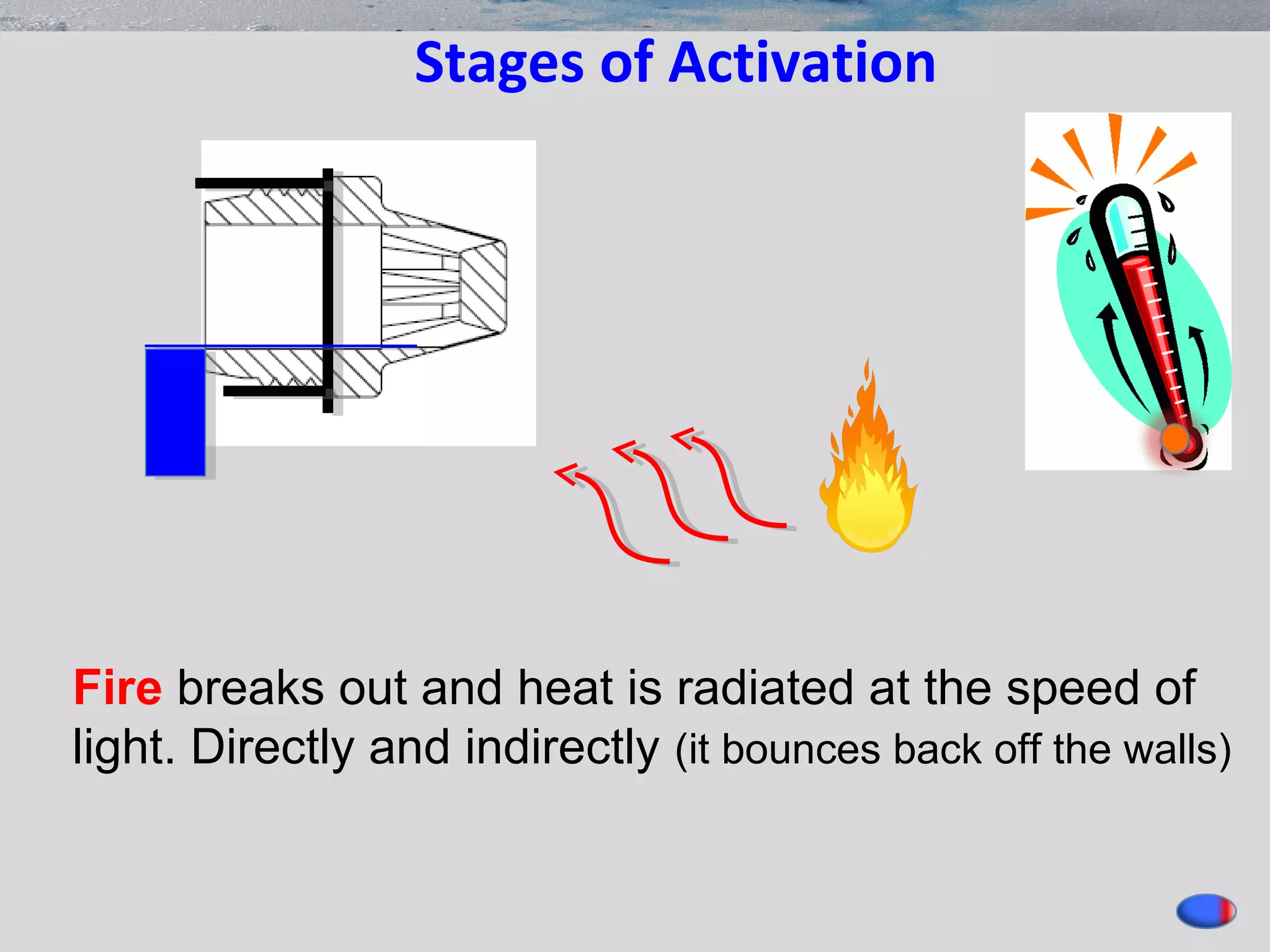
Fire breaks out and heat is radiated at the speed of
light. Directly and indirectly (it bounces back off the walls)
Stages of Activation
[1] ASTM E84, NFPA 255, UL 723 and ULC S102
[2] ISO 5660-1-2002 Reaction to fire tests. Heat release, smoke production and mass loss rate. Part 1: Heat release rate (Cone calorimeter
method) International Organisation of standardization Geneva. 2002
What we now know from Ollerton is
that these jets form in response to the
flame.
The first jet holding back the spread.
The second to the ceiling.
Third and fourth at the wall.
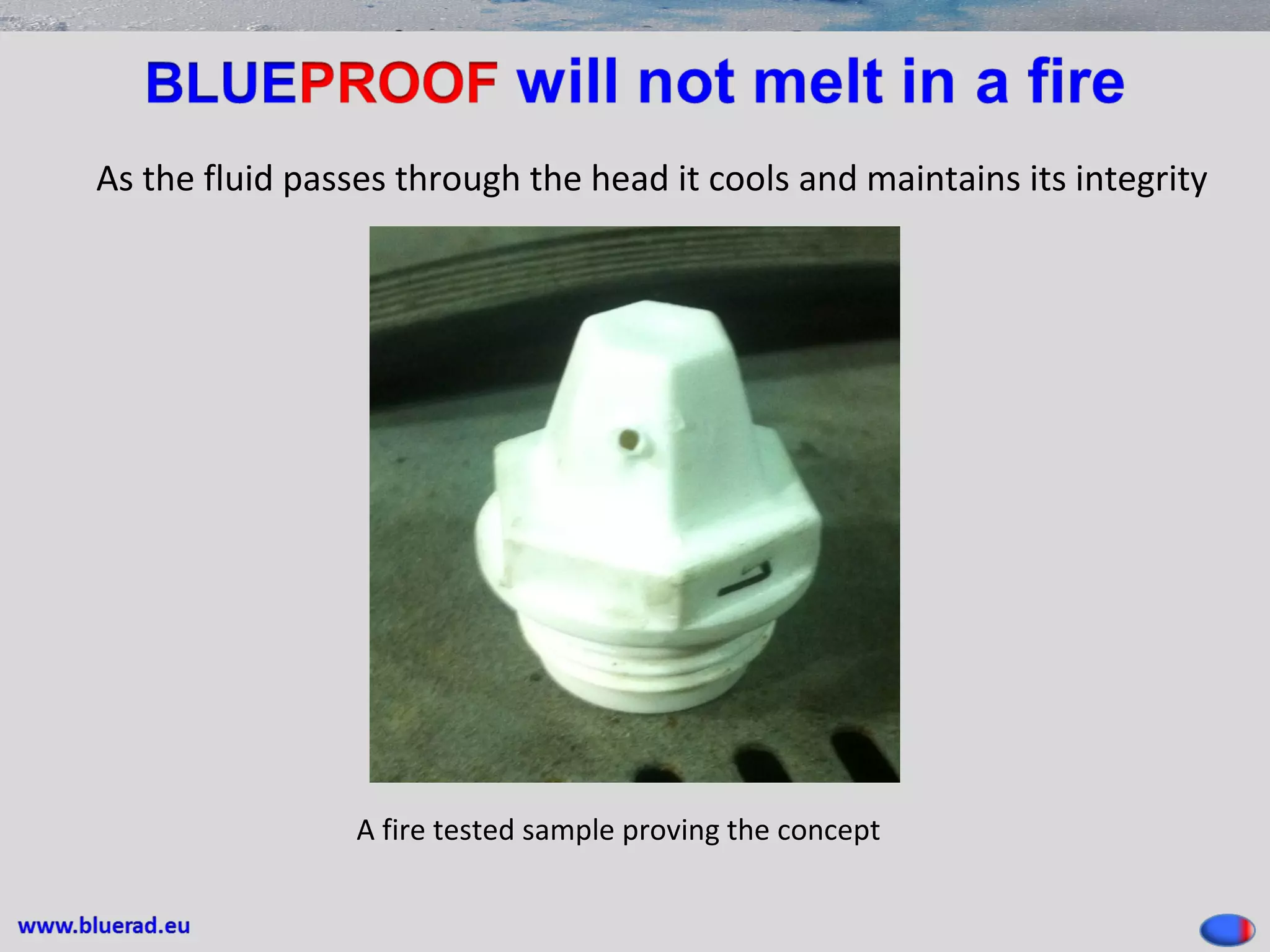
As the fluid passes through the head it cools and maintains its integrity
A fire tested sample proving the concept
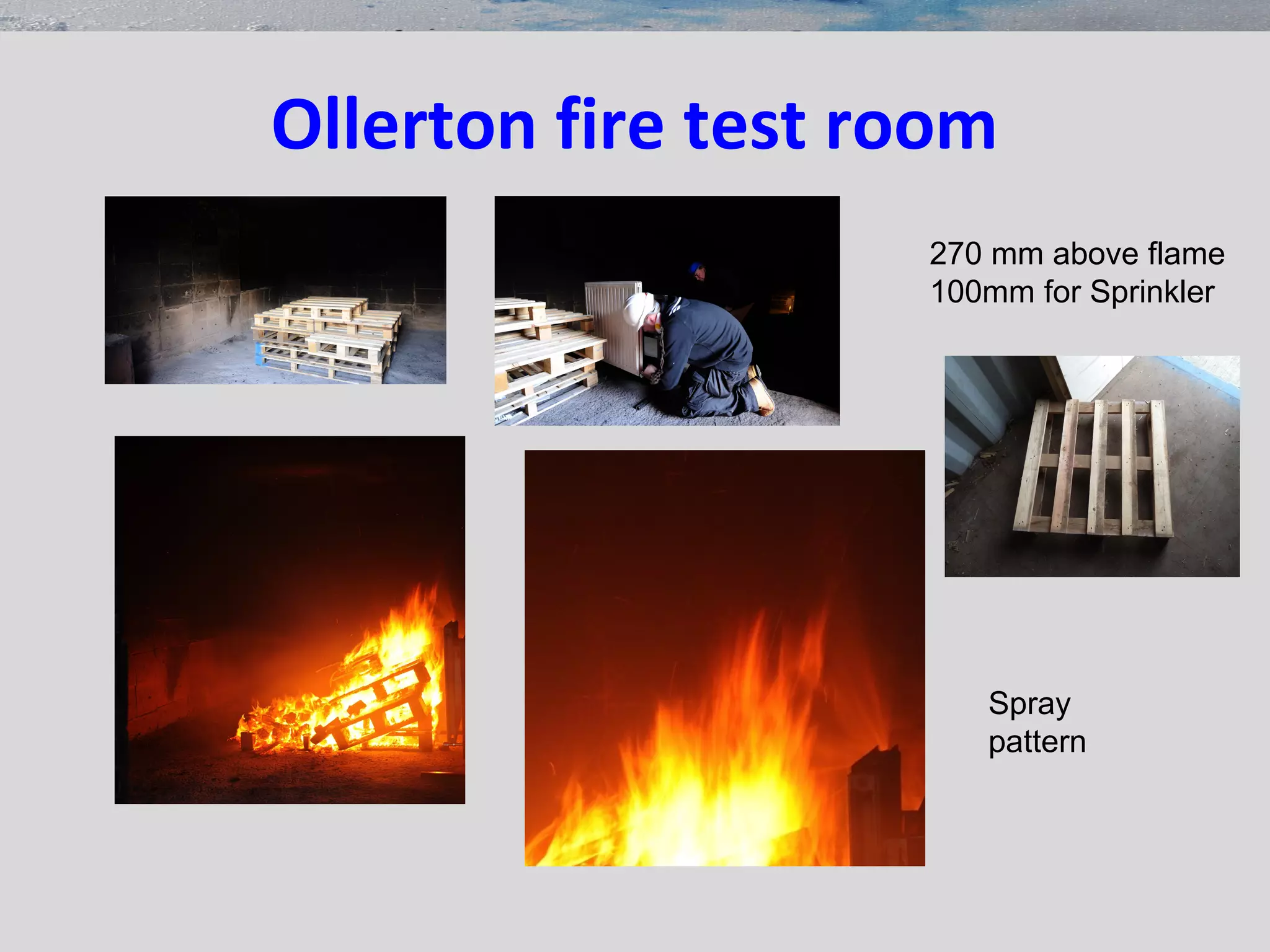
Ollerton fire test room
Spray
pattern
270 mm above flame
100mm for Sprinkler
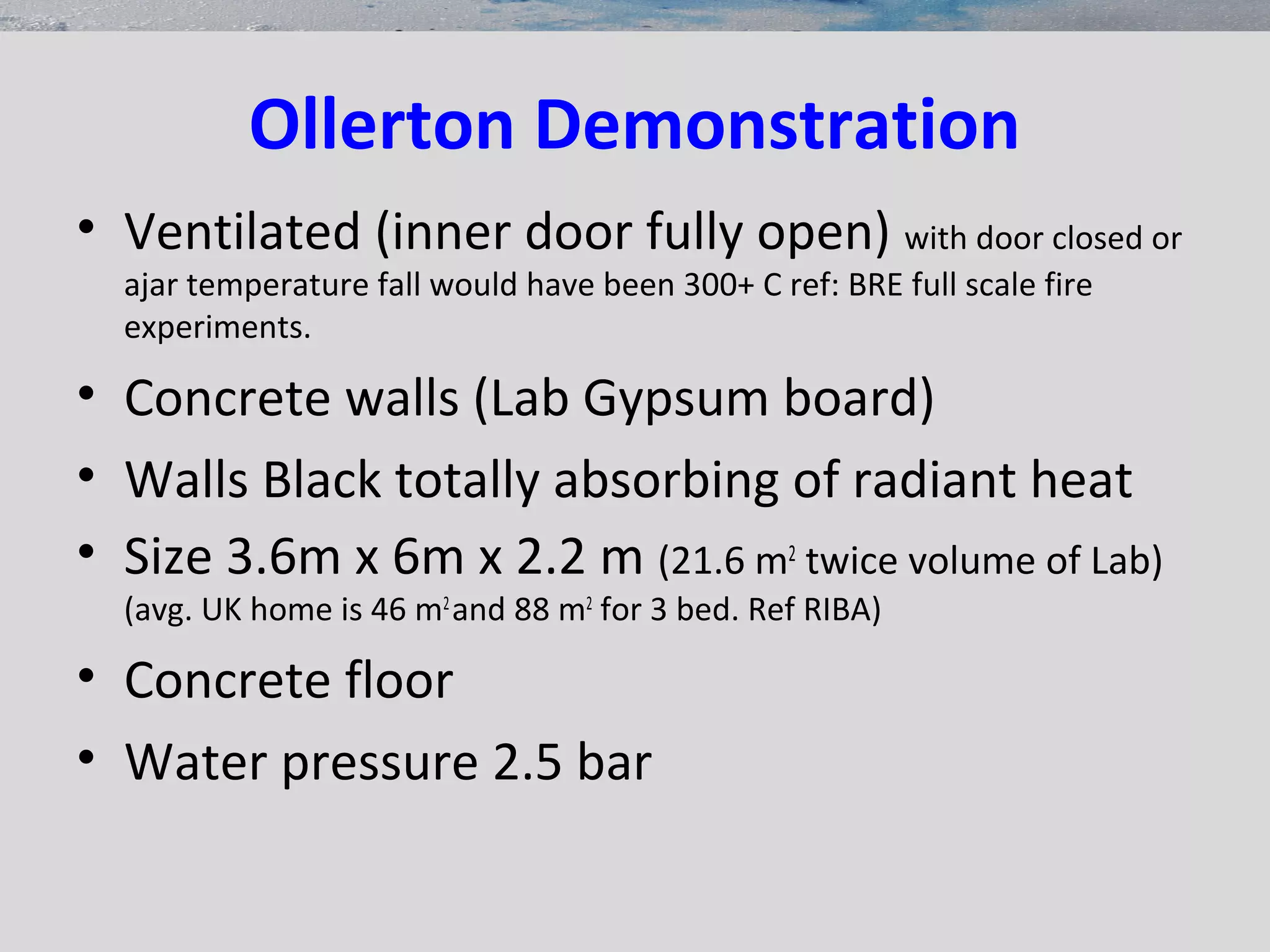
Ollerton Demonstration
• Ventilated (inner door fully open) with door closed or
ajar temperature fall would have been 300+ C ref: BRE full scale fire
experiments.
• Concrete walls (Lab Gypsum board)
• Walls Black totally absorbing of radiant heat
• Size 3.6m x 6m x 2.2 m (21.6 m2
twice volume of Lab)
(avg. UK home is 46 m2
and 88 m2
for 3 bed. Ref RIBA)
• Concrete floor
• Water pressure 2.5 bar
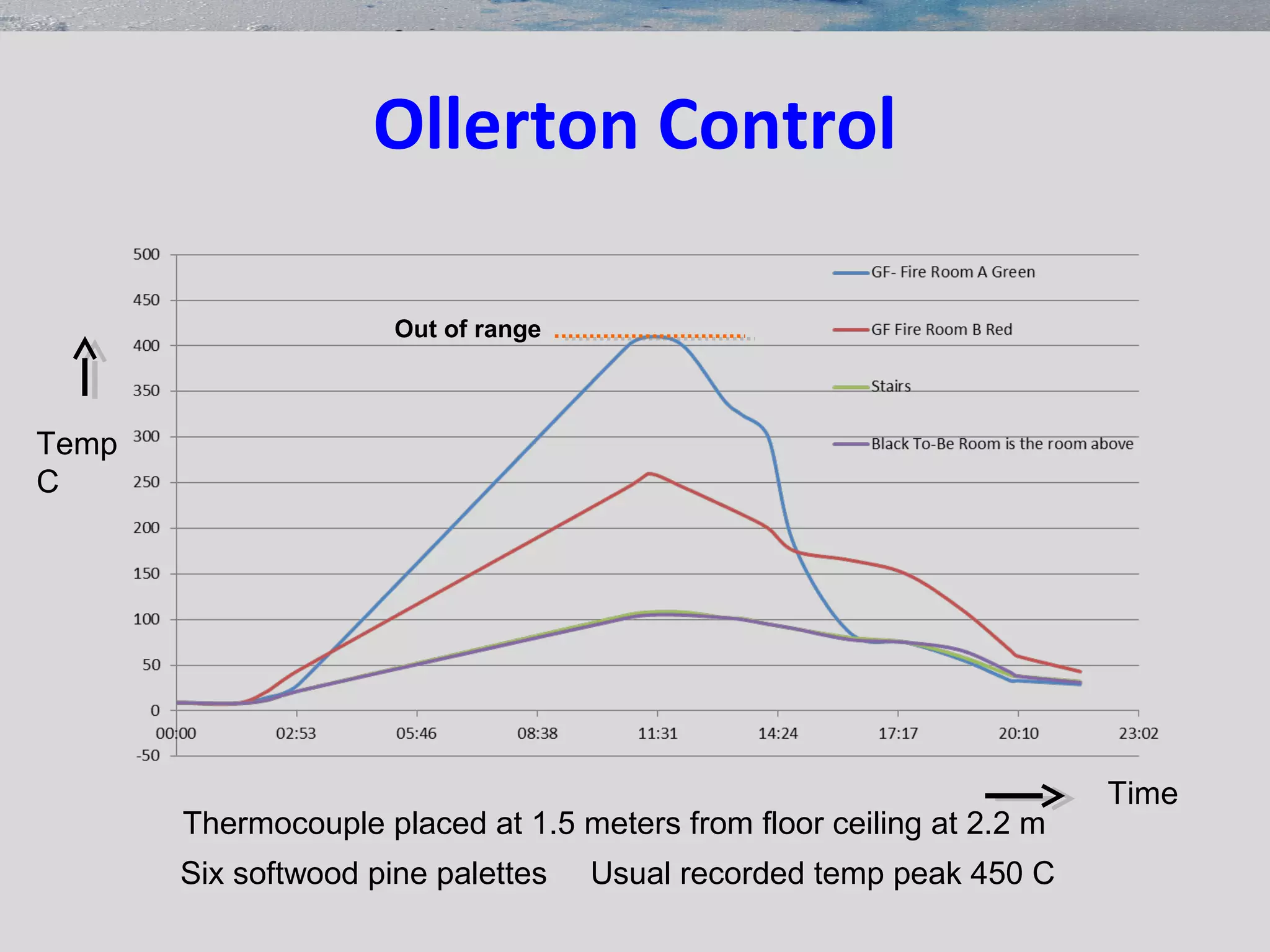
Ollerton Control
Thermocouple placed at 1.5 meters from floor ceiling at 2.2 m
Six softwood pine palettes
Temp
C
Time
Out of range
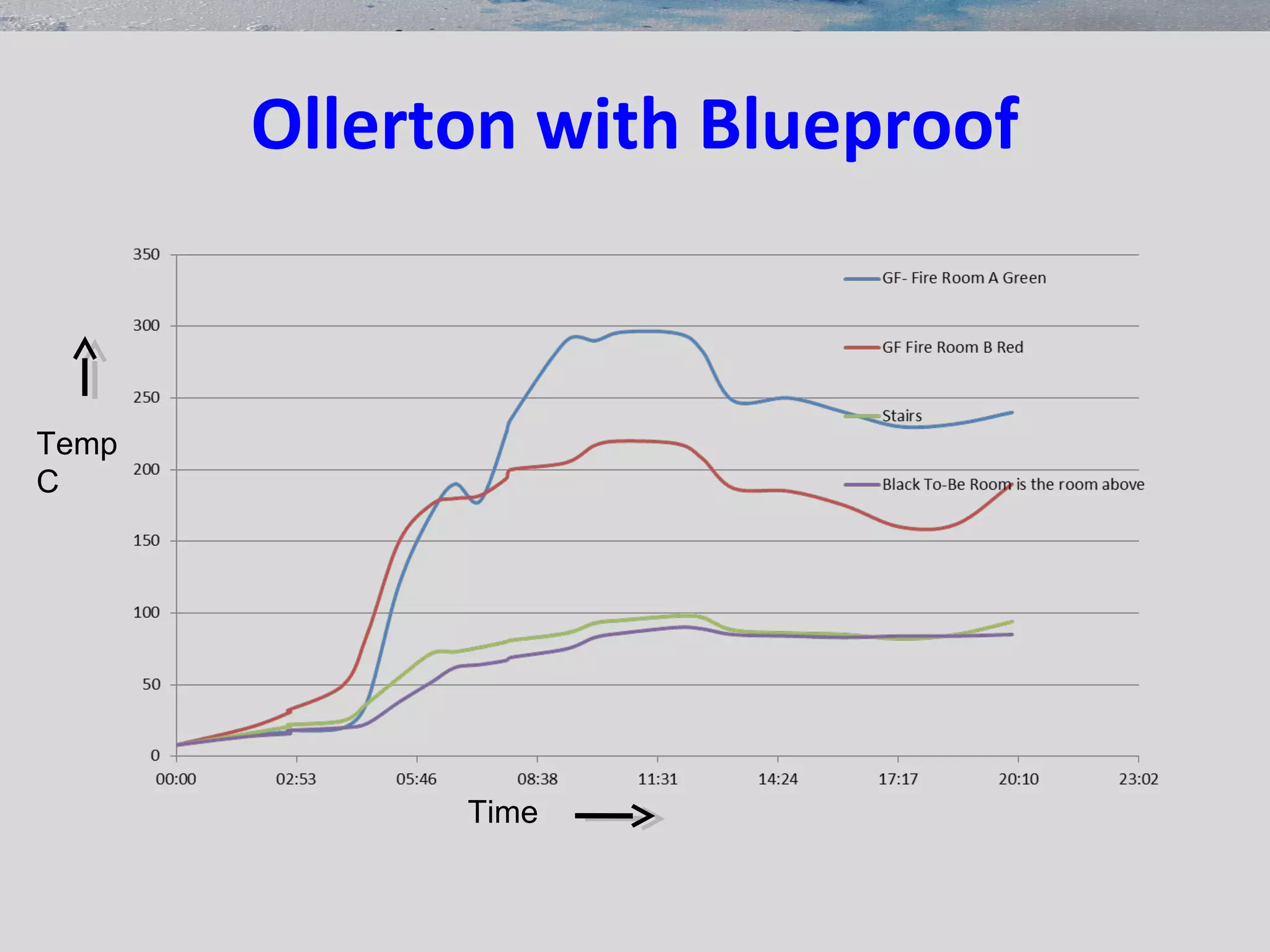
Usual recorded temp peak 450 C
Ollerton with Blueproof
Temp
C
Time
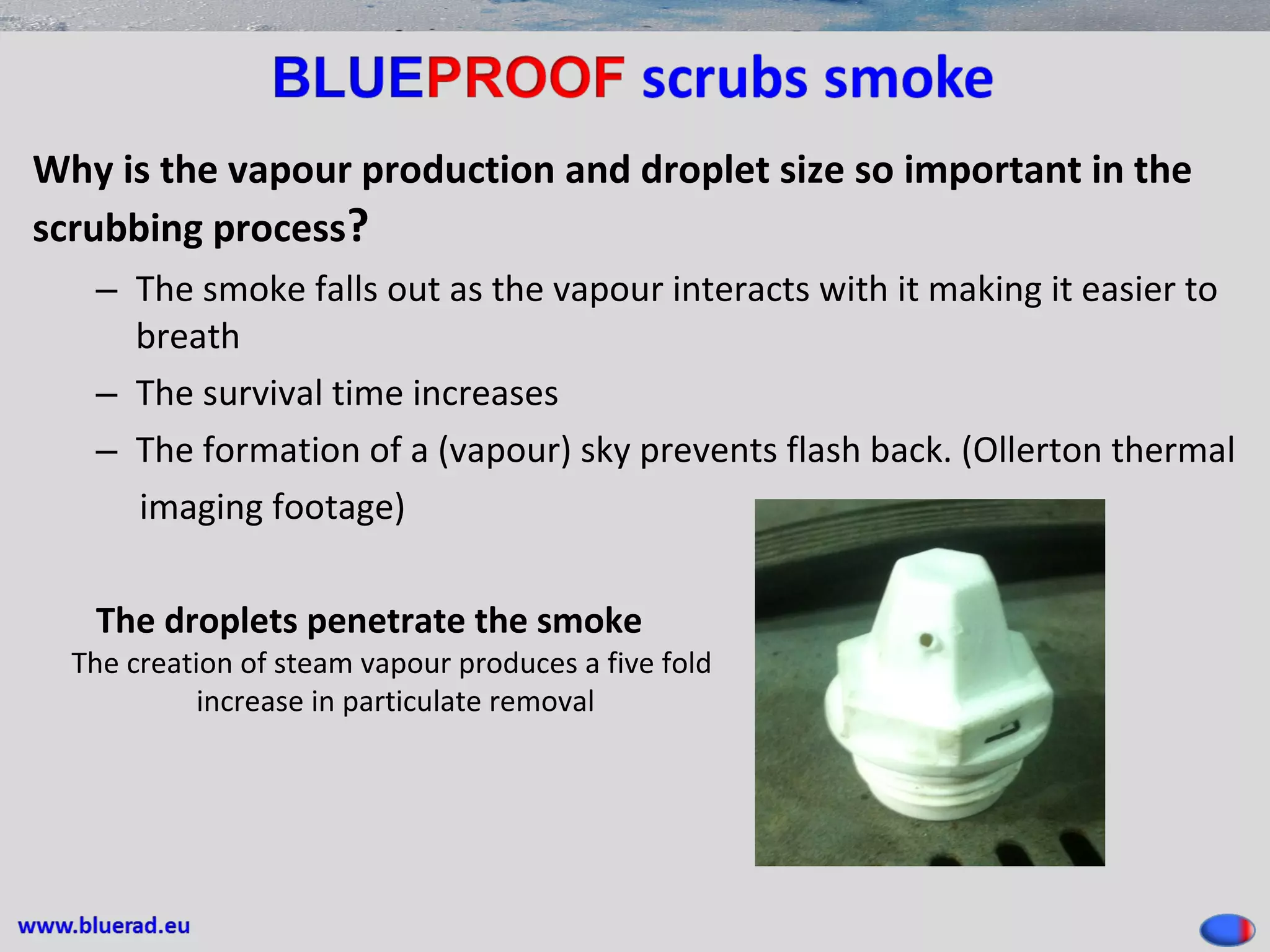
Why is the vapour production and droplet size so important in the
scrubbing process?
– The smoke falls out as the vapour interacts with it making it easier to
breath
– The survival time increases
– The formation of a (vapour) sky prevents flash back. (Ollerton thermal
imaging footage)
The droplets penetrate the smoke
The creation of steam vapour produces a five fold
increase in particulate removal
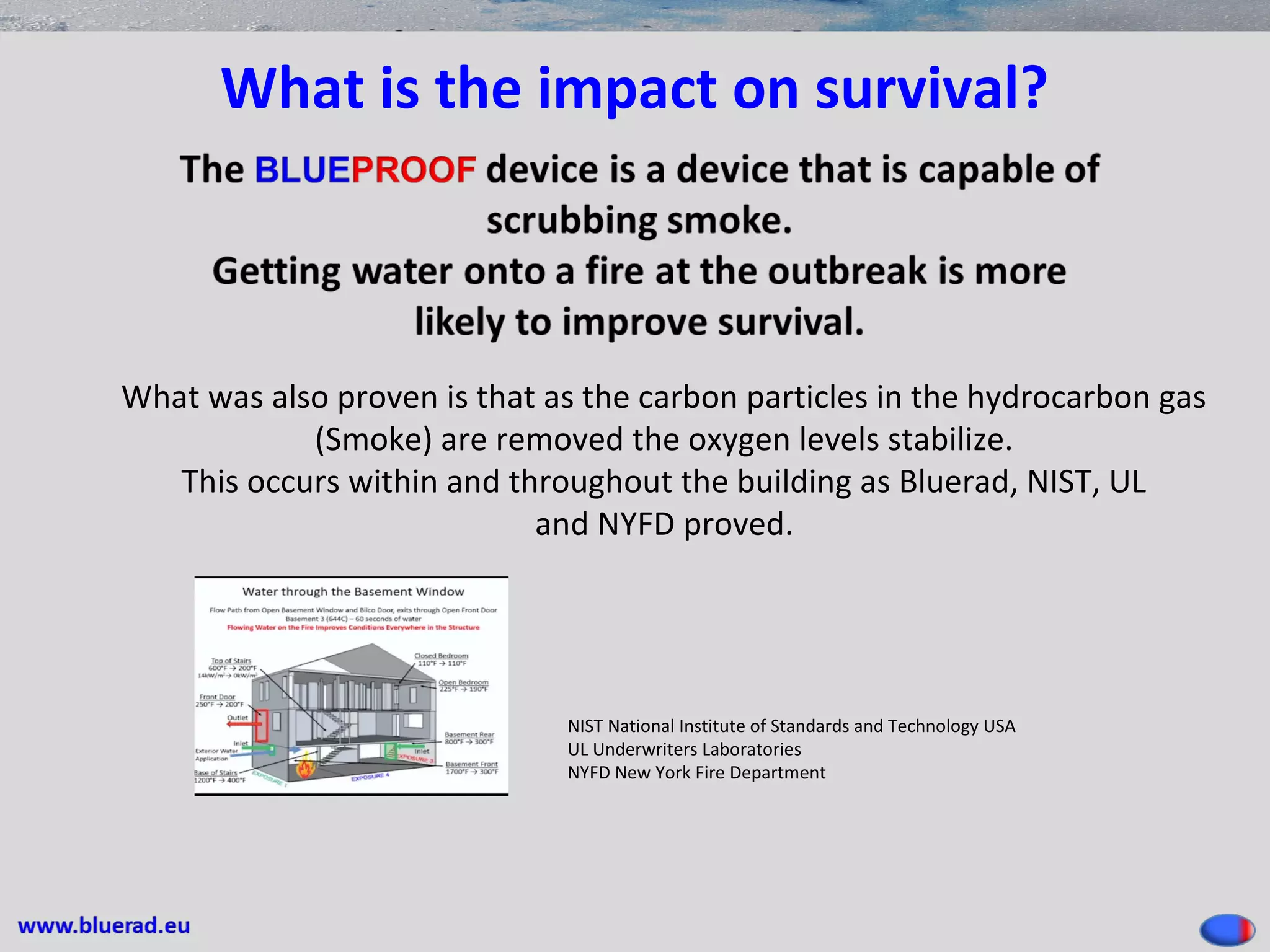
What is the impact on survival?
What was also proven is that as the carbon particles in the hydrocarbon gas
(Smoke) are removed the oxygen levels stabilize.
This occurs within and throughout the building as Bluerad, NIST, UL
and NYFD proved.
NIST National Institute of Standards and Technology USA
UL Underwriters Laboratories
NYFD New York Fire Department
• Flash over did not occur during laboratory
experiments and during the demonstration.
Sufficient fuel was used to induce flashover.
• As smoke was scrubbed from the fire. The
vent gases changed colour from Black to
white.
• Flowing water onto a fire improves
temperatures everywhere in the building.
• Risk is reduced to ALARP.
Source: Fire Behaviour and Tactical Considerations Aug 23rd 2013 IAFTV NIST UL
• So we can re-cap on the types of systems it can be used on.
• All dwellings where water is available.
• It will buy time.
• Reduce fire and smoke damage and potentially save lives.
• Blueproof is available now in the UK.
• It will cost around £2 to the trade for each unit this includes
arms length company's.
• It will cost around £5 each to retail.
Thanks

Community Safety Managers Meeting

  • 1.
    David Atkinson BSc.Chem. Eng. East and West Midlands Safety Managers Meeting – Nottingham January 2015 BLUERAD LTD
  • 2.
    • Each dayin Europe approximately 12 people die in house fires and 120 people are severely injured [1] • There were 275 fire fatalities in England in 2013-14 [2] • Two thirds of all fire fatalities were in accidental dwelling fires. There were 3,600 hospital non – fatal casualties and the fire services attended 170,000 fires. (This excludes Greater Manchester data) • In Scotland almost half of the fatalities occurred where there was a smoke alarm fitted. The most common reason being that the alarm was not fitted close enough.[3] • The cost of fire damage stands at a record level. More open plan buildings, which allow more rapid spread of fire, and the increase in out of town developments, where fires can go for longer unnoticed, are among factors contributing to the doubling of fire costs since 2002. [4] [1] Information Bulletin of the World Fire Statistics Centre. Geneva Association. www.genevaassociation.org [2] Department for Communities and Local Government. www.firestatitics@communities.gsi.gov.uk [3] Fire and Rescue Statistics Scotland 2013-14 [4] Association of British Insurers
  • 5.
    From a heatingpanel Off a water pipe You Tube Bluerad channel
  • 6.
    Combi Expansion Tanks SmallestZilmet Expansion tank being 5 L
  • 7.
  • 9.
    Initial Concept Development •very little water has a massive effect on a fire[1] • the amount of fluid in a heating panel(s) gives twice the requirement to suppress a fire in an average sized room [2] • a high tech device can be used to release the fluid from the heating panel • the device will meet the temperature and pressure requirements of a household radiator under normal operating conditions (13 bar and 75o C operating and 85o C max )[3] • The smallest Zilmet expansion tank holds 5 L as back up to the radiator. • PSV’s on CE systems are sized for pressure relief and not flow release [1] Essentials of Fire Fighting and Fire Department Operations 5th Edition correlated to the 2008 edition of NFPA 1001 [2] The Case For Space Royal Institute for British Architects 2011 [3] Din EN 442 From the initial observations based on science that have been the inspiration to Bluerad’s design team, we now know:
  • 10.
    What does rapidapplication of water do? Applying water directly into the fire area, as soon as possible, results in the most effective means of suppressing the fire This is not new and has been called by many names – Blitz attack – Resetting the fire – Early water – Transitional attack [2] [1] www.firetactics.com [2] Source Fire Behaviour and Tactical Considerations Aug 23rd 2013 IAFTV NIST UL Water will increase its volume by 1,700 times at STP and 1 g of water requires 2260 j to convert it into steam.
  • 11.
  • 12.
    Fire breaks outand heat is radiated at the speed of light. Directly and indirectly (it bounces back off the walls) Stages of Activation
  • 16.
    [1] ASTM E84,NFPA 255, UL 723 and ULC S102 [2] ISO 5660-1-2002 Reaction to fire tests. Heat release, smoke production and mass loss rate. Part 1: Heat release rate (Cone calorimeter method) International Organisation of standardization Geneva. 2002 What we now know from Ollerton is that these jets form in response to the flame. The first jet holding back the spread. The second to the ceiling. Third and fourth at the wall.
  • 17.
    As the fluidpasses through the head it cools and maintains its integrity A fire tested sample proving the concept
  • 19.
    Ollerton fire testroom Spray pattern 270 mm above flame 100mm for Sprinkler
  • 20.
    Ollerton Demonstration • Ventilated(inner door fully open) with door closed or ajar temperature fall would have been 300+ C ref: BRE full scale fire experiments. • Concrete walls (Lab Gypsum board) • Walls Black totally absorbing of radiant heat • Size 3.6m x 6m x 2.2 m (21.6 m2 twice volume of Lab) (avg. UK home is 46 m2 and 88 m2 for 3 bed. Ref RIBA) • Concrete floor • Water pressure 2.5 bar
  • 21.
    Ollerton Control Thermocouple placedat 1.5 meters from floor ceiling at 2.2 m Six softwood pine palettes Temp C Time Out of range Usual recorded temp peak 450 C
  • 22.
  • 23.
    Why is thevapour production and droplet size so important in the scrubbing process? – The smoke falls out as the vapour interacts with it making it easier to breath – The survival time increases – The formation of a (vapour) sky prevents flash back. (Ollerton thermal imaging footage) The droplets penetrate the smoke The creation of steam vapour produces a five fold increase in particulate removal
  • 24.
    What is theimpact on survival? What was also proven is that as the carbon particles in the hydrocarbon gas (Smoke) are removed the oxygen levels stabilize. This occurs within and throughout the building as Bluerad, NIST, UL and NYFD proved. NIST National Institute of Standards and Technology USA UL Underwriters Laboratories NYFD New York Fire Department
  • 25.
    • Flash overdid not occur during laboratory experiments and during the demonstration. Sufficient fuel was used to induce flashover. • As smoke was scrubbed from the fire. The vent gases changed colour from Black to white. • Flowing water onto a fire improves temperatures everywhere in the building. • Risk is reduced to ALARP.
  • 26.
    Source: Fire Behaviourand Tactical Considerations Aug 23rd 2013 IAFTV NIST UL
  • 28.
    • So wecan re-cap on the types of systems it can be used on. • All dwellings where water is available. • It will buy time. • Reduce fire and smoke damage and potentially save lives. • Blueproof is available now in the UK. • It will cost around £2 to the trade for each unit this includes arms length company's. • It will cost around £5 each to retail. Thanks

Editor's Notes

  • #3 Arson mention I was watching the news on the TV and looked at my radiators
  • #9 Protect the services and the public
  • #10 4 times as much needed
  • #11 4 times as much needed
  • #19 Protect the services and the public
  • #24 Advantage of the CE system
  • #26 Protect the services and the public
  • #28 Protect the services and the public
  • #29 Protect the services and the public