www.bluerad.eu
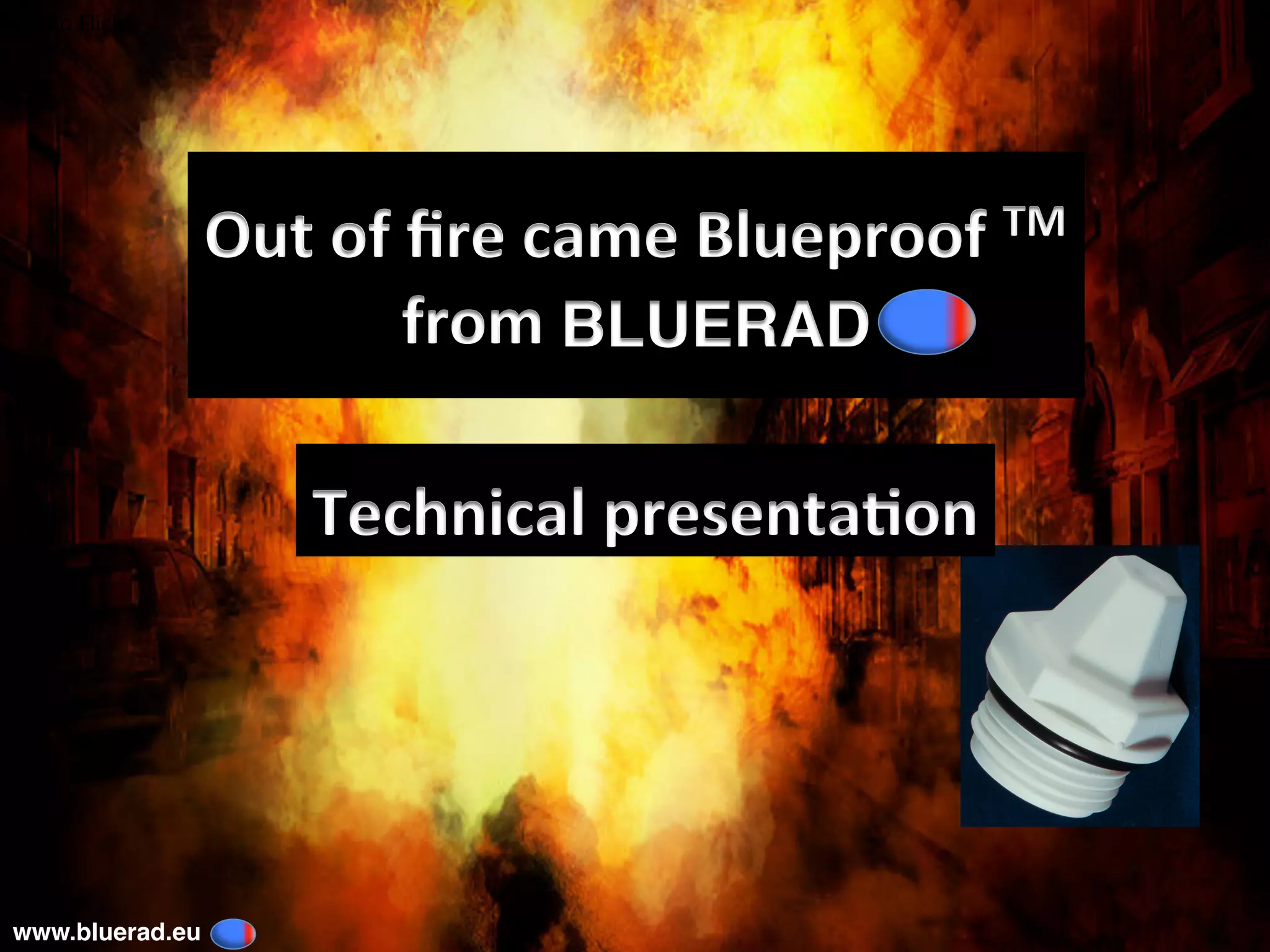
Out	of	fire	came	Blueproof	TM	
from	BLUERAD		
Photo	Flickr	
www.bluerad.eu


Technical	presenta6on
Buys	6me,	save	lives	
Reduces	the	risk	of	flashover	
www.bluerad.eu
Contents	
www.bluerad.eu
	
Part	1.	What	is	Blueproof	TM?		
Part	2.	How	does	it	work?	
Part	4.	A	liGle	water	
Photo	Flickr	
Part	8.	Risk	
Part	9.	Pressure	tes6ng	
Part	6.	Furniture	burn	6mes	
Part	10.	Flashover	
Part	7.	Visibility	
Part	12.	Escape	
Part	11.	Silt	
Full	dura6on	17	minutes	
Part	3.	Chemistry	
Part	5.	Tracking	a	fire’s	movement
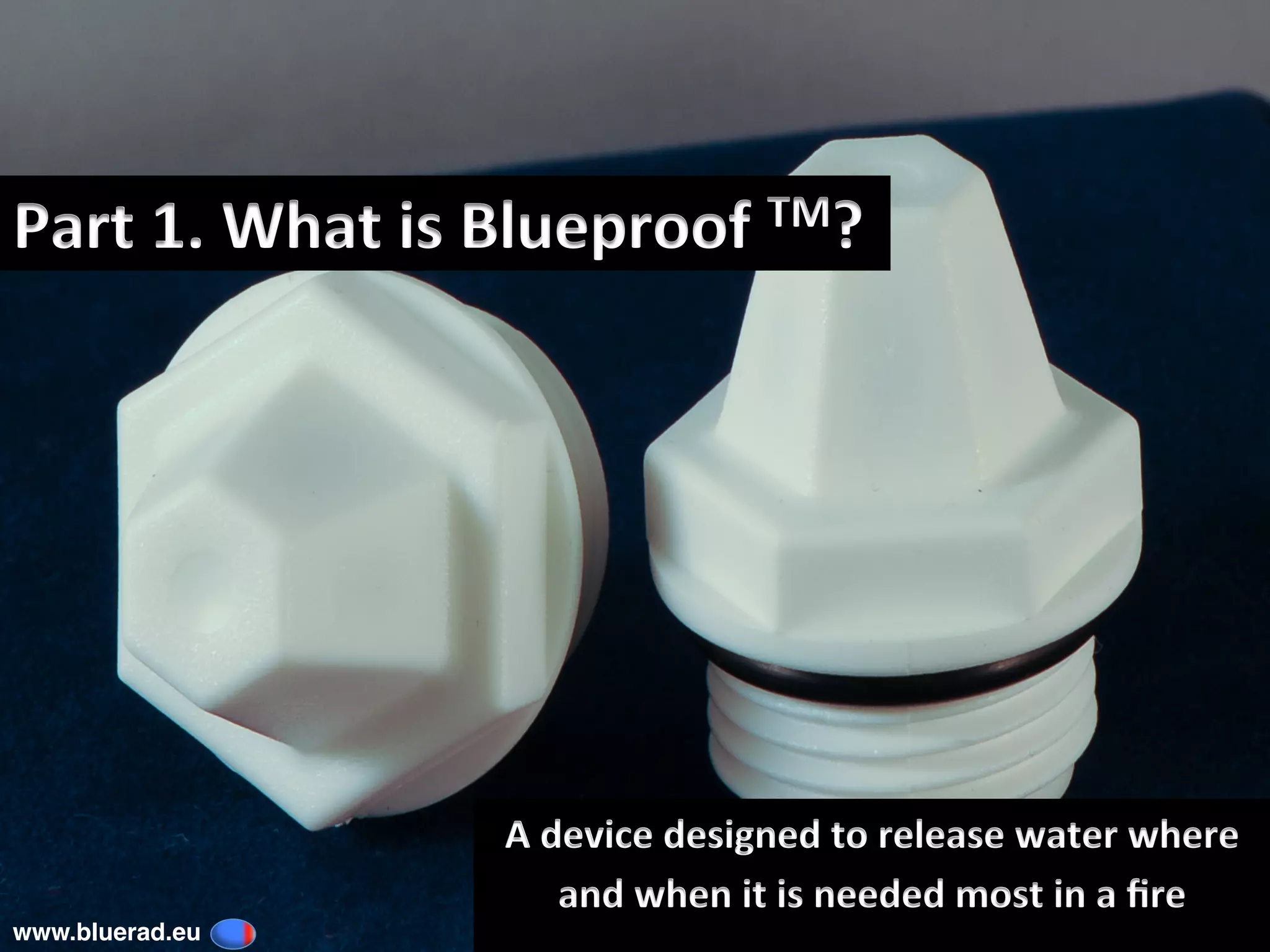
Part	1.	What	is	Blueproof	TM?	
A	device	designed	to	release	water	where		
and	when	it	is	needed	most	in	a	fire	
www.bluerad.eu
Photo	Flickr	
www.bluerad.eu
	
Breaks	Out	
When
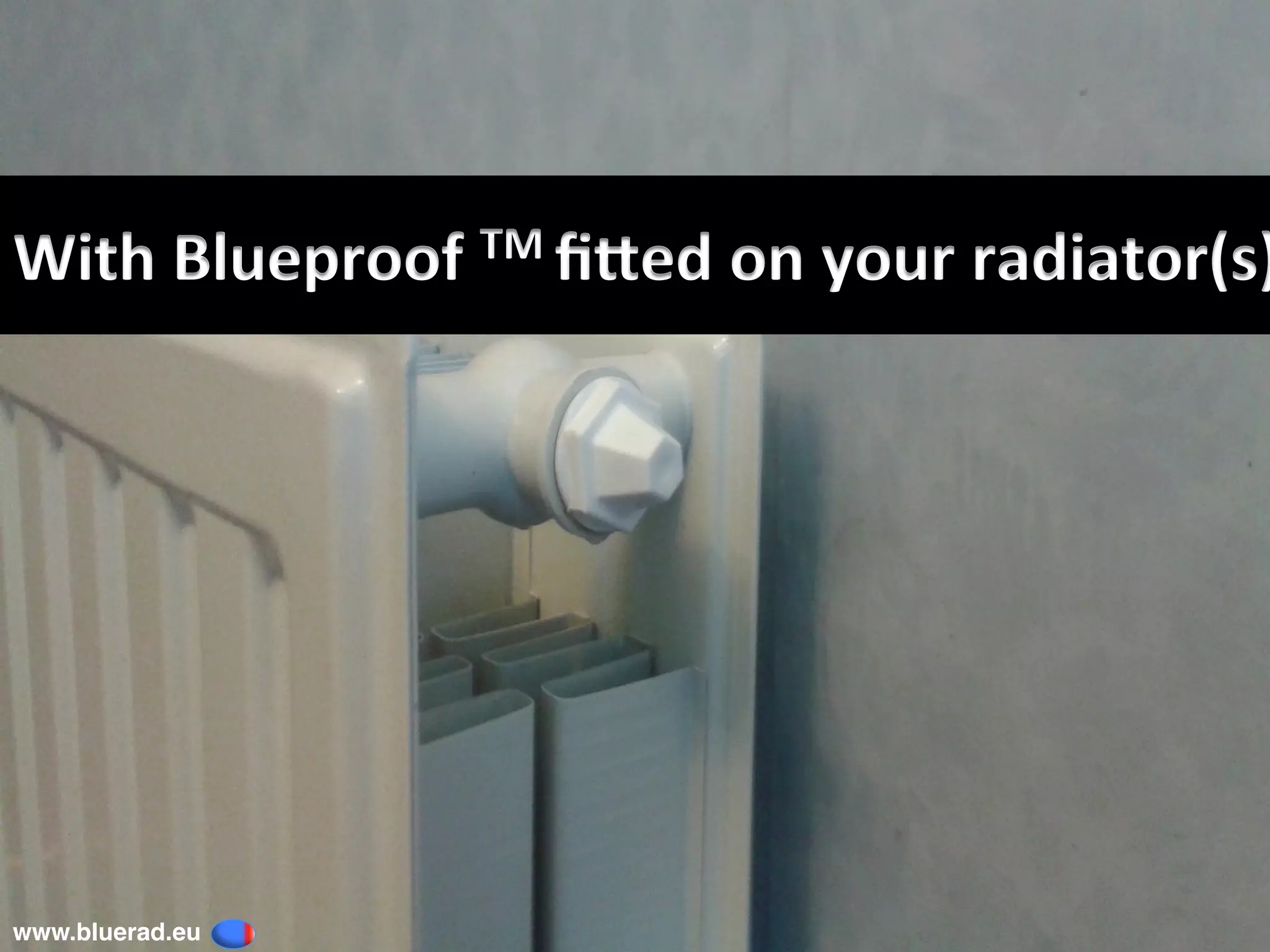
With	Blueproof	TM	fiGed	on	your	radiator(s)
www.bluerad.eu
Heat	arrives	on	its	surface	
Photo	Flickr	
www.bluerad.eu
At	excep6onal	speed	
Photo	Flickr	
www.bluerad.eu
The	content	of	your	
radiator	starts	to	boil	
The	pressure	rises	faster	
than	the	water	can	escape	
‘Blocked	in	pressure’	
Photo	Flickr	
Photo	Flickr	
www.bluerad.eu
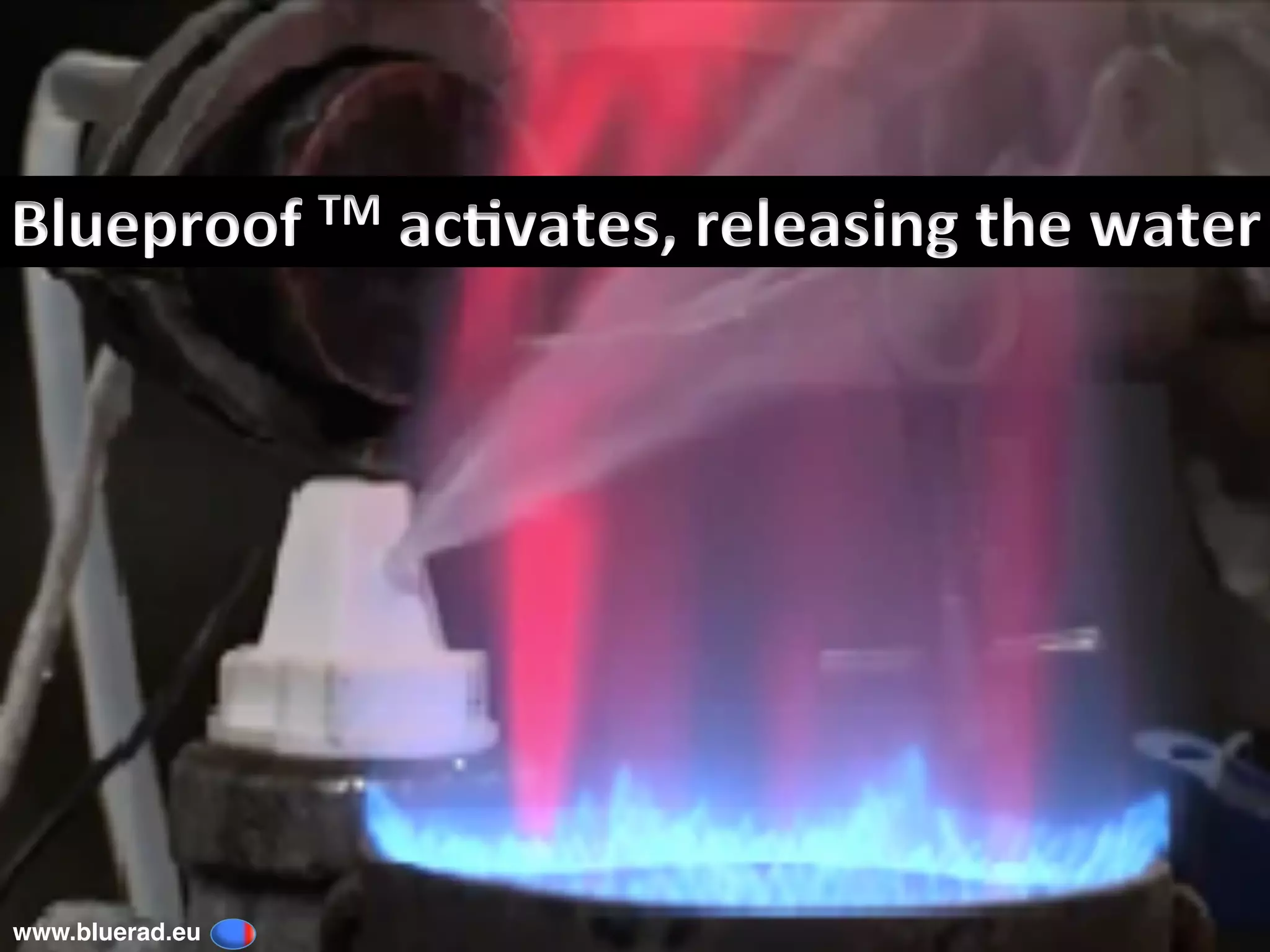
Blueproof	TM	ac6vates,	releasing	the	water	
www.bluerad.eu
The	water	expands	to	create	water	vapour	
Photo	Flickr	
www.bluerad.eu
The	water	vapour	suppresses	the	fire	
Photo	Flickr	
Photo	Flickr	
www.bluerad.eu
It’s	that	simple	
Photo	Flickr	
www.bluerad.eu
Part	2.	How	does	Blueproof	TM	work?	
Photo	Flickr	
www.bluerad.eu
Manufactured	from	advanced	materials	
Photo	Flickr	
www.bluerad.eu
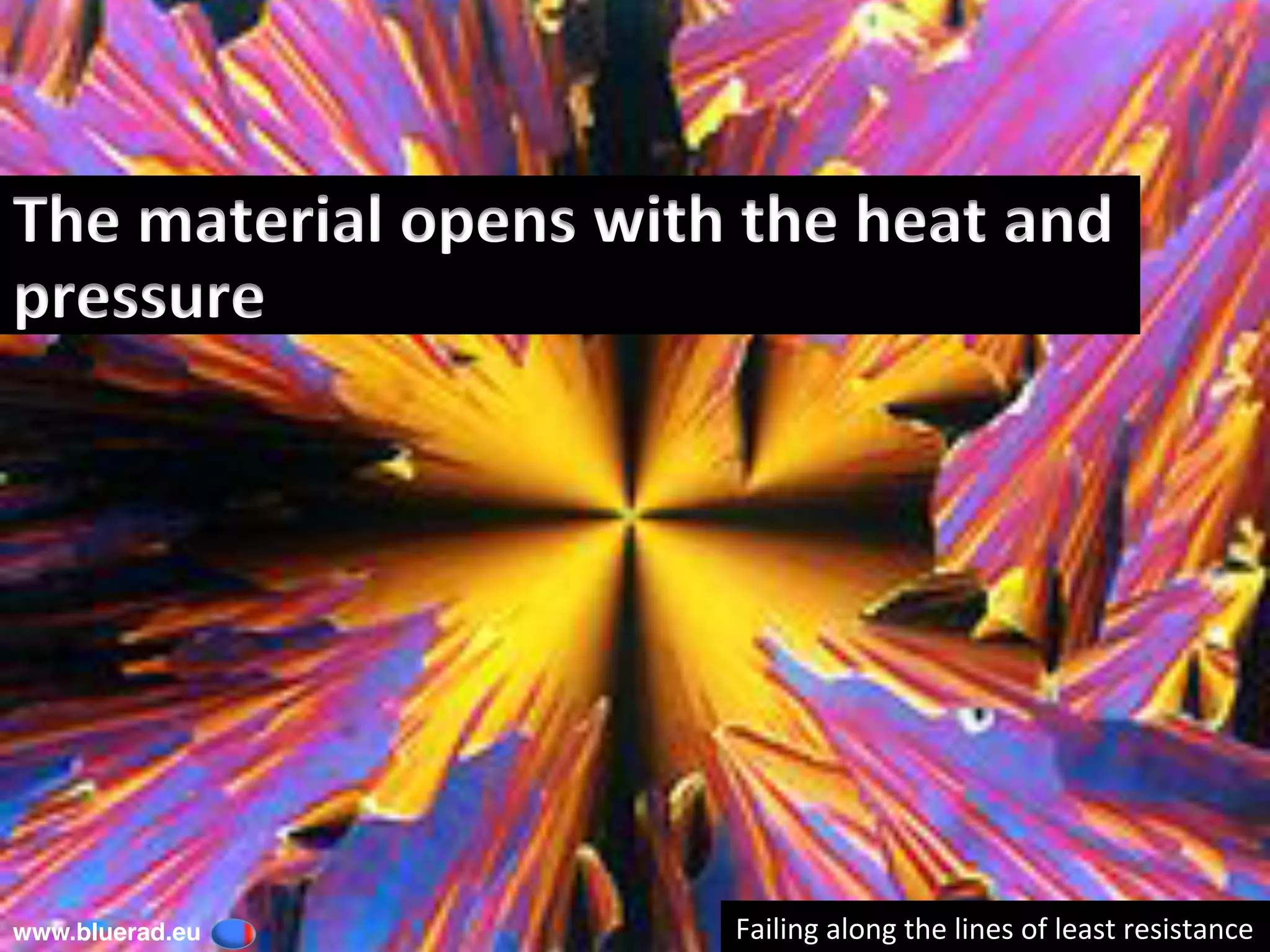
The	material	opens	with	the	heat	and	
pressure	
www.bluerad.eu
	 Failing	along	the	lines	of	least	resistance
In	the	shape	of	a	Maltese	Cross	
Photo	Flickr	
www.bluerad.eu
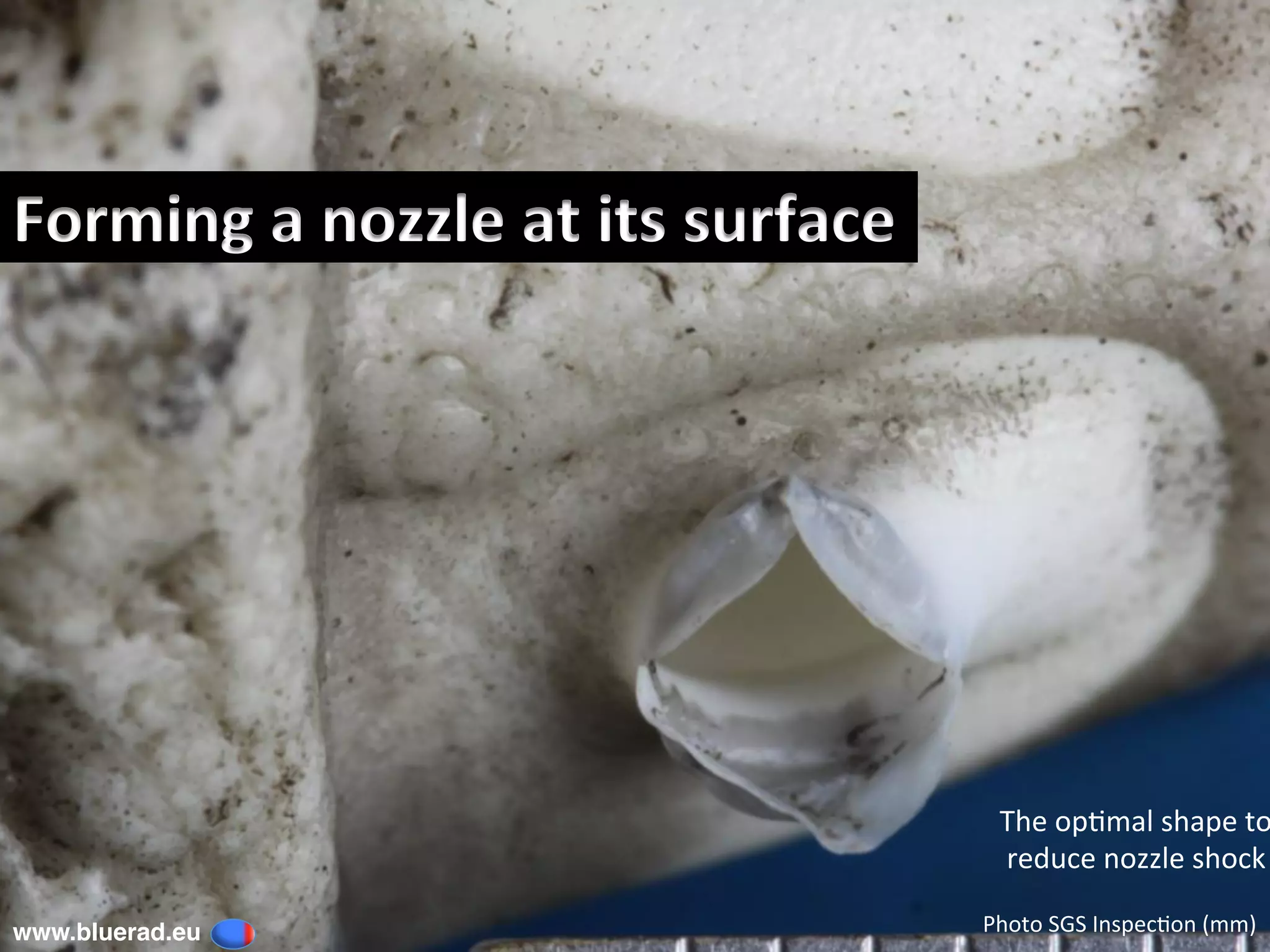
Forming	a	nozzle	at	its	surface		
Photo	SGS	Inspec@on	(mm)	www.bluerad.eu
	
The	op@mal	shape	to
reduce	nozzle	shock
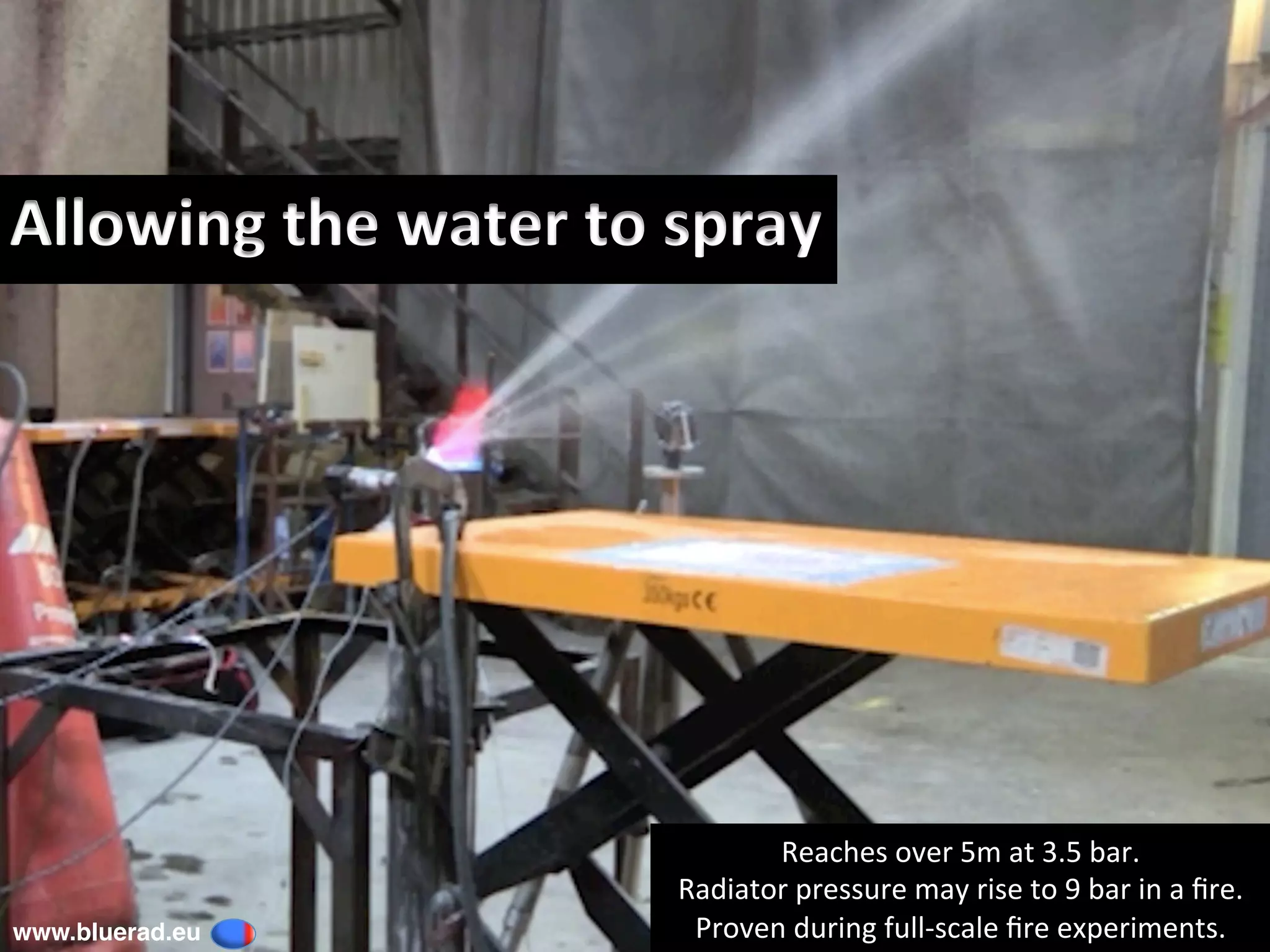
Allowing	the	water	to	spray		
Reaches	over	5m	at	3.5	bar.	
Radiator	pressure	may	rise	to	9	bar	in	a	fire.	
Proven	during	full-scale	fire	experiments.	www.bluerad.eu
The	spray	is	driven	by	the	pressure	in	the	
radiator(s)	exposed	to	the	fire	
Photo	Flickr	
Photo	Flickr	
www.bluerad.eu
	 In	the	USA	radiators	are	known	as	hea@ng	panels
The	volume	of	water	expands	by	
approximately	1700	6mes	its	
liquid	volume	when	released		
Photo	Flickr	
www.bluerad.eu
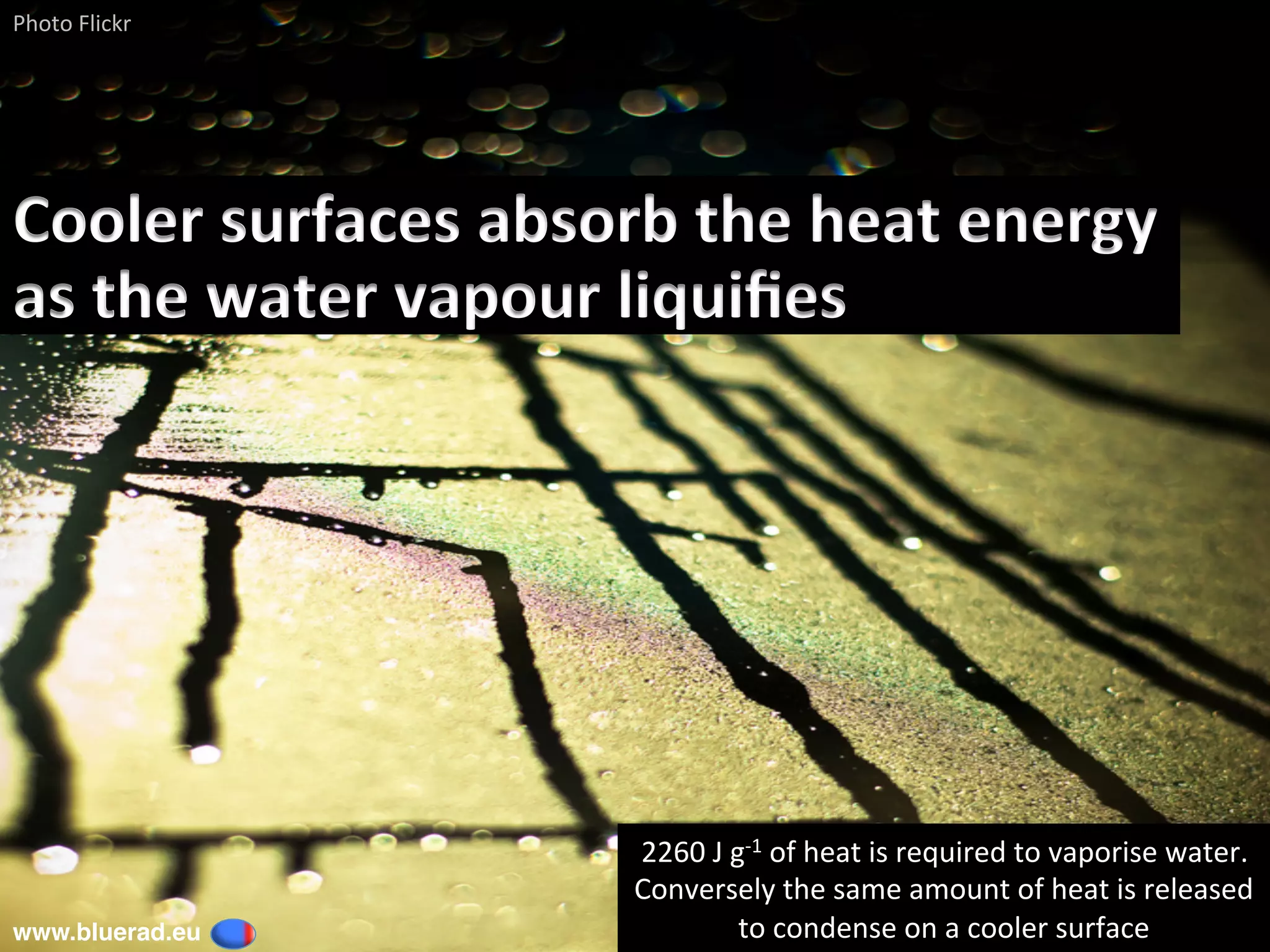
Cooler	surfaces	absorb	the	heat	energy	
as	the	water	vapour	liquifies		
Photo	Flickr	
www.bluerad.eu
	
2260	J	g-1	of	heat	is	required	to	vaporise	water.	
Conversely	the	same	amount	of	heat	is	released	
to	condense	on	a	cooler	surface
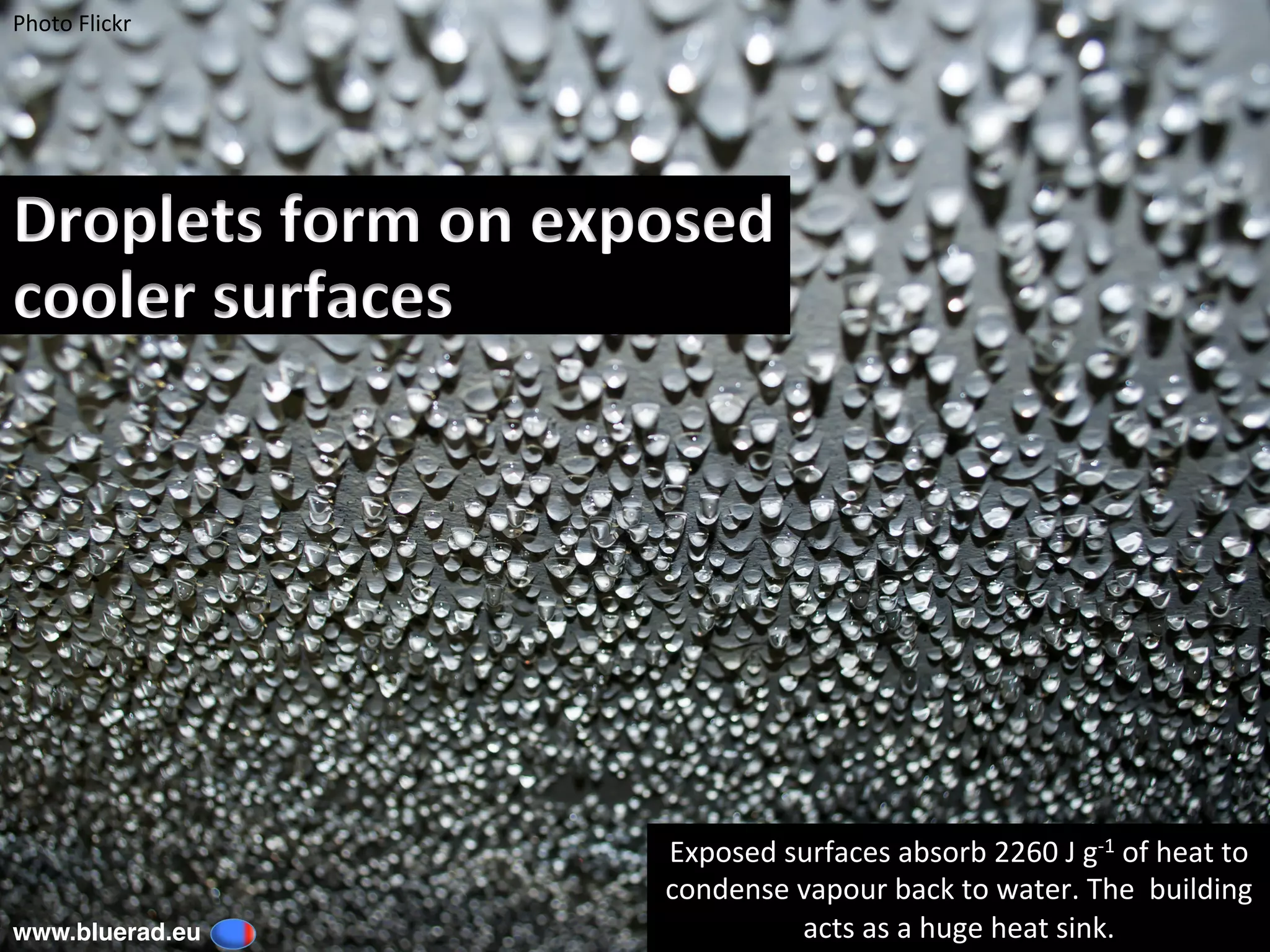
Droplets	form	on	exposed	
cooler	surfaces	
Photo	Flickr	
www.bluerad.eu
	
Exposed	surfaces	absorb	2260	J	g-1	of	heat	to		
condense	vapour	back	to	water.	The		building		
acts	as	a	huge	heat	sink.
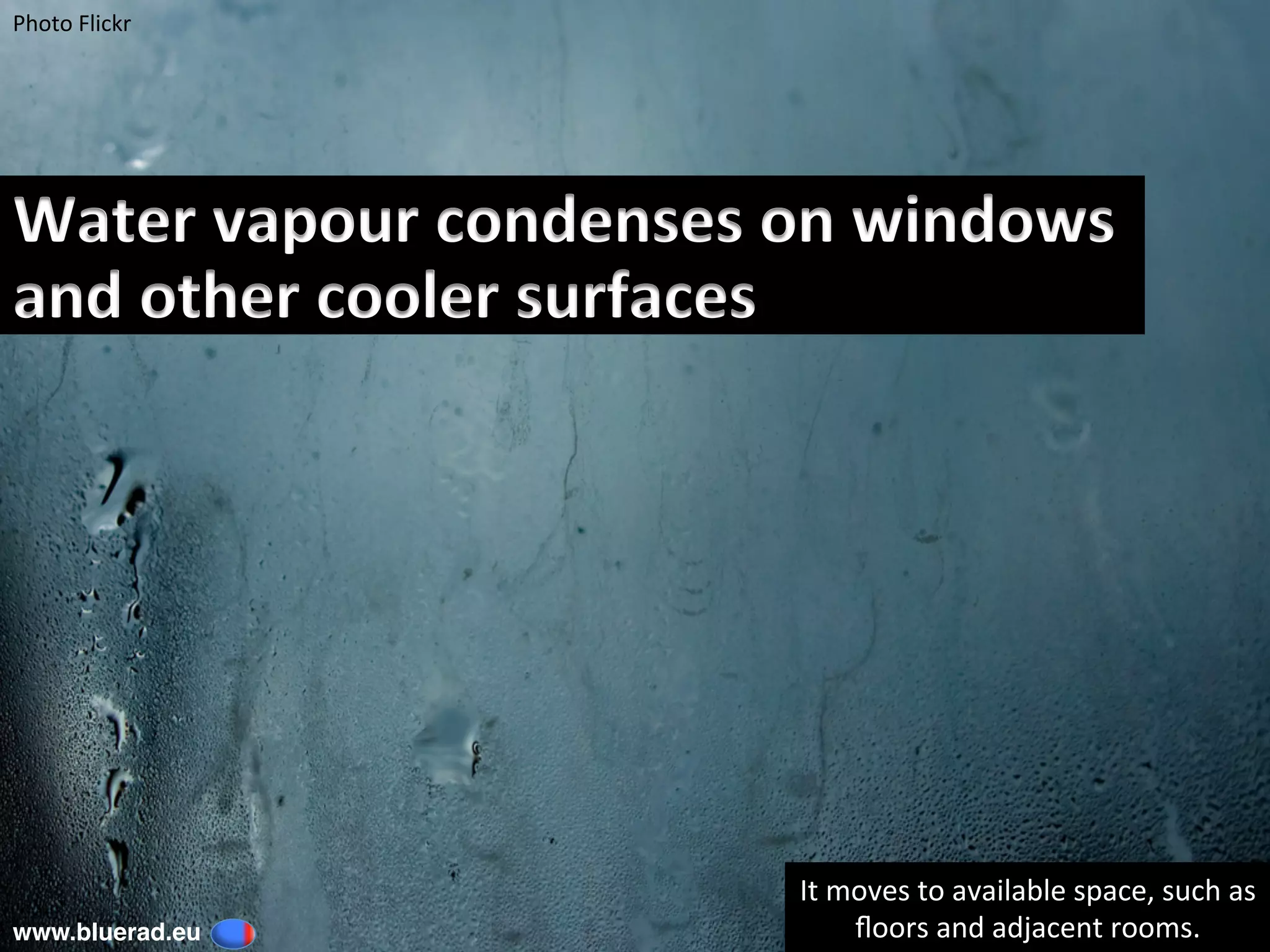
Water	vapour	condenses	on	windows	
and	other	cooler	surfaces		
Photo	Flickr	
www.bluerad.eu
	
It	moves	to	available	space,	such	as		
floors	and	adjacent	rooms.
Any?		
Photo	Flickr	
www.bluerad.eu
	 If	you	have	any	ques@ons	about	Blueproof	TM	do	not	hesitate	to	get	in	touch

Blueproof tech presentation part 1 and 2