PRESENTED BY :-
OM PRAKASH RAJAK
17MT002263
M.TECH. – I (SEM.)
ESE DEPARTMENT
IIT (ISM) DHANBAD
Method for prevention and control of spontaneous
combustion of coal seam and its application in mining
field
INTRODUCTION
• Spontaneous combustion of coal or other carbonaceous matter may be
defined as the process of “self heating” resulting eventually in its ignition
without the application of external heat.
• Mainly CO, CO2 and water vapour along with evolution of heat during the
chemical reaction. The process takes place at normal temperature but it is
slow and the heat evolved is not carried away by the air unless the latter is
stagnant.
What is Spontaneous combustion ?
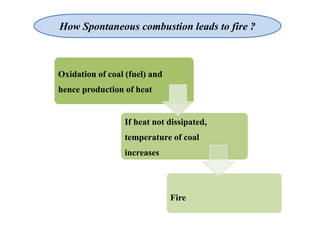
How Spontaneous combustion leads to fire ?
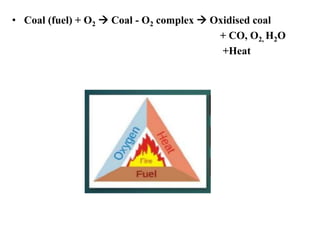
Oxidation of coal (fuel) and
hence production of heat
If heat not dissipated,
temperature of coal
increases
Fire
• Coal (fuel) + O2  Coal - O2 complex  Oxidised coal
+ CO, O2, H2O
+Heat
• Auto-oxidation of coal is a complex physico-chemical process accompanied
by the absorption of O2 , formation of coal-oxygen complexes and their
decomposition leading to the liberation of heat.
• The accurate mechanism of the reaction is still not well understood.
• However, scientists agree that the nature of interaction between coal and
oxygen at much low ambient temperatures is amply a physical
(adsorption) process and change into a chemisorption form.
Mechanism of Spontaneous combustion
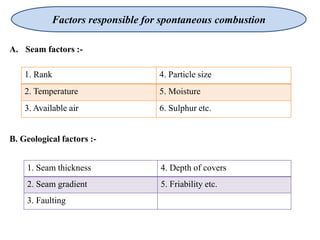
A. Seam factors :-
B. Geological factors :-
Factors responsible for spontaneous combustion
1. Rank 4. Particle size
2. Temperature 5. Moisture
3. Available air 6. Sulphur etc.
1. Seam thickness 4. Depth of covers
2. Seam gradient 5. Friability etc.
3. Faulting
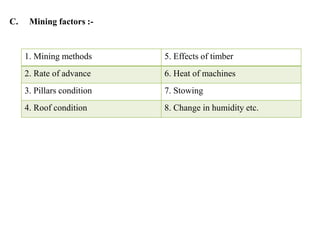
C. Mining factors :-
1. Mining methods 5. Effects of timber
2. Rate of advance 6. Heat of machines
3. Pillars condition 7. Stowing
4. Roof condition 8. Change in humidity etc.
A. Initial stage :-
i. Faint haze.
ii. Moisture deposition.
iii. Faint odour known as gob stink.
iv. Cricket and other small insects show increased activity and chirping.
B. Intermediate stage :- Previous symptoms are intensified and there is a
further pronounced petrol like odour indicating the
beginning of distillation of coal.
C. Last stage :- The petrol like odour changes into tarry odour, sometimes
known as “Firestink” which is also due to distillation of coal.
Symptoms of spontaneous heating in underground mines
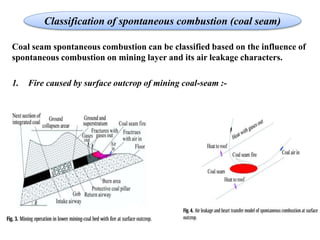
Coal seam spontaneous combustion can be classified based on the influence of
spontaneous combustion on mining layer and its air leakage characters.
1. Fire caused by surface outcrop of mining coal-seam :-
Classification of spontaneous combustion (coal seam)
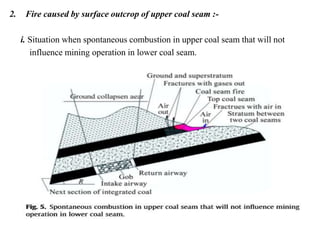
2. Fire caused by surface outcrop of upper coal seam :-
i. Situation when spontaneous combustion in upper coal seam that will not
influence mining operation in lower coal seam.
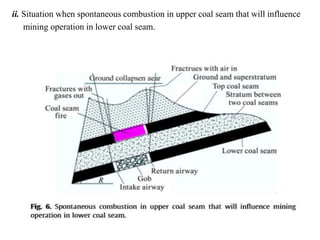
ii. Situation when spontaneous combustion in upper coal seam that will influence
mining operation in lower coal seam.
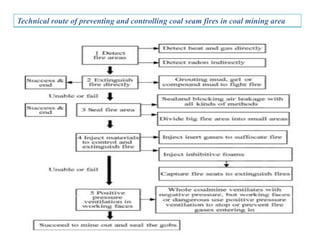
Technical route of preventing and controlling coal seam fires in coal mining area
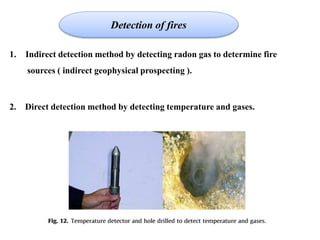
1. Indirect detection method by detecting radon gas to determine fire
sources ( indirect geophysical prospecting ).
2. Direct detection method by detecting temperature and gases.
Detection of fires
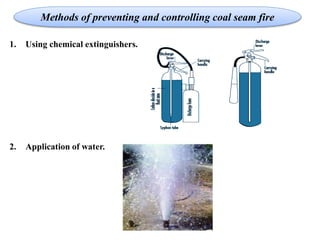
1. Using chemical extinguishers.
2. Application of water.
Methods of preventing and controlling coal seam fire
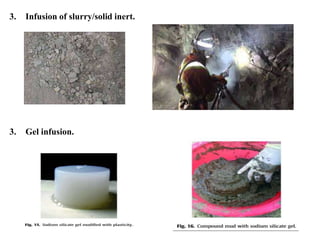
3. Infusion of slurry/solid inert.
3. Gel infusion.
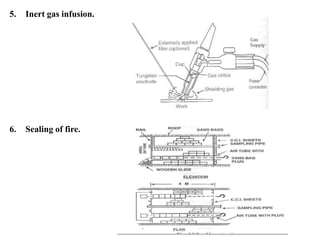
5. Inert gas infusion.
6. Sealing of fire.
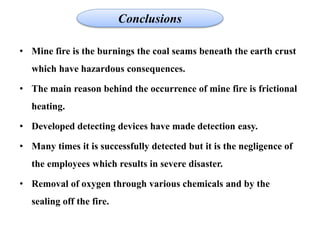
• Mine fire is the burnings the coal seams beneath the earth crust
which have hazardous consequences.
• The main reason behind the occurrence of mine fire is frictional
heating.
• Developed detecting devices have made detection easy.
• Many times it is successfully detected but it is the negligence of
the employees which results in severe disaster.
• Removal of oxygen through various chemicals and by the
sealing off the fire.
Conclusions
• Advancement in technology is required for the application of these
methods.
• Water for removal for heat.
• Removal of hot combustible or the fuel.
• Adjust the ventilation facilities.
• International journal of mining science and technology.
• Element of mining technology vol. 2, DJ Deshmukh
• Internet
References
THANK YOU

Spontaneous combustion prevention and control

  • 1.
    PRESENTED BY :- OMPRAKASH RAJAK 17MT002263 M.TECH. – I (SEM.) ESE DEPARTMENT IIT (ISM) DHANBAD Method for prevention and control of spontaneous combustion of coal seam and its application in mining field
  • 2.
    INTRODUCTION • Spontaneous combustionof coal or other carbonaceous matter may be defined as the process of “self heating” resulting eventually in its ignition without the application of external heat. • Mainly CO, CO2 and water vapour along with evolution of heat during the chemical reaction. The process takes place at normal temperature but it is slow and the heat evolved is not carried away by the air unless the latter is stagnant. What is Spontaneous combustion ?
  • 4.
    How Spontaneous combustionleads to fire ? Oxidation of coal (fuel) and hence production of heat If heat not dissipated, temperature of coal increases Fire
  • 5.
    • Coal (fuel)+ O2  Coal - O2 complex  Oxidised coal + CO, O2, H2O +Heat
  • 6.
    • Auto-oxidation ofcoal is a complex physico-chemical process accompanied by the absorption of O2 , formation of coal-oxygen complexes and their decomposition leading to the liberation of heat. • The accurate mechanism of the reaction is still not well understood. • However, scientists agree that the nature of interaction between coal and oxygen at much low ambient temperatures is amply a physical (adsorption) process and change into a chemisorption form. Mechanism of Spontaneous combustion
  • 7.
    A. Seam factors:- B. Geological factors :- Factors responsible for spontaneous combustion 1. Rank 4. Particle size 2. Temperature 5. Moisture 3. Available air 6. Sulphur etc. 1. Seam thickness 4. Depth of covers 2. Seam gradient 5. Friability etc. 3. Faulting
  • 8.
    C. Mining factors:- 1. Mining methods 5. Effects of timber 2. Rate of advance 6. Heat of machines 3. Pillars condition 7. Stowing 4. Roof condition 8. Change in humidity etc.
  • 9.
    A. Initial stage:- i. Faint haze. ii. Moisture deposition. iii. Faint odour known as gob stink. iv. Cricket and other small insects show increased activity and chirping. B. Intermediate stage :- Previous symptoms are intensified and there is a further pronounced petrol like odour indicating the beginning of distillation of coal. C. Last stage :- The petrol like odour changes into tarry odour, sometimes known as “Firestink” which is also due to distillation of coal. Symptoms of spontaneous heating in underground mines
  • 10.
    Coal seam spontaneouscombustion can be classified based on the influence of spontaneous combustion on mining layer and its air leakage characters. 1. Fire caused by surface outcrop of mining coal-seam :- Classification of spontaneous combustion (coal seam)
  • 11.
    2. Fire causedby surface outcrop of upper coal seam :- i. Situation when spontaneous combustion in upper coal seam that will not influence mining operation in lower coal seam.
  • 12.
    ii. Situation whenspontaneous combustion in upper coal seam that will influence mining operation in lower coal seam.
  • 13.
    Technical route ofpreventing and controlling coal seam fires in coal mining area
  • 14.
    1. Indirect detectionmethod by detecting radon gas to determine fire sources ( indirect geophysical prospecting ). 2. Direct detection method by detecting temperature and gases. Detection of fires
  • 15.
    1. Using chemicalextinguishers. 2. Application of water. Methods of preventing and controlling coal seam fire
  • 16.
    3. Infusion ofslurry/solid inert. 3. Gel infusion.
  • 17.
    5. Inert gasinfusion. 6. Sealing of fire.
  • 18.
    • Mine fireis the burnings the coal seams beneath the earth crust which have hazardous consequences. • The main reason behind the occurrence of mine fire is frictional heating. • Developed detecting devices have made detection easy. • Many times it is successfully detected but it is the negligence of the employees which results in severe disaster. • Removal of oxygen through various chemicals and by the sealing off the fire. Conclusions
  • 19.
    • Advancement intechnology is required for the application of these methods. • Water for removal for heat. • Removal of hot combustible or the fuel. • Adjust the ventilation facilities.
  • 20.
    • International journalof mining science and technology. • Element of mining technology vol. 2, DJ Deshmukh • Internet References
  • 21.