PRESENTATION AND PRESENTATION
SKILLS
OUTLINE
 Why is presentation important?
 Planning for a presentation
 Interacting with audience
 Importance of the visual aids
 Presentation skills
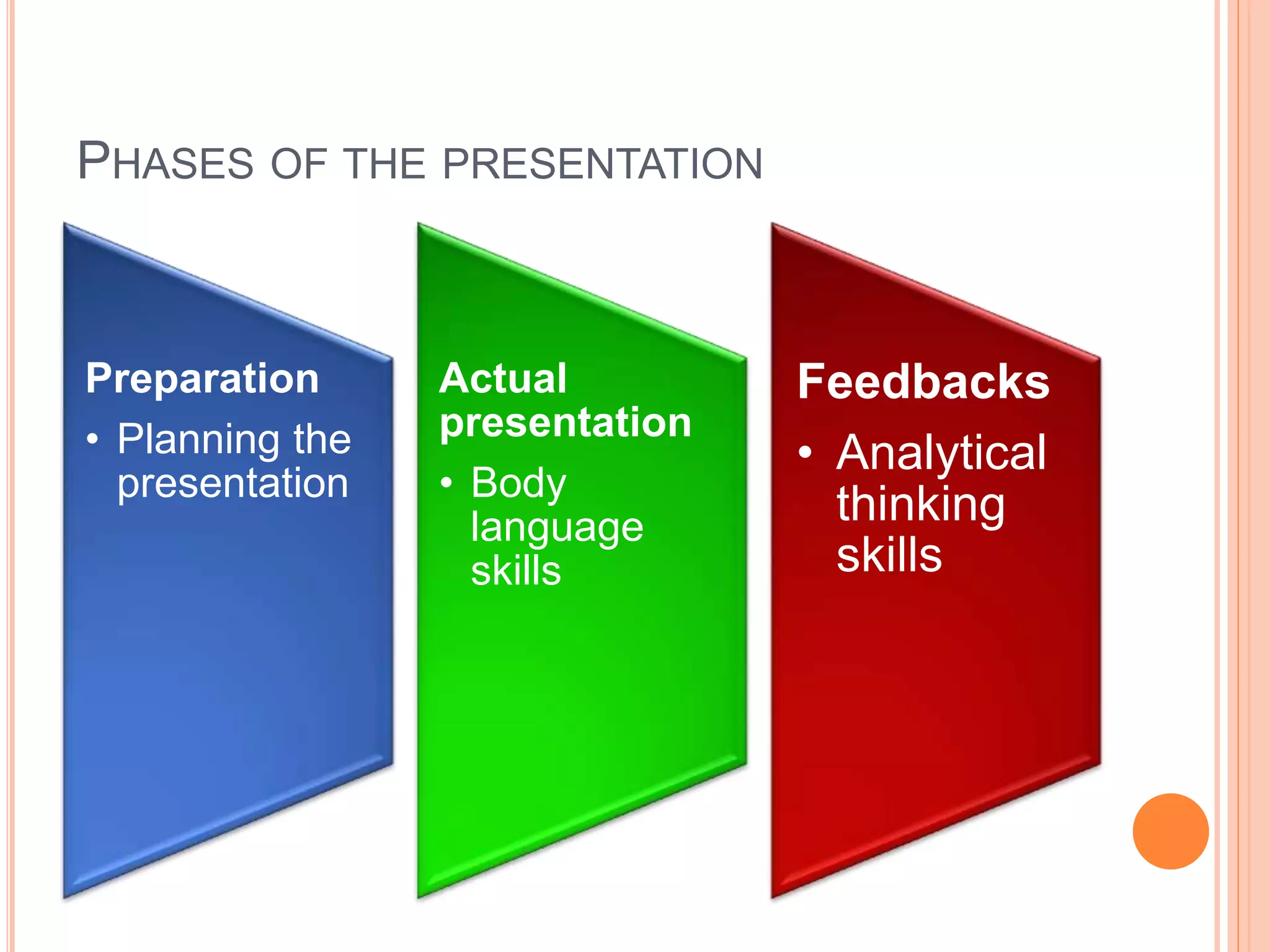
PHASES OF THE PRESENTATION
Preparation
• Planning the
presentation
Actual
presentation
• Body
language
skills
Feedbacks
• Analytical
thinking
skills
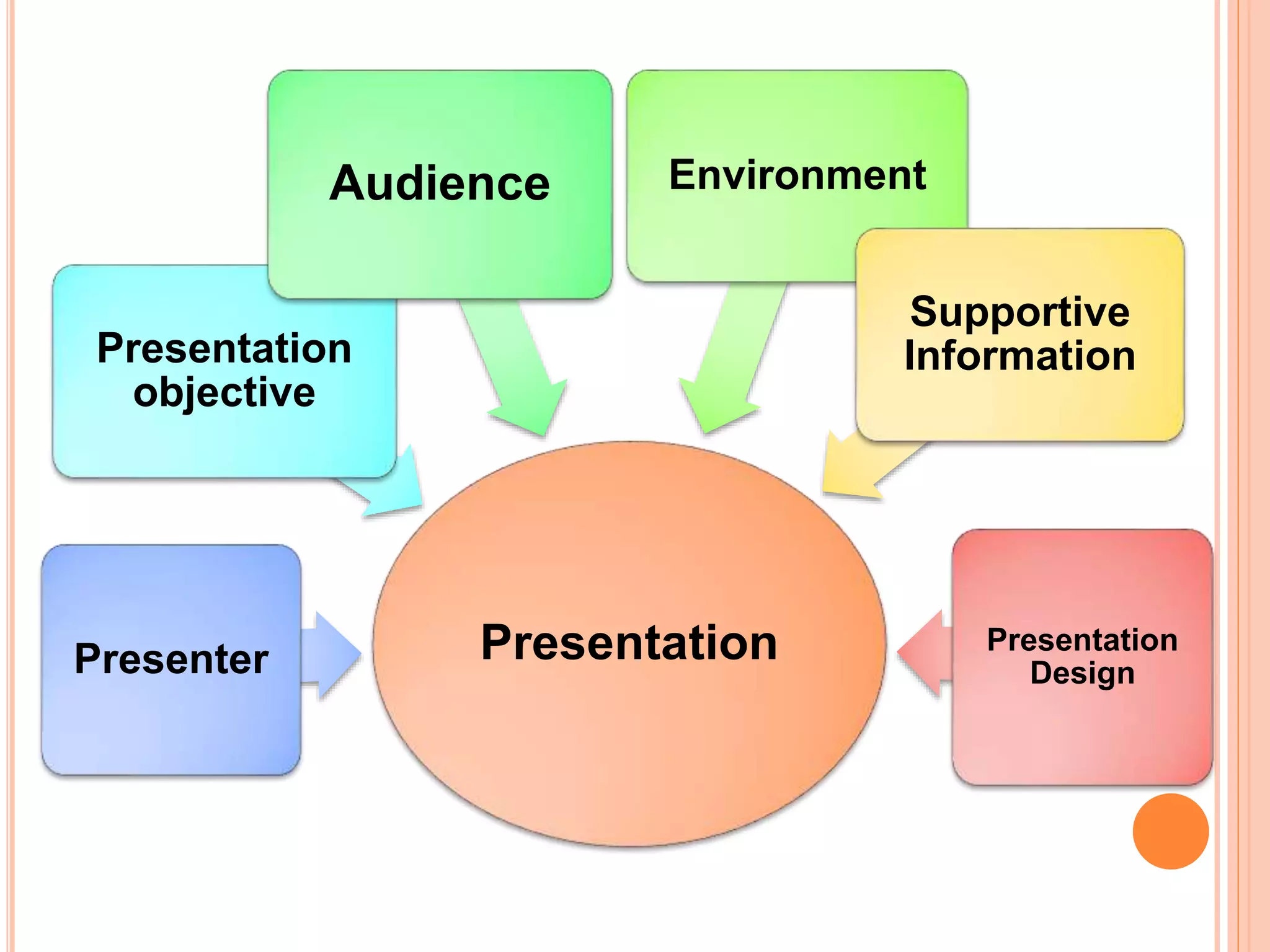
PresentationPresenter
Presentation
objective
Audience Environment
Supportive
Information
Presentation
Design
THE PRESENTATION
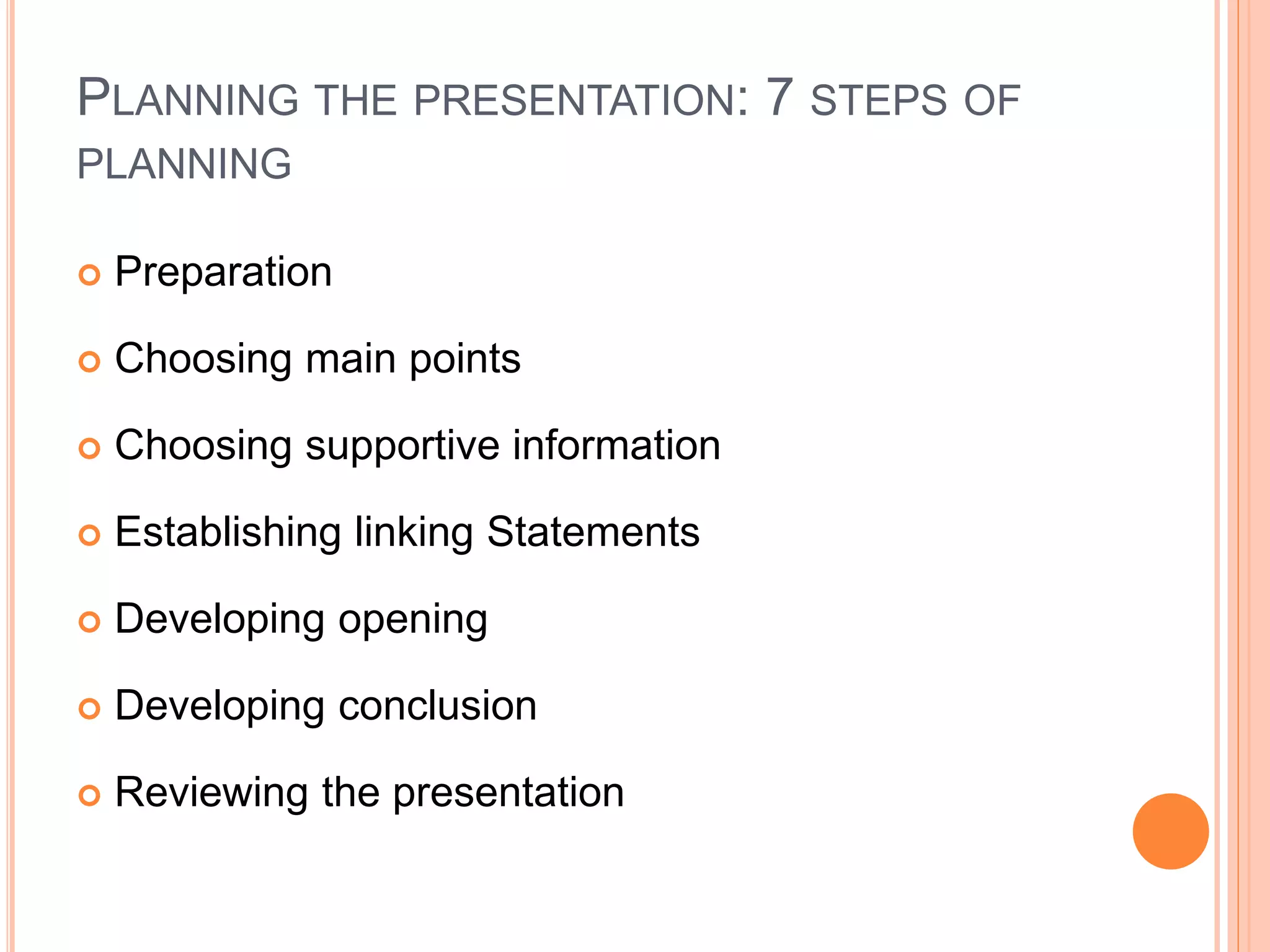
PLANNING THE PRESENTATION: 7 STEPS OF
PLANNING
 Preparation
 Choosing main points
 Choosing supportive information
 Establishing linking Statements
 Developing opening
 Developing conclusion
 Reviewing the presentation
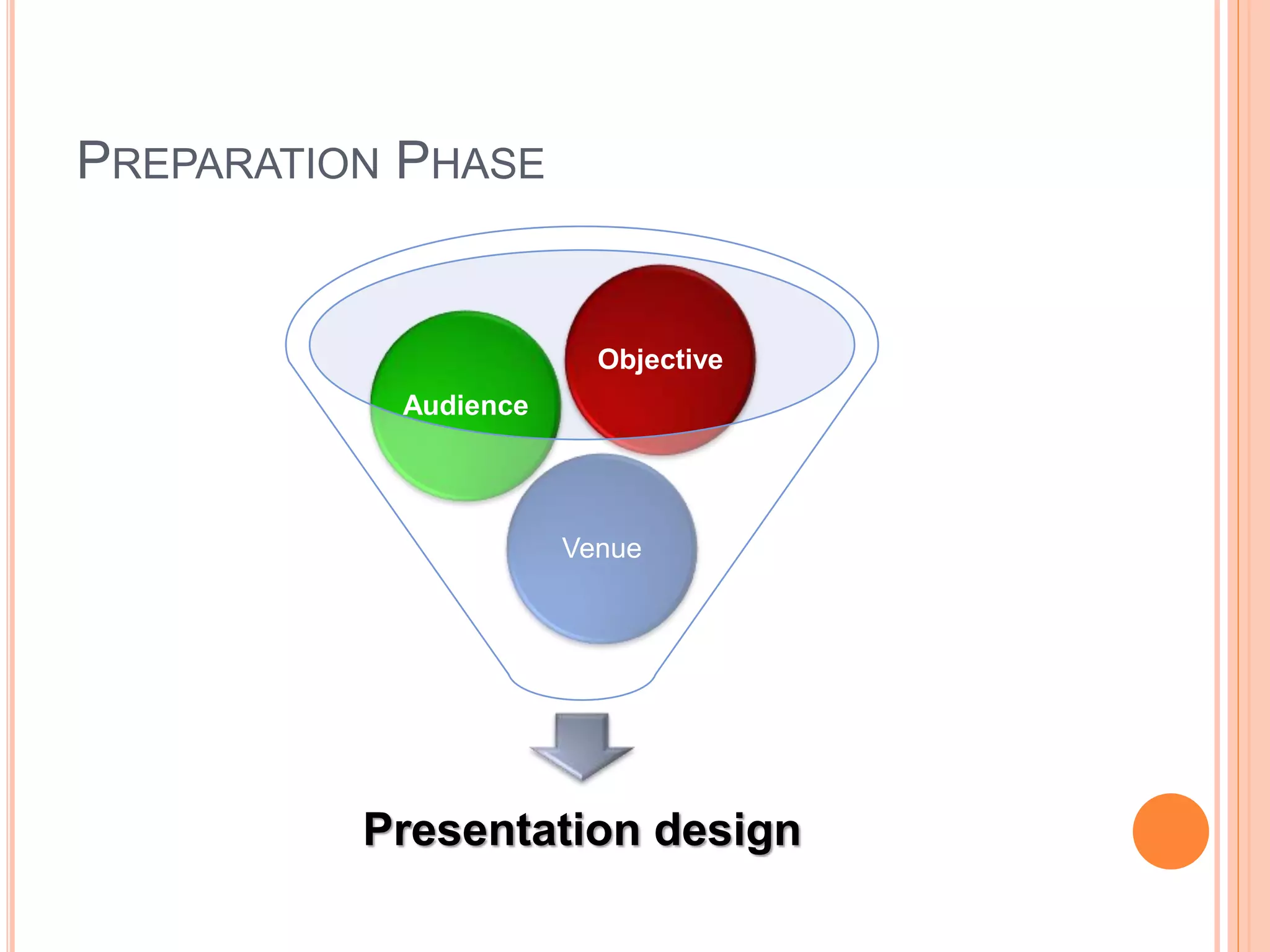
PREPARATION PHASE
Presentation design
Venue
Audience
Objective
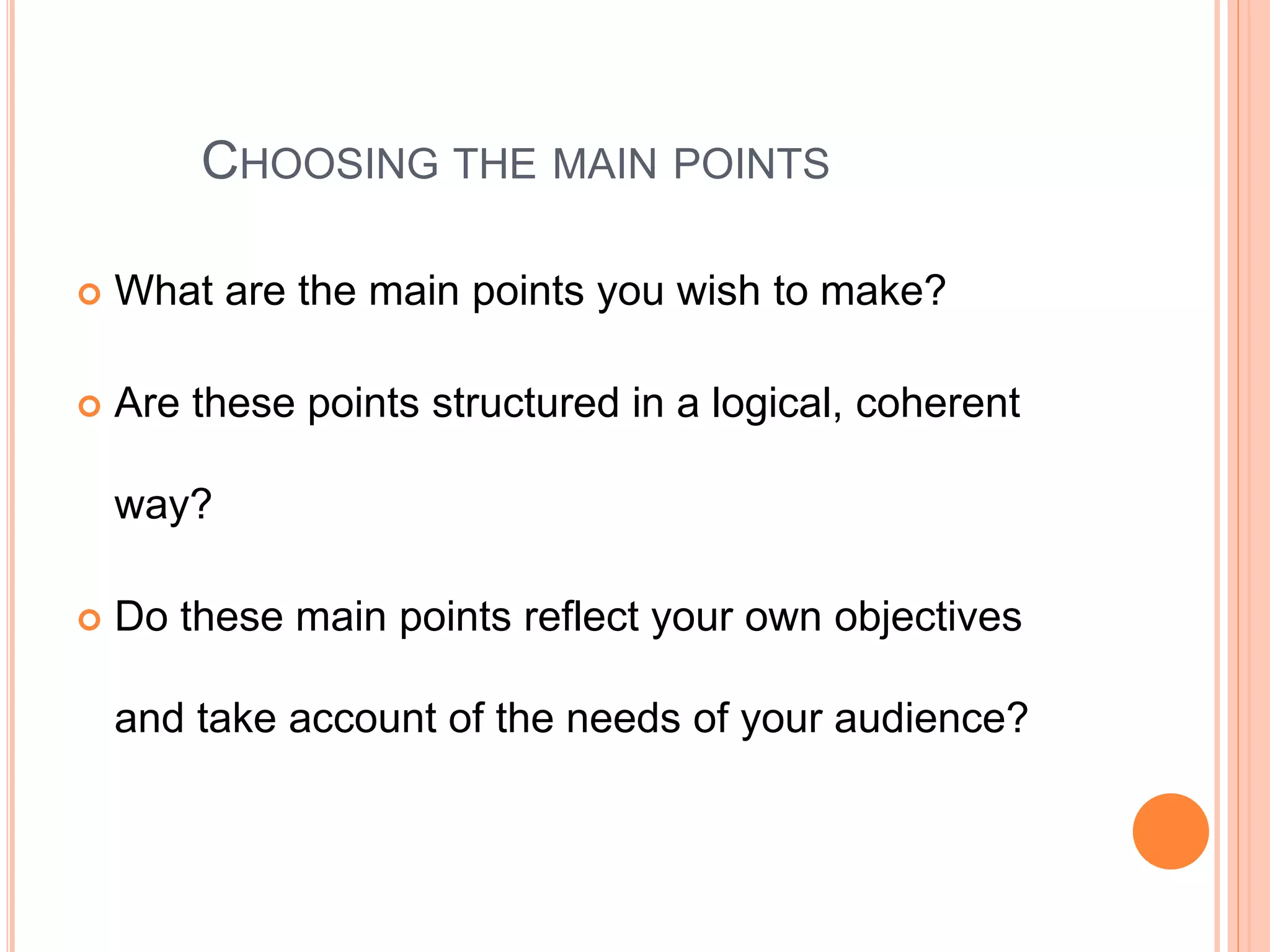
CHOOSING THE MAIN POINTS
 What are the main points you wish to make?
 Are these points structured in a logical, coherent
way?
 Do these main points reflect your own objectives
and take account of the needs of your audience?
SUPPORTING INFORMATION
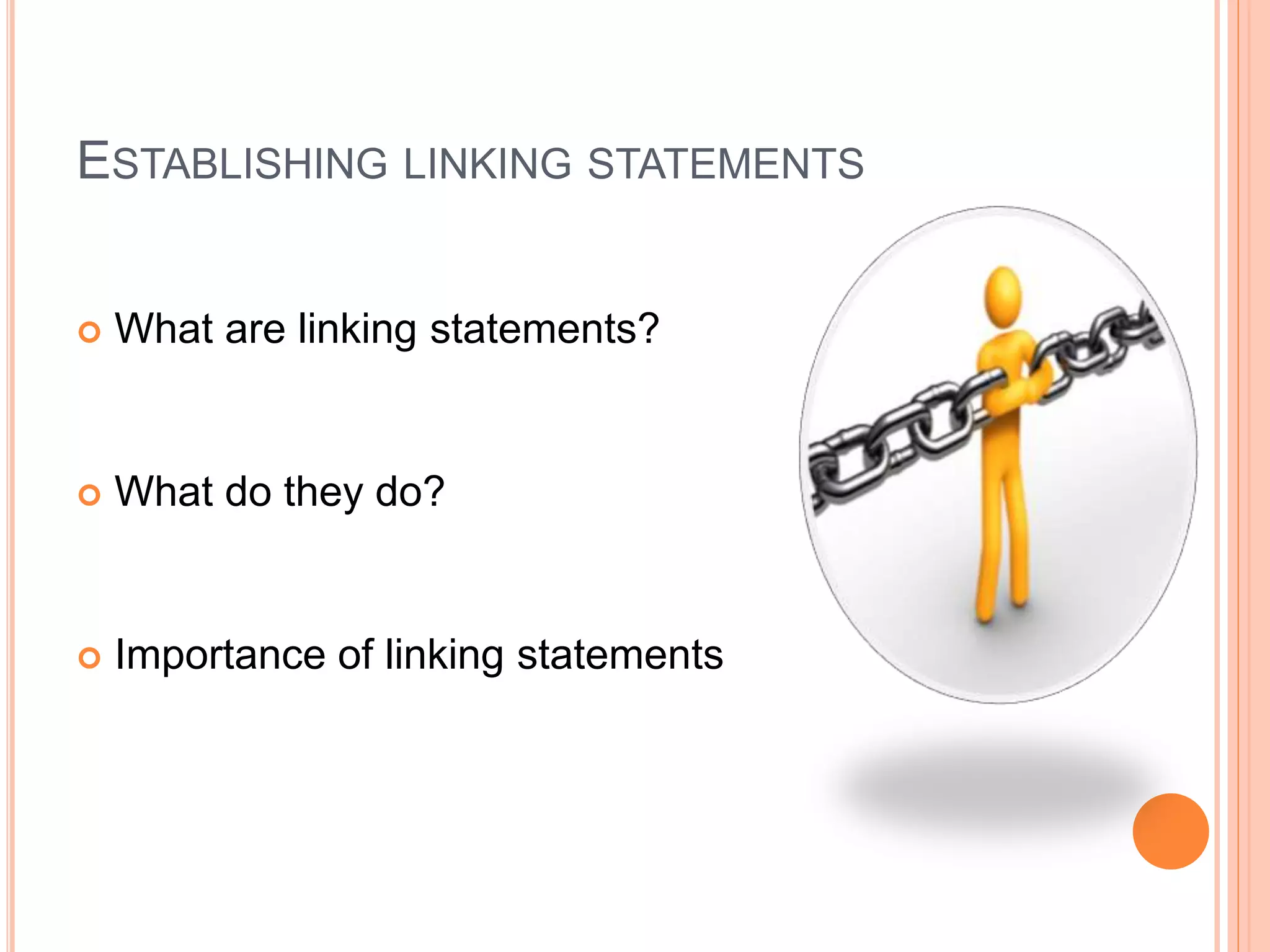
ESTABLISHING LINKING STATEMENTS
 What are linking statements?
 What do they do?
 Importance of linking statements
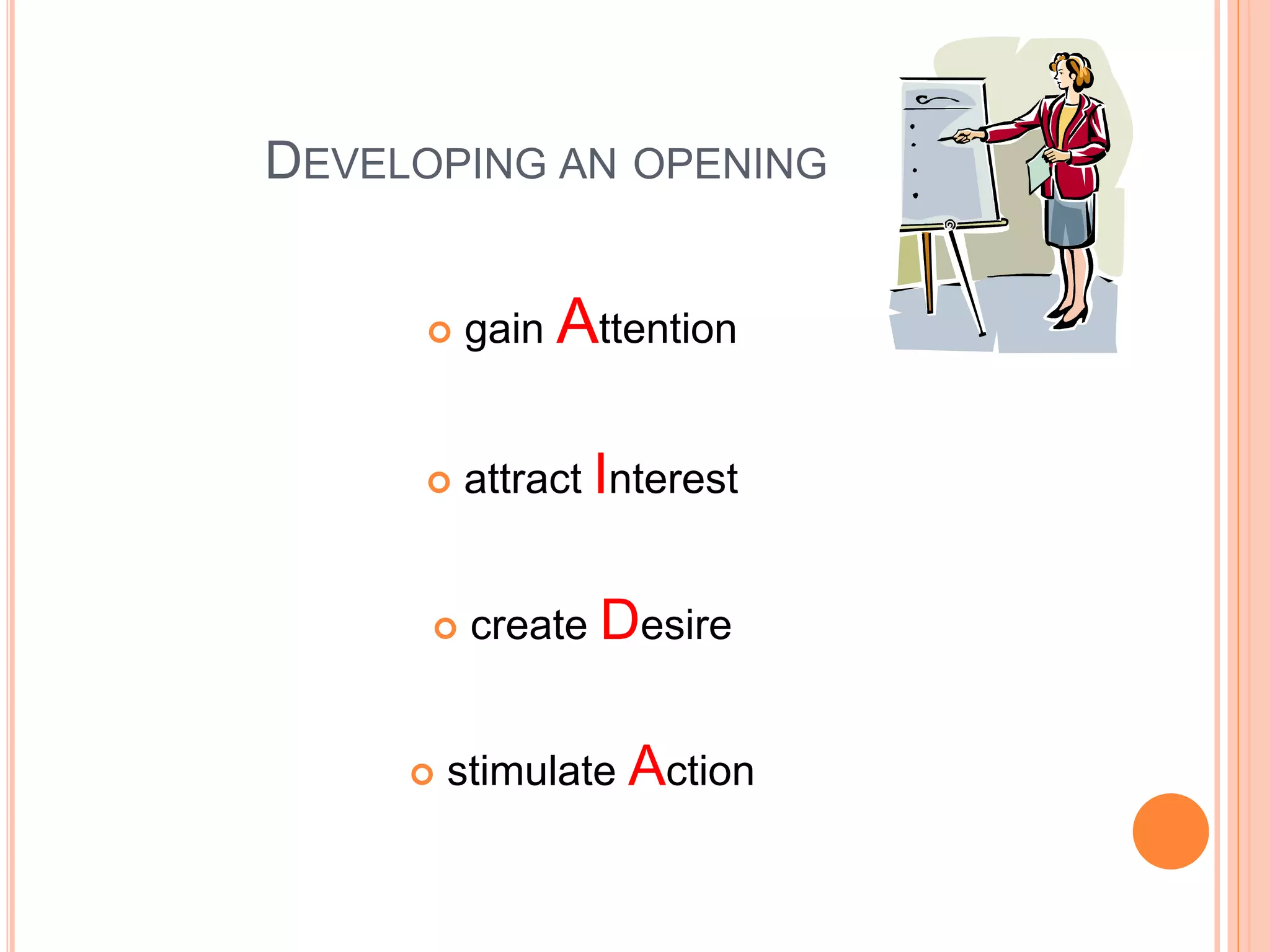
DEVELOPING AN OPENING
 gain Attention
 attract Interest
 create Desire
 stimulate Action
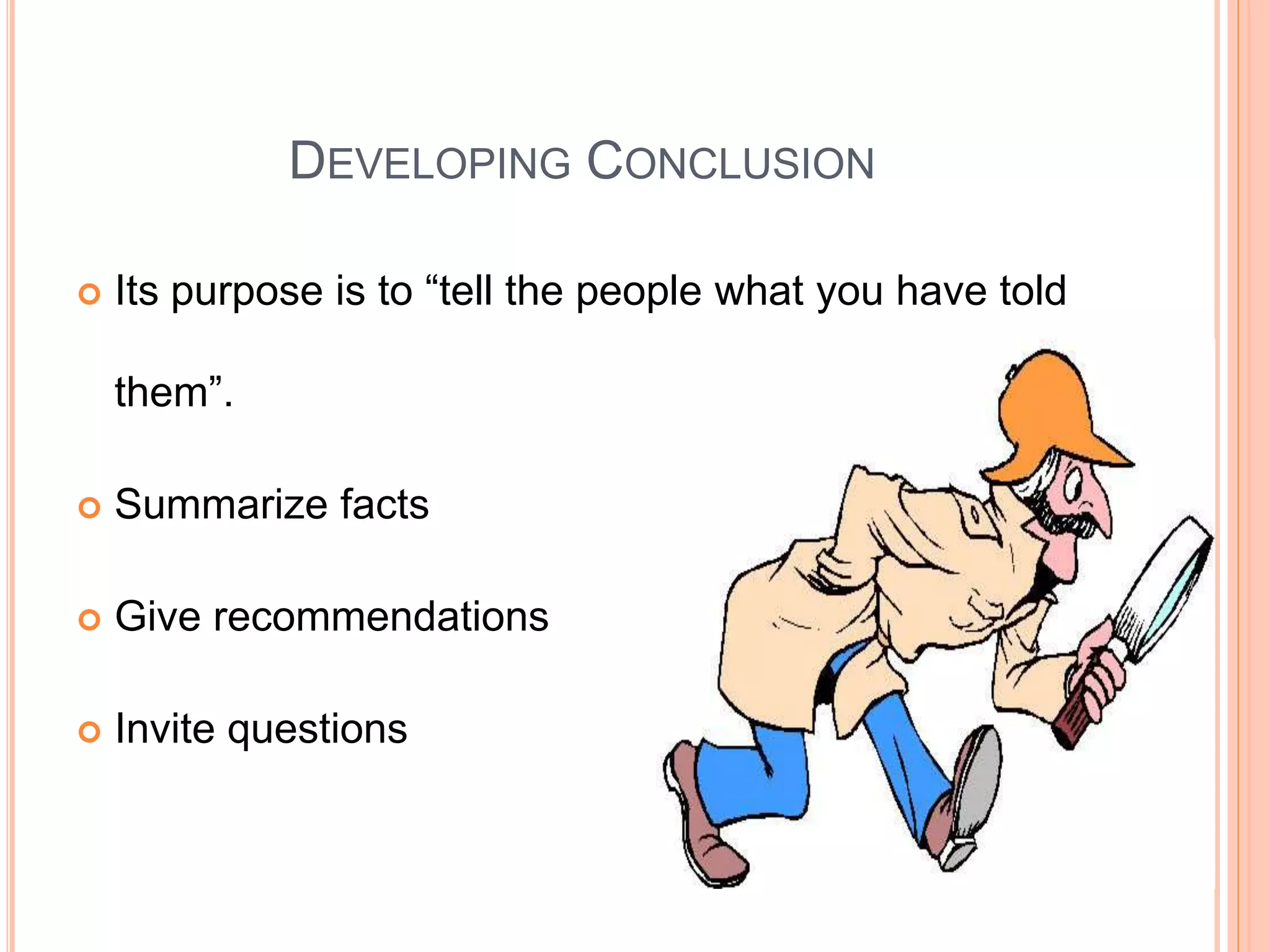
DEVELOPING CONCLUSION
 Its purpose is to “tell the people what you have told
them”.
 Summarize facts
 Give recommendations
 Invite questions
THINGS TO AVOID IN A PRESENTATION
 Reading from slides or notes
 Looking on the screen
 Too much text on the screen
 No clear opening
 Complex words Jargons
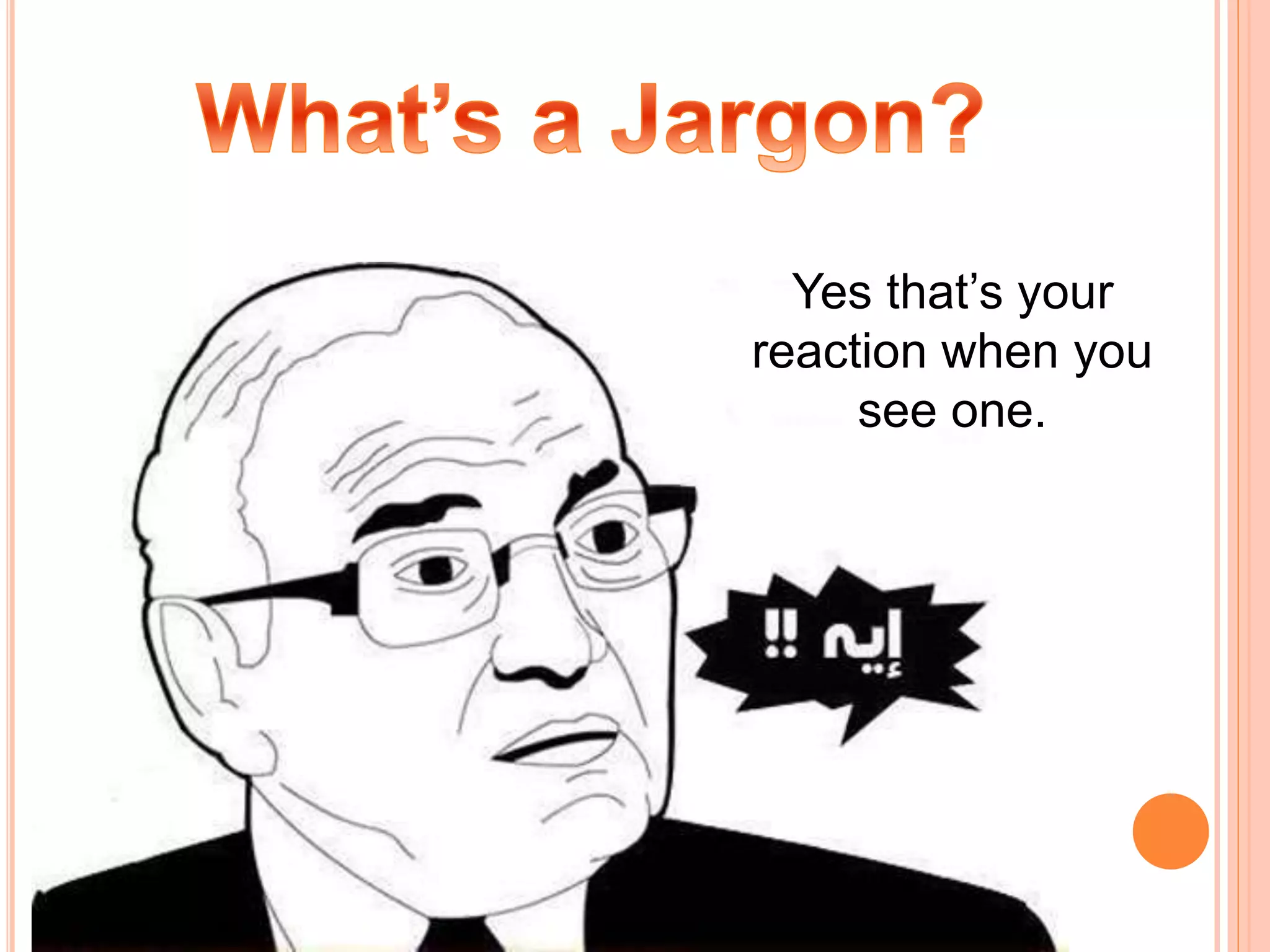
Yes that’s your
reaction when you
see one.
THE PRESENTATION SKILLS
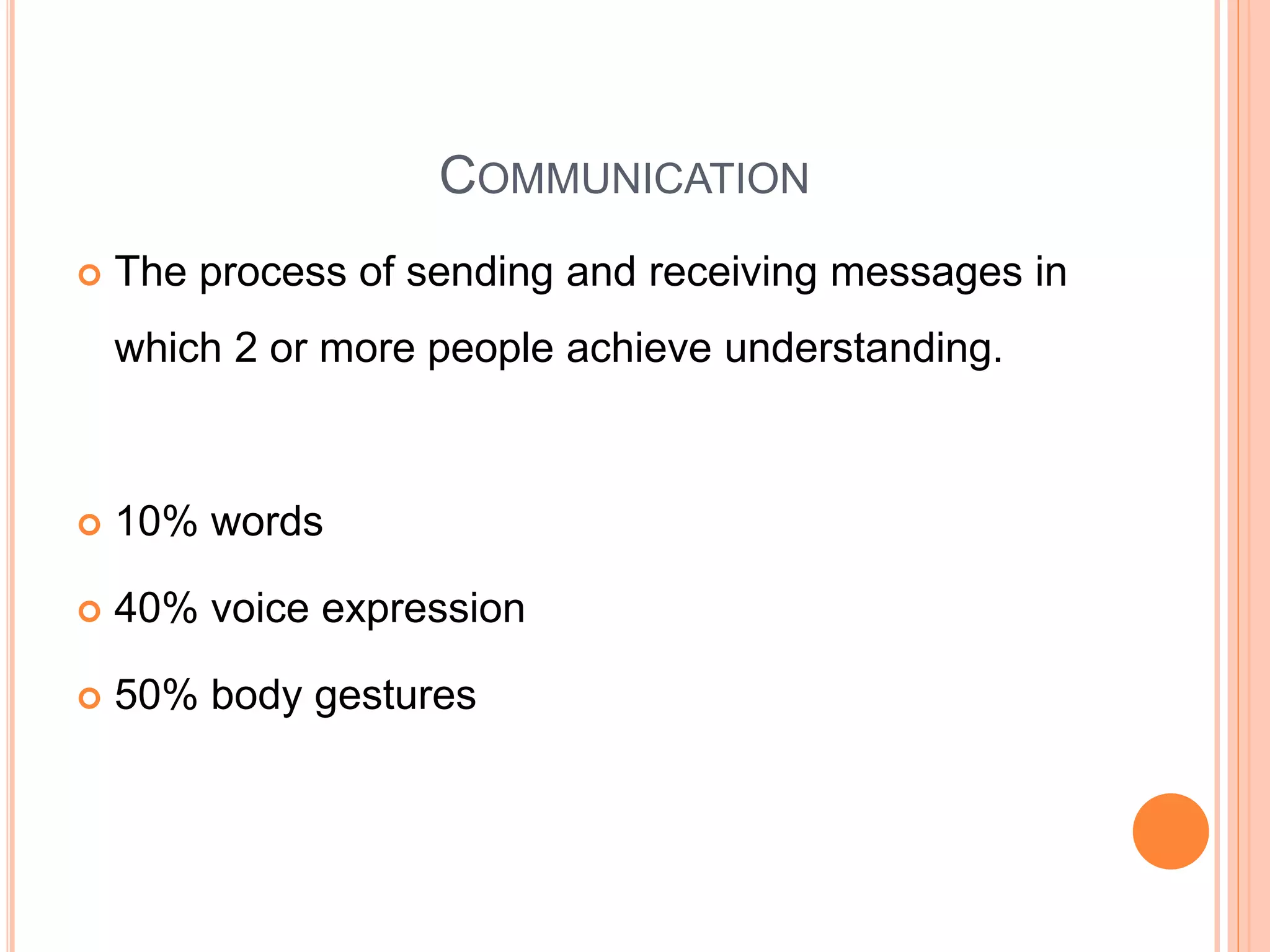
COMMUNICATION
 The process of sending and receiving messages in
which 2 or more people achieve understanding.
 10% words
 40% voice expression
 50% body gestures
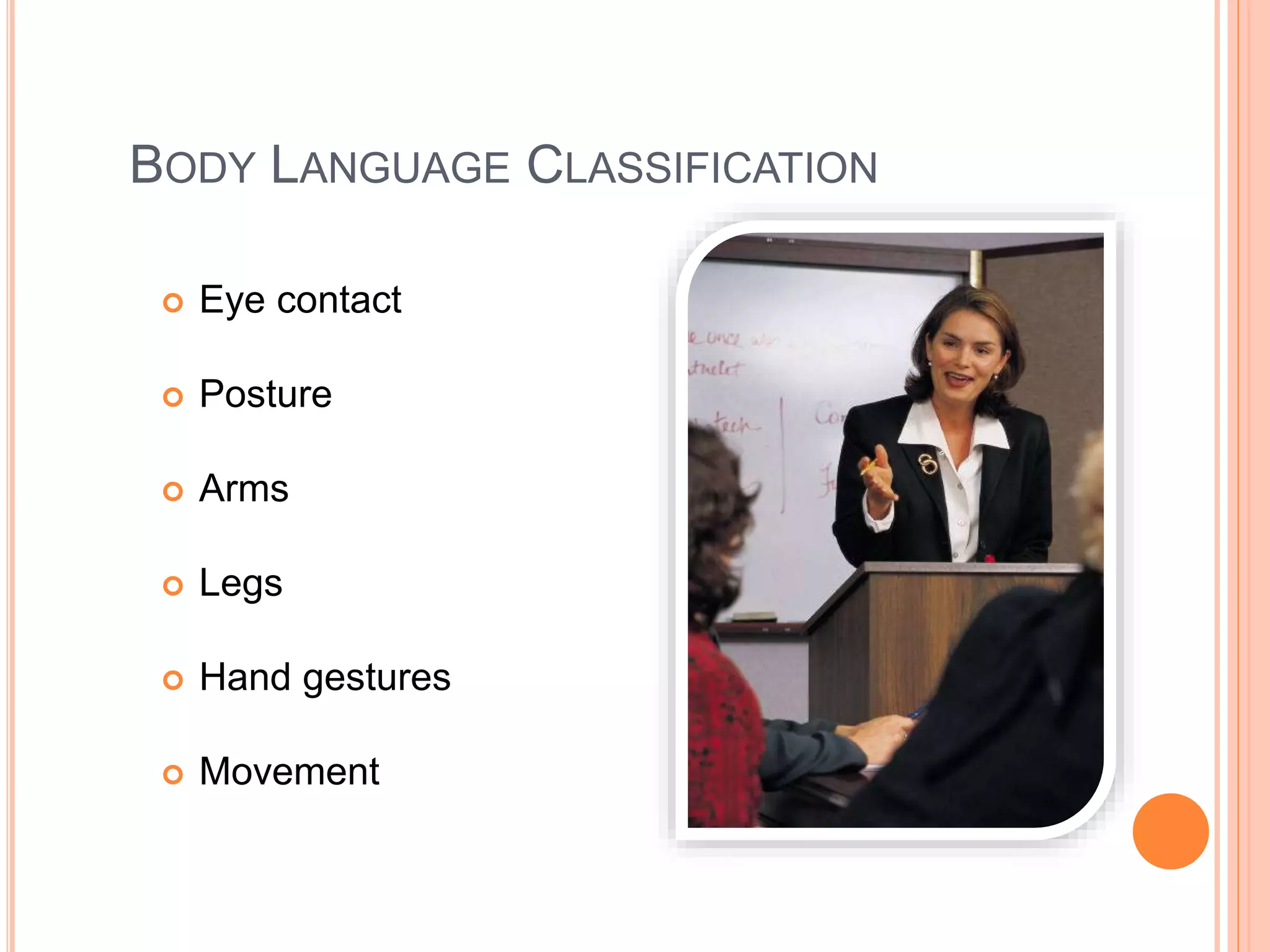
BODY LANGUAGE CLASSIFICATION
 Eye contact
 Posture
 Arms
 Legs
 Hand gestures
 Movement
NOTES ABOUT BODY LANGUAGE
 Be aware of our own nonverbal communication
while delivering a speech to any audience.
 Realize that non-verbal communication is at
times imprecise and should be interpreted with

care.
 Use appropriate gestures to drive home our
meaning.
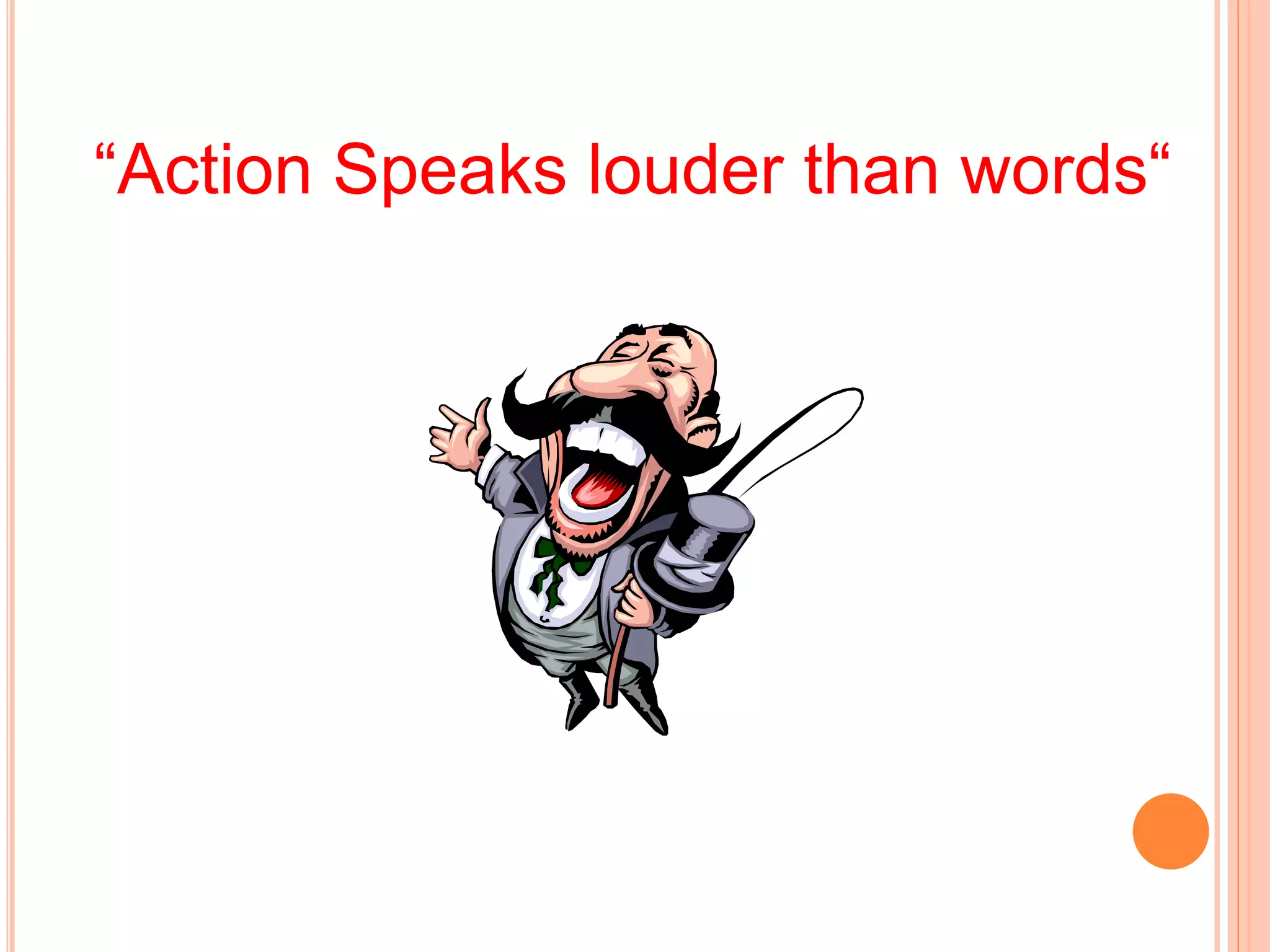
“Action Speaks louder than words“
APPLICATIONS
ACTION STORY
Talk at an ideal speed to allow your partner to
express what you are saying using body
language gestures.
DISCUSSION1
 What do you think about your talking speed?
 Did it slow down?
 How did you feel imitating the words?
MY FRIEND’S FICTIONAL LIFE
Introduce your friend, but not in the usual way ….
DISCUSSION2
 Did you like the story?
 Was the story logical or emotional?
 Can you be the guy/girl in the story?
 If you were to meet this fictional character, what
would you tell him/her?
TELL A STORY
Deliver a presentation based on an image shown
on the screen and receive feedback on your
presentation.
DISCUSSION3
 How well did you deliver
 What did you learn from other presenters ?
 Who had the best presentation? And why?
 Can you identify your weakness in public speaking?
WHICH IS A LIE
Say 3 facts about yourself, but the 3 facts shouldn’t be
all true…
DISCUSSION 4
 How was the candidates lying skills?
 Was it easy to detect the lie?
 What do you think about the lies?
Presentation and presentation skills

Presentation and presentation skills

Editor's Notes

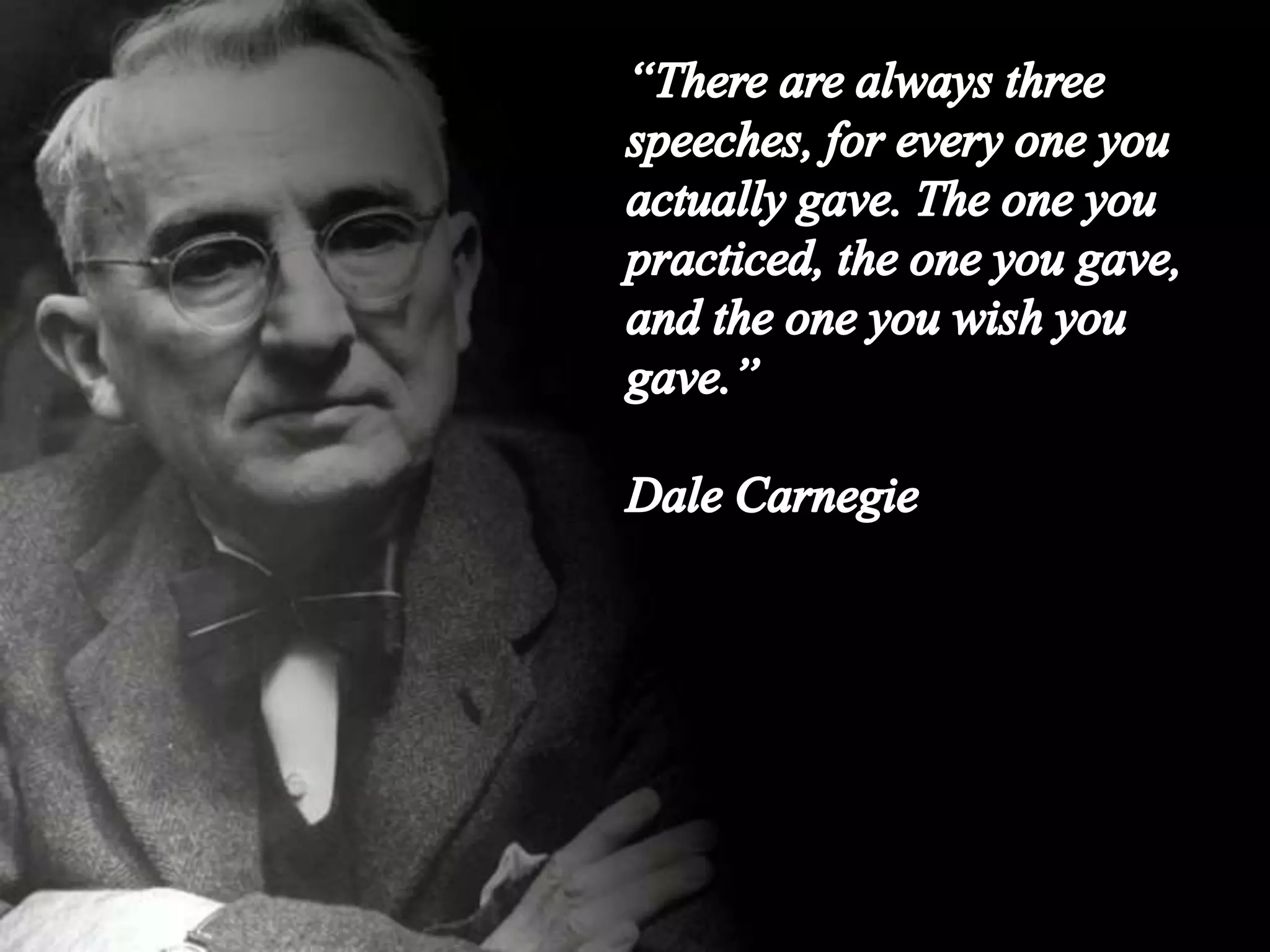
  • #8 (November 24, 1888 - November 1, 1955) was a pioneer in self-improvement, salesmanship, and corporate training programs, and became famous for courses he developed that emphasized public speaking and interpersonal skills.
  • #10 This should be changed/simplified
  • #13 https://www.youtube.com/watch?v=yBd8GYO-t1k