1
PREOPERATIVE EVALUATION
FOR ADULT CARDIAC
SURGERY
Presenter : Dr Rajesh Munigial
DM Trainee
Dept of Cardiac Anesthesiology
Jawaharlal Nehru Medical College,
Belagavi
2
TOPICS OF DISCUSSION
• Risk factors in cardiac surgery
• History and examination
• Risk scoring and stratification
• Preoperative pharmacological considerations
• Investigations
• Patient counselling and consent
3
Aims of the assessment:
• Gain an understanding of the pattern and severity of the cardiac disease and its anesthetic
implications
• Gain an understanding of the severity and implications of any co-morbid disease
• Review all investigations
• Consideration of appropriate resource allocation, including staffing, equipment, and postoperative
care environment
• Quantification of peri-operative risk, allowing discussion with the patient and facilitating informed
consent
• Lower the risk of surgery
4
Risk factors associated with cardiac surgery
Cardiac: myocardial ischemia, congestive cardiac failure,
atherosclerosis, arrhythmias.
Non-cardiac:
Nonmodifiable (age and gender) and
modifiable (renal failure, anemia, CNS
disorders, nutritional status, diabetes , pulmonary diseases
Surgical :combined procedures , CPB time , cross-
clamp time
5
Cardiac risk factors
• Myocardial ischemia : presents as angina or its equivalent
Central chest pain with or without radiation is described as pressure or
heaviness and a squeezing, burning or choking sensation.
It is typically precipitated by exertion and emotional stress, lasts 15
minutes and is relieved by rest or nitrates.
6
Canadian cardiovascular society classification of angina
Grade 1:stable angina develops upon strenuous, rapid and/or prolonged
exertion during work or recreation but it is not induced by ordinary physical
activity, such as walking and climbing stairs.
Grade 2: characterized by slight limitation of ordinary activity. It is induced
by walking or climbing stairs rapidly, walking uphill, post-prandial exertion,
emotional stress or walking more than two blocks.
Grade 3: marked limitation of ordinary physical activity. It is induced by
walking one or two blocks and climbing one flight of stairs in normal
conditions and at a normal pace.
Grade 4: pain and discomfort accompany any physical activity and may occur
at rest.
7
Higher grades exacerbate perioperative morbidity, and presence of
myocardial infarction and haemodynamic instability categorize surgical
urgency
Minimal risk: no
myocardial infarction
or haemodynamic
instability.
Surgery is scheduled
as elective.
Intermediate risk:
myocardial infarction
present without
haemodynamic instability.
Commence antiplatelet
therapy and low molecular
weight heparin.
Surgery is scheduled as
urgent.
High risk:
ongoing acute myocardial
ischemia or infarction with
haemodynamic instability.
Emergency
revascularization is
indicated
8
Congestive cardiac failure
• Left ventricular failure is characterized by exertional dyspnoea, orthopnoea,
paroxysmal nocturnal dyspnoea and fatigue.
• Coincidental pulmonary oedema presents as a wheezy cough with pink frothy
sputum.
• Tachycardia, cyanosis, basal crepitations and a gallop rhythm may also exist.
• Right heart failure presents with pedal oedema, ascites and abdominal discomfort.
• A raised jugular venous pulsation, hepato-jugular reflux, tender hepatomegaly and
pitting oedema may arise with an accentuated second pulmonary sound
9
10
METS score
Inability to perform 4 METs indicates poor functional capacity with a dismal postoperative course.
Conversely, good functional capacity despite stable IHD or other risk factors predicts favorable
outcome
11
Atherosclerosis
• Atheromatous plaques in the proximal aorta and
carotid arteries herald perioperative stroke.
• Diabetes, hypertension, smoking and peripheral
vascular disease exacerbate this.
• Beta blockers and statins ameliorate risk and cerebral
pulse oximetry may optimize perioperative care.
12
Arrythmias
• Atrial fibrillation (AF) is the most common
perioperative arrhythmia in valvular heart disease,
followed by supraventricular and ventricular
arrhythmias
• After myocardial infarction, damage to impulse
formation and conduction can result in bradyarrhythmia
and conduction disturbances.
13
• Patients with bradyarrhythmias may have pacemaker and/or
implantable cardioverter defibrillator devices (ICD).
• These need checking beforehand since electromagnetic
interference may trigger anti-tachycardia shocks or inhibit anti-
bradycardia pacing.
• Accordingly, devices are best reprogrammed to asynchronous
mode before surgery.
• Pacemakers are likewise reprogrammed and as perioperative
myocardial insult may increase pacing capture threshold
temporary epicardial pacing is best deployed
14
Non cardiac risk factors
Non modifiable: female gender and old age
Potentially modifiable :
• Pre-existing renal failure –preop calculation of creatinine clearance better than serum
creatinine
• Anemia: needs identification and treatment
Iron supplementation
Erythropoietin stimulation
Transfusion if < 7.5-8mg/dl
• Nutritional status (BMI<20 OR >35)- low preop albumin <20mg/dl raises risk of
postoperative infection and prolonged mechanical ventilation
15
CNS disorders : previous stroke with or without residual sequalae ,
hypertension , diabetic neuropathy , advanced age , carotid atherosclerosis
It is important to note preexisting deficits ,optimize conditions and seek
for vascular surgical advice
Diabetes Mellitus
Chronic pulmonary diseases
16
Surgical factors :
Combined procedures
Additional factors :
• Unsuccesful PTCA
• Cardiogenic shock
• Acute MR
• LV or IVS rupture
17
HISTORY & PHYSICAL EXAMINATION
18
System Concerning symptom & signs Implication for perioperative risk
Cardiovascular Rapid progression of primary disease
• Dyspnea or angina symptoms at rest or
with minimal exertion
• Recent myocardial infarction
• Orthopnea or other evidence of heart
failure
• Palpitations or syncope/presyncope
• Symptomatic peripheral vascular disease
or evidence of limb malperfusion
Diminished pulses
• Heart failure (peripheral edema, S3 heart
sound, crackles to lung bases)
• Carotid bruit
• Heart murmur
• Presence of CIED—pacemaker or ICD
Risk of preoperative decompensation or recurrent
ischemic event peri-induction of anesthesia
• Decompensated heart failure and fluid overload,
difficult separation from CPB
• Perioperative arrhythmia/postoperative atrial
fibrillation
• Possible vascular complication (e.g., dissection,
embolic event, hypoperfusion)
• Difficult arterial line placement
• Undiagnosed carotid stenosis, perioperative CVA
• Cardiac valvular disease
• Need for device reprogramming perioperatively
19
System Concerning symptoms &
signs
Implication for
perioperative risk
Pulmonary Frequent exacerbations from
chronic obstructive lung disease
• Poorly controlled asthma with
need for rescue inhalers
• Recent pulmonary infection
• Snoring history with daytime
somnolence or witnessed apneas
History of pulmonary
hypertension
Tachypnea
• Accessory muscle use
• Respiratory distress
Perioperative bronchospasm or
pneumonia leading to prolonged
intubation or ventilator
dependence
• Difficult ventilation or
intubation due to airway
obstruction
• Right heart failure, difficult
separation from CPB
Hypoxia after sepeartion from
CPB
20
System Concerning symptom Implication for
perioperative risk
Endocrine Poorly controlled
diabetes
• Uncontrolled thyroid
disease
• Recent unexpected
weight loss/cachexia or
weight gain
Sternal wound infection
• Hyperglycemia-induced
diuresis/dehydration
• Thyroid-induced
arrhythmia or cardiac
dysfunction
• Frailty with prolonged
recovery/need for
rehabilitation
21
System Concerning symptoms & signs Implication for
perioperative risk
Neurologic
/Musculoskeletal
Previous CVA or TIA
• Presence of baseline neurologic deficits
• Poor functional ability or need for
supportive care
altered mental status or memory
deficits/dementia
• Somnolence
• Motor or sensory deficits
Perioperative CVA
• Need to manage antiplatelet agents
• Prolonged recovery or need for
rehabilitation
• Prolonged intubation or ventilator
support
Hematologic History of coagulopathy (either bleeding or
clotting disorder) • Anemia
Perioperative thrombosis
• Challenging anticoagulation
intraoperatively
• Need for bridging anticoagulation
• Postoperative hemorrhage
• Need for perioperative blood
transfusion
22
System Concerning symptom Implication for
perioperative risk
Gastrointestinal Esophageal disease (e.g.,
strictures, varices, ulcers)
• Zenker diverticulum
• Achalasia
• Symptoms of dysphagia
• History of esophageal
or resection
Risk for esophageal
perforation or ulceration
with TEE probe placement
• Inability to obtain TEE
images sufficient to guide
surgical procedure
23
System Concerning symptom Implication for
perioperative risk
Genitourinary History of kidney disease or
failure
• Current or past dialysis
• Prostate disease
Fluid overload perioperatively
• Hyperkalemia with
cardiopulmonary bypass and
cardioplegia solution
• Need for perioperative dialysis
• Traumatic catheter placement
with subsequent hemorrhage
during systemic heparinization on
CPB
24
System Concerning sign Associated risk
Airway Potential difficult mask
ventilation (e.g., beard,
edentulous, thick neck, obesity,
inability to prognath,
macroglossia)
• Potential difficult intubation
(e.g., Mallampati class III–IV,
previous difficult airway, limited
mouth opening, prominent
upper incisors, short thyromental
distance, limited neck extension)
Postinduction hypoxia with
subsequent rapid cardiovascular
collapse/myocardial ischemia
• Postinduction hypercarbia with
subsequent elevated pulmonary
vascular resistance and right
heart failure
25
26
Obstructive sleep apnea
27
• obstructive sleep apnea is a risk
factor for postoperative atrial
fibrillation, delirium and
pulmonary complications.
• Adherence to CPAP therapy reduces
recurrence of atrial fibrillation after
ablation procedures, likely related
to the reductions in left atrial size
and ventricular mass seen in
response to CPAP therapy
28
Risk stratification
Outline risks and
benefits of
surgery and
anesthesia or
alternative
choices
unit-specific
analysis identifies
underperformanc
e and aids
improvement
Enable novel
therapy
assessment
Facilitate
investment
outcome in health
promotion
strategies
improve data
management
29
30
Parsonnet scoring system of risk stratification for
CABG -1989
31
32
33
EURO-score : European system for cardiac
operative risk evaluation
Widely studied and
accepted
Introduced in 1999
2 methods of
calculating
predictive outcome:
additive model and
logistic model
Both are out of date
now
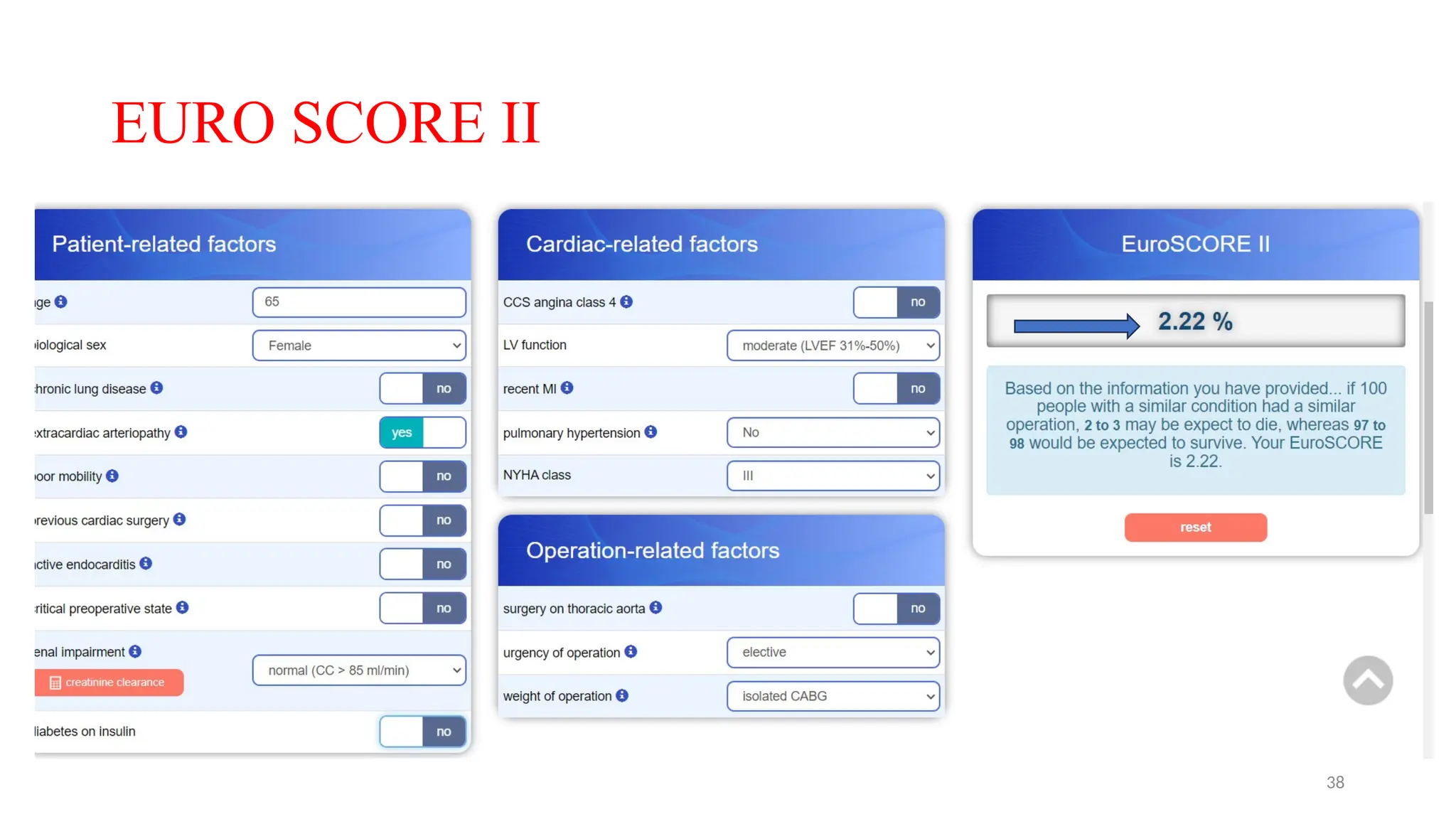
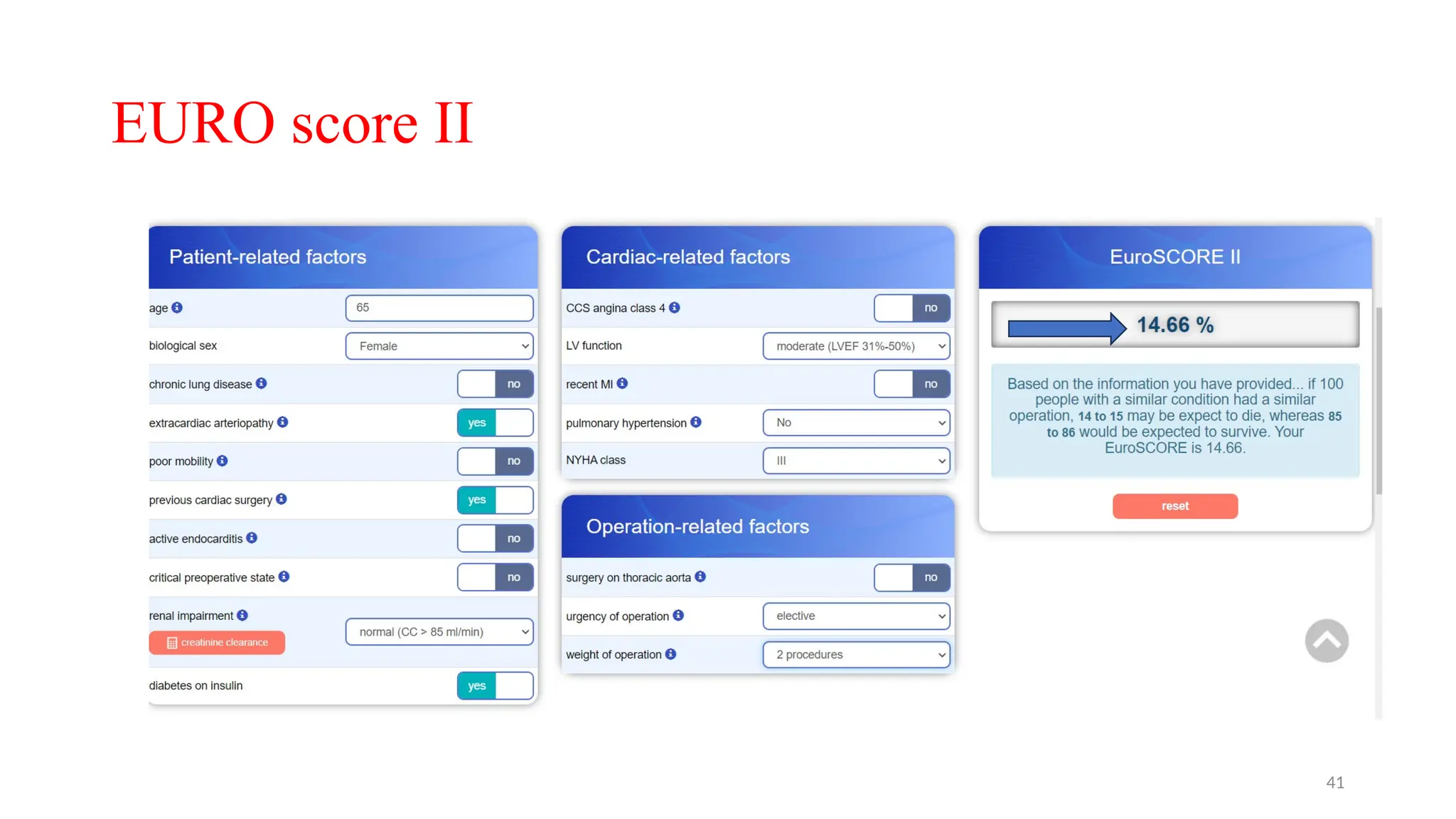
New model 2011 Euro-SCORE II
34
35
Following modifications were made :
• In patient-related variables : insulin-dependent diabetes was added
• Neurologic dysfunction was changed into reduced mobility due to neurological or musculoskeletal
dysfunction
• Renal insufficiency defined in initial euroscore of 2mg/dl was replaced by creatinine clearance.
• In cardiac-related variables unstable angina defined as rest angina requiring IV nitrates until arrival in
the anesthetic room was replaced by NYHA class 2 ,3 ,4 and angina CCS class 4
• Lv dysfunction and pulmonary HTN were divided into new categories
• Emergency Surgeries redefined as urgent, emergency and salvage
• Postinfarctal septal rupture not included in Euroscore II
36
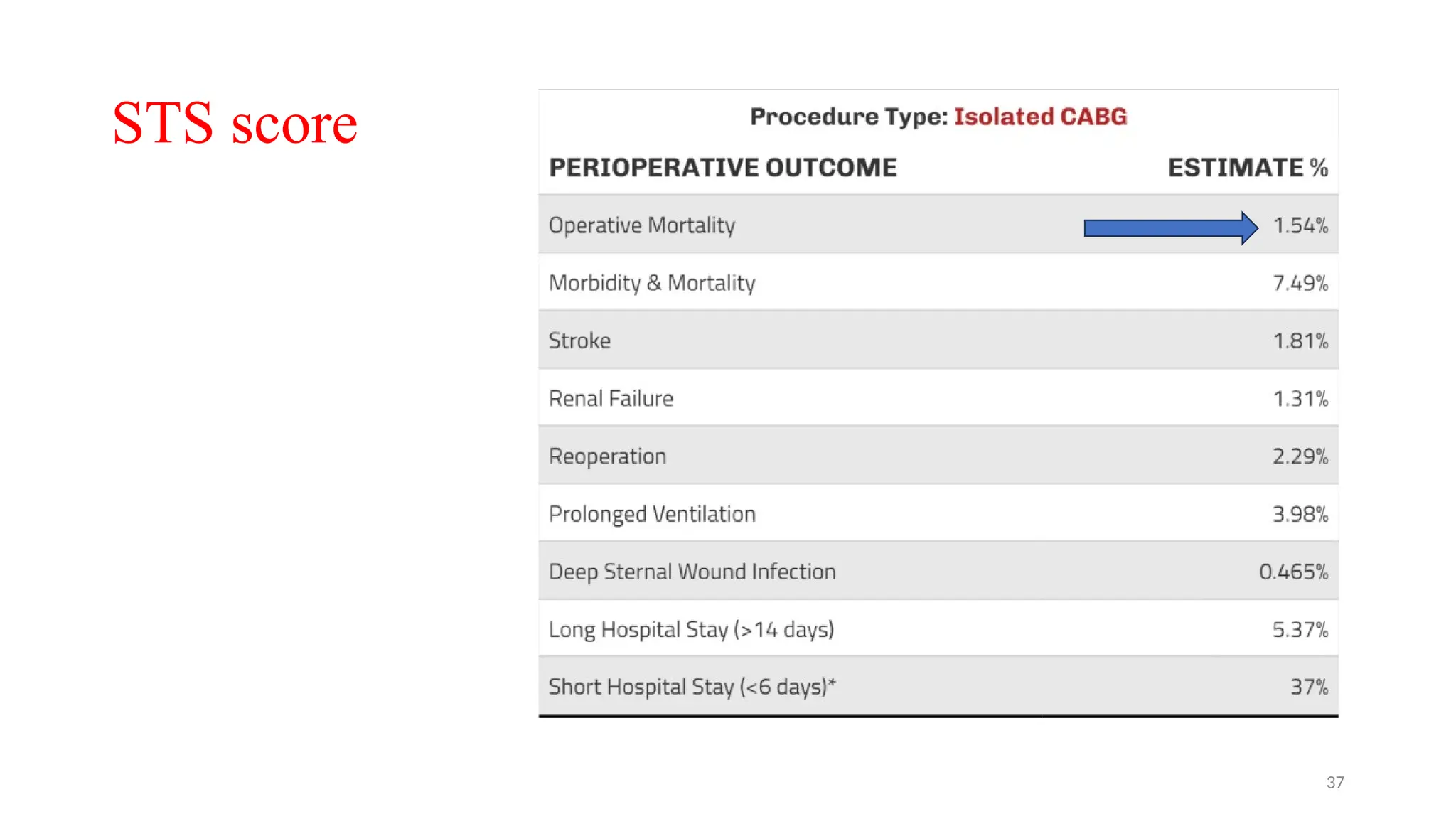
Sample case I
37
STS score
38
EURO SCORE II
39
SAMPLE CASE II
40
STS score
41
EURO score II
42
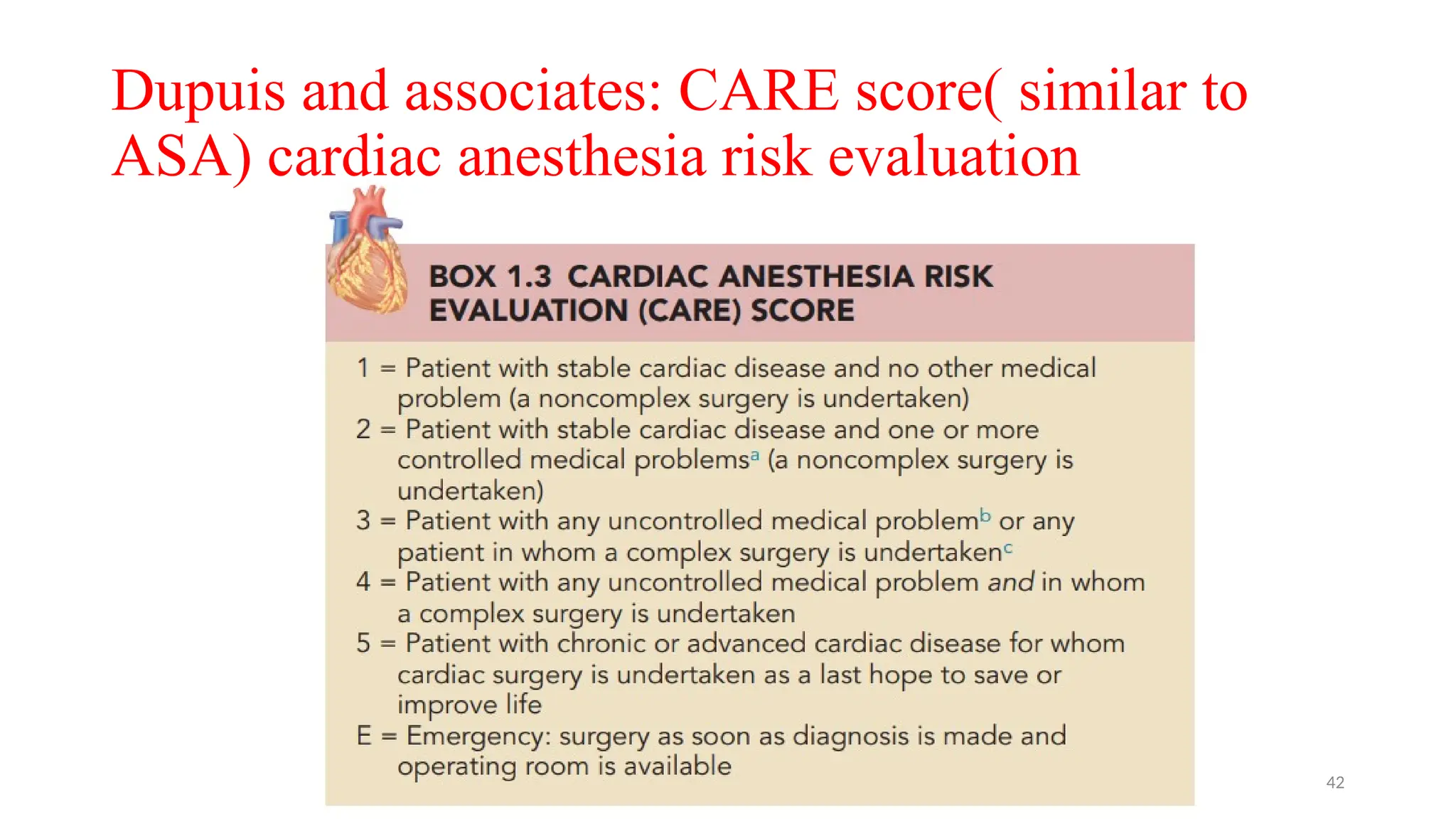
Dupuis and associates: CARE score( similar to
ASA) cardiac anesthesia risk evaluation
43
Preoperative pharmacological considerations
44
Levels of evidence
Level of evidence A :
Data derived from multiple
randomized clinical trials or
meta-analyses
Level of evidence B :
Data derived from a single
randomized clinical trial or
from large nonrandomized
studies
Level of evidence C:
The consensus of expert
opinion and/or small
studies, retrospective
studies and registries
45
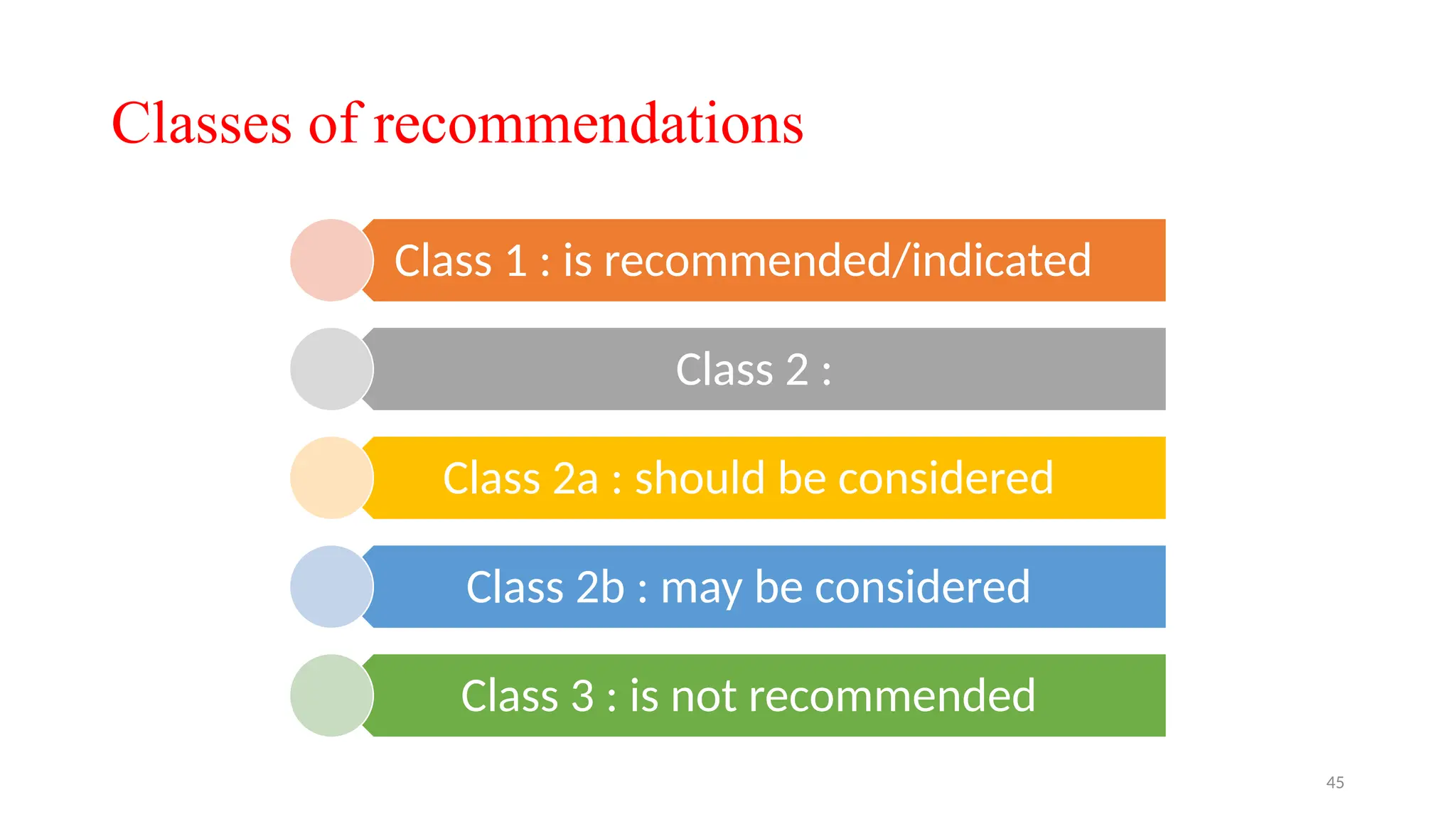
Classes of recommendations
Class 1 : is recommended/indicated
Class 2 :
Class 2a : should be considered
Class 2b : may be considered
Class 3 : is not recommended
46
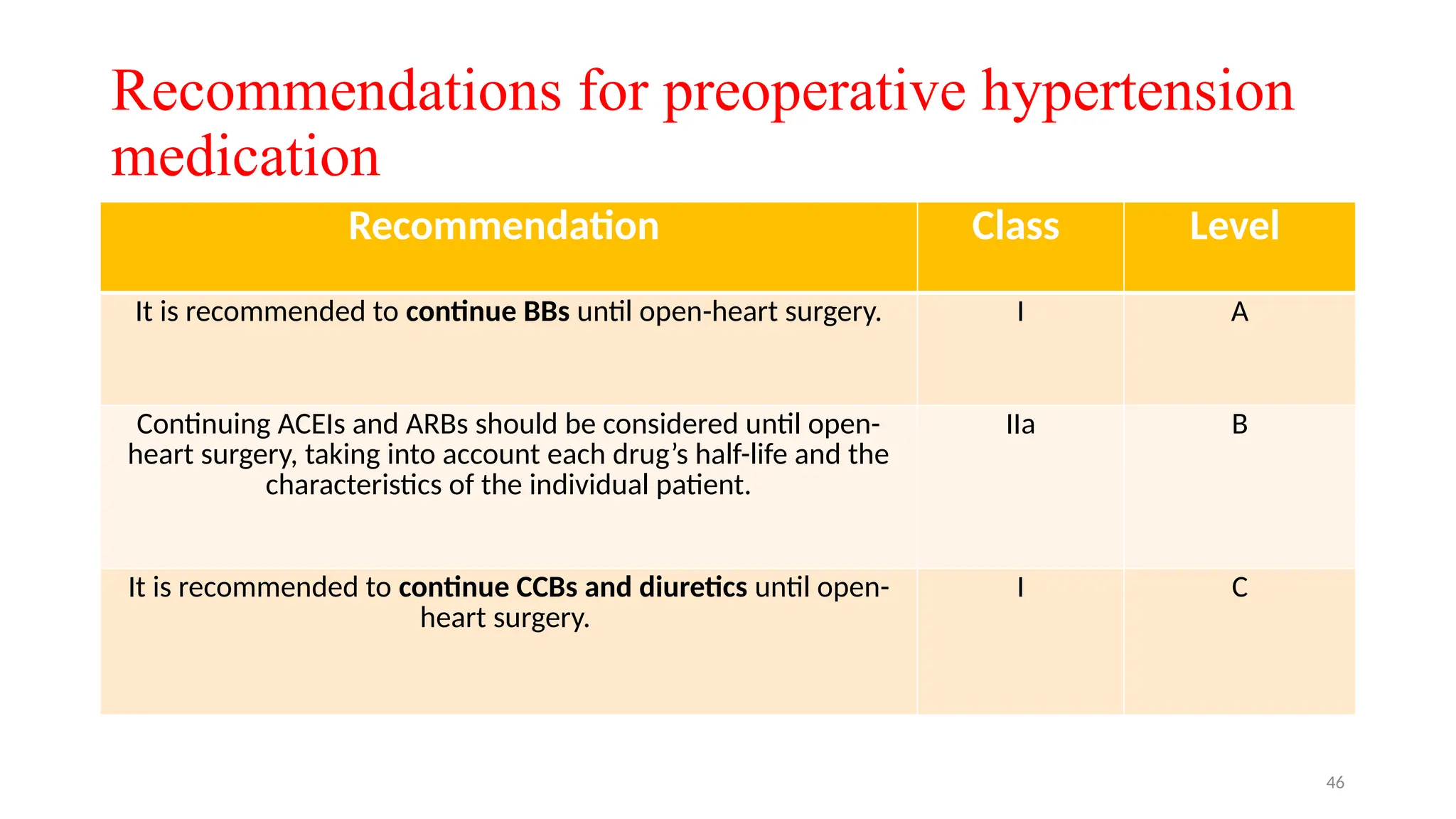
Recommendations for preoperative hypertension
medication
Recommendation Class Level
It is recommended to continue BBs until open-heart surgery. I A
Continuing ACEIs and ARBs should be considered until open-
heart surgery, taking into account each drug’s half-life and the
characteristics of the individual patient.
IIa B
It is recommended to continue CCBs and diuretics until open-
heart surgery.
I C
47
48
Prevention of arrythmias
Recommendation Claa Evidence
It is recommended to continue BB throughout the perioperative
period to prevent postoperative arrythmias
I A
Amiadarone may be considered to prevent POAF in open heart
surgery
IIb A
It is not recommended to initiate early statins or steroids to
prevent POAF
III A
49
Statins
• Unless contraindicated, should be administered to all patients
undergoing CABG
50
ASPIRIN
• Should be administered (100–325 mg/day) up until the time of surgery
unless there are strong clinical indications to withhold
• Should be restarted 6–24 hours postoperatively
51
Other antiplatelet agents
• In the case of urgent CABG, all of these drugs should be stopped for at least 24
hours, if possible
• Short-acting glycoprotein IIb/IIIa inhibitors (e.g., eptifibatide, tirofiban) should be
discontinued at least 4 hours before surgery, and abciximab for at least 12 hours
52
53
Preoperative anticoagulants
RECOMMENDATIONS Class Level
It is recommended to discontinue VKAs at least 4 days before elective, open-
heart surgery to aim for an INR ≤ 1.5 on the day of surgery
I B
It is recommended to discontinue DOAC therapy between 48 and 96 h before
elective, open-heart surgery, depending on the drug’s halflife and renal
function, with no need for routine heparin bridging
(apixaban , dabigatran , edoxaban rivoraxaban )
I B
In emergency, open-heart surgery, idarucizumab should be considered to
reverse dabigatran, if needed
I B
54
In an emergency, open-heart operation involving CPB, andexanet alfa is not recommended in
patients on FXa inhibiting DOACs before weaning from CPB.
III C
Bridging for VKA is recommended in patients at high thrombotic risk due to:
● mechanical prosthetic heart valve
● AF with rheumatic valvular disease
● acute thrombotic event within the prior 12 weeks
● acquired or congenital prothrombotic defects
● left ventricular apex thrombus.
I C
Bridging VKA with UFH or LMWH is recommended, if indicated. I B
In patients on preoperative UFH, it is recommended to stop UFH 2– 4 h before surgery and to
measure aPTT, to avoid bleeding
I C
In patients on preoperative bridging with LMWH, it is recommended to administer the last
dose 12 to 24 h before surgery, depending on the type of LMWH
I B
55
56
Insulin and Oral Hypoglycemic Agents
• Glycemic control in nondiabetics is not necessary if blood glucose <
180 mg/dL
• Nutritional insulin should be held after dinner the night before surgery
in patients taking insulin
• For hospitalized diabetic patients, glycemic control should be achieved
with scheduled insulin therapy (subcutaneous or infusion protocol)
• Oral hypoglycemic agents can be held for 24 hours prior to surgery
57
Antibiotics
Recommendations Class Level
In patients undergoing open-heart surgery who are Staphylococcus aureus
carriers, intranasal mupirocin twice daily is recommended starting 4 days
before surgery.
I B
Antibiotic prophylaxis is recommended to prevent infectious-related
complications.
I A
It is recommended to complete the first dose of antibioticd prophylaxis infusion
within 30–60 min before skin incision.
I B
Antibiotic prophylaxis dosage is recommended to be individualized according to
patient characteristics, including underweight, obesity and renal function, with
appropriate adjustment
I C
A prophylaxis duration of 24 h and no longer than 48 h post-openheart surgery
should be considered.
IIa A
Intraoperative antibiotic redosing should be considered based on patient
characteristics, haemodilution or blood loss or if the procedure exceeds 2 half
-lives of the antibiotic agent.
IIa B
58
Recommendations Class Level
It is recommended that prophylactic agents and dosage are chosen based on
local antimicrobial environment reports and resistance patterns and are
tailored to the patient’s characteristics.
I C
Cefazolin or cefuroxime should be considered as first -line treatment in non -
allergic patients
IIa A
Vancomycin or clindamycin should be considered in patients with a
documented -lactam allergy
IIa B
Vancomycin should be considered for prophylaxis in patients with a
documented methicillin -resistant Staphylococcus aureus colonization
IIa B
Topical vancomycin or gentamicin –collagen sponges may be considered as
adjunctive measures to prevent surgical site infections
IIb b
59
Preoperative anxiolysis and amnesia
• Short-acting BZD in the preoperative holding area with supplemental
oxygen
• Dexmedetomidine
• PPI prophylaxis recommended
• No routine use of prophylactic steroids is recommended
60
Preoperative investigations
Routine :
• CBC (anemia, platelet , leucocyte abnormality )
• Blood grouping : save and cross match
• Coagulation profile (derangement in the absence of anticoagulants .?coagulopathy)
• Liver function tests
• Renal function tests
• Serum electrolytes(diuretic therapy )
• Chest X-ray ( size of heart , lung parenchyma , bony window, pleural effusion )
61
• BNP (N-terminal pro-B-type natriuretic peptide) is a biomarker for cardiac failure and
ischaemia. Elevated BNP heralds atrial arrhythmias and prolonged postoperative
length of stay.
• Serum glucose and HbA1C: diabetes detection and control is vital lest its associated
complications ensue
• Thyroid function tests: occult thyroid dysfunction complicates perioperative care
• ECG: underlying dysrhythmias , ischemic changes, conduction abnormalities,paced
rythms
ECG markers (PR interval, QRS duration, and left atrial enlargement) may aid in predicting
new-onset postoperative AF.
62
63
Echocardiography
ECHO FINDINGS IMPLICATIONS FOR ANESTHETIST
LV and RV systolic functions Select appropriate monitoring strategies (e.g. use of TEE and/or PAC)
Choices of anaesthetic and inotropic agents
Potential need for perioperative mechanical circulatory support
LV diastolic function A slow heart rate may be beneficial in patients with milder degrees of LV
diastolic dysfunction (enhanced preload and a longer diastolic time to allow
ventricular relaxation and filling)
Normal heart rate would benefit patients with more advanced degrees of
diastolic dysfunction who have poor ventricular compliance and a fixed stroke
volume
RWMA New intraoperative RWMAs are not predictive of early graft failure; they are
associated with increased risk for adverse cardiac events in the long term
64
ECHO FINDINGS IMPLICATIONS FOR ANESTHETIST
Ventyricular dimensions The failing left or right ventricle undergoes compensatory chamber dilatation
to maintain stroke volume.
Chamber dilatation leads to increased systolic wall stress.
These patients are less sensitive to preload than those without chamber
dilatation but are exquisitely sensitive to increases in afterload
Valvular lesions The presence and severity of valvular lesions affects intraoperative
haemodynamic goals and resultant anaesthetic management
Aortic atheroma The presence of large or mobile atheroma in the ascending or descending
aorta has been associated with a higher incidence of postoperative stroke
65
ECHO FINDINGS IMPLICATIONS FOR ANESTHETIST
Anatomical defects Large ASD and/or VSD typically results in RV volume overload and increased PAP,
with resultant reduced pulmonary compliance and increased work of breathing.
Presence of a septal defect should prompt thorough intraoperative TEE
evaluation for associated congenital cardiac anomalies (e.g., coronary sinus
defects, partial anomalous venous connection, or cleft anterior mitral valve
leaflet)
Arterial or mural thrombus The presence of thrombus in the left atrial appendage or apex of the left
ventricle may alter the surgical plan (e.g., thrombectomy or ligation of left atrial
appendage).
Intraoperative TEE is necessary to confirm whether the thrombus is still present
before, during, and after surgery
66
ECHO FINDINGS IMPLICATIONS FOR ANESTHETIST
Pericardial diseases and
effusion
Large effusion may indicate pericardial tamponade.
Induction of anaesthesia in such patients may cause life-threatening
cardiovascular events.
Necessary planning requires communication among team members and
preparation of induction agents with minimal myocardial depressant effects
(e.g., etomidate) and inotropic and/or vasopressor drugs
Cardiac surgery in patients with pericarditis or pericardial constriction
typically results in significant blood loss
67
Stress echocardiography
• Stress echocardiography reveals ejection fraction, ventricular size and regional wall motion
abnormalities.
• Dobutamine , adenosine , dypridamole
• These drugs cause vasodilatation of undiseased coronary arteries.
• Stenosed vessels are unable to dilate, limiting blood flow and precipitating ischaemia in the
territories supplied.
• This leads to an area of regional wall motion abnormality (RWMA) on echocardiography
and possible changes in ventricular function
• Dobutamine further identifies hibernating myocardium to predict post revascularization
improvement
68
• A specific indication for stress echocardiography is in the evaluation of low-gradient severe AS in the presence of LV
systolic dysfunction.
• The AS may be truly severe and the gradients spuriously low due to LV systolic dysfunction.
• Alternatively, the AS may not be severe, with the reduced valve area being a function of inadequate opening force
(pseudosevere AS).
• Low-dose dobutamine echocardiography (maximum dose, 10–20 μg/kg/min) can help make this distinction.
• In the former situation, an increase in LV contractility with dobutamine infusion significantly increases the transaortic
gradient without a concomitant increase in valve area.
• In these cases, LV systolic dysfunction is likely to be secondary to severe AS and can be expected to improve after AV
replacement.
• In contrast, if the AS is not truly severe, dobutamine infusion augments valve opening such that the valve area
increases, but the gradients do not increase much.
• In such patients, LV systolic dysfunction is not related to AS, and AV replacement may not be helpful.
69
70
Contraindications for stress testing include
• acute coronary syndrome,
• severe cardiac arrhythmias,
• malignant hypertension,
• LV outflow obstruction, and
• symptomatic severe AS
71
Carotid doppler
To be performed in patients
• >65 years of age
• H/o stroke
• H/o TIA
• Carotid bruits (20-30% of patients with severe stenosis do not exhibit
this sign)
• H/o peripheral vascular disease
72
The management options include
• deferred management of the carotid disease,
• staged carotid endarterectomy (CEA) followed by cardiac surgery,
• staged carotid artery stent (CAS) followed by cardiac surgery, or
• concurrent CEA or CAS at the same time as cardiac surgery.
Currently, many would consider intervention appropriate for symptomatic
stenosis, bilateral 70%–99% stenosis, or unilateral 70%–99% stenosis with
contralateral occlusion, while the management of unilateral asymptomatic
disease is more controversial
73
Pulmonary function tests
• In all patients with chronic lung disease
• ABG, spo2, spirometry, lung volume assessment, and gas transfer
• Reversibility in response to bronchodilators
• A forced expiratory volume in 1 second (FEV1) of less than 2 liters, or less than 50% of
predicted, is associated with a significantly increased risk of postoperative pulmonary
complications.
• Further an FEV1 of less than 1 liter is associated with difficulty with sputum clearance
postoperatively and the probable need for additional ventilatory support.
• A DLCO of less than 70% of predicted is associated with an increased risk of clinically
important postoperative pulmonary complications.
74
Cardiac catheterisation
• Coronary artery anatomy
• Dominance
• Disease location and severity
• A stenosis of greater than 50% of the diameter of the vessel on angiography is
equivalent to a 75% reduction in cross-sectional area and is considered
significant.
• Disease patterns may further be described in terms of the number of vessels
affected, and details including the site, length, eccentricity, contour, tortuosity,
calcification and the presence of thrombus.
75
• Left heart catheterization typically comprises coronary angiography,
aortography, left ventriculography and manometry.
• This provides information about the sites and severity of coronary artery
stenoses, mitral and aortic valve function, and left ventricular (LV)
morphology and function.
• Direct measurement of LV end-diastolic pressure (LVEDP) provides
indirect evidence of LV function, and measurement of aortic and
ventricular pressure allows the severity of aortic stenosis to be quantified
76
• Right heart catheterization permits measurement of pulmonary artery
pressure and cardiac output, and calculation of the transpulmonary
gradient and vascular resistances
• In cases where there is a communication between the pulmonary and
systemic circulations, serial blood sampling allows computation of
the shunt fraction
77
Six minute walk test
The 6-minute walk test (6MWT) is a sub-maximal exercise test that can be
performed even by a patient with heart failure who cannot tolerate maximal
conventional exercise testing.
• Patients are asked to walk as fast as they can down a flat corridor with a 30-m
track marked aiming to cover as great a distance as possible in the 6 minutes.
• Heart rate and oxygen saturation are recorded during the test.
• The distance walked is substantially lower in patients with heart failure and
correlates well with the New York classification of functional status and peak
oxygen consumption during cardiopulmonary exercise testing
78
Myocardial perfusion scan (SPECT& PET)
It detects coronary artery
disease with thallium and
technetium.
A radionuclide (e.g. thallium or
technetium) is injected prior to
stressing either by a
conventional exercise test or
with dobutamine, adenosine or
dipyridamole.
79
• The distribution of perfusion is then assessed using a gamma camera.
• Perfusion defects occur in those areas of myocardium supplied by stenosed
vessels.
• The scan is repeated 3 hours later to demonstrate late accumulation of
radionuclide in the ischaemic areas and reversibility of the perfusion defect.
• This helps distinguish between reversible and nonreversible ischaemia,
differentiating viable myocardium from non-viable scar tissue
80
Cardiac CT scan
• Detailed imaging of heart
• Combined with iodine , CTA (CT angiography )
• This provides high-resolution three-dimensional images of the heart, coronary arteries
and great vessels which are particularly useful in defining access routes for transcatheter
valve implantation and detailing the proximity of key structures to the sternum in redo
cardiac surgery.
• CTA is also detailed enough to provide an alternative to image coronary anatomy in
patients in whom angiography is not possible, or the results are unsatisfactory
• CCTA can detect nonobstructive coronary atherosclerosis including high-risk plaques
which improves risk prediction for major adverse cardiovascular events
81
• CCTA is recommended as a first-line test for assessment of obstructive
CAD in international guidelines for symptomatic patients with low or
intermediate likelihood of disease
• Coronary artery calcium (CAC) scoring by noncontrast ECG-gated CCT has
equally strong evidence for cardiovascular risk stratification in asymptomatic
patients and is the only cardiac imaging test recommended for primary
prevention of atherosclerosis
82
• Multiplanar reconstructions
of a normal left main and left
anterior descending coronary
artery (top red arrow) and of
the right coronary artery
(bottom yellow arrow).
83
84
85
Cardiac MRI
• Cardiac anatomy, perfusion, function, and myocardial viability can all
be assessed with CMR with a high degree of detail and accuracy.
• It can also detect the accumulation of biochemical markers and provide
information concerning lipid accumulation, edema and fibrosis.
• Intravenous dobutamine in conjunction with gating can be used to produce a
‘stress CMR’ to detect ischaemic areas, whilst gadolinium contrast CMR
can distinguish between viable and infarcted tissue.
86
• CMR is considered the gold standard for the quantitative assessment
of biventricular volumes, ejection fraction, and mass while also
offering excellent reproducibility.
• A further tool, magnetic resonance angiography (MRA) allows three
dimensional imaging of blood vessels and the flow of blood through
them allowing an even more detailed assessment of the cardiovascular
system
• CMR has emerged as the gold standard for evaluation of myocardial
scarring
87
88
89
90
Patient counselling and consent
• Develop rapport with patient
• Explain risks/benefits of anaesthesia and surgery
• Inform medications, starvation guidelines, premedications, and possible
complications of intubation, central line, arterial lines, TOE probe insertion
• Provide a brief explanation regarding major postoperative complications
like stroke, pulmonary/cardiac/renal failure, the possibility of prolonged
ventilation, tracheostomy, renal replacement therapy, ionotropic support,
and massive blood and product transfusions.
91
ERAS – PREOPERATIVE STRATEGIES
92
RECOMMENDATION CLASS LEVEL OF
EVIDENCE
Perioperative glycemic control I B-R
A perioperative, multimodal, opioid-sparing, pain management plan I B-NR
Stopping smoking and hazardous alcohol consumption 4 weeks before elective
surgery
I C-LD
Early detection of kidney stress and interventions to avoid acute kidney injury
after surgery
IIa B-R
Prehabilitation for patients undergoing elective surgery with multiple
comorbidities or significant deconditioning
Iia B-NR
Patient engagement tools, including online/applicationbased systems to
promote education, compliance, and patient-reported outcomes
IIa C-LD
Preoperative measurement of hemoglobin A1c to assist with risk stratification IIa C-LD
Preoperative correction of nutritional deficiency when feasible IIa C-LD
Continued consumption of clear liquids up until 2 to 4 h before general
anesthesia
Iib C-LD
Preoperative oral carbohydrate loading may be considered before surgery IIb C-LD
93
References
• Kaplan JA. Kaplan’s Cardiac Anesthesia. Elsevier; 2023.
• Minhaj M. Cardiac Anesthesia: A Problem Based Learning Approach. Oxford University Press; 2019.
• Anders Jeppsson, Rocca B, Hansson EC, Gudbjartsson T, James S, Kaski JK, et al. 2024 EACTS Guidelines on perioperative medication in
adult cardiac surgery. European Journal of Cardio-Thoracic Surgery. 2024 Oct 10;
• Mowat IR, Kelleher AA. Preoperative assessment for cardiac surgery. Anaesthesia & Intensive Care Medicine. 2012 Oct;13(10):469–74.
• Cornelissen H, Arrowsmith JE. Preoperative assessment for cardiac surgery. Continuing Education in Anaesthesia Critical Care & Pain
[Internet]. 2006 Jun 1;6(3):109–13. Available from: https://academic.oup.com/bjaed/article/6/3/109/375310
• Sannakki S, Sannakki D, Echebarria JJ, Patteril M. Preoperative assessment for cardiac surgery. Anaesthesia & Intensive Care Medicine
[Internet]. 2021 Mar 22;0(0). Available from: https://www.anaesthesiajournal.co.uk/article/S1472-0299(21)00041-2/fulltext
94
THANK YOU !!!!

preop evaluation for cardiac surgery.pptx

  • 1.
    1 PREOPERATIVE EVALUATION FOR ADULTCARDIAC SURGERY Presenter : Dr Rajesh Munigial DM Trainee Dept of Cardiac Anesthesiology Jawaharlal Nehru Medical College, Belagavi
  • 2.
    2 TOPICS OF DISCUSSION •Risk factors in cardiac surgery • History and examination • Risk scoring and stratification • Preoperative pharmacological considerations • Investigations • Patient counselling and consent
  • 3.
    3 Aims of theassessment: • Gain an understanding of the pattern and severity of the cardiac disease and its anesthetic implications • Gain an understanding of the severity and implications of any co-morbid disease • Review all investigations • Consideration of appropriate resource allocation, including staffing, equipment, and postoperative care environment • Quantification of peri-operative risk, allowing discussion with the patient and facilitating informed consent • Lower the risk of surgery
  • 4.
    4 Risk factors associatedwith cardiac surgery Cardiac: myocardial ischemia, congestive cardiac failure, atherosclerosis, arrhythmias. Non-cardiac: Nonmodifiable (age and gender) and modifiable (renal failure, anemia, CNS disorders, nutritional status, diabetes , pulmonary diseases Surgical :combined procedures , CPB time , cross- clamp time
  • 5.
    5 Cardiac risk factors •Myocardial ischemia : presents as angina or its equivalent Central chest pain with or without radiation is described as pressure or heaviness and a squeezing, burning or choking sensation. It is typically precipitated by exertion and emotional stress, lasts 15 minutes and is relieved by rest or nitrates.
  • 6.
    6 Canadian cardiovascular societyclassification of angina Grade 1:stable angina develops upon strenuous, rapid and/or prolonged exertion during work or recreation but it is not induced by ordinary physical activity, such as walking and climbing stairs. Grade 2: characterized by slight limitation of ordinary activity. It is induced by walking or climbing stairs rapidly, walking uphill, post-prandial exertion, emotional stress or walking more than two blocks. Grade 3: marked limitation of ordinary physical activity. It is induced by walking one or two blocks and climbing one flight of stairs in normal conditions and at a normal pace. Grade 4: pain and discomfort accompany any physical activity and may occur at rest.
  • 7.
    7 Higher grades exacerbateperioperative morbidity, and presence of myocardial infarction and haemodynamic instability categorize surgical urgency Minimal risk: no myocardial infarction or haemodynamic instability. Surgery is scheduled as elective. Intermediate risk: myocardial infarction present without haemodynamic instability. Commence antiplatelet therapy and low molecular weight heparin. Surgery is scheduled as urgent. High risk: ongoing acute myocardial ischemia or infarction with haemodynamic instability. Emergency revascularization is indicated
  • 8.
    8 Congestive cardiac failure •Left ventricular failure is characterized by exertional dyspnoea, orthopnoea, paroxysmal nocturnal dyspnoea and fatigue. • Coincidental pulmonary oedema presents as a wheezy cough with pink frothy sputum. • Tachycardia, cyanosis, basal crepitations and a gallop rhythm may also exist. • Right heart failure presents with pedal oedema, ascites and abdominal discomfort. • A raised jugular venous pulsation, hepato-jugular reflux, tender hepatomegaly and pitting oedema may arise with an accentuated second pulmonary sound
  • 9.
  • 10.
    10 METS score Inability toperform 4 METs indicates poor functional capacity with a dismal postoperative course. Conversely, good functional capacity despite stable IHD or other risk factors predicts favorable outcome
  • 11.
    11 Atherosclerosis • Atheromatous plaquesin the proximal aorta and carotid arteries herald perioperative stroke. • Diabetes, hypertension, smoking and peripheral vascular disease exacerbate this. • Beta blockers and statins ameliorate risk and cerebral pulse oximetry may optimize perioperative care.
  • 12.
    12 Arrythmias • Atrial fibrillation(AF) is the most common perioperative arrhythmia in valvular heart disease, followed by supraventricular and ventricular arrhythmias • After myocardial infarction, damage to impulse formation and conduction can result in bradyarrhythmia and conduction disturbances.
  • 13.
    13 • Patients withbradyarrhythmias may have pacemaker and/or implantable cardioverter defibrillator devices (ICD). • These need checking beforehand since electromagnetic interference may trigger anti-tachycardia shocks or inhibit anti- bradycardia pacing. • Accordingly, devices are best reprogrammed to asynchronous mode before surgery. • Pacemakers are likewise reprogrammed and as perioperative myocardial insult may increase pacing capture threshold temporary epicardial pacing is best deployed
  • 14.
    14 Non cardiac riskfactors Non modifiable: female gender and old age Potentially modifiable : • Pre-existing renal failure –preop calculation of creatinine clearance better than serum creatinine • Anemia: needs identification and treatment Iron supplementation Erythropoietin stimulation Transfusion if < 7.5-8mg/dl • Nutritional status (BMI<20 OR >35)- low preop albumin <20mg/dl raises risk of postoperative infection and prolonged mechanical ventilation
  • 15.
    15 CNS disorders :previous stroke with or without residual sequalae , hypertension , diabetic neuropathy , advanced age , carotid atherosclerosis It is important to note preexisting deficits ,optimize conditions and seek for vascular surgical advice Diabetes Mellitus Chronic pulmonary diseases
  • 16.
    16 Surgical factors : Combinedprocedures Additional factors : • Unsuccesful PTCA • Cardiogenic shock • Acute MR • LV or IVS rupture
  • 17.
  • 18.
    18 System Concerning symptom& signs Implication for perioperative risk Cardiovascular Rapid progression of primary disease • Dyspnea or angina symptoms at rest or with minimal exertion • Recent myocardial infarction • Orthopnea or other evidence of heart failure • Palpitations or syncope/presyncope • Symptomatic peripheral vascular disease or evidence of limb malperfusion Diminished pulses • Heart failure (peripheral edema, S3 heart sound, crackles to lung bases) • Carotid bruit • Heart murmur • Presence of CIED—pacemaker or ICD Risk of preoperative decompensation or recurrent ischemic event peri-induction of anesthesia • Decompensated heart failure and fluid overload, difficult separation from CPB • Perioperative arrhythmia/postoperative atrial fibrillation • Possible vascular complication (e.g., dissection, embolic event, hypoperfusion) • Difficult arterial line placement • Undiagnosed carotid stenosis, perioperative CVA • Cardiac valvular disease • Need for device reprogramming perioperatively
  • 19.
    19 System Concerning symptoms& signs Implication for perioperative risk Pulmonary Frequent exacerbations from chronic obstructive lung disease • Poorly controlled asthma with need for rescue inhalers • Recent pulmonary infection • Snoring history with daytime somnolence or witnessed apneas History of pulmonary hypertension Tachypnea • Accessory muscle use • Respiratory distress Perioperative bronchospasm or pneumonia leading to prolonged intubation or ventilator dependence • Difficult ventilation or intubation due to airway obstruction • Right heart failure, difficult separation from CPB Hypoxia after sepeartion from CPB
  • 20.
    20 System Concerning symptomImplication for perioperative risk Endocrine Poorly controlled diabetes • Uncontrolled thyroid disease • Recent unexpected weight loss/cachexia or weight gain Sternal wound infection • Hyperglycemia-induced diuresis/dehydration • Thyroid-induced arrhythmia or cardiac dysfunction • Frailty with prolonged recovery/need for rehabilitation
  • 21.
    21 System Concerning symptoms& signs Implication for perioperative risk Neurologic /Musculoskeletal Previous CVA or TIA • Presence of baseline neurologic deficits • Poor functional ability or need for supportive care altered mental status or memory deficits/dementia • Somnolence • Motor or sensory deficits Perioperative CVA • Need to manage antiplatelet agents • Prolonged recovery or need for rehabilitation • Prolonged intubation or ventilator support Hematologic History of coagulopathy (either bleeding or clotting disorder) • Anemia Perioperative thrombosis • Challenging anticoagulation intraoperatively • Need for bridging anticoagulation • Postoperative hemorrhage • Need for perioperative blood transfusion
  • 22.
    22 System Concerning symptomImplication for perioperative risk Gastrointestinal Esophageal disease (e.g., strictures, varices, ulcers) • Zenker diverticulum • Achalasia • Symptoms of dysphagia • History of esophageal or resection Risk for esophageal perforation or ulceration with TEE probe placement • Inability to obtain TEE images sufficient to guide surgical procedure
  • 23.
    23 System Concerning symptomImplication for perioperative risk Genitourinary History of kidney disease or failure • Current or past dialysis • Prostate disease Fluid overload perioperatively • Hyperkalemia with cardiopulmonary bypass and cardioplegia solution • Need for perioperative dialysis • Traumatic catheter placement with subsequent hemorrhage during systemic heparinization on CPB
  • 24.
    24 System Concerning signAssociated risk Airway Potential difficult mask ventilation (e.g., beard, edentulous, thick neck, obesity, inability to prognath, macroglossia) • Potential difficult intubation (e.g., Mallampati class III–IV, previous difficult airway, limited mouth opening, prominent upper incisors, short thyromental distance, limited neck extension) Postinduction hypoxia with subsequent rapid cardiovascular collapse/myocardial ischemia • Postinduction hypercarbia with subsequent elevated pulmonary vascular resistance and right heart failure
  • 25.
  • 26.
  • 27.
    27 • obstructive sleepapnea is a risk factor for postoperative atrial fibrillation, delirium and pulmonary complications. • Adherence to CPAP therapy reduces recurrence of atrial fibrillation after ablation procedures, likely related to the reductions in left atrial size and ventricular mass seen in response to CPAP therapy
  • 28.
    28 Risk stratification Outline risksand benefits of surgery and anesthesia or alternative choices unit-specific analysis identifies underperformanc e and aids improvement Enable novel therapy assessment Facilitate investment outcome in health promotion strategies improve data management
  • 29.
  • 30.
    30 Parsonnet scoring systemof risk stratification for CABG -1989
  • 31.
  • 32.
  • 33.
    33 EURO-score : Europeansystem for cardiac operative risk evaluation Widely studied and accepted Introduced in 1999 2 methods of calculating predictive outcome: additive model and logistic model Both are out of date now New model 2011 Euro-SCORE II
  • 34.
  • 35.
    35 Following modifications weremade : • In patient-related variables : insulin-dependent diabetes was added • Neurologic dysfunction was changed into reduced mobility due to neurological or musculoskeletal dysfunction • Renal insufficiency defined in initial euroscore of 2mg/dl was replaced by creatinine clearance. • In cardiac-related variables unstable angina defined as rest angina requiring IV nitrates until arrival in the anesthetic room was replaced by NYHA class 2 ,3 ,4 and angina CCS class 4 • Lv dysfunction and pulmonary HTN were divided into new categories • Emergency Surgeries redefined as urgent, emergency and salvage • Postinfarctal septal rupture not included in Euroscore II
  • 36.
  • 37.
  • 38.
  • 39.
  • 40.
  • 41.
  • 42.
    42 Dupuis and associates:CARE score( similar to ASA) cardiac anesthesia risk evaluation
  • 43.
  • 44.
    44 Levels of evidence Levelof evidence A : Data derived from multiple randomized clinical trials or meta-analyses Level of evidence B : Data derived from a single randomized clinical trial or from large nonrandomized studies Level of evidence C: The consensus of expert opinion and/or small studies, retrospective studies and registries
  • 45.
    45 Classes of recommendations Class1 : is recommended/indicated Class 2 : Class 2a : should be considered Class 2b : may be considered Class 3 : is not recommended
  • 46.
    46 Recommendations for preoperativehypertension medication Recommendation Class Level It is recommended to continue BBs until open-heart surgery. I A Continuing ACEIs and ARBs should be considered until open- heart surgery, taking into account each drug’s half-life and the characteristics of the individual patient. IIa B It is recommended to continue CCBs and diuretics until open- heart surgery. I C
  • 47.
  • 48.
    48 Prevention of arrythmias RecommendationClaa Evidence It is recommended to continue BB throughout the perioperative period to prevent postoperative arrythmias I A Amiadarone may be considered to prevent POAF in open heart surgery IIb A It is not recommended to initiate early statins or steroids to prevent POAF III A
  • 49.
    49 Statins • Unless contraindicated,should be administered to all patients undergoing CABG
  • 50.
    50 ASPIRIN • Should beadministered (100–325 mg/day) up until the time of surgery unless there are strong clinical indications to withhold • Should be restarted 6–24 hours postoperatively
  • 51.
    51 Other antiplatelet agents •In the case of urgent CABG, all of these drugs should be stopped for at least 24 hours, if possible • Short-acting glycoprotein IIb/IIIa inhibitors (e.g., eptifibatide, tirofiban) should be discontinued at least 4 hours before surgery, and abciximab for at least 12 hours
  • 52.
  • 53.
    53 Preoperative anticoagulants RECOMMENDATIONS ClassLevel It is recommended to discontinue VKAs at least 4 days before elective, open- heart surgery to aim for an INR ≤ 1.5 on the day of surgery I B It is recommended to discontinue DOAC therapy between 48 and 96 h before elective, open-heart surgery, depending on the drug’s halflife and renal function, with no need for routine heparin bridging (apixaban , dabigatran , edoxaban rivoraxaban ) I B In emergency, open-heart surgery, idarucizumab should be considered to reverse dabigatran, if needed I B
  • 54.
    54 In an emergency,open-heart operation involving CPB, andexanet alfa is not recommended in patients on FXa inhibiting DOACs before weaning from CPB. III C Bridging for VKA is recommended in patients at high thrombotic risk due to: ● mechanical prosthetic heart valve ● AF with rheumatic valvular disease ● acute thrombotic event within the prior 12 weeks ● acquired or congenital prothrombotic defects ● left ventricular apex thrombus. I C Bridging VKA with UFH or LMWH is recommended, if indicated. I B In patients on preoperative UFH, it is recommended to stop UFH 2– 4 h before surgery and to measure aPTT, to avoid bleeding I C In patients on preoperative bridging with LMWH, it is recommended to administer the last dose 12 to 24 h before surgery, depending on the type of LMWH I B
  • 55.
  • 56.
    56 Insulin and OralHypoglycemic Agents • Glycemic control in nondiabetics is not necessary if blood glucose < 180 mg/dL • Nutritional insulin should be held after dinner the night before surgery in patients taking insulin • For hospitalized diabetic patients, glycemic control should be achieved with scheduled insulin therapy (subcutaneous or infusion protocol) • Oral hypoglycemic agents can be held for 24 hours prior to surgery
  • 57.
    57 Antibiotics Recommendations Class Level Inpatients undergoing open-heart surgery who are Staphylococcus aureus carriers, intranasal mupirocin twice daily is recommended starting 4 days before surgery. I B Antibiotic prophylaxis is recommended to prevent infectious-related complications. I A It is recommended to complete the first dose of antibioticd prophylaxis infusion within 30–60 min before skin incision. I B Antibiotic prophylaxis dosage is recommended to be individualized according to patient characteristics, including underweight, obesity and renal function, with appropriate adjustment I C A prophylaxis duration of 24 h and no longer than 48 h post-openheart surgery should be considered. IIa A Intraoperative antibiotic redosing should be considered based on patient characteristics, haemodilution or blood loss or if the procedure exceeds 2 half -lives of the antibiotic agent. IIa B
  • 58.
    58 Recommendations Class Level Itis recommended that prophylactic agents and dosage are chosen based on local antimicrobial environment reports and resistance patterns and are tailored to the patient’s characteristics. I C Cefazolin or cefuroxime should be considered as first -line treatment in non - allergic patients IIa A Vancomycin or clindamycin should be considered in patients with a documented -lactam allergy IIa B Vancomycin should be considered for prophylaxis in patients with a documented methicillin -resistant Staphylococcus aureus colonization IIa B Topical vancomycin or gentamicin –collagen sponges may be considered as adjunctive measures to prevent surgical site infections IIb b
  • 59.
    59 Preoperative anxiolysis andamnesia • Short-acting BZD in the preoperative holding area with supplemental oxygen • Dexmedetomidine • PPI prophylaxis recommended • No routine use of prophylactic steroids is recommended
  • 60.
    60 Preoperative investigations Routine : •CBC (anemia, platelet , leucocyte abnormality ) • Blood grouping : save and cross match • Coagulation profile (derangement in the absence of anticoagulants .?coagulopathy) • Liver function tests • Renal function tests • Serum electrolytes(diuretic therapy ) • Chest X-ray ( size of heart , lung parenchyma , bony window, pleural effusion )
  • 61.
    61 • BNP (N-terminalpro-B-type natriuretic peptide) is a biomarker for cardiac failure and ischaemia. Elevated BNP heralds atrial arrhythmias and prolonged postoperative length of stay. • Serum glucose and HbA1C: diabetes detection and control is vital lest its associated complications ensue • Thyroid function tests: occult thyroid dysfunction complicates perioperative care • ECG: underlying dysrhythmias , ischemic changes, conduction abnormalities,paced rythms ECG markers (PR interval, QRS duration, and left atrial enlargement) may aid in predicting new-onset postoperative AF.
  • 62.
  • 63.
    63 Echocardiography ECHO FINDINGS IMPLICATIONSFOR ANESTHETIST LV and RV systolic functions Select appropriate monitoring strategies (e.g. use of TEE and/or PAC) Choices of anaesthetic and inotropic agents Potential need for perioperative mechanical circulatory support LV diastolic function A slow heart rate may be beneficial in patients with milder degrees of LV diastolic dysfunction (enhanced preload and a longer diastolic time to allow ventricular relaxation and filling) Normal heart rate would benefit patients with more advanced degrees of diastolic dysfunction who have poor ventricular compliance and a fixed stroke volume RWMA New intraoperative RWMAs are not predictive of early graft failure; they are associated with increased risk for adverse cardiac events in the long term
  • 64.
    64 ECHO FINDINGS IMPLICATIONSFOR ANESTHETIST Ventyricular dimensions The failing left or right ventricle undergoes compensatory chamber dilatation to maintain stroke volume. Chamber dilatation leads to increased systolic wall stress. These patients are less sensitive to preload than those without chamber dilatation but are exquisitely sensitive to increases in afterload Valvular lesions The presence and severity of valvular lesions affects intraoperative haemodynamic goals and resultant anaesthetic management Aortic atheroma The presence of large or mobile atheroma in the ascending or descending aorta has been associated with a higher incidence of postoperative stroke
  • 65.
    65 ECHO FINDINGS IMPLICATIONSFOR ANESTHETIST Anatomical defects Large ASD and/or VSD typically results in RV volume overload and increased PAP, with resultant reduced pulmonary compliance and increased work of breathing. Presence of a septal defect should prompt thorough intraoperative TEE evaluation for associated congenital cardiac anomalies (e.g., coronary sinus defects, partial anomalous venous connection, or cleft anterior mitral valve leaflet) Arterial or mural thrombus The presence of thrombus in the left atrial appendage or apex of the left ventricle may alter the surgical plan (e.g., thrombectomy or ligation of left atrial appendage). Intraoperative TEE is necessary to confirm whether the thrombus is still present before, during, and after surgery
  • 66.
    66 ECHO FINDINGS IMPLICATIONSFOR ANESTHETIST Pericardial diseases and effusion Large effusion may indicate pericardial tamponade. Induction of anaesthesia in such patients may cause life-threatening cardiovascular events. Necessary planning requires communication among team members and preparation of induction agents with minimal myocardial depressant effects (e.g., etomidate) and inotropic and/or vasopressor drugs Cardiac surgery in patients with pericarditis or pericardial constriction typically results in significant blood loss
  • 67.
    67 Stress echocardiography • Stressechocardiography reveals ejection fraction, ventricular size and regional wall motion abnormalities. • Dobutamine , adenosine , dypridamole • These drugs cause vasodilatation of undiseased coronary arteries. • Stenosed vessels are unable to dilate, limiting blood flow and precipitating ischaemia in the territories supplied. • This leads to an area of regional wall motion abnormality (RWMA) on echocardiography and possible changes in ventricular function • Dobutamine further identifies hibernating myocardium to predict post revascularization improvement
  • 68.
    68 • A specificindication for stress echocardiography is in the evaluation of low-gradient severe AS in the presence of LV systolic dysfunction. • The AS may be truly severe and the gradients spuriously low due to LV systolic dysfunction. • Alternatively, the AS may not be severe, with the reduced valve area being a function of inadequate opening force (pseudosevere AS). • Low-dose dobutamine echocardiography (maximum dose, 10–20 μg/kg/min) can help make this distinction. • In the former situation, an increase in LV contractility with dobutamine infusion significantly increases the transaortic gradient without a concomitant increase in valve area. • In these cases, LV systolic dysfunction is likely to be secondary to severe AS and can be expected to improve after AV replacement. • In contrast, if the AS is not truly severe, dobutamine infusion augments valve opening such that the valve area increases, but the gradients do not increase much. • In such patients, LV systolic dysfunction is not related to AS, and AV replacement may not be helpful.
  • 69.
  • 70.
    70 Contraindications for stresstesting include • acute coronary syndrome, • severe cardiac arrhythmias, • malignant hypertension, • LV outflow obstruction, and • symptomatic severe AS
  • 71.
    71 Carotid doppler To beperformed in patients • >65 years of age • H/o stroke • H/o TIA • Carotid bruits (20-30% of patients with severe stenosis do not exhibit this sign) • H/o peripheral vascular disease
  • 72.
    72 The management optionsinclude • deferred management of the carotid disease, • staged carotid endarterectomy (CEA) followed by cardiac surgery, • staged carotid artery stent (CAS) followed by cardiac surgery, or • concurrent CEA or CAS at the same time as cardiac surgery. Currently, many would consider intervention appropriate for symptomatic stenosis, bilateral 70%–99% stenosis, or unilateral 70%–99% stenosis with contralateral occlusion, while the management of unilateral asymptomatic disease is more controversial
  • 73.
    73 Pulmonary function tests •In all patients with chronic lung disease • ABG, spo2, spirometry, lung volume assessment, and gas transfer • Reversibility in response to bronchodilators • A forced expiratory volume in 1 second (FEV1) of less than 2 liters, or less than 50% of predicted, is associated with a significantly increased risk of postoperative pulmonary complications. • Further an FEV1 of less than 1 liter is associated with difficulty with sputum clearance postoperatively and the probable need for additional ventilatory support. • A DLCO of less than 70% of predicted is associated with an increased risk of clinically important postoperative pulmonary complications.
  • 74.
    74 Cardiac catheterisation • Coronaryartery anatomy • Dominance • Disease location and severity • A stenosis of greater than 50% of the diameter of the vessel on angiography is equivalent to a 75% reduction in cross-sectional area and is considered significant. • Disease patterns may further be described in terms of the number of vessels affected, and details including the site, length, eccentricity, contour, tortuosity, calcification and the presence of thrombus.
  • 75.
    75 • Left heartcatheterization typically comprises coronary angiography, aortography, left ventriculography and manometry. • This provides information about the sites and severity of coronary artery stenoses, mitral and aortic valve function, and left ventricular (LV) morphology and function. • Direct measurement of LV end-diastolic pressure (LVEDP) provides indirect evidence of LV function, and measurement of aortic and ventricular pressure allows the severity of aortic stenosis to be quantified
  • 76.
    76 • Right heartcatheterization permits measurement of pulmonary artery pressure and cardiac output, and calculation of the transpulmonary gradient and vascular resistances • In cases where there is a communication between the pulmonary and systemic circulations, serial blood sampling allows computation of the shunt fraction
  • 77.
    77 Six minute walktest The 6-minute walk test (6MWT) is a sub-maximal exercise test that can be performed even by a patient with heart failure who cannot tolerate maximal conventional exercise testing. • Patients are asked to walk as fast as they can down a flat corridor with a 30-m track marked aiming to cover as great a distance as possible in the 6 minutes. • Heart rate and oxygen saturation are recorded during the test. • The distance walked is substantially lower in patients with heart failure and correlates well with the New York classification of functional status and peak oxygen consumption during cardiopulmonary exercise testing
  • 78.
    78 Myocardial perfusion scan(SPECT& PET) It detects coronary artery disease with thallium and technetium. A radionuclide (e.g. thallium or technetium) is injected prior to stressing either by a conventional exercise test or with dobutamine, adenosine or dipyridamole.
  • 79.
    79 • The distributionof perfusion is then assessed using a gamma camera. • Perfusion defects occur in those areas of myocardium supplied by stenosed vessels. • The scan is repeated 3 hours later to demonstrate late accumulation of radionuclide in the ischaemic areas and reversibility of the perfusion defect. • This helps distinguish between reversible and nonreversible ischaemia, differentiating viable myocardium from non-viable scar tissue
  • 80.
    80 Cardiac CT scan •Detailed imaging of heart • Combined with iodine , CTA (CT angiography ) • This provides high-resolution three-dimensional images of the heart, coronary arteries and great vessels which are particularly useful in defining access routes for transcatheter valve implantation and detailing the proximity of key structures to the sternum in redo cardiac surgery. • CTA is also detailed enough to provide an alternative to image coronary anatomy in patients in whom angiography is not possible, or the results are unsatisfactory • CCTA can detect nonobstructive coronary atherosclerosis including high-risk plaques which improves risk prediction for major adverse cardiovascular events
  • 81.
    81 • CCTA isrecommended as a first-line test for assessment of obstructive CAD in international guidelines for symptomatic patients with low or intermediate likelihood of disease • Coronary artery calcium (CAC) scoring by noncontrast ECG-gated CCT has equally strong evidence for cardiovascular risk stratification in asymptomatic patients and is the only cardiac imaging test recommended for primary prevention of atherosclerosis
  • 82.
    82 • Multiplanar reconstructions ofa normal left main and left anterior descending coronary artery (top red arrow) and of the right coronary artery (bottom yellow arrow).
  • 83.
  • 84.
  • 85.
    85 Cardiac MRI • Cardiacanatomy, perfusion, function, and myocardial viability can all be assessed with CMR with a high degree of detail and accuracy. • It can also detect the accumulation of biochemical markers and provide information concerning lipid accumulation, edema and fibrosis. • Intravenous dobutamine in conjunction with gating can be used to produce a ‘stress CMR’ to detect ischaemic areas, whilst gadolinium contrast CMR can distinguish between viable and infarcted tissue.
  • 86.
    86 • CMR isconsidered the gold standard for the quantitative assessment of biventricular volumes, ejection fraction, and mass while also offering excellent reproducibility. • A further tool, magnetic resonance angiography (MRA) allows three dimensional imaging of blood vessels and the flow of blood through them allowing an even more detailed assessment of the cardiovascular system • CMR has emerged as the gold standard for evaluation of myocardial scarring
  • 87.
  • 88.
  • 89.
  • 90.
    90 Patient counselling andconsent • Develop rapport with patient • Explain risks/benefits of anaesthesia and surgery • Inform medications, starvation guidelines, premedications, and possible complications of intubation, central line, arterial lines, TOE probe insertion • Provide a brief explanation regarding major postoperative complications like stroke, pulmonary/cardiac/renal failure, the possibility of prolonged ventilation, tracheostomy, renal replacement therapy, ionotropic support, and massive blood and product transfusions.
  • 91.
  • 92.
    92 RECOMMENDATION CLASS LEVELOF EVIDENCE Perioperative glycemic control I B-R A perioperative, multimodal, opioid-sparing, pain management plan I B-NR Stopping smoking and hazardous alcohol consumption 4 weeks before elective surgery I C-LD Early detection of kidney stress and interventions to avoid acute kidney injury after surgery IIa B-R Prehabilitation for patients undergoing elective surgery with multiple comorbidities or significant deconditioning Iia B-NR Patient engagement tools, including online/applicationbased systems to promote education, compliance, and patient-reported outcomes IIa C-LD Preoperative measurement of hemoglobin A1c to assist with risk stratification IIa C-LD Preoperative correction of nutritional deficiency when feasible IIa C-LD Continued consumption of clear liquids up until 2 to 4 h before general anesthesia Iib C-LD Preoperative oral carbohydrate loading may be considered before surgery IIb C-LD
  • 93.
    93 References • Kaplan JA.Kaplan’s Cardiac Anesthesia. Elsevier; 2023. • Minhaj M. Cardiac Anesthesia: A Problem Based Learning Approach. Oxford University Press; 2019. • Anders Jeppsson, Rocca B, Hansson EC, Gudbjartsson T, James S, Kaski JK, et al. 2024 EACTS Guidelines on perioperative medication in adult cardiac surgery. European Journal of Cardio-Thoracic Surgery. 2024 Oct 10; • Mowat IR, Kelleher AA. Preoperative assessment for cardiac surgery. Anaesthesia & Intensive Care Medicine. 2012 Oct;13(10):469–74. • Cornelissen H, Arrowsmith JE. Preoperative assessment for cardiac surgery. Continuing Education in Anaesthesia Critical Care & Pain [Internet]. 2006 Jun 1;6(3):109–13. Available from: https://academic.oup.com/bjaed/article/6/3/109/375310 • Sannakki S, Sannakki D, Echebarria JJ, Patteril M. Preoperative assessment for cardiac surgery. Anaesthesia & Intensive Care Medicine [Internet]. 2021 Mar 22;0(0). Available from: https://www.anaesthesiajournal.co.uk/article/S1472-0299(21)00041-2/fulltext
  • 94.

Editor's Notes

  • #25 allergies
  • #35 Urgent : not admitted for operation but require surgery for present medical reason (cannot be sent home ) Emergency: operation b4 beginning of next working day Salvage : requiring CPR enroute to theatre
  • #42 aExamples: controlled hypertension, diabetes mellitus, peripheral vascular disease, chronic obstructive pulmonary disease, controlled systemic diseases, others as judged by clinicians. b Examples: unstable angina treated with intravenous heparin or nitroglycerin, preoperative intraaortic balloon pump, heart failure with pulmonary or peripheral edema, uncontrolled hypertension, renal insufficiency (creatinine level >140 μmol/L), debilitating systemic diseases, others as judged by clinicians. cExamples: reoperation, combined valve and coronary artery surgery, multiple valve surgery, left ventricular aneurysmectomy, repair of ventricular septal defect after myocardial infarction, coronary artery bypass of diffuse or heavily calcified vessels, others as judged by clinicians
  • #46 There is wide agreement that the acute discontinuation of β-blockers is associated with rebound tachycardia, arterial HTN, worsening of HF, and even increased mortality. A major problem with RAS blockers is the associated vasoplegia, blunted adrenergic response, and increased requirements of vasoconstrictor drugs during cardiac surgery
  • #67 Dobutamine is usually delivered in graded doses starting at 5 μg/kg/min and increasing at 3-minute intervals to 10, 20, 30, and 40 μg/kg/ min If there is significant viability, an akinetic segment contracts with a low dose of dobutamine, and then myocardial contractility becomes reduced at a higher dose after initial improvement if there is significant stenosis. This ‘biphasic’ response to dobutamine is the most specific finding for myocardial viability
  • #77 Less than 400meters ..mortality risk
  • #79 PET imaging is more sensitive than SPECT, and it is considered by many experts to be the gold standard for assessment of viability