Predictive maintenance in
the Industrial
Internet of Things
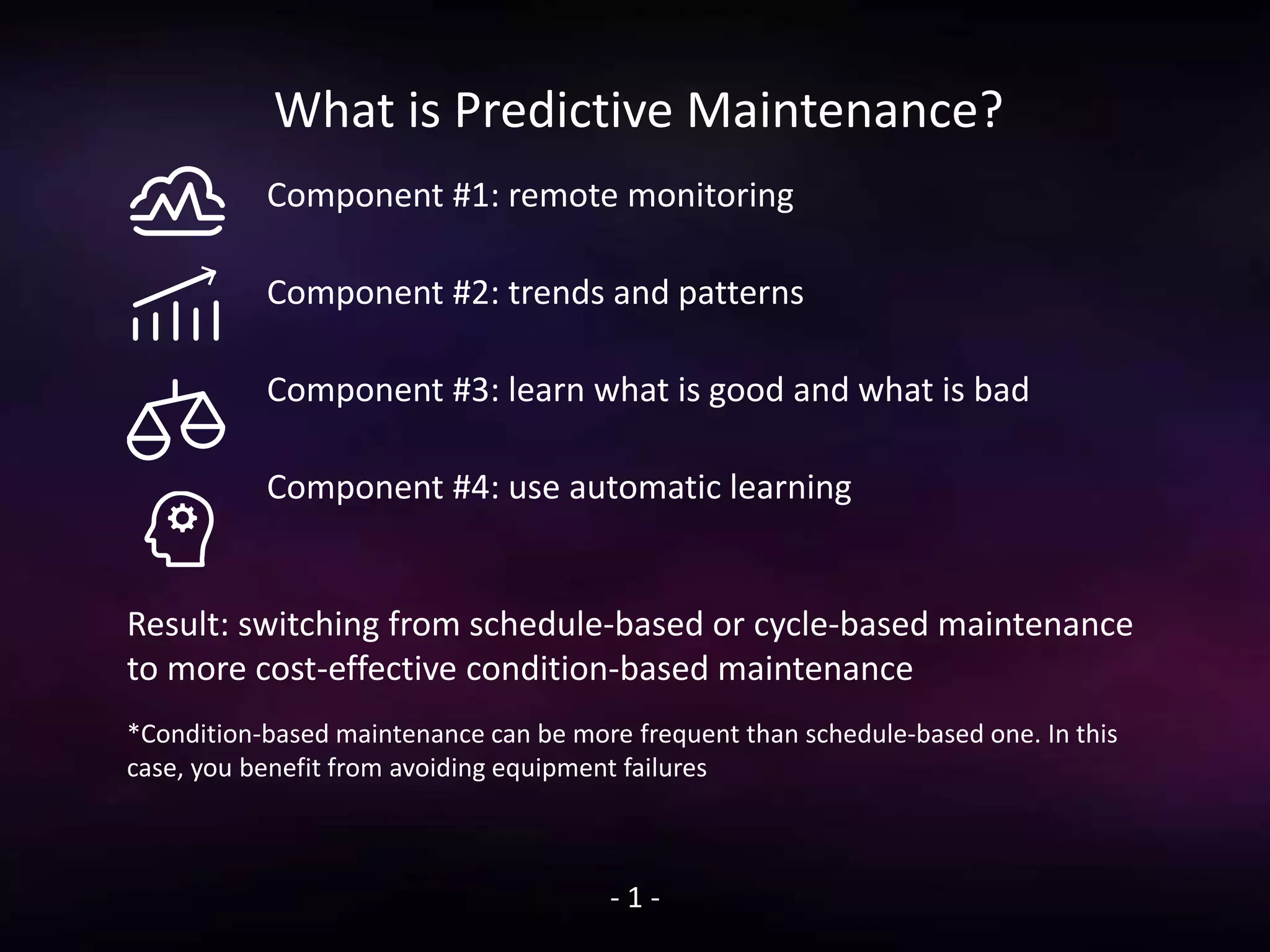
What is Predictive Maintenance?
Result: switching from schedule-based or cycle-based maintenance
to more cost-effective condition-based maintenance
*Condition-based maintenance can be more frequent than schedule-based one. In this
case, you benefit from avoiding equipment failures
- 1 -
Component #1: remote monitoring
Component #2: trends and patterns
Component #3: learn what is good and what is bad
Component #4: use automatic learning
- 6 -
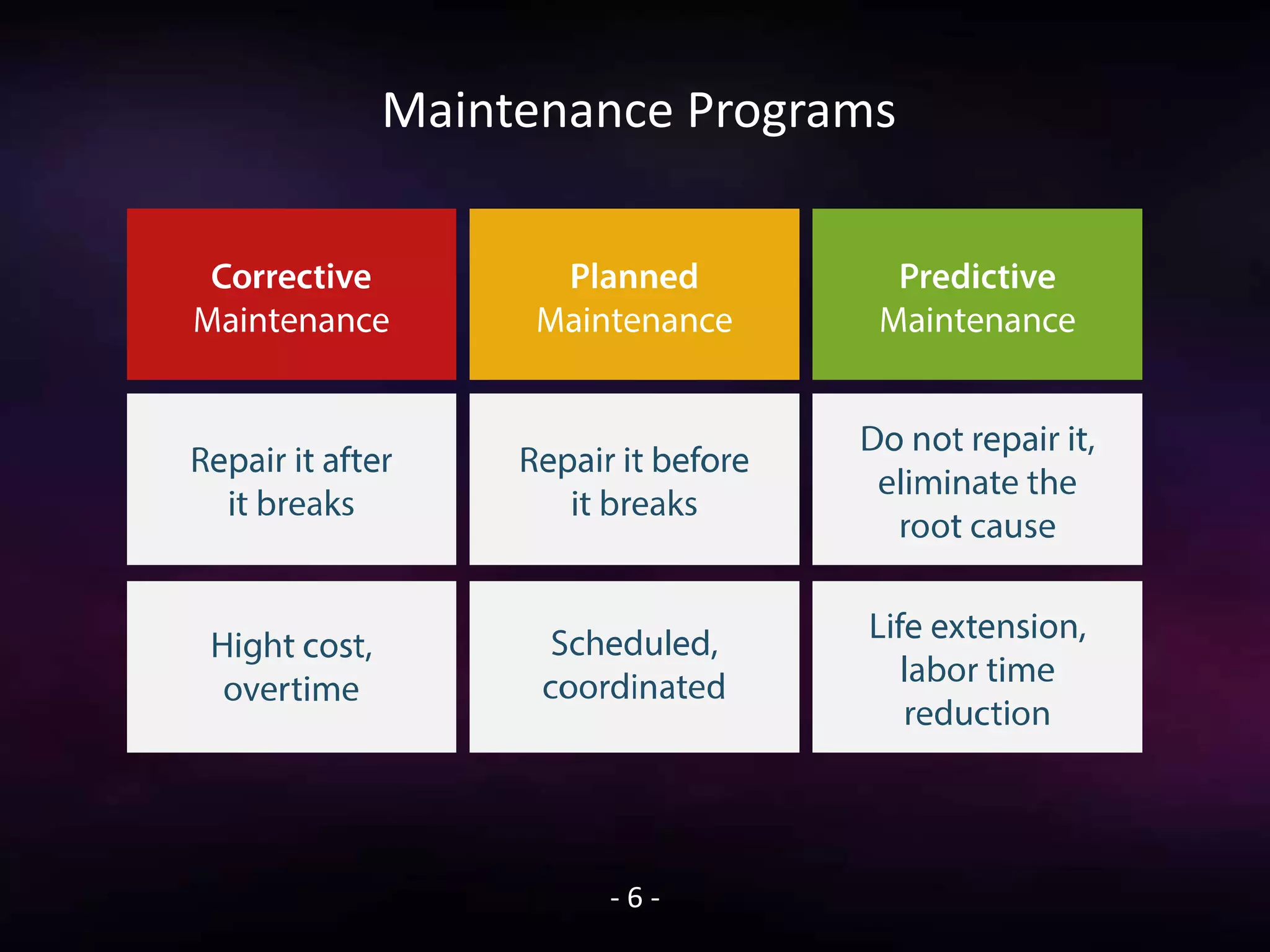
Maintenance Programs
- 6 -
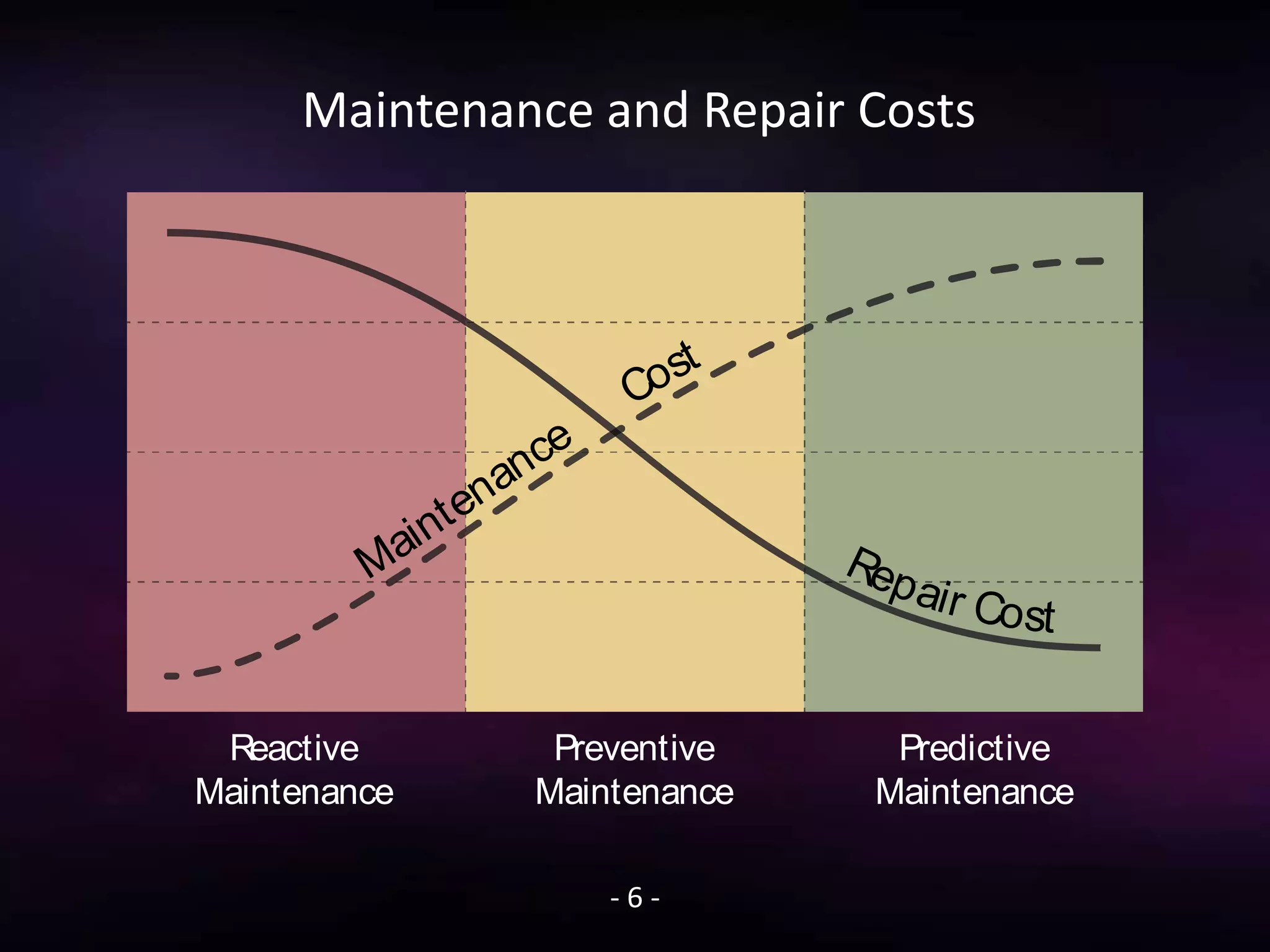
Maintenance and Repair Costs
Repair Cost
Maintenance
Cost
eeee
Predictive
Maintenance
Reactive
Maintenance
Preventive
Maintenance
Remote Monitoring
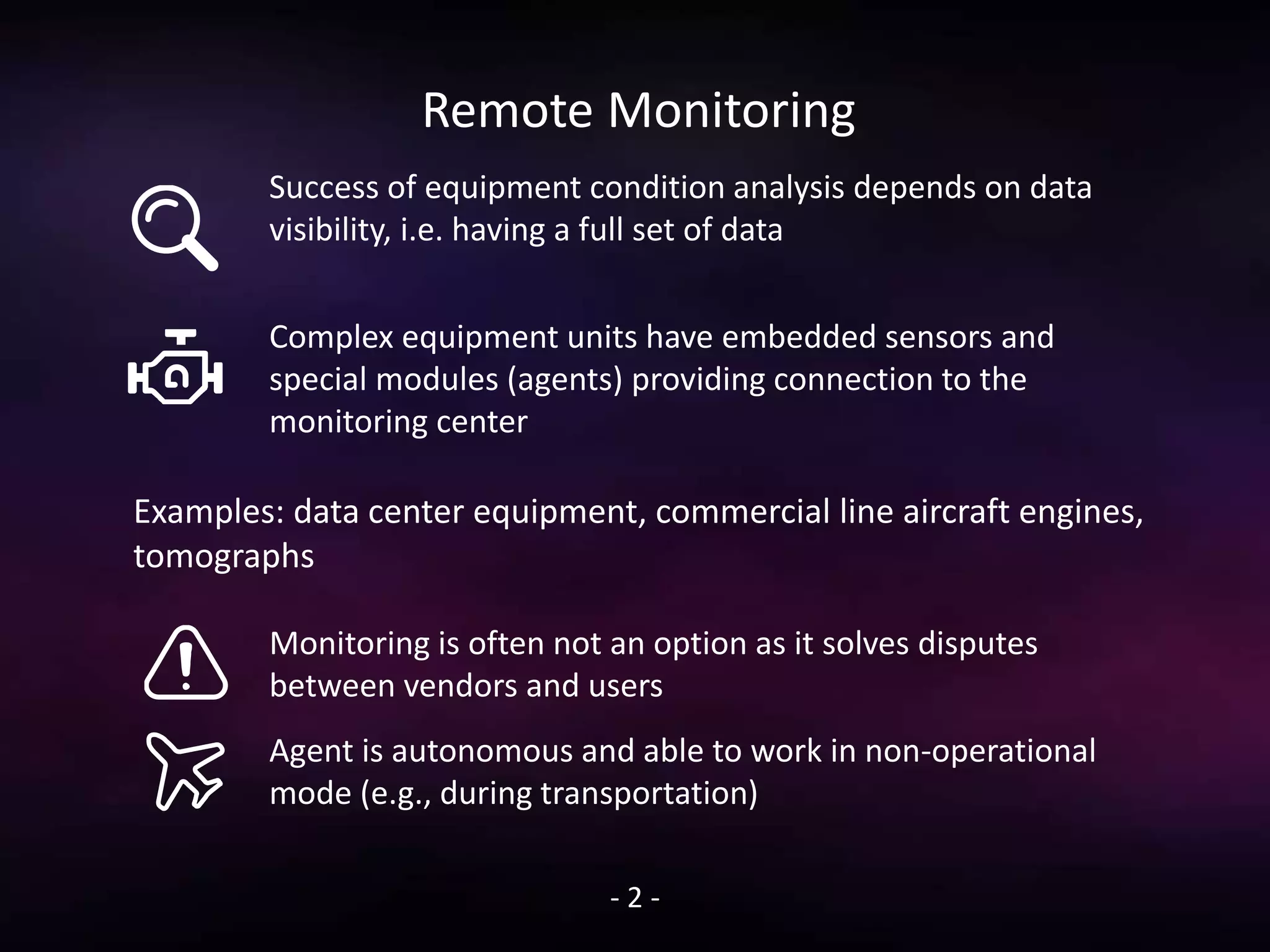
Success of equipment condition analysis depends on data
visibility, i.e. having a full set of data
Complex equipment units have embedded sensors and
special modules (agents) providing connection to the
monitoring center
- 2 -
Monitoring is often not an option as it solves disputes
between vendors and users
Agent is autonomous and able to work in non-operational
mode (e.g., during transportation)
Examples: data center equipment, commercial line aircraft engines,
tomographs
Manual Learning
• In most cases using Big Data and storing raw data is
unnecessary and over-priced
• All you need is a simple linear trend based on
statistics by periods
• Examples: disk space running out, leased network
channel utilization
- 3 -
• Negative patterns are normally complicated, and can be revealed only
by a group of experts after in-depth data analysis
• Example: black box analysis after a plane crash due to technical failure
Automatic Learning
• From all the countless Machine Learning
capabilities, only trends analysis is used often
• Generally, finding a negative pattern in a certain
trend is enough (example: failure in the refrigerator
compressor operating cycle)
- 4 -
• In more complicated cases, correlation of several trends is required
(«if this metric changes in this way and that one in another way, then
everything is bad»)
• It is possible to conduct learning based on data recorded earlier, not
in real time
What Do We Get As a Result?
Time to Failure (TTF) prediction
Remaining Useful Life (RUL) estimation
These metrics are easily converted from hours to operating
cycles, mileage, transaction count, and other metrics.
- 5 -
TTF and RUL estimation is hard work, but it's proven to work well for
rotating machinery, such as fans, pumps, and engines.
Equipment Condition Diagnosis Methods
1. Diagnosis during an operating cycle
2. Diagnosis via applying nondestructive testing during
scheduled maintenance
The first option is becoming more and more popular as sensors
and industrial IoT technologies evolve.
Diagnosis technologies: infrared and acoustic testing, vibration
analysis, noise-level measurement, oil analysis, performance
parameter evaluation, etc.
- 6 -
Other Capabilities of Proactive
Maintenance Systems
• Predictive maintenance usually includes Computerized
Maintenance Management System (CMMS)
• Another additional function is maintenance logistics
• Equipment condition analysis often results in changing
regulating algorithms
• For this purpose, centralized firmware update and
readjustment are applied with the help of IoT Platform
- 6 -

Predictive Maintenance in the Industrial Internet of Things

  • 1.
    Predictive maintenance in theIndustrial Internet of Things
  • 2.
    What is PredictiveMaintenance? Result: switching from schedule-based or cycle-based maintenance to more cost-effective condition-based maintenance *Condition-based maintenance can be more frequent than schedule-based one. In this case, you benefit from avoiding equipment failures - 1 - Component #1: remote monitoring Component #2: trends and patterns Component #3: learn what is good and what is bad Component #4: use automatic learning
  • 3.
  • 4.
    - 6 - Maintenanceand Repair Costs Repair Cost Maintenance Cost eeee Predictive Maintenance Reactive Maintenance Preventive Maintenance
  • 5.
    Remote Monitoring Success ofequipment condition analysis depends on data visibility, i.e. having a full set of data Complex equipment units have embedded sensors and special modules (agents) providing connection to the monitoring center - 2 - Monitoring is often not an option as it solves disputes between vendors and users Agent is autonomous and able to work in non-operational mode (e.g., during transportation) Examples: data center equipment, commercial line aircraft engines, tomographs
  • 6.
    Manual Learning • Inmost cases using Big Data and storing raw data is unnecessary and over-priced • All you need is a simple linear trend based on statistics by periods • Examples: disk space running out, leased network channel utilization - 3 - • Negative patterns are normally complicated, and can be revealed only by a group of experts after in-depth data analysis • Example: black box analysis after a plane crash due to technical failure
  • 7.
    Automatic Learning • Fromall the countless Machine Learning capabilities, only trends analysis is used often • Generally, finding a negative pattern in a certain trend is enough (example: failure in the refrigerator compressor operating cycle) - 4 - • In more complicated cases, correlation of several trends is required («if this metric changes in this way and that one in another way, then everything is bad») • It is possible to conduct learning based on data recorded earlier, not in real time
  • 8.
    What Do WeGet As a Result? Time to Failure (TTF) prediction Remaining Useful Life (RUL) estimation These metrics are easily converted from hours to operating cycles, mileage, transaction count, and other metrics. - 5 - TTF and RUL estimation is hard work, but it's proven to work well for rotating machinery, such as fans, pumps, and engines.
  • 9.
    Equipment Condition DiagnosisMethods 1. Diagnosis during an operating cycle 2. Diagnosis via applying nondestructive testing during scheduled maintenance The first option is becoming more and more popular as sensors and industrial IoT technologies evolve. Diagnosis technologies: infrared and acoustic testing, vibration analysis, noise-level measurement, oil analysis, performance parameter evaluation, etc. - 6 -
  • 10.
    Other Capabilities ofProactive Maintenance Systems • Predictive maintenance usually includes Computerized Maintenance Management System (CMMS) • Another additional function is maintenance logistics • Equipment condition analysis often results in changing regulating algorithms • For this purpose, centralized firmware update and readjustment are applied with the help of IoT Platform - 6 -