IoT in Agriculture
Key Stages of Agriculture Development
• Stage 1: machinery use instead of manual labor
• Stage 2: all-round workflow mechanization, including storage and
processing
• Stage 3: common use of mineral fertilizers and chemical crop
protection agents, soil parameter change, selection
• Stage 4: genetic engineering
• Stage 5: precision agriculture
- 2 -
Why Apply IoT in Agriculture?
- 3 -
• Saving fertilizers and chemical crop protection agents
• Boosting soil fertility due to “smart” correction
• Controlling crop state and preventing its loss when stored
• Increasing machinery efficiency
• Monitoring state and location of farm animals
• Tracking processing line equipment condition
Special Aspects to Consider for
IoT in Agriculture
- 4 -
• Outdated technologies
• Economics of agricultural enterprises is closely associated with living
organisms, their growth and development processes, which cannot be
controlled at all times
• Dependence on external factors (climate, weather, etc.)
• Seasonality
IoT Application in Agriculture
- 5 -
• Thrusters and autopilots for agriculture machinery
• Irrigation systems considering soil state and its peculiarities
• Precise fertilizing systems
• Pest and disease control systems
• Crop storage systems
• Processing lines
Example: Crop Condition Monitoring and
Forecasting System
- 6 -
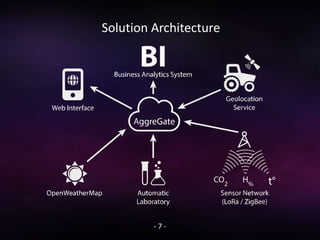
This is a hardware-software solution consisting of:
• Autonomous wireless temperature, humidity, and CO2 sensors
• Base stations – gateways
• GPS/GLONASS receivers
• Lab facilities for imitating various conditions
• Meteorological stations and weather forecast services
• Intelligent Tibbo AggreGate IoT Platform
Solution Architecture
- 7 -
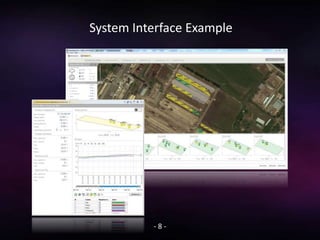
System Interface Example
- 8 -
Summary
- 9 -
AggreGate IoT Platform allowed to:
• Follow the trends of beet sugar amount change for all land plots
• Prevent beet rotting processes at an early stage
• Increase sugar production rates by planning its processing in
compliance with raw material state and storage conditions
• Track agriculture machinery location and efficiency
- 9 -
Learn more about AggreGate IoT solutions for Agriculture on our
website: http://aggregate.tibbo.com/industries/agriculture.html

IoT in Agriculture

  • 1.
  • 2.
    Key Stages ofAgriculture Development • Stage 1: machinery use instead of manual labor • Stage 2: all-round workflow mechanization, including storage and processing • Stage 3: common use of mineral fertilizers and chemical crop protection agents, soil parameter change, selection • Stage 4: genetic engineering • Stage 5: precision agriculture - 2 -
  • 3.
    Why Apply IoTin Agriculture? - 3 - • Saving fertilizers and chemical crop protection agents • Boosting soil fertility due to “smart” correction • Controlling crop state and preventing its loss when stored • Increasing machinery efficiency • Monitoring state and location of farm animals • Tracking processing line equipment condition
  • 4.
    Special Aspects toConsider for IoT in Agriculture - 4 - • Outdated technologies • Economics of agricultural enterprises is closely associated with living organisms, their growth and development processes, which cannot be controlled at all times • Dependence on external factors (climate, weather, etc.) • Seasonality
  • 5.
    IoT Application inAgriculture - 5 - • Thrusters and autopilots for agriculture machinery • Irrigation systems considering soil state and its peculiarities • Precise fertilizing systems • Pest and disease control systems • Crop storage systems • Processing lines
  • 6.
    Example: Crop ConditionMonitoring and Forecasting System - 6 - This is a hardware-software solution consisting of: • Autonomous wireless temperature, humidity, and CO2 sensors • Base stations – gateways • GPS/GLONASS receivers • Lab facilities for imitating various conditions • Meteorological stations and weather forecast services • Intelligent Tibbo AggreGate IoT Platform
  • 7.
  • 8.
  • 9.
    Summary - 9 - AggreGateIoT Platform allowed to: • Follow the trends of beet sugar amount change for all land plots • Prevent beet rotting processes at an early stage • Increase sugar production rates by planning its processing in compliance with raw material state and storage conditions • Track agriculture machinery location and efficiency
  • 10.
    - 9 - Learnmore about AggreGate IoT solutions for Agriculture on our website: http://aggregate.tibbo.com/industries/agriculture.html