K.JANANI,B.Sc (N)
Nursing Tutor
Kvcn.
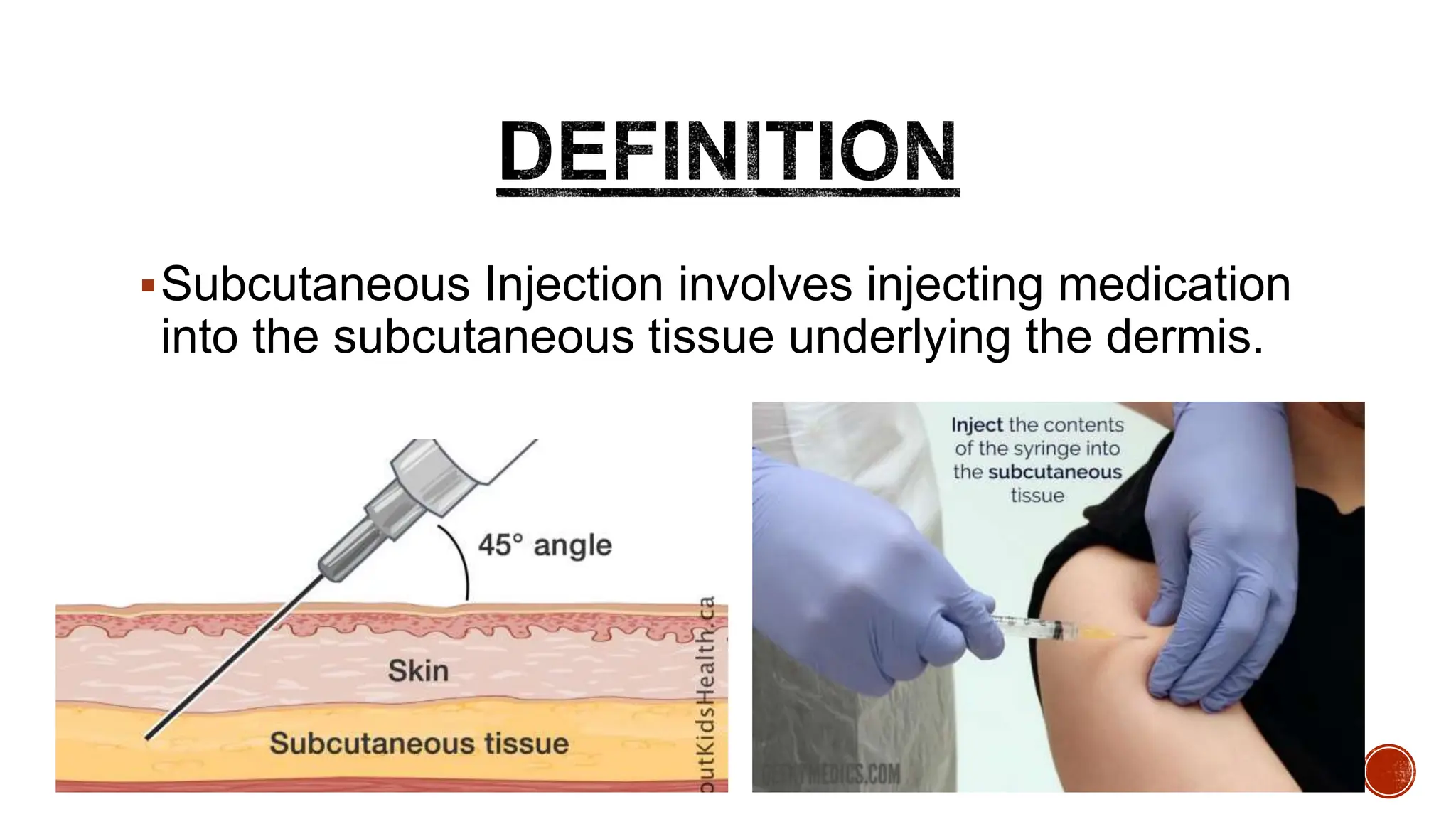
ļ‚§Subcutaneous Injection involves injecting medication
into the subcutaneous tissue underlying the dermis.
ļ‚§To achieve an absorption rate slower than IM
(Intramuscular) route .
ļ‚§To administer watery and nonirritating
medication.
ļ‚§To get rapid effect of the drug.
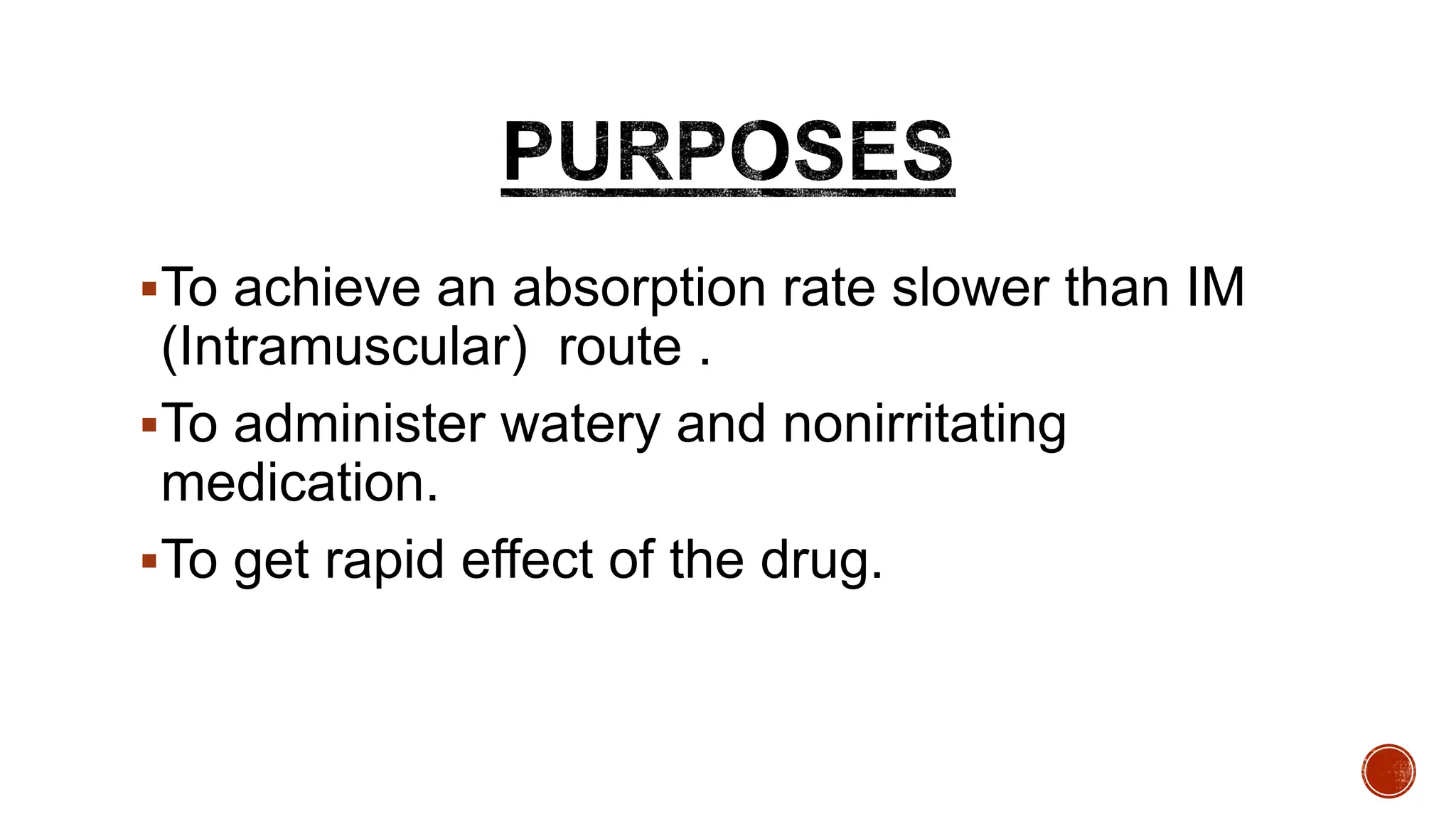
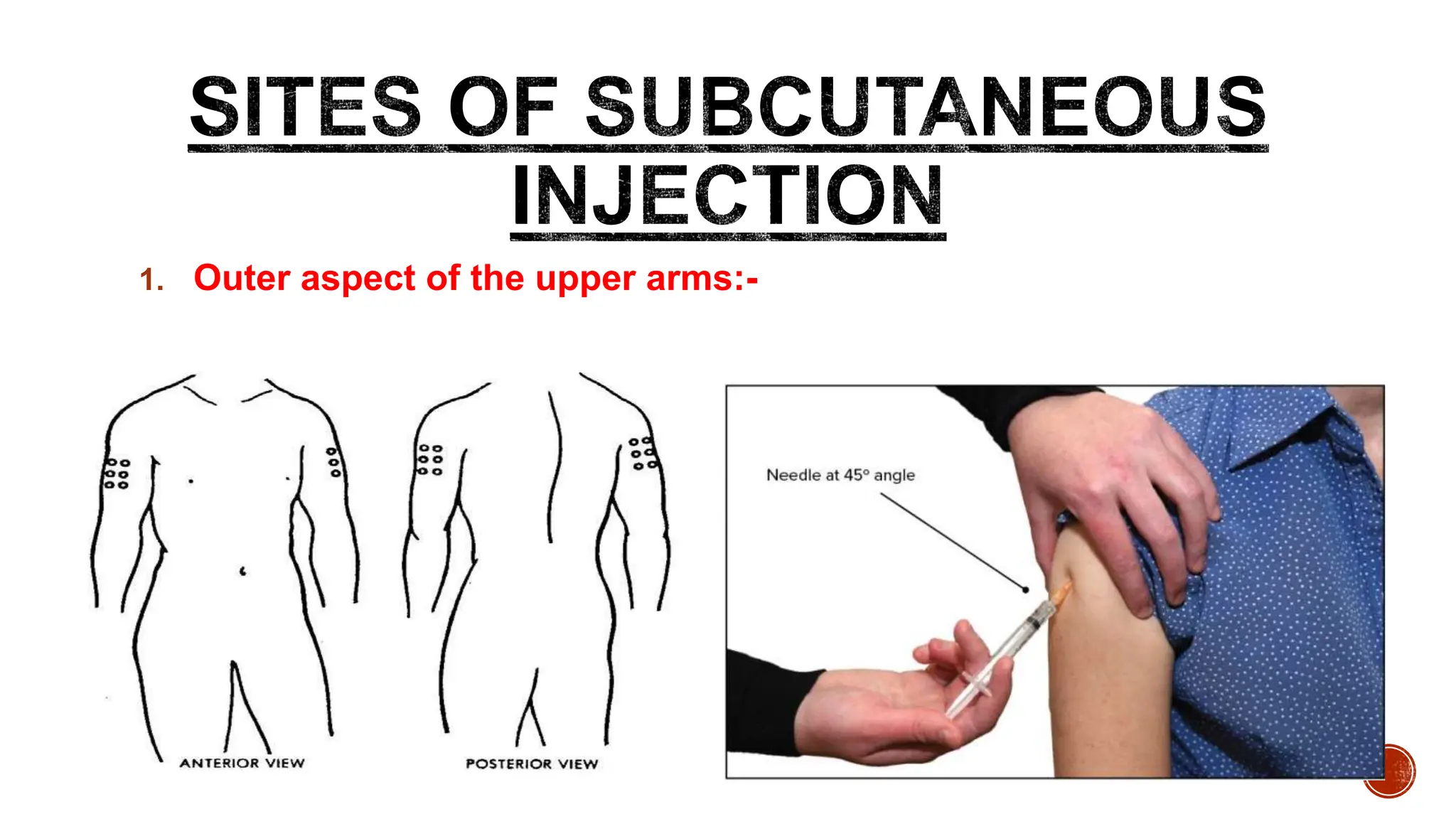
1. Outer aspect of the upper arms:-
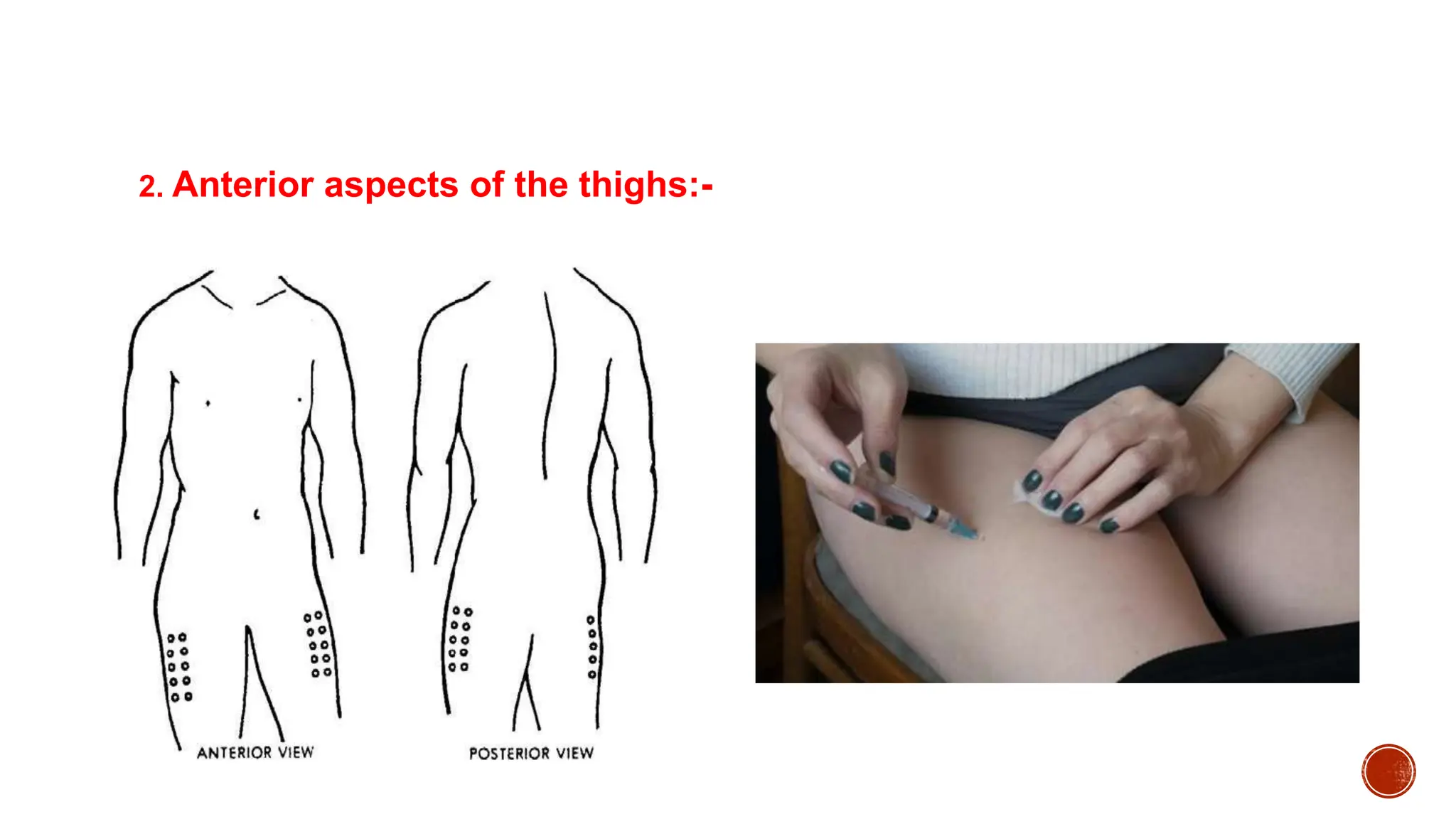
2. Anterior aspects of the thighs:-
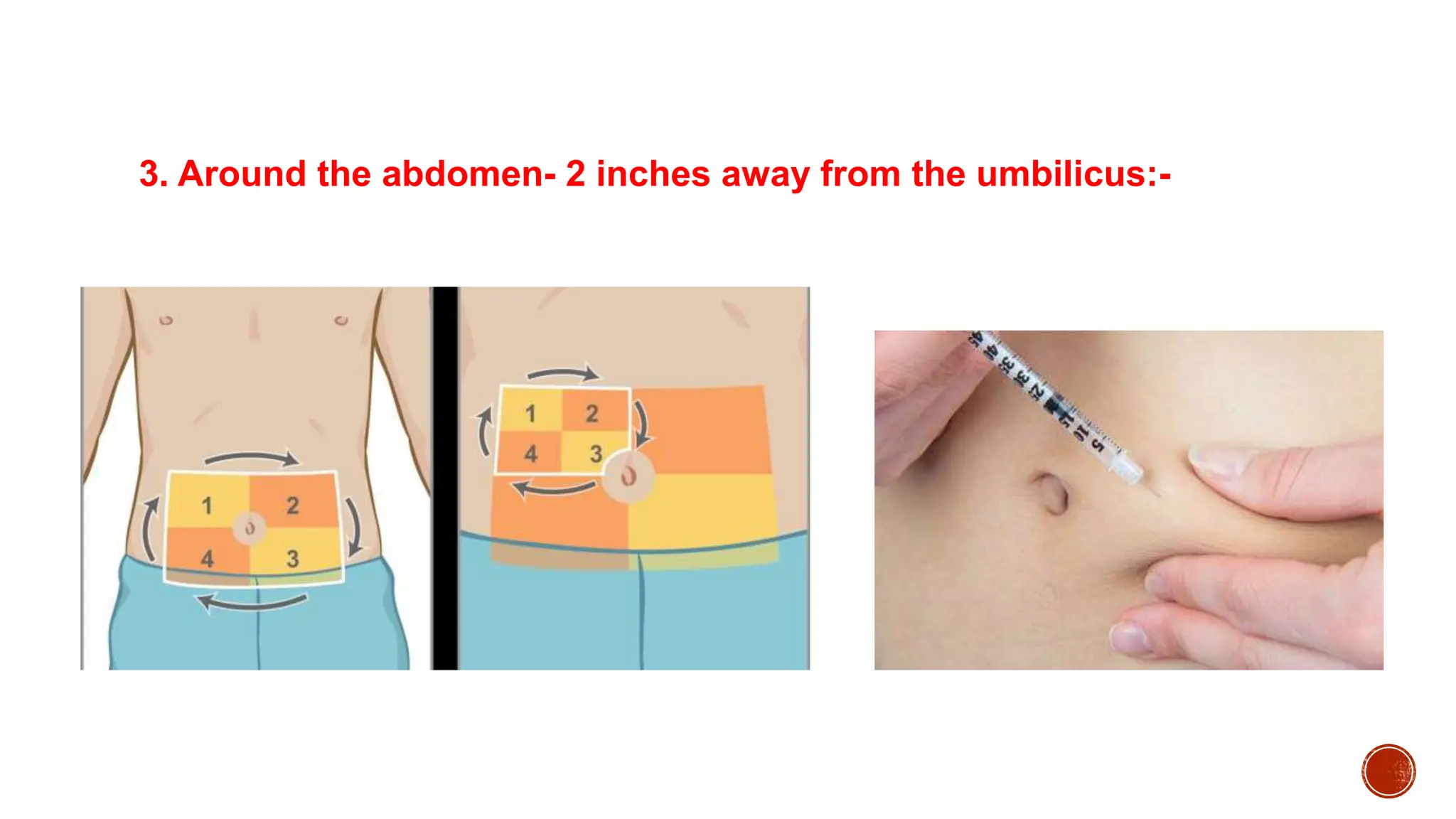
3. Around the abdomen- 2 inches away from the umbilicus:-
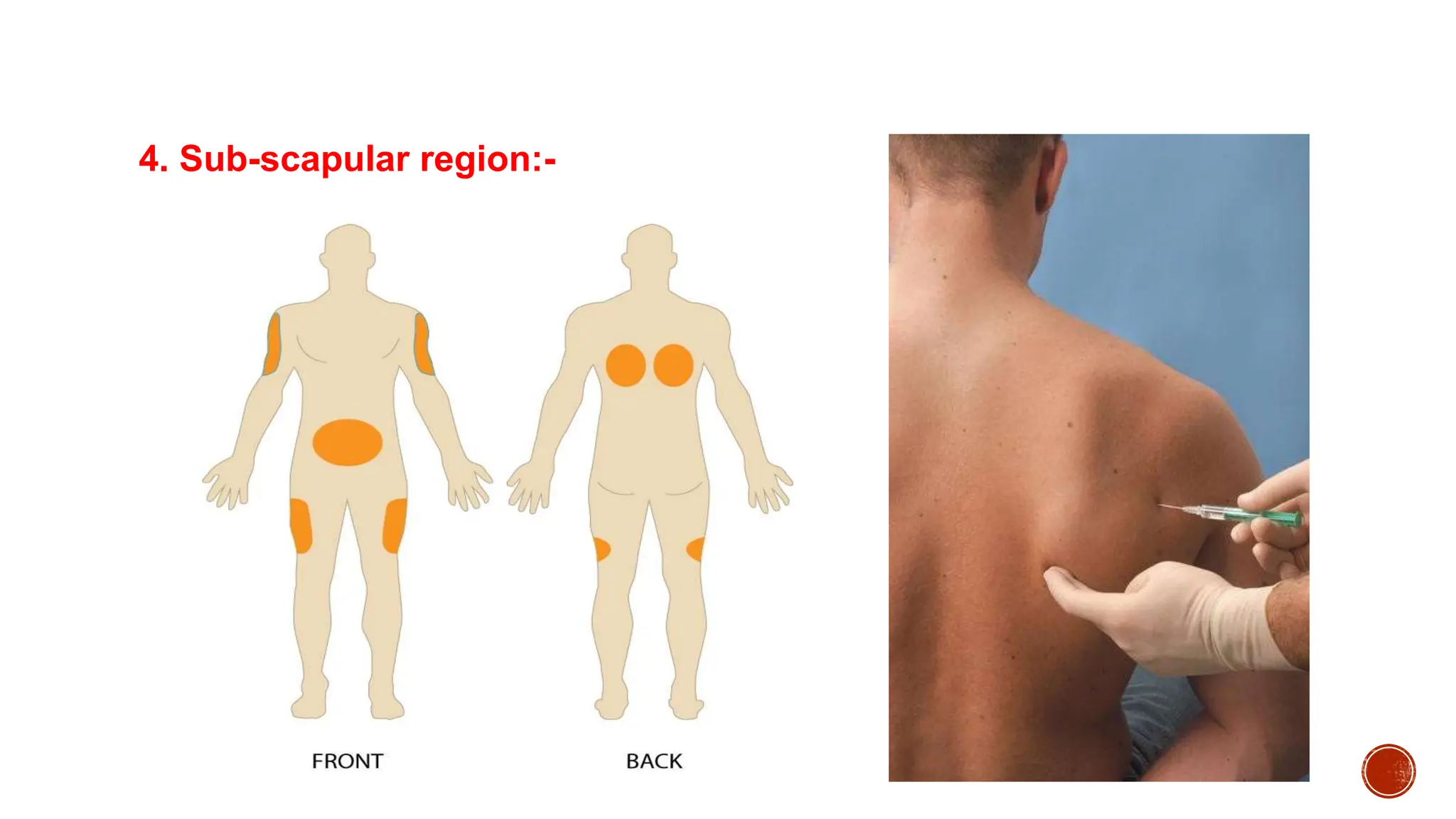
4. Sub-scapular region:-
1. Diabetic mellitus
2. Anticoagulant administration – eg:- Heparin
3. MMR vaccination
ļ‚§Inspect the Vials before each use for changes in appearance
(Eg:- clumping,frosting, precipitation and changes in clarity)
as this indicates a loss in quality.
ļ‚§Do not interchange insulin types, unless approved by the
patient prescriber.
ļ‚§Assessbfor contraindication to subcutaneous injection.
ļ‚§Assess adequancy of the patients adipose tissue.
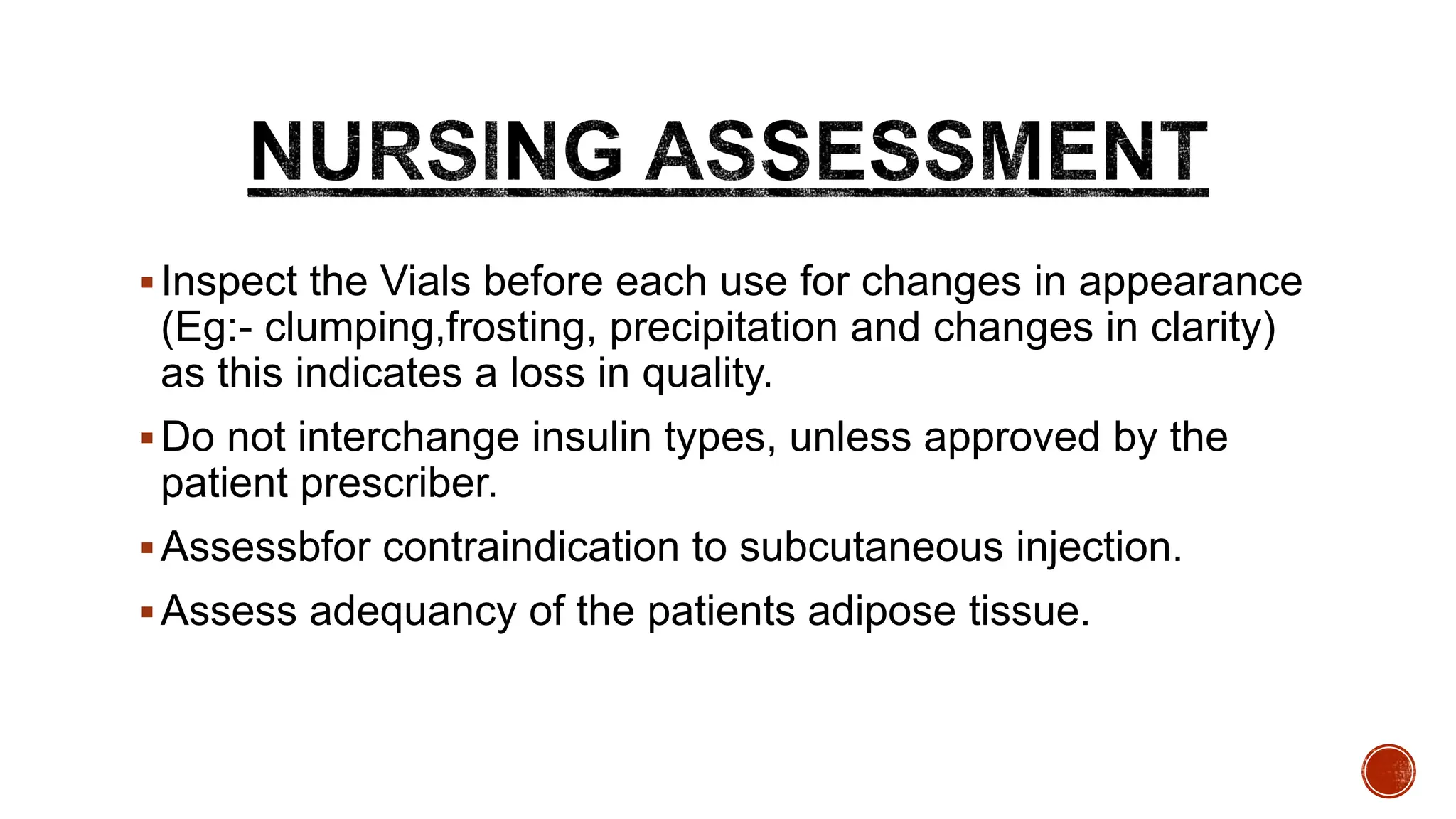
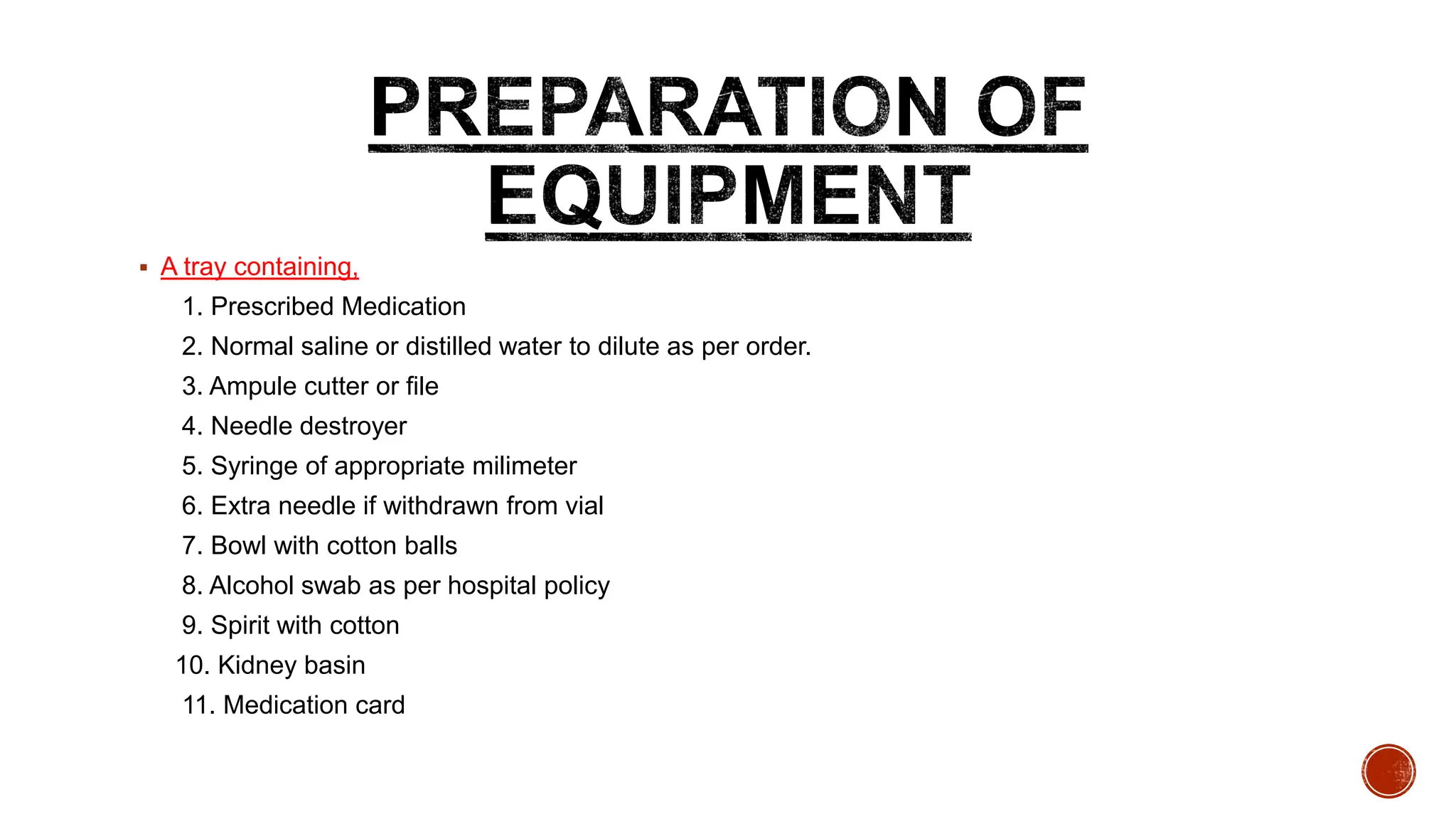
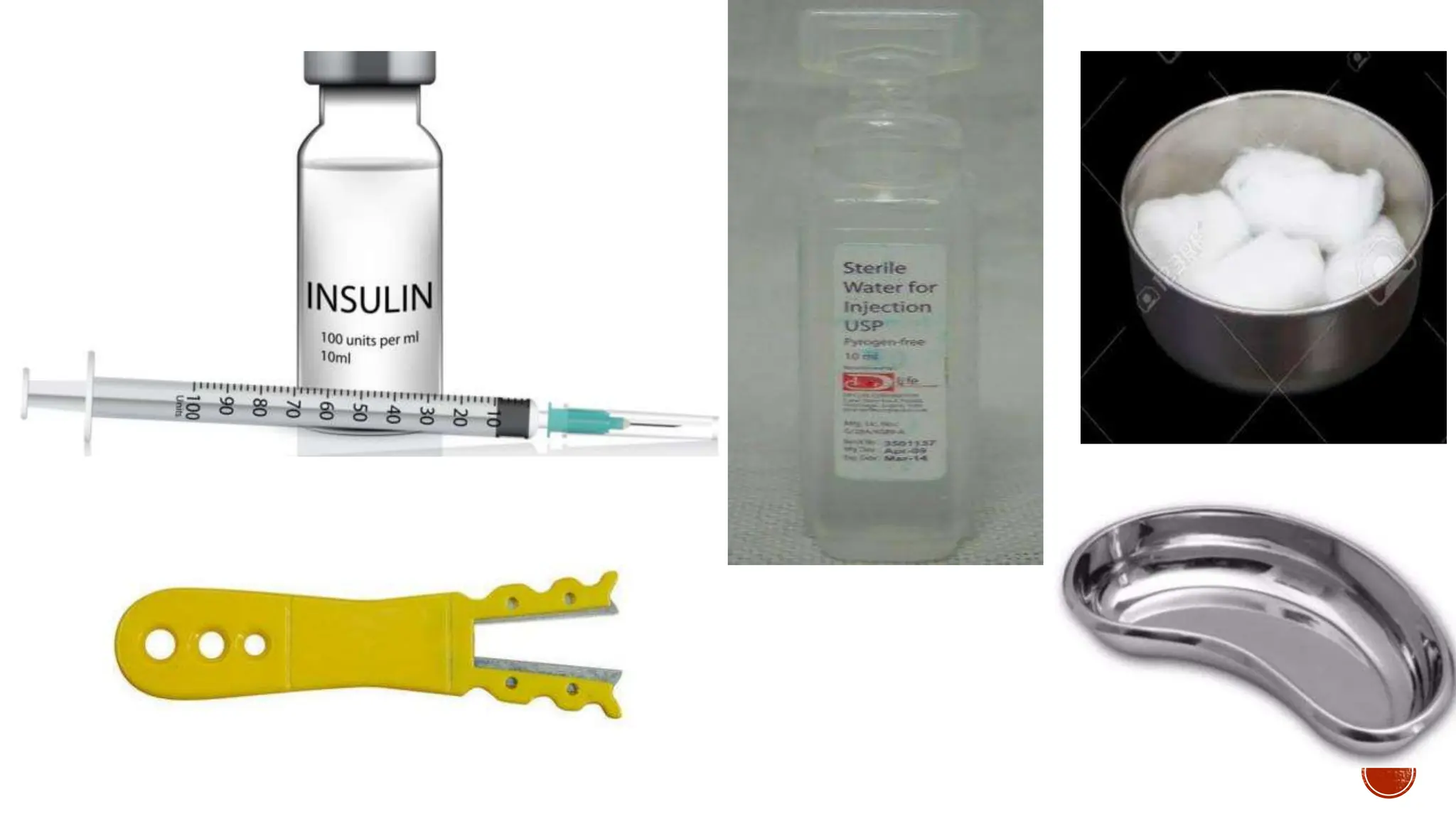
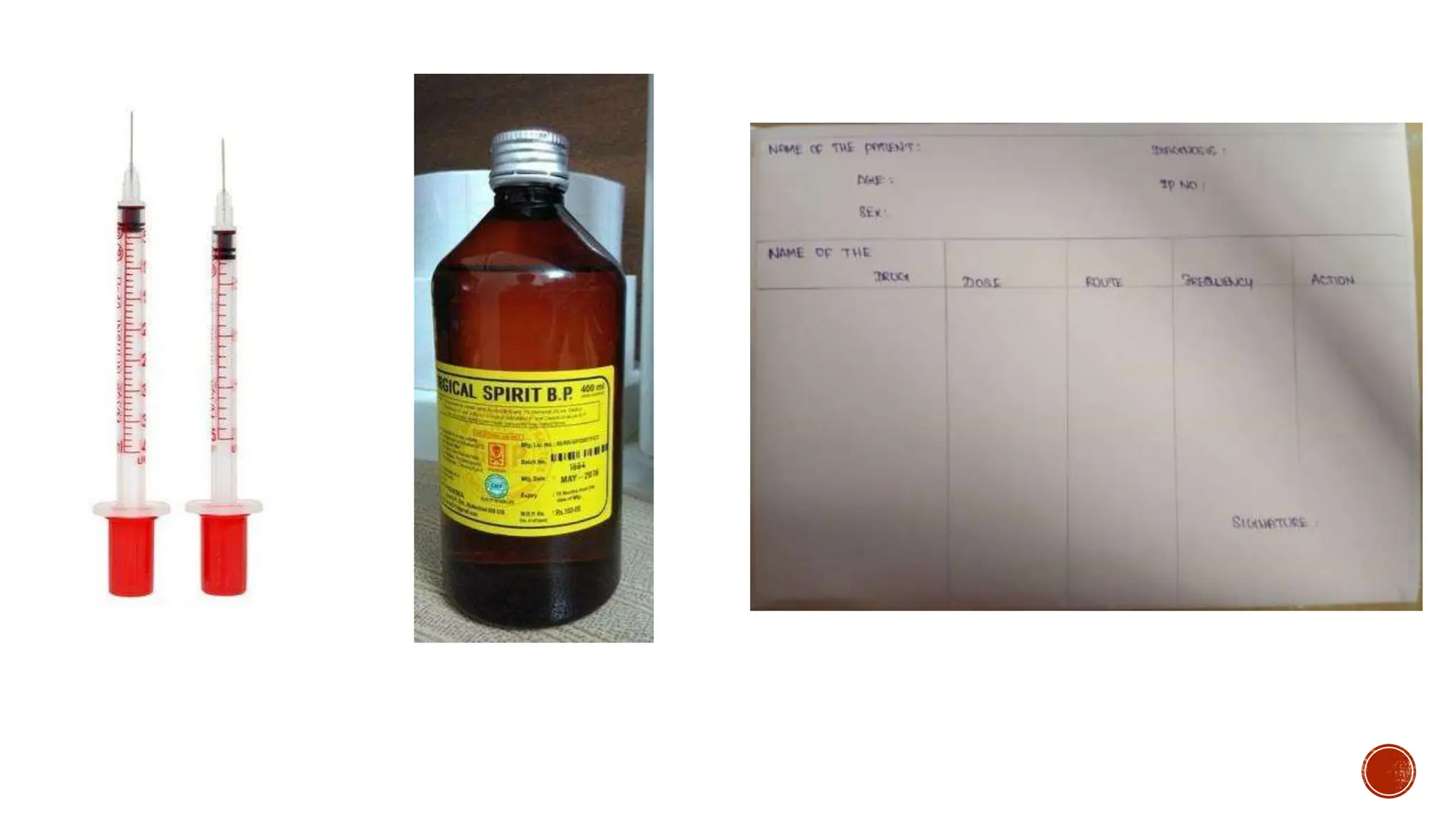
ļ‚§ A tray containing,
1. Prescribed Medication
2. Normal saline or distilled water to dilute as per order.
3. Ampule cutter or file
4. Needle destroyer
5. Syringe of appropriate milimeter
6. Extra needle if withdrawn from vial
7. Bowl with cotton balls
8. Alcohol swab as per hospital policy
9. Spirit with cotton
10. Kidney basin
11. Medication card
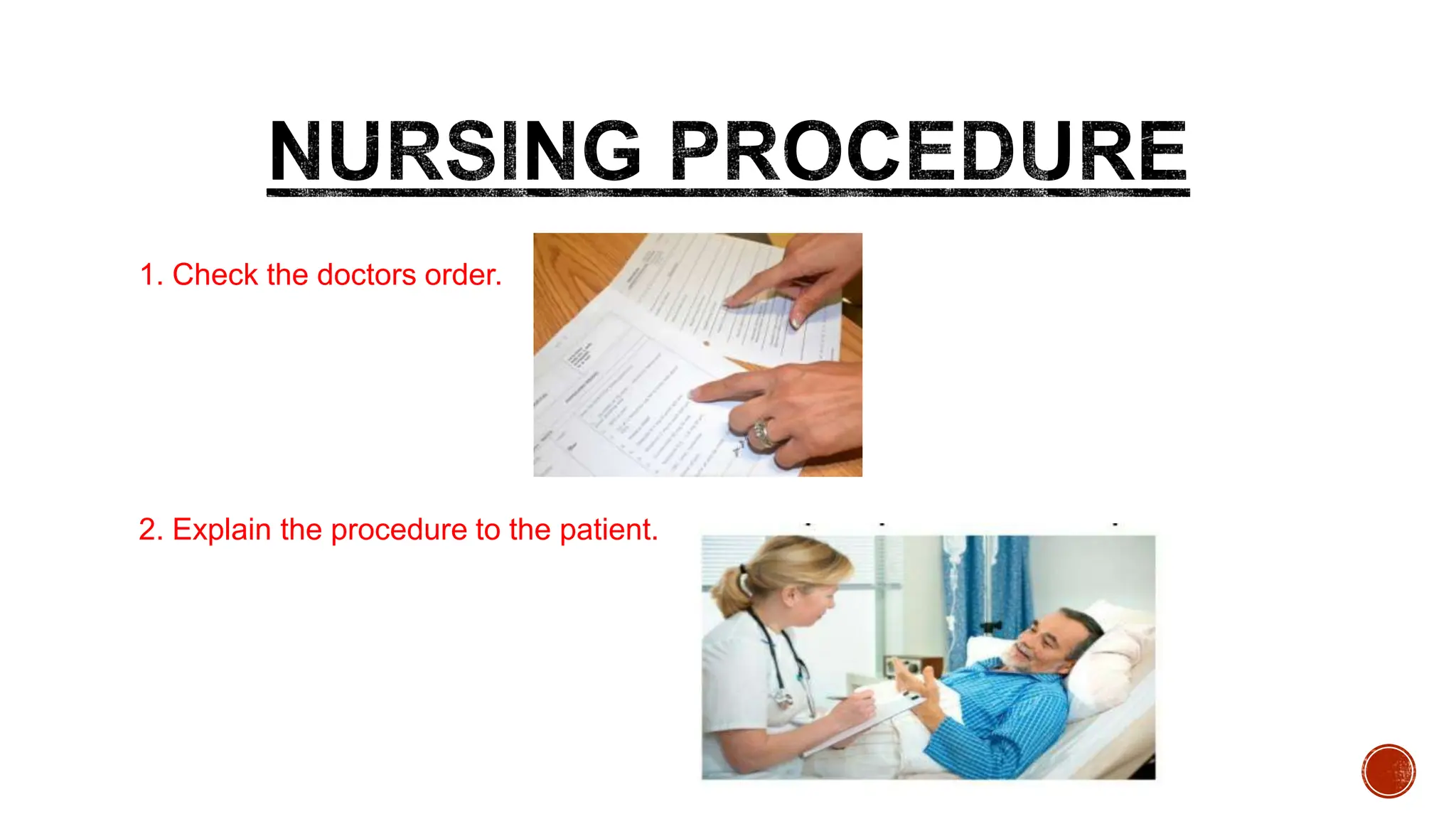
1. Check the doctors order.
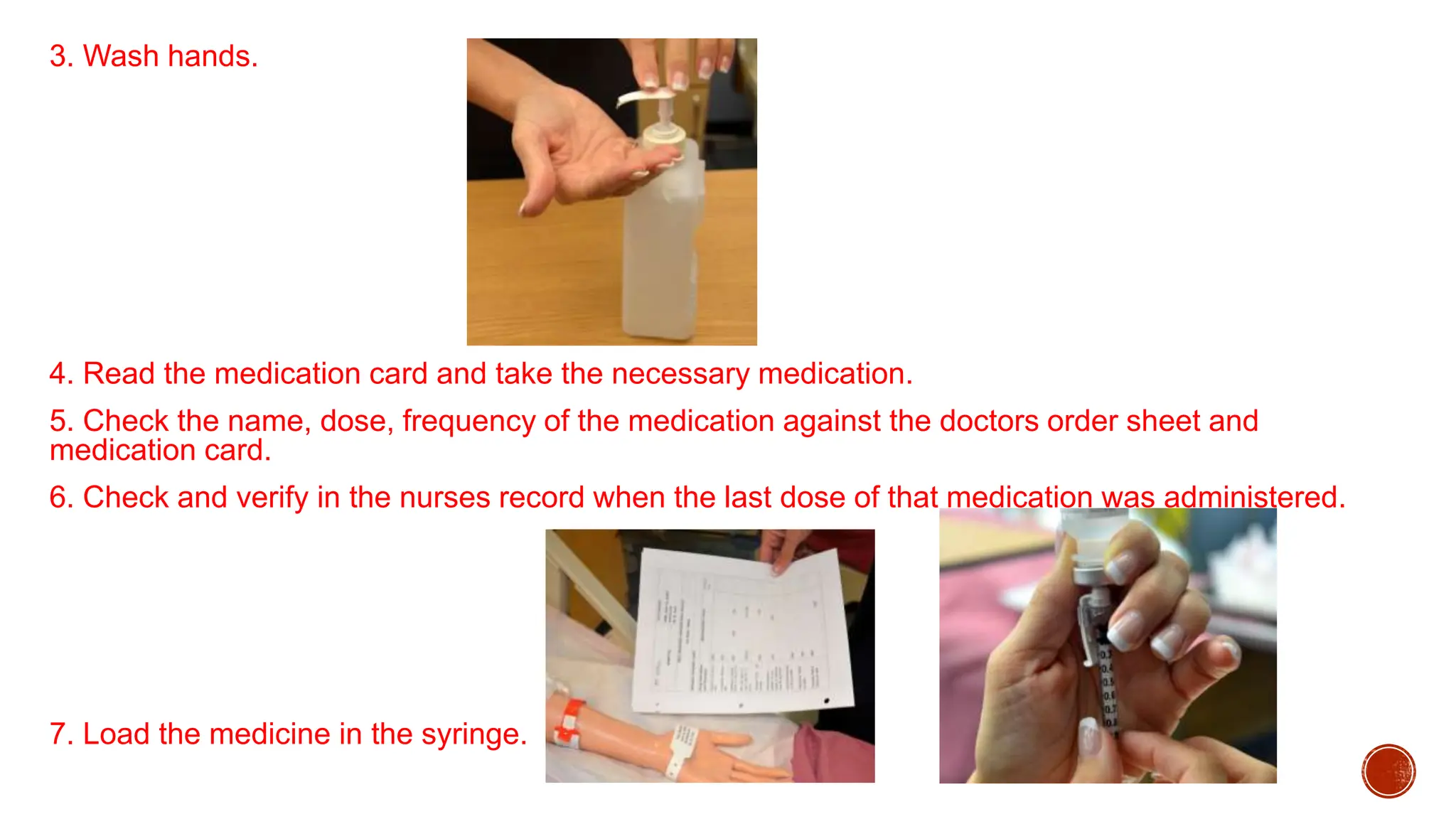
2. Explain the procedure to the patient.
3. Wash hands.
4. Read the medication card and take the necessary medication.
5. Check the name, dose, frequency of the medication against the doctors order sheet and
medication card.
6. Check and verify in the nurses record when the last dose of that medication was administered.
7. Load the medicine in the syringe.
8. Assemble all the equipments near the bedside.
9. Provide privacy.
10. Position the patient and expose the area.
11. Identify the correct site.
.
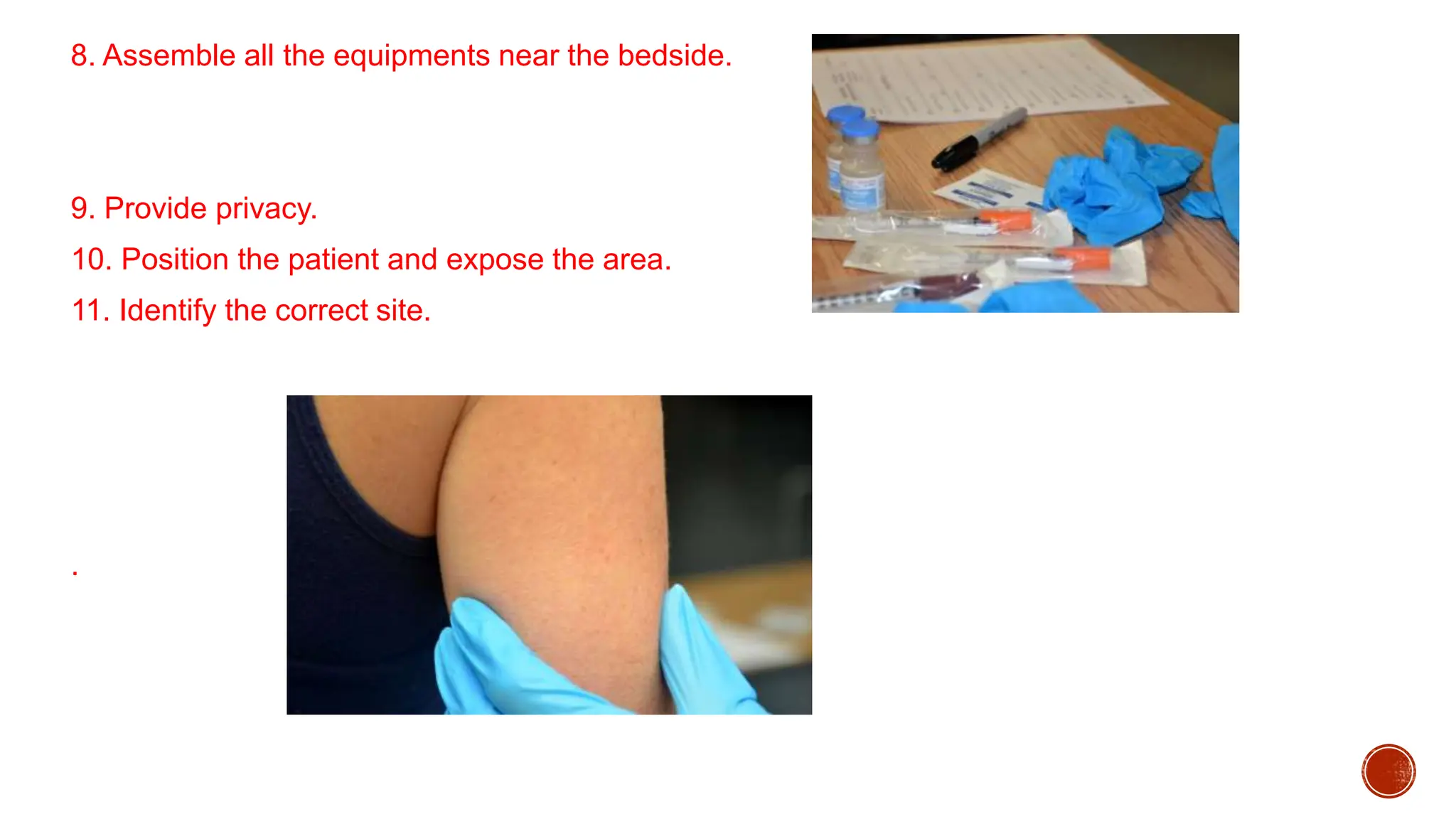
12. Clean the skin using a rotatory movement with an antiseptic swab.
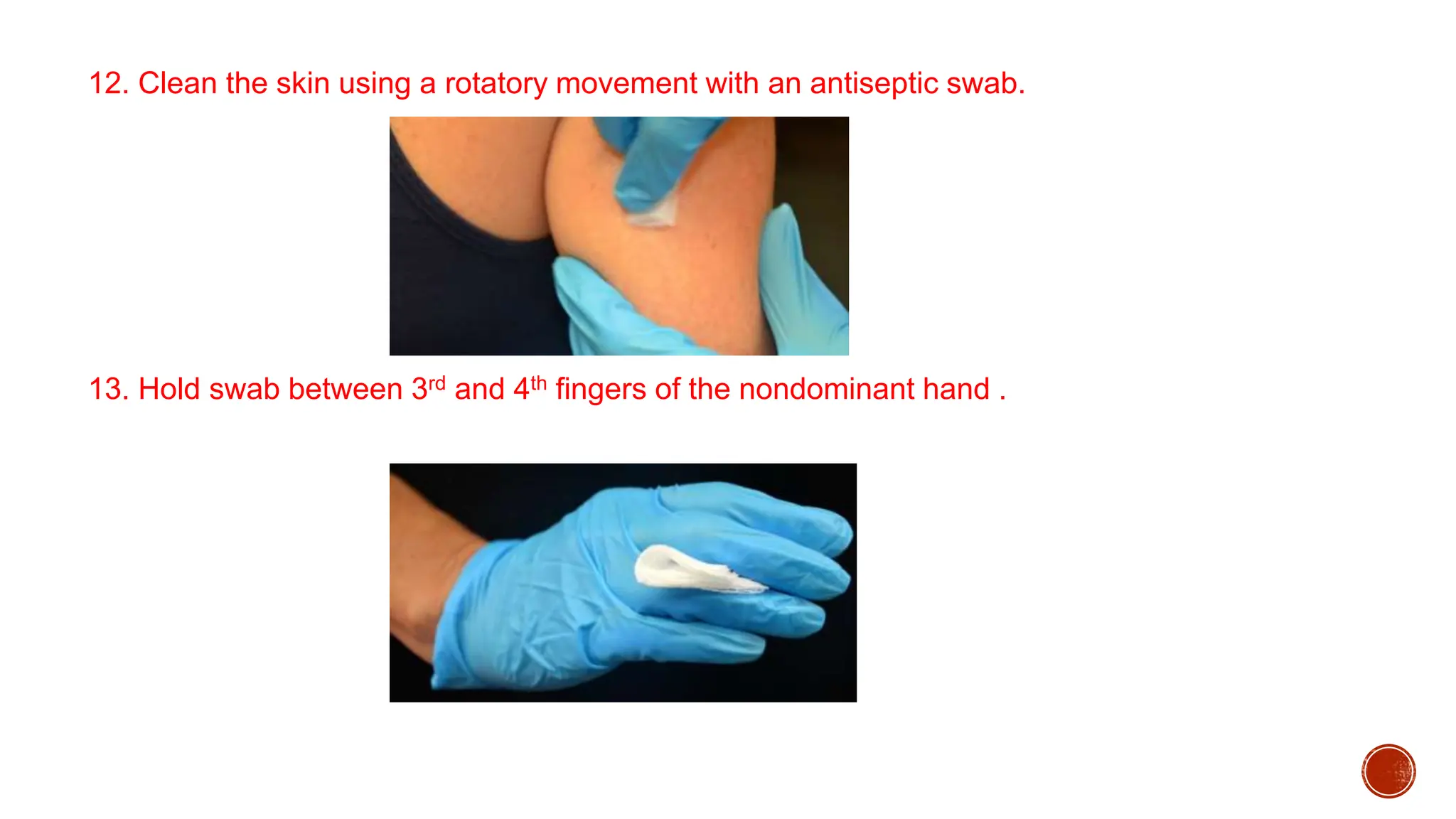
13. Hold swab between 3rd and 4th fingers of the nondominant hand .
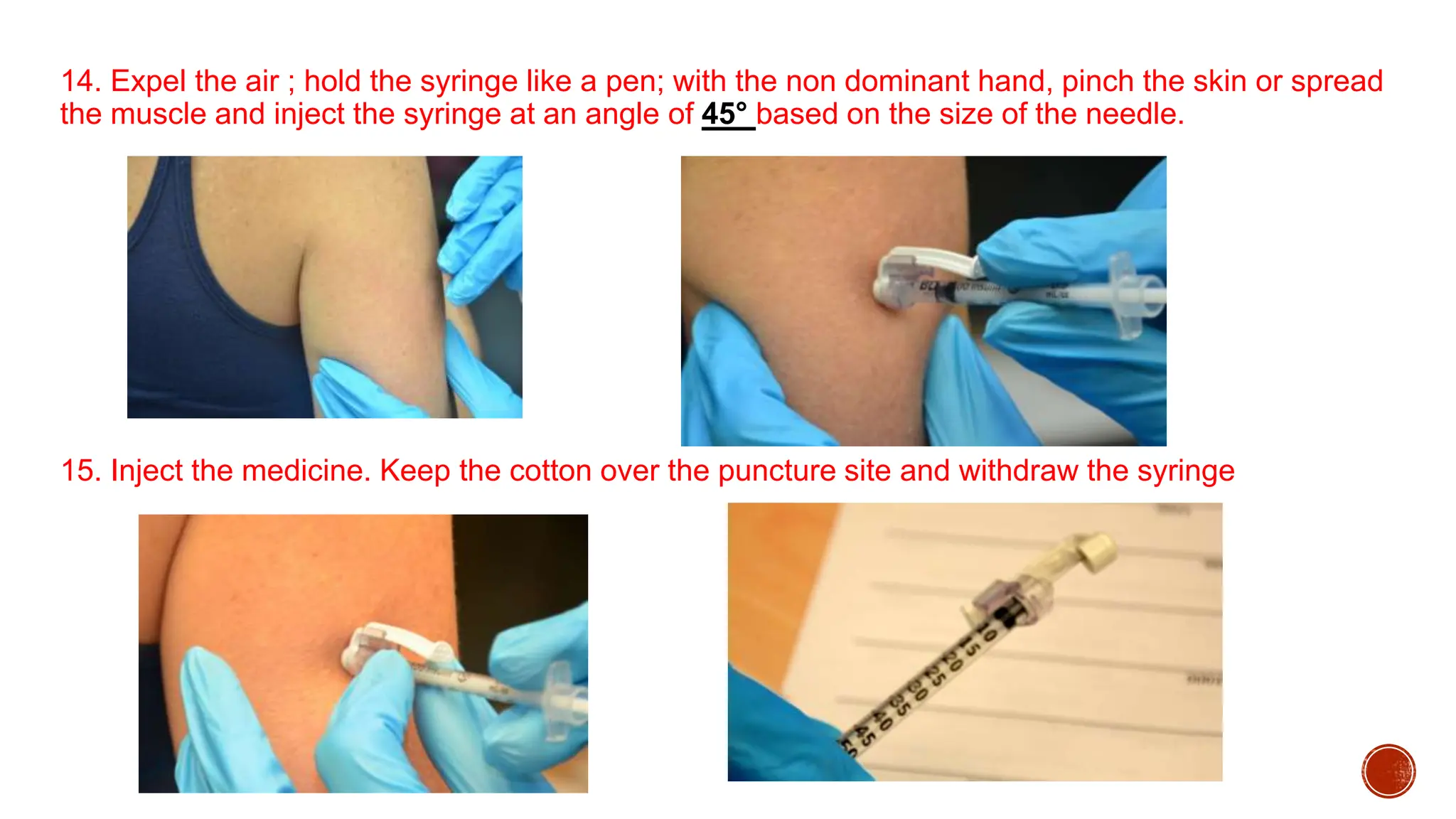
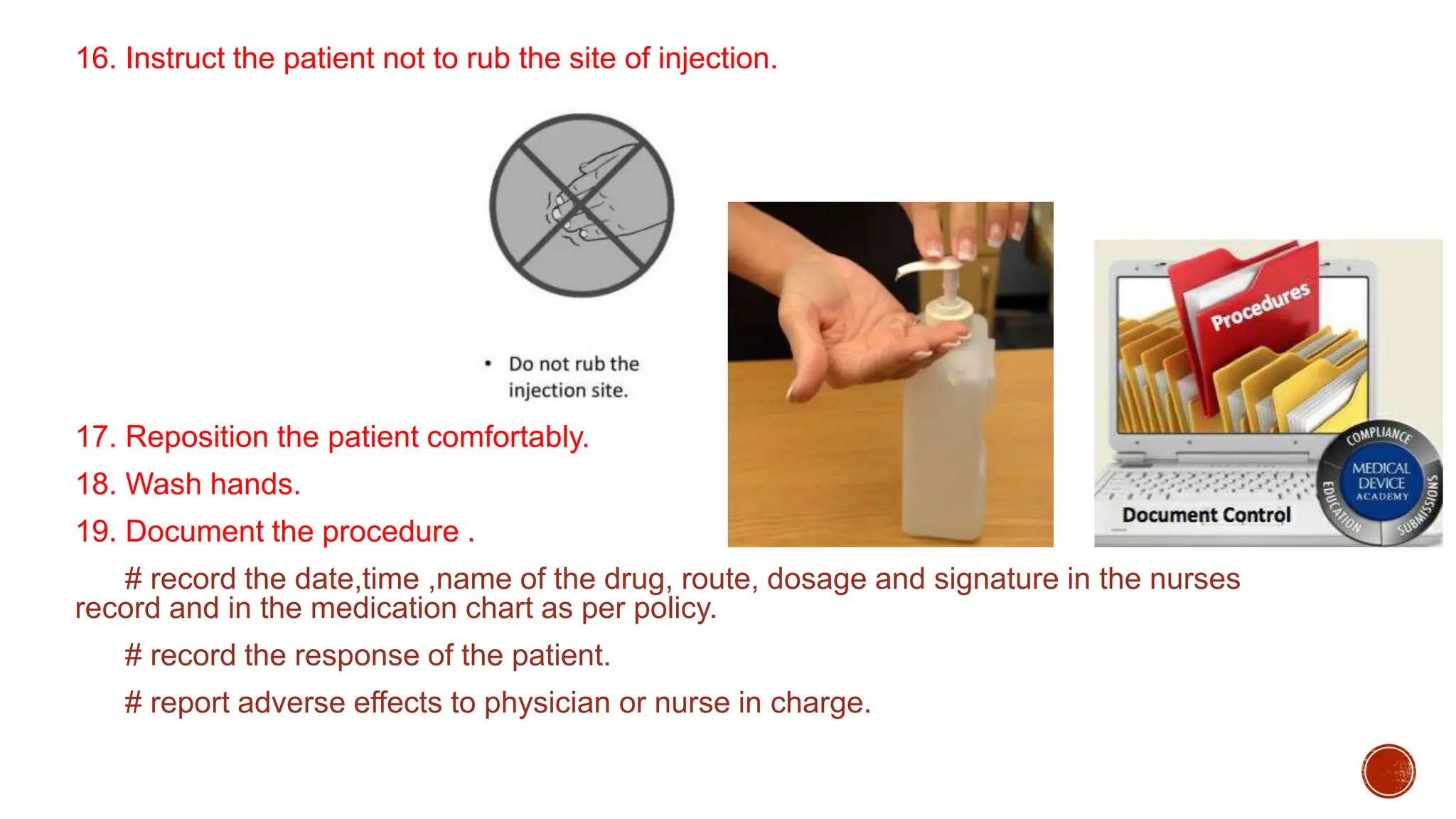
14. Expel the air ; hold the syringe like a pen; with the non dominant hand, pinch the skin or spread
the muscle and inject the syringe at an angle of 45° based on the size of the needle.
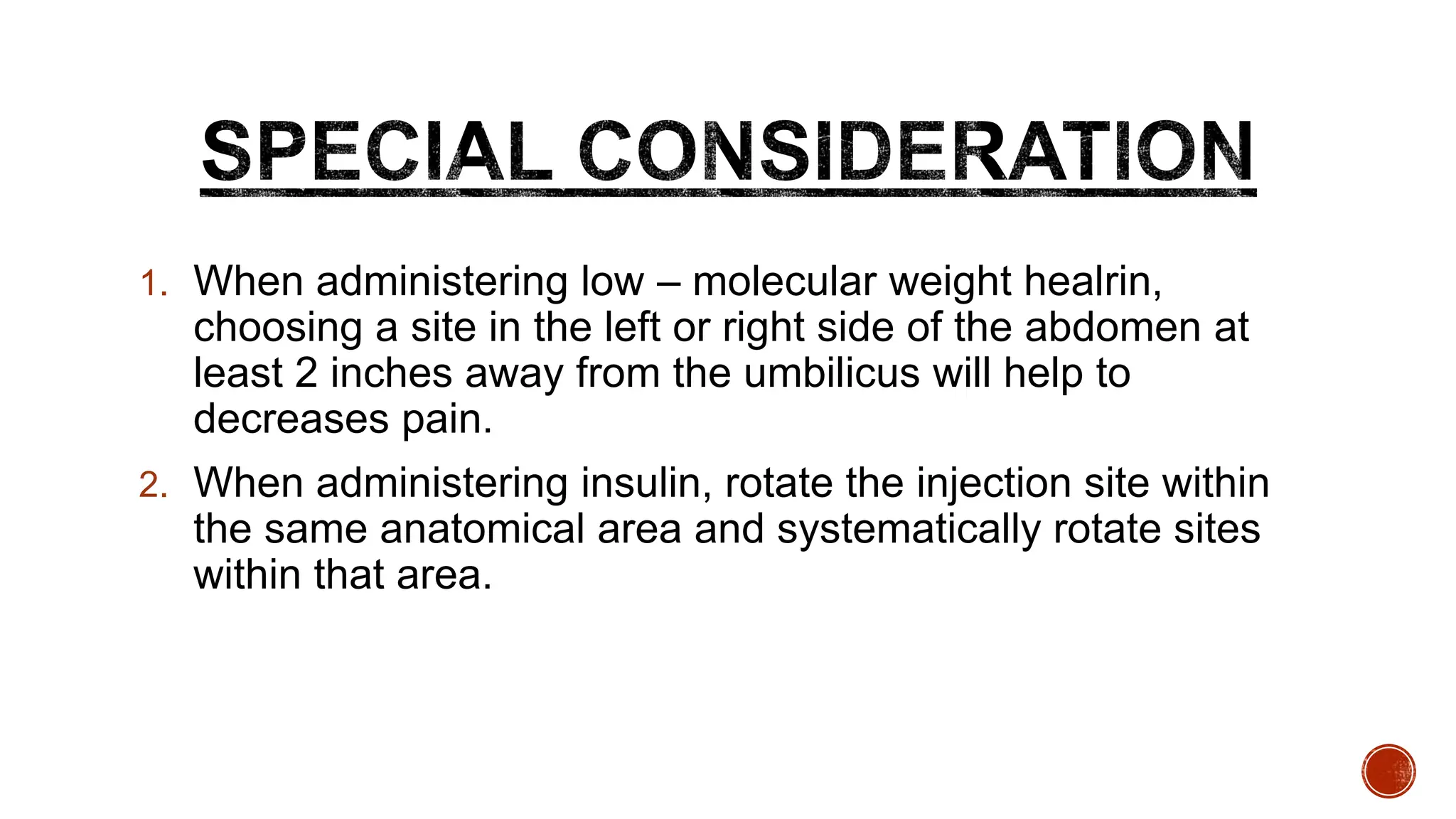
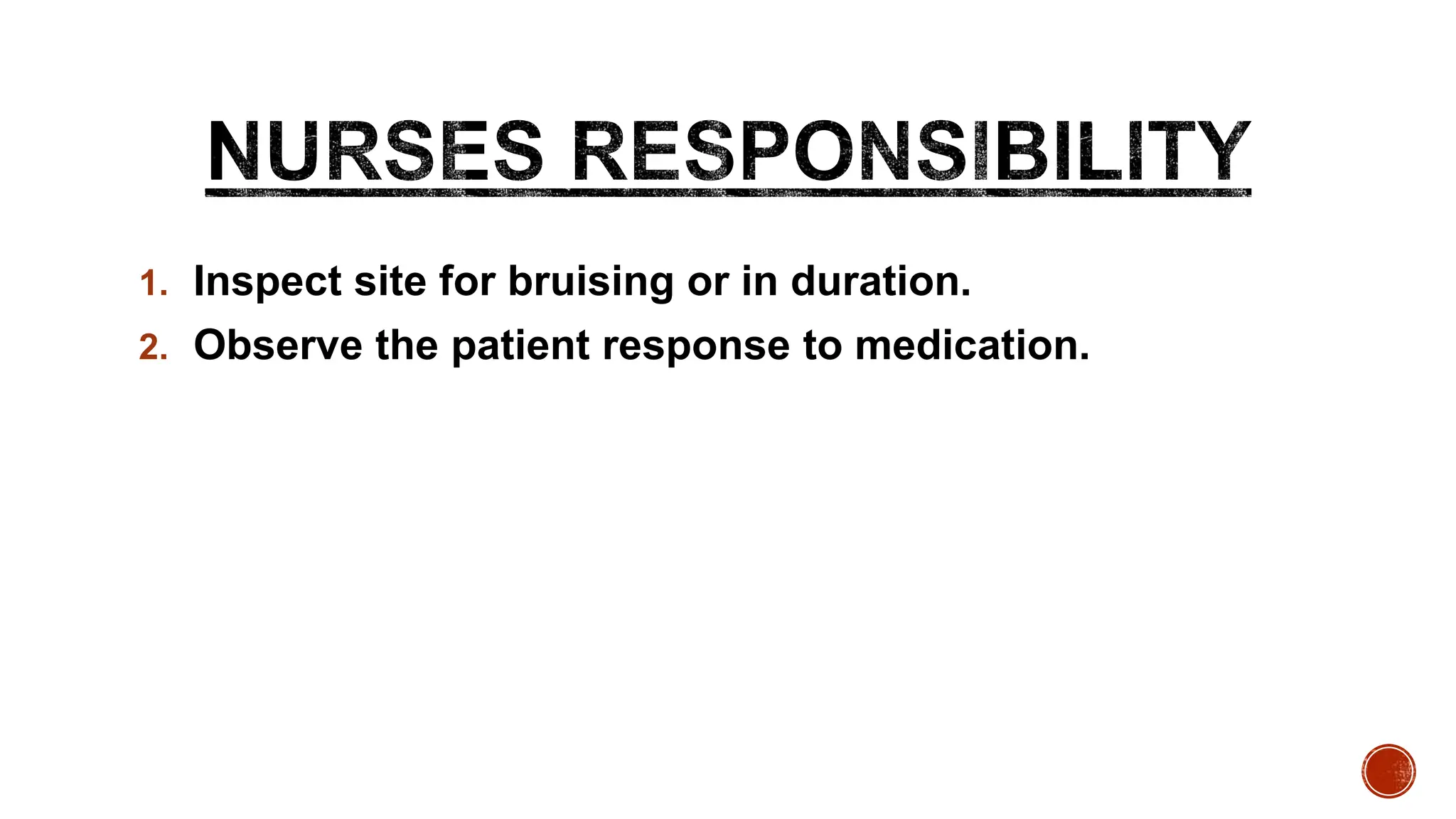
15. Inject the medicine. Keep the cotton over the puncture site and withdraw the syringe
16. Instruct the patient not to rub the site of injection.
17. Reposition the patient comfortably.
18. Wash hands.
19. Document the procedure .
# record the date,time ,name of the drug, route, dosage and signature in the nurses
record and in the medication chart as per policy.
# record the response of the patient.
# report adverse effects to physician or nurse in charge.
1. When administering low – molecular weight healrin,
choosing a site in the left or right side of the abdomen at
least 2 inches away from the umbilicus will help to
decreases pain.
2. When administering insulin, rotate the injection site within
the same anatomical area and systematically rotate sites
within that area.
1. Inspect site for bruising or in duration.
2. Observe the patient response to medication.
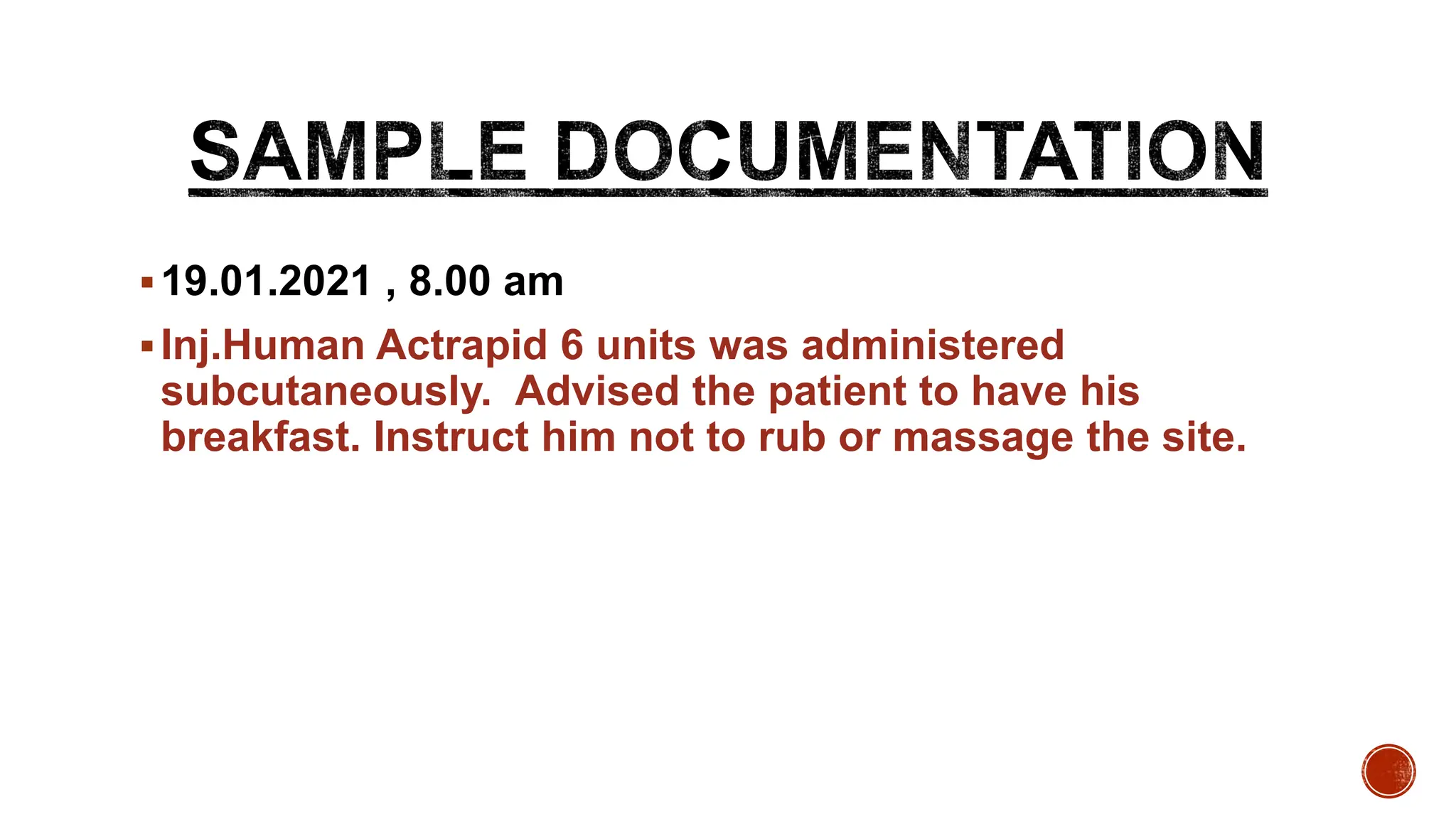
ļ‚§19.01.2021 , 8.00 am
ļ‚§Inj.Human Actrapid 6 units was administered
subcutaneously. Advised the patient to have his
breakfast. Instruct him not to rub or massage the site.

PPT-Administration-of-Subcutaneous-Injection-.pptx.ppt

  • 1.
  • 2.
    ļ‚§Subcutaneous Injection involvesinjecting medication into the subcutaneous tissue underlying the dermis.
  • 3.
    ļ‚§To achieve anabsorption rate slower than IM (Intramuscular) route . ļ‚§To administer watery and nonirritating medication. ļ‚§To get rapid effect of the drug.
  • 4.
    1. Outer aspectof the upper arms:-
  • 5.
    2. Anterior aspectsof the thighs:-
  • 6.
    3. Around theabdomen- 2 inches away from the umbilicus:-
  • 7.
  • 8.
    1. Diabetic mellitus 2.Anticoagulant administration – eg:- Heparin 3. MMR vaccination
  • 9.
    ļ‚§Inspect the Vialsbefore each use for changes in appearance (Eg:- clumping,frosting, precipitation and changes in clarity) as this indicates a loss in quality. ļ‚§Do not interchange insulin types, unless approved by the patient prescriber. ļ‚§Assessbfor contraindication to subcutaneous injection. ļ‚§Assess adequancy of the patients adipose tissue.
  • 10.
    ļ‚§ A traycontaining, 1. Prescribed Medication 2. Normal saline or distilled water to dilute as per order. 3. Ampule cutter or file 4. Needle destroyer 5. Syringe of appropriate milimeter 6. Extra needle if withdrawn from vial 7. Bowl with cotton balls 8. Alcohol swab as per hospital policy 9. Spirit with cotton 10. Kidney basin 11. Medication card
  • 13.
    1. Check thedoctors order. 2. Explain the procedure to the patient.
  • 14.
    3. Wash hands. 4.Read the medication card and take the necessary medication. 5. Check the name, dose, frequency of the medication against the doctors order sheet and medication card. 6. Check and verify in the nurses record when the last dose of that medication was administered. 7. Load the medicine in the syringe.
  • 15.
    8. Assemble allthe equipments near the bedside. 9. Provide privacy. 10. Position the patient and expose the area. 11. Identify the correct site. .
  • 16.
    12. Clean theskin using a rotatory movement with an antiseptic swab. 13. Hold swab between 3rd and 4th fingers of the nondominant hand .
  • 17.
    14. Expel theair ; hold the syringe like a pen; with the non dominant hand, pinch the skin or spread the muscle and inject the syringe at an angle of 45° based on the size of the needle. 15. Inject the medicine. Keep the cotton over the puncture site and withdraw the syringe
  • 18.
    16. Instruct thepatient not to rub the site of injection. 17. Reposition the patient comfortably. 18. Wash hands. 19. Document the procedure . # record the date,time ,name of the drug, route, dosage and signature in the nurses record and in the medication chart as per policy. # record the response of the patient. # report adverse effects to physician or nurse in charge.
  • 19.
    1. When administeringlow – molecular weight healrin, choosing a site in the left or right side of the abdomen at least 2 inches away from the umbilicus will help to decreases pain. 2. When administering insulin, rotate the injection site within the same anatomical area and systematically rotate sites within that area.
  • 20.
    1. Inspect sitefor bruising or in duration. 2. Observe the patient response to medication.
  • 21.
    ļ‚§19.01.2021 , 8.00am ļ‚§Inj.Human Actrapid 6 units was administered subcutaneously. Advised the patient to have his breakfast. Instruct him not to rub or massage the site.