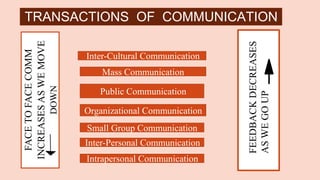
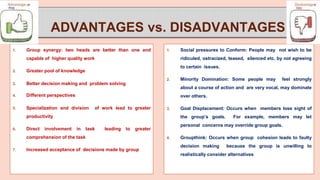
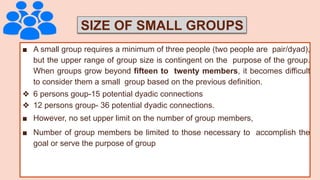
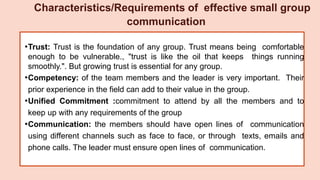
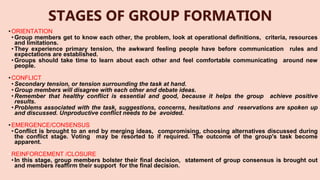
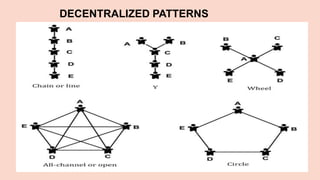
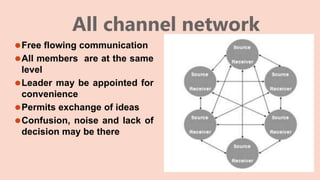
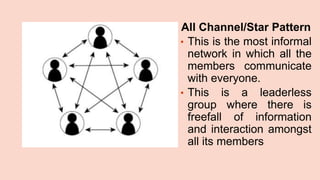
Small group communication involves interactions between 3-9 people connected by a common purpose. Key aspects include mutual influence, shared identity, and interdependence. Groups form for various reasons like affection, inclusion, and control. Effective small groups have characteristics like trust, competency, commitment, open communication, collaborative climate, and clear goals. The formation of small groups typically involves stages like orientation, conflict, emergence of consensus, and reinforcement. Models of group formation include Fisher's four stages of orientation, conflict, emergence/consensus, and reinforcement/closure, as well as Tuckman's five stages of forming, storming, norming, performing, and adjourning.