Unit: Community
Topic: Famous People
Matthayomsuksa 2
to accept that something is true.
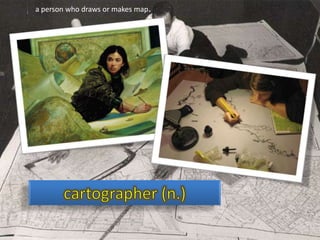
a person who draws or makes map.
an official agreement that ends an argument
between two people or groups.
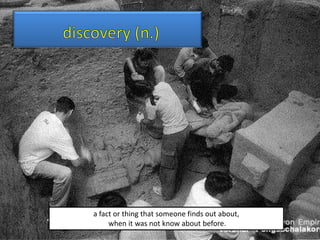
a fact or thing that someone finds out about,
when it was not know about before.
made of rock, difficult and not certain to
continue or to be successful.
Structure: Past Simple Tense

Subject + Verb2 (past form)
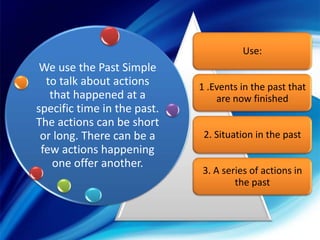
Use:

We use the Past Simple
to talk about actions
that happened at a
specific time in the past.
The actions can be short
or long. There can be a
few actions happening
one offer another.

1 .Events in the past that
are now finished
2. Situation in the past

3. A series of actions in
the past
Use 1: Past actions that are now
finished
The first we use of the Past Simple Tense to
express actions that happened at a specific time
in the past. The actions can be short or long.
-I went to college 3 years ago. long
-He ate the dinner 1 hour ago. short
-I slept well last night. long
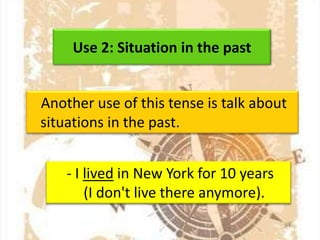
Use 2: Situation in the past
Another use of this tense is talk about
situations in the past.
- I lived in New York for 10 years
(I don't live there anymore).
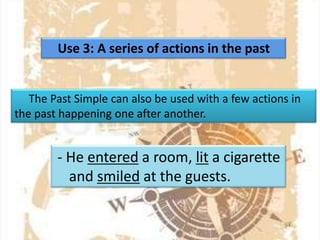
Use 3: A series of actions in the past

The Past Simple can also be used with a few actions in
the past happening one after another.

- He entered a room, lit a cigarette
and smiled at the guests.
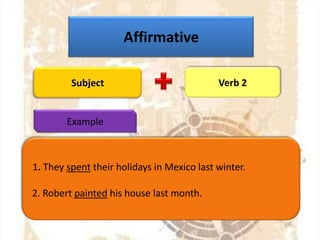
Affirmative
Subject

Verb 2

Example

1. They spent their holidays in Mexico last winter.

2. Robert painted his house last month.
Negative

Subject

didn't

Verb
infinitive

Example

1. Eva didn't go out last weekend. She stayed home.
2. I didn't make a cake last Sunday. I cleaned my room.
Question

Did

Subject

Verb
infinitive?

Example
1. Did they go out last night?

Yes, they did.

2. Did she chat online with friends last night? No, she didn't.
“Who really discovered America?”
1. When was Columbus sail from Spain
with three ships?

2. Where were many Europeans traveled
to make new settlement?

3. What was Leif Eriksson found when
he traveled?
Listening

Reading

Writing

Speaking
Activity 1 Listening
Listen and choose the correct words
Direction:
Listen to the audio visual about
“Who really discovered America?.”
Then circle the correct words.
Columbus was an Italian sailor and cartographer.
In 1492 he (sell /sailed) from Spain with three (ships / sheep ). He
traveled west across the ocean to
(find / fine) a new route to Asia for buying and selling goods. After

two months at sea Columbus and his men
( reached / rich ) The Bahamas—he discovered America. Many
Europeans then traveled across the Atlantic Ocean to make new

settlements in America. America became known as the “New
World.”
However, Columbus was not the first European to arrive in
America. Almost 500 years earlier, a young Viking explorer
named Leif Eriksson traveled (west / wet ) from Greenland,
looking for new lands he had ( hurt / heard ) about.

Greenlanders’Saga, a story written about Eriksson’s adventures,
(tail / tells ) how he found a rocky land. He also saw forests and
white sandy (beaches / beat). He made a settlement on an

(Ireland/island) ,which he named Vinland (land of vines). His old
settlement has been found on the island of Newfoundland in
Canada.
Even though he found America much later than Eriksson

and by accident, Columbus is still credited with the discovery.
“Columbia” is the name of a university, a movie company, a
space shuttle and even a country. But Leif Eriksson’s name is
(hard / heart) to find anywhere.
Activity 2 Reading

“The Sequencing the events”
Direction:
- Work in pair.
- Read about “Who really discovered America?” and
rearrange each statement into correct order (A-G).
Christopher Columbus

1
2
3
4
5
6
7
Leif Eriksson

1
2
3
4
5
6
7
Activity 3 speaking

Describing picture
Direction
-Work in pair.
-Look at the picture and describe the
picture by using the words in the box.
-10 minutes prepare your work.
-Present in front of the class.
Useful words: Christopher

Columbus, cartographer, discovered,
Atlantic Ocean, ship, New
World
Activity 4 Writing
Let make a story

Direction
-Make a group of three people.
-Make up a short story based on the text 3
“Who really discovered America?”
-Come up with your idea and present in front
of the class.
-10 minutes to do this activity.
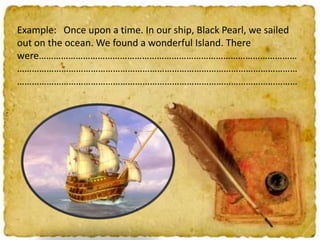
Example: Once upon a time. In our ship, Black Pearl, we sailed
out on the ocean. We found a wonderful Island. There
were……………………………………………………………………………………………
……………………………………………………………………………………………………
……………………………………………………………………………………………………

Ppt PPP

  • 1.
    Unit: Community Topic: FamousPeople Matthayomsuksa 2
  • 4.
    to accept thatsomething is true.
  • 5.
    a person whodraws or makes map.
  • 6.
    an official agreementthat ends an argument between two people or groups.
  • 7.
    a fact orthing that someone finds out about, when it was not know about before.
  • 9.
    made of rock,difficult and not certain to continue or to be successful.
  • 12.
    Structure: Past SimpleTense Subject + Verb2 (past form)
  • 13.
    Use: We use thePast Simple to talk about actions that happened at a specific time in the past. The actions can be short or long. There can be a few actions happening one offer another. 1 .Events in the past that are now finished 2. Situation in the past 3. A series of actions in the past
  • 14.
    Use 1: Pastactions that are now finished The first we use of the Past Simple Tense to express actions that happened at a specific time in the past. The actions can be short or long. -I went to college 3 years ago. long -He ate the dinner 1 hour ago. short -I slept well last night. long
  • 15.
    Use 2: Situationin the past Another use of this tense is talk about situations in the past. - I lived in New York for 10 years (I don't live there anymore).
  • 16.
    Use 3: Aseries of actions in the past The Past Simple can also be used with a few actions in the past happening one after another. - He entered a room, lit a cigarette and smiled at the guests.
  • 17.
    Affirmative Subject Verb 2 Example 1. Theyspent their holidays in Mexico last winter. 2. Robert painted his house last month.
  • 18.
    Negative Subject didn't Verb infinitive Example 1. Eva didn'tgo out last weekend. She stayed home. 2. I didn't make a cake last Sunday. I cleaned my room.
  • 19.
    Question Did Subject Verb infinitive? Example 1. Did theygo out last night? Yes, they did. 2. Did she chat online with friends last night? No, she didn't.
  • 20.
  • 21.
    1. When wasColumbus sail from Spain with three ships? 2. Where were many Europeans traveled to make new settlement? 3. What was Leif Eriksson found when he traveled?
  • 22.
  • 23.
    Activity 1 Listening Listenand choose the correct words Direction: Listen to the audio visual about “Who really discovered America?.” Then circle the correct words.
  • 24.
    Columbus was anItalian sailor and cartographer. In 1492 he (sell /sailed) from Spain with three (ships / sheep ). He traveled west across the ocean to (find / fine) a new route to Asia for buying and selling goods. After two months at sea Columbus and his men ( reached / rich ) The Bahamas—he discovered America. Many Europeans then traveled across the Atlantic Ocean to make new settlements in America. America became known as the “New World.”
  • 25.
    However, Columbus wasnot the first European to arrive in America. Almost 500 years earlier, a young Viking explorer named Leif Eriksson traveled (west / wet ) from Greenland, looking for new lands he had ( hurt / heard ) about. Greenlanders’Saga, a story written about Eriksson’s adventures, (tail / tells ) how he found a rocky land. He also saw forests and white sandy (beaches / beat). He made a settlement on an (Ireland/island) ,which he named Vinland (land of vines). His old settlement has been found on the island of Newfoundland in Canada.
  • 26.
    Even though hefound America much later than Eriksson and by accident, Columbus is still credited with the discovery. “Columbia” is the name of a university, a movie company, a space shuttle and even a country. But Leif Eriksson’s name is (hard / heart) to find anywhere.
  • 27.
    Activity 2 Reading “TheSequencing the events” Direction: - Work in pair. - Read about “Who really discovered America?” and rearrange each statement into correct order (A-G).
  • 28.
  • 29.
  • 30.
    Activity 3 speaking Describingpicture Direction -Work in pair. -Look at the picture and describe the picture by using the words in the box. -10 minutes prepare your work. -Present in front of the class.
  • 31.
    Useful words: Christopher Columbus,cartographer, discovered, Atlantic Ocean, ship, New World
  • 32.
    Activity 4 Writing Letmake a story Direction -Make a group of three people. -Make up a short story based on the text 3 “Who really discovered America?” -Come up with your idea and present in front of the class. -10 minutes to do this activity.
  • 33.
    Example: Once upona time. In our ship, Black Pearl, we sailed out on the ocean. We found a wonderful Island. There were…………………………………………………………………………………………… …………………………………………………………………………………………………… ……………………………………………………………………………………………………