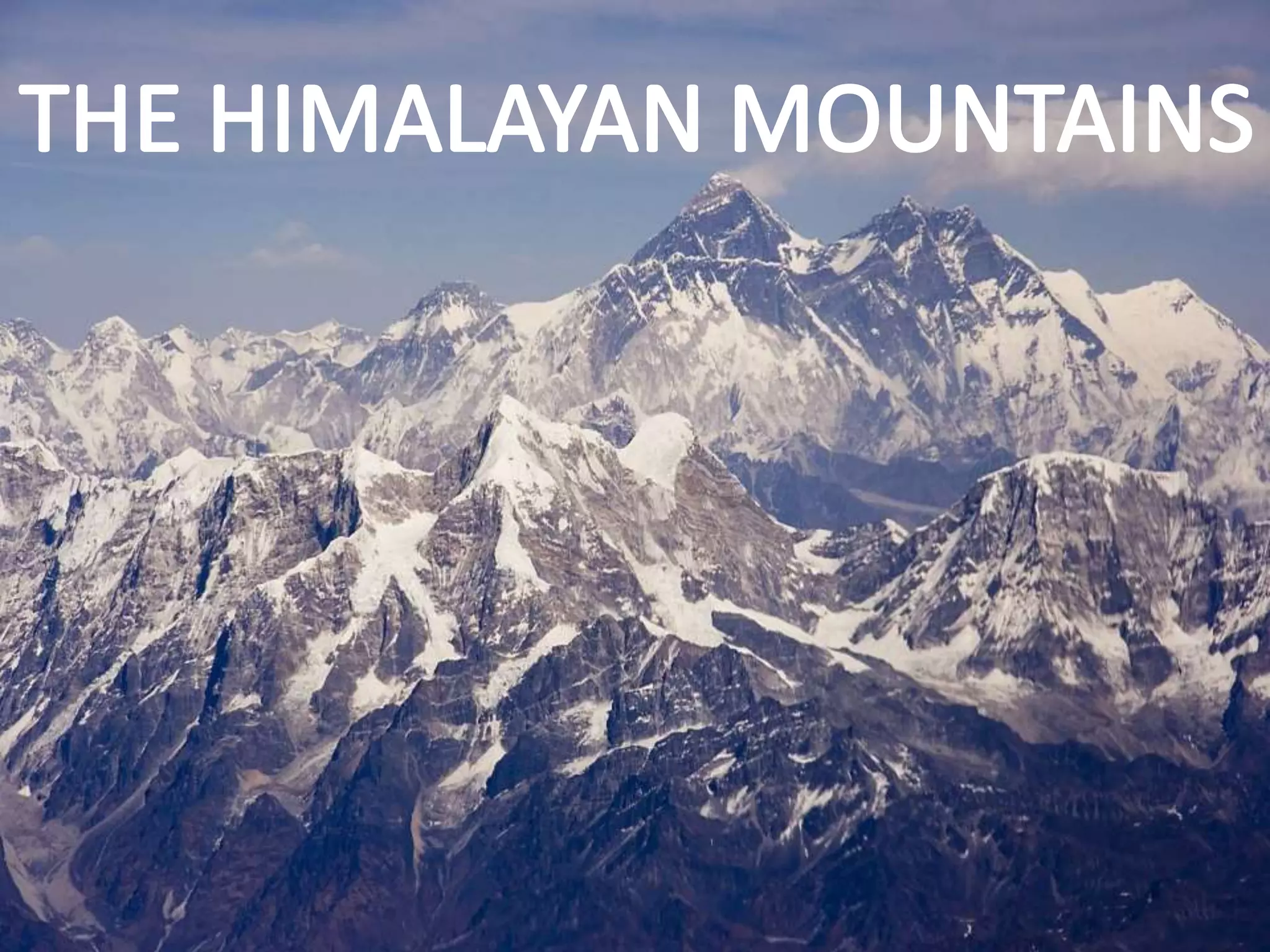
The word Himalaya means “abode of snow” in Sanskrit.
Himalayas are divided into 3 parts Himadri , Himachal and
Shiwaliks . The 15 highest mountains in the world are in
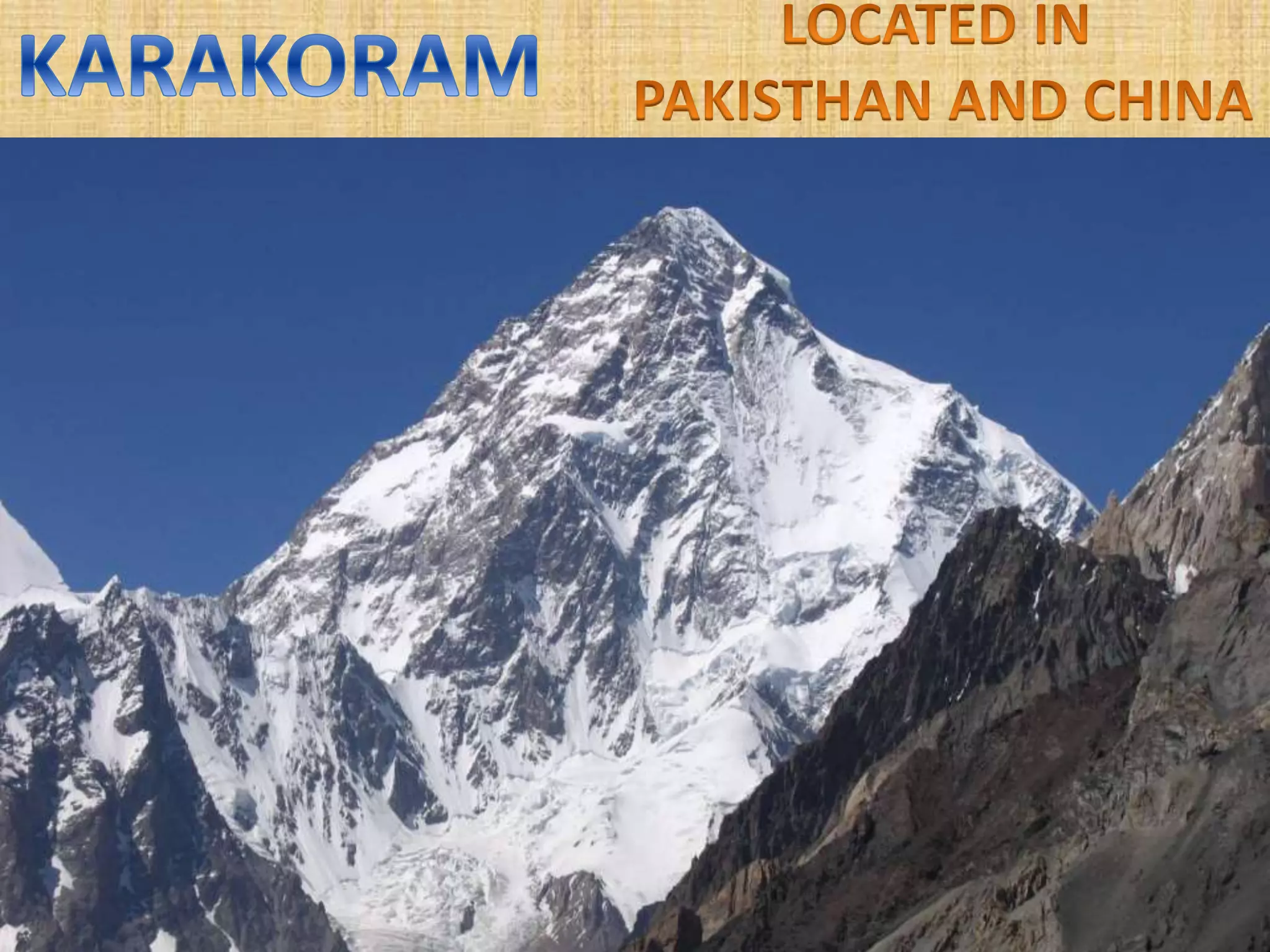
the Himalayas. The main ones are Mount
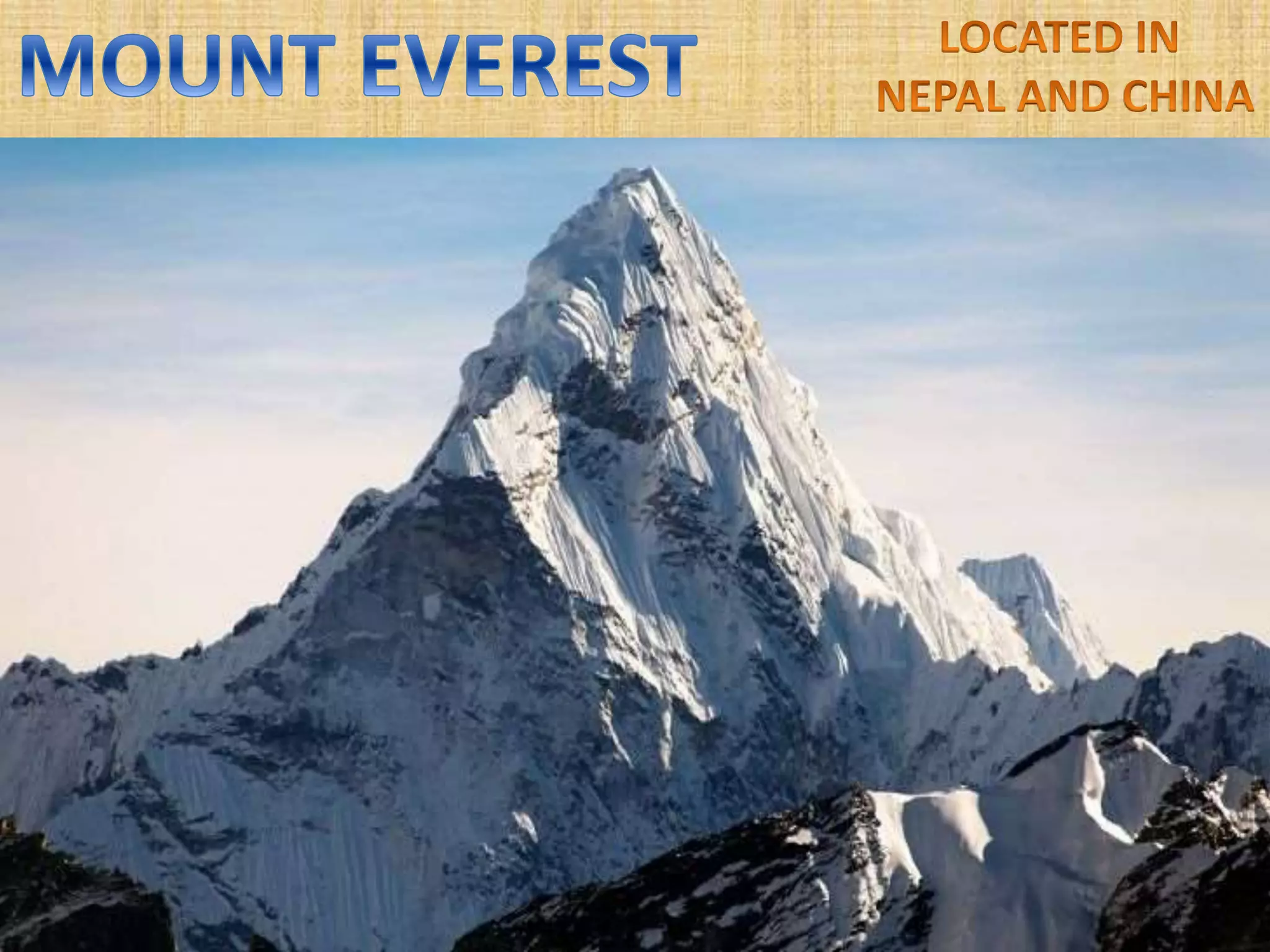
Everest, K2, Annapurna, and Nanga Parbat. Mount Everest
is the highest mountain on Earth, at 8,849 meters. Of the
fifteen highest mountain peaks in the World, nine are in
the Nepali Himalayas. Many of Asia’s most important rivers
have their sources in the Himalaya Mountains including the
Indus, Ganges and Brahmaputra. The Himalaya contain the
world’s 3rd largest deposit of ice and snow on the planet.
Only the Antarctic and Arctic have more. Altogether, the
Himalaya is home to around 15,000 glaciers.
Geologically, the origin of the Himalayas is the
impact of the Indian tectonic plate. This travels
northward at 15 cm per year, and joined the Eurasian
continent about 40-50 million years ago. The
formation of the Himalayas resulted in the lighter
rock of the seabeds of that time being lifted up into
mountains. An often-cited fact used to illustrate this
process is that the summit of Mount Everest is made
of marine limestone. The Indian plate is still moving
north at 67 mm per year. The movement of the
Indian plate into the Asian plate also leads
to earthquakes from time to time.
The Himalayas are very popular for tourists because it has a lot
of wildlife. The types of plants and trees, which are common in
the place, are Oak, Pine, Fir, Rhododendron, Birch, Juniper, and
Deodar. Common animals, which are seen mostly in the different
parts of the Himalayas, are snow leopards, blue sheep, musk
deer, tigers, elephants, wild boar, and crocodiles.
Even endangered species of animals and plants are also found
there. In the north part of the Himalayas where the temperature
falls below freezing point, animals cannot survive well. During the
cold winters most of the animals migrate to the lower regions of
the Himalayas while others like the brown bear hibernate instead.
The Yak is mostly seen in the cold desert. They are like wild ox and
they are the largest animals in this region. In regions of Ladakh
animals like Nyan, the wild and the most largest sheeps are found.
PPT on Himalyas.pdf
PPT on Himalyas.pdf
PPT on Himalyas.pdf
PPT on Himalyas.pdf
PPT on Himalyas.pdf
PPT on Himalyas.pdf

PPT on Himalyas.pdf

  • 3.
    The word Himalayameans “abode of snow” in Sanskrit. Himalayas are divided into 3 parts Himadri , Himachal and Shiwaliks . The 15 highest mountains in the world are in the Himalayas. The main ones are Mount Everest, K2, Annapurna, and Nanga Parbat. Mount Everest is the highest mountain on Earth, at 8,849 meters. Of the fifteen highest mountain peaks in the World, nine are in the Nepali Himalayas. Many of Asia’s most important rivers have their sources in the Himalaya Mountains including the Indus, Ganges and Brahmaputra. The Himalaya contain the world’s 3rd largest deposit of ice and snow on the planet. Only the Antarctic and Arctic have more. Altogether, the Himalaya is home to around 15,000 glaciers.
  • 4.
    Geologically, the originof the Himalayas is the impact of the Indian tectonic plate. This travels northward at 15 cm per year, and joined the Eurasian continent about 40-50 million years ago. The formation of the Himalayas resulted in the lighter rock of the seabeds of that time being lifted up into mountains. An often-cited fact used to illustrate this process is that the summit of Mount Everest is made of marine limestone. The Indian plate is still moving north at 67 mm per year. The movement of the Indian plate into the Asian plate also leads to earthquakes from time to time.
  • 5.
    The Himalayas arevery popular for tourists because it has a lot of wildlife. The types of plants and trees, which are common in the place, are Oak, Pine, Fir, Rhododendron, Birch, Juniper, and Deodar. Common animals, which are seen mostly in the different parts of the Himalayas, are snow leopards, blue sheep, musk deer, tigers, elephants, wild boar, and crocodiles. Even endangered species of animals and plants are also found there. In the north part of the Himalayas where the temperature falls below freezing point, animals cannot survive well. During the cold winters most of the animals migrate to the lower regions of the Himalayas while others like the brown bear hibernate instead. The Yak is mostly seen in the cold desert. They are like wild ox and they are the largest animals in this region. In regions of Ladakh animals like Nyan, the wild and the most largest sheeps are found.