A
Presentation
on
Practical Training
taken at
DURATION: 04/06/2014 to 04/07/2014
SESSION: 2014-2015
SUBMITTED BY :
LOKESH KUMAR MEENA
Final Year B.Tech (Civil)
SUBMITTED TO :
SHIVANSHI SINGH
ANKUSH JAIN
AVI MAHERISHI
DEPARTMENT OF CIVIL ENGINEERING
R.N MODI ENGINEERING COLLEGE
RANPUR., KOTA
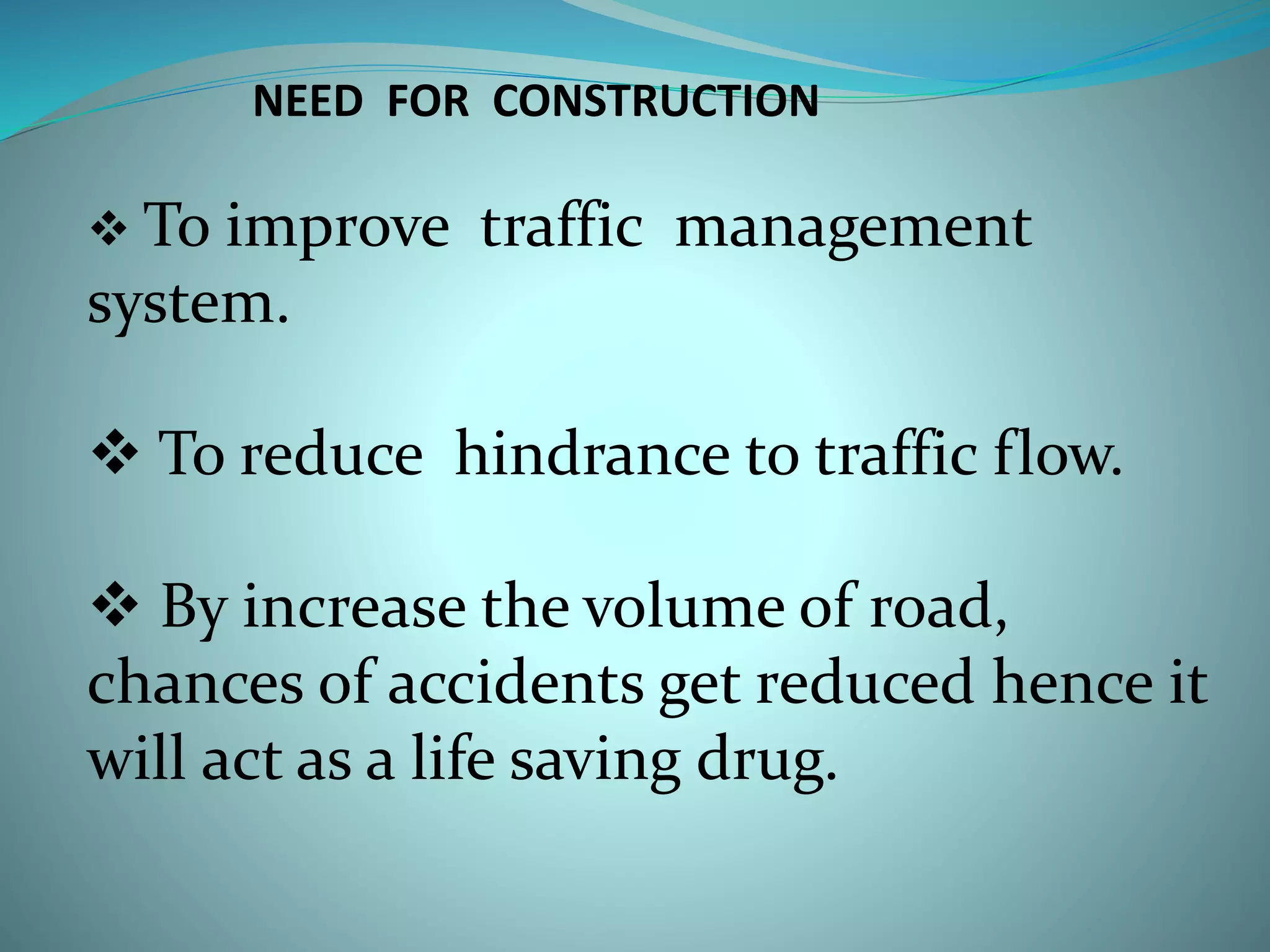
NEED FOR CONSTRUCTION
 To improve traffic management
system.
 To reduce hindrance to traffic flow.
 By increase the volume of road,
chances of accidents get reduced hence it
will act as a life saving drug.
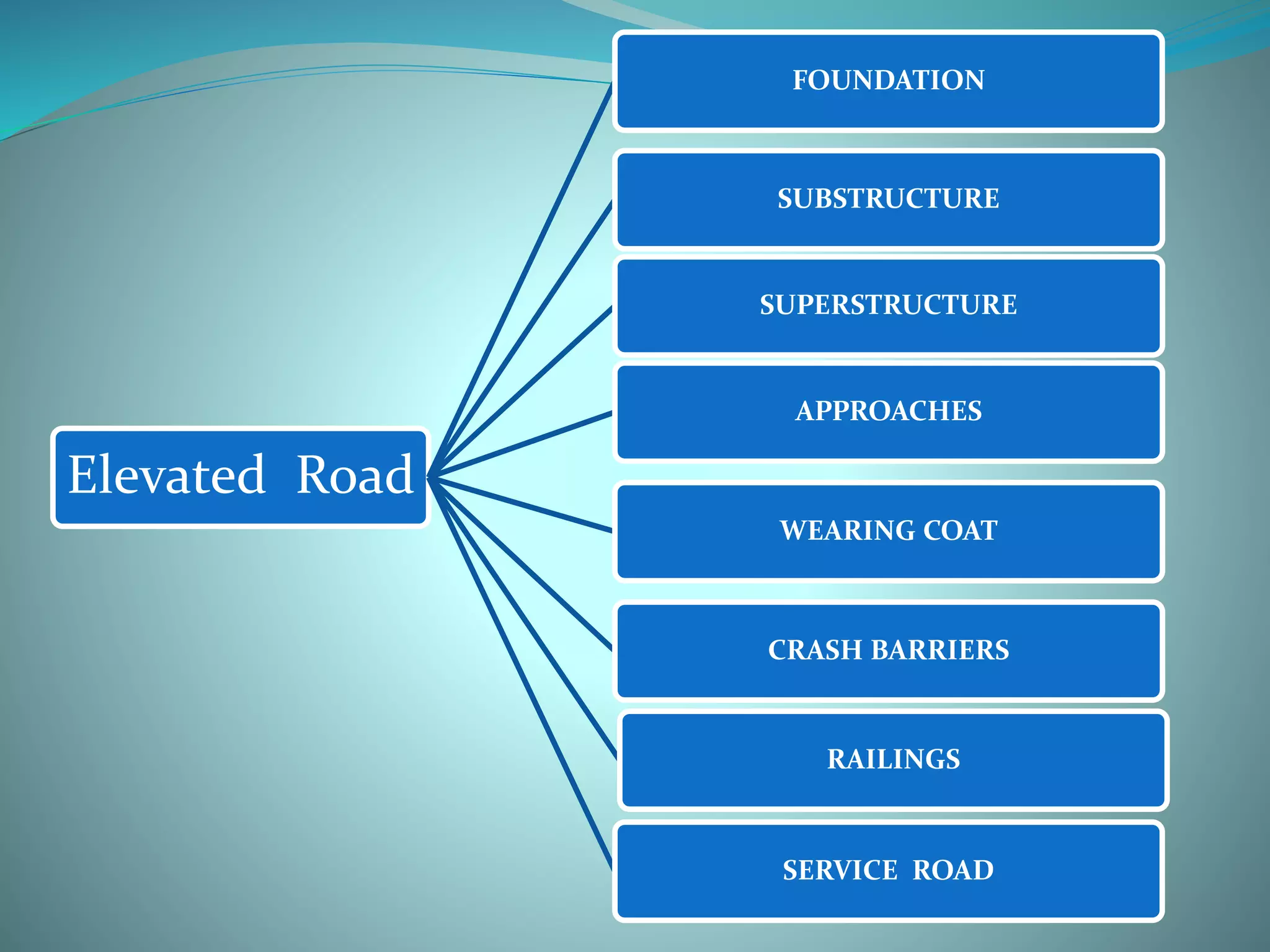
Elevated Road
FOUNDATION
SUBSTRUCTURE
SUPERSTRUCTURE
APPROACHES
WEARING COAT
CRASH BARRIERS
RAILINGS
SERVICE ROAD
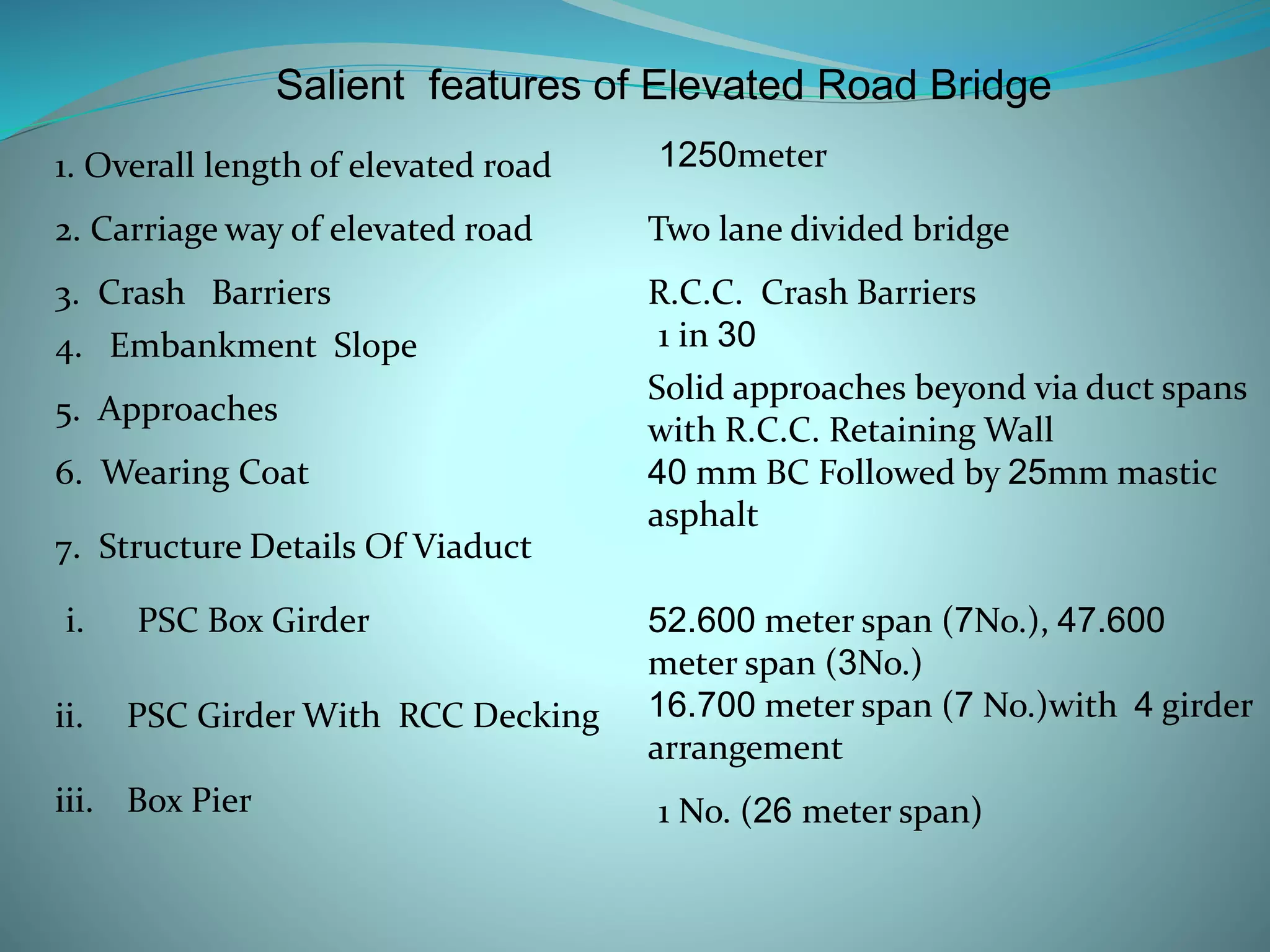
1. Overall length of elevated road
2. Carriage way of elevated road
3. Crash Barriers
4. Embankment Slope
5. Approaches
Salient features of Elevated Road Bridge
1250meter
Two lane divided bridge
R.C.C. Crash Barriers
1 in 30
Solid approaches beyond via duct spans
with R.C.C. Retaining Wall
7. Structure Details Of Viaduct
6. Wearing Coat 40 mm BC Followed by 25mm mastic
asphalt
i. PSC Box Girder 52.600 meter span (7No.), 47.600
meter span (3No.)
ii. PSC Girder With RCC Decking 16.700 meter span (7 No.)with 4 girder
arrangement
iii. Box Pier 1 No. (26 meter span)
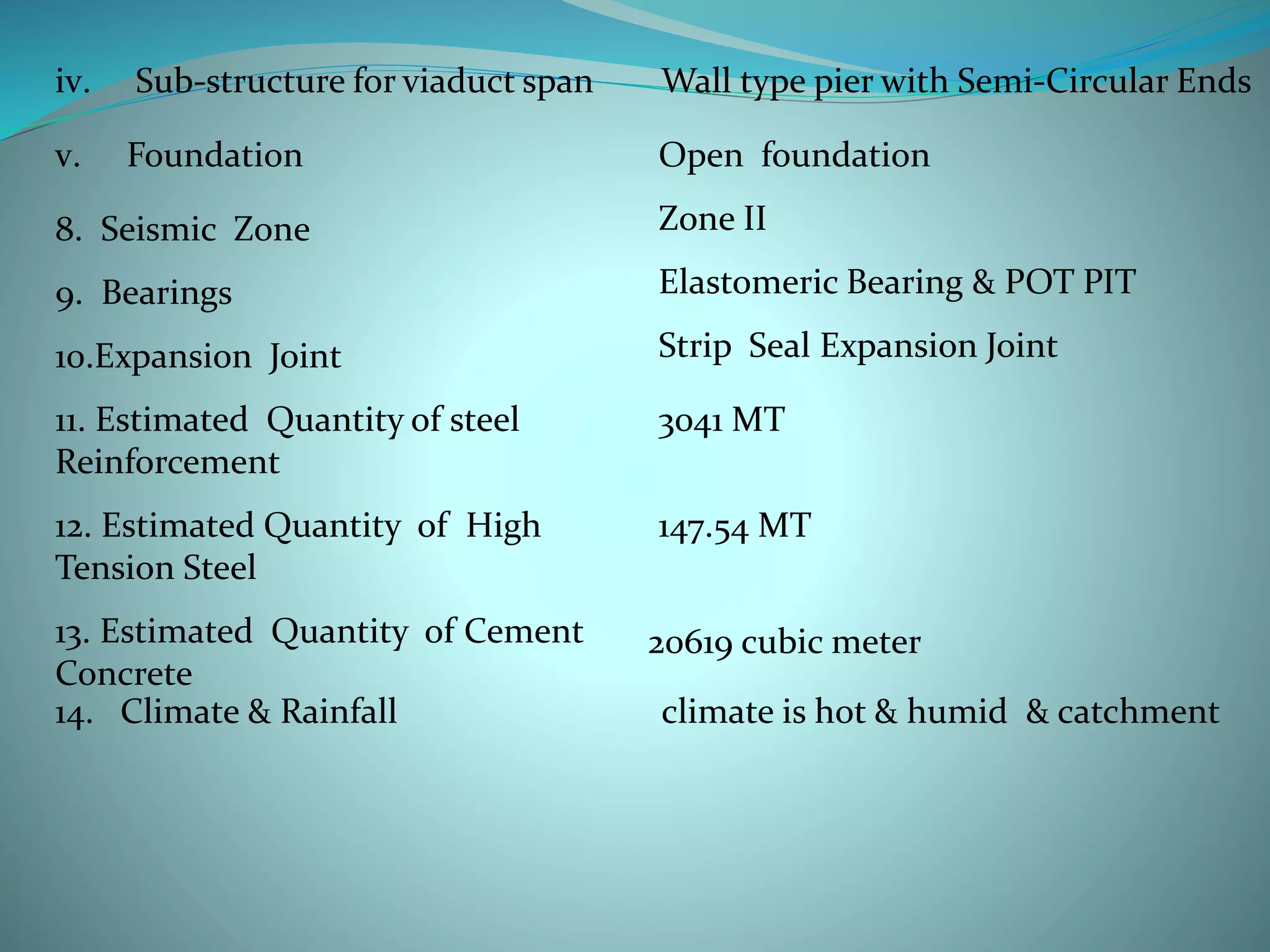
Wall type pier with Semi-Circular Ends
v. Foundation Open foundation
8. Seismic Zone Zone II
9. Bearings Elastomeric Bearing & POT PIT
iv. Sub-structure for viaduct span
10.Expansion Joint Strip Seal Expansion Joint
11. Estimated Quantity of steel
Reinforcement
3041 MT
12. Estimated Quantity of High
Tension Steel
147.54 MT
13. Estimated Quantity of Cement
Concrete
20619 cubic meter
14. Climate & Rainfall climate is hot & humid & catchment
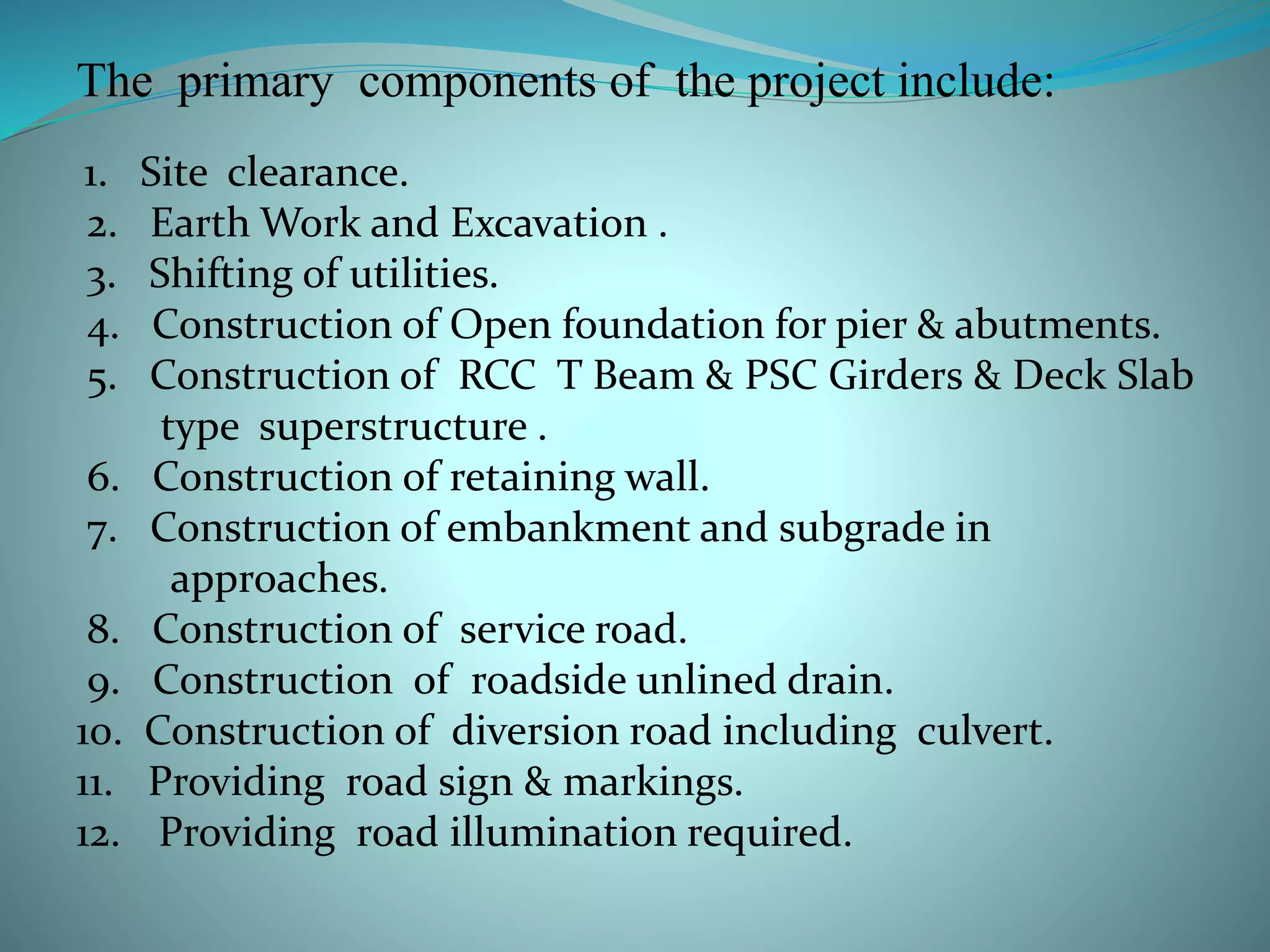
The primary components of the project include:
1. Site clearance.
2. Earth Work and Excavation .
3. Shifting of utilities.
4. Construction of Open foundation for pier & abutments.
5. Construction of RCC T Beam & PSC Girders & Deck Slab
type superstructure .
6. Construction of retaining wall.
7. Construction of embankment and subgrade in
approaches.
8. Construction of service road.
9. Construction of roadside unlined drain.
10. Construction of diversion road including culvert.
11. Providing road sign & markings.
12. Providing road illumination required.
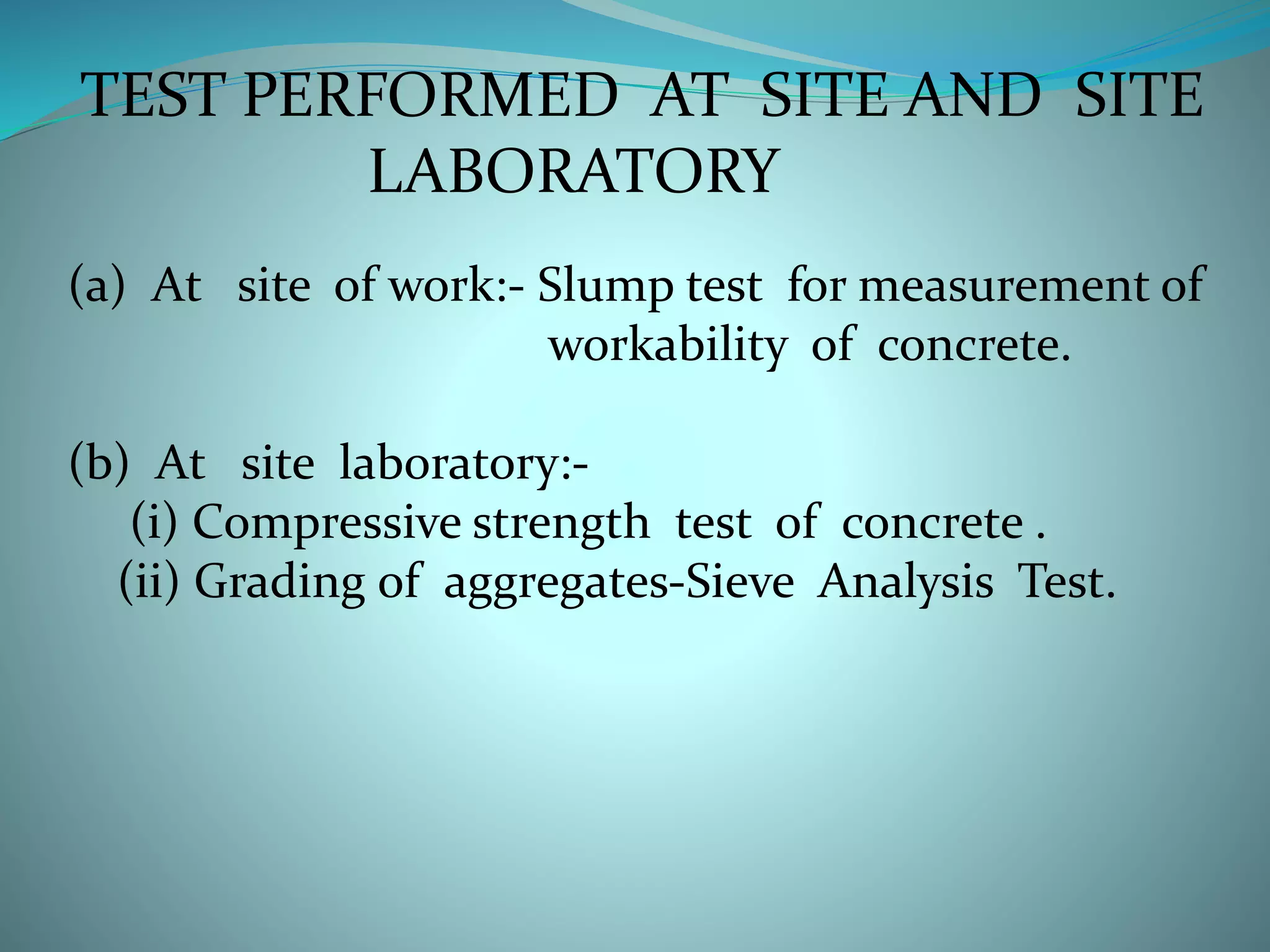
TEST PERFORMED AT SITE AND SITE
LABORATORY
(a) At site of work:- Slump test for measurement of
workability of concrete.
(b) At site laboratory:-
(i) Compressive strength test of concrete .
(ii) Grading of aggregates-Sieve Analysis Test.
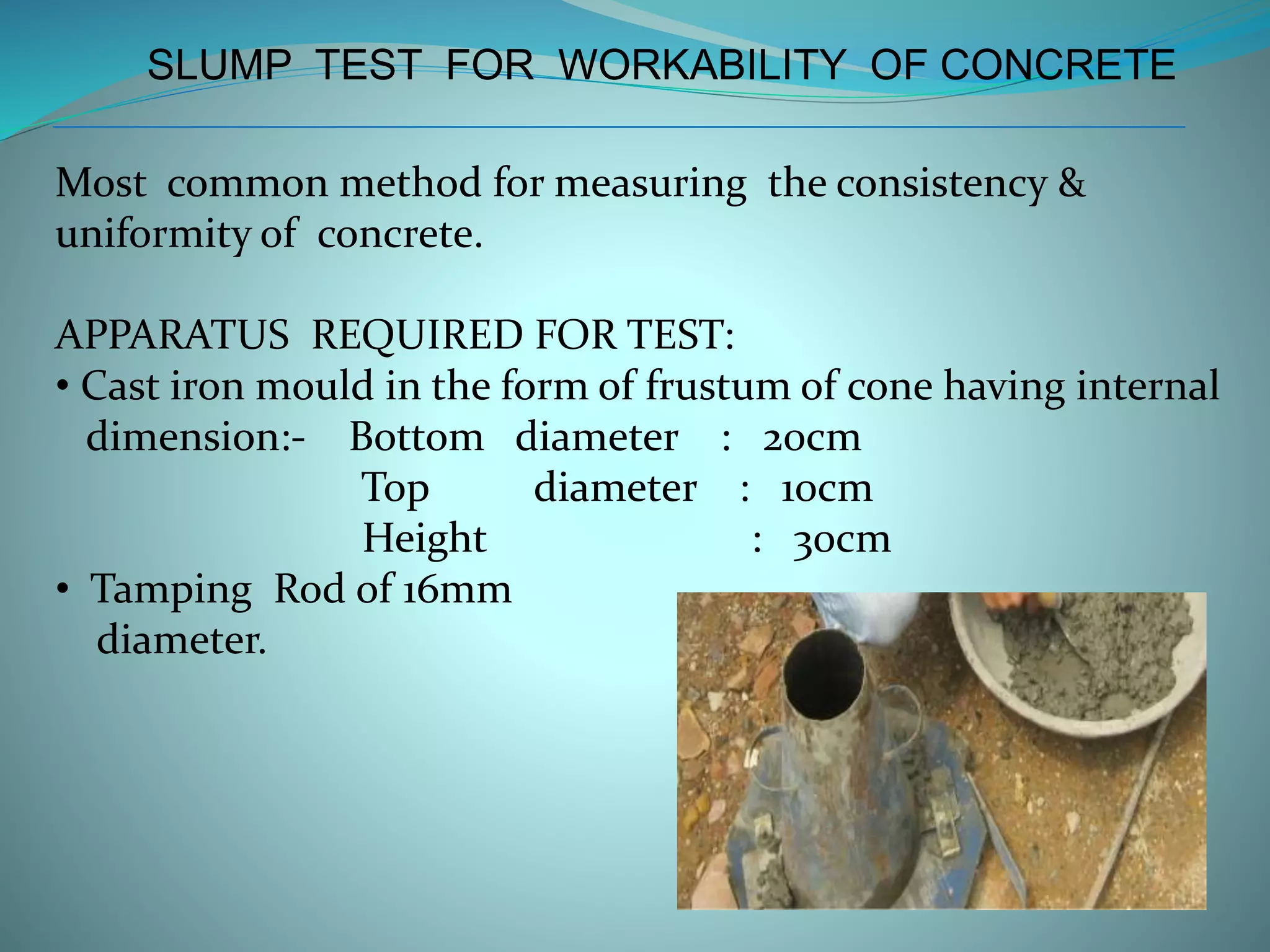
SLUMP TEST FOR WORKABILITY OF CONCRETE
Most common method for measuring the consistency &
uniformity of concrete.
APPARATUS REQUIRED FOR TEST:
• Cast iron mould in the form of frustum of cone having internal
dimension:- Bottom diameter : 20cm
Top diameter : 10cm
Height : 30cm
• Tamping Rod of 16mm
diameter.
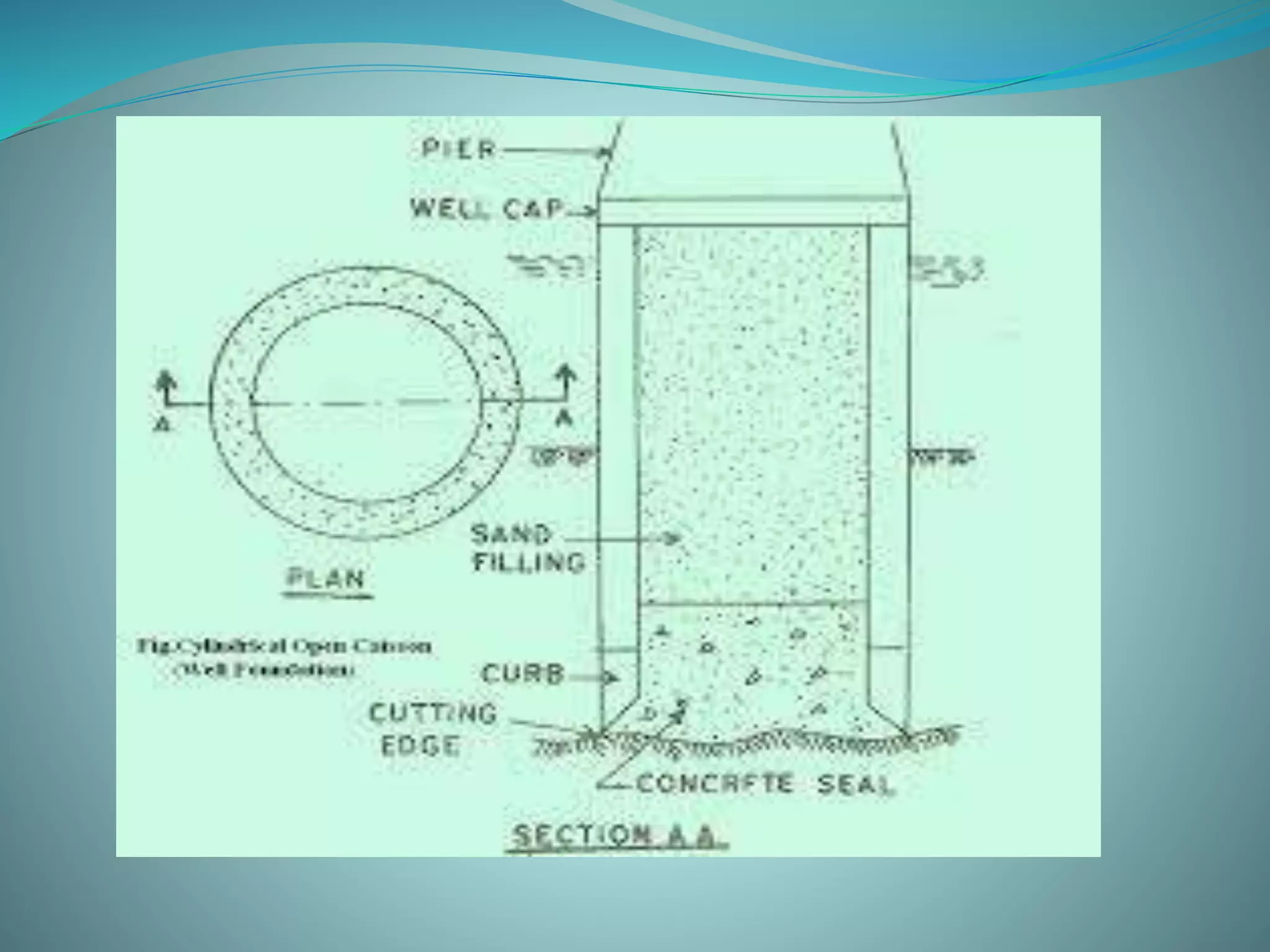
Foundation For piers and abutments
• Types of bridge foundations-
1. Open foundation
2. Well foundation
3. Block foundation
Open foundation & Block foundation are come
under shallow foundations .
well foundation are come under deep foundations.
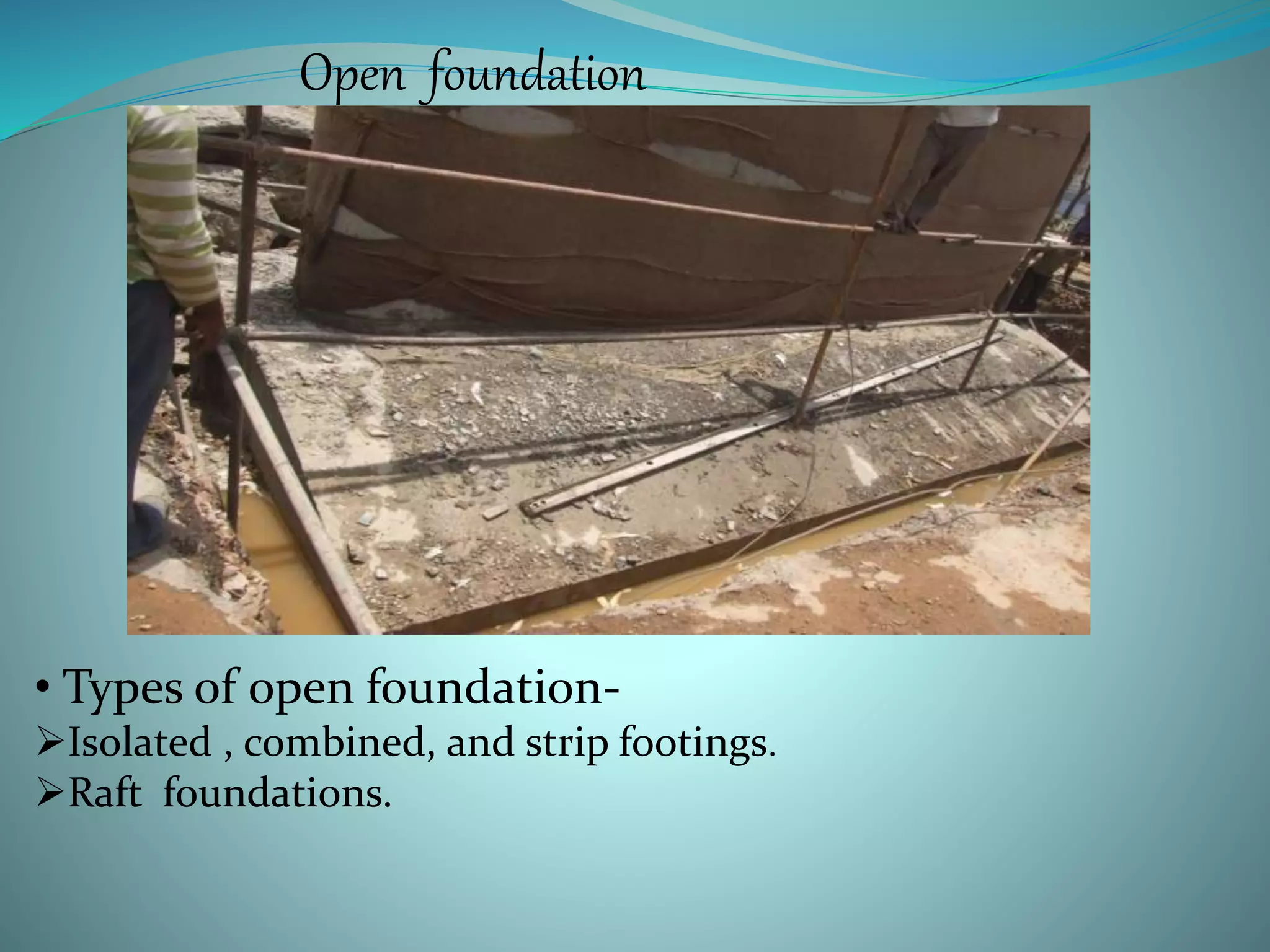
Open foundation
• Types of open foundation-
Isolated , combined, and strip footings.
Raft foundations.
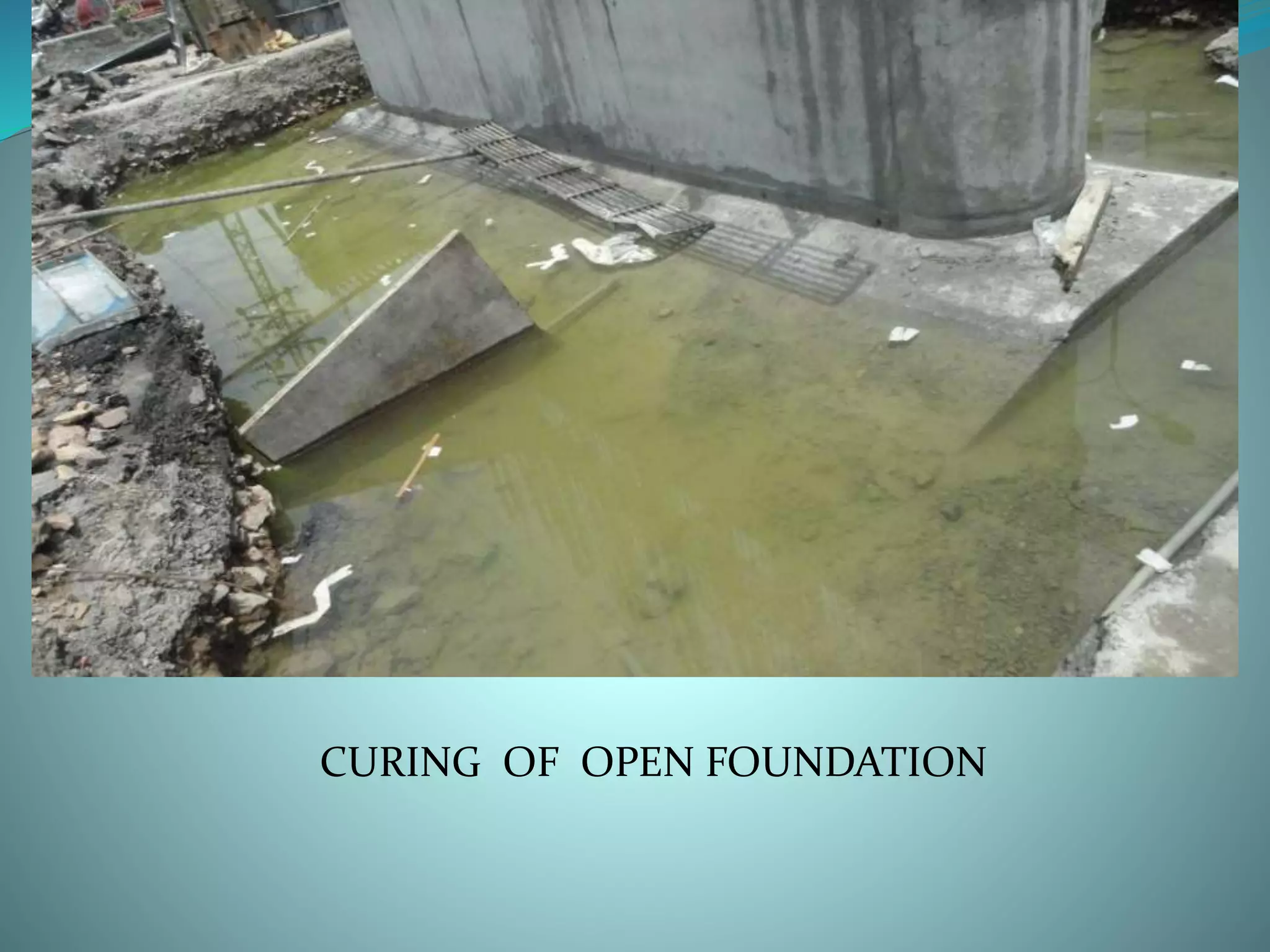
CURING OF OPEN FOUNDATION
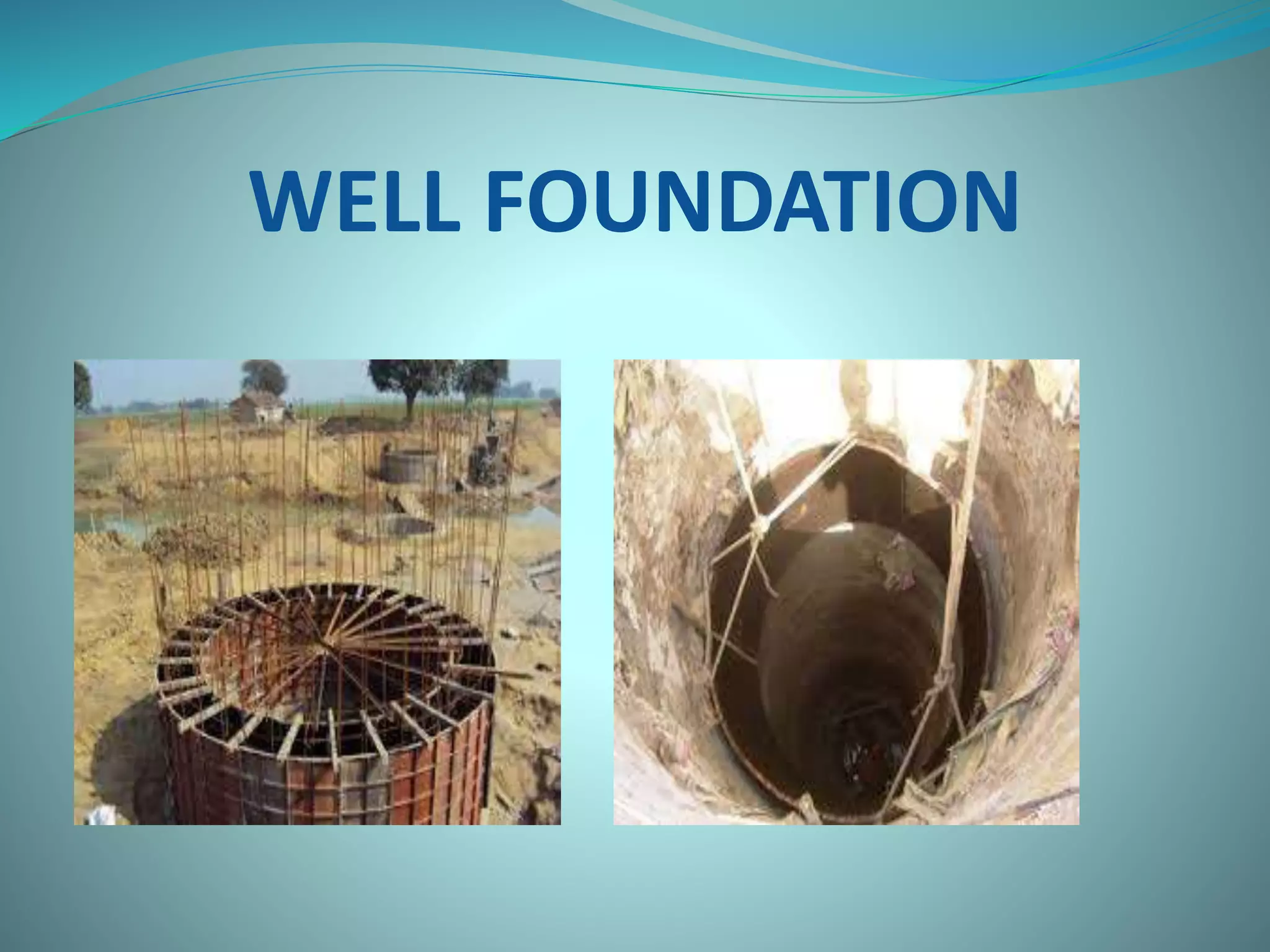
WELL FOUNDATION
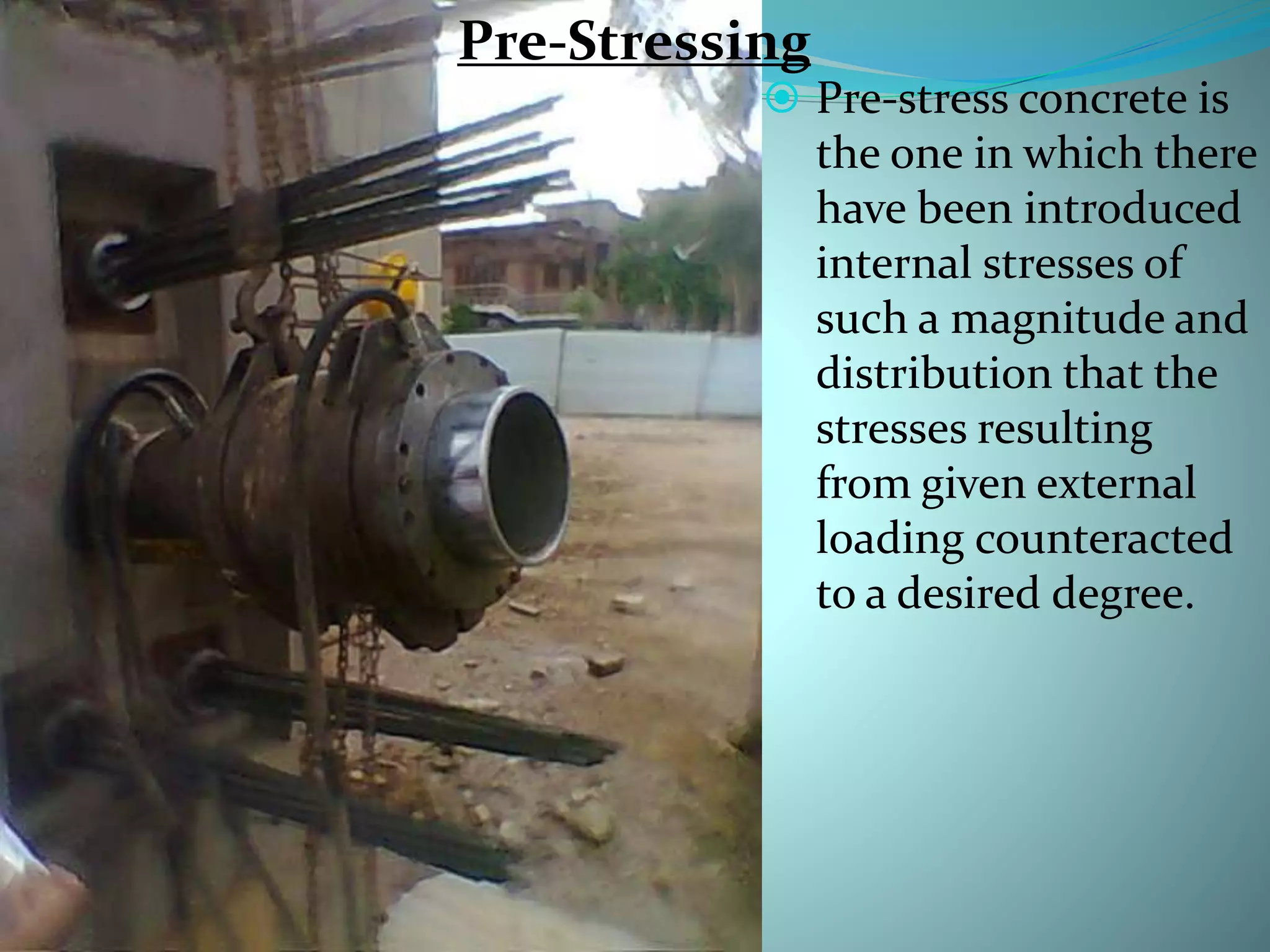
Pre-Stressing
 Pre-stress concrete is
the one in which there
have been introduced
internal stresses of
such a magnitude and
distribution that the
stresses resulting
from given external
loading counteracted
to a desired degree.
Pre-Stressing
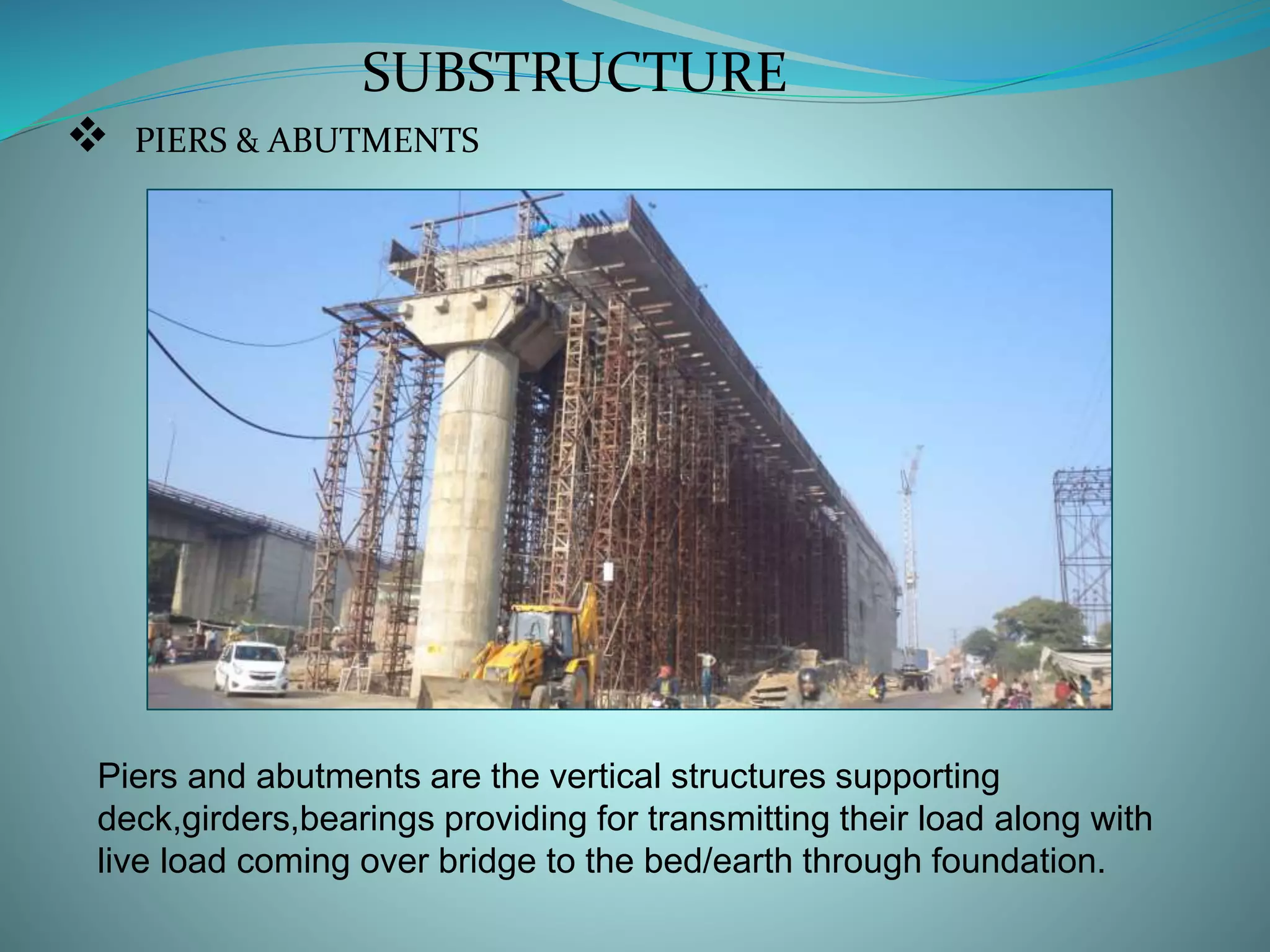
SUBSTRUCTURE
 PIERS & ABUTMENTS
Piers and abutments are the vertical structures supporting
deck,girders,bearings providing for transmitting their load along with
live load coming over bridge to the bed/earth through foundation.
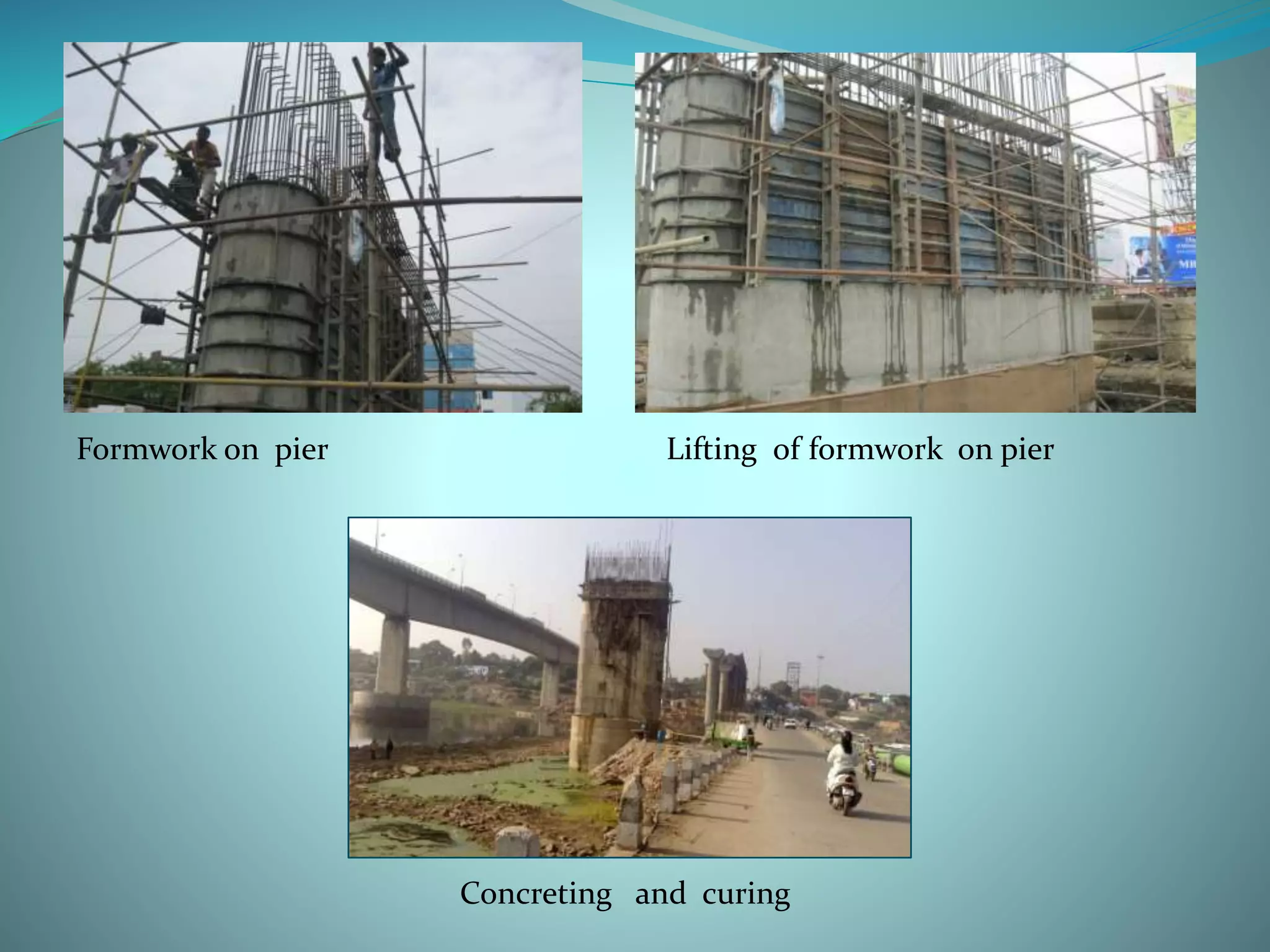
Formwork on pier Lifting of formwork on pier
Concreting and curing
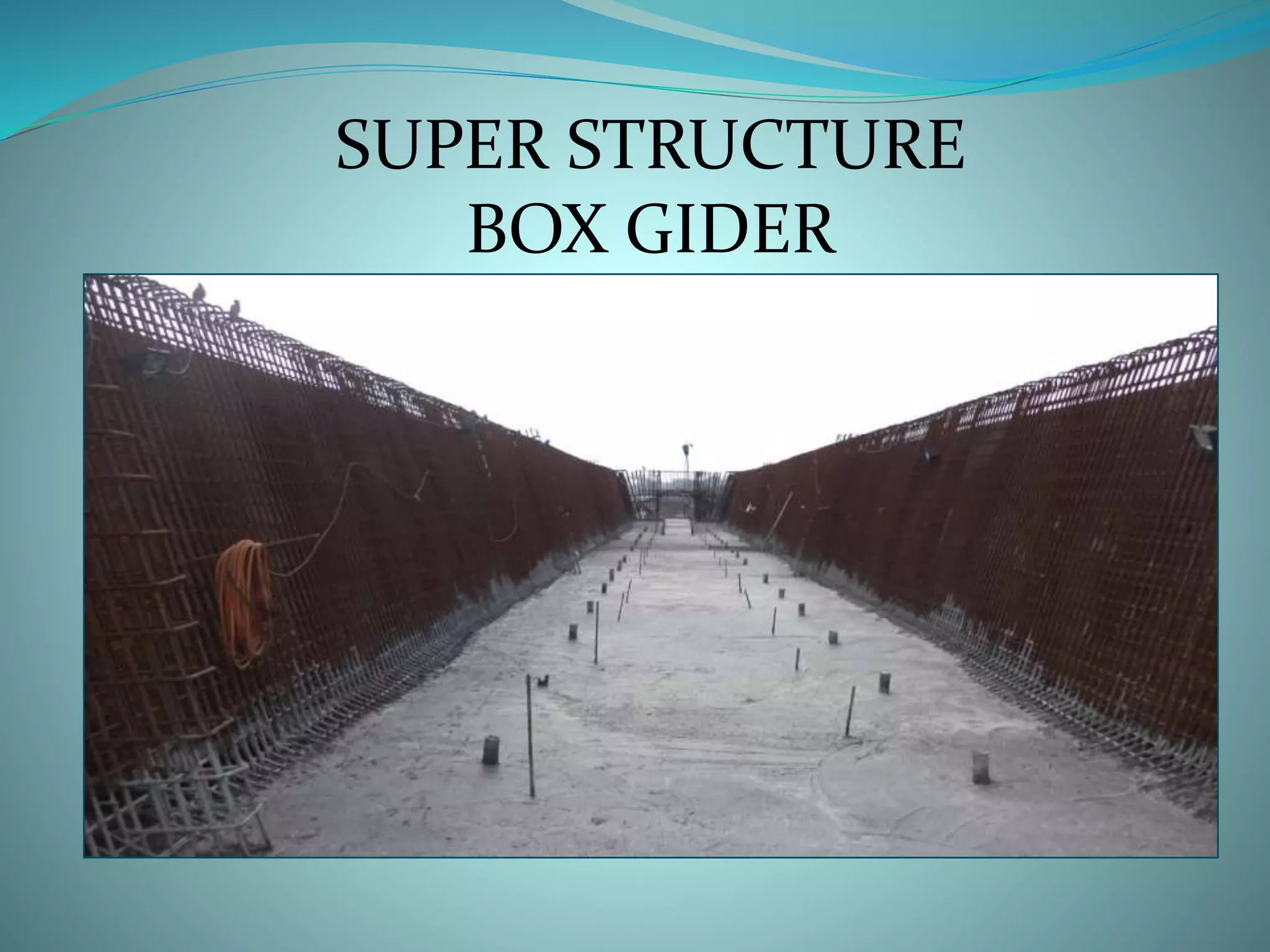
SUPER STRUCTURE
BOX GIDER
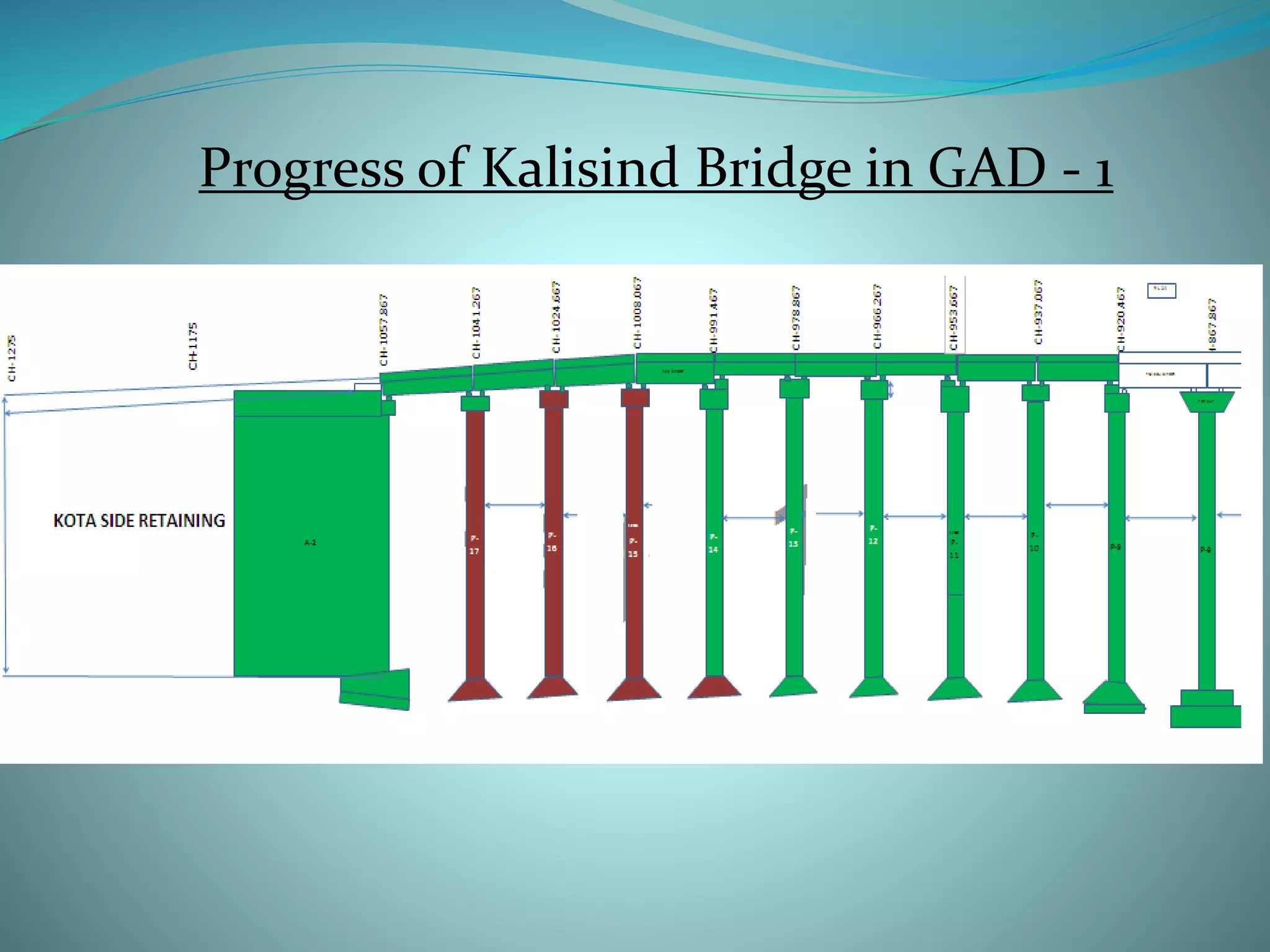
Progress of Kalisind Bridge in GAD - 1
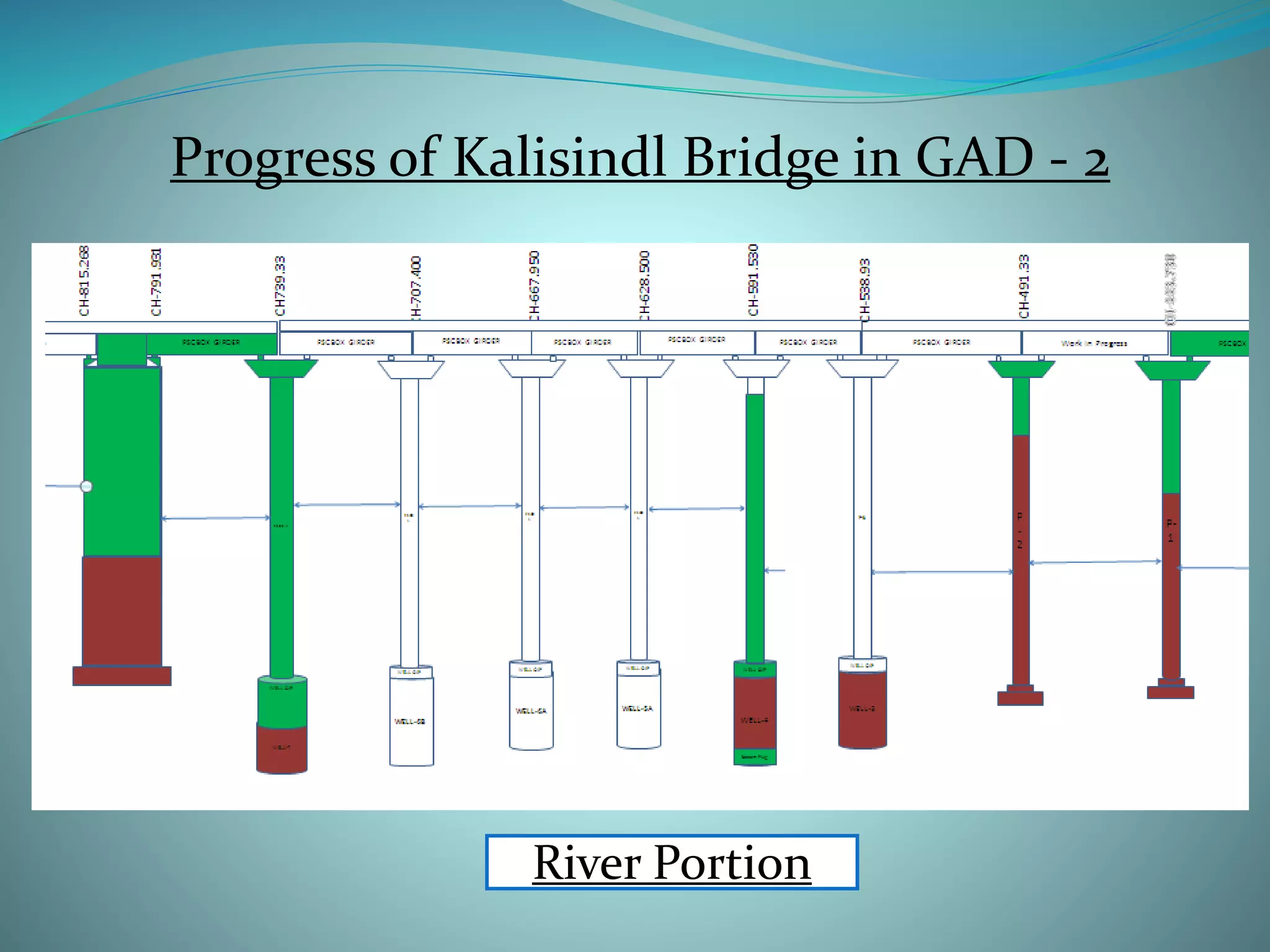
Progress of Kalisindl Bridge in GAD - 2
River Portion
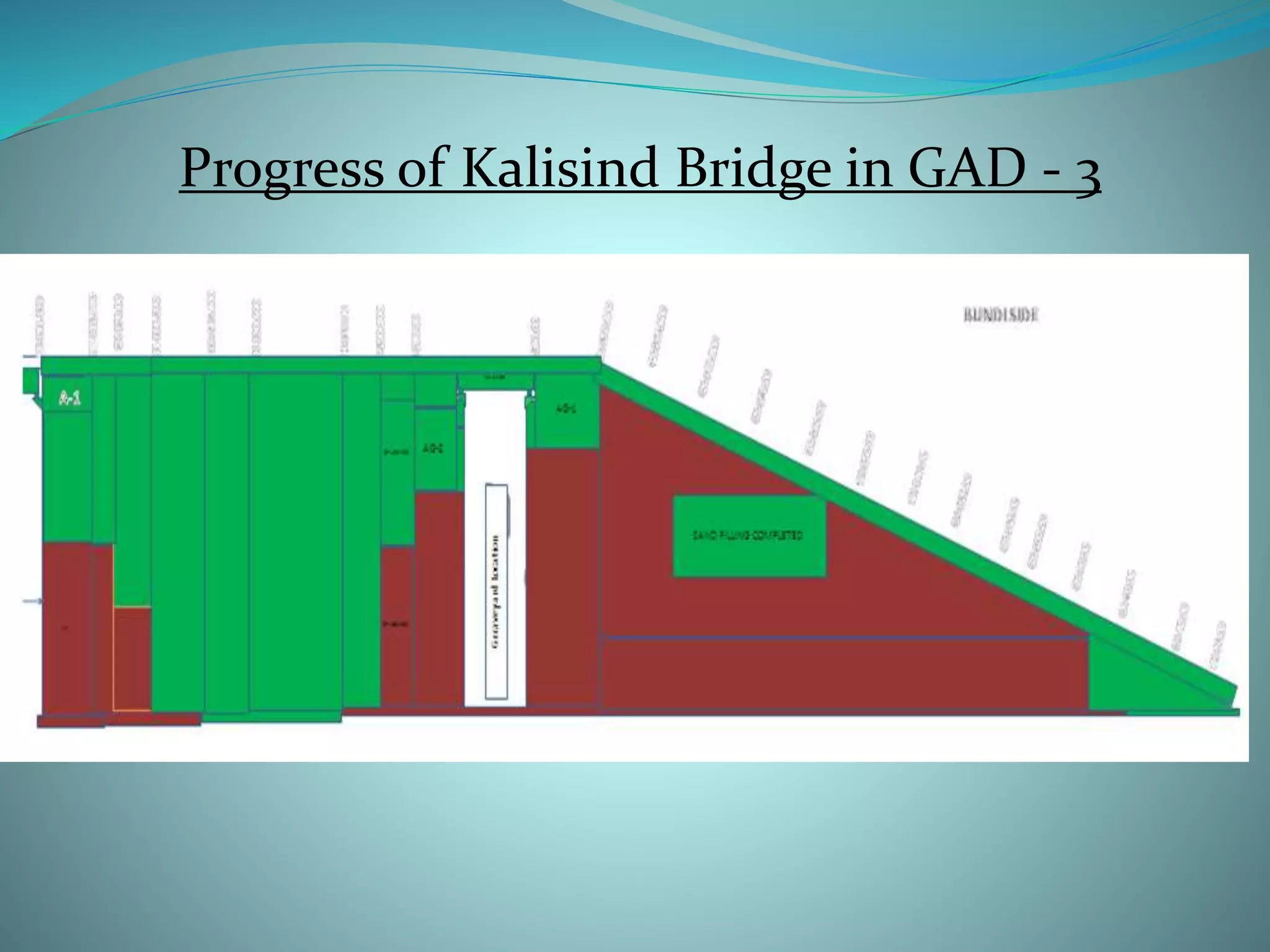
Progress of Kalisind Bridge in GAD - 3
PPT On High level bridge

PPT On High level bridge

  • 1.
    A Presentation on Practical Training taken at DURATION:04/06/2014 to 04/07/2014 SESSION: 2014-2015 SUBMITTED BY : LOKESH KUMAR MEENA Final Year B.Tech (Civil) SUBMITTED TO : SHIVANSHI SINGH ANKUSH JAIN AVI MAHERISHI DEPARTMENT OF CIVIL ENGINEERING R.N MODI ENGINEERING COLLEGE RANPUR., KOTA
  • 2.
    NEED FOR CONSTRUCTION To improve traffic management system.  To reduce hindrance to traffic flow.  By increase the volume of road, chances of accidents get reduced hence it will act as a life saving drug.
  • 3.
  • 4.
    1. Overall lengthof elevated road 2. Carriage way of elevated road 3. Crash Barriers 4. Embankment Slope 5. Approaches Salient features of Elevated Road Bridge 1250meter Two lane divided bridge R.C.C. Crash Barriers 1 in 30 Solid approaches beyond via duct spans with R.C.C. Retaining Wall 7. Structure Details Of Viaduct 6. Wearing Coat 40 mm BC Followed by 25mm mastic asphalt i. PSC Box Girder 52.600 meter span (7No.), 47.600 meter span (3No.) ii. PSC Girder With RCC Decking 16.700 meter span (7 No.)with 4 girder arrangement iii. Box Pier 1 No. (26 meter span)
  • 5.
    Wall type pierwith Semi-Circular Ends v. Foundation Open foundation 8. Seismic Zone Zone II 9. Bearings Elastomeric Bearing & POT PIT iv. Sub-structure for viaduct span 10.Expansion Joint Strip Seal Expansion Joint 11. Estimated Quantity of steel Reinforcement 3041 MT 12. Estimated Quantity of High Tension Steel 147.54 MT 13. Estimated Quantity of Cement Concrete 20619 cubic meter 14. Climate & Rainfall climate is hot & humid & catchment
  • 6.
    The primary componentsof the project include: 1. Site clearance. 2. Earth Work and Excavation . 3. Shifting of utilities. 4. Construction of Open foundation for pier & abutments. 5. Construction of RCC T Beam & PSC Girders & Deck Slab type superstructure . 6. Construction of retaining wall. 7. Construction of embankment and subgrade in approaches. 8. Construction of service road. 9. Construction of roadside unlined drain. 10. Construction of diversion road including culvert. 11. Providing road sign & markings. 12. Providing road illumination required.
  • 7.
    TEST PERFORMED ATSITE AND SITE LABORATORY (a) At site of work:- Slump test for measurement of workability of concrete. (b) At site laboratory:- (i) Compressive strength test of concrete . (ii) Grading of aggregates-Sieve Analysis Test.
  • 8.
    SLUMP TEST FORWORKABILITY OF CONCRETE Most common method for measuring the consistency & uniformity of concrete. APPARATUS REQUIRED FOR TEST: • Cast iron mould in the form of frustum of cone having internal dimension:- Bottom diameter : 20cm Top diameter : 10cm Height : 30cm • Tamping Rod of 16mm diameter.
  • 9.
    Foundation For piersand abutments • Types of bridge foundations- 1. Open foundation 2. Well foundation 3. Block foundation Open foundation & Block foundation are come under shallow foundations . well foundation are come under deep foundations.
  • 10.
    Open foundation • Typesof open foundation- Isolated , combined, and strip footings. Raft foundations.
  • 11.
    CURING OF OPENFOUNDATION
  • 12.
  • 14.
    Pre-Stressing  Pre-stress concreteis the one in which there have been introduced internal stresses of such a magnitude and distribution that the stresses resulting from given external loading counteracted to a desired degree. Pre-Stressing
  • 15.
    SUBSTRUCTURE  PIERS &ABUTMENTS Piers and abutments are the vertical structures supporting deck,girders,bearings providing for transmitting their load along with live load coming over bridge to the bed/earth through foundation.
  • 16.
    Formwork on pierLifting of formwork on pier Concreting and curing
  • 17.
  • 18.
    Progress of KalisindBridge in GAD - 1
  • 19.
    Progress of KalisindlBridge in GAD - 2 River Portion
  • 20.
    Progress of KalisindBridge in GAD - 3