Poetry is a form o literature that expresses ideas, feelings or tells a story in a
specific form.
An imaginative response to an experience reflecting a keen awareness of language.
 Figurative
 Literal
the person who speaks in or narrates a poem.
But the speaker and writer NOT necessarily the same
person.
A statement about life that a particular work is trying to
get across to the reader.
Theme=Main idea
Prosody is the study of the meter, rhythm and intonation of
a poem.
Rhythm and meter are different, although closely related.
Meter and rhythm describe patterned repetition of
stressed and unstressed syllables in a line of poetry.
The meter and rhythm of a poem creates a beat
 Verse: Metric line of poetry names according to the
kind and number of feet composing it.
 Refrain: repetition of line or phrase of a poem at
regular intervals, especially at the end of a
stanza(CHORUS)
A division of poetry named for the number of lines it
contains.
When you see a space between lines in a poem, that
means a new stanza is beginning.
Similarity or likeness of sound existing between two
words.
 T op= Top
 St op=Stop
Repetition of initial consonant sound in words
 she sells sea shell down by the seashore
Repetition of vowel sounds without the repetition of
consonant sounds.
 How now brown cow
Comparison od two unlike things using the words LIKE
or AS .
He acts like an animal when he eats!
Giving human qualities to non-human objects.
 the statue stared at us
 the flag waved at us
 the sun smiled down on the earth.
The use of a word whose sound suggest its meaning.
The use of a exaggeration for a heightened effect.
Comparing two things by saying one thing
actually is another thing.
Poems are written in stanzas.
 Narrative Poetry
 Epic Poetry
 Dramatic Poetry
 Lyric Poetry
 Prose poetry
 Speculative Poetry
Types of poetry
 Haiku:is a Japanese form of poetry which is
composed of three non rhyming lines.
 Limerick: Often, limericks tell a short, humorous
story.
 Sonnet: Contains 14 lines, typically with two rhyming
stanzas known as a rhyming couplet at the end.
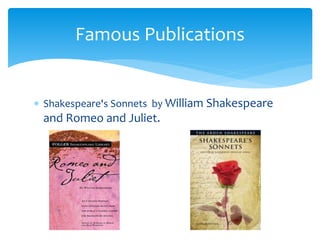
Famous Publications
 Shakespeare's Sonnets by William Shakespeare
and Romeo and Juliet.
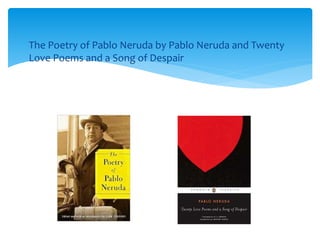
 The Poetry of Pablo Neruda by Pablo Neruda and Twenty
Love Poems and a Song of Despair

PPP Poetry

  • 2.
    Poetry is aform o literature that expresses ideas, feelings or tells a story in a specific form. An imaginative response to an experience reflecting a keen awareness of language.
  • 3.
  • 4.
    the person whospeaks in or narrates a poem. But the speaker and writer NOT necessarily the same person.
  • 5.
    A statement aboutlife that a particular work is trying to get across to the reader. Theme=Main idea
  • 7.
    Prosody is thestudy of the meter, rhythm and intonation of a poem. Rhythm and meter are different, although closely related.
  • 8.
    Meter and rhythmdescribe patterned repetition of stressed and unstressed syllables in a line of poetry. The meter and rhythm of a poem creates a beat
  • 9.
     Verse: Metricline of poetry names according to the kind and number of feet composing it.  Refrain: repetition of line or phrase of a poem at regular intervals, especially at the end of a stanza(CHORUS)
  • 10.
    A division ofpoetry named for the number of lines it contains. When you see a space between lines in a poem, that means a new stanza is beginning.
  • 11.
    Similarity or likenessof sound existing between two words.  T op= Top  St op=Stop
  • 12.
    Repetition of initialconsonant sound in words  she sells sea shell down by the seashore
  • 13.
    Repetition of vowelsounds without the repetition of consonant sounds.  How now brown cow
  • 14.
    Comparison od twounlike things using the words LIKE or AS . He acts like an animal when he eats!
  • 15.
    Giving human qualitiesto non-human objects.  the statue stared at us  the flag waved at us  the sun smiled down on the earth.
  • 16.
    The use ofa word whose sound suggest its meaning.
  • 17.
    The use ofa exaggeration for a heightened effect.
  • 18.
    Comparing two thingsby saying one thing actually is another thing.
  • 19.
    Poems are writtenin stanzas.
  • 20.
     Narrative Poetry Epic Poetry  Dramatic Poetry  Lyric Poetry  Prose poetry  Speculative Poetry
  • 21.
    Types of poetry Haiku:is a Japanese form of poetry which is composed of three non rhyming lines.  Limerick: Often, limericks tell a short, humorous story.  Sonnet: Contains 14 lines, typically with two rhyming stanzas known as a rhyming couplet at the end.
  • 22.
    Famous Publications  Shakespeare'sSonnets by William Shakespeare and Romeo and Juliet.
  • 23.
     The Poetryof Pablo Neruda by Pablo Neruda and Twenty Love Poems and a Song of Despair