TOPICAL
CORTICOSTEROIDS
Corticosteroids
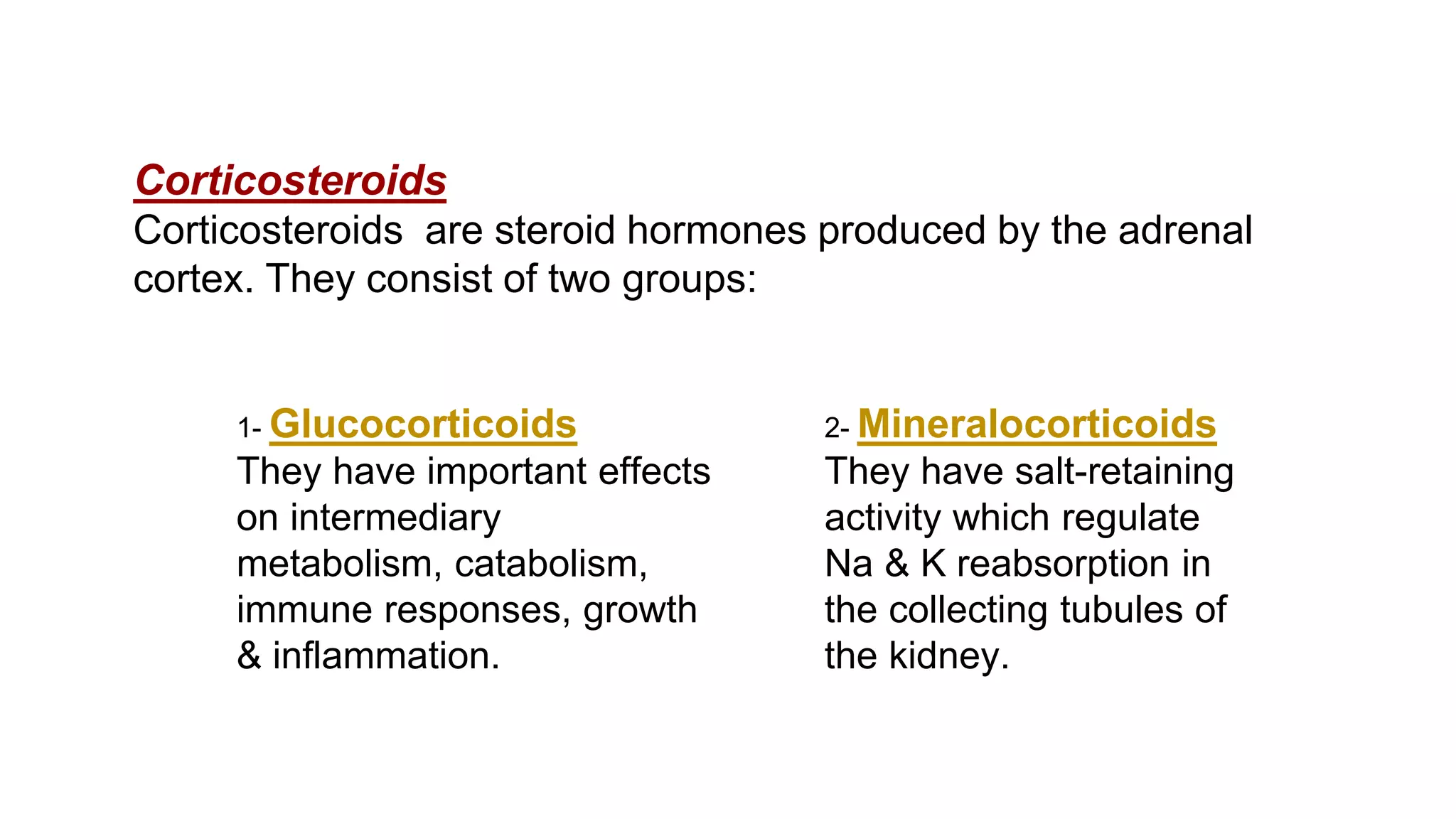
Corticosteroids are steroid hormones produced by the adrenal
cortex. They consist of two groups:
1- Glucocorticoids
They have important effects
on intermediary
metabolism, catabolism,
immune responses, growth
& inflammation.
2- Mineralocorticoids
They have salt-retaining
activity which regulate
Na & K reabsorption in
the collecting tubules of
the kidney.
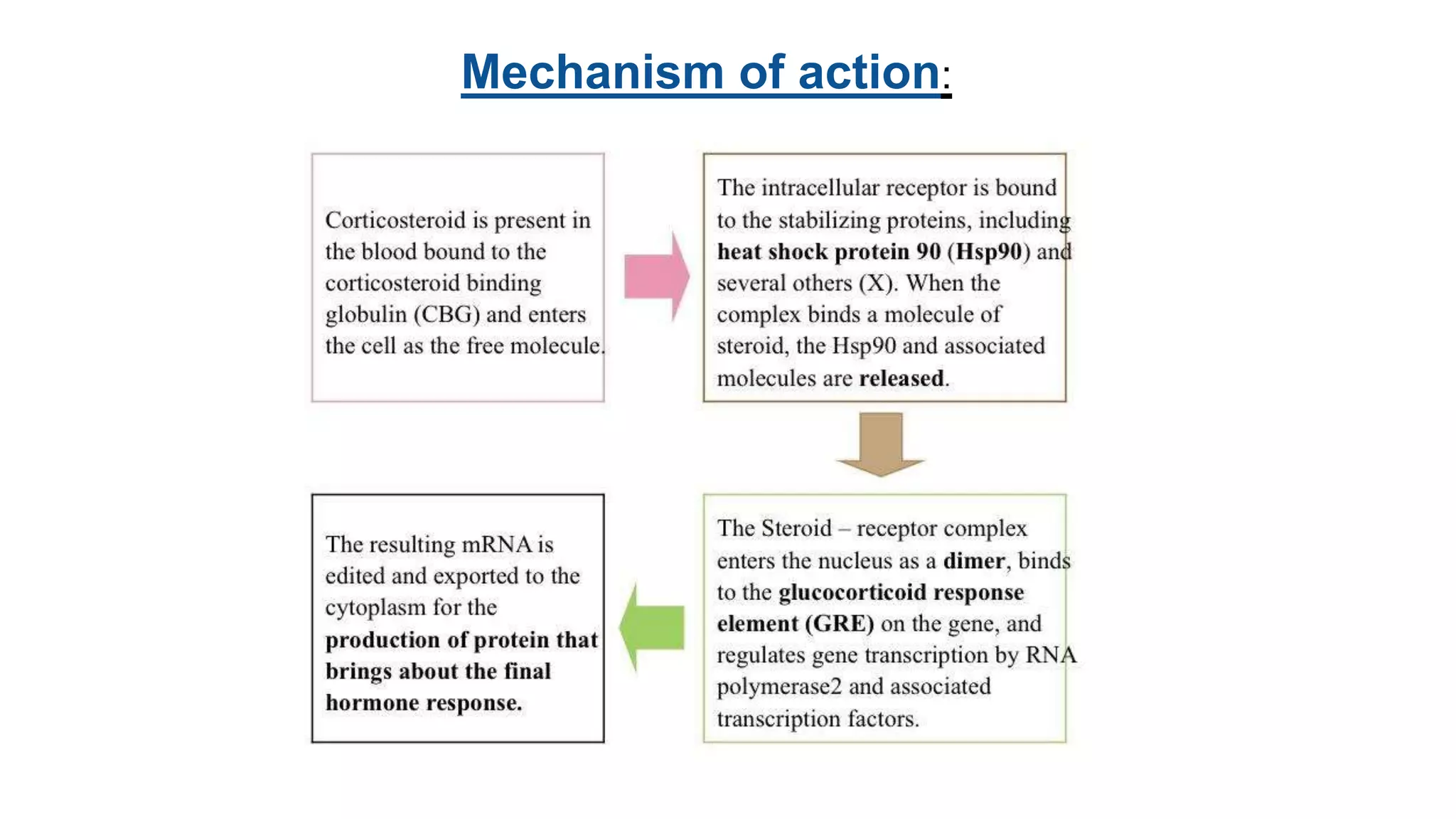
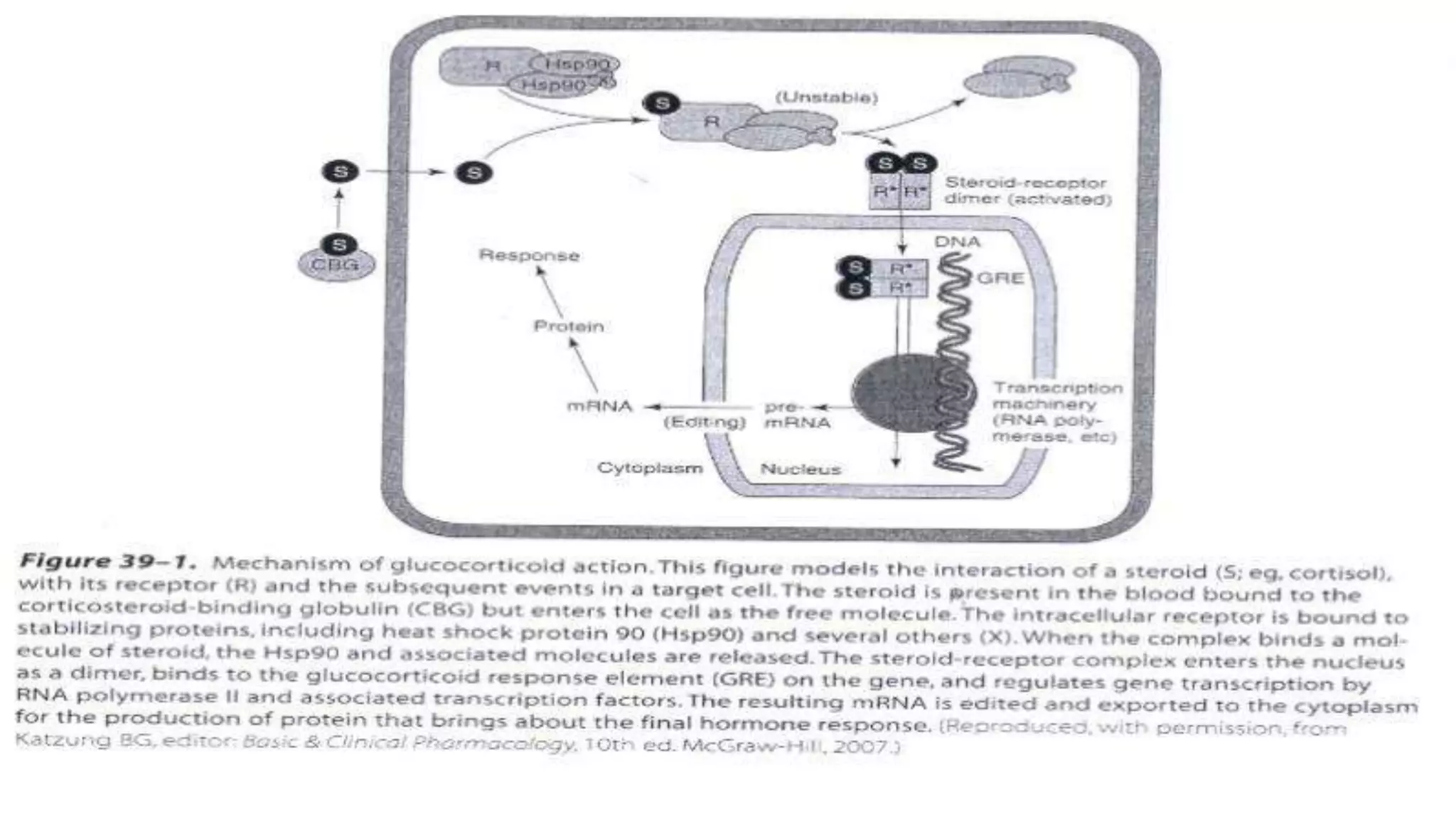
Mechanism of action:
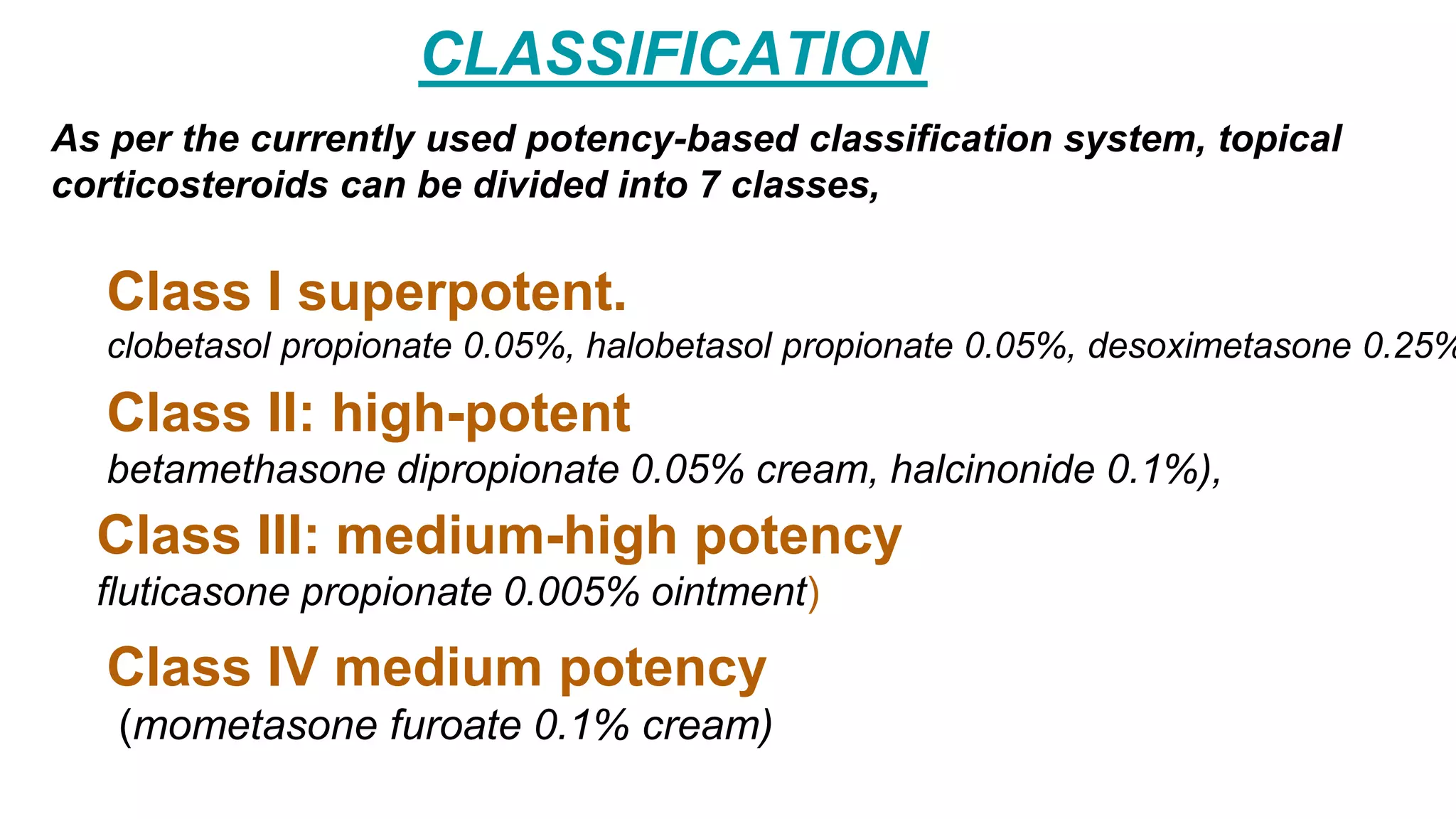
As per the currently used potency-based classification system, topical
corticosteroids can be divided into 7 classes,
CLASSIFICATION
Class I superpotent.
clobetasol propionate 0.05%, halobetasol propionate 0.05%, desoximetasone 0.25%
Class II: high-potent
betamethasone dipropionate 0.05% cream, halcinonide 0.1%),
Class IV medium potency
(mometasone furoate 0.1% cream)
Class III: medium-high potency
fluticasone propionate 0.005% ointment)
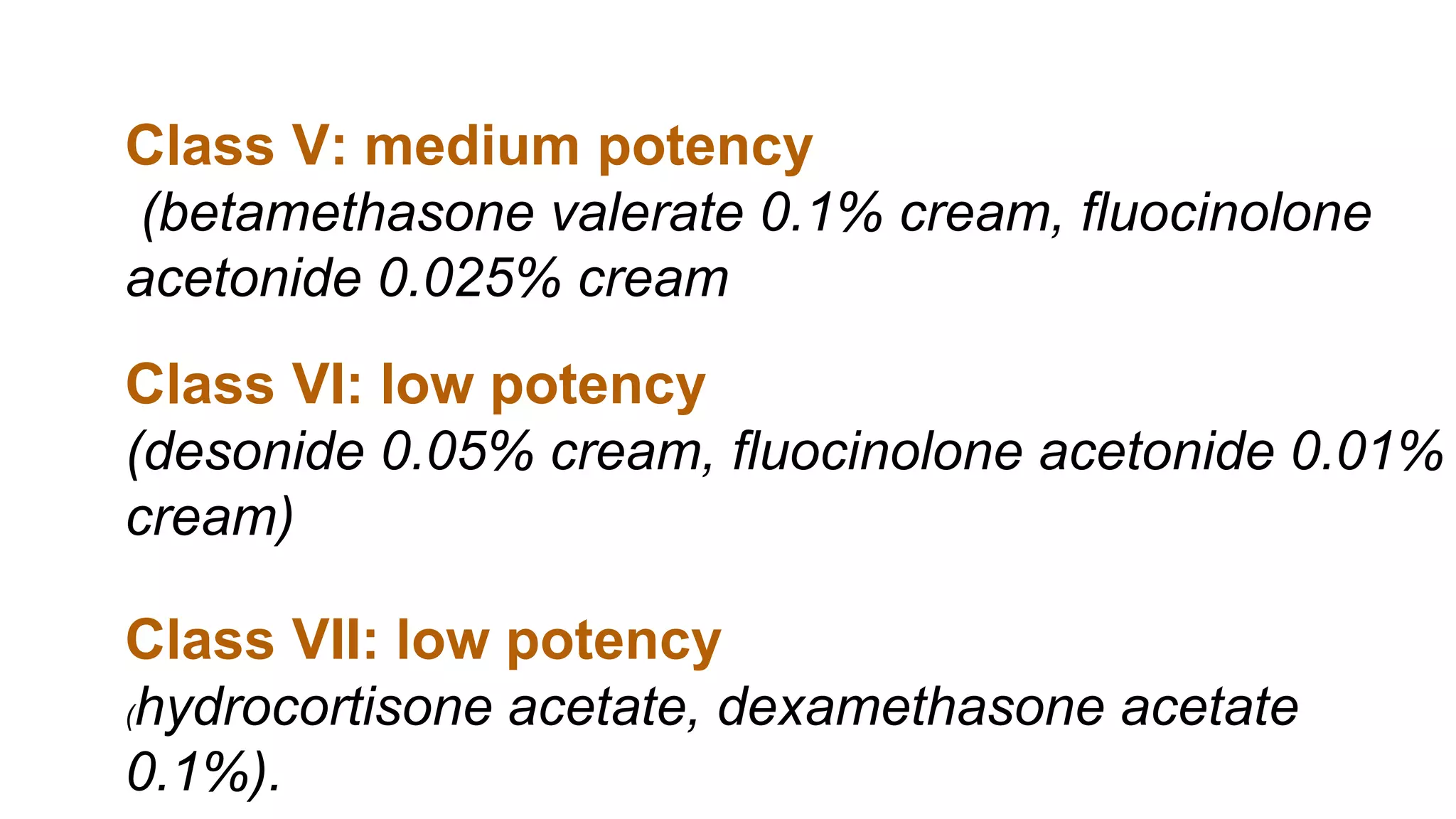
Class VI: low potency
(desonide 0.05% cream, fluocinolone acetonide 0.01%
cream)
Class V: medium potency
(betamethasone valerate 0.1% cream, fluocinolone
acetonide 0.025% cream
Class VII: low potency
(hydrocortisone acetate, dexamethasone acetate
0.1%).
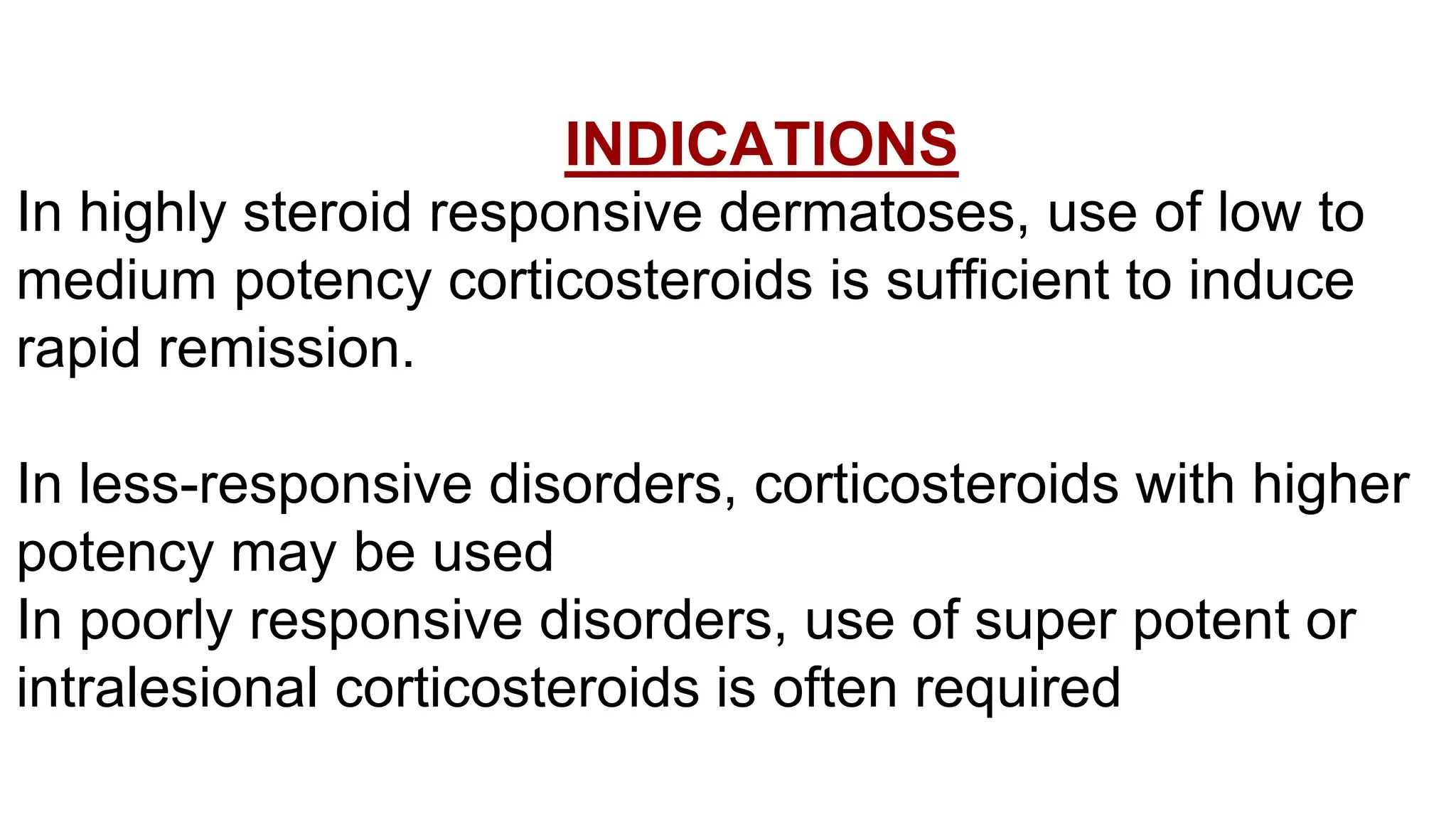
INDICATIONS
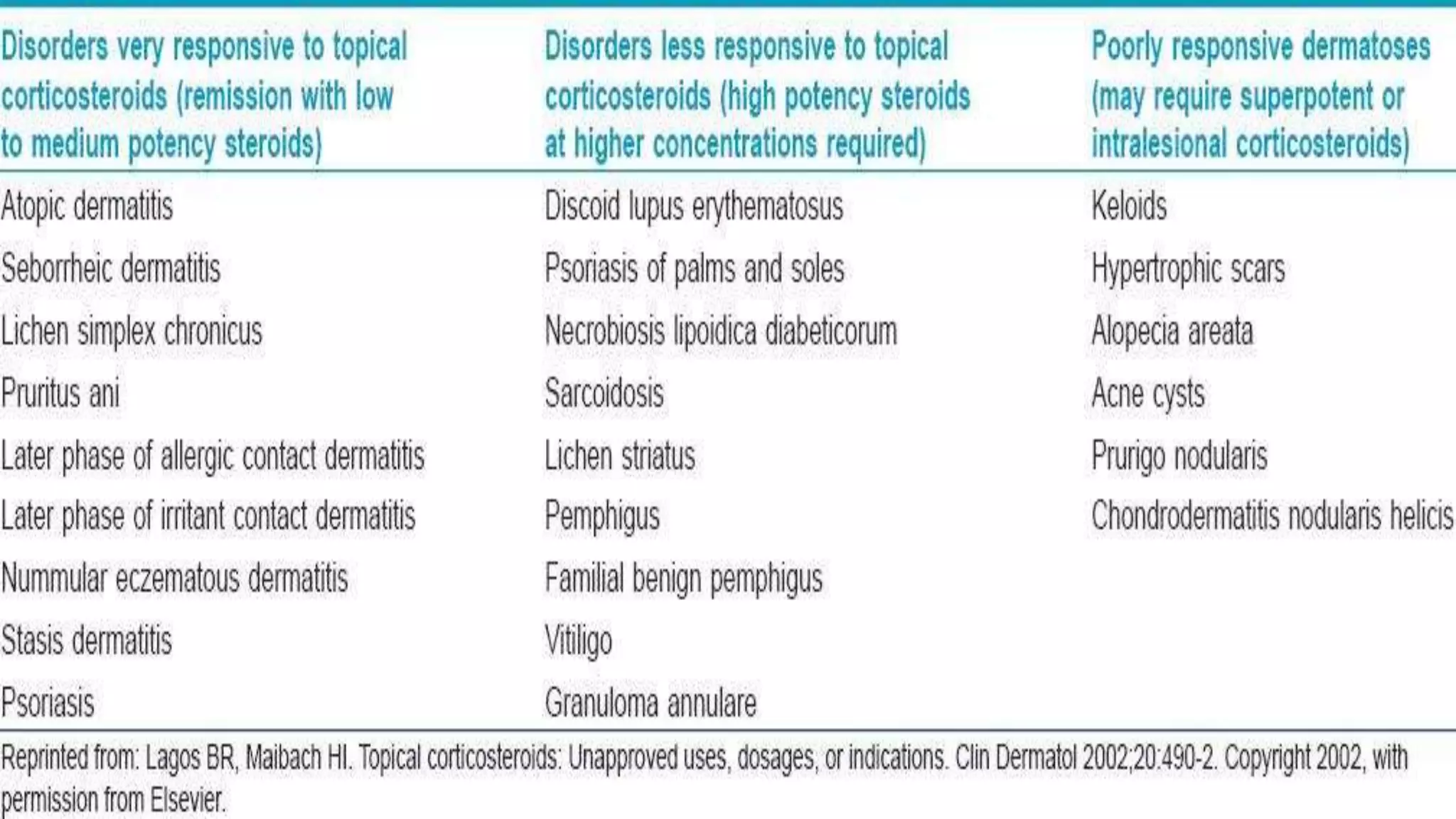
In highly steroid responsive dermatoses, use of low to
medium potency corticosteroids is sufficient to induce
rapid remission.
In less-responsive disorders, corticosteroids with higher
potency may be used
In poorly responsive disorders, use of super potent or
intralesional corticosteroids is often required
SIDE EFFECTS OF STEROIDS
• LOCAL SIDE EFFECTS
 Atrophic changes
• Most common
• Due to antiproliferative effect of steroids on fibroblasts.
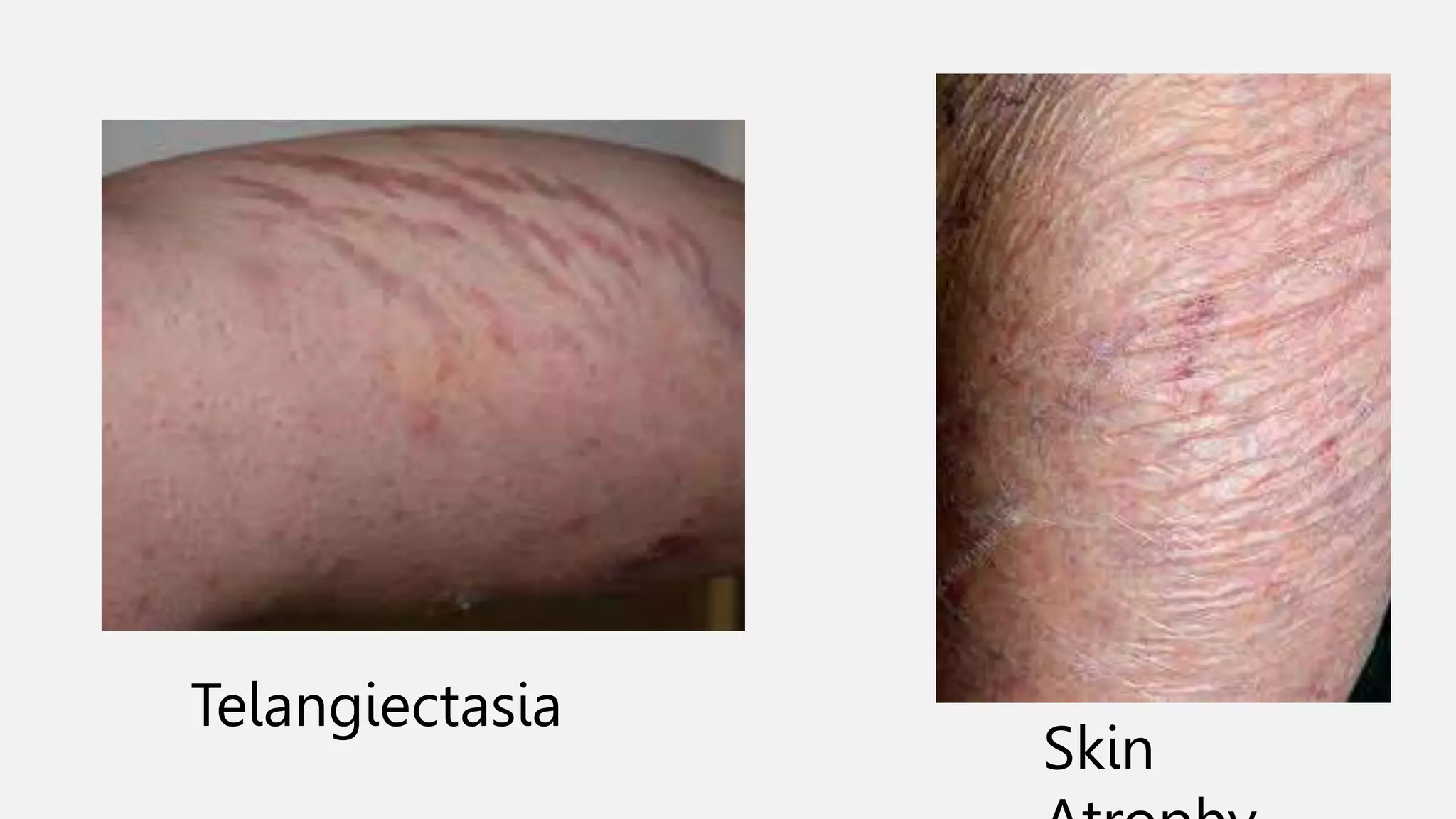
• Lax , depressed, wrinkled, shiny skin with Vascular
dilatation, telangiectasias, purpura, easy bruising and
ulceration occurs.
• Most signs of cutaneous atrophy ( except striae) resolve
by 1 to 4 weeks of stoppage.
Telangiectasia
Skin
Acneiform Reactions
•Development or exacerbation of dermatoses of the face ,
including steroid rosacea, acne and perioral dermatitis is a
well know efffect of steroids.
•Although steroids initially lead to suppression of
inflammatory papules, patients become addicted because
they notice that lesions flare when treatment is
withdrawn.
•Steroid use should be discouraged in the treatment of
rosacea and perioral and periocular dermatitis.
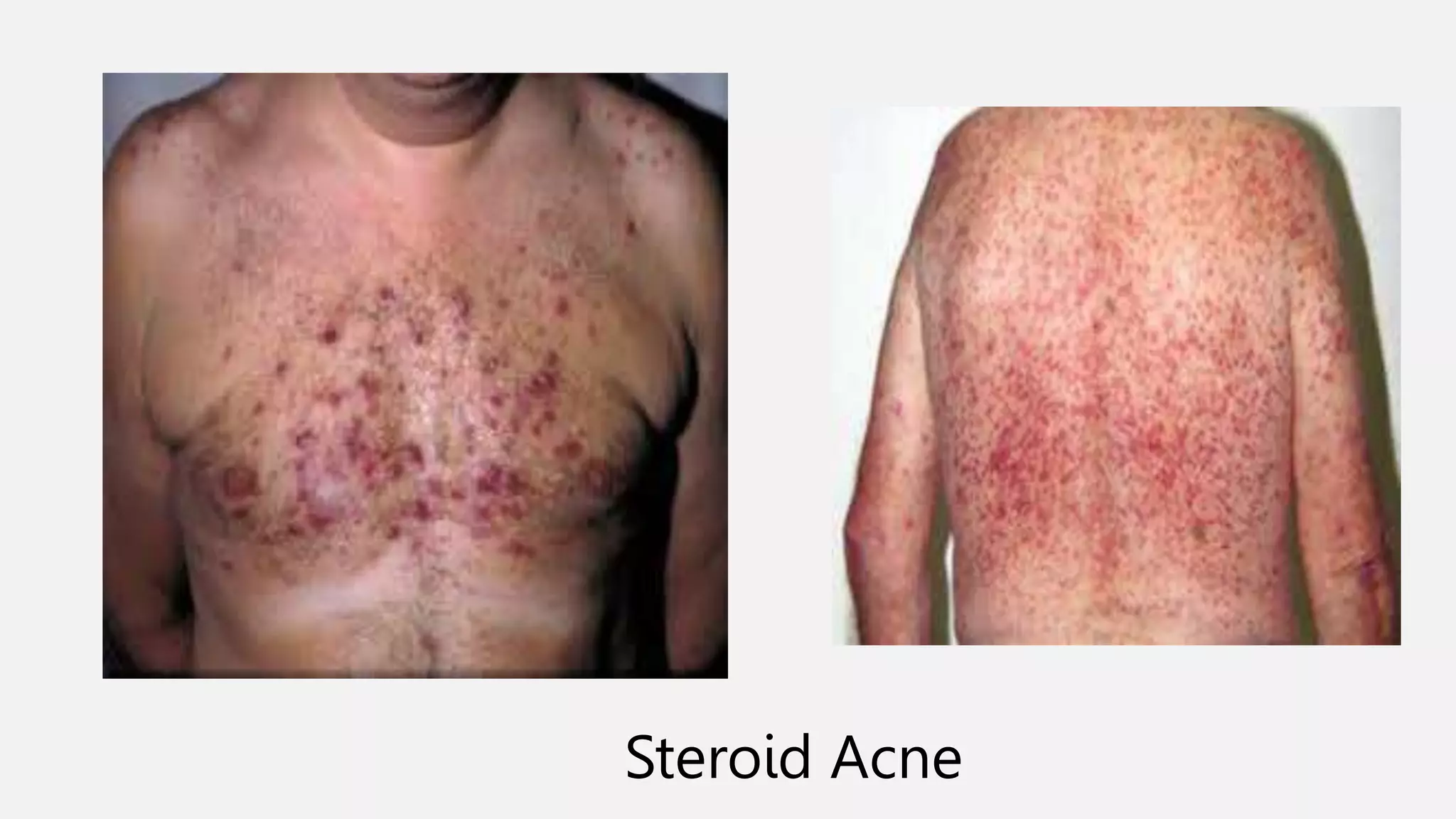
•Prolonged steroid treatment also results in steroid acne
characterised by:
Crops of dense inflamed pustules in the same
developmental stage
Lesions occur on face, chest and back
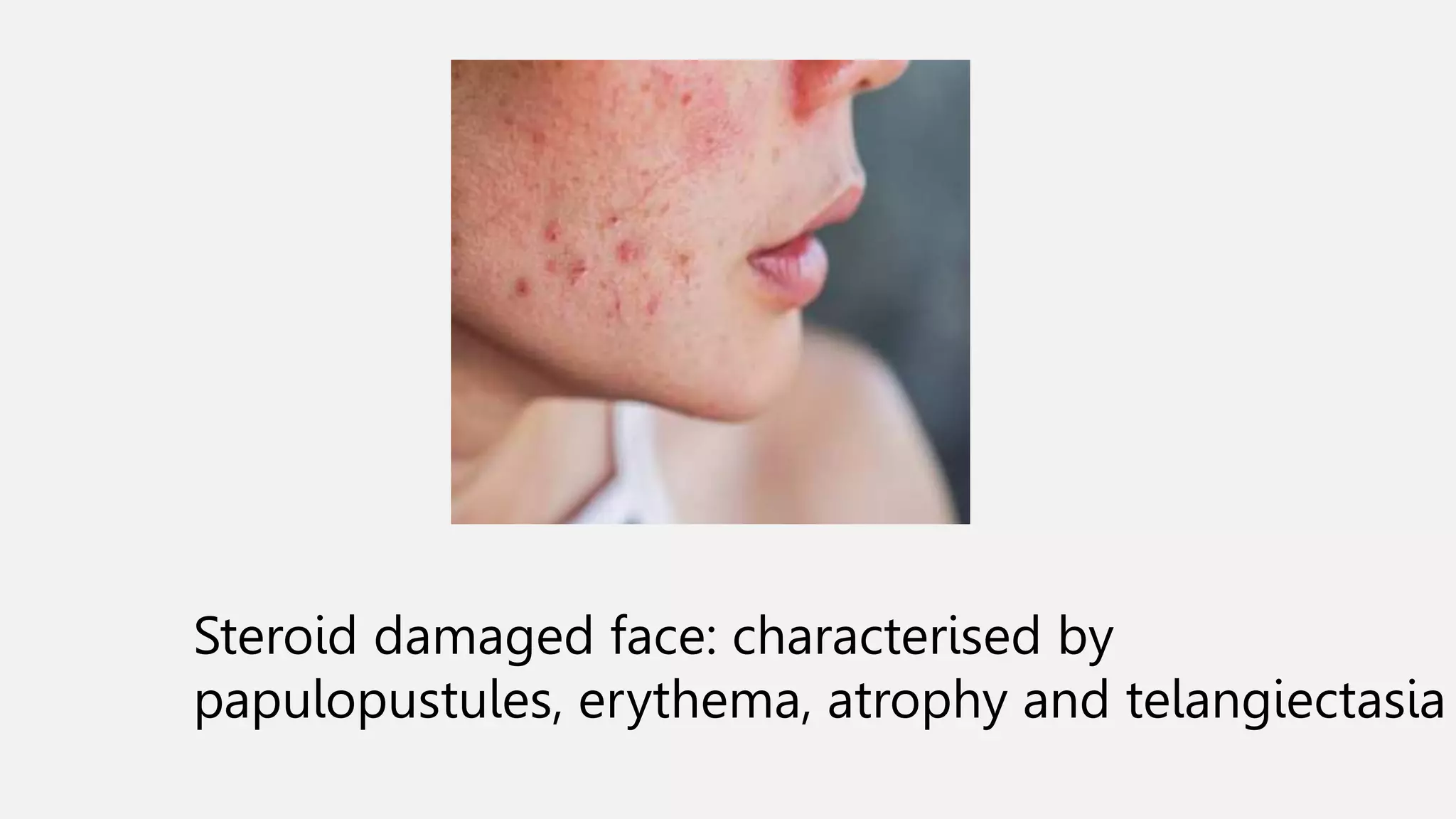
Steroid damaged face: characterised by
papulopustules, erythema, atrophy and telangiectasia
Steroid Acne
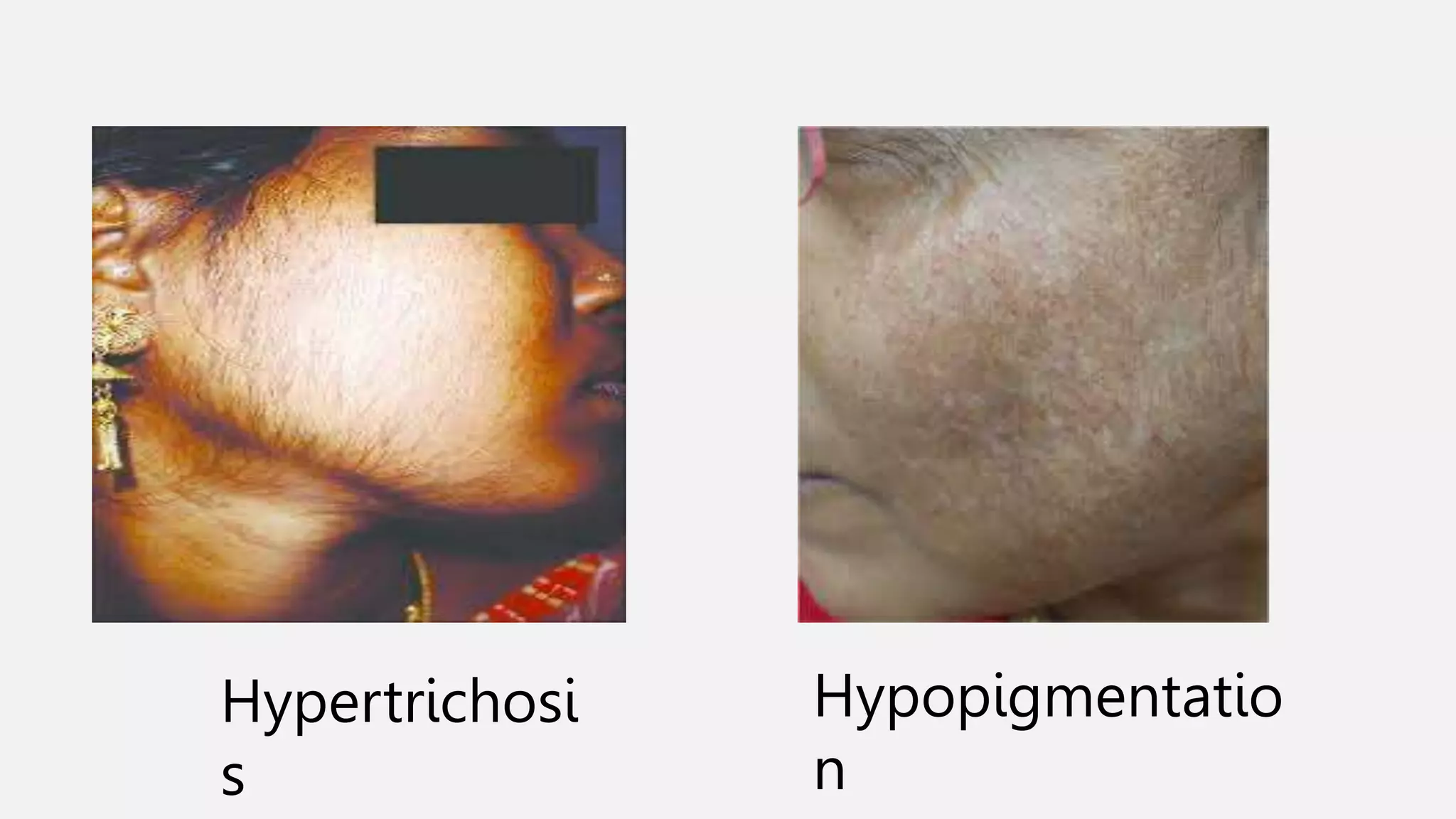
Hypertrichosis
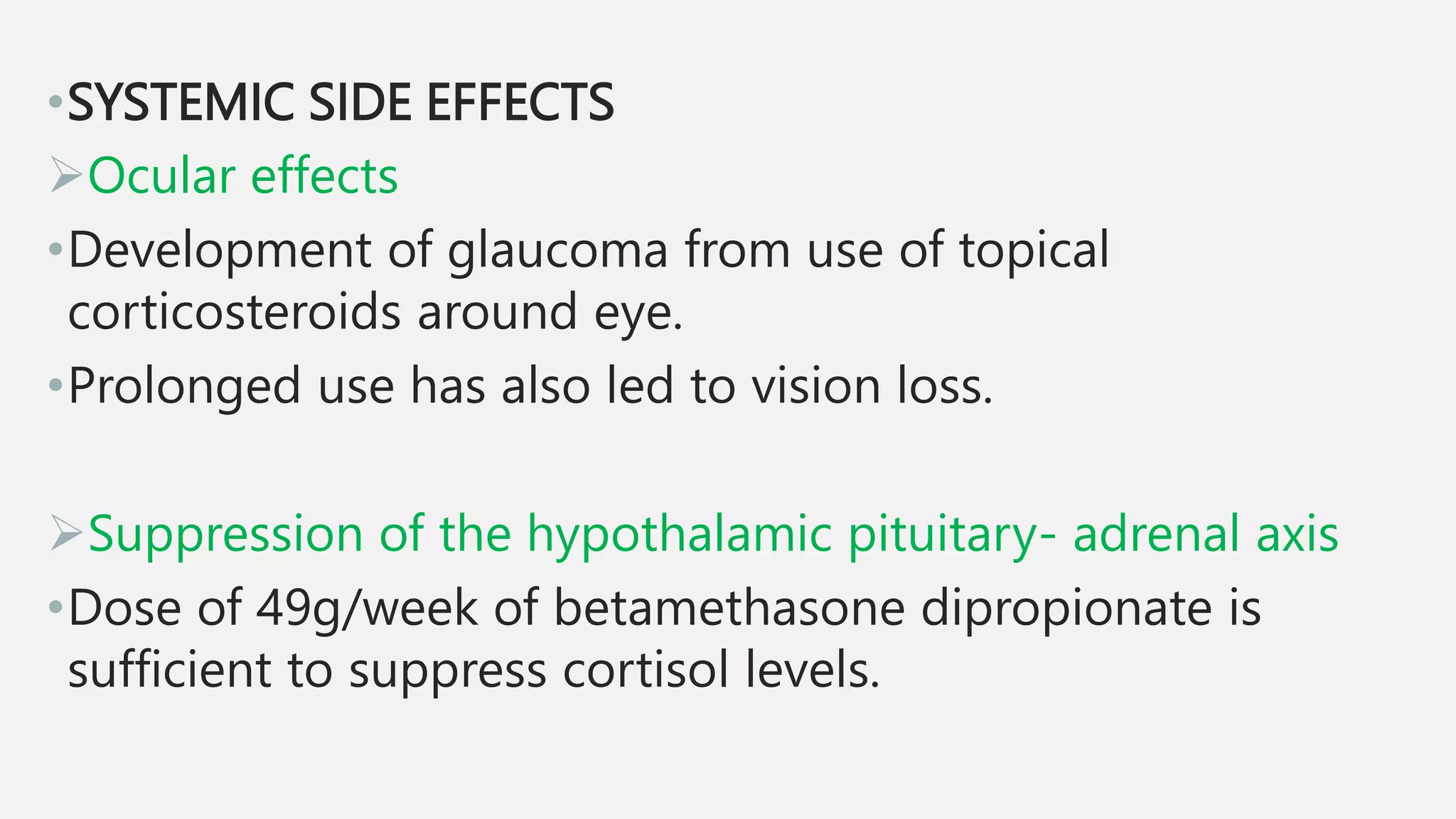
Pigmentary changes
•Hypopigmentation occurs
•Pigment generally returns after discontinuation
Development of infections
•Exacerbate or mask cutaneous infections
•Granuloma gluteale infantum, characterised by reddish
purplish granulomatous lesions on diaper area is a
complication of diaper dermatitis that is being treated with
corticosteroids .
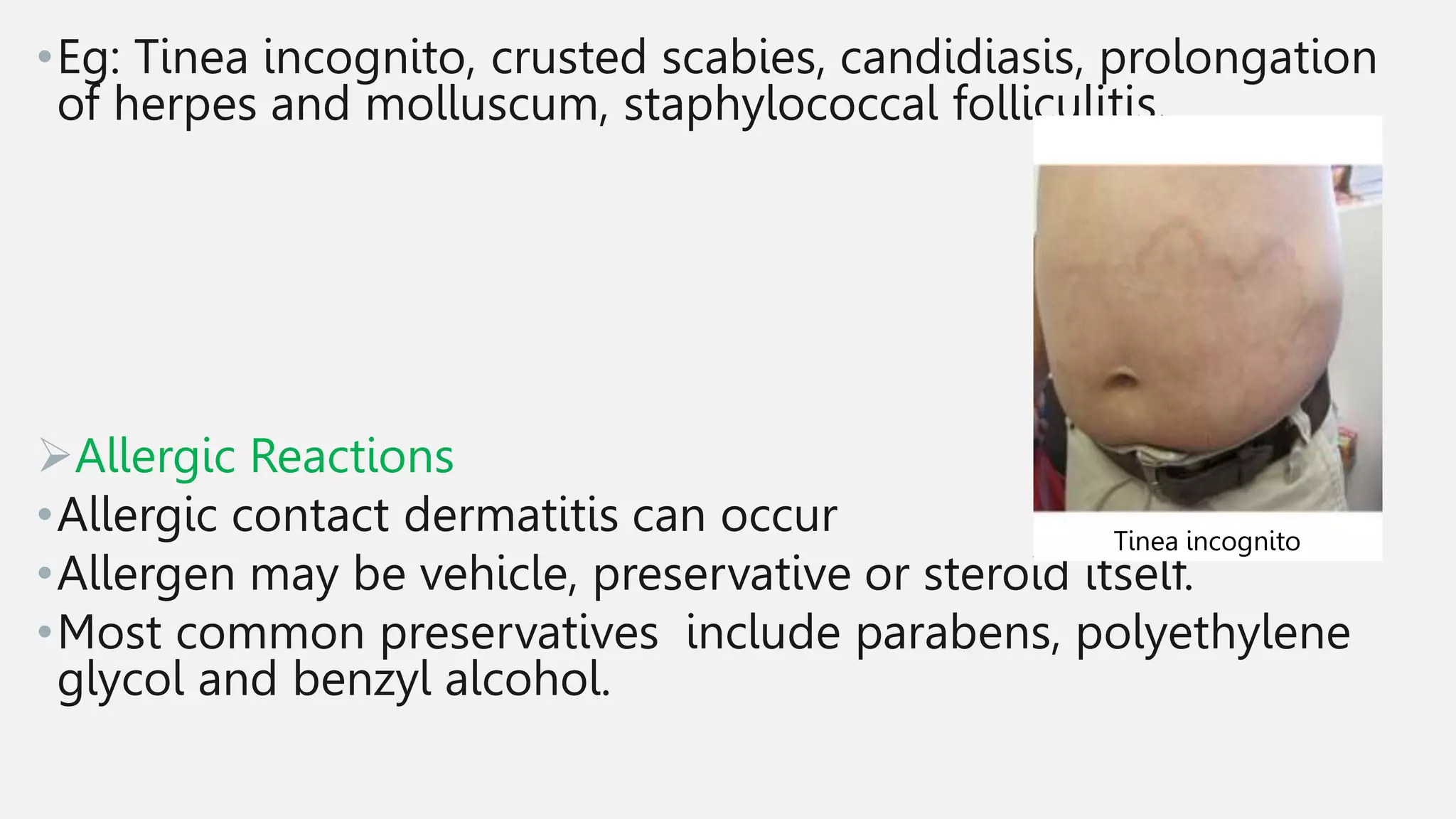
•Eg: Tinea incognito, crusted scabies, candidiasis, prolongation
of herpes and molluscum, staphylococcal folliculitis.
Allergic Reactions
•Allergic contact dermatitis can occur
•Allergen may be vehicle, preservative or steroid itself.
•Most common preservatives include parabens, polyethylene
glycol and benzyl alcohol.
Tinea incognito
Hypertrichosi
s
Hypopigmentatio
n
•SYSTEMIC SIDE EFFECTS
Ocular effects
•Development of glaucoma from use of topical
corticosteroids around eye.
•Prolonged use has also led to vision loss.
Suppression of the hypothalamic pituitary- adrenal axis
•Dose of 49g/week of betamethasone dipropionate is
sufficient to suppress cortisol levels.
Metabolic side effects
•Hyperglycemia leading to diabetes mellitus
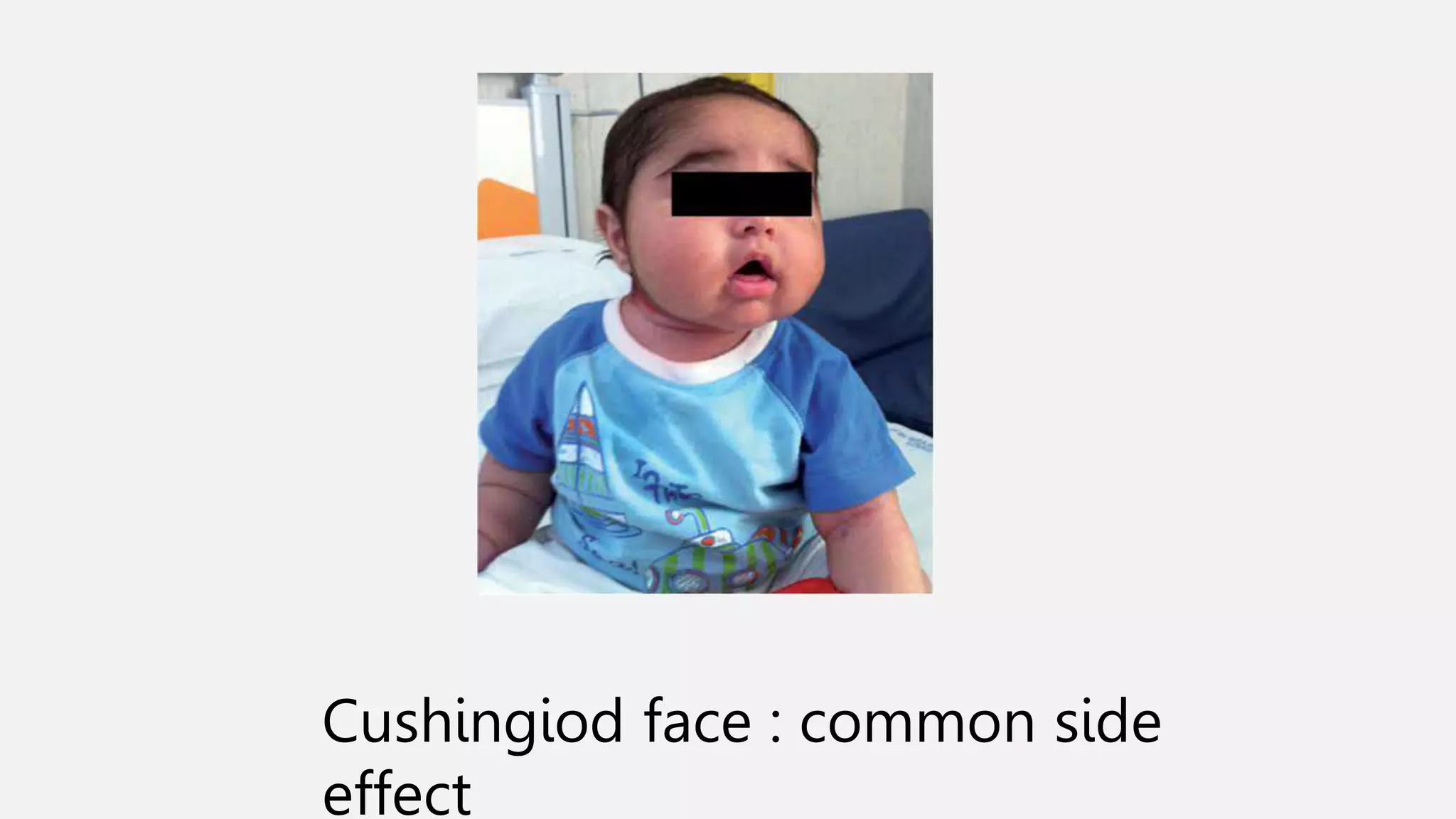
Iatrogenic cushing’s syndrome, corticosteroid related
addison crises
Growth retardation in infants and children
Cushingiod face : common side
effect
CONTRAINDICATIONS OF
STEROIDS
ABSOLUTE
•Known hypersensitivity to TCS
•Known hypersensitivity to a component of the vehicle
RELATIVE
•Bacterial, mycobacterial, fungal , viral infections
•Infestation
•Ulceration
•Topical steroids are contraindicated for patients with:
Untreated bacterial ,fungal and viral lesions
Acne
Rosacea
Perioral dermatitis
•Besides, potent and very potent topical corticosteroids should not
be used :
Patients with widespread plaque psoriasis
For more than seven days , unless under the supervision of a
dermatologist
•Moreover, prolonged use on face should be avoided.
INTRALESIONAL STEROID
ADMINISTRATION
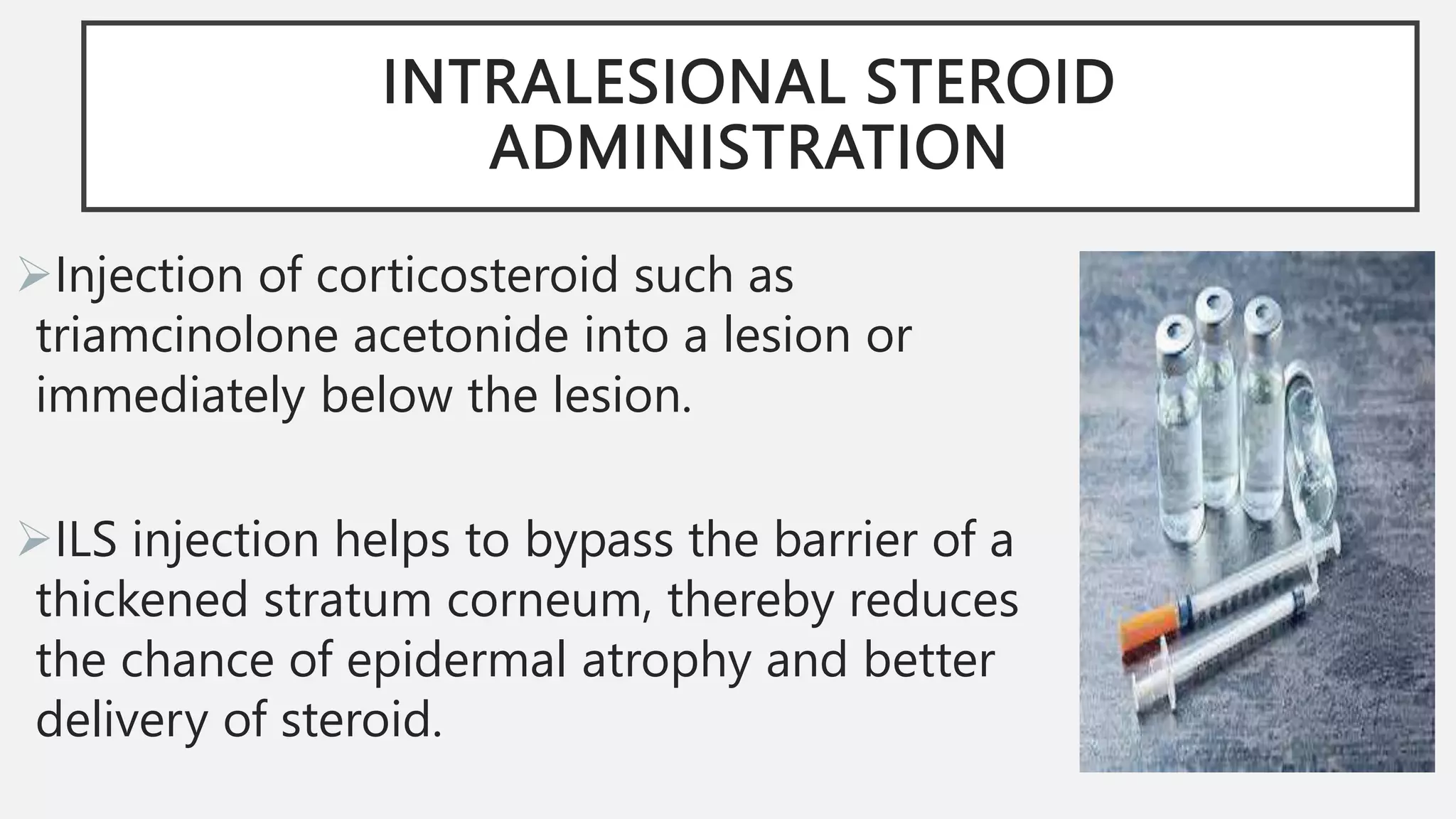
Injection of corticosteroid such as
triamcinolone acetonide into a lesion or
immediately below the lesion.
ILS injection helps to bypass the barrier of a
thickened stratum corneum, thereby reduces
the chance of epidermal atrophy and better
delivery of steroid.
METHOD OF INTRALESIONAL STEROID INJECTION
• The site of injection and volume should be carefully
considered due to the potential for cutaneous atrophy.
• Multiple sites separated by 1cm or more may be injected
• 0.1 - 0.2 ml is injected per square cm of involved skin. The
steroid can be diluted with normal saline or plain local
anaesthetic.
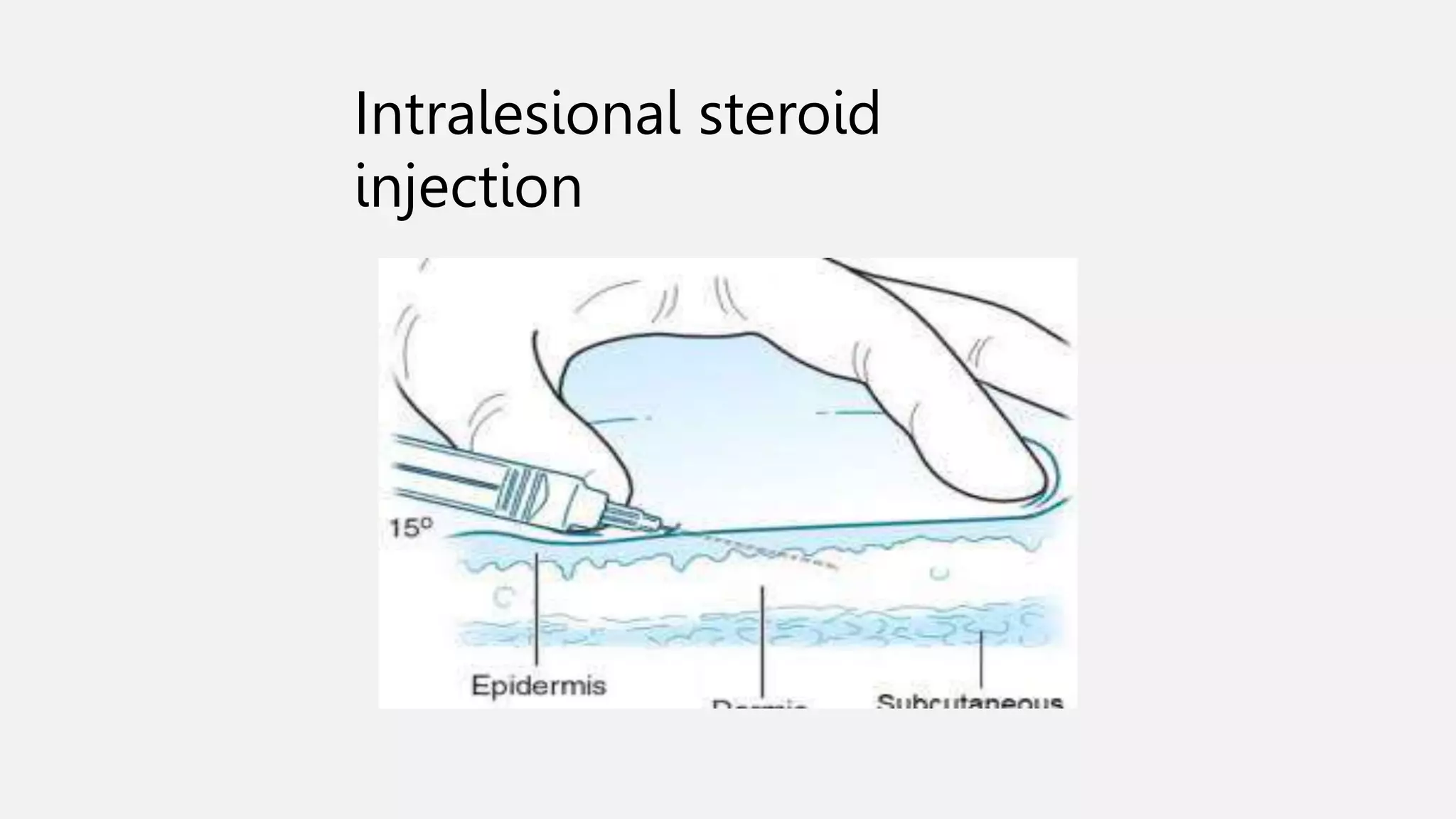
•The medicine is placed in dermis if it is a flat lesion (eg:
alopecia areata) or within the lesion, if it is raised( eg:
hypertrophic scar).
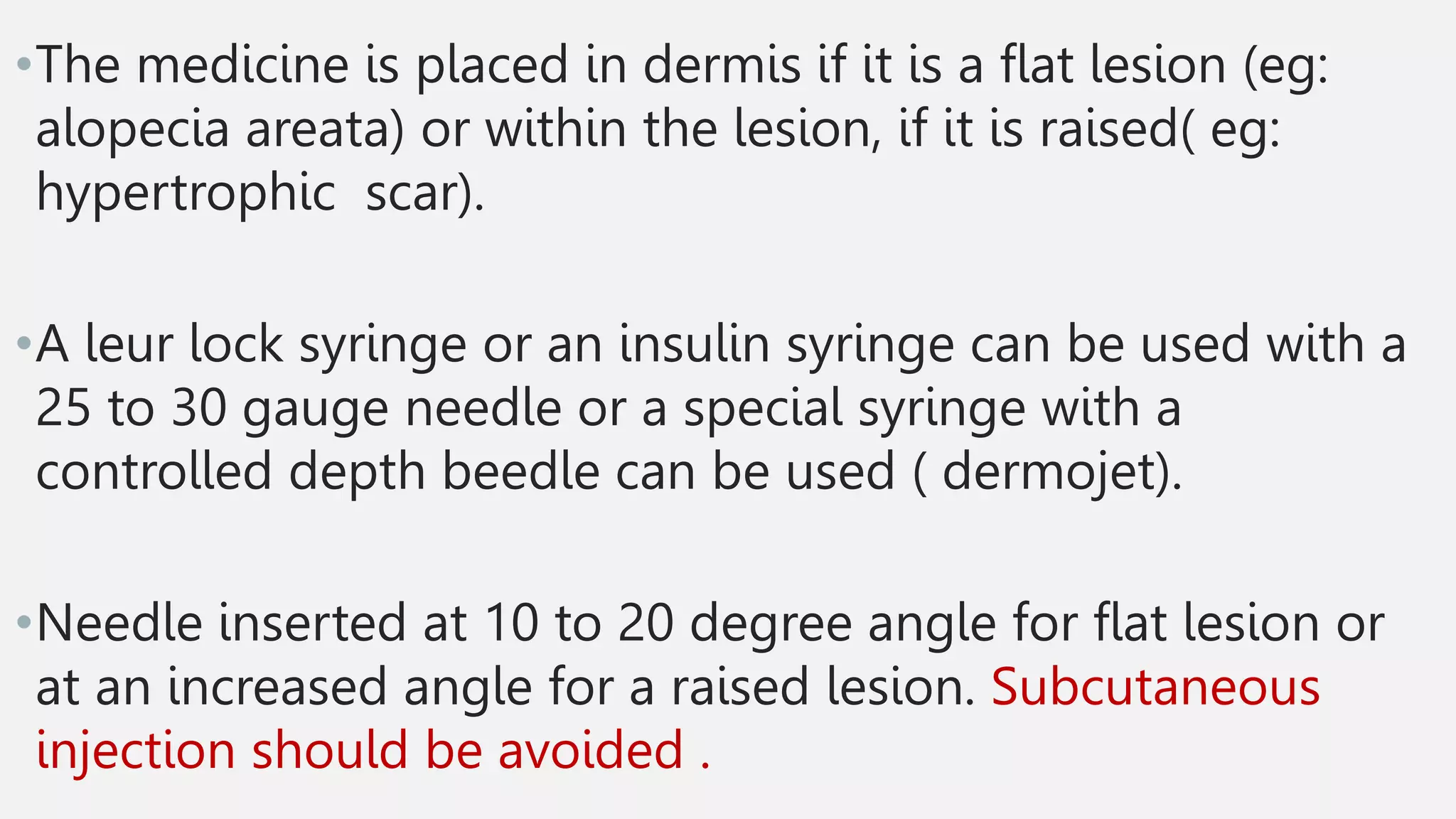
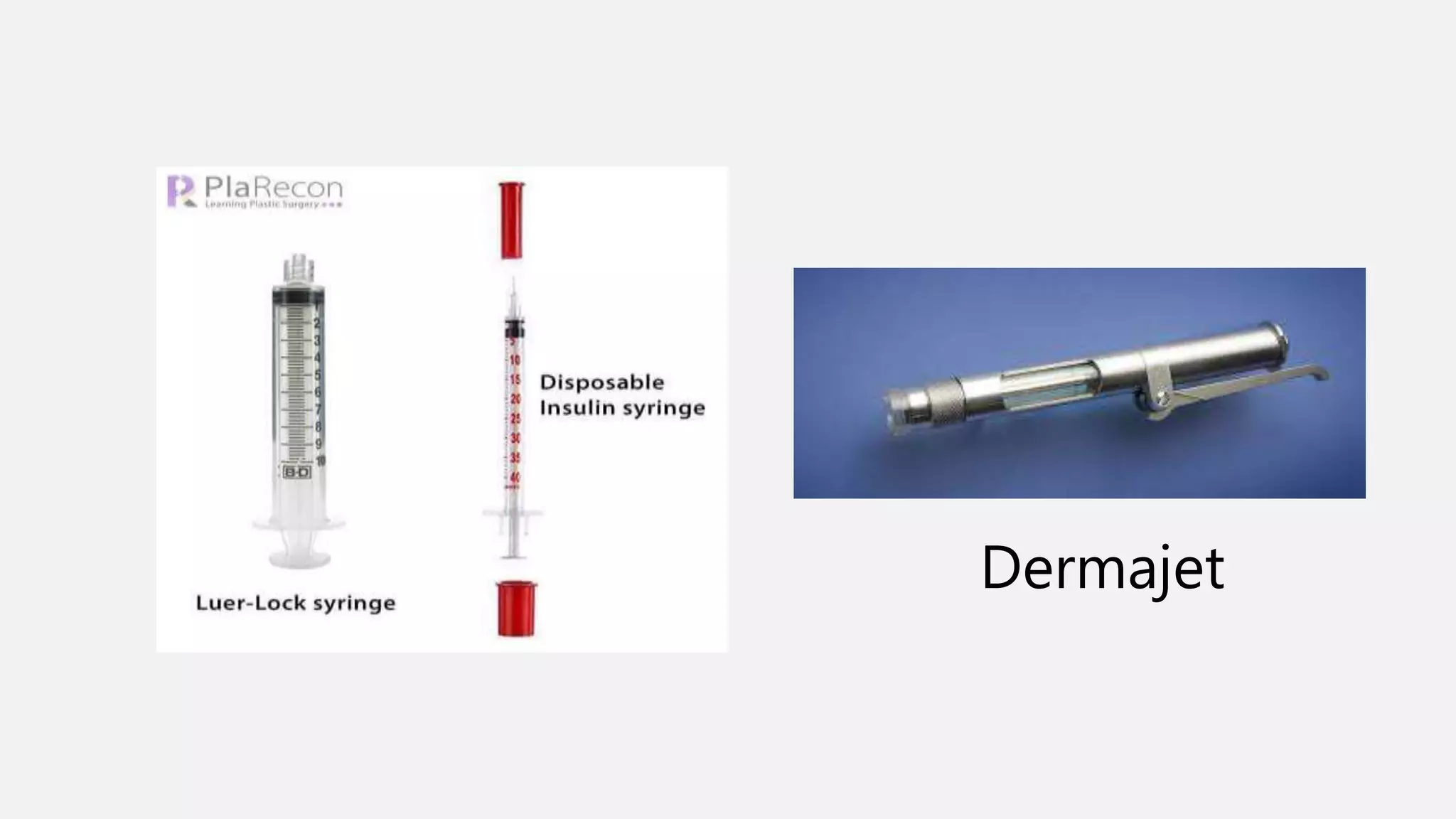
•A leur lock syringe or an insulin syringe can be used with a
25 to 30 gauge needle or a special syringe with a
controlled depth beedle can be used ( dermojet).
•Needle inserted at 10 to 20 degree angle for flat lesion or
at an increased angle for a raised lesion. Subcutaneous
injection should be avoided .
Dermajet
Intralesional steroid
injection
SIDE EFFECTS OF INTRALESIONAL
INJECTION
SHORT TERM
•Pain
•Inflammatory reaction
•Infection
LONG TERM
•Hypopigmentation
•Atrophy
•Telangiectasia
CONDITIONS TREATED WITH INTRALESIONAL
STEROID INJECTION
•Alopecia areata
•Keloids
•Hypertrophic scars
•Nodulocystic acne
•Hypertrophic lichen planus
•Discoid lupus erythematous
•Resistant plaque psoriasis
•Vitiligo
•Mucocele

PowerPoint_merge.ppt.pptx

  • 1.
  • 2.
    Corticosteroids Corticosteroids are steroidhormones produced by the adrenal cortex. They consist of two groups: 1- Glucocorticoids They have important effects on intermediary metabolism, catabolism, immune responses, growth & inflammation. 2- Mineralocorticoids They have salt-retaining activity which regulate Na & K reabsorption in the collecting tubules of the kidney.
  • 3.
  • 5.
    As per thecurrently used potency-based classification system, topical corticosteroids can be divided into 7 classes, CLASSIFICATION Class I superpotent. clobetasol propionate 0.05%, halobetasol propionate 0.05%, desoximetasone 0.25% Class II: high-potent betamethasone dipropionate 0.05% cream, halcinonide 0.1%), Class IV medium potency (mometasone furoate 0.1% cream) Class III: medium-high potency fluticasone propionate 0.005% ointment)
  • 6.
    Class VI: lowpotency (desonide 0.05% cream, fluocinolone acetonide 0.01% cream) Class V: medium potency (betamethasone valerate 0.1% cream, fluocinolone acetonide 0.025% cream Class VII: low potency (hydrocortisone acetate, dexamethasone acetate 0.1%).
  • 7.
    INDICATIONS In highly steroidresponsive dermatoses, use of low to medium potency corticosteroids is sufficient to induce rapid remission. In less-responsive disorders, corticosteroids with higher potency may be used In poorly responsive disorders, use of super potent or intralesional corticosteroids is often required
  • 10.
    SIDE EFFECTS OFSTEROIDS • LOCAL SIDE EFFECTS  Atrophic changes • Most common • Due to antiproliferative effect of steroids on fibroblasts. • Lax , depressed, wrinkled, shiny skin with Vascular dilatation, telangiectasias, purpura, easy bruising and ulceration occurs. • Most signs of cutaneous atrophy ( except striae) resolve by 1 to 4 weeks of stoppage.
  • 11.
  • 12.
    Acneiform Reactions •Development orexacerbation of dermatoses of the face , including steroid rosacea, acne and perioral dermatitis is a well know efffect of steroids. •Although steroids initially lead to suppression of inflammatory papules, patients become addicted because they notice that lesions flare when treatment is withdrawn. •Steroid use should be discouraged in the treatment of rosacea and perioral and periocular dermatitis.
  • 13.
    •Prolonged steroid treatmentalso results in steroid acne characterised by: Crops of dense inflamed pustules in the same developmental stage Lesions occur on face, chest and back
  • 14.
    Steroid damaged face:characterised by papulopustules, erythema, atrophy and telangiectasia
  • 15.
  • 16.
    Hypertrichosis Pigmentary changes •Hypopigmentation occurs •Pigmentgenerally returns after discontinuation Development of infections •Exacerbate or mask cutaneous infections •Granuloma gluteale infantum, characterised by reddish purplish granulomatous lesions on diaper area is a complication of diaper dermatitis that is being treated with corticosteroids .
  • 17.
    •Eg: Tinea incognito,crusted scabies, candidiasis, prolongation of herpes and molluscum, staphylococcal folliculitis. Allergic Reactions •Allergic contact dermatitis can occur •Allergen may be vehicle, preservative or steroid itself. •Most common preservatives include parabens, polyethylene glycol and benzyl alcohol. Tinea incognito
  • 18.
  • 19.
    •SYSTEMIC SIDE EFFECTS Oculareffects •Development of glaucoma from use of topical corticosteroids around eye. •Prolonged use has also led to vision loss. Suppression of the hypothalamic pituitary- adrenal axis •Dose of 49g/week of betamethasone dipropionate is sufficient to suppress cortisol levels.
  • 20.
    Metabolic side effects •Hyperglycemialeading to diabetes mellitus Iatrogenic cushing’s syndrome, corticosteroid related addison crises Growth retardation in infants and children
  • 21.
    Cushingiod face :common side effect
  • 22.
    CONTRAINDICATIONS OF STEROIDS ABSOLUTE •Known hypersensitivityto TCS •Known hypersensitivity to a component of the vehicle RELATIVE •Bacterial, mycobacterial, fungal , viral infections •Infestation •Ulceration
  • 23.
    •Topical steroids arecontraindicated for patients with: Untreated bacterial ,fungal and viral lesions Acne Rosacea Perioral dermatitis •Besides, potent and very potent topical corticosteroids should not be used : Patients with widespread plaque psoriasis For more than seven days , unless under the supervision of a dermatologist •Moreover, prolonged use on face should be avoided.
  • 24.
    INTRALESIONAL STEROID ADMINISTRATION Injection ofcorticosteroid such as triamcinolone acetonide into a lesion or immediately below the lesion. ILS injection helps to bypass the barrier of a thickened stratum corneum, thereby reduces the chance of epidermal atrophy and better delivery of steroid.
  • 25.
    METHOD OF INTRALESIONALSTEROID INJECTION • The site of injection and volume should be carefully considered due to the potential for cutaneous atrophy. • Multiple sites separated by 1cm or more may be injected • 0.1 - 0.2 ml is injected per square cm of involved skin. The steroid can be diluted with normal saline or plain local anaesthetic.
  • 26.
    •The medicine isplaced in dermis if it is a flat lesion (eg: alopecia areata) or within the lesion, if it is raised( eg: hypertrophic scar). •A leur lock syringe or an insulin syringe can be used with a 25 to 30 gauge needle or a special syringe with a controlled depth beedle can be used ( dermojet). •Needle inserted at 10 to 20 degree angle for flat lesion or at an increased angle for a raised lesion. Subcutaneous injection should be avoided .
  • 27.
  • 28.
  • 29.
    SIDE EFFECTS OFINTRALESIONAL INJECTION SHORT TERM •Pain •Inflammatory reaction •Infection LONG TERM •Hypopigmentation •Atrophy •Telangiectasia
  • 30.
    CONDITIONS TREATED WITHINTRALESIONAL STEROID INJECTION •Alopecia areata •Keloids •Hypertrophic scars •Nodulocystic acne •Hypertrophic lichen planus •Discoid lupus erythematous •Resistant plaque psoriasis •Vitiligo •Mucocele